100言語を話すAIをどう活用するか:DeepL音声部門責任者 Leo Doin 氏に聞く
How to leverage an AI that speaks 100 languages: Leo Doin, Head of Voice, DeepL
100言語を話すAIをどう活用するか:DeepL音声部門責任者 Leo Doin 氏に聞く
VUX World
要約
VUX World に DeepL の Head of Voice、Leo Doin 氏が登場し、会議やコンタクトセンター向けのリアルタイム音声翻訳について語った。汎用LLMではなく翻訳特化モデルを使う利点、AIエージェントが多言語化されても人間へのエスカレーション先が多言語対応できない問題、遅延や「ちらつき」の抑制、話者の声を保つ音声生成などが議論された。多言語AIには、背後の人間側の多言語対応も必要だという点が核心である。
この回のポイント
- ●Doin 氏は、音声認識・翻訳・音声合成を連結する多くの構成では汎用LLMが翻訳に使われるが、特定の業界用語や敬語レベルまで扱うには翻訳専用に訓練したモデルが有利だと述べている。
- ●AIエージェントが100言語に対応しても、エスカレーション時に人間が対応できなければ運用が破綻する。DeepLはこの部分を担うという立ち位置を示した。
- ●リスボンの多言語ハブを持つBPOの顧客では、約50言語分の採用・研修に数か月かかっていたものが、数週間で展開でき、約10人の専門家で多くの言語に対応できるようになったという。
- ●言語が振り分け条件でなくなることで、より積極的に人間へつなげられ、CSATや初回解決率が向上した事例があると述べた。
- ●品質には、ブランド名や住所などの「話し言葉の用語」のカスタマイズが重要で、遅延は数秒程度、通話では顧客が翻訳に気づかないほどだと説明した。
- ●翻訳テキストのちらつき(後から修正される現象)を避けるため、ストリーミング向けに速度と確定的な精度の両立を設計してきたと述べ、次世代モデルの発表も予告した。
章立て
DeepLと音声事業の紹介
Doin 氏が自身の役割とDeepLの7年超の翻訳研究、会議向けから始まった音声翻訳の歩みを説明する。
翻訳特化モデルと汎用LLMの違い
カスケード構成の課題と、専任チームやデータ、言語専門家による翻訳専用モデルの強みが語られる。
企業にとっての言語障壁と文化的文脈
海外展開の遅れ、Aramarkの事例、文化や慣用表現を踏まえた翻訳の重要性が議論される。
多言語AIとエスカレーション問題
AIエージェントを多言語化しても、人間側が対応できなければ拡張できない点と、リスボンのハブの事例を語る。
リアルタイム翻訳の現在地
品質、用語カスタマイズ、遅延、人間らしい声という三つの柱と、ちらつきを避けるストリーミング設計を説明する。
自社モデルと顧客層
音声認識・翻訳・音声合成を自社開発している点と、企業やプラットフォーム向けAPIなどの顧客像を述べる。
声の保持と今後の展望
話者の声を保つ音声翻訳の価値と、近く発表される新モデルへの期待が語られる。
解説記事
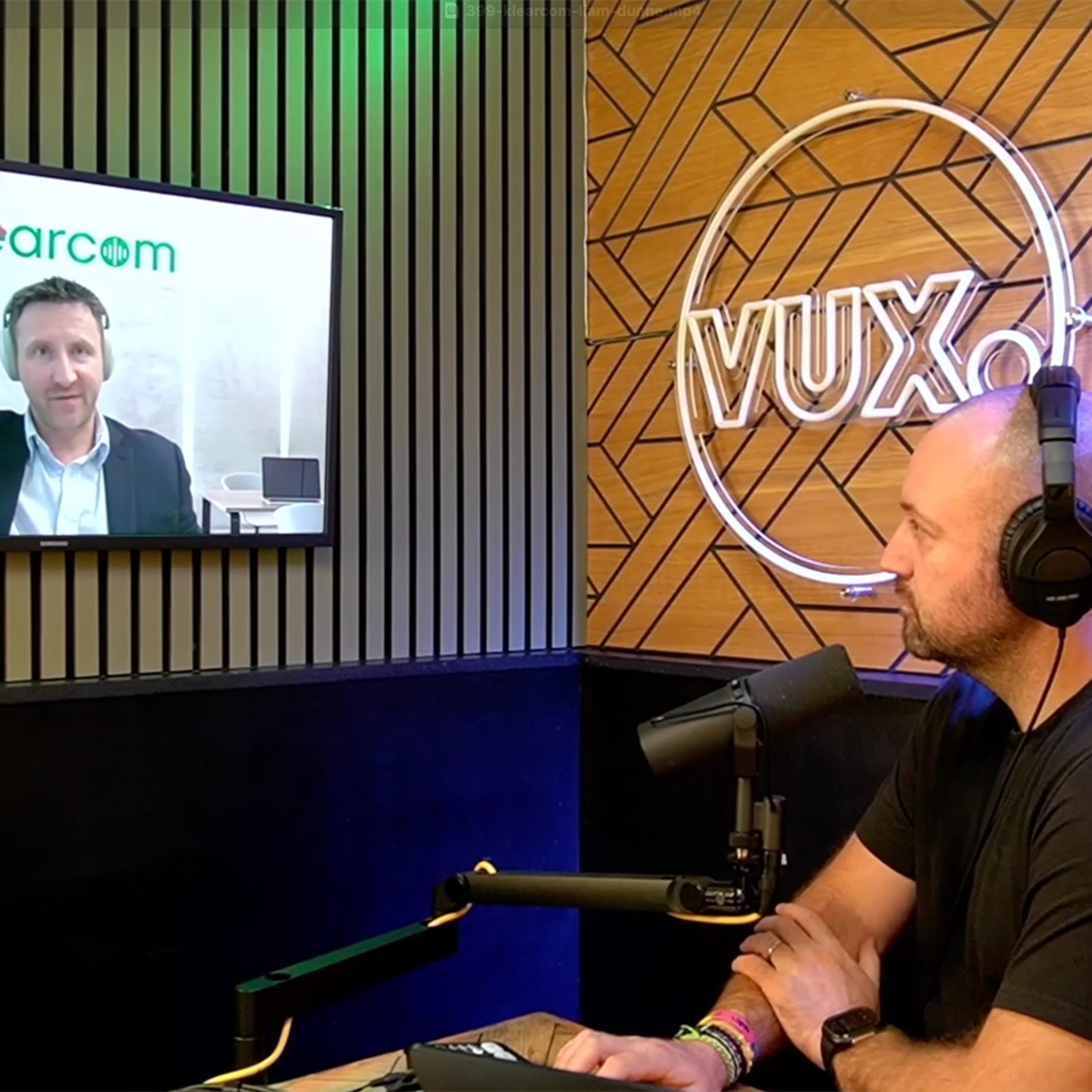
VUX World の今回のエピソードでは、ホストが DeepL の Head of Voice である Leo Doin 氏に、リアルタイム音声翻訳の現状と企業での活用を聞いた。テーマは「100言語を話すAIエージェントを導入したとき、その後ろの人間側はどうするのか」という実務的な問いである。
汎用LLMではなく翻訳特化モデルを使う理由
Doin 氏によれば、DeepLには7年以上の翻訳モデル開発の蓄積がある。音声分野では、音声認識(ASR)、翻訳、音声生成を組み合わせ、まずオンライン会議向けの低遅延な人間同士の会話翻訳から始め、その後コンタクトセンターへ展開したという。
同氏は、多くの事業者が音声認識・翻訳・音声合成を連結する構成の中で、翻訳部分に汎用LLMを使っていると指摘する。汎用モデルは一部の言語ではうまく動くものの、業務文脈や言語ごとのフォーマリティ(丁寧さの度合い)まで扱うには、翻訳専用に訓練する必要があるという立場だ。専任の研究チーム、データセット、各言語の専門家、顧客ごとの専門用語セットがあることで、幅広い言語で高い精度を保証できると述べている。
言語は事業拡大のボトルネック
Doin 氏は、言語の壁が事業拡大の制約になると語る。新市場向けのキャンペーンや現地チームとの調整には時間がかかり、100か国で顧客を持つとなれば、サポートの運用負荷は多くの企業にとって現実的でなくなるという。
事例として挙がったのが Aramark だ。ニューヨークと東京の物流調整で、2時間以上の会議が必要だったり、サプライチェーンの問題が土壇場まで見つからなかったりしていた。リアルタイム音声翻訳の導入後、東京側のメンバーが会議で発言するようになり、それまで会議後のメール中心だったことによる数週間の遅れが解消に向かったと紹介された。通訳を毎回呼ぶのは現実的でなかったため、価値は明確だったという。
また、翻訳は単語の置き換えでは不十分で、文化的文脈も要る。同氏はブラジル系ポルトガル語のサッカーに由来する表現が、モデルによって英語で「素晴らしい」という趣旨に文脈ごと訳された例を挙げた。ホストも、郵便配達員の位置づけが英国とフランスで違うという例を出し、比喩や文化的参照が翻訳の難所になると述べた。
多言語AIエージェントとエスカレーションの落とし穴
今回の中心的な議論がここである。LLMエージェントによる一次対応は多言語化しやすく、DeepLがここに入るわけではないと Doin 氏は明言する。しかし一定割合の通話は人間にエスカレーションされる。AIを100言語に広げれば、人間側も100言語分の体制が必要になり、規模が合わなくなる。
ホストは、キューやスキルセットに加えて言語まで考慮する振り分けは「苦痛」になると指摘し、多言語AIには人間側の多言語対応が必須だと整理した。Doin 氏が挙げた事例では、リスボンに多言語ハブを持つBPO(業務委託先)が、約50言語の採用と研修に数か月かけていたところ、数週間で立ち上げられるようになった。ポルトガル語と英語を話す約10人の専門家で多くの言語に対応できるという。さらに、言語が決定要因でなくなるため、より早く適切な専門家につなぐことができ、CSATや初回解決率が上がった例もあると述べた。
品質・遅延・声:現場での三つの要件
現在の品質について Doin 氏は、Google、Apple、OpenAIなどの消費者向けモデルも急速に良くなっているとしつつ、顧客サポートではブランド名や住所などの固有表現を、発話でも文字でも正しく扱うカスタマイズが重要だと言う。DeepL自身の名前の発音や表記の揺れも例に挙がった。
遅延については、電話ではもともと多少の間に慣れているため、数秒程度の遅延であれば顧客が翻訳に気づかなかったと述べる。また、人間らしい声も当初想定より重要で、顧客は機械と話していると感じたくないことが分かったという。なお、通話の冒頭では音声技術を使用している旨を伝えていたとも話している。
技術面では、リアルタイム字幕で結果が後から書き換わる「ちらつき」が体験を損なうため、速くて、いったん出した結果を覆さないモデルを2年前から重視してきたと説明した。多くの構成はカスケード型で遅延が積み上がるが、DeepLはストリーミング最適化を行い、次世代モデルでは複数の段階を一つのモデルで扱って遅延をさらに縮めると述べている。音声認識、翻訳、音声合成はいずれも自社の研究チームで開発しているという。
顧客像と「自分の声」で話す価値
顧客は、銀行のようにコンタクトセンターを直接運営する企業、BPO、そして GenesysやRingCentral のような連携先を通じてDeepLのAPIを使う事業者など多様だ。APIの提供は急成長しているが、主な事業の軸ではないと同氏は述べた。
音声のクローンについては、単に人間らしいだけでなく「自分らしい」声を保つことが価値提案の一部だという。東京オフィスの同僚が日本語で話し、自分が英語で聞く会議では、相手が自然体で話せて、なおかつ本人と話している感覚が残ると語った。
まとめ
この回の示唆は、AIエージェントの多言語化は、人間側の多言語対応とセットで考えるべきだという点にある。日本企業が海外展開や訪日客・在留外国人への対応でAIを導入する際も、エスカレーション後の体制が盲点になりうる。また、用語のカスタマイズ、遅延、声の自然さ、ちらつきのなさといった評価軸は、音声翻訳製品を比較する際の実務的な観点として参考になる。なお、数値や効果はいずれもDeepL側の説明であり、独立した検証は示されていない。
文字起こし(英語・自動生成)
Alright, Leo, welcome to the podcast, how are you? Doing great, mate, thanks. You? I bet I know that we're actually recording. I had a bit of a scare there, for some reason. My mixer has gone on the blink, and I don't know exactly why that is. It's telling me there's no power, even though it's plugged in. It was a quick recovery, though. It was, fairly, yeah, fairly, as quick as it could be. So my microphone is not working either, but you can hear us all, and I can hear you, that's the main thing, so we're all good to go. Yeah, I'm glad you can join us. I've been following DeepL for a long time. I know lots of companies that use DeepL, know lots of vendors and technology platforms that use the technology for providing kind of multilingual models and stuff like that, but never really kind of got close to DeepL and fully understood all of the kind of ins and outs of what it takes to create these kind of multilingual models, really, because I think people think that it's as easy as just pointing an LLM at an agent
and all of a sudden you've got something that speaks a different language. And I'm kind of in two minds here because I've worked on the NLU side of localization in the past and it was not trivial whatsoever. In fact, it was very, very challenging. So live language models kind of present the solution to that, at least that's kind of how it appears. but I'd just be really keen to sort of explore with you what are still the challenges in localisation where are we with the technology how does DeepL kind of solve a lot of the really hard problems of language and translation and stuff like that and just generally what your observations are and trends in terms of companies adopting these more kind of multilingual sort of systems really so maybe it would be good to start in terms of sharing a little bit about yourself head of voice at DeepL, so maybe it's a bit about your role and what you do. And for those that don't know, a little bit about DeepL perhaps as well will be a good starting point. Perfect. Yeah.
So, yeah, I joined DeepL and the team when we were at the beginning of our journey with voice. And actually, about DeepL, we have quite many years now, seven plus years on translation models. And we can dive a little bit deeper on that. definitely not easy and definitely a lot you need to do to not just get translations, but get translations right and at the right level of quality. With voice specifically, we realize that if we pair the quality of translations we have with ASR, speech generation, we had a very good shot at breaking a problem that was back then, two years ago, not even close to human-to-human, real-time translations. We didn't really have systems that, if you take, for instance, to call centers, could work at the
level of speed and quality that you need to really automate those calls. And the team had a very super, very clear mission or first product, like Surfaces meetings and having humans talking across like online meetings and having those types of calls with working really low latency in real time. That's the trick where you can have a back and forth conversation and you really don't feel that there is a translation between. And from there, once the technology was replaced, which has been like more than a year now that we launched, and now we have like a strong and fast growing. customer-based online meetings. We then brought the technology to contact centers as well, where there you can really see the impact, right, when you bring it to calls where the human on the other side can just,
we can talk a little bit more about this, but what we saw is that when we brought the technology to a certain level of latency, so they can simply automate those calls, add confidence, then there's a lot more to unlock that is really just the beginning of the journey. So about me, super excited. And it's just the beginning of a long journey to go automating human-to-human real-time translation. Nice. Yeah, I remember seeing in probably 2022 or 2023, um the uh bosch basically was presenting at an event and they were sharing their kind of translation pipeline and it was supposed to be a real time not real time it was intended to be the kind of real time uh voice translation and what they shared was kind of like the call is on the phone they speak it gets the speech to text translates it to english the model then i don't
I don't know what they were using. It was maybe some kind of version of Google Translate or some early transformer model or something like that that then translates it into a different language that then reads it back in English to the agent. And honestly, it just, it was unworkable. It just didn't work. It just took far too long. And the practicalities of actually doing that on a phone call just wouldn't happen whatsoever. So obviously there is a speed challenge, which I imagine could be one of the challenges. but there's also inherent language challenges as well, isn't it? Because different languages have different ways of being, so to speak, different patterns, different ways of phrases, masculine, feminine, formal, informal, and a lot more besides that. I'm not an expert in that whatsoever. So I wonder whether you could share with us a little bit about what are the challenges that DeepL is solving as it pertains to cracking this real-time translation problem? I love how we frame it because it starts
not just the speed itself and the latency is one challenge in and of itself that we manage to solve but where deep health strength really lies on the broad set of languages that we have very good quality on the translation itself and training those models require first a team that is really focused on the problem alone because if you take out a lens and what I think with the what you just mentioned as the cascaded model where you have first speech recognition, then you have a translation pipe, and then you have voice generation. Most providers are using a more general LLM in between to make the translations. And they work okay for some set of languages, but you need to train models to really work with specific sets of context, business context, the specific types of words or what we call formality levels
that you're going to use across languages. And you need a team that is focused on that problem alone as opposed to solving this and other abilities that you need to bring into another land. So, another land has a generic model trained to solve way more tasks than translation itself as opposed to really training for translation. So DeepL's research team has been working for more than seven years now on that problem alone. And then it amounts to the data sets that we have, the language specialists that work in each one of the languages to really hone in to very specifics of how we translate across those languages. and finally also having things like on Contact Center, for instance, we have a large set of specific terms that needs to be translated in very specific ways that we can bring to any customer's deployment that then also make sure that across a broad set of languages
we can guarantee very high accuracy, whereas with a more generic model, it's very hard to get to this level. Yeah, that's interesting. What sort of, what's the size of the problem of this kind of space? As I said, we've kind of worked in the past on localizing an English chatbot, for example, to be able to be deployed in the Spanish market, for argument's sake. And, you know, there's companies now that have got kind of like, you know, at a group level, global companies deploying stuff in lots of different markets. so you can see that it's beneficial to be able to potentially have one agent that speaks five different languages. At the same time, you could potentially still create a specific agent for a specific market. Now, I know that DeepL, in terms of your capabilities, it's not just the contact center that you're focusing on. You're solving the whole language problem. So in your sort of viewpoint, how big is the problem and how much value do you think there could be in being able to bring multilingual models into an enterprise?
Got it. Yeah, so the problem space of language translation or language barriers for businesses and enterprises is a huge space. and if you account for how much friction any enterprise has to, let's say, expand from Europe into Latin America or from the U.S. into Asia, it takes a surprising amount of time, actually, to roll out, let's say, a new marketing campaign or to actually coordinate with the teams and customers in those regions. It should take any business that is expanding globally There is in many different pockets of those businesses, areas that you can accelerate from months to days or weeks of deployment if you take the language barrier or hiring specialists that speak a certain language in those countries. So the problem space is very significant.
And we're also extremely bullish about the customer support and contact centers specifically as a very important subset of the problem space. So imagine you're expanding globally, now you're going to start having customers globally, and now you're serving 100 countries. The amount of operational work and logistics that you need to make sure that you can cover all those other languages makes so too many businesses even prohibitive to expand at the pace that they would need to expand. So, that language really becomes a limiting factor for business expansion. And that's why we feel extremely bullish about this position. Brilliant. Yeah, that's really good. So, But what are some of the things that maybe what are some of the considerations that people outside of this space might not be aware of in terms of, you know, as you said, if you're going to expand from the UK to Germany, you don't just start selling products in Germany.
that everything you do basically is a language problem because even if your business is good, your products are good, your systems are good, all of that then needs to work in a different country where all of the language is totally different. So what are maybe some of the things, kind of considerations, if you like, that businesses need to consider when it comes to leveraging a technology like DeepL that might not be as obvious as just plug it in type of thing? a very good point where the folks in the businesses that are working on those problems, it actually comes very naturally to them what the problems are because they face them on a day-to-day. For example, one of our customers, Aramark, they coordinate logistics with New York and Tokyo. And you usually think it's, Well, they know how to operate. They already have employees in the Tokyo office.
And it doesn't come across immediately for, like, most folks in the business, what the barriers are. But when we go and we talk to the heads of the teams that are coordinating on both sides, it's immediate to them. They're like, look, we have had many calls that takes two-plus hours to coordinate with the teams. and it still takes us months to find some of the issues on the supply chain that we only find at the last minute. And once they start using voice translation real time, they realize that many of the folks in the Tokyo team started speaking up. And before that, they were not. They were actually mostly sending emails afterwards. And this would cause weeks of delays. Interesting. So for the folks working on those things and for the team leads, was immediate, like the value was extremely clear, even before they even had the product, because before that was just like, you don't really call interpreters for these types of calls, like it's prohibitive.
But the problem for teams that are operating this way is super clear. And then it comes to customer support, or if you're coordinating a team on a contact center, might be in-house, might be with a DPO providing contact center for you, the operational work to hire folks across all the languages they need to support, but then more importantly, making sure they have the same quality of level that will influence like your CSAT for score resolution for the customers across all the languages is a very hard problem to solve. And it's very clear and immediate for the folks operating those contact centers because they always think, okay, how do I serve those 10 extra languages? It will take me months to hire and train the right people. And even then, some of the languages that have very low volume, but you still need people sitting there 24-7,
and you need to train them to be specialists on those problems. Turns out that business ends up not expanding into those regions because it's just like close to impossible problem to solve. But then if you can just do the human-to-human real-time, Translation just solves. Now, an interesting angle there, which is unintuitive for folks that are not from those businesses, is that you think about language or you think about customer support, you might think of LMS and not human to human, and we can talk a little bit more about that. What is unintuitive is that for all those businesses to expand, humans talking to each other, communicating, exchanging, information and you talking directly to your customer is and will still be for for foreseeable future a very important part of all businesses operating globally. Definitely and also you've got the added benefit of you know most countries today
don't they're not made up of a population that speaks the native tongue as a first language. America, England, everywhere else in Europe you've got people from lots of different places speak lots of different languages and I think that as well as expansion which I think is a fair point there's also value in actually being able to properly serve more people in the country that you're already in type of thing, you know That's a very good point and specifically for services like public services and some of our customers are in the public sector you want to make sure that you're serving all customers equally. And it's also operationally very hard to guarantee that with all the technology. Yeah. One of the things, I kind of alluded to a little bit earlier, one of the things that we kind of see quite often is businesses that build an AI agent, they deploy it in a specific location. When it comes to deploying it in another location, they build a different agent. And sometimes that might be valid
because maybe that region has different products and, you know, different data sets and stuff like that. But also it's largely also a language issue. You often see that we're going to go live in English and then we might turn on the French translation stuff later, but we're not quite sure yet. So for those people who are, you know, the businesses that are kind of global businesses, got different groups in different geographies, what's kind of your experience of taking a business from one language to another language as i said it used to be a very manual process translation and all this kind of stuff now the kind of the nirvana essentially is plug a multilingual model in like deep l and as long as the data is the same and there's no product differentiation and all this kind of stuff then everything should run so smoothly. Is that kind of vision an accurate vision, or is there more to it?
Is there something I'm missing? No, it is quite close. And indeed, if you already have all those processes, right, or let's say your customer communications and email flows or your marketing and content, we can localize and automate a lot of this. at pretty much at a click. And then you can have not just a model, but have a system also around it where you have the right humans and the right places to review the flaws and whatnot. Where it gets interesting is a lot of expanding into new markets has to do with not just translating word by word of the content they already do have, but making sure that this content now applies
to the culture, the customs. So what a lot of the research work we do and the effort that we put is that not just do translations, but understanding the context of the business they're operating, how, let's say, UK-based business translates into French, let's say in the context of Harma, you not only translate word by word, but you need to make sure that the meaning of the content that you're translating, sometimes it has to do with how you frame some sentences, or sometimes part of our, for instance, in document translation, not only we translate word by word content, we also translate or to an extent design how the content is positioned. And across different languages and customs or even the business domain, those things also need to be taken into account. Yeah. Yeah, it's quite a challenging one, isn't it? Because sometimes languages have either words or concepts
that don't really exist in other languages. And also cultural references can be different. And I always remember a conversation I had way back probably in 20, maybe as early as 2019 or 2018, it was about kind of localising Alexa skills. And I can't remember exactly who it was who said this now, but it was something, I think it was Micah, who basically said that, you know, in the UK, your postman is kind of like a community type of figure. everyone talks to the postman everyone gets on with them and you'll spend five minutes on this driveway talking to your postman so if you were to have some kind of metaphor for friendliness you might reference a postman whereas apparently in France that's not the case whatsoever there may as well be complete strangers and you never see them they're never going to talk to you and it's a totally different dynamic so it's like it's not just the words is it it is also like if you've got things like that in your content
or in your conversation, it's not going to have the intended impact because not every culture behaves the same type of thing, you know. It's a very good example. Another one, I was presenting at our company event beginning of this year to launch our first iteration of the voice-to-voice real-time translation. I'm a native Brazilian-Portuguese speaker, and I was saying an expression that in Brazil we use which showed you Bola, but it's related to football games and matches and how passionate we feel about it. But the translation in English just translates to awesome. This has been just great. And the model didn't translate anything related to football. It just said, it's just so awesome that we're doing this. So this contextual translation is very important. We put a lot of attention on this. Nice, nice. Shout out to Janinho, by the way. I didn realize you were Brazilian but Janinho is a local hero in Middlesbrough where I or close to where I from So yeah interesting So when we last spoke you mentioned something incredibly
interesting that I want to make sure we discuss, because you were talking about how if you have an AI agent that overnight speaks multiple languages, on the one hand, obviously that's a real benefit for the user and a benefit for the business, but it causes problems when it comes to escalating to human agents. I wonder if you could maybe frame what that challenge was as you recall it, and maybe we can kind of dive into that. Very good. So, in call-to-center is what we call, like, most of the calls are getting, as you try to expand across languages, they get to a LLM, right? So it's human talking to a LLM agent. So it's not a human-to-human, the customer is talking to the LLM. And for most of our customers, that's the, for most, except for very high criticology calls that we can, like, part for a second,
for incoming calls that are not highly critical, they get to this first tweetage where you're talking to LLM. imagine you and this you can reasonably well scale for more languages the LLMs are reasonably good making those same conversations and the same support across more languages and to be clear that's not where DPL enters the frame just yet and there's plenty LLM providers that can help automate that first part. Just so happens that when you have this escalation of those calls which right now depending on the setup it happens to a significant percentage of those calls, these still need to be escalated and then a human needs to pick up the phone, so if you scale those LLMs across let's say 100 languages now you need to make sure that you have the operational muscle behind it to actually support
100 languages with humans and And today, as we're scaling the LMS bit, and we do expect to have those escalation calls across many more languages, then you need to also have a team of experts on the other side that can cover for as many languages as you're scaling. And this is where tools like DPL enter the frame where we can then take, for instance, one of our customers in the BPL space has a multi-language hub in Lisbon, and they used to take many months to roll new customers as they need to train across 50 different languages in that hub, hire, train for products, and now it can roll out pretty much in weeks where it can have a team of 10 experts, mostly Portuguese, English speakers, that can then serve many more languages. So what I sort of take from that really is that, you can't have a multilingual AI agent
without having multilingual capabilities sitting behind it necessarily because otherwise you're in a very difficult position because escalating generally is quite challenging anyway because it's not like NLU chatbots where you're having a conversation about this intent and that intent escalates to this queue you know it's not as deterministic as that the conversation could be about anything the LLM needs to make a call about what the conversation is about and what Q is relevant and which skill set we should be escalating people to but then that's hard enough as it is and not everyone's cracked that and then you add a language component on top of it as well now all of a sudden you're rooting for the right Q the right skill set and the right language and you're in an absolute world of pain So you can't have a multilingual AI agent that escalates to humans without also providing the humans with the same technology.
Right, and that's what we're finding with more and more of our customers, that it doesn't scale, right? The approach doesn't scale with the LLMs escalating to all those multilingual queues. you cannot reasonably scale the human experts across all those languages in the same time frame that you can escalate the LLMs. And also in some of the deployments we have, we're also finding that we can be way more aggressive on the escalation paths in the sense that we bring humans to talk to customers sooner, and we see CSAT and first-score resolution rates going up by humans being connected faster with the right expert for the problem that they have. And this routing becomes way easier when language is not the main decider. Because now you can more reliably escalate or queue to the right experts in your team
and we can see this impact in both CSET and first call resolution. how good is real time translation today when it happens you see Apple will have an advert where AirPods are real time you'll see OpenAI might talk about speech to speech models in real time translation there's a lot of talk and news coverage and developments in real time translation however you always have to be very careful about taking you know Apple's three and a half million dollar advert in a demonstrated clean environment and applying that in the real world so and I've never experienced it myself obviously DeepL you know you have customers that sort of do this so I wonder if you can share a little bit about how good is real-time language translation today if me and you were going to have a call. You're speaking Portuguese, I'm speaking English.
What's the reality of that exchange today? So today, with our models, we are on a level of, very importantly, first need the quality, and it needs to really get things right. So what consumer models will offer, Google, Apple, OpenAI as well, So they have a general quality that it's now like the industry as a whole is evolving very fast and the quality is at a very good level already. Yet for customer support, let's say, you also need to factor in the very specific terms and the very specific lingo for that business and the customer will expect. so the quality work happens like when we build the models we build in specific models contexts but also deployment where before we even deploy we actually
add a lot more context to make sure that we have the right setup so then what would that look like then what would the additional context look like it would look like there's things like more concretely we call like spoken terms so let's say you're going to be talking about specific brands or names or street addresses. We need to make sure that those things are spoken but also written because part of this is, by the way, not just voice-to-voice, but also transcribing and writing so the agent has this context in real time. And we want to make sure that we're writing specific terms or saying specific words in the very specific ways it should be said. So let's say DPL, for instance, is our brand, like people pronounce it different ways, they write in different ways. Our models are very reliably recognized across a set of languages, how it should be said. And this is true for any brand that you're representing in customer service, right?
And this is something that a more like a commercial model will not get right most of the time, as they also lack this level of what we call customization. and then on the latency side how it sounds like funny enough over a phone call where you don't see the other person you already expect and if you think about it we're all a little bit used with a little bit of delay over phone calls so we even adapt and have you wait for the other person to finish and then you start with the level of latency we have which is like a couple of seconds in both phone calls we realize the customers didn't notice they were doing language translation. Because they were already expecting some delay and the delay was short enough that they just thought it was just a human speaking in whichever language we were translating to. Which then goes to the third pillar that is very important to us, which is human-like
voices. That really feels human, that really feels natural, and this we learned that it's very important to the customers. actually at the beginning together with some of the contact centers we're serving we had the assumption that maybe a voice that feels very human was not that important and that customers wouldn't care as much but as we roll out the customers really cared that there's a very natural voice and that they feel they're not talking to a machine so funnily enough we actually had at the beginning of every call that the human on the other side starts by saying I am using voice translation technology, you may not notice, but just so you know this voice is being recorded, there is a voice technology so we are today at a point where when we have the right setup and we make sure we have all this customization I just described the level of latency and the naturalness of the voice
are so good that it's barely noticeable on a customer support call. Wow. That's really good. And how are you, not that you would share the secret sauce with me anyway, but is this done in, I imagine to get to that level, you have to do this in a kind of streaming fashion. So as the audio is coming in, you're translating it as you go sort of thing. But presumably that also presents a challenge because what a lot of the systems tend to do is they transcribe something then they sort of look back over it now that they got more context and then they can kind of like retroactively correct what they just transcribed sort of thing but you in your real time so you don't have a great deal of time to do that so i wonder if you can share a little bit about any of the technicalities that are going on in terms of how you make something like that happen very good maybe just like what you described is very true even before I had voice if you just talk about transcription or just text translation
in real time sometimes you need to go back and correct this is what we call flicker so if you take solutions for instance for online meetings many of the solutions they will be very fast but they will eventually correct and this makes it actually very jarring to try to follow the transcript because now you have it and then it's correct and it's flickering around. And then, sure, you deliver something very fast. The model's technically being very fast, but in concrete terms, until you have the final result really unstable, it doesn't really deliver user experience. Where our models, and this is something we cater for and paid attention very early on, like two years ago, where we wanted to not only train models to be fast, we wanted them to be fast and accurate. Meaning once you already have a result, it sticks. You don't need to go and backtrack. And this was even before we were delivering voice translation.
This was by the time when we had real-time subtitles and our models were focused on text alone. So that same-based technology applied to voice actually gives this advantage that you don't need to backtrack. Because with voice, as you described, it simply doesn't work. If now you already started a sentence and you would need to flicker, it doesn't quite work. And as we mentioned before, most of the models are what we call cascaded. And even with LLM-based, first call, contact center. Most of the approaches are cascading, which means you have first speech recognition, then you have another step, and then you're going to have speech synthesis at the end. This adds a lot to the latency. Our models are, there's where we view a lot of the frequent
source, but what I can say is we optimize a lot for streaming in real time, as opposed to doing translations in chunks or in bits. And this is already paying off. This is how we have the level of speed that makes people in a call sometimes don't even notice there's translation. But also, coming over the next, you're going to see some announcements over the next weeks, months, we have the next generation of models that actually, when the team was testing, I was quite baffled with where we're bringing this level of latency even shorter and the level of naturalness to a really different level. And as you pointed and you're right, it has to do with dealing with all those layers in one model rather than making hops in different hops. Nice. Nice. And you mentioned speech synthesis there. So would I be correct in thinking that DPL has its own speech synthesis models and you don't rely on third parties,
11 labs, Microsoft, things like that. That's correct. For both speech synthesis, speech recognition or ASR, and also translation. We rely on our own research team that has been... Not only we rely on our models for speech generation, we develop them in a very close way with the research we have for the language and translations. so we make so those things are very tightly connected so they're not just generic speech synthesis models but they're really optimized for real-time translation and human-to-human. And who is your kind of... It's really interesting with a technology like this because ultimately, you know, it's not challenging but it can be quite challenging to identify the perfect customer because the perfect customer could quite easily be the Bank of America of the world
who want to leverage this technology themselves, and so therefore that's what they're going to do. But at the same time, I'm pretty sure Cognigy was using D-Pel for translation at one point, but maybe still are. So you've also got potential customers at the platform. I've actually seen some examples. I won't mention a name so I don't want to reveal anything that might not be the right thing to do but I've seen some examples of real time voice translation in the last month or two that I would probably be now convinced is probably deep help because everything we've been discussing here is that it's not an easy problem to solve and therefore it's unlikely that someone else who doesn't specialise in this has actually solved it So who is it that is the ideal kind of customer for DeepL? Is it the enterprise like Bank of America, or is it the 11 Labs and the Cognigies and the voice kind of AI platforms of the world,
or does it not really matter? It does matter. We do have a voice API, and we do have APIs that we offer as a platform, like for a platform. layer, right? What you will see is many of the providers that, for instance, offer third-party integrations for, let's say, contact centers like into Genesis or RingCentral, under the hood, they're using our APIs to offer that service, right? This is one example. There's plenty of other examples where now we're embedding real-time translations where we provide it through our APIs. And this is one, it's growing quite fast. It's not our main business focus as we started,
because we really started with online meetings. And by then, we didn't focus as much on providing this platform layer. and then we evolve into contact centers which now are quite more mature and then even into the contact centers there's a distinction where you can provide the service directly to the customer and let's say banks some of our customers are banks that provide contact centers directly others are what we call BPOs that then provide the service to their customers And then there's also providers that actually use our APIs to integrate their solutions into the different contact centers. And there's where the API play comes. And then we have many other cases where companies that are more in the technology space or, like, building their own products use the same spec as well.
and where does um kind of like voice cloning land with you guys do you guys do that as well so for example we're having a conversation you're in the contact center i'm a caller i'm speaking in english you're speaking you're having this translated into portuguese you're speaking back in portuguese but the voice that comes back to me is english is that voice a clone of your voice, so it sounds like you speak in Portuguese, or is it a generic synthesized voice? As I said, a lot of the effort or the work we put is on human sounding voices, but not just human sounding, sounding like you. So a big part of our value proposition is allowing you to just sound like yourself. Let's say it doesn't, if not on a contact sensor call, can be on a business meeting, where for instance even for ourselves one of our biggest offices
in Tokyo, we have a very big customer base in Japan when talking to our own team with our Tokyo team when we usually talk in English, they started now switching always to Japanese by default and we can have those calls where they actually just speak Japanese and I hear them in English and it's quite striking how one, they just get much more like to be at ease in themselves and there's quite some change in personality but second, I feel like I'm still speaking to them because I used to have those calls already in English now I'm still hearing in English and it's quite it really brings you to the core, you're still talking to a person rather than talking to some machine voice So this is really a deep crux of how we think of our products and the models. And over the next few weeks, you're going to see some announcements as well,
how we're pushing the boundaries a little bit more. Nice, nice. I think that confirms it to me. I think I have experienced DeepL in action as part of another platform, I won't say who. But now that I'm convinced it is. Anyway, that is absolutely perfect. Really, really interesting. I really appreciate you spending some time with us. Apologies for the hiccup at the beginning of the game, but yeah, glad that you were able to spend some time with us and share those learnings. Absolutely brilliant. I really love what you're doing. I think what you're cracking is a problem that the big providers, it's too much of a niche. It's important to them because they're all global companies, but it's very much a niche problem. I don't think it's necessarily something that the Googles and OpenAI's and Apples are properly going to crack. Certainly not from the point of view of like the banks of the world being able to leverage it properly for their customers. I think you're sitting in a really sort of perfect space, which is at the cutting edge, but also accessible. So it's a great combination.
So yeah, I appreciate your time. Correct. Exactly, Ken. And that's the DNA we keep focusing on translations. Mitch, much appreciate being here. No worries. Thanks for joining me. And thank you all for tuning in. We'll see you again on the next one. Thanks now. Bye.
番組の概要欄(原文)
<p>You can't have a multilingual AI agent without multilingual capabilities sitting behind it. Your AI agent might speak 100 languages, but when it escalates, who picks up?</p><p>Leo Doin, Head of Voice at DeepL, joins me to talk about real-time voice translation in meetings and contact centres. We cover why a translation specialist model beats a general LLM, how one hub of human agents can now serve customers in many languages, how good real-time translation really is today (latency, accuracy, streaming without flicker) and what happens when the translated voice sounds like you.</p><p><strong>Links</strong></p><ul><li><a href="https://www.deepl.com/en/products/voice" target="_blank" rel="noopener">DeepL Voice</a></li><li><a href="https://www.deepl.com/en/press-release/deepl-voice-now-preserves-your-voice-in-real-time-multilingual-conversations" target="_blank" rel="noopener">DeepL Voice now preserves your voice</a></li><li>DeepL launched Aure, the new voice model behind DeepL Voice, a week after we recorded. Read <a href="https://www.deepl.com/en/press-release/aure-voice-ai-model" target="_blank" rel="noopener">DeepL's announcement of Aure</a>.</li><li><a href="https://www.linkedin.com/in/leonardo-doin" target="_blank" rel="noopener">Leo Doin on LinkedIn</a></li></ul>
出典・この記事について
- 番組
- VUX World(Kane Simms)
- 元の回
- How to leverage an AI that speaks 100 languages: Leo Doin, Head of Voice, DeepL
- 配信日
- 要約作成日
- 公式サイト
- vux.ai
この要約・解説記事は、元の音声を文字起こしした内容をもとに AI(Claude)が日本語で作成したものです。 固有名詞や数値に誤りを含む場合があるため、正確な内容は元の音声でご確認ください。制作方法について