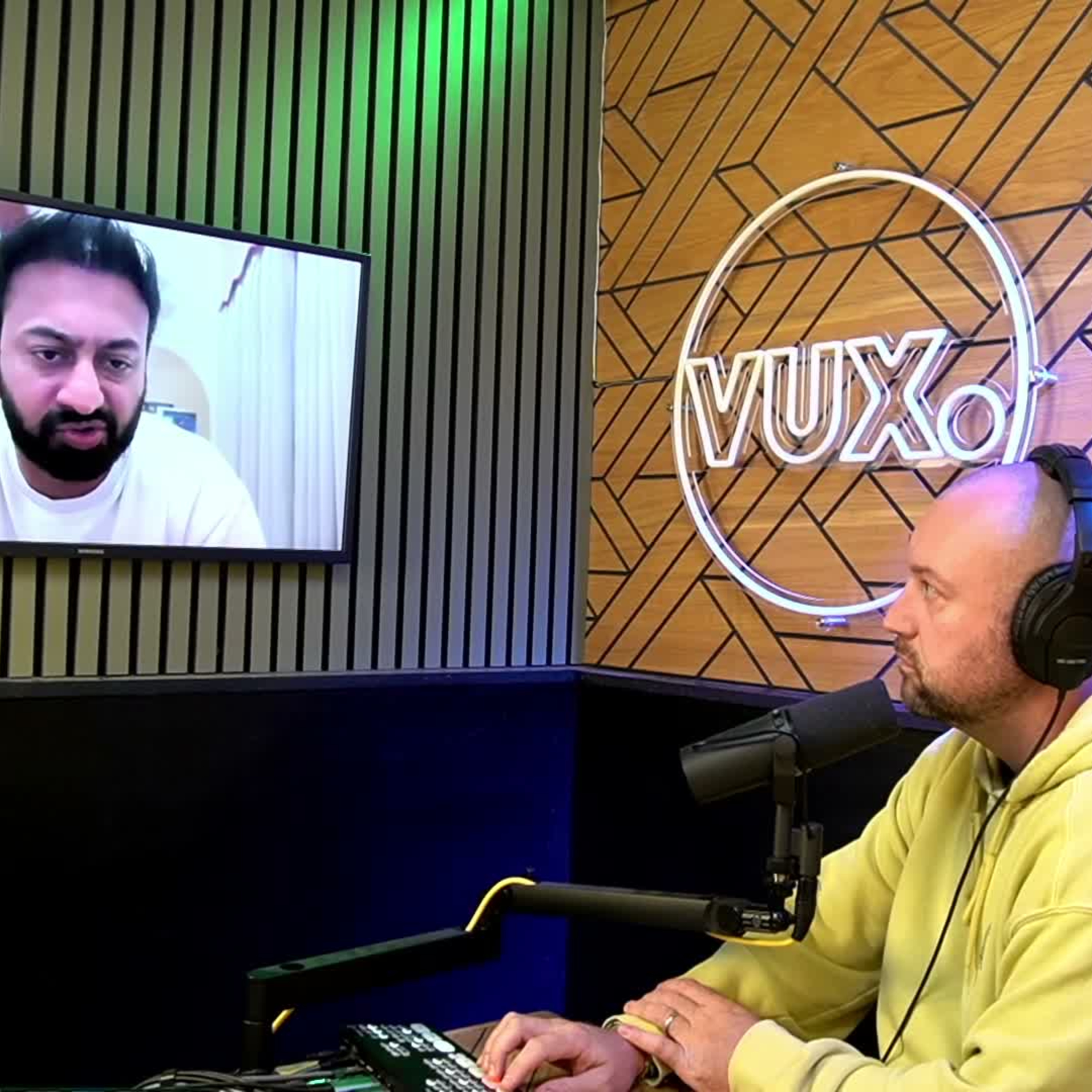
AIがブランド価値を剥ぎ取る:Matt Clare(UJet)との対談
VUX World
要約
VUX WorldのホストKaneが、UJetのVP of Product MarketingであるMatt Clareと、顧客側が所有するパーソナルAIエージェントがCXやコンタクトセンターに与える影響を議論した回。人員削減が本質ではなく、企業はどこまで機能を公開するかというチェック体制が問われると語られる。製品・価格・ブランド・体験という差別化軸がAIエージェントによって無効化されかねないという見方も示された。二人が好きなヒップホップ曲を話題ごとに挙げる構成。
この回のポイント
- ●Mattは「AIで人を置き換える」という人員削減の物語に懐疑的で、AIは雑務を担い、人間が価値・差別化・顧客生涯価値を生むべきだと述べている。
- ●パーソナルAIエージェントはセルフサービスの新しいモダリティ(接点の形)であり、会話量は増えうるが、人間の対応が不要になるとは考えにくいという見方をMattは示した。
- ●返金のような少額自動承認の社内ルールは、エージェントが大量に請求してくると破綻しうるため、企業にはチェック体制の見直しが必要だと指摘された。
- ●Kaneは、製品→価格→ブランド→体験と移ってきた差別化が、待ち時間や粗末なサイトを気にしないAIエージェントによって無効化される「ヘッドレス組織」の可能性を論じた。
- ●エージェント経由でタスクが失敗した場合、顧客はより感情的になって人間の窓口に来るため、オペレーターへのエスカレーションが過熱するとMattは懸念している。
- ●CCaaSはチャネルや会話だけでなく、データ取得からEC、クロスセルまで全体を束ねるオーケストレーターになるべきだと語られた。
章立て
自己紹介とMattの経歴
Prairie Fire、Mitel、GoogleのContact Center AIを経てUJetに至るMattの経歴と、ヒップホップ好きという共通点、番組の進め方が紹介される。
人員削減ではないAIの価値
IKEAやMicrosoftの事例に触れつつ、AIは雑務を担い人間が価値を生むべきだというUJetの考え方が語られる。
パーソナルエージェントは新しい接点か
Grokbotなどの個人向けエージェントの普及しやすさと、会話量・CSATへの影響について二人の見方が分かれる。
公開範囲とリスク管理
銀行の認証体験や、銀行業の資本保持、少額返金ルールが大量のエージェントに悪用されるリスクが議論される。
差別化の剥奪とヘッドレス組織
製品・価格・ブランド・体験と進んだ差別化がAIエージェントで無効化され、顧客との関係が仲介されるリスクが論じられる。
人間へのエスカレーションと新興企業
エージェントが失敗した際の怒れる顧客への対応や、最初からエージェント前提で作られる新企業の可能性が語られる。
CCaaSの将来とオーケストレーション
CCaaSはAIプラットフォーム化し、EC・データ・会話を束ねるオーケストレーターが勝つという見解と、短期契約化の動き。
結び:顧客に聞くこと
人・プロセス・システムの重要性を確認し、顧客に何を求めるか尋ねることが唯一無二の存在につながると締めくくる。
解説記事
VUX WorldのホストKaneが、UJetでプロダクトマーケティングを統括するMatt Clareを迎え、顧客自身が使うパーソナルAIエージェントがカスタマーエクスペリエンス(CX)とコンタクトセンターをどう変えるかを語り合った回である。二人はヒップホップ好きで、話題の節目ごとに曲を挙げていく構成になっている。
「人員削減」ではない、AIの役割
MattはMitelでコンタクトセンター製品を率い、その後Googleで約5年間、コンタクトセンターAIに関わった経歴を持つ。現在UJetで掲げる考え方は「AIは雑務を担い、人間が価値、差別化、収益、顧客生涯価値を生む」というものだ。IKEAが2,500人をAIに置き換えつつ、その人員を高付加価値の業務に回したという話を例に挙げ、Microsoftの人員削減報道についても、年末には純増になっているのではないかという「勘」を述べている。AIで全員をロボットに置き換えるという発想には、CSATはどうなったのかと疑問を呈した。
パーソナルエージェントは「新しいモダリティ」
Mattは、個人向けエージェントはWebサイトやアプリに続く新しい接点にすぎず、人間への問い合わせが不要になるとは思わないと述べる。ただ、自分がもっとも好きな企業は、もっとも話さなくて済む企業だという持論から、エージェントが手間を減らす価値自体は評価している。
Kaneは、GrokBotなどを数週間試した経験から、導入のしやすさが従来のチャット型AIとの違いだと指摘する。短期間でメール、Slack、CRM、カレンダーにアクセスし、ブラウザ経由でClaudeを操作することまであったという。便利さの一方でリスクも大きく、銀行のように規制で本人同意が必要な領域では、企業側が許可する範囲を決める必要があると述べた。
少額返金ルールが破綻するかもしれない
Mattは、銀行アプリで高額送金をしようとして、何度も本人確認を重ねた経験を語った。技術は普及より先行しており、企業が機能を公開するかが本当の問題だという見方だ。また、北米の大手小売で見た、100ドル未満の返金は調査せず返す運用を例に、エージェントが大量に返金を求めれば社内ルールが成り立たなくなる可能性を指摘した。Kaneも、ある英国の大手銀行関係者から聞いた話として、エージェントが人間の追随できない速度で取引を起こせば資本を枯渇させかねないという懸念を紹介している。
差別化の4段階とヘッドレス化
Kaneは、企業の差別化は製品、価格、ブランド、体験の順に移ってきたと整理する。しかしAIエージェントは待ち時間も粗末なWebサイトも気にせず、ロゴも見ない。RBIのMathias Fanschekとの対話で出た「ヘッドレスバンク」の発想を引き、顧客が提供者を気にしなくなると、これまで事業を支えた差別化が消えるという見方を示した。一方で、エージェントに対応しないと差別化の機会を逃すが、対応すれば比較を担う集約者に仲介され、顧客との関係を失うというジレンマもある。
Mattは、エージェントが失敗した場合に顧客がより腹を立てて電話してくるため、人間のオペレーターが対応する場面はむしろ過熱しうると語った。
CCaaSの行方と、顧客に聞くこと
CCaaSについてMattは、すでにAIプラットフォーム化しており、勝つのはデータ取得、複数の仮想エージェント、EC、クロスセルまでを束ねるオーケストレーターだと述べる。大手小売が「12か月以上の契約は結ばない」と話していた例も挙げ、ベンダーの優位が長く続かないという前提で動く顧客が増えていると紹介した。
Kaneは、企業は結局のところ人・プロセス・システムであり、古いプロセスを改善するためにAIを使うべきだと述べた。Mattの締めくくりは、顧客に何を求めるのか、セルフサービスで何が筋かを尋ねよという助言だ。
まとめ
日本の読者にとっての注目点は、エージェント対応を技術課題としてだけでなく、公開範囲、返金ルールのような業務ポリシー、本人確認といった運用設計の問題として捉えている点だ。エージェントの普及で会話が減るのか増えるのかは両氏とも断定しておらず、失敗時の人間による対応品質が重要になるという示唆は、コンタクトセンター運営者に有益だろう。
文字起こし(英語・自動生成)
And away we go. Matt Clare, welcome to the podcast, my friend. How are you? Hey, I feel like this is a long time coming. I'm doing great. And I'm stoked that I finally get to take part in one of these. Likewise. So I'm looking forward to the chat today. Yeah, yeah, it's definitely been a long time coming. I remember, I think we spoke originally when you were at Google. We spoke when you were at Mitel. We just hadn't managed to kind of make it happen. But I'm super glad that we can do this now that you're here at UJet. and still heavily involved in the AI space. So excited to chat to you, yeah. Yeah. Yeah. Wouldn't it be a conversation about CX in 2026 without AI? I know, I know. I went to CCW Amsterdam a few weeks ago and it could have been an AI conference because every single company there was talking about AI. 90% of the talks were about AI. Don't get me wrong, I was there before that. I'm not as interested in the general CX stuff.
I'm pretty much interested exclusively in the role of AI. So for me, it was fine and good. It is funny, though, right? Like, if I think back to, like, 20 years ago when I was doing my first kind of, like, contact center industry shows, they had heavily communications, like, very focused on, like, physical. You'd have the phone vendors at the show. Yeah. And now, 20 years later, you've seen this, like, transition from the, like, communication shows became contact center shows, contact center shows becoming AI shows. And I went to like a general technology show a couple months ago. And I can tell you like that show felt like it's become a CX and AI show. Just because like the use case, like AI and customer experience, obviously something that everybody understands, right? It's one of the like front running use cases. So yeah, it's funny how, how much it's like disrupted the event space. It's mad. It's mad. And all this time, we've kind of known each other from afar,
never realized that you are a massive hip-hop head. Yeah, yeah. And likewise, right, we're always here talking about tech. And then so, you know, a couple weeks ago, you saw my mug and my MF Doom sticker on my mug, and we went down this rabbit hole about, like, hip-hop. And so I'm going to shout out some friends in London, Ontario, where I came up. my friends from Bread and Water and Thisa Saheed and Shad K guys who like little indie hip hoppers in Canada that you probably don't know but yeah I've been doing it a long time, been playing music a long time, making beats a long time and kind of moonlight as an MC if I get enough drinks in me so yeah it was funny the two worlds collided Yeah, absolutely the same. It was funny because I spent a long time when I was growing up doing the same thing, MCing, making beats. It's funny because we were talking about, you were saying that you got yourself an NPC in lockdown.
I managed to come across the NPC sample fairly recently, so I've been diving into that. It's just funny, isn't it? So what we thought we'd do for this episode, for those tuning in, if you are a hip-hop head like me and Matt, then you'll enjoy this one very much because as we go through the discussion today, at certain points, whenever it feels kind of relevant, we're going to nominate some, or a series of, or one, or however many we get to, some hip-hop tunes that we think match the moment. And at the end of this episode, we're going to take them all and stick them on a Spotify playlist, and we'll put it in the show notes, and you can go there and you can listen. We can't really play any music at the minute, because obviously YouTube and Spotify and that will not really enjoy that, but we'll put it all on the playlist afterwards, and you can grab it there. Sound good? It sounds amazing. This will be the funnest podcast I do all year. Absolutely, absolutely. All right, so maybe it's for a bit of context. It might be worth sharing with the listeners a little bit about yourself,
about your role at UJ and a little bit about your experience. As I mentioned, ex-Google, ex-Mytel, a lot of experience in the contact center, a lot of experience with the X, a lot of experience with AI. What is it that you do and share a little bit about your experience and what you're doing at UGET. Yeah, so really quick, VP of product marketing at UGET today. I'm also responsible for our solution consultant sales engineer group. 20-year vet in the space as of this year. Came up at a little company called Prairie Fire Software based out of Ottawa, Canada. At that time, they were an exclusive provider from my total contact centers. helped them grow to about 300, probably 300 employees, about the size of UJet today. And then we got acquired by Mitel and became Mitel's contact center platform of choice. Somewhere in there, in about the 10 years I did with them, I moved from product marketing to product management and eventually was running contact center products at Mitel
with a considerable number of agents. I think it was about 1.3 million contact center seats around the world when I left. Left to go work for Google. Mitel was, strangely, in hindsight, one of the first partners on Google's contact center AI initiative. And so right when Google had acquired API.AI that became Dialogflow and their conversational agent platform, we've had this serendipitous moment of my VP at the time, I connected with one of the Google folks and they sent their product team up to Canada. And it was literally a conversation of like, how do we get this chat bot thing to talk over the phone? And then what else could we do with it? And so we got co-development nods at the time for kind of co-innovating with Google B1 Agent Assist back in 2017. And so made a lot of connections and friends at Google. They eventually kind of told me to apply for a job, asked me to apply for a job.
And then landed over at Google for about five years as a product lead, launched a context-centered partner program on the Chrome side of the house first, moved over to the now Gemini Enterprise for CX side of the house and did a whole bunch of, I would call the fun side of product marketing or like the fun side of product management, sorry. so almost leaning more product marketing like very go to market focus role as opposed to like in the weeds with engineers every day and then you know as I was kind of like getting to the edge of my investing cliff if you will with Google and equity and shares and what have you I was realizing I was having a lot of fun doing stuff that I wasn't getting a chance to do anymore so like stuff like this engaging with analysts, right? Like being more of an up and out voice as opposed to like a down and into the factory type position. And it was kind of like, maybe it's time for me to think back to like going back to like
my roots in marketing. And then looked at a bunch of different companies. Eventually had a conversation with UJet, who I knew very well. I've done the leadership team over here for almost my entire career. and then Shirley got to know the team at UJet really well while I was on the Google side, working with them as a partner, with us as being the provider of Google Cloud Contact Center. That's UJet, just rebranded, reskinned, a subtle tweak in how it deploys on the cloud for Google-specific customers. And, yeah, I had a conversation with UJet about everything they were doing, kind of doubling down on the direct business, growing the partner kind of program direct, making some acquisitions, and got really excited about the opportunity over here. And for the last year and a half, yeah, I've been kind of spearheading product marketing and all things kind of evangelism, et cetera, at UJet,
and really trying to change the conversation about the value of AI and CX. and without giving away too, too much. That really means like, and we all hear automate, automate, automate, automate. You know, you see the headlines. There was a great headline yesterday from Ikea that said, Ikea has moved 2,500 people, replaced 2,500 people with AI for customer service. The subtext was they kept those people, they put those people on higher value work. That's what AI should be doing. But, you know, we keep hearing these like, yeah, well, I'm just going to replace everybody with robots. and I always joke, I'm like, well, what's your CSA score look like after you've made that change, you know, and nobody wants to share that data. So our kind of approach at UJet is very much so like AI should be doing the chores, humans are the ones that deliver value, differentiation, revenue, customer lifetime value, et cetera. And, yeah, it's been a blast over here in the last year and a half.
Nice. Yeah, I think it's interesting. I saw yesterday, I think it was yesterday, that Microsoft apparently is paying off about 60,000 staff, which I think, I can't remember the stats, it might be something like a third of its workforce, or like 20% or something like that. Yeah, it'll be a big chunk for sure. What will be interesting, I have a friend who's a developer, like a pretty senior developer, been a programmer his whole career, sent me the thing, and he's like, see, I told you, AI's coming for our jobs. I was like, man, like I went through restructuring while I was at Google. And that restructuring like during the pandemic was very much messaged as like, we're pivoting the business to focus on AI. I got hit by that restructuring. I had a job back at Google within two weeks. Like I never really left the books. They just moved me into a job where I was working on AI instead. So I was kind of like, look, I'll believe that Microsoft's laying off that many people at the end of the year when I see that the headcount hasn't grown.
But my gut feel is they're just repositioning people onto higher value AI focused work and projects. And at the end of the year, that company's still going to have net growth. That would be my like sneaky suspicion. I strongly doubt that this is like a pure headcount reduction play. I think that's where a lot of people get infatuated with this idea of AI is going to save the world and AI can do everything. And it's like, no, you kind of still need people. You still need people. Which I think segues into kind of what we wanted to talk about today was this personal agent. And so now it's like, I've been around, you've been around long enough that we heard, hey, digital channels are coming for voice. and it's like voice traffic never went down. There was just more digital traffic. And it was like, oh, AI is coming for the humans. And it's like, well, we let go of some humans, but then we actually hired them back
or we just repositioned those humans to do different work. And now it's like, all right, this personal agent thing showing up now. I mean, arguably doing some automation of things that have always been available, whether a company exposes those APIs and that self-service capability is the bigger question. And so you hear people saying, hey, this is going to change things again. And it's like, well, is it or is this just a new modality? And I think it's just a new modality. Like it's a new way to interact with companies where you're having an AI agent doing it instead of you having to go to a website or you sign in into a mobile app or a portal. functionalities just getting exposed in a different way. Am I convinced it's going to take down the need to talk to a human? I don't know, man. I don't think I believe it yet. I think it's just new. Will there be more conversations as a result? Yes, for sure. Will customers do more in
self-service? Sure. But is it really going to build a need for human agents on the other end i don't see it i don't just don't see it do you think that's a kind of well i don't necessarily know whether it's about the kind of human sort of capital reduction so to speak necessarily it's more about the consumer trend of these kind of personal ai agents you think of like muse instinct hack dot some open ai grok bot um open claw i think was one of the first ones to sort of like raise people's awareness about it. I think the kind of question for me is around like the adoption of these things. I mean, I've been using quite a few of them recently, and some of them are, you know, GrokBot genuinely is brilliant. I don't know if you've used it or not, but it is genuinely great, and it kind of straddles this mid-ground between like instincts, which is essentially on WhatsApp and that's all,
and then you've got like Claude and OpenAI, which are, it's a chat, there's co-work so it can actually do stuff as the agent harness but then there's also the code platform whereas grokbot kind of sits in the middle of yes it's conversational and it may as well be something like a an instinct type of interaction but with cursor behind it it can do all the stuff that the other platforms can do but it just makes it easier and it's a lot more user-friendly so it's like for me it's more about the ease of adoption of these platforms and the ease of experimentation on these platforms has the potential for, as you said, the contact to rise. But I don't know if it will necessarily rise because just because I start using GrokBot to help me with certain things doesn't necessarily mean... I might have it do things that I wouldn't have otherwise done, which creates more demand, but it also takes away demand because I'm not calling anymore. It's the other thing that might be using the website instead of me calling It uses the website type of thing So I don necessarily know there going to be a net it could be it could be a net massive increase depending on how fast these take off but yeah I don know if it much about reducing human capital
and more about how do you deal with this new interaction paradigm you know there's always two sides to a coin right so like I totally agree with you that the value is actually for the consumer yeah what will inevitably happen and always does just like it happened with ai agents is technology companies will spend some ridiculous roi of saving money in human replacement hey yeah throw everything like this will just be another round of we did it with deterministic ai we did it with generative we did it with agentic now we're doing it with personal agents which is like you can the goal should be deflection and containment of conversations that your humans would otherwise be handling and I think that you know that in some cases maybe there's a potential for that like there will be things
that as a result of me asking Groffbot to go do for me I don't need to ask somebody to do um that values for me as a person. I think this infatuation with getting interaction volumes down, getting humans off phones, C-level leaders are still going to go, oh, yeah, that's the value of what we're doing. And it's like, no, the value of what you're doing is delivering a better customer experience. I've been saying for a long time, probably a decade now, The companies I like the most are the ones I talk to the least. This is a new way for me to ensure that I don't have to talk to companies. Could those same tasks be performed manually by me in the past? Yes. Now I have like a little helper assistant doing it. Makes it even easier. Great. Makes it more widely adopted for sure. I think the impact is on Csat is going to be the real value.
and that's my first hip hop song so and the value of all of this is being able to tell an assistant to go do something, go do this there and so my first hip hop track that I'm going to name is Lyric Sporn, I don't know if you know that name, Lyric Sporn is one of two guys from a group early 90s hip hop group called Latyrix L-A-T-Y-R-X they were friends with like DJ Shadow and that whole community like Blackalicious the whole like Bay Area hip hop underground scene in the early 90s and then he went off solo did this thing it's like a super funky almost soulful hip hop banger called Do That There and that's the value of these AI agents is hey I need you to book me flight tickets or find me the cheapest flight tickets go do that here's the sites I want you to go do it on go do it so that's my first track for the list
today like it lyrics born do that there that's the first one on the playlist that is class so what I was thinking when we were talking about this is which will arrive at my first song which is the polar opposite of yours is that I don't think that, I don't think consumers will stop using these personal agents. I think we're right at the very beginning of what could be a pretty significant rise in adoption. Just three, four weeks spent with GrokBot and trialling dots on the side and instincts and stuff like that tells me that the thing that these do that other tools have, I think, so far failed to do is they make adoption super easy. Like, it's just so easy. Yeah, chat GPT is easy because it's a conversation interface and you talk to it, but it doesn't,
traditionally and historically hasn't been set up from the beginning to be a doing partner. It's been set up from the beginning to be a chat partner or an information-based partner. And that was great for OpenAI, and that's what's led to that initial adoption. But that's not what's going to continue, and I think that the way that these agents' platforms now are positioning themselves out of the gate as we will do jobs for you, if you can make that easy, I think you'll find that you'll get really great adoption. And Grokbot, its onboarding journey is unbelievable. In the space of four days through this asynchronous chat, before I knew where I was, it had access to my email, had access to Slack, had access to my CRM, my calendar. And yet last night when I was experimenting with it, it signed in to Claude via its own browser and was interacting with Claude on my behalf via its own browser that's not something I'm going to maintain
because it seems incredibly risky for me but the reality is it can go in there and it can do it so you know when you think about these things now as they're emerging sometimes you're not going to have a choice about it, the business, because someone can just sign into their bank account using GrokBot and Grok can just get on with it. But the business is going to have to try and figure out what do we allow, what do we not allow? How far do we go and where do we stop for the purposes of preserving our own security? For example, in the banking industry, you can't actually allow an AI agent to go and open up a savings account on my behalf because there's certain regulations that exist that mean that I have to personally agree to certain things and you as a bank have to have done certain things and said certain things in order for that to happen. so getting round to the tune which might be perceived as a bit of a boring one but it is an absolute classic and I think it's perfectly fit for where we are which is in order to find a balance between the rise of these personal agents of facilitating business with customers businesses and users
are going to have to regulate what they are going to do I was waiting for it I was like is he going to atmosphere trying to find a balance it's the absolute classic regulate by Warren G featuring Nate Dogg I don't think anyone would dispute that as a classic Nate Dogg one of a kind total classic look so I'm going to drop another one right now so I had written down The Roots, The Next Movement which was like the third Roots record I think and I've written that down as like the next movement in CX is like we've for the last two years at UJet since we launched our conversational analytics platform we've been talking about like root cause analysis and the importance of using analytics not just to like optimize a virtual agent and optimize a human agent but like to and the like optimize to not have an interaction again
right the companies I like most are the ones I don't talk to and this is kind of an evolution of that which is like it's not just how do you optimize for not having an interaction but like what are you what risk are you willing to take what are you willing to expose because like again I'll come back to like something I've been chatting a lot just internally with folks as we've been thinking about our own roadmap for personal agents and how we're going to support that IEJ like Like, the idea of exposing functionality via self-service is not new. Microsoft Nuance was doing this ages ago when, like, language models sucked and it sounded like talking to a robot, right? Like, the tech's been around for a long time for companies to expose self-service over the phone or through a web portal or through a mobile app, and you still, like, get certain things. It's like I called my bank last March, maybe this past year. I was in my mobile app trying to do a lump sum money transfer
because the band I had played in had recorded and we were trying to send a bunch of money. And it was like, you can't send that much money without contacting us. I'm like, great. I'm in the app. I'll start a chat. I start a chat. It authenticates me. I'm like, this is frustrating. I'm signed into the mobile app with my fingerprint. and I'm signed into my phone with my face like you know who I am at this point why are you asking me in chat I get a live human and he goes uh sorry you're gonna have to call in I can't do that over chat and I was like well you know who I am can't you call me and he's like no I'm just a chat agent and I was like in 2026 like this is the world we live in and so by the time I actually got help I I had, like, authenticated my phone, the mobile app, the chat, the chat agent, the phone, virtual agent, and then the human agent. I had authenticated, like, seven times or something to get this money transfer sent. And so, you know, when we're thinking about, like, to your point, it's like, just because I can ask my Brock assistant to go do this now, is my bank going to expose it?
Like, of course not. and so this is where I'm like having a bit of an existential crisis with all this personal agent stuff is like how far are companies willing to take it because the AI companies will take it as far as they can we know that most consumers take a little bit of risk like you said maybe you don't want to punch them through and doing stuff in cloud for you longer term but it was but it can right so it's like the thing that kills me about this industry, customer experience, contact center, is technology is always further along than adoption. Yeah. Typically, right? Like you think of like, you think back to like omni-channel and multimodal and you think through like agentic and it's like, I think most people would tell you they have agentic AI and it's pretty vanilla generative FAQs. It's not anything that we'd consider agentic as like folks in the industry. So what's weird is I think the consumer desire to adopt personal agents to do the work because of the value it provides us as consumers is super high.
Will companies actually get there becomes the big question. Yeah, 100%. I mean, I think Amazon's already blocked bots from using its website. I was having a conversation with one of the major UK banks last week who said, I didn't realise this about the banking industry, which is that the banking industry essentially survives on keeping hold of capital for as long as possible, where I actually thought it was the other way around. Me, naively, I thought banks make money based on giving money out, charging an interest on it, and then claiming it all back. But actually, apparently, the whole economy is essentially built on banks keeping hold of as much money as is humanly possible and the person I was talking to was saying that one of the biggest threats actually about these personal agents is that if everyone does it, if everyone uses them and all of a sudden banking becomes an interaction with personal agents those personal agents don't care about anything and all they care about really is doing the thing
which means that they potentially could be initiating transactions at a pace and at a rate that the banks can't cope with therefore the entirety of the banking industry and therefore the economy could feasibly collapse because they could be moving money around at a rapid rate which just depletes the capital that they have stored crazy but you can also so like comparable story last year i visited a large retailer in north america and a good chunk of the calls i watched her staff handle in a couple hours I got to kind of shadow in the contact center was doing returns and refunds. Yeah. When they got to a refund request, cause like an order didn't get to lift, there's no checks and balances. They're like, it's under a hundred dollars. We'll just give you your money back. It'll cost us more money to look into this than it will for us to give you the money back. Well, you take that like internal corporate mandate and you expose the ability to
just get overwhelmed and swarmed with personal agents asking for refunds. Like, are you going to go bankrupt tomorrow? Like today the friction is a human has to do initiate that interaction, right? You're like, well, if somebody sat in queue for 10 minutes before they got transferred to an agent, then we asked them 40 questions to try to like get to, all right, here's a refund. And it's cheaper for us to refund you than to go through and figure out with the shipping company if it's actually, you know, is a viable refund. You put a personal agent there, and all of a sudden you go like, no, no, no, that corporate mandate needs to change now because your ship's going to get sunk by all these attacks and vulnerability. So my next song, I'm jumping. Yeah, that's one. Yeah, you did. There's a guy called Sims, S-I-M-N-S, from Minneapolis, I believe. and the song's called Future Shock.
Wicked MC, really fast. Chop's like one of my favorite kind of choppy MCs the last decade. But yeah, Future Shock's obviously just about just that. Like the future is like crazy. And so I think like when we think of the impact of this tech, everybody right now is thinking like, what do we do? How do we get something stood up sooner than later So we're competitive and differentiated in the space. But at the same time it like your risk team your compliance teams are they staring future shock in the face because you getting these crazy questions around does the way we've been operating, not only how should we operate in the future, but does the way that we've been operating as a corporate philosophy, does it even make sense in this new world, or do we risk bankrupting ourselves as soon as somebody figures out that this has been our policy.
That would stick thousands of personal agents on us. 100%. I think I've got two there, actually. So one is related to the first part of the conversation, which is the whole kind of thing about how do businesses respond? Because businesses could block the adoption of these things, you know. Well, they should. Yeah, yeah. Right. And the reason for that is they basically, without blocking it, they have no control. Right. And there needs to be control. But at the same time, from a customer perspective, if they're using these things more and more and more, then you need to strike the balance. So the tune that I thought was quite apt for this is another classic for those who appreciate decent old-school hip-hop, is Jurassic 5 Quality Control. There you go. now we're talking I absolutely love those guys I still have a pretty worn out
tape of that record from probably the late 90s I don't know if it would have been right when it came out but yeah one of my favourites and related to what you were talking about in terms of Future Shock I think it potentially even goes one further than that which is related to my next tune I have which is I couldn't do this without putting some UK MCs and producers in here. So I've gone for Lewis Parker and Young Gun, and their tune is called The Big Idea. And the big idea for me is that whether it's personal agents or not, what I think is occurring is, and I'd love to get your thoughts on this, And what I think is happening is that businesses for a long time have pretty much firstly differentiated on product. Go back to the 80s, 70s, whatever.
It was all differentiation on product because we were innovating new technology. Oh, the Hoover. Oh, my God, that's a brilliant invention. You know, the washing machine. Oh, my God, what? You mean I can buy a washing machine off you? So it was all product-based differentiation and businesses were built based on the products they sold. and then as things start to mature you start to get in this kind of like pricing war so then business start differentiating based on pricing and then you've got premium brands and expensive brands and cheap brands and you know mediums you know so then you start to get into this sort of like differentiation based on pricing and then as the internet comes around everything starts to become more abundant everything starts to become more readily available and then you start differentiating based on the brand well i like apple because i'm an apple guy or i liked pc because I'm a PC guy. And you start to differentiate based on the brands that you subscribe to. Is it brand or is it user experience associated with the brand? Well, that, I think, is the fourth leap. You're correct. Is it moves from brand to experience. And for the last decade or two, brands have been differentiating based on experience.
Because the products and pricing has started to basically homogenize. So it doesn't really matter where you get your insurance from. Talk about AI making things worse. It's easier to build SaaS products than ever right now. So it's like, how long are you going to be different for? Two weeks. Exactly. You see it with the frontier models. It's like somebody will put out, like the AI leaders are an AI leader for 10 days max until one of the other AI vendors launches their new frontier model and takes over and is doing stuff that you're not doing. So basically where we've been is that brands have started differentiating with product, then started differentiating on pricing, then started differentiating on brand, and then started differentiating on experience. Because as long as my car gets me to school and back, it's still a car. As long as my insurance company insures me, it's still an insurance. As long as my bank holds my money, it's still a bank. So the actual thing that you do is less important than the experience you provide. However, as you start to get into there, what AI starts to do
is it starts to make the experience less important. Because an AI agent doesn't care less about your experience because it'll just figure it out. It doesn't mind waiting on hold for 35 minutes before it speaks to someone because it doesn't care about time. It doesn't mind, you know, a rubbish website because it'll figure it out. So what it potentially does, and I spoke to Matthias Fanchek about this from Raiffeisen Bank fairly recently, and I didn't really appreciate what he was saying until recently, which was he was talking about the headless bank. And I think that's kind of where we're getting to is almost a headless organization where the product doesn't really matter as long as it meets my needs. The pricing isn't as important as it was because everything costs pretty much the same. I don't really care about the brand because I'm never going to see you, quite frankly. And I don't care about the experience because I'm not the one that's engaging in the experience. So when you do that, and going back to that song, The Big Idea by Lewis Parkland-Youngon, when you do that, the big idea basically is customers get what they want when they want for a price they're happy to pay and they don't care less about who provides it.
And what that does to businesses, I think, causes massive problems because everything that you've been relying on so far to build your business disappears. As differentiation, yeah, which then puts the ball firmly back in the court of if you're not enabling personal agents to engage with your business, what are you leaving on the table? Yeah. Right, which is you're essentially leaving almost all your differentiation on the table. Because that effectively is like the next generation of experience. It's crazy. It's mad. But at the same time, the question is, you know, how much do you divulge and offer and open up? because, you know, let's say you're a bank and you offer mortgages and savings and stuff like that and you want to be really innovative and you want to be getting out there and you want to make sure that you're available in all these personal agent platforms. You take a really innovative stance
and you think all we care about is getting to the customer. Where you end up basically is in a position where you volunteer yourself to be intermediated by an aggregator ultimately, which is this personal agent who doesn't care less about you or your brand and only cares about getting the best deal for the customer. So you lose the contact with the customer, you lose the customer relationship, and what you're left with purely is product price, you know. And you're probably still going to need a human in the loop. Like, as a business, right? Like, obviously, whoever the consumer is using the personal agent, they're going to be in the loop, and, like, ideally it won't be doing anything that you're not allowed to do it. doing. But you think of like that price matching use case, like price matching use case have existed for a while. Like I can program a generative bot to let my users come on my website and chat with an e-commerce bot and negotiate the price. Yeah. But the question is how far do you want to take that without somebody being
in the loop, making those changes. Right. So it becomes like, all right, I think back to my refund use case, my groceries never showed up. All right, well, I have a picture of them sitting on your front porch from the shipping company. So how are you going to prove me otherwise, right? And do you really want, as an organization, your AI just to refund that consumer AI based on what it was saying? Or do you want to go, guess what? This is what kills me in all of this is like, human-to-human conversations are still going to need to happen. it's just the conversations again like this is like a new level of like friction and like emotionally like emotional charge if you will right so it's like alright me not the consumer I tried to go place a refund for this delivery that never showed up I tell
my truck to go do it it tries to do it and can't now I'm frustrated now I need to talk to a human and so this is where I'm like you think of the humans in the contact center or customer service, support reps, whatever you want to call them like they're just going to be getting a new level of heated escalations because it's like alright so we exposed the ability for you to do something it couldn't do it if the task failed it was blocked it was deemed too risky too sensitive or we just didn't expose what you were doing now you're going to have even more pissed off customers part of the language potentially contacting the businesses and so i think that's through all of this is what matters most to me is like yeah i totally agree for the companies that nail it and get it right, you could
definitely distance yourself from the customer in the process. But if something goes wrong, that customer's coming in hotter than they've ever come in when they pick up that phone, right? And so I've been saying for a while now, again, the companies that I like the most are the ones I never talk to. that doesn't mean that I'm not engaging with them in other ways it just means that I'm not starting to chat or a phone call I'm going to YouTube, I'm watching videos on how to troubleshoot things I'm going to Reddit forums and asking other users what they did when they had a similar situation then you put me in a chatbot and you recommend me to go do the things that I've already figured I had to do myself, right? and so now are we just exasperating that kind of frustration by now adding like hey AI tried to do it for me
and couldn't then I had to take it upon myself to go do the research and try to figure it out myself and still couldn't now I'm picking up the phone we've wasted a ton of times we've wasted AI tokens like it's just like we're just like adding layers to this problem and so I see like I see an opportunity for personal agents to bring down conversation volume into a business, 100%. Routine, mundane, repeatable conversations, transactional stuff, for sure. But I also see the other side of the coin, which is, hey, if this doesn't go well, and you're not exposing something that I, as a consumer, think you should be, like, am I going to go shop somewhere else where they'll expose me to this functionality? Quite possibly, right? so yeah it's a great new frontier it's mad i'm kind of like i always think in extremes i suppose which is like i remember a long time ago feels like that now at least i used to do a lot of work
and i did as it was called digital transformation and it was like a lot of legacy sort of businesses that you know they have a lot of paper-based processes they receive letters instead or even emails that cause a lot of manual work and it was like a lot of work around how do we put systems in place that kind of you know remove the human out of the places where they're not adding tremendous amount of value and slowing down the process and therefore slowing down the service to the customer and all kind of stuff so it's our first way of digital transformation and what happened in that sort of phase was that at the same time as businesses were trying to move from like on prem into the cloud and moving from paper to digital and moving from excel spreadsheets to systems while all that was happening in the background you had ebay uber airbnb booking.com and all these companies that emerged that were built on that from the ground up anyway monzo revolue and and those kind of like leaped frog a bunch to companies because they didn't have the baggage that other companies had and so i always kind of think about that and i think well on the
one hand some companies did have to do a lot of work to change the way that they were operating because if they didn't, they'd end up like Blockbuster. Prime example, Blockbuster stayed where it was, Netflix emerges, built on digital, and all of a sudden everything's over. So on the one hand, I always think that this might be another one of those times where we've already seen open AI and Anthropic come out of nowhere, and now they're two of the most valuable companies on the planet. Google has managed to transform itself and get itself into a place where it's also one of those leaders in AI. So it's like, on the one hand I feel as though companies are in a position that they've been in before, to bring back a tune that I think is a classic as well, not a classic, but it's a good tune from a number-level album, is Nas, Destroy and Rebuild from Still Mike. I think that's kind of where some companies are going to find themselves, because they're going to have to make a choice as you've said, how much do we expose, how much do we not expose, we're going to have to orient ourselves to be able to handle potentially increasing demand,
going to be to do that with people all on we're going to have to put ai agents in place now all of a sudden we've got a knowledge management problem a system integration problem an infrastructure problem a data problem and all of this stuff that the first world digital transformation didn't solve emerges again but on the other hand on the other flip side i think sometimes have i just got my like again another tune another classic classic group gangstar featuring inspector deck above the clouds? Great. Are we just... Classic. Great. Do we just have our head in the clouds because we all in this industry and we love AI and we think that that just inevitable because it where we are Well what really crazy is when you think of that digital transformation and the companies that you mentioned that came out, they embraced it day zero. This is the thing that's like a Pandora's box, right? About probably two or three years ago, I met with a bank out of Australia and they were like, we don't do brick and mortar
We don't have ATM machines. We're entirely a digital online bank. Everything's self-serviceable. Like there's, you can't, there's literally nothing that you would ever talk to a human about in the company. And it was like, Oh, like, yeah, you showed up post LLMs. You showed up post generative and you built your financial institution from zero based on the tech that was available today. Like, what bank, what retailer is going to show up tomorrow that's designed for this next era of personal agents, right? And this is like, how do I go invest in those? How do I buy shares, right? Because it will be a lot easier for a company that's not like, you think of banks, they're all still using AS400 green screen terminals. Like that's still common in the major financial institutions. Like, you're going to point an AI agent at that green screen tech from 30 years ago,
mainframe and stuff? I don't think it works that way. And so, yeah, it's crazy to think about what's going to be born out of this. Like, again, the technology's kind of outpaced the industry and the industry's ability to change and adapt based on the way it is. but if you were going to build a business today from scratch and you're building with personal agents of mine, it's probably a lot easier. There might even be companies that, you know, I think the big winners obviously thus far is OpenAI, Anthropic, Google. I think GrokBot is quite good. And I think that, you know, they've obviously got a massive investment from SpaceX and all that kind of stuff. but that could potentially be a pretty successful consumer product if it continues. But then at the same time, you've potentially also got the emergence of those companies
that you'd alluded to, which, like, let's say that you're going to create a retail company today. Do you create a website and a contact center? Well, you're already starting to see this with, like, some SaaS companies' websites now. You go to it, and it looks like Gemini and ChadJPT. yeah exactly it's like you don't have to worry about the merchandising aspect and you don't have to worry about laying everything out like you literally just have a search bar and ask me anything agent on the website and that's that will do the work like find the page for me why are you making me click to a page and go through your navigation and scroll past the fold like all these things that like marketing's been trying to optimize for the last 30 years you got to go like no like hey AI go figure this out tell me what I'm looking like give me the answers to what I'm looking for and where do you think all of this kind of where do you think that this leaves the contact center in terms of
because not all of what we've spoke about thus far is necessarily being contact center related from a point of view of almost do it all without which is the fascinating thing in all this, right? Like, if a company exposes functionality that an AI agent can talk to or that an AI agent can interact with, you actually remove the need for a conversation. So, like, I keep hearing, like, oh, like, an AI agent's going to sit on hold and talk to a live human. Like, that sounds like a boring waste of time and money for everybody involved. Like, expose the APIs and a portal that my AI agent can log into and do it without ever having a conversation. Why are we based in our money on conversation. But it does change the way we think about CCAS as the enabling technology behind customer experience and customer service. I think it broadens the scope of what we think customer experience is yet again.
The context on our industry, I personally have been guilty of this for 15 years now probably where we use the word customer experience but it really starts when a conversation starts and ends when the conversation ends. And the reality is there's a lot of stuff that happens outside of conversations with a business that serves us, right? Like me searching for a product that I want to buy is customer experience. How you show up in search matters. How you show up in AI, like AEO, GEO matters. what happens beyond support post sale which could be cross sell upsells, promos all that stuff is customer experience and when you talk to most context center platform providers they're focused on channels and the conversations themselves so I think it begs this really
interesting question which is like what happens to CCAS so CCAS has become effectively an AI platform where every vendor will tell you they have virtual agents and agent assist tools. And then they'll tell you they have the plumbing underneath voice channels, digital channels, reporting, writing, all that jazz. No, that's going anywhere. Like I said at the top of the call, the conversations will still sneak through and need to happen, even with all this new self-service capability. I think the C-Guys companies that win are the ones that are going to be able to orchestrate. And when I say orchestrate, I mean everything. From data capture up front to various virtual agent platforms, because let's be honest, most of the larger enterprise ones aren't standardizing on one. The same retailer I mentioned earlier, I bumped into this year at a show,
said, hey, what are you guys looking at? They said, oh, just see what's new. I said, can you guys just make like a multi-year, multi-million dollar commitment to a vendor? And they said, yeah, but nobody's going to be number one for more than 12 months, is our assumption. So we're doing bank-offs constantly, and POCs constantly, and different lines of businesses, and trying different AI engines and platforms, computing platforms. And they were like, we won't even sign a contract for more than a year. Like, this industry that I came up in, that we came up in, like, has lived and thrived on multi-year contracts for the last 20, 30 years. And now you've got leading enterprises going, I won't set a contract for more than a year because I don't trust your leadership position will still be intact next year. So I think it puts the onus on CCAS to be like an enabling orchestrator. Like you sit in the metal and you've got all these frockets, you're the mastermind, if you will. There's my next song. Deltron 3030 mastermind great record
huge Delphin, huge Hyrofin and yeah the C-Cats that win will be the C-Cats that can mastermind the experience across everything and when I say everything I mean like e-commerce and shopping and like you know the purchasing experience to the transactional experiences to the customer conversations and what we think of traditional contact center kind of capabilities all the way through to cross-sells, up-sells, promos, things that generate customer lifetime value. Those will be the mastermind platforms that win. Nice. Love that. That has a quality tune as well. It kind of makes me think, you know, as we sort of, there's a lot of moving paths, there's a lot of things going on but at the same time i think it is a brilliant time to be in this
industry as you mentioned you know from the i mean i don't work at a technology company so it's a bit different for me i imagine that if i was only getting 12 month deals and i was used to getting three year deals i'd be uh you know i'd probably be a bit worried and also the nature of the commercials are changing as well which is some of some people are going consumption based some are going outcome based some are going still licensed based or whatever so it's a turbulent time in terms of the the usage and then also you've got a lot of companies that are just trying to build their own stuff do their own thing type of thing so you know where where's the opportunity but i think that what what is the case i do genuinely believe this i know we spoke a lot about personal agents but i think that businesses are fundamentally just people processes and systems aren't they fundamentally that's all it is so so you know you're always going to have people i think that yes i know why combinators raving about this one person billion dollar company which everyone's trying to find but most businesses are not going to be that most businesses are going to require people whether it's strategy delivery you know contact center definitely in the midterm um
and a lot of businesses are built on archaic processes and archaic systems and i think that the opportunity there is to leverage AI to change that, to get yourself in a better position where you've got better processes so you can deliver better services, and in order to do that you're going to need better technology. So the chewing I was going to end on was Our Time by Klasnikov from his The Sagas of Klasnikov album, which is a classic one, because I do think it's Our Time, and this is a moment to be alive. I actually don't know that one, so you finally hear me with one I didn't recognize. Oh, there you go. I've accomplished some things today. so that is the thing I think it's our time and it's a great time to be in this industry but when I was just thinking there about people, processes and systems that's the classic that doesn't change that kind of triangle is the beginning and end of everything and every business and always has and always will be so I've just thought of another one which would be apt to put onto that which is Jest featuring
Chester P and I believe Kaiser and the tune is called the trilogy from the High Plains Drifter album. So there you go. There's another one I'll throw into that mix. I love it. I love it. I think, yeah, for me, it all comes down to, like, the consumer definition of loving the companies you work with, right? And so for me personally, like I said, I keep driving it home. it's the ones that I talk to the least. If I don't talk to you, you're doing something right. Yeah. And that doesn't mean you're perfect, but it means that you've enabled me to help myself when I need help. I think that's still the measuring stick. And this whole personal agent thing is just the next generation of, you know, how do you provide
if we bring it back to your earlier comments about like everybody's got the same products and services and cost competition is not something you want to compete on because it's a race to the bottom really quickly so prices are pretty stable across providers and then you go like alright well is it brand is it user experience what is it it's how do you get to that like one of a kind and that'll be my last tune, Blackalicious one of a kind, wicked song, you can see from all my samples I'm a big Bay Area hip hop underground head but yeah that'll be my last one and it's like how do you as an enterprise find that one of a kind that separates you from everybody and maybe it is that like you're that bank that's digital first and doesn't have brick and mortar and you've just enabled your consumers to help themselves and, you know,
use chatbots and effectively use personal agents. But at the same time, maybe it's like, no, like, you're going to be a brick and mortar and, like, that still matters to some people, right? And so knowing your consumers I think is more important than ever. And people don't ask. Like, I've been kind of, like, preaching this for a while. is like my one big takeaway is like, don't be afraid to ask your customers what they want. Like there's a lot of like innovating for innovation's sake and AI has made that way easier than it's ever been, right? Like you can iterate crazy fast and like one engineer can code at the speed of like 10 or 20 engineers now using agents to help them code. Like ask your customers what they want. Ask your customers what makes sense for self-service. ask them what they want to do give your customers what they want and that will typically make you a one of a kind nice love that great place to end
Matt this will be an absolute pleasure thank you so much we'll get these tunes put onto a Spotify playlist we'll put them in a show notes on the website and all that kind of stuff and yeah I'm excited to give it a listen yeah likewise it'll be a fun dog walk later absolutely nice one Matt, really appreciate it. Thank you so much. We'll put your details in there as well and you, Jet, and your LinkedIn and all that kind of stuff. And I'm sure you would welcome a conversation from anybody should they be interested in taking you up on that to chat either business or hip-hop. I'm sure you don't mind. I'll take that out of there. Nice one. Thanks very much and thank you all for tuning in. We'll see you again on the next one. Thanks, man. Bye.
番組の概要欄(原文)
<p>What happens to your business when your customer's AI agent is the one calling?</p><p>Matt Clare, VP Product Marketing at UJET, joins me on VUX World. We get into customer-owned AI agents vs business AI, why "headcount reduction" is the wrong story, and the checks and balances businesses need before thousands of personal agents start asking for refunds.</p><p>The big idea: brands used to differentiate on product, then price, then brand, then experience. AI is now stripping that perceived value away. An agent doesn't care about your hold music, your rubbish website or your logo. So what's left?</p><p>We're both hip hop heads, so we picked a tune for each moment. Full playlist below.</p><p><strong>Links</strong></p><ul><li><a href="https://www.linkedin.com/in/matthewjclare">Matt Clare on LinkedIn</a></li><li><a href="https://ujet.cx/">ujet website</a></li><li><a href="https://vux.ai/the-trust-layer-banks-need-for-an-agentic-future-with-mathias-fanschek-raiffeisen-bank-international/">Headless banking with Mathias Fanschek, Raiffeisen Bank International</a></li><li><a href="https://youtu.be/4fFWBkcgBLo">The headless AI enterprise is coming</a></li></ul><ul><p><br></p></ul><p><strong>The playlist</strong></p><ul><li>Lyrics Born, Do That There (Matt)</li><li>Warren G ft. Nate Dogg, Regulate (Kane)</li><li>The Roots, The Next Movement (Matt)</li><li>Sims, Future Shock (Matt)</li><li>Jurassic 5, Quality Control (Kane)</li><li>Lewis Parker & Yungun, The Big Idea (Kane)</li><li>Nas, Destroy and Rebuild (Kane)</li><li>Gang Starr ft. Inspectah Deck, Above the Clouds (Kane)</li><li>Deltron 3030, Mastermind (Matt)</li><li>Klashnekoff, Our Time (Kane)</li><li>Jehst ft. Chester P & Kyza, The Trilogy (Kane)</li><li>Blackalicious, One of a Kind (Matt)</li></ul><p><strong>Bonus tracks:</strong></p><ul><li>Run the Jewels - Never Look Back (Matt)</li><li>Braintax ft. Jehst, Riviera Hustle (Kane)</li></ul><p><br></p><p><a href="https://open.spotify.com/playlist/5kwIjLeQnKJk2F3ilkQLr6?si=C7RntwZyS3i2LWnK2RcPpQ&utm_source=copy-link&pi=AF2AMwAhSiex0">Listen on Spotify</a></p>
出典・この記事について
この要約・解説記事は、元の音声を文字起こしした内容をもとに AI(Claude)が日本語で作成したものです。 固有名詞や数値に誤りを含む場合があるため、正確な内容は元の音声でご確認ください。制作方法について