
ボイスAIエージェントはなぜラボで合格し、実際の通話で失敗するのか:Liam Dunne(Klearcom)
Why voice AI agents pass in the lab and fail on real calls: Liam Dunne (Klearcom)
ボイスAIエージェントはなぜラボで合格し、実際の通話で失敗するのか:Liam Dunne(Klearcom)
VUX World
要約
VUX WorldにKlearcom共同創業者兼CEOのLiam Dunne氏が登場。コンタクトセンターは「第4の大移行」であるエージェント型ボイスAIへ向かっているとし、キャリア、CCaaS、会話AIと連なる通話経路の死角を指摘する。ラボのレイテンシーと現地通話の実測値には大きな乖離があるため、各国のペルソナによる実通話テストが不可欠になると述べる。2027年が本格普及の年になるとの見方も示した。
この回のポイント
- ●Dunne氏は、PSTNからSIP、オンプレからクラウド、DTMFから音声認識に続く「第4の大移行」が、確率的に動くエージェント型ボイスAIだと位置づけている。
- ●通話はキャリア、CCaaS、会話AIの各プロバイダーを経由し、各社は自社区間しか見えない。これが「第4の死角」になり、障害の切り分けが難しくなる。
- ●ラボやダッシュボードで2秒未満のレイテンシーが、現地実通話では20秒以上になった例が挙げられた。接続できなかった通話はダッシュボードに記録すらされない。
- ●成功の定義は技術、プライバシー、法務、セキュリティ、業務など複数チームで異なる。Klearcomは各チームが評価基準を作れる「ビジネスリスクOS」を目指している。
- ●テストは「あれば良い」から、グローバル展開に必須のものへ変わりつつあるという。観測(モニタリング)は事故の後追いで、実通話テストは衝突試験のダミーのように事前に挑戦する、と説明した。
- ●2027年に大企業での本格展開が進み、その後ミッドマーケットに広がるとの予測。AI規制や第三者監査の需要も追い風になると述べた。
章立て
第4の大移行とボイスAIの変化
2025年以降の変化として、エージェント型ボイスAIへの移行を説明。市場の急成長と、チャットが失敗したことへの反省も語られる。
ボイスAIは経営課題に
導入は技術判断ではなく取締役会が関わる事業判断になった。複数チームの目が向くため、リスクも大きくなっている。
通話経路と見えない死角
キャリア、CCaaS、会話AIの各区間と、それぞれが自社区間しか見えない問題を解説する。バックアップ未更新による障害例も紹介。
実通話テストで見るもの
遅延、パケットロス、無音に加え、プライバシー開示、法令順守、セキュリティなど、4チーム以上が異なる成功基準を持つ点を説明。
テストか監視か、現地ペルソナ
テストと観測の違いを整理し、現地発信のペルソナの必要性を語る。フリーダイヤルは現地からしかかけられない点も指摘された。
レイテンシー改善とテストが後回しになる理由
CDRをプロバイダーと共有して原因区間を特定する方法を説明。英語圏での展開後にグローバル展開で壁に当たる企業が多いと述べる。
2027年の普及とコンタクトセンターの未来
普及曲線はまだ始まっていないとし、2027年を飛躍の年と予測。規制や統合、人の役割の変化も議論された。
CCaaS・CRM・会話AIの統合
買収が相次ぐ業界の統合傾向と、顧客起点の運用基盤への収束について語る。
解説記事
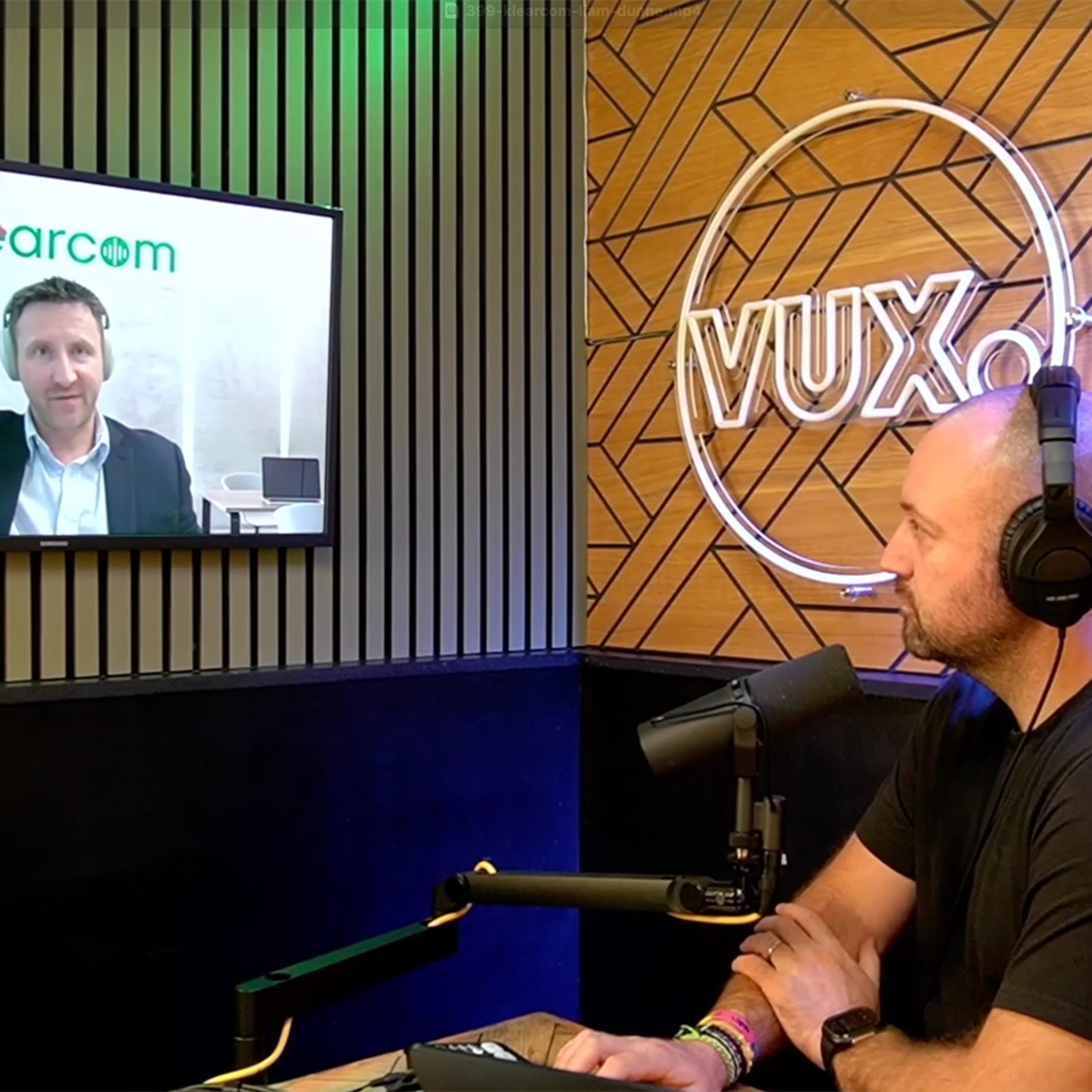
VUX WorldにKlearcom共同創業者兼CEOのLiam Dunne氏が出演した。ホストはKane Simms氏。前回の出演から1年以上たったボイスAIの変化と、実際の通話で何が起きているかを語り合った。ブラウザで動くボイスAIエージェントが、現実の通話では遅延や不通で機能しない。そのギャップが中心テーマだ。
「第4の大移行」とボイスAIの追い風
Dunne氏はコンタクトセンターの歴史を4回の大移行で捉えている。PSTNからSIPへ、オンプレミスからクラウドへ、DTMF(プッシュ音)から音声認識へ、そして今回の確率的に動くエージェント型ボイスAIへの移行だ。直近の四半期には、会話AIベンダーの単一四半期の成長が前年通期を上回った例もあると述べている。
背景には、人件費が音声で最も高い要素であり、取締役会が一部の通話をAIに任せるよう求めているという事情がある。一方で同氏は、利用者も単純な用件のためにIVR(自動音声応答)で待たされたくないと指摘する。AIが定型業務を引き受ければ、人間のオペレーターは専門性の高い仕事に移れるという見方だ。チャットは通話の抑制策として不十分に導入されたが、ボイスAIなら質を落とさずに同じ目的を果たせると述べている。
通話経路に潜む「第4の死角」
顧客が電話をかけると、通話はまず現地キャリアを通り、国をまたいで別のキャリアに渡る。その後CCaaS(クラウド型コンタクトセンター基盤)に入り、さらに会話AIプロバイダーへ届く。大手の多国籍企業は障害に備えて3社以上のエージェントプロバイダーを使うことが多いという。
各社が見られるのは自社ネットワークの区間だけである。そのため各ダッシュボードが正常でも、顧客はつながらない可能性がある。経路は時間帯やデータセンターの負荷で変わり、バックアップ側の設定が更新されておらず、昼の2時間だけ体験が変わった事例も紹介された。企業側の課題は、問題が起きたとき、どのチームを動かすべきかを素早く特定し、検知と解決にかかる時間を短くすることだと述べている。
実通話テストと複数チームの成功基準
Klearcomは、主要な国・キャリア・言語ごとにペルソナ(合成の顧客)を作り、外側から通話してテストするプラットフォームを提供している。確認する項目は、遅延、パケットロス、無音といった技術面にとどまらない。プライバシー開示が現地語で正しく再生されたか、問題が解決したか、不正な返金が行われなかったかといった点も対象になる。
Dunne氏によれば、成功の定義は音声エンジニア、プライバシー、法務、セキュリティ、業務・財務などで異なる。各チームが評価基準を作り、共通の証拠に基づいて判断できるようにするのが狙いだ。またテストと監視は補完関係にあると説明した。監視は起きた事故を捉え、テストは本番でも継続的に挑戦して問題を先に見つける。その結果を学習に戻すことで、エージェントの改善にも使えるという。
ラボと現地のレイテンシー差
ホストのSimms氏が取り上げたのが、レイテンシーだ。同氏によると、ラボやCCaaSのダッシュボードでは2秒未満と表示されても、現地からの実通話では20秒以上になった例がある。つながらなかった通話は会話AI側に記録が残らず、ダッシュボードは緑のままという事態もありうる。
フリーダイヤルは現地にいなければかけられないため、各国に拠点を持つ必要がある。さらに、キャリアのCDR(通話詳細記録)は24〜48時間で消えることがあるため、テスト通話の記録を各プロバイダーに渡して原因区間を切り分ける。無音はAPI呼び出しの失敗を示すサインで、2秒を超えると顧客が離脱しやすいという。
テストは必須に、2027年が転換点
多くの企業は、英語圏の市場で低価値の通話フローをまず公開する。そこで立ち止まり、非英語圏へのグローバル展開で手動QAの限界に直面する。ある大手小売の顧客は、各国展開のために体系的なリスク低減を必要としたという。Dunne氏は、テストが「あれば良い」から「大規模展開に必須」に変わったと述べた。
普及について同氏は、まだ普及曲線の始まる手前で、2027年に大企業から本格展開が進み、その後ミッドマーケットに広がると予測する。コスト削減、待ち時間の短縮、AI規制と第三者監査の需要が追い風だという。製薬の顧客が結果を25年保管する要件を出した例も挙がった。
業界統合と未来
後半では、AIが定型作業を肩代わりし、コンタクトセンターが不要になる可能性をSimms氏が提起した。Dunne氏は、CCaaS、CRM、会話AIの統合と層の平坦化が進むと見ている。ただ、裏側にはデータセンターや経路制御が残るため、接続の失敗リスクは消えないとも述べた。音声は電話番号にとどまらず、アプリの中など顧客のいる場所に広がると予想している。
まとめ
本回の要点は、ボイスAIの品質はAIモデルだけでなく、複数事業者をまたぐ通話経路全体で決まるという点だ。ベンダーのダッシュボードは自社区間しか映さないため、顧客視点の外部検証が欠かせない、というのがDunne氏の主張である。なお同氏は検証サービスの提供者であり、数値や予測は番組内での本人の発言だ。日本企業にとっても、多言語・多国展開を見据えるなら、現地発信での実通話テストと、チームごとの成功基準の整理が検討課題になるだろう。
文字起こし(英語・自動生成)
All right, Liam Dunn, welcome to the podcast, my friend. How the devil are you? I'm doing very good. It's a privilege, delighted to be on such a reputable podcast and talking about very exciting changes in the market. So, Trills, thanks for having me. No, you're welcome. Thanks for joining me. Appreciate it. You're a busy guy. I appreciate the time. So, last time, the diehard viewers of VOX will probably remember the last time we had clearcom on the podcast we had satish barrow the cto i hate holly's yeah he knows his stuff yeah yeah uh that was in july i believe 2025 over a year ago now so in that time as it relates to let's say voice ai voice in general what's changed whoa oh well that's a broad question right so much has changed and really I kind of like to use frameworks and conceptualize things
I believe and certainly in this last quarter I think the market indicators are there we're going through the fourth great migration and that is the migration to agentic voice AI, conversation AI basically true agentic implementation within traditional call center space and that's what's happening right now. And there's so much within that. They're kind of, if you look at the last quarter, Cain, you see all the conversation AI providers, they're all across LinkedIn and all the analysts are saying what an explosion they've had in the last quarter alone. And most of these providers have seen that single quarter growth has eclipsed the previous full year to date. so really we're at that fourth great migration and I think there's certain headwinds in the market that are driving all of this and it's just a hugely exciting time to be in our world
I think the whole contact centre world, call centre world has at periods had kind of a brand perception there about it's just all low value and really that's because I think we've done a couple of things really badly over the last number of years and Agentsic Voice, Conversational Eye, is actually putting us back into the fore in terms of a true value lever right across the business. It's not just about cost savings anymore. It's about efficacy. It's about scalability. And really, AI is caught up where we can do some really cool things at scale in voice. Nice. You mentioned there that, well, firstly, I think you're right in terms of the growth. I'm looking here. Eleven Labs has now, what is it, 600 million ARR by mid-26, up from 200 in what might have been the previous year. Valuation now, the valuation was $3.3 billion in January 25.
It's now worth apparently $22 billion late 26. These figures are, to me, in this instance, they're justified. This isn't just SaaS. This isn't just AI. There's real world examples of where all of these companies are adding value. We see it every day. It's not just them. It's all the providers in this space. So I believe that this is a new dawning for voice. I do believe that as well as this has been before great migration, we're entering a golden era of voice. Voice itself has so many benefits. it's nearly four times faster than typing, first of all. It's much more intimate in terms of it and instant in terms of a communication vehicle. And I think, you know, if I talk back to that previously, what our industry hasn't done well and it has had an impact. I think chat was something that has been executed really poorly. Chat was put in place in our industry as a way of deflecting voice calls. And it wasn't because the customer was actively looking for it.
It was a cost-saving measure and it was done poorly. And what's happening is the components of why we were driven to chat can be achieved through voice AI without sacrificing the delivery. And that's been the huge thing. So it is the real world. What I'm seeing voice AI achieve for enterprise customers in a multilingual, multinational complex scenario that's been delivered now, couldn't have been delivered a year ago, let alone two years ago. So it's democratizing voice. We all know, and sometimes I think boards are afraid to announce it, but the reason that this growth is happening is one of the reasons is cost, and because the most expensive component of voice is the human at the end of it. And boards are pointing to contact centers and saying, hey, can you take a portion of that cause that have been handled by humans and have agentic AI manage that?
and they can and they should because the benefits on everybody's side the consumer doesn't want to have to wait first of all the consumer doesn't want to have to dial into an IVR press digits, say keywords and wait three minutes before they get to an agent for a very simple task I want to speak to a gent of AI if it's a simple task for an account inquiry or an order update, I want to get straight to it and then for the agent side I come from that world my first job in college was in AOL doing tech support back in the days when you would dial in on the modem, you loaded your internet from a CD. And I was on the front line listening to all those simple technical queries that now in this world, an agent is too highly skilled and highly valued. Actually, what it's going to do is it's going to move the human capital up the value chain and it's going to increase the value in terms of how that human contributes contributes to the call center world overall. So I think this repositioning, it's going to help kind of,
it's going to democratize, but also going to take away a lot of that grunt work so that human capital in the call center world will really become subject matter experts. And it's going to, I believe genuinely, it's going to reignite the whole contact center world and industry overall by this one massive paradigm shift. And I talk about it at the outset as the fourth great migration. So again, I'm here all my life from my call center work back in 1999. I'm giving my age away, right? Back in the old days where you had server rooms that eyes the inboxes and nobody could even look at the door of the server room unless you had the right security clearance. So we went from, you know, PSTN to SIP, first one. Then it went from on-prem to the cloud. Then we went on our third one, DTMF to speech. It wasn't AI, it was machine learning. and now the fourth great wide nation is moving to this probabilistic world. And with that comes challenges that have to be de-risked. It's not just a technical deployment anymore.
If a company chooses to utilize agentic AI, it's a business decision. And there's many more teams and many more board seats that are looking at this. So as a result, when it comes to the risk of deployment, it's much more business encompassing than what's gone before us. and you kind of explained something last time we spoke which I think was quite interesting in terms of you're right it's a business decision it's now a boardroom conversation AI it's not kind of like an experiment anymore it's not an innovation thing anymore it's well and truly like companies are deploying this on the agenda if you're not doing it you are truly left behind I don't think I don't think both the enterprise or the consumer will settle for businesses when they talk about communication channel not deploying the agent to AI because the scalability is there for both sides. So this is an actual fundamental need in deployment. Absolutely.
With that then, it means that it used to be that certain teams that are deploying this technology could get away with a little bit more because the business isn't looking at it quite as intently as it is now. so the risk is great not only because of the probabilistic technology as you mentioned but also because everybody's eyeballs are on this now whereas it wasn't before and when I think what a lot of businesses probably don't appreciate is when your customer makes a call to your voice AI agent it's not just their phone connecting to your voice AI agent There's a whole load of stuff in the middle and a whole load of dependencies in the middle that can turn something that you've built, and when you test it in the browser, it's fine, into something in the real world that actually doesn't quite work quite so much. I wonder if you can shed some light on what's going on behind the scenes when someone calls your voice AI agent. Where are the dependencies? And getting around to what ClearCom do is how do you validate that those dependencies are in safe hands and are actually performing like they should do?
Yeah, it's interesting. Ultimately, what people don't realize is that this lands on data centers and hardware in so many different instances, and so much can go wrong. So in that question there, what's great is you're surfacing challenges that the market needs to be aware of. So there's risks across multiple different levels. One of them, to answer this question, is around that technical deployment. So I pick up the phone and I ring a toll-free number in any country. It's many links in that telecoms chain that sends the call from customer to agent. So first of all, you've got the local in-country carrier. So typically, businesses will deal with an aggregate services like Tata, BT Global Services, AT&T, the new guys like Bandwet and so on, right? And those guys will all have their own individual network. but outside of the network, they're blind. They can't see what's happening. So when a call lands onto a carrier network,
it has to distribute internationally. It's no different to the country. Network BT can only see what's happening on their network in the UK. Air in Ireland here, AT&T in the US and so on. Physically, the call has to transfer across networks. And that's just the first leg. That's the carrier leg. Then you've got, and within that carrier leg, there's multiple different data centers and routing and hops within each one of those countries. Then you've got the CCAS leg, which is it's landing in on your Genesis, your five nines, your nice, your eight by eight and so on. And those guys have their own network. And again, within their network, they can only see what's happening on their own corporate network. They're not in within each country. And then from there, it goes into the agentic voice providers. And what we're seeing as well is for the large multinationals, they're typically deploying minimum three agent providers because you don't want to rely on just one provider for all of their call management in case, obviously, if there was a major outage for whatever reason.
So what we're seeing is that there's minimum three links and before it gets to the enterprise. So that's four links with individual data center locations, individual connections between each one. And one thing that's clear in all of this is that each provider can see what's happening on their own leg of the chain. But I could have my conversation AI working correctly, but the call coming into my CCAS from my carrier that ultimately sends into the conversation AI might be working. So there's a blind spot in all of these deployments, what we call the fourth great migration. The conversation AI creates the fourth great blind spot because it's another provider in the tech stack. It's another link in the chain. and what that does is it presents, I suppose, a challenge to enterprise customers but when something goes wrong, how do I pinpoint it? What team do I scramble to investigate if I've got all these different providers and how do I ultimately have my mean time to detection and mean time to resolution
as optimum as possible? So to lead it on to my company and my side of the house, and thank you for getting me there, we've basically built an HMTKI platform that allows our customers to generate personas in all the major markets, using all the major carriers, and using all the major languages, and testing it like a synthetic, or we call it a digital customer, it's an agentic customer in each one of those countries. And we're testing from the outside in across that carrier network to ensure each link in the telecoms chain works. And if there's any issues, then we're pinpointing and stating to our customers where that issue has arisen. So we're effectively like a persona sitting in each market. And when everything works, you've got a quality confidence metric. You've got a benchmark on performance. And when there issues we simply telling our enterprise customers which team to scramble to resolve it So am I understanding this correctly then If I call let say I on EE in the UK and I call for one of the better examples let
say I call my bank and my bank has a call centre, let's say in the Philippines. so am I correct in my understanding of my call leaves my phone on the EE network which presumably I think is probably using BT's network or what have you then BT transfers it to the CCAS of choice for that provider well first of all BT will have to, it depends where you're calling from so they're going to, if you're in the UK and that call centre services are Philippines for example, that call has to be routed to the Philippines, then into the CCAS provider, and then into the agentic AI provider. Right. And all of that. Each one of those providers have different data centers. So they can only see what's happening on each individual leg. It's like the reporting that all the providers provide to end customers will give a dashboard in terms of what their leg, if you think about it in links, what their link in that chain
is how it's performing within that link. And we give them to see from the customer's perspective in that local market, in the UK in this instance, regardless of what topography it's taking to get to the end destination. Because all of that routing, that change is based on so many permutations. The carrier can route calls based on time of day, based on data center volume. The CCAS provider is the same thing. It might be that, say, CCAS A has a data center in London and Frankfurt and Dublin over here in Ireland. And depending on certain times of age, that routing can change. The same with the conversation of the AI provider. And remember, these guys are growing so fast. They're spinning up new data center instances every week and month. And all of that adds complexity. That changes in real time. But the customer should not be affected by those real-time changes, but they are. And that's where you have to provide the capabilities to test from the customer perspective.
We've got a cane sitting in the UK, and cane's persona is testing and validating that he can get through to that bank, that service provider, that credit card, that pharmaceutical company. And if he can't, we're saying, don't leave cane, raise the alert. don't leave the dependency on disgruntled customers and stakeholders use clear call we'll find it before the ouch becomes sticky and affecting your wider customer base Right, so that call then that leaves my phone goes to the BT network, goes to the Philippines goes to the C-Class, goes to the Gentic Eye platform is it that the BT network remains hosting that call the whole time or is it passed off and then that's disconnected from that network now and then it becomes a Philippine network problem and then it gets passed on to the CECAST then it becomes a CECAST problem It's great, you know yourself because remember BT will own it's no different to a country
they will own their network in that market and then the call physically has to traverse to the other country and jump onto PTL or whoever it is in the Philippines and so on And that's in a very simple, basic scenario. If you're a multinational with multilingual capabilities, with toll-free numbers all across the world, it adds. It's like inception. It creates a problem within a problem within a problem. And all this routing can change. All those four links, not just the carrier, but the CCAS, the actual conversation AI, and the enterprise themselves, All of that routing can change in real time depending on whatever complexity. We have an example of a customer whose backup site is supposed to kick in based on redundancy or base and capacity examples. And what happened was the backup mirror had not been updated. And as a result, the calls just literally changed from one time of the day.
I think it was like between 12 and 2 p.m. And suddenly their authentic AI experience was completely different because one of the vendors down in the tech stack, down in the chain, had not done a mirror on this backup on their site. So there's all of these elements that create the complexity. The challenge is knowing when. And ultimately, the challenge, I suppose, really is about making sure that your mean time to detection is as early as possible. so the customer doesn't become impacted and it doesn't become a systematic issue. The sooner you can identify, the sooner you can resolve. It all comes down to, like my customers will always say to me, when we work to the three hours, replicate, repeat, and remove. Issues are not a challenge, unless they're not that scary word in front of them, intermittent. Nobody likes that word, intermittent, because it's very hard to replicate, repeat, and remove. But if you can replicate it, force, find the issue, remove it, that's where the best practice is in terms of all this area. And it's funny because we move into this more cloud-based world.
Everything is cloud-based. The issues are still there. It's just we're moving them down the chain because I don't have the data centers, but the carrier has the data centers, the CCAS has the data centers, the conversation AI has data centers. But your customer doesn't care about that. Your customer is ringing your toll-free. They're ringing 1-800-VUX. and when they get to that they want cane services to be up and running they don't care that canes ccas provider agentic carrier whoever it was is causing the issue they'll blame you so the important thing is that you as an enterprise if you own the number you own the customer and when that's going good you own that positive views you're getting everywhere and when things go wrong you have to own that as well interesting so what are the kind of things that you're looking for when you're doing that kind of testing then? Is it that you're looking for, like, calls dropping between one network to another? Are you looking for impact on latency? Like, what is it that you're kind of looking for? I would say, like, all of them, right?
But that's with one simple view of just the technical component. And I think you articulated it really at the outset. When a business decides to apply authentic AI, the business is deciding, okay? So what that means is that the agent speaks for the business overall. And what technical thinks looks good, there's other teams that are involved in selecting or making the decision to deploy agent to AI. And what looks good for them is different as well. So that technical point is really important. The latency, the packet loss, the silence, all those elements that you'd expect. But other elements that we're seeing coming into it is privacy, for example, whether the right to disclosure was given. in a local market, in that local language. I don't know what your Japanese is like, but can you tell when, if you're looking at your transcript of a Japanese call, that the privacy statement was correctly played, or the customer operations asked whether the problem was resolved.
So never mind the call being answered successfully or being terminated to your agent to the AI, and it obviously stating the correct disclosure statement. Was the problem resolved? or was there security scenarios where a refund was incorrectly released and that they had no right to? There's more than one team now. There's like minimum four teams. There's one conversation, but there's four different definitions of success is what we're seeing. And really how we've come at this, Cain, is that we see us as kind of a business risk operating system, right, for multinationals deploying multilingual, authentic conversation AI. so what we do is we give each department the ability to create evaluators and so that they can determine what success is like for each one of those departments but from a real world perspective independent of all the providers and making sure that we provide the live risk evidence for each one of those teams
because like I said at the outset this is now a board driven decision it's not a technical only deployment it's a business deployment so it is so it's one operating system for assurance but every team gets to own their own set of standards if that makes sense and so when you're referring to these teams are you referring to presumably it's like the contact center holistically is your predominant kind of like user base and then different teams within that contact center will set things up slightly differently depending on what they care about is that right exactly so like you might have a voice engineer and he's all about RC, reachability, routing, audio quality and so on. Ultimately, the carrier leg is up, the CCAS leg is up. You might have a privacy and data team and they've got approved geographic disclosures and ways of handling information in local markets and they have to make sure that nothing
unauthorized is disclosed. Then you've got legal and compliance, and their job is to make sure that approved policy information, requirement standards, all of those adhere to the local legal requirements. And then you've got the customer and the operations, you've got financial and commercial. Security is a huge thing. Identity checks and resistance to control bypasses, that's a huge thing. So as you try and barge your way through agentic AI, again, add the complexity of multilingual, multinational, and you can see how businesses, it's not just can I technically deploy agentic AI? When I do deploy it, how do we mitigate those risks? and a big thing as well is being able to provide enterprises with one shared body of evidence one clear ownership of every standard and then one true view end to end and by using a third party, not just like us but anyone in this industry
what we're doing is ensuring that all the providers are adhering and working correctly but also them as an enterprise in terms of their requirements in each local market has been adhered to as well so that's where we've come in you know and is that more of a monitoring thing then or is that a testing thing because if you need to make sure that certain legal things are happening, certain notices are being read properly, you're abiding by GDPR, AI Act all this kind of stuff like that seems to me to be something that needs to be done on every call as opposed to necessarily something as well as perhaps something that needs to be done as you're kind of building something so where does it live in terms of the life cycle of kind of an AI project? Is it a testing thing? Is it a monitoring thing? Is it both? I think there's kind of multiple layers to this. It depends on how the business looks at mitigating risk. You've kind of got your lab testing, your pre-production, shall we say, if we equate it to the old world, and that's validating that everything works before
it's deployed live on the TFN in country. And observability, I always struggle with that world, it has an important place in all of this. But with observability, you're capturing the issue live as it's affecting your customers. With real-world testing, you have to actively challenge the deploy journey. And you're not just doing it before release to customers, you're doing it throughout production, you're doing it against each department's standards so that you're capturing in real time. And you're helping, again, all of our customers, what we're seeing now is they're using our test results in real time to help that reinforcement learning. So what they're doing is they're taking those live results and whether they're successful in a quality confidence metric or whether it's an issue that we've captured that maybe, say, there was an unauthorized refund, for example, they're all being fed in real time into the conversational AI platform
or ultimately the underlying LMM so that everything is learning. So I suppose what we're trying to do with all of this here is a correct way of looking at this is that looking at them in an individual way is important. You're going to have different stages of release. But there's only one way to truly test both negative occurrences and the actual, say, happy paths as well and ensure that that reinforcing learning is continuous. And that's true testing. so from our perspective what we're seeing is customers want both but to truly train the LLM and the conversation AI you have to test observability will capture the crash has already happened but what we're doing is we're effectively crash test summies and what we doing is effectively testing it and making sure that training and learning reinforcement learning is reinforced so that you as the end customer don become the crash test on me you know
that makes sense um one of the things i'll put these i'll put these uh links in the show notes i was just i was looking at the agentic assurance uh web page that you have and one of the things that you kind of alluded to a little bit earlier on was about the kind of personas that are created that make kind of local calls in the respective market. I kind of, I understand that, I think I understand, and it'd be good for you to shed some light on this, I think I understand the idea of making the call from the local market because that's where you're going to actually test from end to end the reality of the thing. And we've seen lots of issues. In fact, I had a conversation, I think it was with Seenly AI, and we were discussing about latency issues and stuff like that. And all of these AI agent platforms, some of them at least, have like a view of latency. So there'll be like a little bar and it'll be like, okay, what's your latency? Estimated latency is like two seconds. And then within that, you've got this is made up of speech recognition and speech generation and models and this, that, and the other.
But that's just what it's like either in the browser or in that range. Exactly. So it's like when you actually visit a call and you record the call, the latency is miles away. the deviation that we're seeing from what's been reported in the lab versus the real world is actually significant so we're seeing like say latency shown as less than 2 seconds in the lab environment and within a CCAS dashboard and when that's supplied live in country we're seeing a vanishing 20 seconds plus like the impact is significant and how it I suppose highlight really how important that is. A call that never reaches the conversation AI platform may leave no record in its dashboard. Now think of that. So your dashboard and your conversation AI is showing everything is green, but your customer is sitting in 110 plus countries if you're a multinational using all these different languages
and could be having significant issues, but that dashboard is green. So a correct-looking transcript may conceal a misheard digit. Or a quiet meek, say, may contain no examples of a vulnerable caller requesting an exception. An absence of alert is not even evidence for those scenarios. You know, you need to test exactly as a customer experiences your company's customer experience. You have to dial in-country. And another thing to add on for the audience to be aware of, if in particular, if you're using toll-free numbers, okay? If a toll-free number, a free phone number in Europe, you can't ring that number unless you're physically located in that market. So the free phone number that you'll dial in the UK is different to the free phone number in Ireland. And I can't ring yours and you can't ring mine, okay? So the only way to test and validate that entry point is to have
POPs like what we have within each country so you can generate the test call locally. And even if you don't have free phone numbers, if I ring your number in the UK, it's going to take a different path to you ringing it because you're dialing there. So again, whether you're free phone or non-free phone, the only way to be absolutely clear that your customer can get you to your services is to be able to dial exactly as your customers do across Fix the Mobile with all the major carriers in that market. and that's just the first leg. Then, to prove the conversation in the AI works, you have to be able to generate personas. So that's just, it's Kane in the UK. It's Liam here in Ireland. And typically, you will create a persona that matches the profile of your customer base. So if they're typically dialing in London from BT or Vodafone or wherever it is, you'll create a persona that is a London accent, background street noise, dialing again from within country
and validating that that persona, depending on the use case, because obviously you have to give the context around what you want them to do within that persona itself. And then you create all these evaluators depending on success for whether it's data, privacy, compliance, whatever the case may be. The only way to ensure that that's working every time is to be able to do all of that in country. With one single test, that can dial across the full tech stack end-to-end. And another thing as well that's really important, you've got to make that simple. Like with us, you can create a persona, set up your evaluators. You can do it all in minutes. You can be up and running globally within a few hours and testing and validating that your authentic AI is working across all those major markets. And nobody else can provide, solve this for this problem in the way that we can do it. That's the plug-in for us. One of the things that,
the reason I was kind of asking about the latency element is that, well, I want to get back to personas in a minute and touch on some of what you touched on there, but I want to just wrap up on this latency thing first, because let's say that you are, let's say that the platform that you use reports really great latency, and you deploy it in the country that you deploy it in, or the countries that you deploy it in, and then you realise actually the latency is really bad. I know we're getting hung up on latency here, but I think it's really important because latency does damage conversations. So let's say that you identify that the latency is poor. What are your options to resolve that? Because if it's not sitting in the platform and it's something to do with the network, have you got any levers that you can pull to affect any of that type of thing? 100%. I like that you're doubling down on this, right, because like we were talking about, one dashboard from one provider can indicate everything is green. But when that customer dials in that local market, what we're seeing is that the true in-country experience of that customer
can be vastly different. First thing is if you don't measure, you can't know. So you have to measure that customer side things. And then what you need is you want one true view so you can liaises with all your providers. So that means that you need one single test. What we use in our world is the CDRs, the call detail records. So that's a trace that when I'm speaking to my CCAS provider, when I'm speaking to my agentic AI provider, when I'm speaking to my carrier, they have to be able to trace these test results within typically 24 to 48 hours or disappear from the system logs. You can imagine a carrier has hundreds of thousands of customers, millions of calls logs. The CCAS providers are saying, The agentic conversationally voice providers are the exact same as well. So you have to be able to give them the information that they can trace internally because it's not a game of you versus them. They want to resolve these issues, but they need you to help them. And the only way to do that is to be able to give them multiple CDRs
across multiple carriers and help them isolate the issues so that they can resolve it. So you're able to take that one single view and share that with your respective providers to help them see which link is causing that issue and ultimately improve it. Because remember, we're generating these test calls locally. There's the CLIs or the ANIs. You can see them on every test. So when we're reporting and we have a whole managed service around this as well, not to keep bringing it back to ClearCom, but we've been managed service on this, Cain, where we can actually manage this on behalf of our customers. So we're like an outsourced knock. So we're not just testing in an operating system. We can do all, well, we do all the triage, so you don't have to, but then we can liaise with the respective providers directly. But you have to do it in a collaborative way. It has to be genuinely simple for them to trace on their system logs. And then once you do multiple tests over multiple day parts and help isolate when this is typically happening,
that's when you can affect change. And so it is. But 100%, we see all of the latency and all of those issues, like silence and blind is a huge one. So silence and blind is an indicator for us that some API call hasn't worked. You know, your call has been answered successfully. The carrier has done their part. Agent AI kicks in. But say you're at that stage of giving an account number or some security information and suddenly silence kicks in there, that's when customers just freak out and start hanging up because I think that's over two seconds pretty much. We're not waiting for that. And that's going to become more pertinent. There's a rush to deploy agency AI everywhere. Ultimately, it's going to depend on the pipes to deliver that computing capability. So its delivery is dependent on the underlying service layer. And that's why the likes of us exist.
Because if you think about what's involved in that stack, that delivery stack, you've got the AI models like your chat EPTs, your Anthropics, you've got the AI applications, you've got your CCAS, your voice AI, you've got the carriers. And because of that data-centric topography, you need AI assurance. And that's where we come in to help our customers de-risk the deployment across the world. and what if I mean the challenge with all of this by the way you're preaching to the choir with all of this kind of stuff the challenge I suppose it'd be interesting to get your thoughts in terms of what you're hearing from customers is that I don't think that there is a proper appreciation of the importance of testing and validating these probabilistic technologies and then you've got the additional challenge of trying to get people's heads out of the platform
the AI platform and trying to help them understand that this conversation is going to take place in the world in a broader environment with lots of different moving parts so what I see typically with businesses not just with Voice AI but AI agents, tech space as well is that there is a big pressure to just release them just get them out there so it's not maybe they maybe they maybe they know that they should be perhaps doing more when it comes to testing but it seems to be something that i often observe being skipped do you see the same thing and what was what's your advice to companies that are in that kind of situation where they're under pressure to get something out the door and they're struggling about how do we apply resources for testing when we've got to build this thing and all that kind of stuff like what's your what's your thoughts on that from the the multinational perspective what i see is there's a race to deploy some in conversation AI in typically
two markets and typically starting off in like north american or uk or an english-speaking market and that's just to get to the start line and then what's happening is there's a pause because after getting to the start line, the real enterprises are realizing that there's significant complexities about deploying globally at scale in a non-English world. And that's where we're seeing actually a flip. So up to that point, up to the old world, I think testing is seen as a nice to have. I think now it's been seen as a mandatory to deploy at scale globally. So while there's a race to just start and to kind of ease the pressure from the board to be able to say, we started on this and we've got two call flows, which are low-value call flows with not necessarily front line, but it's been deployed. And what they're discovering is that the QA process is so manual
and so cumbersome in just that simple example. To deploy that globally is a much more complex thing. So we have a very large retail customer. who did that, got into one market, realized the complexities and needed a way to systematically, programmatically de-risk that deployment globally. And actually, we were told in our early access days as we were A-B testing a lot of this with our customer base, we were actually told we need to speed up ourselves as a service provider because they can't roll out because we hadn't rolled out at the time. So actually, I see there's a huge shift now from getting to the start line, which is saying I'm using some conversation in low value capacity to actually deploying it at scale to different worlds. And it's only getting bigger. I think you mentioned it at the very beginning of the call. I have to try and dig out the study that I found I can think of where it was now but I come across something recently which surprised me in that the adoption of voice AI agents was actually frighteningly low I thought it was going
to be like miles bigger than it currently is because that's all I've been doing for the last eight years it's all you've been doing for the last however long so there's enough of a market it there but the point of this piece of research was saying look this is so early and the interest over the course of 2026 has been so much that the i think it might have been gartner they're forecasting like the the rise in adoption is going to be going through the roof over the next kind of few years which i can completely see but i'm wondering if if you know what's your perspective on where we are now where we're going what does the future look like yeah i think when we look at Now, in terms of that bell curve of adoption, we're at the very bottom. I don't think even we're at the bottom. We've got the innovators, the blue chips, who want to lead and are investigating. I think we're only at that stage. I think we haven't even started the bell curve. I think 2027 is going to be the year where voice steps into the limelight
and is going to be deployed at scale. If I just take other soft indicators like customer queries, inbounds, that type of thing from even just us as a business. I speak to all my peers all across the world, whether they're competitors or an adjacent business. We work a lot with the carrier world as well. We can test every single voice conversation AI provider in the world. So it's small. You know this game. We're in a small world. It's about to get a lot bigger next year. We're going to start with the large enterprise adoption curve, right? And then what's going to happen is that innovation is going to move to the core. We're going to see a whole spread of mid-market adoption. And as everybody looks up to the large enterprises, and if they're doing it well, how can it deploy mid-market? And we're going to see this kind of natural, cyclical approach to adoption of any technology. I think the next three to five years, it's going to be a systematic, programmatic approach.
to moving away from IVR. The savings, I have one customer who's saving $20 million on called costs alone by moving to Conversation A, and that's just the phone bill, nothing else. You can imagine the cost savings everywhere else, not just in terms of human capital, but all the other elements of the business and training, support, and all those things. The compound effect is so significant. The benefits are so significant. but what we're seeing is that in terms of the adoption curve from the customer side as well, they are so happy that we don't have to wait in queue. Like look at Spain. Spain are bringing in their own legislation where nothing more than three minutes in terms of call wait time, so you have to dial back in. Look at the, everything I'm talking about here, look at the other headwinds. I'm talking about soft indicators from us, the business, but look at the headwinds. One of the massive ones is going to be AI regulation. and look at all how that's coming to the fore now in the next 24 months.
Look at what's happening in California, what's happening in New York versus happening in the EU. Even in the EU as a whole, the individual countries, APAC, there's so many legislations that are going to drive the need for third-party compliance and auditory. We have another customer in the pharma world who have asked, can we store results for a minimum 25 years? because there's a particular oncology drug that when customers deal or engage with that particular voice spot, we have to be able to provide those test results and store them for a minimum of 25 years. And that's just one element. Can you imagine all the different industries when the AI acts kick in, what dependencies and third-party audits are going to drive in all of this? It's hugely exciting. We're not at the start line yet. We're coming up. We're in the blocks. We're about to get to the start line. 2027 is where we hit goal. Nice. And it makes me think, you know, a little bit about,
we're at the very beginning, it seems. I always say this, and it always seems weird to say, because, you know, I've been working with Voidstai for, you know, nine years almost, and it feels to me as though it's obvious that the rights have been on the wall this whole time, and I'm like, what's taking this off? You know, you and I were in this bubble of, why isn't it going faster, or why aren't they moving more? really it was it was the probabilistic nature on what lmms can truly discern on themselves and the fascinating thing in all of this is that there's only so much we know it's no different to a human like i hand you a script and kane has to go and learn that i don't know how kane learns that the lmm is no different but i can test and validate that you have learned so a lot of the characteristics of the human experience as call center agents are being transferred to the LLMs, we still have to test and validate because you can have good days and bad days on the phone. I certainly did. There was days where I was answering fast. There was days when I was hanging up. I
probably should admit that. But anyway, it happened to the odd time. But all of that's happening now in the agentic AI world. The conversation AI bots are hanging up as well. You have to test and validate. You have to reinforce them and learn. If those real-time alerts to discern who hung up. Was it you as the customer or was it the agent? All of those characteristics play out in LLM no different to a human and we have to test and validate. And it's just, there's so many benefits of moving at pace, growing at scale. And the fact that multilingual, the big difference in the last year has been the multilingual capability. The fact that we're able to step outside of North American English, it means we've got true global scalability. And that was probably a factor as well in terms of when I see the adoption, like customers race to A-B tests as far as English. But if I want to truly adopt agentic AI, I need to be able to do it on a global scale to get the global benefits. And that's where 2027 is going to be all about.
What about kind of, I know it's hard to sort of pontificate beyond that, but I can see a world where, you know, I wrote about this recently on my sub stack, which is all about what I've called like the people in the middle, which is that what AI is incredibly good at is taking the grunt work and the mechanical elements out of a process. and so really to you know if I look at the way that I use GrokBot we run a lot of the kind of marketing and content side of things all through GrokBot and it takes away so much of the mechanics that it's all the stuff that you realize you used to spend a lot of time on but it's just kind of like the thankless tasks all that really matters for example is this conversation we're having the insights that we get from this conversation and getting these insights in front of people that would find them interesting so the the creation of the insight is important
they're getting it in front of the people that matter is important but everything else in the middle is just mechanics and ai is so good at the mechanics and i'm just using a very simple example here of content marketing but how many businesses in the world do content marketing And if it can do content marketing, then what else can it do? So most businesses, in fact, all businesses are essentially just a series of people fulfilling processes. But AI essentially can take the mechanics out of the process, and therefore the people are not needed in the process. And I can entirely see a world where the contact center, as we know it, really doesn't need to exist. Because the mechanics of the process can be figured out by AI, and as long as the input is found and the output's got some kind of validation on it, you know, you require significantly less people. And then if you're going down that route, then... Which is a serious radical. Yeah, which is a serious radical. And there's much bigger implications than that.
But like, you know, let's just say that we're on that sort of path. Then you also have to ask yourself the question of, well, what is the infrastructure that all of this stuff exists on? And is it telephony infrastructure and contact centres or is it internet infrastructure and AI agents? Does that make sense? What I'm asking is, do you see a world in which actually the contact centre at some point actually doesn't even exist? I think what we're going to see is we're going to see just so much kind of consolidation and layers collapsing and we've seen it even in the CCAS world over the last number of years a lot of them have been eating up each other there's no doubt the same is going to happen with Conversation AI then we're going to see probably a blending of CCAS with Conversation AI we're already seeing CCAS and CRM blending so what we're seeing is that
probably from the public perspective we're seeing companies merge but underneath that tech stack there still is data center topography, there's still call routing there's still complexities in terms of my I suppose my need to be resolved a call, a connected call to business can still fail for my personal outcome because I didn't get my call resolved. But I do think we're going to see a natural flattening of the constituent components that make that up. And that's what AI has done. But even before that, moving from PSD and SIT, moving from on-prem to the cloud, naturally it flattens the amount of links, the amount of components. So we're naturally going to see all of that. But I do see that we're going to, from a voice perspective, it's going to become more ubiquitous. It ain't going to be just on a phone and dialing a number.
It's going to be within the apps. It's going to be within wherever the customer sits and wherever you are as an enterprise, what's as frictionless as possible in terms of me getting to you to resolve my query. That's going to naturally collapse over time and become as least frictionless as possible for the customers. and AI, you know, that was going to speed that up. And God knows where that's going to go, Cain. That's for another day. That's for a couple of points in the pub. Absolutely. And we're already seeing exactly what you've described there. You know, even in the last two weeks, you've got, you know, Five9 acquiring Level AI, Salesforce acquiring Cresta, before that it was Fin. You've got all this stuff happening where CRM providers, CCAS providers, before that it was Nice and Cognigy. Then you've got Automation Anywhere acquiring Boost AI. all of this consolidation is happening to a point where I think it all kinds of ends up in some kind of like, I don't know, if you want to call it a customer experience management platform for one of the better ways,
which is CRM, CMS, you know. It's not call center by itself. It's like, it's a way of working. It's an operation system. I see it as a, it's more, it's the customer focused operation system. There's a big difference there because the operating systems that previously existed were limited based on the technology that was available at the time. But now that technology has caught up, we're actually putting the customer first and how I as a customer want to engage with you as a business. It's not dependent on your tech sack. It's dependent on how I want to engage with you. And that's why things like value in terms of the customer, ultimately, you can't rely on disgruntled customers and stakeholders to be informing you as an enterprise when there's issues with anything. It's just not good because they will take that and complain about it, tell them people and move to competitor. We're moving to an era, I think we're there actually, where poor experience, I don't even want to say customer experience, just poor experience will not be tolerated.
It means we want instant value and instant positive outcome. And anything that helps the enterprise deploy that, train, highlight and realize real-time issues, it's what's important for the next number of years for the market. So they get as frictionless as possible, you know. Brilliant. Liam, this has been an absolute pleasure thank you so much, really really good stuff I'll put the the Gentic assurance links into the show notes I'll stick your LinkedIn in there as well clearcom.com for those of you that want to jump there right now clearcom.com and yeah, thank you so much it's been an absolute pleasure Love it, hope to see you again sometime Absolutely, nice one, appreciate it Thank you all for tuning in, and we'll see you again on the next one. Thanks now. Bye.
番組の概要欄(原文)
<p>Your voice AI agent performs great in the browser. Then a real customer rings from another country and you have 7 seconds latency. Worse yet, the call never connects in the first place and you don't even know about it.</p><p><br></p><p>Liam Dunne, Co-founder and CEO of Klearcom, joins us to talk about what really happens between a caller and your voice AI agent. We discuss why agentic voice AI is the fourth great migration for contact centres, why lab-test latency and real-world latency are so far apart, how in-country personas test the whole customer journey in situ and why testing is becoming mandatory for anyone deploying voice AI globally.</p><p><br></p><p>Chapters</p><p>00:00 Welcome back to Klearcom</p><p>00:36 What's changed in voice AI since 2025</p><p>07:31 Voice AI is now a business priority</p><p>13:26 Following one call from your phone to the AI agent</p><p>19:35 What real-call testing looks for</p><p>24:11 Testing or monitoring?</p><p>27:02 In-country personas and real-world latency</p><p>32:06 How to fix poor latency</p><p>36:47 Why testing gets skipped</p><p>40:13 Voice AI adoption and why 2027 is the year</p><p>46:46 The people in the middle and the future of the contact centre</p><p>51:18 Consolidation across CCaaS, CRM and conversational AI</p><p><br></p><p>Links</p><p>Klearcom Agentic Assurance: https://klearcom.com/agentic-assurance-on-real-calls-klearcom</p><p>Klearcom: https://www.klearcom.com</p><p>Previous Klearcom episode, From IVR to AI with Satish Barot:</p><p>Watch on YouTube: https://www.youtube.com/watch?v=3evzm0nnFSY</p><p>Read on VUX AI: https://vux.ai/from-ivr-to-ai-the-future-of-voice-testing-in-contact-centres-with-satish-barot-klearcom/</p><p><br></p><p>Guest: Liam Dunne, Co-founder and CEO, Klearcom: https://www.linkedin.com/in/dunneliam</p><p>Host: Kane Simms, Founder and CEO, VUX AI</p><p><br></p><p>Follow Kane on LinkedIn: https://linkedin.com/in/kanesimms</p><p>Find out more about VUX: https://vux.ai</p><p>Subscribe to The AI Ultimatum Substack: https://open.substack.com/pub/kanesimms</p><p><br></p>
出典・この記事について
- 番組
- VUX World(Kane Simms)
- 元の回
- Why voice AI agents pass in the lab and fail on real calls: Liam Dunne (Klearcom)
- 配信日
- 要約作成日
- 公式サイト
- vux.ai
この要約・解説記事は、元の音声を文字起こしした内容をもとに AI(Claude)が日本語で作成したものです。 固有名詞や数値に誤りを含む場合があるため、正確な内容は元の音声でご確認ください。制作方法について
関連エピソード

すでに機能している企業をどう変革するか――Leidos CIO アレクサンドラ・ギュンター氏に聞く
The AI in Business Podcast
連合学習でエージェント型AIを強化する:Flower Labs の Lorenzo Sani 氏に聞く
Practical AI

AIがブランド価値を剥ぎ取る:Matt Clare(UJet)との対談
VUX World

AIモデル投資の前に決めるべきこと:「仕事」を定義してからモデルを選ぶ - Salesforce Melissa Ramey氏
The AI in Business Podcast
Codexで「もっと良いDuolingo」を作った創業者 William Imoh
How I AI

AIエージェントを作った後、どう統制するか:Lyzr AI共同創業者Ani Narayan氏に聞く
VUX World