
計算速度で回すラボ・イン・ザ・ループ — Ian Quigley(Leash Bio)
Lab-in-the-Loop at Compute Speed — Ian Quigley, Leash Bio
計算速度で回すラボ・イン・ザ・ループ — Ian Quigley(Leash Bio)
Latent Space: The AI Engineer Podcast
要約
Leash Bio の CEO Ian Quigley が、DNA コード化ライブラリ(DEL)で数十億規模の低分子―タンパク質結合データを集め、機械学習に使うまでの経緯を語った回。Kaggle コンペでの未知ライブラリへの汎化の失敗、ChEMBL に潜む「化学者の癖」の問題、Hermes モデルとポケット破壊変異による検証、そして LLM エージェントが SAR を探索するサンドボックスへの展開が語られる。データ品質への徹底したこだわりが一貫したテーマである。
この回のポイント
- ●DEL は DNA バーコード付きの低分子を一度に混ぜて標的タンパク質で釣り上げ、配列解読で結合を読む手法。Leash は1分子に32〜48個のバーコードを付け、DNA 自体に結合するタンパク質による偽陽性を見分けている。
- ●Kaggle コンペでは約40億件の測定を公開したが、約2,000チームのうち未知の化学ライブラリでは誰も偶然以上の精度を出せず、問題が未解決であることが確認され、データ収集に注力する判断につながった。
- ●ChEMBL の分子から化学者を top-5 精度60%で当てられ、化学者確率ベクトルだけで活性予測しても構造と同程度の性能が出た。公開データは「社会学」を学習させかねないと Ian は述べている。
- ●自社データのみで学習した Hermes は公開ベンチマークで Boltz と同程度の性能を示した。一方、注意マップからタンパク質の「あだ名」を記憶していると分かり、結合ポケットの変異体を大規模に作って再スクリーニングすることで改善を図った。
- ●最近は LLM に自然言語で SAR を推論させ、650万分子のデータベースを予算100分子で探索させるエージェント環境に移行している。事実に根ざした強化学習の場として有望だと見ている。
- ●競合に対する防御は、バッチ効果などの実験上の落とし穴を潰し続ける文化と忍耐にあるという。ルマカフトル類似の化合物がヒットする現象をタンパク質のミスフォールド検出に使う例も挙げた。
章立て
DEL の仕組みと Leash の出発点
DEL の原理、バーコードによる偽陽性対策、DNA タグの影響への考え方を説明。Recursion 出身者の文化にも触れる。
低分子創薬の意義とスケール戦略
低分子と抗体の違い、毒性などの課題、多数のタンパク質を多数のライブラリで測る方針を語る。
Kaggle コンペの設計と結果
難易度別の評価分割を設計し、未知ライブラリでは誰も偶然以上に届かなかった結果と、そこから得た教訓を説明。
Hermes と評価の工夫
ESM と ChemBERTa 系の埋め込みを cross-attention で結合した単純なモデルと、ブロック単位クラスタ分割による評価を紹介。
化学者の癖と Clever Hans
ChEMBL で化学者を予測できる問題と、モデルが物理でなく社会学を学ぶ危険性を議論。
Boltz との比較とポケット破壊変異
自社データのみで公開データを予測した比較、変異体スクリーニングによる記憶対策と注意マップの分析。
LLM エージェントのサンドボックス
自然言語で SAR を推論し、予算内で最良の結合体を探すラボ・イン・ザ・ループ環境と、その利点を説明。
批判的質問と今後の展望
DEL の限界、マウス PKPD、Kosuri パラドックス、競合への優位性、ミスフォールド検出、理想の解決策を議論。
解説記事
Latent Space の AI for Science 回に、Leash Bio の共同創業者兼 CEO である Ian Quigley が登場した。Leash は DNA コード化ライブラリ(DEL)で低分子とタンパク質の結合データを大規模に集め、機械学習に活用している。聞き手は RJ Haneke と Brandon Anderson。データの信頼性への執着と、LLM エージェントへの展開が主な話題である。
DEL と「トラウマ」を乗り越える工夫
DEL は、DNA バーコードを付けた膨大な低分子を一つの試験管に混ぜ、標的タンパク質を磁気ビーズに付けて浸し、釣り上げた分子の DNA を配列解読して結合を知る手法だ。Ian によれば、従来の試験管1本ずつの方式では最大級でも数百万分子だが、DEL では最大4,000億…ではなく、4京に迫る規模、すなわち番組では40兆分子のライブラリが作られた例があるという。
一方で DEL は偽陽性に悩まされる。タンパク質が薬ではなく DNA に結合してしまうからだ。Leash は同じ分子に32〜48種類のバーコードを付け、バーコード間で差が出れば DNA 側への結合と判断する。転写因子のように DNA に結合するタンパク質なら、既知の結合モチーフが回収できることで実験の健全性も確認できる。DNA タグ付きで測るので結合は実測だが、DNA を外した合成では、簡単な分子で約9割、難しいものでは約5割が機能するという。
Ian は、従来の DEL が難標的に1本ずつ大きなライブラリを当てる使われ方だったのに対し、Leash は多数のタンパク質を多数のライブラリで測り、ライブラリの癖を徹底的に把握していると述べる。ゲノミクス手法開発や Recursion での失敗経験が、機器や条件でモデルがズルをする経路を潰す姿勢につながったという。
Kaggle コンペが示したこと
Leash は約40億件の相互作用データを公開して Kaggle コンペを開いた。当時の BindingDB は300万件弱だったという。評価は、共有ビルディングブロックがある場合、共通の核(トリアジン)だけがある場合、全く別のライブラリの場合に分けた。約2,000チームが参加したが、最難関の未知ライブラリでは誰も偶然以上に届かなかった。SMILES という単純な文字列表現が、凝った表現より優れていたことも確認できた。
Ian は、co-folding が自社を不要にする可能性を約5%と見ていたが、そうならなかったと話す。問題の難しさを確認できたことが、データ収集を加速する判断につながった。また、10万規模ではなく小さめのライブラリを多数のタンパク質で測る方針を選んだ。化学の軸とタンパク質の軸の両方に多様性を持たせるためだ。
公開データの落とし穴
Hermes は ESM のタンパク質埋め込みと SMILES ベースの化学埋め込みを cross-attention で結合した、あえて単純なモデルだ。評価では、ビルディングブロックをクラスタリングしてテストとの重複を避ける分割を使い、XGBoost の性能が分布の外に出るほど落ちる一方、Hermes は比較的安定していたと紹介された。自社データのみで学習し、公開データ約1,300万件のテストで Boltz と同程度の性能だったという。BRD4 の例では、Boltz が PDB で既に見ていたと思われる分子で Hermes が劣った。
興味深いのは ChEMBL の分析だ。1,815人の化学者の分子から、top-5 精度60%で作者を当てられた。さらに、化学構造を使わず「作者確率ベクトル」だけで活性を予測しても、構造を使う場合と同程度の性能が出た。Ian は、モデルが物理でなく化学者の癖や意思決定という「社会学」を学んでいると見る。分子量が強い予測因子になるのも、化学者が有望な分子ほど改良を重ねて重くするためだと説明した。Clever Hans の馬の逸話がその比喩として語られた。
ポケット破壊変異と記憶対策
Hermes の注意マップを調べると、結合ポケットではなく保存領域から外れた短い配列に注目しており、タンパク質の「あだ名」を覚えている可能性が見えた。そこで Leash は、競合阻害剤でポケットを確認した上で、残基を変異させてポケットを壊し、再スクリーニングする実験を大規模に行った。競合剤で消える化学シリーズが変異でも消えれば、そのポケットに入っていた根拠になる。他の結合は残るので、タンパク質全体が壊れたわけではないとも確認できる。こうした変異体でモデルを再学習し、注意が全体にまんべんなく向くようになったという。Ian は、現行の co-folding モデルがポケットを壊しても分子を元の場所に置く事例を挙げ、記憶の疑いを示した。
LLM による SAR 探索とラボ・イン・ザ・ループ
現在の注力は、オープンソース LLM に医薬化学を教え、構造や分子間の差を平易な英語で記述させ、結合体と非結合体から理由を推論させることだ。エージェントは10個の結合体と10個の非結合体を与えられ、100分子の予算で、650万分子のデータベースから実験を選び、結果を即座に得て仮説を更新する。因果的な活性崖を含むデータなので、推論トレースを大量に作れる。先週末だけで1万件以上のこうした探索を生成したという。Ian は、自然言語が記憶に対する正則化として働くと見ており、現実世界の実験ロボットを使う従来型のループより桁違いに速いと述べている。
批判的な質問への応答
DEL の限界について Ian は、市販ビルディングブロックの多様性が課題だと認めた。ただ、近年は DNA に優しい炭素間結合などの化学が増え、不安定なアミド結合への依存は減っているとした。ライブラリは薬らしさを最適化して設計しており、あるシリーズでは DEL ヒットから6か月でマウスの良好な PKPD(炎症のサイトカイン指標)を得た。抗体で攻められているサイトカイン標的に対して、経口の低分子を狙う意義も語られた。
Kosuri パラドックス(データを集められるならモデルは要るのか)には、多様なデータで汎化できれば、標的ごとのスクリーニングを繰り返さず、農業や材料などにも広げられる可能性があると答えた。測定は約2,000構築物、約5,000回のスクリーニングに達するが、化学空間としては「全く足りない」と認める。KD の直接予測は未達で、相対順位は可能だという。
競合の追随を防ぐのは、バッチ効果の追跡などで失敗を潰し続ける文化だという。例として、ルマカフトルに似た化合物が複数のタンパク質で現れるのは、ミスフォールドの目印になるため、学習データから除外する指標にしていると説明した。理想の魔法として挙げたのは、低分子の大規模並列精製である。
まとめ
この回の核心は、規模と同じくらい測定の品質と評価の厳密さが重要だという点だ。公開データには作者の癖が入り込み、モデルが物理でなく社会学を学ぶ危険がある、という指摘は、化学以外の領域でデータを使う日本のエンジニアや研究者にも示唆が大きい。自社で取得した因果的なデータを、LLM エージェントの強化学習環境にする発想も注目に値する。なお、Ian の主張は番組内の自己申告であり、成果の外部検証は今後の論文やデータ公開で確認したい。
文字起こし(英語・自動生成)
My co-founder, Andrew Blevins, and I were at Procursion looking at a small molecule on a screen. And then a medicinal chemist walked by us that's named Mike Cucarisi. And Mike was like, hey, looks like a Stuart Shribert molecule. And then we were like, oh no, you can tell just by walking by? You're like, who made this? That's horrifying. And if the models can identify the chemist by looking at the molecule alone, then maybe the models can infer chemist intent, which means maybe they don't learn anything at all. Well, maybe they learn something. They don't learn physics. Yeah, they don't learn physics. We downloaded all chemicals from all chemists at Chemble, which is the biggest repository of these things and their activities. Every chemist who published more than, I think it was 30 papers and 600 molecules. So you get all the molecules and all the stuff. It's 1,815 chemists. And then we tried to classifier to predict a chemist from looking at the molecule alone. And we got a top five accuracy of 60%. We chose to represent the molecules, not with any chemical structures or formulas at all, but just a vector of the probability of creator.
So now it's this 1800 element, you know, vector, and it's got some probability of who made it. And you can use that representation and then train a model to predict activity from chemical. And it does as well as if you use chemical formulas. We really think that it's learning a lot of sociology. It's not learning ground truth. When you train models on the exhaust, you might be in trouble. Welcome to Latent Space AI for Science podcast. I'm RJ Haneke, CTO of Mirror Omics, and I'm joined by my co-host, Brandon Anderson. He develops RNA therapeutics at Atomic AI. Super excited to have Ian Quigley in the studio with us today. This episode is going to be a treat. Very excited. Ian is the co-founder and CEO of LeashBio, which in my personal opinion is one of my favorite young tech bios in the last few years, you know, at a high level. Leash is combining epistemic rigor, data collection at like a crazy scale, and has a strong commitment to open science and has an incredible series of blog posts,
a lot of which we'll cover today, which I think really tells you how to do machine learning in a very hard domain in kind of the right way. I think I'll have some fun anecdotes hopefully can trickle into the episode. But yeah, to start with, thanks for being here. And, you know, is there anything about us that you want to tell us before we get started? No, thanks. That was very kind. Yeah, we founded Leash historically after being confronted by a particular problem of trying to predict small molecules binding to protein targets and then finding that the data that was out there was kind of wanting. And so we went out and built this thing at a reasonable scale to kind of try to go after it. Yeah. Yeah. So reasonable scale. You're founded upon the idea of doing something called a DNA encoded library. Every person I've ever met who's touched a Dell has come out severely traumatized. I don't know any person who has ever said, Dell, that's a great idea. Let's do hundreds or thousands of these things. So why? What? And also, please explain what a Dell is before you get started.
Yes. So when you're going after a small molecule drug discovery, the ultimate goal is to get a small molecule or a dinky chemical to bind to the protein that you think is causing the problem in a disease and then go from there. And some of these proteins are pretty easy to find chemical material to fix you, and some are harder. One way to go about this is to have a lot of different chemicals in different tubes, and you then dunk the protein in one tube at a time, and it kind of takes forever. And then a different solution that was proposed some years ago now was maybe if you had a lot of chemicals in the tube at once and then one tube, and then you've got a small DNA barcode that's physically attached to each small molecule. You dunk your protein in the tube, kind of like a fish hook. You pull out different ones that bind, and then you sequence the DNA of those. And so the idea is that you could then pool this large number of molecules, and then you wouldn't have the logistical overhead of trying to go across large numbers of tubes or individual wells and plates. And so what's happened downstream of that is that you've got chemical libraries that if you do one tube at a time, the biggest ones in the world are in the low single-digit millions.
With Dells, the largest one that has been produced is 40 trillion molecules. There's some problems when they get that big, but that is the kind of scale you could try to attempt with this technology. So the way you create these things is you use this combinatorial chemistry where you have these building blocks, and then you build the library piece by piece, but you build it combinatorially. So that is correct. Yes, yes. And so to unpack that a little bit, if you've got, you know, some number of millions of molecules, what this really means is it is a combinatorial mixture of building blocks. And the number of building blocks is going to be a lot smaller than the final product of all of those. So you might be squared or cubed, right, in some different examples. So it's not uncommon for there to be maybe thousands or tens of thousands of building blocks that would then generate a chemical library of many millions of molecules. And this is restrictive in some ways because, you know, you're stuck with a smaller number of building blocks. But one thing that's really nice about it for machine learning is that you've got all these different combinations of things that look very similar to each other except for maybe one or two changes.
And so that, you know, I'm sure going to get into this later, but that does really enable comparisons so that you can identify, oh, it's this part of the small molecule that's driving the binding because I see a lot of variations in this other part that's not affecting the behavior too much. And that turns out to be incredibly useful. The other aspect of this is how you do the readout, which is the DNA sequencing. This has been a big theme on the podcast. We've had many guests who have had some variation of we do something crazy and then we convert the reading into a DNA sequencing readout. So how does this work and why is this so useful? Right, yeah. I would definitely say that it is a party line at least that if you're going to go off and try to do life science stuff and couple it with machine learning approaches, there's really only, really only one scalable technology in town, and that technology is taking pictures. Sequencing DNA is another way of taking pictures. So it's basically pictures and DNA sequencing. And if you can shovel your challenging problem into that using one of those approaches as a readout,
So, you know, like recursion takes actual pictures of cells and a bunch of other groups do that, like in secret does that. And then almost everyone else with the spatial omic stuff or other approaches, they'll do some mixture of pictures and, you know, and sequencing, which is also pictures. Yeah. There will be some proteomics people out there who are going to, you know, disagree with me, but I'd still argue the scale is not there yet. Hot take number one. Yeah. And one of the really cool things about sequencing is that it is dirt cheap. you can, you know, extremely scalable, very well-established technique. We're very good at it. It is very, very cheap. It is getting cheaper all the time. There was a little while where it kind of plateaued in terms of the price dropping, but now a bunch of new companies have started off and they're driving it down again. And so, like, we very much look at, like, the trajectory of CPT cost dropping, and it has implications for how we think about data collection in the scale that we're doing. Yeah, it's really nice. It's cool. So you have these components that you are mixing together to form different, this combinatorial mixture of molecules,
and each of those components is barcoded. Is that right? That's correct. And so they kind of bind together because they're these amino acid chains that will click onto the ends of each other and fold together, and then they either bind or don't bind to your target. So, first of all, how do you know that they bound to your target? Yeah, so first of all, it is very much like this sort of fissure canology, where if you were to, so right now the target, you know, is some protein or a protein complex that you're going to try to find chemical material to bind to. It's attached to a solid support. And so some folks do it a variety of different ways, but the way that we usually do it is it's attached to a magnetic bead. And so you dunk this bead in this complex mixture of all these small molecules. And in a very easy case, let's pretend that the protein has a very distinctively shaped hole in it. You dunk it in there, and then the chemicals in that pool, some tiny fraction of them,
have the appropriate shape in electronics that they're going to bind into this very distinctively shaped hole. So then you pull this protein back out, and you only pull out the things that are in that hole. You rinse it a couple times in some way, and then you sequence the DNA of those things that come out that are in that hole. Okay, and then when you say sequence of DNA, you're basically amplifying the barcodes that are in there. And so then you can, so amplifying the PCR or something like that. You do a little bit of PCR, and then, yeah, then you toss it into the sequencer. And then one thing that you're probably thinking right now is, okay, well, we need to compare it to something to get a good measure of relative enrichment. And so you do have to engineer a bunch of good negative controls to say, oh, well, if I just stuck the bead in there by itself, or are there pan-protein stickiness signals that are going to pull out certain chemical libraries, chemicals from the library? And so you've got to think pretty hard about all those things and make a reasonable comparison to the thing you're actually trying to get binders for. For the things that bind, you sort of have these combinations of barcodes that all sort of,
okay, if this one bound, then I have like these, how many barcodes are we talking about for one protein? Great question. One small model. For one small molecule. So there's a couple things. One thing, if you want to get into the kind of PCR-based weeds, and so for the audience here, if you're making lots and lots of copies of DNA, there's little subtle biases in the DNA that might make them amplify faster than others, and so you want to control for that. So you put in a little bit of unique sequence in there, so when you have lots of copies, you can then collapse it so that they all came from this one that you know very much. It's very much just from this one event. And then there's a bunch of other things about barcodes that we worry about, leash, which is that when you are trying to stick proteins in there, some of those proteins are going to stick to DNA because that's their job, right? There's lots of proteins whose job it is to interact with the genome and cells and turn things on or turn things off or affect them in some other way. And then you've got this assay where you've got a ton of DNA and you're throwing them in there. Yeah. And so that can be risky.
And that can cause false positives, right? Very much so. Yeah. A lot of people complain about this. This is kind of to the earlier comment about folks having dull nightmares. This is one of those problems. There's a variety of ways to address it. One thing that we do is we have large numbers of barcodes that each encode one particular type of small molecule. Here's one small molecule. That's great. Now we have 32 or 48 different barcodes all encoding this one small molecule. Oh, I see. Right? And so then, you know, so like, you know, there'll be a single example. One single molecule has got this barcode, and then its neighbor, which is the same chemical formula, will have a different barcode, and then so on. So if there's a differential there, then you know that you're binding to the DNA instead of the small molecule. That's right. That's right. And so for like the DNA protein aficionados in the audience, one really nice thing about this is that because there's DNA in there, you can see if there's a single DNA encoding barcode that's like way,
binds way better than everything else, even though it's all the same small molecule. And then you can look at the sequence that you have enriched there, and you can recover the described DNA binding preferences of those proteins. It's like, oh, here's a transcription factor. It binds this series of nucleotides that is very well described. You know, it's like six or eight of them. And then you look at the, you recover the DNA sequences back from this experiment. It's like, oh, great, we found the consensus binding motif. Right. So I think our protein probably got made right. You have this barcode that you've identified, and you've kind of gotten rid of the false positives using the technique that you just said. And so now I know that for a given combination, so for a given small molecule that I'm in, I bind to my target, and it's, but don't you have all these DNA tags, barcode tags, like hanging off your molecule? You do. Doesn't that impact the... Yes, they are happy. They are happy. This is another complaint that people bring up about DELs.
There's a couple different answers here. I would say, but like the very, like 10,000 foot philosophical answer is that there are two different or there are multiple different reasons why you might want to run one of these experiments. One reason is that you're trying to get small molecule material that behaves a certain way that you're going to progress into drug programs. And so if that is your main goal, then you want to make sure that you're getting some kind of fidelity between having the DNA barcode on there and then having it off there. And that's true, and when we try to pursue interesting chemical material at least, like you do have to go through the work of manufacturing chemical off DNA. You've got to run them in these functional acids. There's a certain level of attrition for things that are easy in our hands. about 90% of them work. For things that are hard, it's about 50. So there's some loss. Other people have different experiences. But I would also say that if you're thinking about doing this for machine learning training purposes, all these chemicals with their DNA barcodes are in the tube. You ran the experiment. Some of them bound and some of them didn't. And that is real signal that you are physically measuring from the world. And so then you just condition your models on the existence of this barcode,
and then you just keep moving on with your model training. And so on our hands, when we run experiments, so make fresh protein batches, make a new batch of the chemical library over many, many months of time, we get back the same hits in the same order for the most part. And so it's extremely reproducible and robust. And so in terms of like ground tree signal, we feel quite good about it. Okay. You could be blocking the pocket or something with your DNA. You could. You get a false negative there. But you don't because you know that the DNA is there. It did not bind. The way that you're thinking about it is like, oh, I'm thinking about how the molecule will behave missing the DNA. But we know it's there. We don't pretend that it's not. Oh, I see. So does your hit include the DNA then? Yeah, like when we train models, we very much put in a placeholder that marks the position of the DNA. If you're going to synthesize this for a drug, will you leave the DNA? Yeah, like I said, that's where you get those nutrition rates, right? Okay, yeah. Then you've got to make it, and sometimes they behave differently. Okay, yeah, yeah. Let's not track it. Got it, got it, got it. Sorry.
No, no, no. Just needed to understand that. Those are really good questions. Those are really good questions. Yeah, I got it. But, like, there are lots of objections. And, like, there's one reason. These are many of the reasons why folks are trying to do the thing that we're trying to do. Yeah, I was going to say, going back to my original statement, I, again, have never met someone who has worked on Dell's and said, we should do more of these. So, I mean, I think, I mean, hopefully we will get to, I think, why I'm actually excited that this route seems to be working. you know hopefully the audience will will agree with me before this is over in fact actually maybe even a personal anecdote um we have a mutual friend who was i think an angel investor in leash and when he told me he was an angel investor in a Dell company i i jokingly said okay well that's money you'll never see again i'm like here in front of our entire audience to say i was i'm i I was wrong. I wish I had listened. I'm curious about, first of all, why are Dells so hard?
I think we just covered a lot of these. Like, what in the historical community of people doing Dells was making it so traumatic as an experience? And then why did you think you could overcome that? But one thing I do want to say is that when Dells were invented, it was definitely at a time when sequencing was kind of more expensive. And it really felt like doing sequencing experiments was kind of like a big logistical and financial swing. And then when you built the technology at the time and then pointed it at the problems that it was pointed at, it was very much, oh, we want to find new chemical material, finding it to targets that are very challenging. And so that brings up a couple kind of tactical issues. One of them is that classically folks don't screen large numbers of protein targets. They're usually interested in finding chemical matter for something that's like really hard. And they have maybe tried a bunch of other techniques and they haven't worked out. So, okay, let's try Dell screen because we don't have anything.
Then they'll go off and make the protein that they're going to try to screen. and they'll put a lot of work into it because it feels like kind of a lift to do a Dell screen. And so maybe they might spend two to six months growing big batches of the protein that they care about, doing a bunch of purifications. Maybe they're going to run some functional assays to convince themselves that, oh, it's really got to be this good for us to go off and run this screen. And then when they run the screen, they're going to try to maximize their chances of getting pretty good chemical material. And so then the incentive drives into a place where we want a big Dell. Like we want a lot of diversity. And so if you go looking at folks who are offering CRO services or internal Dell groups, a lot of times they'll push into these very large Dells and HOPES. And that's their motivation, and it makes a lot of sense. What we have done that's very, very different is we screen tons and tons and tons of proteins. And we are less driven by trying to find individual binders for a particular protein target that might be of high interest for a program. We just want to get tons and tons of active chemical material across large numbers of proteins.
And so there we can identify how our Dells behave very, very well, because every one of our chemical libraries gets screened against many hundreds of targets. So you're characterizing the chemical library better. We know it very, very well. And so we start to encounter lots of these motifs that are quirks of the chemistry that we've designed or maybe the manufacturing process. Like, oh, well, even, I mean, a great example is we have one chemical library that we've had made a couple times, and even though it's the same chemical library, it does behave differently, and we did not know that until we screened hundreds of proteins against it. And then you have to stare at those results and say, oh, well, now we're seeing these motifs show up a little bit more. And then as you characterize the library more and more, it really helps you evaluate and troubleshoot even your protein production process. And so the one reason that we felt that this was pretty tractable overall is that I and a couple of people at the company come from real, like, genomics methods development backgrounds. as compared to chemistry backgrounds.
And so we knew what it might take to tweak experimental protocols to really get good signal out of these spunky assays. And I would say it was that plus many years at recursion, that's where I was last with my co-founder, this guy, Andrew Blevins, and a number of other people on our team. And we all made, you know, honestly, like a lot of mistakes in high-dimensional biology, bumping around in the dark, figuring out what different modes, failure modes there might have been that would allow models to cheat on the high-dimensional imaging data that recursion produces. And so we had this real eye for thinking about, oh, well, there's these sources of noise this way. We're going to have to chase those down. And, oh, can you predict the instrument that this was run on? And if you can, that's really bad. And so we incorporated all that thinking into going after this particular assay. And we had a feeling that folks hadn't really stared at it in that amount of detail before. Yeah, this goes back to the Ron Alpha noetic episode where I found it. Recursion Mafia. Yeah, Recursion Mafia. I found there's some real spiritual parallels between both of your companies,
this, like, real epistemic rigor, checking very carefully everything you're doing, doing things in different ways and sort of, like, semi-overlapping ways. And I'm just curious. We asked around this. Yeah, very data-focused. And automation. And, yeah. And I'm curious, like, was there something, like, at recursion? Like, was this just, like, quarter recursion's culture that is sort of? It is weird. Yes, yes. Especially in the early years. I would say that there are four that I, I think there's four ex-recursion mafia companies, and they all kind of rhyme. So there's us, there's Noetic with Ron Althod, there's Invada with Vishwa Kaluru, and August Allen, and Hannah Gordon, and all these great people, and Dave Healy. And then there's also Known Medicine that was run by Katie Rieskelli that got picked up by Pace a couple years ago. And so all these companies are basically looking at different interesting biology problems with extremely noisy measurements. And then they pull in people from recursion to figure out, like, oh, we're pretty good at noisy measurements.
Let's try to see if we can get a signal out of this particular corner. You know, so for us, it's a small molecule chemistry problem. For Invada, it's mixtures of natural products. They do a lot of, like, you know, kind of mass spec kind of stuff. And then there's Ron and then there's Katie Rizzo's group. So, yeah, we're all very similar. So let's pause for just a second. What do you guys actually do? That's great. Sorry. I was so excited about this. I just jumped in. Yeah. Yeah. We are a machine learning small molecule company. And so what that means is we go off and we collect massive numbers of small molecules binding to protein targets. and we use that to drive advancements and machine learning understanding of this kind of stuff. And we also push, you know, small molecule material into partners and move it forward towards, you know, towards patients. Just for the audience that's not familiar, what is a small molecule? Why do we care? How is it different than other therapeutic techniques?
This is great. This is great. So when you're trying to drug something, I talked a little bit earlier about how you've got a protein of interest in your body and you're going to try to affect its behavior in some way. There are a couple different things that are currently on the market that people use. One thing that's common is antibodies, which are made by cells. They're large molecules. And by large, they're big enough that they have a really hard time getting inside cells. They also have a really hard time being in a pill. So if you have, like, antibody treatment or one of these protein treatments like GLP-1 treatments, You're going to have to have kind of an ejection. It can affect certain proteins that are easy for them to get to. But there's other ones inside the cell that drive a lot of disease that are quite challenging for those. It is kind of more appealing in a lot of ways to instead of have this big thing that's a protein, to have a little tiny chemical. And tiny chemicals, small molecules here, are things that can be in pills. They can go inside your cells and affect behaviors. They do make up most of drugs.
If you've got any pills in your house, they're almost certainly small molecules. and of the different machine learning drug discovery groups that are going after treatments in a general sense. We, as in all of life scientists in the 21st century, have made pretty good progress on being able to predict and enable the behaviors of protein-type drugs. So you've got a bunch of antibody companies like Isomorphic does this or like Chai or Nabla. There's all these groups of very good, very smart people pushing on these particular problems. And I think part of it is because we understand or have enough data for protein behaviors that make it reasonably effective for these companies to do these designs. Our thesis is that those capabilities are really not here for small molecule approaches. And so that was one reason why we built this company, is we felt that we could go after it in a meaningful way. And small molecules, one of the key characteristics, they go everywhere in your body. So that's good and bad. Yep, that is good and bad. They can penetrate into the cell, and they can also get through defenses of tumors and cross the blood-brain barrier more easily.
But at the same time, they do all those things, and therefore they can be more prone to toxicity and other side effects. Very true. So the kind of path through the regulatory barriers for small molecules can be a little bit more fraught than those for antibodies. And so antibodies we know pretty well right now about how they behave in the body and what they're likely to cause problems and what they're not. And for small molecules, there's a bunch of well-described problems that some of them might affect. They might cause liver problems, for example. They might cause heart arrhythmias. And as a medicinal chemist, a person whose job it is to develop these molecules, to get them from something that looks okay in a tube to something that you would feel confident enough to give to a human being, There are a lot of these pitfalls, and they have to do a lot of work to avoid these pitfalls. So make sure that my molecule doesn't cause heart arrhythmias. And then if I change it to stop causing those problems, does it affect it doing the thing that I want it to do? How do your models help with this larger problem of developing these and then maybe with sort of these downstream problems?
So one way to think about it is that some number of these problems, these sort of off-target toxicities, are going to be driven by your small molecule binding to other proteins in ways that you might be able to predict or identify. And so that's something that we are very much pushing forward to is, oh, let's also make those proteins. Let's also screen those proteins with our chemistry. It seems useful if you have a giant assay of, that's right, different proteins and a library that you can, yeah. Yeah, it is not at all an exaggeration to say that it is our aspiration to have screened every protein and then also move on to those outside of humans, both for reasons to get variation of the proteins but also to identify maybe you don't want to run a mouse model, maybe you should run a rat one because your chemical material behaves differently in those different species because those proteins might be slightly different. Interesting. Right, so you want to do that stuff. But yes, going after large numbers of these things allows you to think, all right, well now I've got my chemical material and then I know of all these chemicals which ones and what variations are ones likely to bind these things will cause other toxicity problems.
Got it. Yep, yep. And then downstream of that, there's a bunch of other assays that lots of people do that are more kind of emergent behaviors where it's maybe not a single protein, but it's how well it gets across cell membranes, how it interacts in a more complex way that you require a cell to evaluate, or it might be like a cardiac cell, for example, if you have heart arrhythmia stuff. And so those things, you know, right now there are lots of groups that are pushing on technologies to measure these at the cellular level. which is one level of biological abstraction away from what we're focusing on right now. But we'd like to think that models that have a good understanding of the biophysics themselves can be useful and maybe fine-tuned on smaller data sets in the future. Popping back one more, maybe getting a little into the model, why DELS? DELS really are, at least in our view, the most scalable technology for measuring small molecule interactions because you can put many millions of them in a tube. Now, one thing that we haven't touched on in terms of, like, these chemical libraries is that when you make them in a pooled process, there are probably going to be some that react imperfectly
and that the label translation of what you think you have might be a little bit off. And so we've designed a lot of controls into constructing our chemical libraries to mitigate this. When you're using these, you know, the word might be arrayed libraries or libraries that are in one chemical at a time at a tube or in a well on a plate. When folks study to figure out how good those labels are, like you hope that they're good, but when folks examine this, they're typically off by 20 to 30 percent. It's an enormous mislabeling problem. We think it's probably comparable to mislabeling and DELs may be worse. And DELs themselves are just enormously enormously scalable And maybe I can like I tell a quick story that I sure that we get into at some point anyway We ran a Kaggle competition a couple of years ago and we decided to generate the data for the Kaggle competition, and we released it. There's a database that was at the time two years ago called BindingDB, which was the biggest aggregated collection of small molecules binding to protein targets as compared to cells or something else.
It was about a little under 3 million physical interactions. And so we released a data set that was about 4 billion physical interactions, and it was all measured by a single person in the basement of my house. Yeah. The early blog posts are really funny. You, like, literal picture, you have an act. It's not quite a garage startup, but it's in a basement. It's a basement apartment with, like, a seven-foot ceiling. Yeah. It looks claustrophobic. Yeah. I've never seen a biotech startup started in a basement. Oh, we don't. We can't be done. We're like that, right? Yeah. Okay. So this Kaggle competition, I think, is just a fascinating story because you had such high hopes going into this. We did. You were like, and I think this is one of those cases of, like, very nice epistemic rigor where you didn't just provide, oh, like, you know, here's a trained test with random split or something. You thought carefully about how you organize this Kaggle competition, how to run it, and how to kind of evaluate fairly.
Can you talk about that process, decisions you made, and then also the results? Yes, happy to do that. So we were not by a long shot the first group to try to evaluate whether you could use computers to make reasonable predictions to small molecules, finding the chemicals, and then test those predictions. There are lots of papers that are doing this. Like, there's a real classic paper that came out of Xchem and Google some years before we found it leashed that does this. We had run a lot of our own experiments on public data, and we had suspected that no one was really very good at it. And so we wanted to put together this contest and design evals in particular in a way that could really test it across a range of eval difficulties because we were thinking about, okay, we're going to have a lot of people, hopefully a lot of people compete in this. Some are going to be very good. Some are probably going to be beginners. We want to make sure that there are some nice, easy wins and, like, a bunch of stuff in the middle that's, like, kind of hard and then some things at the very top end of what would be difficulty or what we imagine difficulty might be.
And so to kind of unpack that, we've talked a little bit already about how these libraries are combinatorial. So you're going to have some smaller number of building blocks, but a large number of combinations. We got our hands on a chemical library from a wonderful sponsor, this guy named Xiaoji Liu, who runs a shop called Alpha Ma in Shanghai. And the chemical library was about 130 million molecules. and the center part of the molecule, you can imagine it kind of like a hub with three spokes, and then the center hub was the same for every molecule. It's a particular chemical motif called a triazine. And so what we did was we said, okay, so we got the center hub, then we got these three spokes. For the evaluation data set, let's have a couple different ways to split this. One way is that we could say, all right, the chemicals might have one shared building block, one shared spoke, and then the other two spokes are different. Okay, that's one thing we can do. So let's do that for some, and that was the easy stuff. Another one we can say is, all right, well, maybe we're not going to have any shared building blocks, but we do know that if they're going to come from this chemical library,
there's going to be the shared hub. And so we can imagine that some of the spokes might be similar, but they won't be exactly the same, and they won't be shared. So we think this is going to be a little bit harder. Sounds great. And then for the third most difficult eval, we had a completely different chemical library that we had designed at Leach. There was no common hub, no common building blocks, different attachment chemistries, different everything. And so we thought, okay, we're going to have these three in different proportions. We're not going to tell anyone that's what we did. We're just going to say, here are the evals, and let's go see how it goes. And so we launched the competition. It was two years ago, and you guys can look it up if you want. We've written a lot about it. And then after 2,000 teams competed, the winner did okay on the stuff where they were shared building blocks. Depending on the target, we saw some boosts in performance for where there were no share of building blocks, but the core hub was still the same. The trisane was still there. And then when you go to the most challenging eval, no one did better than chance. Yeah, the, like, winner was, like, the, like, 1,200, just random person who submitted a Jupyter notebook, right?
Yeah, so the winner was this guy and Viktor Shlopov, who put together a slightly different approach, and his was good, but, again, like everyone else, no better than chance. Three of the top five were the noisy tutorial notebook. So, but just to be clear, usually with Kaggle competition, there's like a public eval for you to train to test your algorithm, I guess. And then there's the private one that's held out. That's right. And the competition runs that. And all you know is the score. Yep. So was your library included in the public eval? Okay. It was hidden back to make it spicy. Right. Okay. Yeah. And it was spicy. It was very spicy. So what did you take from this? What was the lesson? And, I mean, first of all, what did you hope to get from this? You kind of talked about that. But then how did that sort of affect your thinking about, like, how do you proceed forward? Yeah, yeah. We had a couple of hopes. And some were fears. One thing I will be candid about is, you know, we had released this data set that was a thousand times bigger than anything anyone had ever seen. And we gave it about a 5% chance that recent advancements and kind of like co-folding approaches would mean that it would obviate our company entirely.
It didn't happen. No, it didn't happen. No, but we were like, you know, there's like a small chance. Like, we are really messing up here. And that didn't happen. We suspected more likely that folks weren't very good at it and that the data might help. And so we were hoping to see that. Anyway, you'd want to know that. You'd want to know that. You'd want to know that. Absolutely. Absolutely. And, like, another thing that we wanted to know is there's lots of different ways to represent molecules and give them to computers. You could use these things called smiles that do it some way. You could do 3D graphs. There's, like, weird spherical convolutional nets. Like, people tried kind of goofy things to try to represent molecules in a useful way. And there'll be lots of people in the field who will argue that, like, oh, I think this way is better than this way or whatever. And we did really encourage competitors, especially those who had a chemistry background, like, let's try, like, some of these different representations. So let's see how it goes. And we were grateful to find that, like, the thing that we were doing, which are just basic smiles, kind of beat everything else. Like it wasn't like a resounding thumping, but it was better enough for us to continue to using that approach.
And smiles just, if I recall correctly, is just basically a sequence, a textual sequence. It's a sequence of strings. It doesn't encode any 3D structure. It does not. It does not, yeah. It's all emergent. It is a graph traversal translated into a text string. And so you can start the graph at different points. And so there's what they call canonical and non-canonical smiles, depending on where you start. But, yeah, it's an extremely simple representation. And so, yeah, we were thinking that, you know, or, you know, we wondered if some of these fancier ways of representing molecules might beat at least this particular problem. And they super didn't. So was your takeaway that you should go full force into this? Was this encouraging to you or was this discouraging you to do? Like, what was the collective emotional reaction at least after that? I always I've always wondered that. I mean, you kind of wrote about you had several follow ups, but I'm just curious here. Yeah, yeah. This is a great question. And so, like, we are extremely bitter lesson-filled over here. And so our thought was some of it was kind of the light, which is like, wow, this is much harder than we thought.
That's kind of great. That's kind of great. Yeah. Because if this problem is like all the other ones that we're aware of, if you can get pretty good signal out of a scalable measurement regime, then you should just try to go get that. Yeah. Yeah. No, I mean, for us, it was pretty validating, like, oh, man, like, this is an opportunity here. Especially if your scalable measurement regime is hard and you have specialized knowledge to do that. Absolutely. Absolutely. It was like, oh, man, this is the time to pour gas on this. All right. Great. Wow. Yeah, I mean, that's awesome. So then you were just like, okay, let's full force. We're going to just start collecting data, collecting data, collecting data. Correct. Yeah. And so you did that for a while. And then what came next? And maybe first, also, what were the lessons you learned in the process? and then building to kind of your first useful outcome. Yeah, yeah. There are a couple of things that were in the process that we felt was very, very useful. One thing that we realized is that the count competition was based on three protein targets
that were fairly well studied. It became clear to us that we really wanted to, you know, for lots of reasons, but including these, that, you know, getting performance across novel proteins probably meant that we'd have to do a whole lot more. So, okay, so that, you know, we were always motivated to do that, but that really underscored, like, oh, man, we're going to have to go. We're going to have to make a lot of proteins, aren't we, here? And so that was part of it. Part of it was thinking that we had this very large number of small molecules, like this 100 million compound library. That didn't help as much to us as better characterizing a smaller one. And so that was also, like, a strategic choice that we made. This is actually quite important because you have a fixed budget, and so you can either, let's say, sequence or sequence it. You spend more money on sequencing, getting high resolution for what you already have for a smaller set, or you can get more molecules and then hope that the noise sort of averages out or something. That's correct. Like having a fixed budget really does affect like your strategic choices. And for us, we wanted to make sure that we're getting a lot of variation across both axes as compared to like one axis and like a handful of proteins.
Sorry, which two axes? So that would be like the number of chemicals against the number of proteins. Okay. Right. And so, you know, you can imagine like, oh, I'm going to do three proteins and a billion chemicals, or maybe you actually do like thousands and single-digit millions. Yeah. You know, or some other combination of those. Single-digit millions being probably one of the tiniest Dells ever constructed. It's pretty small. The smallest one I've seen is 50,000 molecules. Oh, okay. Yeah. I guess you can make a custom Dell if you want to do like SAR. You can do whatever you want. Yeah, yeah. Yeah, well, you have the technology, just do it. Yeah, yeah. Two building blocks, yeah. Yeah, right? Yeah, yeah. You can do whatever you want. Yeah, yeah. So that's the nice thing is you have enormous control over like, you know, both like the library size and its characteristics and like this barcode issue that I talked about. You can expand that kind of stuff. And we put a lot of thought into, you know, kind of bells and whistles in our own Dells to really boost, you know, kind of like a performance and signal over noise and all this stuff. But getting back to the kind of like the Kaggle competition lessons, it was also clear to us that models could think about memorizing individual building blocks and that would boost their performance.
That was something that seemed pretty clear. It seemed pretty clear that they might be able to get an idea through probably through memorization that if you have a very similar ability block, it might behave similarly. So that also some of those performance metrics. And then also that, you know, when I said it's pretty far away, they, I mean, at the current regime, at that regime, they simply could not do it. And when we released these results, basically saying, hey, you know, no one did better than Chance, we did get some blowback where folks were like, well, did anyone good compete, you know, in your competition? Like maybe one's just bad. Maybe it's all first-year grad students. And so as a result, we just released all the data in entirety. And so if anyone out there thinks they're awesome, then, like, please show us, because, like, we want this problem solved. But we haven't seen anyone do great, you know, perform great on that stuff yet. And we say all the data you have, including all, like, the raw read counts and everything. So you can go through and say, oh, it's not just, you know, a processing error. Like, you can go from the raw data and use it. You could take our binary labels. You could do it yourself. all the evals, everything.
It is all on Polaris, which is like a nonprofit group that was run by Recursion. It's there for anyone to use. Please use it. You know, like we intentionally released it as, you know, hoping the community would make good use of it. Do you think, though, the structure of this data set was fundamentally limited in a way that maybe without some external augmentation, you're not going to be able to do any better than what people have pretty much already done? I think if you had really perfect structural understanding or like really good structural models, then you ought to be able to do okay on this, right? Because if we all have models that really understand, truly understand, like, the physics of the interactions between the amino acids and the small molecules, then it doesn't really matter what the distribution of the small molecule training set would look like if they're really good at this. You know, and I think when we see structural model predictions and folks say, oh, well, you know, I've got this time split on the PDV, for example. And, you know, our models have never seen these molecules or this protein before, and then hopefully we can, you know, kind of use this understanding to make reasonable folds. Like, that's very much in the spirit of being able to make the predictions on this stuff because no one has seen these, especially our internal molecules. Like, no one's seen those before.
That's cool. So, Kaggle competition, you went ahead and you learned some lessons. You went full force, data collecting, regrouped, committed to scaling. Yep. All right. So, then you, I think something like six months later, you released or you had a blog post about your model Hermes. Yep. Which is, yeah, can you tell us about that? Sure. Some of the learnings there, and I think both, especially how you evaluated that, I think, and all the care you, which went into that model. Hermes is a model that is the original brainchild of a data scientist at least named Max Klein-Sasser, Max Klein-Sasser, and also Sean Francis-Line, and Andrew Blevins, of course, is the CTO there. What the thinking was, originally, was that we had a bunch of data, and we were thinking about how to split it and different, like, training regimes, and so we wanted to come up with a model that was really, really dead simple so that we could do lots of potential experimental iterations. The purpose of it wasn't to be a state-of-the-art model. It was like, ah, you know, we want to try stuff fast. And so we built Hermes, and then the basic architecture of Hermes is two different embeddings.
One of them is evolutionary scale modeling, ES embedding. That's a protein embedding that comes from a group that was at Meta and then went off to start their own company, and then they got picked up by Chan Zuckerberg more recently. We had Alex Reeves on the podcast. Yeah, that's right. Throwback to our episode. If you want to hear more, we'll go back a few weeks. Yeah, thank you, Alex, if you're listening. So we did that for the protein side, and then we had a different embedding called Kenberta, which is basically like an X-token predictor chemistry kind of embedding for this side. Something which predicts smiles. That's right, yeah. Just predicts smiles tokens. And so these are very, very two simple embeddings, and then we just put them together with cross-attention, and that was it. And then we used it to predict a binary label. The simplest possible thing. It was incredibly simple. A very pretty small. And then we trained some around data on it. Actually, not the simplest. You could have done an MLP after those, right, instead of cross-stension. So why attention? The thinking with the attention had to do with some other experiences that we had,
kind of with graph models for protein structure. And one thing that we've noticed is if you've got these sort of graphs, and there's a couple models that do this, other work that we had done, we had scrambled the positional coordinates of those and performance for some of those models more or less stayed the same. And that made us think that attention was super critical. And so we ended up just making sure that the model was at least what we hoped is that it would be looking at the different parts of the proteins and small molecule structures that could be useful here. So this is, I think, oftentimes known as the Picasso problem in image generation where, let's say CNNs, for example, were famous for a while where you could scramble just the features of a picture like Picasso, So, like, flip the nose around or just, like, rotate the eyes or something. And the CNN would still depict, oh, this is the Picasso, because it just picked up on individual local features rather than some sort of global structure. And this has been a problem in small molecule drug discovery for a while, where oftentimes it picks up on local metis, and then it doesn't have any global understanding of the topology.
So, especially for something like Adele, where you have this combinatorial structure of individual building blocks, You could imagine the model learning each building block independently and then essentially just decomposing into the sum of three building blocks or something. Or, I mean, it's a simple concept. Yeah. Yeah. So cross-attention, in some sense, forces certain molecules to interact with certain residues in a protein. Yep. Or at least maybe not forces, but it provides the opportunity. Yeah, hurry to think about it. It's an inductive bias. Yeah. Yeah. Kind of what you're getting at is, you know, we were thinking about how to evaluate this. And so we had done some of the similar tricks that we did over with the CAD competition where we had training sets on data that we generated internally, and then we'd look to chemical libraries that were further away. But then also we wanted to think about splits to kind of probe Hermes' behavior. And so because Dells have this combinatorial approach, you can do the same thing where you might share certain building blocks, and so we do that. And, of course, performance is better, which we suspect is for memorization. But the other thing is you can imagine that there are building blocks that are very similar to one another.
that if you're just trying to split on the identity of those, then you might have things that are close enough that memorization or some other cheat mode might convert to power. And so we came up with a scheme where we then did basically clustering of these different building blocks. We had building block clusters on similarity, and that way we would just avoid entire clusters from being overlapped between test and train. And so when you do that, then the performance does drop. And so one thing that you might be alluding to is we use lots of reasonable baselines here that we're really worried about. And so for almost everything that we do, we'll use like XGBoost, right? You should use something like that. Just to see how it's going. Yeah, yeah. Right? Yeah. The classic young machine learner practitioner, they spend six months optimizing the favorite model, and then someone walks by and does like XGBoost or random forest, and they're like, oh, yeah, yeah. I just beat, like, six months of work. Oh, yeah, yeah.
Yeah, and so we did these different, like, split regimes to try to evaluate how well things would do relative to, like, XGBoost performance. And so one thing that was really gratifying to see is that you see XGBoost drop steadily as you get further and further away with these building block cluster approaches. It's like if you share two building blocks, it's a certain level. If you only share one, it gets worse. If you share one, you know, only none, it's worse. than if you do the Domebox, it's even worse than that. And then we compared that to the Hermes performance, which was pretty steady across all these different regimes. I see. Yeah, so it made us think like, oh, yeah, you know, you've really got to get pretty far out of distribution for XGBoost to really tank. Yeah, and that's something that we haven't, you know, it's been a couple plots in some work that we've published. We haven't yelled about it too much. Do you have a block post like XGBoost is all you? Yeah, we did do that. Yeah, we did that. Yeah, yeah, yeah. Running those splits is something that we've put a lot of thought into trying to figure out, okay, how do you stop your models from really memorizing and remembering things? This might be a good time for a little bit of a detour, but
referencing another one of your blog posts, which I found absolutely hilarious from my own personal experience, I have seen machine learning models pick up on so many weird detractors, and your blog post about molecule ownership or authorship was a really fun story. Dito. So many years ago, my co-founder Andrew Blevins and I were at Procursion looking at a small molecule on a screen. And then a medicinal chemist walked by. It's this guy named Mike Cucarisi. And Mike was like, hey, looks like a Stuart Trivert molecule. And then we were like, oh, no, you can tell just by walking by? Have you like who made this? That's horrifying. And then that haunted Andrew in particular for like many years. Like it was like six or seven years. and we joked, you know, I don't know, every couple of months we're out for beers, like, man, we really should figure out, like, how bad this problem is. Why is that a problem? Okay, so it's a problem where it's very easy to imagine you're going to try to train models to understand chemistry.
So you're going to get the data from lots of groups because it's very tempting to get data from lots of groups. And if the models can identify the chemist by looking at the molecule alone, then maybe the models can infer chemist intent, which means maybe they don't learn anything at all. Well, they did learn something. They learned music games more. Yeah, they don't learn physics. They're not learning the thing you're trying to get them to learn. And so we were really afraid of this. They learned that certain chemists are better than other ones. Yeah, we learned all kinds of stuff, but maybe to set this up for the audience, so we went out and we published this over Christmas. You could look it up. We have a leaderboard. We have a goofy online game you could play. But we downloaded all chemicals from all chemists at Kimbell, which is the biggest repository of these things and their activities. Every chemist who published more than, I think it was 30 papers and 600 molecules. So you get all the molecules and all the stuff. It's 1,815 chemists. And then we tried to classifier to predict a chemist from looking at the molecule alone. And we got a top five accuracy of 60%. It's a very, very easy problem.
Yeah. Yeah, it's super easy for the models to do. Where they get confused is where you have two chemists who run the same publications and were at the same institution. And so what we think is very likely is that there is a distinctive chemical signature style that individuals have when they make molecules. And then when those individuals have students or trainees, then they adopt some fraction of that, you know. And so that seemed pretty clear to us. And so that was horrifying enough on its own. And this is a data set that many, many academic projects, many PhDs have trained on, tried to predict on, find patterns. And this is really like a major data set for the field. Yeah, like if you are not generating your own data, you're using this. And then if you are generating your own data, then you are probably victim to this because your organization probably has multiple chemists who have their own distinctive chemical styles and that they are using their styles to go after different types of projects. But the key here, I think, is that those chemists also tend to solve similar problems.
Like I have a career here and I have a style, but I also am working on a class of problems. Right. And so that your style is also you're learning the style instead of the problem. You're learning the style. You're learning the sociology of the problem. And the other thing that you're learning is that when you're a chemist with these organizations, you know, ordering a molecule to be manufactured and tested is kind of a pain. Right. So what will happen is you will make many, many choices of things you will not pursue, and you do not write those down. Oh, yeah, it would be dumb to do that. And it's like, yeah, that's their motivation. Or it's like our team just wouldn't make it. Like, we could do this, but then it would cost too much, or the lab team will say, the chemistry team will say, no, we can't make it now. Or, you know, we don't have the building blocks on. I don't think it's going to work. There's all these reasons why you might not make a choice. and then not making that choice with a fingerprint that is going to land on what does get made. And then, you know, when you talk to some medicinal chemists, some of them are, you know,
bless them, they're superstitious people, and some of them will say like, oh, this is a red. Yeah, I bring this up like every single time. Yeah, medicinal chemists are some of the most superstitious people I've ever met. Right. And so it's like, oh, well, this building block worked in this program that made it to the clinic. I'm really fond of it. Maybe it helps a side building. So I'm going to put it in things that I like. And so then your model will learn, like, oh, the chemist likes this, because that means it's probably working. And so it learns all this weird stuff. And so, like, we were very afraid of this. And so we took, you know, we ran this model to identify who the chemist was. And then we chose to represent the molecules, not with any chemical structures or formulas at all, but just a vector of the probability of creator. So now it's this 1,800 element, you know, vector, and it's got some probability of who made it. And you can use that representation and then train a model to predict activity from Kimball. And it does as well as if you use chemical formulas. And if you combine them.
You're according to sociology only. Yes. If you combine them, it doesn't view meaningfully better. And so, yeah, we really think that it's learning a lot of sociology. It's not learning ground truth. It's just learning, like, the choices and the fingerprints of the people who are trying to develop these molecules. And it's not a knock on them, right? I mean, that's not what they're trying to do. They're trying to, you know, get to drugs by making the fewest number of chemical series possible. Of course they're going to do it like that. But when you train models on the exhaust, you might be in trouble. So this means that this is not a great machine learning training set. We do not believe so. It's funny. In my own life, you know, I've had many of these similar lessons. It's well known that things like molecular weight will just, you know, all you have to do is sort by molecular weight. That's like one of the single biggest predictors you can possibly have. Like, wasn't it CAS-16? It was CAS-16 where it was tied for first place. Yeah. For second place, like, it was really close. It was really close. Yeah. Yeah, so all these people pulling out their fancy machine learning models, you just sort the molecules by heaviest molecules, better binders.
Yeah. Yeah. Yeah. Yeah. So, yeah. But this is not an intrinsic property of chemistry. This is a property of a data set. Yes. Yes. This is a property of a sociology of what gets made, what gets tested, and, like, the way medicinal chemists work. heavier molecules more likely to bind? A lot of times it's because they're seeing improvements to affect other properties. That's part of it. And you've probably got some parts, do you? It's like basically you have a chemist who they find a hit and then they start optimizing it and they're like, oh, I have a hypothesis that this is the binding site. So let me add this functional group to bind here. And then they're like, okay, well, that was a stronger binder. And then so they're like, oh, what if we add this other functional group to bind to this thing? And what is that happening if they just keep adding things? Yeah, until it gets really good. And then, yeah, until it's sufficiently good. And then, you know, then. Instead of using a combinatorial approach. Or as he said, also, then you have these other properties. You're like, okay, well, now we have this really good binder, but it's not soluble. So let me throw on, you know, some, you know, hydrophilic functional or some functional groups on the other side of the molecule,
which is not in the binding pocket to, like, make it, you know. And you just sort of, you just keep tacking these things on. And next thing you know, you get this big, good binder. and so you just sort by molecular weight and it's like the single biggest connector that you can have in most public data sets but that has nothing to do with chemistry no like I mean I think a good way of intuition is like if a thing's working they're going to do more stuff to it because they like it so you just do more stuff to it it gets more baroque or you have more like complicated expensive reactions or you know you get like weird building blocks they're hard to get things that you wouldn't do if you didn't think it was working And so it's all these signatures that the models would just kind of pick up. And so, yeah, it's quite terrifying. This is like the horse something. Clever Hans. Clever Hans. Can you tell the story about Clever Hans? Yes. So a little history lesson here is there was a horse trainer in Germany. I think it was like the late 1800s. I read about this. I should remember it.
And there's a horse named Clever Hans. And what Clever Hans seemed to be able to do was complicated math. So you would show the horse you know like a chalkboard that got a math problem and then the horse would stamp the horse foot on the ground and then stop when the correct answer you know was arrived at And everyone was amazed that these horses are brilliant And then someone had the good idea to go get a questioner who did not know the answer to the math problem Yeah. And then the horse completely fails. And then it turns out that the horse is just looking at, like, the posture and the microexpressions, mostly of the owner. So that when it got to, you know, let's say the answer's seven, then the owner gets, like, real giddy when it's at six, right? Yeah. on the horse's stop stamping. And there's this wonderful paper put out by a German psychologist who actually evaluates the actual micro-expressions and postural changes that he had observed on the horse's owner. It's quite extensive. Okay, yeah. Like if you're dying for a silly read, you can go look it up. So then the analogy is that you're reading the face and not the math. That's right, yes.
You do not understand math. The models do not understand chemistry at all. They are just remembering the sociology of the creators. Got it. Going back to Hermes and your epistemic rigor and, you know, in trying to build something useful out of all the data you've trained. So you find, you know, public data sets are untrustworthy, and you have a bunch of data which you trust internally, but you don't really have a good way of, but now you need to understand how do we accurately and carefully use this to understand something useful in the real world. So how did you bridge that gap? For us to think about this, like we did a bunch of these splits, like I kind of described earlier, but then the next thing that seemed very obvious for us to do is like, well, you know, we've trained models on internal data, and we kind of don't like to train models on external data, so maybe we should try to predict on external data instead. But without ever training on external data. Without ever seeing it. And so that does put us in a nice position because I haven't seen any other group train models for this task
exclusively on internally generated data. I think it's very tempting to go get these other sources, especially because there's so many possible protein targets out there because people don't screen as many as we do typically. And so we took large collections of external molecules, and then we predicted them to see how well we would do across, you know, many different proteins, lots of different positive negatives that we chose very carefully. It was, I want to say it was like the total number of tests in the Hermes paper, I think it's like 13 million or something across like many, it's like 500 protein targets. I think it's a huge number. And then we benchmarked it against the existing, what was at the time, like the state-of-the-art structural model, which was done by the Boltz team, which is a very good model. And ours cannot do a lot of the things that that model can do. But what we were able to do was do about as well as those guys on those public data sets in terms of this binding problem. When you compared to Boltz, it required some sort of tricks to kind of have a various comparison. I think Boltz also trained on this data. Was that right? Sort of. So there are a couple of large collections that we weren't totally clear on, like, the different subsets that they had trained on.
And so I could think of one example in particular where it was very, very clear, and I'll talk about that in a minute. But a lot of the evals that we used were ones that were also surfaced by the Bolt's gene mold. We put a lot more molecules in there to go see how it would go. So, yeah, like, I think there. And also, if you look at the different performances between Hermes and Bolt's, you know, like we're better on some proteins and protein families that that bolt is worse at and vice versa. And we suspect this is because of like different distributions of those in the training sets so that they understand a little bit more. Or, you know, honestly, maybe like memorize a little bit more and they're able to extend that a little bit. One thing that was very validating for us is one of our test sets was like another orthogonal chemical library that our models had not seen that we had used internally. But it was a copy of a chemical library that had been out in the literature. And so there was one target in particular. It was a protein. It's called BRD4, where there's an identical molecule from our screen that was also in the PDB, the protein data bank training set that Bolt had almost certainly seen. Our models did kind of bad on that molecule.
It was a distant chemical library. They weren't very good at it, and Bolt was perfect at it. And it's because we suspect that Bolt had seen this protein and this individual molecule in a crystal structure already as part of the training set. So they were all somatic. Oh, yeah, that checks out. Feels pretty good. So does this mean that, I mean, in your opinion, this validates your scaling hypothesis? Add more proteins, more diverse chemical libraries, and now you can basically fill in the space more broadly? We hope so. Yes, we hope so. Like we think that going after large amounts of diversity, and in particular going after intentionally chosen what you might call activity cliffs, is the way to do this. And kind of to unpack that a little bit, it's either on the protein side or the small molecule side. do you have two things that look very, very similar except for a tiny change, and that tiny change drives, like, outsized changes in behavior. So, like, a real classic example of this that medicinal chemists will talk about is this idea, and it's kind of mythical, it's not exactly real, but this thing called a magic methyl,
and the idea is that you've got a molecule, and then maybe you've got, like, this one, like, little thorn that is or is not there, and that presence or absence of that thorn means like either it works great or it doesn't work at all. When you have those situations, then maybe your model will start to learn like, man, like having a thorn could be really meaningful. And so maybe I need to think about like these very small changes. And so one thing that we do a lot, and it's baked into Dells because you've got, you know, two out of three building blocks might be similar across large numbers of examples and have variations of behaviors. And then on the protein side, we very intentionally engineer mutations in those proteins. to do the same kind of thing. I'm a little confused here because if you have these building blocks, then the size of your variation is multiple atoms, right? How big is, like, a building block in terms of atoms? Right, right. It might be, like, 6 to, like, 30 or something if we're not ignoring, like, if we're ignoring, like, the hydrogens. But you can imagine that there are building blocks that themselves are very similar with, like, a single atom substitute. Oh, I see.
Okay, so maybe there's two building blocks that have one, a thorn and not a thorn. Right. And then so you can see that in the sequencing. That's right. That's right. And maybe that thorn just changes position. Okay. And then as you're thinking about this, you're like, okay, well, I might have tension between my goals. I might want lots of, like, rougher, more coarse diversity because I'm trying to find binders across large numbers of protein targets that may be very different. or I may want like super fine-grained changes that are very, very subtle and try to like really teach the models like these like very, very subtle differences. And so as we think about designing our own chemical material, like we have to span this kind of tension. So yeah, we think about it a lot. And both of those matter. Both of those matter. Both of those matter. And it also matters in the protein side too. It matters very much the protein side. And so as you look at current like sort of co-folding models, a couple of different groups have shown this. You can take a protein, and it's got this amino acid sequence, and it codes some protein that's got a big pocket in it.
And maybe that protein is represented in the training set, so the model has a pretty good idea about what it looks like when there's a molecule in there, a small molecule chemical in there. So you've got this pocket, the thing that goes in the pocket. You can just change the amino acid sequence that you give to the model to consider. And you can use that to break the pocket. You could fill the pocket in like you're filling it with cement. Or you could remove it entirely so that there's nothing there or it's gone or it's much bigger. you do any of these things and you get at least what we've seen so far if you use current state of the art models to go see what the model will do. It will show the small molecule in where the pocket used to be. Because it just remembers where it is. That's why looking at the large scale structural things, or like the hypothesis anyway, is that it's doing this. Yeah, the hypothesis is that it doesn't quite understand, you know, when you have a pocket and a protein, there's going to be a small number of amino acids that will have hydrogen bond positions that are going, they're sticking out, there's going to be maybe a little bit of pie stacking, these other things that, you know, sort of drive this chemistry. And those things really ought to be very, very important.
And they are very important in the physical world when you're measuring them. And so if you break them and the model understands the physics, then it probably should know that it can't shove a molecule in there. And that's the thing is, like, a lot of these structural training sets, like, there aren't great negatives because what makes it into there is Yeah, I was going to ask one. That's the thing, right? They don't have a lot of these variations that really disrupt these behaviors. And no one's going to make crystal structures with a bunch of these mutants like we're currently doing first. But how do you get negatives? The way that we get negatives is that we have a really good understanding of the distribution of the number of those molecules in a baseline condition. Okay. So like when we do the screen, we know, oh, okay, these bound a lot because now we're enriching for them when we pull the protein out. And now let's break the pocket and they are no longer enriched. Okay. They are no longer going. That one amino acid substitution that we made is making a bunch of these chemical series dropout. But this is a one-off experiment. This is not Adele. No, this is Adele. No, so you're not saying you broke it.
You're saying I find the case where it was broken. No, we break it. So let's say we screen a protein and the pocket is intact. Yeah. Sounds great. Okay. We get a bunch of hits. Yeah. Let's go even further here. Let's say that we know someone else has already identified a chemical that goes in that pocket. Let's buy it. Let's stick it in there and run the screen again. Yeah. That means all the chemicals that normally go in the pocket will be displaced by a high cost. Oh, you have a competitive asset. Oh, we do it all the time. Okay, okay. We do this all the time. Okay, and then you say, okay, well, that looks pretty good. I believe that. And then you say, all right, now we know that this chemical that someone else has characterized goes in this pocket because maybe they made a crystal or some other thing. Great. let's look at the amino acids in that pocket and then we will change the DNA construct that makes the protein for us. We will now mutate physically this one residue. So now like this, you know, this physical amino acid, now we put a big bulky one in there, the pocket's full. Or like a different side chain or something. Different side chain. All these things you can do.
Yeah, yeah. And this is really easy now because we have AlphaFold and, you know, Bolts or all these structure models. You can use this to design your proteins as you... You can use this, you can use that. And for things that aren't as well characterized, you know, like we use conservation, you know, like we stare at, we have a structural biologist and staff, I kind of look at these things like, oh, yeah, you know, this guy, Edward Kraft, who's amazing. And so, all right, so, you know, now we're going to make this one mutation. Let's do get another screen. And, oh, look, all the chemicals that got booted out when we hit it with that one thing that's plucking the hole, they're also gone when we broke the pocket. So now we have really good evidence that they're all going into that pocket. Right. Right. And then here's the point where, you know, like the protein chemists come in and they You say, well, if you made a mutation, how do you know that you didn't just break the whole thing? Right? Reasonable question. You say, okay, well, we only lose the chemical series that got kicked out by that competitor. All the other ones that are binding everywhere else in the protein are intact. They are intact. Yeah. So you didn't just break the protein. You didn't just break it. Right? And then you think, okay, well, if you're going to be out screening 100 protein constructs a week,
which is what we do on big weeks, like, sorry. So you've broken the pocket. Oh, yeah. Oh, yeah. Then do you also find that there are other things that do, that start to connect, to bind to the protein? So when you change things around, you might change the shape in a way that does encourage other things to bind. We have definitely seen it. And is that an information source for you? It is. It is. And so another thing that's really nice about this, and the nice part about DELs, is you can imagine, if you're not thinking in large numbers, that, oh, I've got this one chemical that was binding, and now I broke the pocket, and now it's gone. Yeah. But because of the combinatorial nature of the Dells, maybe I have five different chemical series. It's like hundreds of molecules. And there's another group that's the same hundreds of molecules with a single change in the building block. So, like, you have these repeated examples where it's like, oh, this one tiny thing shifted the population behavior enormously. And it's a big population. And so it's like, oh, I am now really convinced. I can show you guys a plot that we – I don't know if you, you know, put pictures on the podcast or whatever.
But it's very obvious, like, oh, this one side group on this building block is clearly interacting with this one amino acid residue because we have, like, five independent examples of population behavior shifting because of it. It's beautiful. It's very, very clear. Yeah. Go ahead. Tell us about this part. We pulled this thing up, and the reason that we pulled it up is we think it's really important for there to be a lot of variation in the proteins as well as the molecules. And a reason that we think this is you want to be able to get a model trying to learn medicinal chemistry to really start to put together. You're having these hydrogen bond interactions between, like, this part of the small molecule and this part of the protein. We've seen other work that I talked about earlier about how you can, if you digitally break a pocket and you use the current state of the art models, that they have a really hard time understanding the physics, and they'll just shove the molecule back in that thing anyway, so it makes us suggest that they're memorizing. And so we thought one way to get around this is to experimentally engineer mutations in binding regions of these proteins and then re-screening. And so what that looks like.
Physically doing that. Physically doing that. You take the DNA of the wild-type protein that you've already screened and then use microbiology techniques to change one or more than one amino acid in that protein so that the functional part where the small molecules are binding is no longer the same. It's different in some way. We have different methods to try to identify which amino acids are the smart ones to break. Sometimes you break ones that you're confident will do things. Sometimes you don't know. But we can do this at a pretty big scale, so it's not a big problem to us to take a couple wingers at each one. And so then you run the screen. And now when the pocket is broken, when the molecules go, what do the molecules do? Do they still go in there? Do some of them go in there? Is there something common among the ones that stick around? Is there something common about the ones that get dislodged or pitched out? And then you have lots of different examples of these where you might have three to five-ish amino acids in a given pocket that are driving the binding behaviors. Maybe you try to break all of them independently. And then you do redo the screens each time and get a good feel for what part of the small molecule is interacting with the part that you have changed.
And then when you do this with a large Dell, then you'll have lots and lots of repeated examples of similar molecules. They're all following the same behavioral trajectories. and that way you get a really good feel for, oh, I've got lots of examples. They're all pretty similar, but the one thing that's super common is this one little bit on the small molecule. So I have a suspicion that it is interacting with the pocket that I just broke. What are we looking at on this diagram? So what we're looking at on this plot is all those little dots are small molecules from a chemical library that we have designed and made. Along the axes are how well the small molecule is bound. So if it's really down the axis, it's binding well. It's more towards the origin. It's not really binding at all. And then we've colored a couple of different blobs, and those blobs are different chemical series. The chemicals look very similar to each other. But the difference is where we've pointed that kind of chemical-looking structure. And so if you're squinting and you look at these, they're all pretty similar, but there's a couple of subtle differences. And that whole population, we believe, is driven by interactions of those differences to the one mutant that we made.
So in this plot, there's on the bottom the wild-type target, and then on the horizontal or the vertical axis, you have the mutant-type target. And so there's this red one, and the red one is pointing basically up. It is binding better. It is binding better. So that particular one, like the mutation made that particular one bind better, which is speaking to the question that I asked a few minutes ago. Yeah. And then maybe some of the, most of these seem to be above the axis. So most of this mutation caused most of these to bind better. That's correct. Yeah, there's a second mutation in that pocket that I can also share with you guys, where all of those populations, all those blobs get kicked out entirely, and they do not bind. So then the pocket was broken in a meaningful way, and then here the binding is increased. And so basically everything will be along the bottom. That's correct. Okay. That's correct. So you can give us a post-production. Yeah. Awesome. So doing this, you can map out both, you can treat the activity cliff issue both in compound space and in protein space.
That is correct. And this is particularly useful if you're, let's say, working at kinases where there's like 100 kinases which differ only by like, in the important binding site, you might differ by one residue at a time or something. So this would be incredibly powerful for certain classes like that in addition to your own sanity. Yep, that's right. That's right, yeah. And we do this, you know, as I mentioned, we do this a lot. Yeah, many hundreds of these types of screens. One of the things you can do with this is Hermes sees this cross-attention, so you can actually interpret where Hermes thinks the binding pocket is. So it's learning the binding pocket through these types of maps. Yes. So one thing that we've sort of written about is using these attention mapping approaches to have a look at where Hermes is, you know, looking at an amino acid space. And when we first did this work, we were expecting for it to either look at the binding pockets, that was like the first intuition, and then maybe like a more measured intuition was like, oh, well, maybe what we'd hope for it to do is maybe look at all those residues, because it probably doesn't really know what's going on yet. And then when we looked, it was not looking at either of those things.
It was looking at really short sequences of amino acids that were away from the functional part of the protein and also away from part of the protein that looks similar across many proteins. And so for maybe the non-biology people in the room, the way a lot of molecular evolution has worked is that there's a stretch of a protein that does a pretty good job, and that often gets shuffled among other proteins as well, so that you have this conserved region. It's called a domain or conserved protein domain. And so that part looks pretty similar across many proteins. It's something that biologists will use to infer protein families and relationships and functions. So if they have the same kind of piece, they're probably doing something kind of similar. And so we expected the models to look at that, but they don't, they look outside that, and they look at these little stretches that people don't think typically do a whole lot. They're like a little bit different. They're non-conserved. There's a lot more variation in those. And we realized that Hermes was probably coming up with a nickname for the protein. It's not thinking about, oh, this is the functional part. It's like, I don't need to learn that. I can remember, you know, 10 or 12 amino acids that are different
here than everyone else, and I can just memorize it. And we thought that was bad. because maybe many of the like if you have variations in the pocket or whatever but they all have these other parts that are similar then maybe and the variations in the pocket mostly don't matter but some of them do then you might, the model might learn oh I can just pay attention to these yeah the concern was that the model again was not really learning any physics it's like oh I can just memorize this stuff it's very much in keeping with when you try to break the pocket with the co-folding models and they shove it in there Anyway, it's like, oh, it doesn't know what's going on. It's just made this nickname. It's like, oh, man, so how do you fix that? And then that's when we hit upon trying to do these mutations at scale. And so what happens is if you have a protein that looks almost exactly the same, but there's one tiny difference, and then the behaviors change a lot as a consequence of that one tiny difference, you're kind of encouraging the models to look at all the amino acids again. It can't do that for the section that's non-conserved, because if it does that with these two things in different behavior,
it's going to do a bad job. And so we went back and did, you know, trade models with these additional mutations, like the one on this pot that you guys are seeing, and then, you know, look back at the attention maps, and now Hermes will look at all of these things much more evenly. So you're basically using the attention map to find these cases where it's memorizing nicknames, and then enrich the mutations in the pocket to kind of encourage it to pay attention to the pocket instead. Yep, yep. And it's not necessarily just to be across any one gene. It's more like the general problem of like, oh, I can't use this nickname strategy effectively anymore. You want to teach the model that, no, don't do that. You don't do that. No, no, that's lame. Don't do that. So I love this because we've seen or I think that the most pragmatic use of mechinterp has been in biology and in probably others related sciences. And the reason why I think it's qualitatively different is because you go backwards from you're learning about biology from the model rather than just trying to interpret what is it thinking.
In this case, maybe it is actually that forward case, but I've just seen so much mech and terp being applied to biology because you're really trying to understand. You don't have the language in these machine learning models. There is no language to lean on, so you really have no clue what it's thinking unless you're inspecting the model. Well, it's really interesting. So, yes, and one thing that we have found very fruitful in the very recent past is actually transitioning to language models. Okay. And what we are currently doing is we're using readable, interpretable English to represent the small molecules and the proteins and their behaviors. Wow, okay. And that turns out to work pretty good. Yeah, I mean, this is a little bit. No, sorry, this is a little bit. I want to just frame this a little bit before you tell us about this because there's actually a really interesting paper in the single cell domain called GenePT in which people – So I can't remember the authors are from Stanford, and it was somebody who was a statistician, not even really in bio.
Maybe they are now, but that person, they took the textual embeddings of the descriptions of genes. Yep. And then they used those, and so like you're using the ESM embeddings? Stanford Hermes, yeah. So you were using the ESM. They were just like, let's just use the textual embeddings. And the beauty of this is because now you have, like, a gazillion years of human time put into understanding each of these genes, and that's all captured to some extent by these textual embeddings, that knowledge of the embedding. So, like, yeah, so please tell us about what you're doing. Yeah, so we started this project a little while ago because one thing that we realized is that we had this, like, growing collection of activity cliffs and profiles of the same chemical material across large numbers of proteins. And we wanted to know if we could actually use reasoning agents to go explore it and use it in a lab-in-a-loop kind of situation. And so that demanded that we started working with reasoning models and language models in order to kind of let them go play.
And so what that looks like is we took some open source language models, like we did some QUINs and GLM and the stuff that other people are using, and we taught them medicinal chemistry in ways where you say, here is a structure, describe it in natural English, give me the diff between two molecules in natural English, and then we got it to the point of where we say, okay, here are some molecules that are binders, here are some that are not binders. Can you tell us why you think the binders are binding? And then you can also give it hard negatives. So you have these two collections that think, okay, well, I think this chemical series does this, and it will write these things down in readable English, which we think is great. And then we said, okay, now that you sort of know these basic concepts, we're going to give you 10 binders and 10 non-binders that are closed, ask you to decide why you think the binders are binding, and now we're going to give you the opportunity to run your own experiments. Here's a catalog of millions of molecules. Why don't you pick five or ten and test your hypothesis about why they're binding? And so then the model will go into the data that we have already collected. It will pull out what it thinks are the most informative choices,
It will get back the answer instantly, like it's a coding sandbox, and then it will update its hypothesis about the binding. And then the ultimate goal is to get the best binder in as few steps as possible, very much like a medicinal chemist would do. So you're doing this based on your a priori run experiments, but it's looking up in a database. That's right. So you're basically created reinforcement rollouts. It is a reinforcement rollout of a large scale that's growing all the time and full of these activity cliffs and full of different protein variations. And so now we have, and so you can use this, And since we know that when you change the molecules in these small activity cliff ways, it is a causal change. Like we know that when you put this thing on there, the behavior changes in this reproducible, measurable way. And so you can also use these trajectories to come up with reasoning traces kind of at a pretty good scale. And so right now we have these agents running through the data set. We just give them 10 binders and 10 non-binders. You give them a budget of 100 molecules and they'll go through, you know, probably like 102 holes where they're just going through this long, many-step reasoning problem. and then come up with what they think are the answers to the best at the end.
And why do you think this is superior to something like Hermes or maybe like something, you know, sort of scaling up the Hermes approach where you're, you know, sort of building some, you know, attention thing? Yeah, we think so. We think it's much more resistant to the memorization problem. And so, like, while we are very happy with where the attention goes with Hermes when you throw in all these mutants, like, as you add more parameters to a model, like, they're going to memorize the mutants too. right? Like, and we want this thing to really understand, like, these causal changes. And it seems like using natural language is, like, a pretty good regularizer for the problem. And, like, we are unaware of other problems where you have a reinforcement learning loop that is physically grounded, that is this scalable, this fast. Like, you can imagine for, you know, when you're doing lab-in-the-loop stuff, where you're going off and making robots and going off to these problems, they will also necessarily require, like, limited resources. they will still make some choices about what to make in the first place, what not to make in the first place, and then doing those loops will take a little bit longer. And if there's a scalable way to measure that landscape
and then continually make that bigger and bigger and bigger and to allow the agents to play in it, we think it's probably going to go a lot faster for this particular problem. That's interesting, yeah. I mean, I would say Excel from Xera is getting there, but they're not actually language there, but they are encoding as a sequence. so it's in some ways the perturbation is similar but this is yeah this is different and then lila also rhymes with this but it's not it's like all these guys are really smart and pushing like these automation things yeah but but but they're they're not um doing these pulled screens and then using that as they haven't as far as they know i haven't figured out how to make that into a just a database so you can do a huge number of rollouts. Yes, yes. So right now, the way that we like to think about it is if you're a medicinal chemist and you're working at a pharmaceutical company, you do this thing called a structure-activity relationship. And what that means is, oh, when I change the molecule in this way, it changes the behavior, and so I'm trying to optimize these different properties.
And you go through what's called an SAR campaign. That's early drug development. It's making the molecule better. You might see a couple dozen of these, maybe 50 of these in your career. And so right now, you know, last weekend we pulled out over 10,000 of them. And we're not even trying that hard. Right. So, yeah, and so now is the opportunity. Now we'll be restricted to the space of things that we have screened. And then at the end you can ask the models to make additional choices from, say, catalogs. And then you can go, you know, in the future, go order those and retest them like you might for like a traditional lab-in-the-loop approach. But right now, we give these agents 10 binders, give them a budget of 100, and they'll get the best binders out of 6 million in that budget And so it seems like it working Yeah so tell us more about why you think this is I get the argument about it a better regularizer But also why do you believe that this is effective So you can imagine, well, it doesn't get things wrong so badly, but it also doesn't get things that right.
I think it's because you give it the opportunity to make all those choices. I mean, it's like running these coding sandboxes. You just have, like, really rapid reinforcement reward signal. But the thing is you also have to include the choices that a human being would not have made because we're measuring all the molecules across all the proteins. Yeah, so it has to be able to make the counterintuitive decision and get a feedback on that. It's got to have the counterfactuals. It's got to make mistakes. And you need to make sure that the mistakes are, you know, present in the data or future potential mistakes are present in the data in ways that are not really biased for it to, you know, learn chemist's sociology fingerprints. Yeah, that's really fascinating. So through all of the, you know, language pre-training corpus, it kind of has an intuition for some basic chemistry that I think most medicinal chemists might have an idea of. And now you're giving it sort of like an infinitely fast lab in the loop. That's correct. So maybe reasoning, too. I would say that the reasoning skills might even be more important, right? The ability to say, oh, in my reinforcement campaign, I've learned things, and now that allows me to reason about the next harder question.
And then just keep making choices. Yeah, yeah. And, you know, right now, like, we're really excited about the early signal. And also, you know, like, we're a tiny shop, right? There's only 10 of us. Like, I'm really looking forward to when, you know, our experimental corpus grows, you know, like, 2X, 10X, you know, like, 100X the rate that it currently does. Because then, like, the amount of space for these agents to explore, like, expands dramatically. Let's talk about that space. So my understanding, and this is from me talking to Cloud and Googling and whatever, but my understanding is that Dells are limited in that they tend to create flat molecules or flatter molecules. It depends on the building blocks. Okay. It depends on the building blocks, yeah. So you can imagine that you will be somewhat constrained by designs in terms of like, oh, I'm going to get some number of building blocks, usually two to three, and then stitch them together in some way. And so, like, when we do chemical library design choices, typically it's like one that we run a lot right now is a forked design. It's like a Y-shaped molecule. And then there's other ones that are linear-shaped molecules.
There's yet other ones that are kind of like circular, kind of macrocycle-shaped things. And then you have to think about where is the DNA going to go and, like, how is that going to cause me problems? And then also the commercial availability of building blocks and the chemistry is required to stitch those together. You can go for custom stuff. It takes longer. It's kind of more appealing to us to go faster. and there's certainly going to be corners of chemical space that we're probably bad at and then you have to think about, oh, well, future libraries should have this kind of geometry and then I've got to think about the different proteins you're going to throw at it and there'll be like a pretty uneven distribution of like a whole chemical library made this way might be really good for these types of targets and might be really crappy for these other types of targets. And so then you get to think about, all right, what corners of protein space am I optimizing for and those kinds of tensions. Yeah. So it sounds like the argument is, well, we know that we're not optimizing the whole space, but it's a lot more than it was before. So that's better. And then as we get better at this and understand or we have a bigger budget or whatever it is, then we'll expand to these corners that we know that we're lacking in.
Or maybe we don't even know we're lacking in, but we will find that out. Right, exactly. Do we want to move on to the last space? Yeah, you can. Go for it. Let's see how it goes. All right. So for the audience context, Ian requested, I want to confirm that this was his idea, not mine. It was my idea. A don't ask me or come at me bro section where we ask the hardest problems we can come up with. Which is, all we have to probably tell is not very hard for me. Yeah. I think I've asked the hard questions already. We only had about 24 hours to prepare, so I think most of these will be Claude's hardest questions. But anyway, we'll see how this goes. Yeah, the context for this is I was at a cancer micro-therapeutics meeting last week, and the format of the meeting is half of the time is for content presentation, and the other half is for very aggressive grilling. And it was horrifying and inspirational. And so here I am willing to do it in public. Let's do this. Dells, as RJ was just alluding to, oftentimes have very specific properties,
and you can get very good at optimizing in Dell, but ultimately they frequently fail at certain things which are hard to translate to actual medicine. So certain failure modes being such as anything which is easy to assemble is easy to disassemble. Bad for, you know, ad met properties. You only have so much room to kind of build on because you've already started using the commentatorial building blocks. Anyway, how is this limiting in terms of like long-term out-of-library generalization? I think a lot of it is going to be somewhat dependent on like building block availability. and, like, one's willingness to go into custom synthesis. So if we're, especially for the fine-grained mapping stuff, you know, being able to, say, move a nitrogen all the way around the ring and all one of those positions is something that's very, very desirable, but it's also something that's pretty unlikely that you're going to get, like, commercially for all sorts of building blocks that you're currently generating. So, like, is that going to be a failure mode? For sure. Yes, yes. I would love to be able to get more of those and, like, beef up our custom synthesis. That's something that we're looking at. But right now trying to get those is challenging.
One critique that Claude might be thinking about in terms of molecules easy to put together and disassemble, for many years it was the most common way to attach building black-chain gel chemistries is amide bonds or protein bonds, and so those are quite digestible, you know, in the body. But in the past few years, the really past like four-ish years, there have been like a really nice fluorescence of chemistries that are friendly to DNA, that don't destroy it during the attachment process because that's very important, that will give you carbon-carbon bonds, carbon-nitrogen bonds, these kinds of things. So it's actually pretty good for work-a-day simple chemistry. Yeah. So, like, I'm actually not too worried about that part. I'm more worried about building block diversity. And there's sources for that. Yeah. What about admit properties in general? Like, you know, you've been focusing very much on binding. We have, yeah. So a project that we've done, trying to look at reasonable admit and, like, PKPD properties, for what it's worth, we've gone directly from chemical library hits to good PKPD in a mouse in six months with a very small number of medcom cycles.
So these chemical material that we currently have, or at least those few series that we did that for, they turned out pretty good in our hands. I guess we will continue to see how that modeling looks. And also, of course, we want to do more of these admet target models and then think about how to incorporate other types of more emergent models along with our designs. Was that speed driven by your ability to create custom local combinatorial libraries? Or was that speed driven? What allowed you to get there in six months? So when we designed those chemical libraries at the beginning, we very much optimized that space for drug-likeness. And so we think that's part of it, is that was like a really good starting point. You know, when we do our chemical library designs, we have this kind of like Tufts and Sampling level approach where we come up with an optimization function. You say, okay, well, I want the libraries to have these properties. And so some of those properties are going to be I want to bind these things, I want to avoid these things. and then some of these properties are going to be, oh, there's other ADMET model approaches that you can use to make predictions about how your chemical material might turn out. And so you put that as part of the optimization function.
And then what you do is you say, okay, of all the chemicals that I could make, given my geometry, I don't want to make that many. I want to make a smaller number. And so you basically set up and generate a bunch of synthetic libraries and you score them on this optimization function. And so we did that with this library and the starting material looked pretty good. So I'm sure that we'll continue to do that. Along those same lines, has anything that you've done made it to animals? Yeah, so PKPD in the mouse is, yeah. So what that means is can you dose the mouse with the thing and then see how it gets into the mouse's body and tissues? So PKPD is pharmacokinetics, pharmacodynamics, meaning how does the body move the drug through the, or how does the metabolism move the drug through the body? Yeah, and then are there biomarkers of the drug's intended activity? And so what that means here is this is like a drug, this is a compound we're working on for inflammation. And so we were following cytokine levels in mouse blood, and they did what we wanted them to do and expected them to do based on the targets of the drug.
So Sean likes to ask, when money? I want to ask, when people? Yeah, I mean, for those we talked to, we have a couple of these things that we're talking to folks about partnering out to spin up new entities to go chase them down. Okay. And so, yeah. And, of course, like all these things take, like, sometimes you've got to do, like, there are these traditional things for it, which you declare what's called, like, a development candidate. Then you've got to do a bunch of other work about manufacturing and additional safety work before you can get into people. So all these things take a lot longer. Yeah. And so you're going to spin out. The idea is to spin out a, so people, maybe even internal, they will say, like, I really want to take this thing to market or try to get it, like, take it to the next step. Yeah. I mean, one way that we kind of think about it is, you know, we built this really great engine for, like, data generation and model training. And now, as we've talked about, like, these reinforcement learning reasoning approaches. And most other domains, when you build an engine to go do that stuff, to go, like, help on those problems, the subset that you're generating along the way is not itself intrinsically valuable.
No one wants to sell reasoning traces about, like, political theory. but there are going to be little bits of gold that we have generated as the consequence of doing all of this screening. Because you're actually reasoning about not only that this model is good, or sorry, this molecule is good, but that this, here is why that's good. Here is why that's good, and here is chemical material that's proprietary to us, that has activities that are protein target classes that others might find hard to drug, right? And so you've got starting material for, you know, right now we have starting material that looks pretty selective to us for, I think like 700 targets, like it's an enormous number. You don't want to chase all those down. But, you know, as opportunities, they are all opportunities with different levels of, you know, kind of economic value capture and desirability. And so you think, all right, well, we've got all this stuff. Like, let's see what we can get out. Let's see what we can get out of it. Discovery is like a small percentage of the total cost of developing a drug. And you can argue that, well, you have lots.
any given discovery is cheap maybe, but that, you know, because of the failures, you have a lot of them. So, but even then, you know, to get one drug, one drug, like all the steps of a single drug candidate that is successful is maybe, you know, on the low side, 200 million, on the high side, a billion, depending on who you have to test on and lots of other factors. And then, you know, the discovery is a couple million. So are you tackling the right problem here? And so I think there are a number of early discovery problems that are worth that much, you know, like reasonable amounts. And so what does that mean? There's a bunch of targets right now with, like, really good genetic evidence that are very challenging to drug with small molecules. You know, a pretty straightforward example is for a lot of these kind of cytokine inflammatory indications. Folks are using antibodies to drug them and going after a small molecule therapeutic that you could take as a pill instead of an infusion,
one that doesn't require like cold chain, you know, transport to get to different patient populations. Like having those things is enormously desirable. Meaning you have to have refrigerated trucks. Yeah, right? Yeah. Like, if you want to get these antibody-based drugs to some of these folks, like, this is, like, a very hard problem. Yeah, and very expensive. And very expensive. And so folks are, like, really quite excited about can you find a small molecule therapeutic that does the same thing, that antibody against these folks. So there's some antibody. It works. Yep. And so we know it works. And so you're like, well, why can't we just go after the same target with a small molecule? And it turns out that those proteins are very hard to drug for a variety of reasons. But we like to think that, you know, the technology that we're developing can get good material. And so we do, in fact, have selective material for a lot of these cytokines. And so that's one example of something that's like a very desirable target where, of course, like there's going to be much more capital requirements to like get it across the line to actually get it to market. But the interest is sufficiently high enough. So you're going to ruin the antibody market, basically. I mean, like if you can, like it's great for some stuff. Like it's great for some stuff. And like there's a lot of energy being thrown, you know, at those groups because we're good at protein folding.
And so like they're making a lot of progress. and maybe more broadly, I would say, is like going after the right problem. It is a little bit of a lamppost problem where the things where we can make enough scalable measurements in the life sciences are these early problems. We can't really run a million mice experiment, right? Like we can't run many millions of phase one trials. And so we're going to get better at that stuff. We're going to start to like go up these different layers of biological abstraction with like better data and better reasoning and physics models. But, like, right now, like, the technologies that we have to really make the number of measurements that we need are going to be, like, these early approaches, I think. Yeah. And I would argue also that you can, if you have an Oracle, some AI Oracle that says, oh, this, like, all the AdMap properties will be good, and this generalizes to exactly this population, so you have this Oracle filter, then all of your failures in clinical trials go away. Yeah, you can imagine a world where you can come up with an ORC, you have some new target that, you know, some new evidence it covers, and the ORC could give you small molecule material instantly that you would feel comfortable running straight to, like, a mouse study.
Right. Right? So that requires training on data from mouse studies, clinical trials, whatever. I mean, maybe. I mean, I could say definitely, like, ADMET properties if you're confident in the target and you need to make sure that it's not hitting all these other off targets. But even then, like, that's – you probably don't need clinical results to feel the confidence to run off and run a mouse study right away. All right. Well, we're on everyone's favorite pet question. My favorite pet question is what I call the Kosari paradox of machine learning. Oh, here we go. Yes, yes. Okay, so Shri Kosari. That's a great tweet. I love this tweet. Love this guy. Yeah, yeah. I mean, he was on us a few weeks ago. We hopefully will release his episode in the next few weeks. Sadly, I actually didn't even bring this up on the episode. I'm so disappointed. Anyway, but, yeah, the tweet is basically, what is the business model in machine learning for drug discovery? Because in order to build a good machine learning model, you need lots of data and good high quality data at scale. You clearly have that. But then if you need that to train the model,
like what do you need the model for? Because you just go collect the stuff and you clearly can collect this stuff quite well. So yeah, we talked a lot about data collection. We talked a lot about machine learning. And I'm actually kind of curious in some ways, like where does the actual machine learning, Is it necessary for your business model? So, I mean, of course, it would depend on the business model. I think if your only rationale is to go off and get good chemical material for a particular target, then of course we are right, right? You would have it, you could get started. If you had enough chemical material broadly cast across all these other targets in a way that can kind of drive a deeper machine understanding of the chemical behaviors, then the way by which you optimize those early materials have the potential to go much faster, especially if you can do it at the scale that we've done it, especially if you can do it at like the low capital infusions that we've been able to do this. We have not raised a lot of money at least, and we screened it in an enormous amount. And then I think getting even, you know, kind of even stepping back, you know, one of the reasons that I brought up this language model stuff
is because we are starting to wonder if it would enable, you know, a much larger sort of like scope of capabilities than just identifying novel chemical material. Like if we get really good at chemical reasoning, then we can get really good at lots of different industries and their applications without having to physically go and screen in all those different domains. Like what's an example of that? So let's say we get really good at making these predictions. Then we can run off and go work in agriculture like immediately. Right. You could go work in veterinary science and you'll work off material science. And you don't have to if you're really good at it, you don't have to screen all those proteins, too, because you have a good fundamental understanding of this. Right. And the same thing could be argued for, like, all the protein folding companies, right? It's like now that these models are good, there are teams that are going after protein targets that have not been screened yet or are very challenging to screen and getting, like, really good starting material. Like, the novel guys did it with this basically, like, a receptor on cells that has, like, a little tiny piece of a mutated cancer gene
that's, like, really hard to do, and they managed to pull it off. And so you can imagine, oh, there could be a world where we do this with small molecule material as well. And so, like, I don't think 3 is wrong in terms of finding, like, start, you know, if you're just trying to drug this one thing, you screen a lot, and then you already have the thing, you don't need a model for the thing. But that's not exactly the same as generalizing across all things. And, you know, we are hopeful that if you have enough of this variation in engineered activity cliffs, that you will actually be at a point where you can do all things, at which point you don't need to screen it all ever again. Well, and arguably, you guys, I don't know exactly how much you raise. So, I mean, for a campaign, that's like a couple campaigns that would cost the same amount. Yeah, yeah. I mean, maybe to put some real perspective on it. So we have developed and screened about 2,000 different protein constructs, a total of probably about 5,000 screens in the history of the company across at least 6.5 million molecules each, which I don't want to get into like a huge numbers game, but it's certainly almost as much as anyone else on Earth,
maybe more than everyone else, probably not. There's probably a couple of groups that, like, have, you know, but, like, the number of mutations, I think it's probably more than everyone else. That seems likely to me. And so, yeah, like, we just put a huge amount of work into making this, like, very cheap and very scalable. And if I was doing one at a time? Yeah, if you went to a CRO and you did one at a time, it would probably cost you $100K each, depending on, you know, how much handholding you got. Right. Yeah. You just said five million molecules, six, what is it, six million molecules? Yep. That's not a lot of molecules, especially since it's combinatorial space. You know, everyone wants to say 10 to the 40 or something, 10 to the 60, big numbers. I mean, obviously, you don't need to understand all chemical space. You just need to make drugs consistently, repeatedly. That's your goal. But is that actually enough chemical space to meaningfully do anything outside of your chemical space? Great question. So the pleasant answer is, you know, I said earlier that we have trained models on internal data only and that we're able to extend and make generalized predictions into Kembo, which is very different corners of chemical space. So, yes, do we think it's enough, not remotely?
You know, and so part of our roadmap before just making, you know, larger numbers of chemical libraries in different corners of chemical space and kind of spanning kind of what I talked about earlier, where some are like these very fine-grained changes to more appreciated activity cliffs, and then the other side, it's like these big course changes to try to capture new proteins and sort of protein shapes. This is not a hard question, just I'm genuinely curious. are you able to predict, like, potency, like, relative potency meaningfully? Like, can you do KD curves, like, where you, you know, titrate, like, more and more larger libraries? So people have wrestled with this a little bit in terms of trying to get KDs directly out of DELs, doing things like maybe varying protein concentrations, something that folks do. One thing that we see is when we do replicates of screens, we get back the same hits in roughly the same order, which makes us, you know, kind of optimistic that you could get these kinds of things. We started to move more into SPR, biophysics-related measurements, trying to figure out if we can maybe come up with, like, a potency ladder that we could then be as part of the chemical material that we're screening
to try to capture those things. But I won't say that, like, we're good at it yet. Like, you can't just use reads as a proxy for KD or something? I think the relative ranking, yes. But I think reads for KD, not really. And then you start running into weird stuff. So, like, there's lots of proteins that we've encountered where it turns out, of like the DNA barcode itself, there are proteins that are not described as DNA binders that we have discovered are. And so you can imagine that that might affect the KDs of things, and you have to figure out how to mitigate those problems and that kind of stuff. So like, yeah, I think the relative ranking is something that's quite doable. I think translating it into KDs is something that we're actively working on, and we think we might really get like some reasonable, you know, kind of like sloppy translation, but I wouldn't say that we're there yet. Okay. This one was pretty brutal. Oh, nice. The bitter lesson, yeah, I'm just going to read. This one is pure clod. I had no thought in this. The bitter lesson is really the law. What stops a better funded lab from outscaling your Dell engine? Oh, yeah, of course you're going to ask us this. And the reason, like, you know, here's what I would really say is that both at leash and at recursion,
my team has made so many mistakes in accidentally bumping into the cheating modes that just kind of come out of the consequence of doing laboratory work. There are so many of these. And so, like, you have to chase these down. and a lot of it has to do with tracking batch effects with metadata, for example. And so then you have to build a culture of your organization where it's like, all right, we have to track all these things. We have to build tools to track all these things. We have to make those tools frictionless that the people doing the work actually will record these things. And then you have to go back and look at all the data back into the founding history of the company to make sure you're getting really consistent results. And then when you see big changes, you have to identify what drove them. Then you have to mitigate those. And it's just like a huge, huge amount of work. And we also rebuilt kind of from scratch the selection process. We rebuilt from scratch a lot of the protein expression process. And then we have all these other proxies that we use to evaluate how well the protein production went and if it's good or it's bad and these other filters. And it's just it takes kind of a unique culture and patience and moment to make these mistakes and then have the team like really think very deeply about how to address them.
And I think unless you've got folks who, you know, really have a nose for these kind of experimental mistakes, it's going to be pretty – it's going to take some time to replicate. Process mode. Yeah, I really think so. There's just so many things where it can go sideways, and you have to be paying enough attention all the time to identify them when they're going sideways. And there might be things that you can write automated filters for and maybe not early on. And so, like, you know, like one pretty good example I'm happy to talk about is people ask us a lot, how do we know our proteins are any good? We have lots of ways to figure this out. I think one of my favorite ones right now is we have noticed that when proteins misfold and we're able to identify misfolding in very crude cases, like if you put the protein, you know, run it on a gel, which is this protein trick where you try to figure out how big it is, and it misfolds, then you can kind of detect that. But if it misfolds a little bit, it could be hard. There are drugs whose job it is to refold misfolded proteins. We call them molecular chaperones. You can call them crudric too. That's what we would call them. Yeah. There's a very famous one that treats cystic fibrosis patients called LumaCaptor.
We have a bunch of chemicals in our chemical library that looks like LumaCaptor, this thing whose job it is to refold misfolded proteins. Guess what kind of proteins it hits when we screen them. Cystic fibrosis? Misfolded proteins. Oh, yeah. Misfolded proteins. That's what it's for. And it's in our libraries. And so, you know, like, and we discovered this by accident. Like, we saw this, you know, these chemical series keep popping up across all these different protein types. It's like, man, like, what is that? Is that a lumbar catheter? And then you start looking at the protein expression and then, like, how it went. It's like, oh, it goes when things aren't going well. And so now we can use it as one filter for if we think, if we get a bunch of lumbar catheter hits, that protein probably didn't fold right. We probably don't want to use that as training data. We probably want to rerun it with slightly different conditions and make it more friendly to the protein. Then we'll see what those hits look like. And so, like, unless you're paying that kind of attention, like, it's really hard. I mean, it's really hard. Yeah, and you have to build tools so that you can just look at these things and have people who know to look for these things and recognize them.
Yeah, it's a hard problem. Yeah, going back to everyone who touches dills comes out traumatized. Somehow you've figured it out. I probably supported this one. You're also traumatized in a good way. Yeah, no, it's really hard, and that's why. And, you know, when you have the motivation to just finding, like, one or two really awesome hits to start off a drug program, I'm like, then you're not going to chase down, like, all of these different aspects of the essay. And so I get it. But, like, if you're motivated for it to be machine learning fodder, then, like, yeah, you have to pay attention to all this stuff. One of the questions that we always ask at the end is, if you could, by fiat, remove a bottleneck, what would that be? You know, when I think about by fiat, and it's one of these things that is actually currently happening, which is watching the sequencing costs drop like a rock. Like, I'm thinking about, okay, what do we really want to do? We want more chemicals and we want more measurements. Those are the things that I want to make my life a little bit easier, like the problems that are immediately on the ground.
So you want, sorry, I don't understand. G for sequencing, more molecules. Okay. Yes. In sequencing, like, can you give some context for how much it's dropped? Oh, my God. Like, many, many, many orders of magnitude. It is, I think. The first genome cost a billion dollars, and now we can do a human genome for $1,000, right? I think it might be $100. A hundred. Yeah, a hundred. It's really cheap. There were stretches where it was dropping faster than Moore's Law. Yeah. Was exciting. And so wait, then why do you want to even cheaper sequencing? Oh, I'm just happy with the trend. Oh, okay. Yeah. What would you remove by fiat if you, like, that hasn't been removed? Yeah, here's a good thing. What I would want is there are different gizmos that you can use to kind of purify small molecules. Okay? So right now when you make them, you put some stuff in a pot and you heat it up or do some other conditions and you get the output. And that will work at some level of efficiency. It might be great. It might be crappy. And so in either case, especially if it's crappy, there are these other gizmos that you can use to kind of clean it up. So people use like HPLC or some of these other tricks.
None of them are super parallelizable that are really, really good. And so being able to like clean up stuff at a massive scale would be really, really nice. Because like we, you know, what do we want to do? we run all these molecules in this funky assay that we've already described as giving people lots of trauma, it would be great to then get, you know, large numbers of molecules in a different assay that would be really clean and purified and easy to work with, and then go do that next, because then you could really orthogonally validate all those measurements that you're making. So, yeah, that would be really, really nice. And, of course, everyone complains about, like, QPUs and stuff. Yeah. That's everyone. Everyone says, like, besides QPUs. Yeah, yeah. All right. And then the other question is, what would you like people to take away from the episode? I would like people to take away from the episode that, like, you know, at least for us, we believe that we're building something that's really, really exciting and, you know, like what feels like physically grounded substrate for all sorts of interesting reasoning and biomedical applications. And so if that's of interest to them, like, please reach out to us.
Like, you know, we're hiring machine learning people. We want to talk to partners. And so, you know, we're building this thing that we think will be transformative. So come talk to me. Amazing. Cool. That was great. So much fun. Thank you. Thank you for coming. Thank you. Yeah. Yeah.
番組の概要欄(原文)
A few years ago I stumbled upon Leash Bio’s Substack, and was hooked. Be it their Kaggle competition that showed that no, we really haven’t solved protein-ligand binding, or their crazy discovery that knowing a molecule’s author is perhaps all you need to know to predict how good it is. Their substack — or at least Owl Posting’s deep dive on them — should be required reading for any scientist trying to do chemistry with AI. So I was super excited to finally be able to sit down with Ian Quigley from Leash Bio, and pick his brain. Leash specializes in DNA Encoded Libraries (aka “DELs”), a way of collecting ridiculously high-throughput interaction data between proteins and small molecules. Before I discovered Leash, I had heard nothing but horror stories from DEL users. And yet, Ian and friends somehow found a way to tame the beast, extracting clean and reproducible data that is just perfect for large scale modeling. Without teasing too much, the answer comes down to epistemic rigor, and an incredible conviction that you just have to Do The Thing. It gets even better! Near the end of this episode, Ian teases something his team was just playing with when we recorded: an AI playground for agents to do verifiable scientific reasoning. They discovered the data they had spent the last few years collecting could provide tens of thousands of “lab-in-the-loop” simulations, just what an agent needs for scientific RL. Two months later, it’s matured into Minos, and today they’re releasing a full preprint, blog, and open dataset. We’ll be releasing a lightning podcast in a few days with an update. Stay tuned! We had a blast with Ian, probably one of our most fun episodes to date. For both complete chemistry novices and expert AI x Bio practitioners, we think you’ll get something out of this. Enjoy! We covered: * Why DELs traumatize everyone who touches them, and how Leash puts dozens of barcodes on each molecule to catch proteins that bind the DNA instead of the drug. * Ian’s rule that biology only scales two ways: taking pictures and sequencing DNA. * The Kaggle competition: about 4B measurements from a basement and about 2,000 teams, with nobody beating chance on an unseen chemical library. Also why Leash quietly feared co-folding would make them obsolete. * Clever Hans in ChEMBL: models can guess a molecule’s chemist from its structure, and “who made it” predicts activity about as well as the structure does. * Hermes, trained only on Leash’s own data, keeping pace with Boltz on public benchmarks. Plus the BRD4 molecule Boltz had already seen in the PDB. * Breaking the pocket: engineering protein mutants at scale after catching Hermes memorizing “nicknames” for proteins instead of binding sites. * Lumacaftor-like hits as an accidental detector for misfolded proteins. * The agent sandbox: LLMs that reason about SAR in plain English, hunting for the best binders among 6.5M molecules on a budget of 100. * The Recursion mafia, and why its alumni companies all rhyme. * The Kosuri paradox: if you can collect the data, why do you need the model? * Going from a DEL hit to good mouse PKPD in six months on an inflammation program, and the case for pills over antibodies on cytokine targets. * What stops a better-funded lab from outscaling them, and Ian’s by-fiat wish for massively parallel purification. This is a public episode. If you'd like to discuss this with other subscribers or get access to bonus episodes, visit www.latent.space/subscribe
出典・この記事について
- 番組
- Latent Space: The AI Engineer Podcast(Latent.Space)
- 元の回
- Lab-in-the-Loop at Compute Speed — Ian Quigley, Leash Bio
- 配信日
- 要約作成日
- 公式サイト
- www.latent.space/podcast
この要約・解説記事は、元の音声を文字起こしした内容をもとに AI(Claude)が日本語で作成したものです。 固有名詞や数値に誤りを含む場合があるため、正確な内容は元の音声でご確認ください。制作方法について
関連エピソード
Dyna-2:100万時間の人間動画で学ぶワールドアクションモデルと、1時間自律で動く汎用ロボット — Jason Ma(Dyna Robotics)
Latent Space: The AI Engineer Podcast
なぜ AlphaFold はタンパク質フォールディングを「解決」しなかったのか — Pushmeet Kohli(Google DeepMind)× Sal Candido(Biohub)
Latent Space: The AI Engineer Podcast
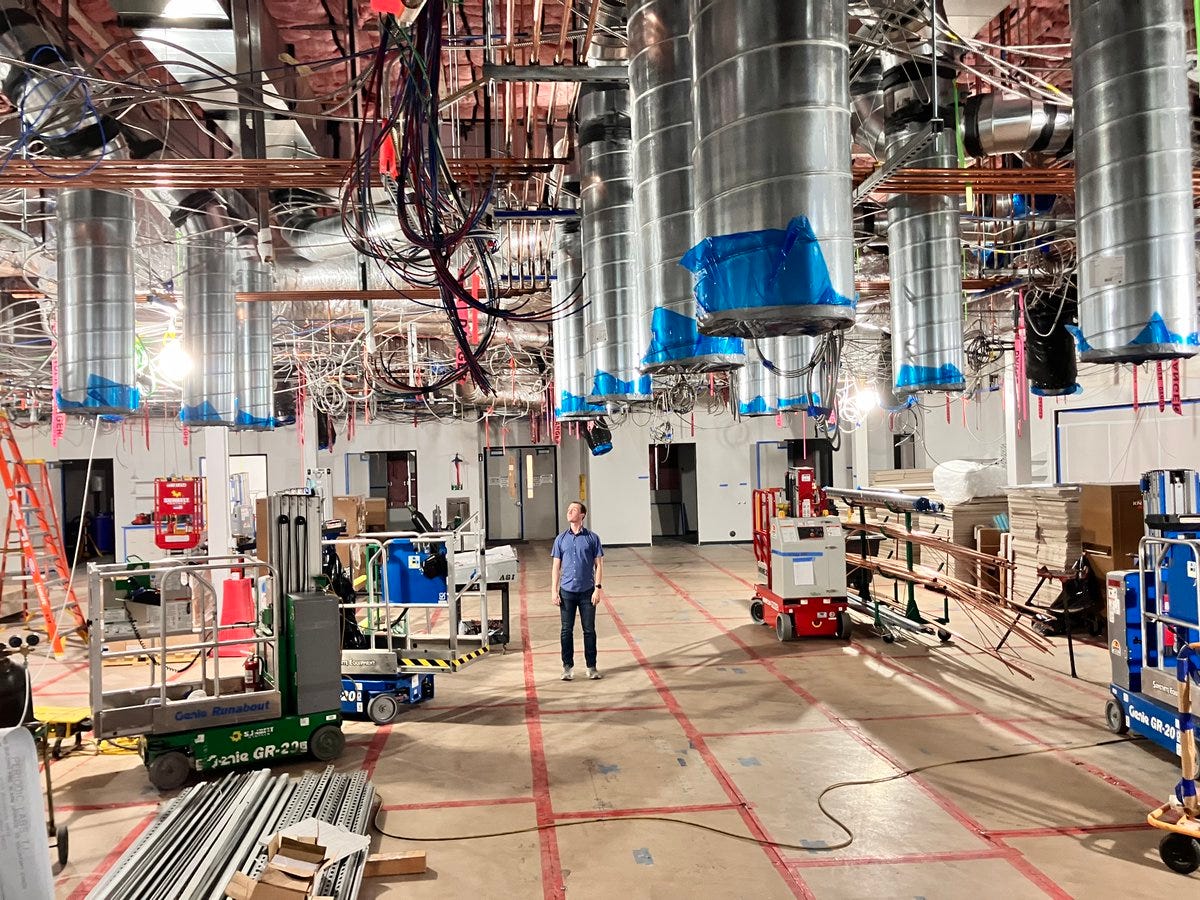
合成超知能へ――半導体から超伝導体まで:Periodic Labs の Liam Fedus と Ekin Dogus Cubuk
Latent Space: The AI Engineer Podcast
学界は野心のためにある — Alex Zhang(MIT)が語るRLM・ハーネス・エージェントスウォーム
Latent Space: The AI Engineer Podcast
Dwarkeshは間違っている?Computer Useの現在地と、OpenAIがJev対抗のDecisions APIを1週間で作った経緯
Latent Space: The AI Engineer Podcast
Claude Code の次の時代 — Thariq Shihipar(Anthropic)
Latent Space: The AI Engineer Podcast