
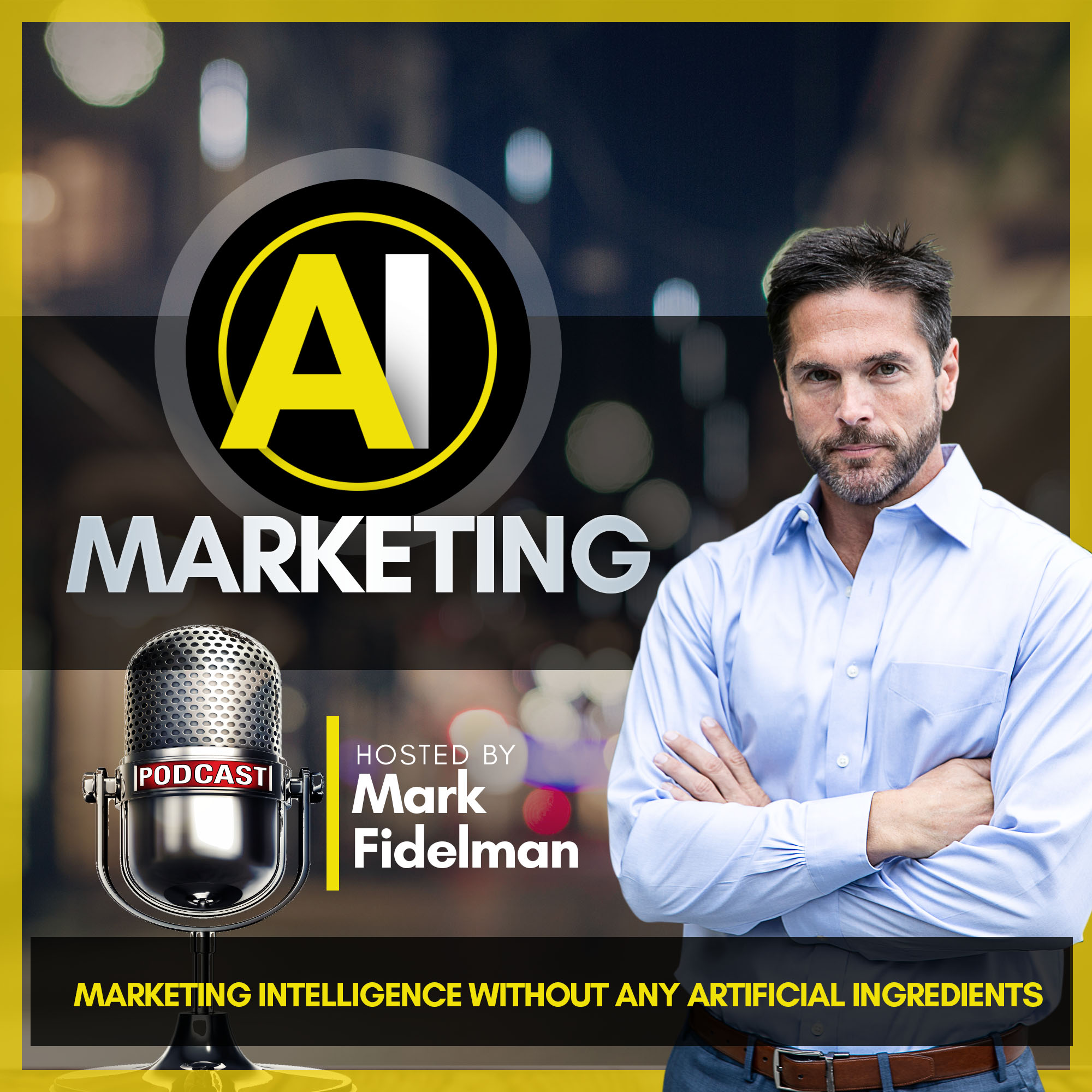
AIはマーケティング分析をどう変えるか:データサイエンスの役割と既存データ活用
AI Marketing
要約
マーケティング調査・分析の実務家 Aksel(Axel)Bedikyan 氏が、司会の Mark Fidelman 氏とAIによるマーケティング分析の変化を語った回。コーディングの参入障壁が下がりデータサイエンスは民主化するという見方や、Claude Code を使った定期レポートの自動化事例を紹介している。助言は、まず手持ちのデータを棚卸しし、LLMで探索し、答えられない問いにはカスタムリサーチで補うこと、そして実際に手を動かして学ぶことだ。
この回のポイント
- ●Aksel 氏は、AIでコードが書けるようになり参入障壁が下がるため、従来型のデータサイエンティストは減っても、アプリやモデルを作る人は増えると見ている。
- ●同氏のチームは LLM、特に Claude Code を使い、分析の生成や PowerPoint レポートの作成を自動化している。ブランドトラッカーのような定期資料では、初版の作成だけで20〜40時間ほど節約できる場合があると述べた。
- ●企業は「データは豊富だが洞察が乏しい」状態に陥りがちなので、データマップを作り、知りたいことと結びつけることから始めるべきだと助言している。
- ●LLMは企業固有の顧客・事業データで学習しておらず、非公開情報には自動ではアクセスできない。
- ●新しい問いが出てきて既存データで答えられない場合は、インタビュー、フォーカスグループ、エスノグラフィー、アンケートといったカスタムリサーチが価値を持つ。
- ●変化が速いため、好奇心を保ち、実際にツールを試し、学んだことを他者に話すことが最も効果的な学習法だという。
章立て
ゲスト紹介と経歴
Aksel 氏は航空宇宙エンジニアからMBAを経て、Cirque du Soleil での市場調査に進んだ経歴を紹介する。近年はデータサイエンスや機械学習に深く関わってきたと話す。
データサイエンティストは不要になるか
AIがコードを書く時代に、データサイエンスの技能は不要になるのかを議論する。Aksel 氏は参入障壁が下がり、より多くの人がモデルやアプリを作ると見ている。
AIエージェントと雇用・イノベーション
Mark 氏は「Jarvis」のようなAIが分析を代行する未来を語る。Aksel 氏は雇用への不安とイノベーションによる雇用創出の両面を見るべきだと述べる。
Aksel氏のチームのAI活用
従来のデータサイエンス業務を説明したうえで、最近は業務の効率化と新しい成果物の創出という2方向でAIを活用していると話す。
定期分析とレポートの自動化
Claude Code を使った分析生成と、ブランドトラッカーなどPowerPoint資料の自動化を説明する。Mark 氏もChatGPTでの資料作成の品質向上に触れる。
手持ちデータを活かす方法
データマップを作り、知りたいことと結びつけ、LLMでどこまで答えが出るかを試す手順を紹介する。LLMは企業の非公開データを学習していない点も指摘する。
カスタムリサーチの役割
既存データで答えられない問いには、インタビューやアンケートなどの独自調査が必要になる。今後の価値はモデル構築よりデータの質とアクセスにあると語る。
好奇心と実践による学び
変化が速い分野では、好奇心を持ち、実際に試し、学んだことを共有することが重要だと述べる。最後にMark 氏が自著 Agent Shock を紹介する。
解説記事
AIがコードを書き、分析し、レポートまで作る時代に、マーケティング分析では何に価値が残るのか。ポッドキャスト「AI Marketing」のこの回では、司会の Mark Fidelman 氏が、モントリオールで調査・分析の事務所を営む Aksel Bedikyan 氏(番組内では Axel と呼ばれる)に話を聞いている。
航空宇宙エンジニアから市場調査の実務家へ
Aksel 氏は機械工学の学位を持ち、約10年間航空宇宙エンジニアとして働いたのち、MBAを取得した。その後、事業計画や経営コンサルティングを経て市場調査・分析・インサイトの分野に進み、最初の職場は約15年前の Cirque du Soleil だったという。この道に入ったのは偶然で、面接官だった人物と働きたいと思ったことがきっかけだったと語っている。ここ3〜4年は、複数のデータソースから得た大量のデータを使ったデータサイエンスや機械学習のモデル構築に深く関わってきたと述べた。
データサイエンスは「なくなる」のか「広がる」のか
Mark 氏は、AIが常に身近でマーケティング指標を集め、提案までしてくれる「Jarvis」のような存在が実現すると考えており、その中でデータサイエンティストの居場所はどこかと問いかけた。
Aksel 氏は、Python や R を書ける専門家が不要になるという議論は成り立ちうるとしつつ、別の見方も示した。ClaudeやChatGPTのおかげで、誰でもコードを動かせるようになった。その結果、従来型のデータサイエンティストやプログラマーではない人々が、自分のアプリやモデルを作り、ビジネス上の問いに答えるようになるという。一方で失うものもあるが、全体としてはデータサイエンスが民主化し、人々は過去10年とは違う形でそれに関わるようになると見ている。
エージェントの時代についても、採用を見送れる役割が出てくる点は不安材料だと認めた。ただし、少ない人手でより速く価値ある製品やサービスを市場に出せれば、将来の雇用を生む可能性もあると述べ、否定的な面だけを見るべきではないと語っている。
現場でのAI活用:自動化とアウトプットの拡張
Aksel 氏のチームの本業は、顧客企業の取引データベースや顧客リスト、CRMのデータに加え、レビューなど公開情報も収集し、数理モデルでブランドの位置づけや市場の有無といったビジネス上の問いに答えることだ。顧客の中心はマーケティング部門である。
AIの活用は、これまでのところ大きく二つの形をとっている。一つは効率化で、繰り返し発生する作業を自動化する。たとえば半年ごとに更新するトラッカーの資料では、LLMで初版を自動生成することで、テーマによって20〜40時間を節約できるという。もう一つは、LLMを使って顧客やその先の顧客に届ける新しい成果物を考えることである。
具体的なツールとしては Claude Code を多用しているとのこと。分析の生成やPowerPointレポートの作成を自動化し、分析資料の体裁をテンプレート化する。月次のブランドトラッカーのように年に何度も作る資料では、新しいデータセットに合わせて手作業で作り直す代わりに、Claude Code でその工程を自動化する。場合によっては生成したコードを自社環境で実行しているとも話した。Mark 氏は、ChatGPTを使えば資料作成が数日から1時間ほどに短縮され、見栄えも良くなったと自身の体験を述べている。
まず手持ちのデータを棚卸しする
マーケターへの助言として Aksel 氏が最初に挙げるのは、多くの企業が「データは豊富だが洞察が乏しい」状態にあるという点だ。データの扱い方に関する知識が不足し、分析麻痺に陥りやすいからだという。
そこで、データを買ったり収集したり、定量調査を実施したりする前に、自社が使える情報の全体像、つまりデータマップを作ることを勧める。次に、事業・顧客・市場・提供する体験について「知りたいこと」を挙げ、両者を結びつけて、手持ちのデータでどこまで答えられるかを探る。LLMは学習に使ったデータの質に左右され、企業が提供していない私的なビジネスデータは学習していない点にも注意が必要だと述べた。
答えが問いを生む:カスタムリサーチの価値
LLMで洞察を得ていくと、答えがさらなる問いを生む。そのうち公開データでは答えられない問いが出てきたときに、カスタムリサーチの出番になる。インタビュー、フォーカスグループ、エスノグラフィー、ターゲット層への定量アンケートなどである。
Aksel 氏は、今後も価値を持つのは、モデルの構築や処理・分析そのものよりも、LLMが持たないデータを生成し、アクセスできることだという見方を示した。AIは公開記録やSNS、誰でも使える第三者データには触れられるが、それだけではすべての問いには答えられない。
手を動かして学ぶ
変化が速く、今日の話が1週間後には古くなりかねないと Aksel 氏は述べる。助言は、好奇心を保ち、最新動向を追い、何より実際に試すことだ。数時間かけてアプリを作ってみるだけでも学びがあり、学んだことを他の人に話すことで定着するという。Mark 氏は、Jarvis に関する自身の予測はあくまで予測だとして、過度に心配しすぎないよう付け加え、自著 Agent Shock を紹介した。
まとめ
この回の核心は、AIが処理や分析の部分を安くする一方で、価値の重心が「データの質とアクセス」に移るという見方にある。日本の実務者にとっても、新しいツールやデータ収集に投資する前に、社内データを棚卸しし、問いと結びつけてLLMで探索するという順序は取り入れやすい。レポートの定期更新を Claude Code などで自動化する事例も、すぐ試せる具体策だ。ただし、効果の数字や将来像は本人たちの経験や予測に基づくもので、自社で小さく試して確かめるのが現実的だろう。
文字起こし(英語・自動生成)
Hello, everyone. Welcome to AI Marketing. Today, joining me, Axel Benician, and I hope I found that properly. He and I are going to talk about AI and marketing and analytics. This is a combination of three things that we haven't had on this show. So, with that, before we get started, Axel, do you want to give us kind of a brief background on yourself? Yeah, absolutely. Thank you for having me on, Mark. I really appreciate it. So I'm Axel. I have a marketing research and analytics practice based out of Montreal, Canada. I have a, if we wanted to get into education and things like that, I have a bachelor's degree in mechanical engineering, and then I did an MBA following that. I was an aerospace engineer for about 10 or so years, which was very cool and interesting, but I wanted to kind of get like a
more of a business background, so to speak. So I got my MBA degree, and then I got into things like business planning, management consulting, and eventually I got into market research, analytics, and insights. And my first gig doing that was for Cirque du Soleil, and that was about maybe 15 years ago. Wow. Okay. And, you know, when you first decided to do all this, what was your – did you know that you were going to add AI to all of this and get interested in it, or what got you into this specific field it's very specific honestly um it was a little bit happenstance when i got recruited by circ i never really imagined working for that company it's just the person that was interviewing me was really interesting and ended up being my boss and i just knew i wanted to work for her and with her and that's kind of like how that started uh before ai um took the nature it has taken in
lives, you know, let's say in the last three or four years, I've been deep into data science and, you know, machine learning and building models based on large volumes of data coming from different sources. So I have a longer background, let's say, in AI than some of us who are just starting to kind of get familiar with it, if you will. Okay. Let's start taking things apart here like I like to do. So do you feel like the role of data science as a human is going to go away anytime soon? Look, I don't know that it's going to go away. You can make an argument to say, well, why do I need a data scientist who knows how to program in Python or R? Or I can have, you know, Claude or ChatGPT walk me through it and then write code, you know, at the pace that 10,000 programmers can write it at.
So from that perspective, you know, you might argue that, you know, maybe we won't need the skill. But from another perspective, I could argue that because we have now lowered that barrier to entry, you know, pretty much anybody can get code to run, right? You don't necessarily have to be a programmer anymore. It's really reduced that barrier to entry. I think more people are going to get into it. Maybe they're not going to be the traditional data scientists and programmers, but they're going to be building stuff, right? They're going to be building their apps. They're going to be building their models. They're going to be building things that help answer business questions. So depending on how you define data science, I have a feeling that we might lose out on one end, but we're going to gain a whole lot from another, right? It's just going to democratize things to such an extent as it's already doing now that I think people are going to be engaged with so-called data science, but in a very different way than
we have in the last 10 years or so. Yeah, I mean, I guess the way I look at it is if I see where things are going. You look at, you know, Muse from Facebook, you look at OpenAI. Dots. And I see the what's going to what's going to happen. So first of all you will have a Jarvis that around you at all times in the future And right now I kind of got that set up between the two of them and I kind of weighing out who going to be doing what and so on and so forth you know, who's the chief of staff. That is going to happen. I mean, it's very, very good, very, very powerful. So in terms of analytics, I can't believe, you know, some sort of Jarvis wouldn't be constantly, you know, going out and getting the analytics around your marketing and bringing it to your attention and also proactively looking for ways of creating more attention for your organization or your product. I just fundamentally believe that's going to happen.
So I don't know where the data scientist fits in in that regard. And I don't want to go too far down this path. I'm going to piss some people off. But what are your thoughts on it? Um, I mean, look, I think we are in the age of agents, right? So when you're thinking about scaling your business, and you were thinking about hiring a couple of people, guess what, now you might not need to hire for those roles, because you can have it, you know, at the end of your fingertips. So I think that in itself is a scary, because, you know, people are thinking it in terms of, hey, those are jobs that otherwise would have gone to people. And, you know, now those people aren't going to be employed. The other way to look at it is innovation, right? So now if I'm able to innovate and bring things faster to market without necessarily having to employ all those people, to the extent that I'm bringing something valuable to society, right, whether it's a product or a service,
that in itself can potentially create jobs in the future as well, right? So I find sometimes like we have a tendency to look at things from one perspective and it's doom and gloom. And I'm not saying it doesn't have, you know, that aspect, but the picture like is not complete, right? Like there are forces, there are tensions, there are pros and there are cons. And sometimes I feel like we're only looking at the negative aspect of things. Yeah. I mean, I see what you're saying. I'm just trying to be practical here as to what I'm seeing out there. But we're jumping to God a little bit about what I feel the future is going to be. Tell us a little bit about what you're doing with AI and marketing and analytics. Sure. So typically our organization is doing more traditional data science work, right? Like we're connecting dots between different data sources. A client might have a database with millions of transactions, customer lists, customer data, CRM platforms, and so on and so forth.
Sometimes we'll look online and we'll scrape data that exists out there for free in the form of reviews, in the form of, you know, sentiment and what people are talking about when they're on platforms and so on and so forth. And we build mathematical and data science models to be able to answer business questions. Right. Things like, you know, where does my brand span vis a vis other brands? Is there a market for a product and a service? Is there a market in such a geography in such a location? So we're trying to get to the heart of some of these business questions. And we typically work with the marketing function. Right. People who are looking to get a better sense of, you know, getting insights basically around their products, around their services, around their consumers and also their prospects. So that's the type of work we're doing in data science from a traditional standpoint. The work that we're doing more recently in AI is that we're helping companies make use of AI for their business, right?
So far, it's taken on the form of one of two things. So it's either we're helping companies become more efficient, right? How do we automate things that are repeatable? If there's a task that we're doing, if there's a deck that we're putting together, if there's an analysis, like imagine a tracker, which gets updated every six months or so. So instead of having to redo that deck manually, we make use of LLMs to be able to automate at least the V1 of that deck. That might save 20, 30, 40 hours, depending on the subject. The other thing we doing with AI is to actually carve and I guess in a way improve the outputs of our work right What are some of the new deliverables What are some of the new outputs that we can deliver to our clients and our clients to their clients by making use of these large language models? Okay, so you're just using the LLMs. Are you
using any other types of tools, AI tools, for example, to pull this information together, or do the LLMs handle it just fine? Well, you know, sometimes it's straight up LLMs. We use Cloud Code extensively, and sometimes we take the code and we run it in our own environments as well. So that's kind of the way we've been using it so far. And Cloud Code, what are you telling, or what are you using Cloud Code for specifically? So we'll automate generation of analysis, creation of PowerPoint reports. will put out templates around the way we would want a particular analysis deck to look like. And then if it's one of those decks that take place multiple times over the course of a year, like a tracker, if you will, a brand tracker, where we might want to track something on a monthly basis. And instead of having to manually redo that deck with a new data set,
we would just build cloud code around that so that we automate that process. I mean I actually think TredgePT is better for decks but it's getting so dang good unbelievably good I don't think I'll ever create another deck manually and I used to spend days and days and days when I came together and now maybe an hour and it looks way better you know and it's all branded and all the graphics are you know there aren't from all over the place. Everything looks like it belongs there. Quite incredible. Same with video, for that matter. It's video is just getting really, really good. Okay, so back to analytics. I feel like that this Jarvis future is right around the corner. And in between then, if you're talking to marketers now, what do you recommend they do to make them –
You know, analytics to me just makes better decision-making possible. And so what do you suggest they do now in order to make their decisions better through the use of AI, whether they have a data scientist or not? Sure. So oftentimes I think the lowest hanging fruit is people are very much data rich but insights poor, right? Or they're data rich, analysis rich, but insights poor. And that's because there is a shortage of knowledge of what to do with the data that they have, right? It could really cause analysis paralysis. So I think the first thing that clients can do that I tell my clients is, listen, we don't necessarily have to go out and purchase data, scrape data, run quantitative surveys. Before, just taking a look at taking stock of all the information that you have access to. Like, what is your data map, right? And then overlay that with things like, okay, what are some of the things you wish you knew about your business, about your customers, right? About your markets, about your business, about the experience that you offer your clients.
and then try and connect the two in a way to say, how can we make use of this data to be able to get to some of those insights, right? You haven't spent any money on external data. You haven't gone to field with qualitative research or quantitative research. You're really just, you know, making use of what you have, right? So a lot of these LLMs or all of these LLMs are as good as the data that they've been trained on. they haven't been trained on your personal business data, right? Because you haven't made that available to them. So I think that's where the quality is. So oftentimes, if the data is out there and it exists and it's public, you know, I would tell my clients, well, that's your first step, right? Because you don't necessarily have to invest money into data gathering before doing analysis, you have access to the data. Let's make use of the LLMs and see how far we can get. And oftentimes what will happen is as you're making use of these LLMs,
you have answers to some questions But if you getting quality answers to your questions what ends up happening is answers yield more questions right So as you start uncovering insights and as you start figuring out you know like what this landscape is you're invariably going to come up with new questions. And some of those questions won't be able to be answered by the data that's already publicly available. So then that's where custom research comes in, right? Then we might do qualitative research. We might do some interviews and we might do some focus groups. We might, you know, do some ethnography or we might just field a quantitative survey amongst your target audience with the questions that are most pressing to you. An AI, an LLM won't be able to give you that type of quality because it doesn't have access to the data, right? So I think, you know, where data science is still, and custom research is
still going to be very valuable in the future, is to be able to generate and access data that large language models don't have access to, right? So it's less about processing and analyzing and building the models, right? And more about the quality and access to data. and where do you get that access to data that AI does AI help with that or how do you see that happening yeah of course so depending on on the use case AI might be able to access public records it might be able to access you know social platforms it might be able to access third party data that's available for everyone so that's a really good place to start right but it won't be able to answer all of your questions that's where custom research comes in okay yeah yeah okay um what else should uh people know about what's going on with ai in analytics i mean it's it's changing
so fast right like i might say something today and you know in a week from now it might be obsolete A bit of an exaggeration, but not a big exaggeration. Things are really changing so fast. I think the best thing for people to do is just to remain curious and to stay abreast of the things that are happening. And also, the most important thing is doing it, right? So you and I can talk about, oh, this cool little thing that we built, and you should try this LLM, or you should try this feature, you should try this way of, you know, running AI or building AI, you know, based tools. But people won't necessarily absorb that, right? But if they did it, if they tried it, you know, like if they spent a couple of hours trying to put together, you know, an app or whatever it might be that they want to do, it's just by doing that you learn, right? And by talking about what you've done and what you've learned to other people that really helps cement that so i think
that's where real learning and real um you know development and and and exposure to to the very thing that you're interested in comes from yeah okay makes a lot of sense yeah all right um i don't have anything else. You're very succinct. All I can say is my predictions about this Jarvis type of thing are just that. Don't get too worried yet. I just see what's happening. In terms of really understanding where everything's going, I'd say pick up a copy of my book called Agent Shock. You can go to agentties.com forward slash book for it. and any information that you want to get from our very esteemed guest, Axel. Axel, what do people reach you? They can reach me on LinkedIn, and they can reach me through my website,
through our website at oginsights.com. I like that. All right. Well, thank you very much, and I appreciate you being on the show. Thank you so much, Mark. Thank you for your time. Thank you.
番組の概要欄(原文)
Host: Mark Fidelman Guest: Aksel Bedikyan, marketing research and analytics practitioner based in Montreal, Canada Episode description How is AI changing marketing analytics—and what remains valuable when AI can write code, analyze data, and automate reports? Mark Fidelman talks with Axel Benikian about AI agents, the changing role of data science, and practical ways marketers can get more insight from the data they already have. Axel explains how his team uses AI to automate recurring analysis and presentation work, while emphasizing that useful insights still depend on access to good data. His advice to businesses: map your existing data first, use AI to explore what it can tell you, and turn to custom research when important questions can't be answered with public or existing data. Key takeaways AI is broadening access to data science. Coding may become less central to some roles, while more people use AI to build apps, models, and tools for business questions. AI can automate repetitive analytics work. Aksel's team uses Claude to help generate analyses and recurring PowerPoint reports, including brand trackers. Start with the data you already have. Map your internal data and connect it to the questions you want to answer before investing in new data collection. AI has limits when it comes to proprietary information. LLMs can help analyze available data, but they don't automatically have access to a company's private customer or business data. Custom research still matters. Interviews, focus groups, ethnography, and surveys can fill gaps when existing data can't answer new questions. Learn by doing. Aksel recommends experimenting with AI tools and sharing what you learn with others. Episode timestamps 00:27 —Aksel's background in aerospace engineering, consulting, and market research 02:36 — Will AI replace data scientists? 05:25 — AI agents: risks to jobs and opportunities for innovation 07:05 — How Aksel's team applies AI to marketing analytics 09:54 — Automating recurring analyses and PowerPoint reports 11:46 — How marketers can make better use of existing data 15:13 — When AI needs to be supplemented with custom research 15:47 — Staying curious and learning through hands-on experimentation Links Mark Fidelman's book, Agent Shock: agentize.com/book Aksel Bedikyan: OG Insights · Find Axel on LinkedIn
出典・この記事について
- 番組
- AI Marketing(Mark Fidelman)
- 元の回
- How AI Is Transforming Marketing Analytics
- 配信日
- 要約作成日
- 公式サイト
- www.fanaticsmedia.com
この要約・解説記事は、元の音声を文字起こしした内容をもとに AI(Claude)が日本語で作成したものです。 固有名詞や数値に誤りを含む場合があるため、正確な内容は元の音声でご確認ください。制作方法について
関連エピソード

革命とルネサンス — Thariq Shihipar(OpenAI)
Latent Space: The AI Engineer Podcast

Microsoft AI戦略の内側:GitHub、Copilot、Azure幹部3人に聞く(Ignite 2026)
The Neuron: AI Explained

Hugging Face事件が示すAIエージェント・スウォームの脅威(Connor Leahy氏)
Future of Life Institute Podcast

AIを戦略的優位に変えるには:Tempo Software CEO Vic Chynoweth の見解
AI Today Podcast
Warp、ソフトウェアファクトリーに賭ける(Changelog Interviews #693)
Changelog Master Feed
AIセキュリティに透明性が欠かせない理由 ― Red Hat CTO Chris Wright が語るオープンソースとエージェント保護
NVIDIA AI Podcast