
Warp、ソフトウェアファクトリーに賭ける(Changelog Interviews #693)
Warp bets on the software factory (Changelog Interviews #693)
Warp、ソフトウェアファクトリーに賭ける(Changelog Interviews #693)
Changelog Master Feed
要約
Warp 創業者兼 CEO の Zach Lloyd が、新たな主力事業「Warp Factories」について Adam Stacoviak と語った回。Factories はクラウド上でエージェントがソフトウェア開発ライフサイクルを回すためのオープンなインフラで、Zach は「CI/CD の新版」と位置づけている。ファクトリーをコードで定義する発想、エージェントトレース、自己改善に伴うドリフトのリスク、シニアエンジニアの意識変化、Slack 中心の協働開発などが語られた。
この回のポイント
- ●Warp Factories は GitHub/Linear/Slack などと連携し、エージェントの役割・MCP 設定・スキル・シークレットをコード(factory as code)で定義して実行するインフラだと Zach は説明している。
- ●エージェントトレース(プロンプト、ツール呼び出し、結果)と人間のフィードバックを組み合わせ、スコアラーで評価し、ファクトリー定義への PR として自動改善を提案させる。ベンチマーク機能で過去の実行をモデルやハーネスを変えて再実行できる。
- ●自己改善システムは、スキルが誤った推論で劣化する「複利的ドリフト」を起こしうる。人間の確認、テスト、A/B テストなどの歯止めが必要で、Adam は「自分で感じる必要がある」と述べた。
- ●Warp のシニアエンジニアは当初「コードの守護者」として AI に不満だったが、Opus 4.5/4.6 前後でコード品質が上がり、最大の採用者に変わったと Zach は語る。
- ●インターフェースは新設せず、Slack・Linear・Claude Code など既存ツールから使うヘッドレス設計を採る。Warp では 60% 以上のコーディングが Slack 上でグループ作業として行われているという。
- ●Zach はこの方向転換を「ピボット」とは呼ばず、世界が変わったため追随したと説明。データ主権の観点でトレース保存やコードフォージを差し替え可能にしている。
章立て
Zach の近況と開発の変化
Warp の歩みと、エージェント自動化の波、エンジニアの仕事が抽象度の高い「メタエンジニアリング」へ移る様子を語る。
GitHub 障害と Adam の自宅環境
GitHub の障害やスケール問題に触れ、Adam が Gitea と Tailscale で自前運用している話、code.storage の利用に話が及ぶ。
Warp Factories の仕組み
連携先、factory as code、スコアラー、ベンチマーク、ハーネス非依存の設計など製品の全体像を説明する。
トレース、データ主権、ドリフト
Entire や Zed の DeltaDB に触れつつトレースの活用法を議論し、複利的ドリフトと人間の確認の必要性に話が進む。
シニアエンジニアの意識変化
品質の低かった時期の不満と、Opus 4.5 前後で採用者に変わった経緯を語る。
ピボットか、UIなしの設計か
方針転換の経緯と、ヘッドレスで既存ツールから使うインターフェース方針、Slack での協働開発を説明する。
資金調達と競合、今後
追加調達の見通し、Cursor など競合との立ち位置、「continuous flow」の発想、早期アクセス対象を語る。
解説記事
Warp の創業者兼 CEO、Zach Lloyd が Changelog の Adam Stacoviak に、会社の新たな主力事業「Warp Factories」について語った回である。かつてターミナルで知られた Warp が、なぜクラウド上のソフトウェアファクトリーに賭けるのか。その中身と思想が語られている。
Warp Factories とは何か
Zach は Factories を、チームや企業が開発を自動化するためのオープンなインフラ、つまり「CI/CD の新版」と位置づけている。GitHub や GitLab、Jira や Linear、Slack や Teams を接続すると、Terraform のようなファイルでファクトリーが定義される。そこにはエージェントの役割、MCP 設定、スキル、シークレットが含まれる。
Sentry のクラッシュ通知などをトリガーに、トリアージ、仕様作成、実装、コードレビュー、コンピュータ操作による QA、CI 経由の出荷、監視までを回す流れを想定している。モデルやハーネスは選べ、Claude Code や Codex も動かせる。Zach は、トークン再販ではなくこのループの支援で稼ぐ立場だと述べている。
factory as code と自己改善
設計の肝は、ファクトリー定義をコード(Git リポジトリ)として持つ点だ。ブランチ、バージョン管理、テストが可能になり、非決定的なエージェントのループに一定の決定性を与えられる。Adam はこれを高く評価している。
さらに「スコアラー」と呼ぶ評価機構があり、エージェントが運用状況を見て改善を提案し、ファクトリー定義に対する PR として出す。例えばレビューエージェントの指摘に対し、シニアエンジニアが「この import の書き方は提案するな」と返したとする。そうしたフィードバックを大量に集めて傾向を分析し、スキルを修正させる、という使い方が紹介された。過去の実行を別のモデルやハーネスで再実行し、コストと性能を比較するベンチマーク機能もあり、汎用ベンチマークではなく自社の実タスクで測れる点を Zach は強調している。
この基盤になるのがエージェントトレースで、LLM に送られるプロンプト、システムプロンプト、ツール呼び出しとその結果などを含む。Warp は S3 に Blob として保存している。ただし企業が自らデータを持つべきだという「AI ソブリンティ」の考えから、トレース保存先もコードフォージも差し替え可能にしているという。Adam は、トレースを ETL のように生データと加工データに層分けする案を出していた。
ドリフトと「感じる」必要性
自己改善システムの危険として Zach が挙げたのがドリフトだ。誤った推論でスキルが劣化し、それが積み重なる。対策は、複数の観点のスコアラー、ランダムなタスク集合での A/B テスト(まだ未実装)、人間によるレビューだと述べている。Adam も、完了の定義を明確にしても完全には防げないと語った。
Adam は映画『インターステラー』の「自分で感じる必要がある」という場面を引き、今の段階では人間が確認すべきだと主張した。Zach も、実際に自分で使って確かめることは任せられないと同意し、一方で恐れるのは質の低いソフトウェアが量産されることだと述べた。ただし経済的価値のある体験は残ると見ており、そうはならないという見方だ。
シニアエンジニアの変化とピボット論
Warp のシニアエンジニアは当初、品質の低い AI 生成コードの PR を見る立場にあり、「コードの守護者」として不満を持っていたと Zach は振り返る。転機は Opus 4.5 や 4.6 の頃で、長年悩んでいた課題をエージェントが解いた例もあり、いまでは最大の採用者になったという。
方向転換については、ピボットという語を好まないと述べている。誤った賭けではなく、世界が変わったため追随しただけだという説明だ。Warp Terminal の支援は継続し、約 100 万人の開発者が使い、オープンソース化されたとしている。Factories はまず Oz というクラウドエージェントの基盤から段階的に育てた。
UI を作らない設計と Slack での協働
Factories は基本的にヘッドレスで、Slack、Linear、Claude Code、Sentry など既存の作業場所から使う。提供するのは運用を俯瞰するインターフェースだけだ。Zach は、開発者のツールの好みは強く、合意しやすいのはインフラ層だと語る。iOS アプリも公開 API 上でオープンソースとして開発中だという。
Warp 自身では、コーディングの 60% 以上を Slack 上でグループとして行っているという。バグのスクリーンショットを貼ってファクトリーに調査を頼み、再現動画や PR が返ってくる。チームメンバーが同じスレッドで原因に気づいたり、デザイナーがマーケティングサイトの改善を依頼したりできる。ターミナルでは実現しきれなかった「マルチプレイヤーの開発」が、エージェントで実現しつつあると Zach は見ている。
まとめ
本回は、AI コーディングの焦点が「個人の端末での対話」から「チームで運用・計測・改善するインフラ」へ移りつつある、という一つの見方を示している。注目点は三つある。第一に、プロンプトやスキルをコードとして管理し、実データで評価するという、エージェント運用の工学化。第二に、自己改善に伴うドリフトと、人間の確認をどこに置くかという課題。第三に、データ主権を意識した差し替え可能な構成だ。なお Factories はまだ早期アクセス段階で、効果は発言ベースの主張にとどまる。日本のプラットフォームエンジニアにとっては、自社の CI/CD の次の姿を考える材料になるだろう。
文字起こし(英語・自動生成)
What's up, friends? Welcome back this week on The Change Loves. Zach Lloyd is back with a new bet on the future of software. Last time, it was Warped Terminal. This time, it is Warped Factories. Yes, software factories. Agents do the work. Engineers tune the system that ships that code. And Zach calls that the new CI CD. And I kind of agree. Just don't call it a pivot. The world changed, so Warped did as well. We talk about engineers as guardians of the code. why most of Warp's coding now happens as a group inside Slack, what happens when a factory starts to drift, and why we still need to feel it. A massive thank you to my friends and partners at Fly.io. Computers for agents from sandboxes to production. Give your agents its own hardware-isolated Linux computer and deploy what builds without changing platforms. It's total magic. Learn more at Fly.io. All right, let's do this.
What's up, friends? This episode is brought to you by ClickHouse and their launch of ClickHouse Observability, a fully managed observability service for SREs and their agents. You send your open telemetry data. They handle the rest. I'm here with Mike Shee, head of product for observability at ClickHouse. Mike co-founded HyperDX, which ClickHouse acquired. So he's been building this stack for years. So Mike, is this launch ClickHouse for a whole new kind of team? Yeah, I think ClickHouse has appealed a ton to the builders. And I think that's still going to be that core persona for us. Those are building applications and ClickHouse is a great tool for that. However, I think one of the things that we're trying to allow for are for teams that maybe don't want to build every single bit of their stack, including their observability stack. How do we make sure that the teams are super focused on building their next application? They don't have to worry about, hey, how exactly am I going to be scaling and tuning our ClickHouse cluster
for our observability workload? And that's where ClickHouse observability comes in in terms of taking that burden off these teams. Getting started becomes, you're in the OTLP, fantastic. Plug into our endpoint. We'll take care of the schema, the scaling, the experience on top, the eval MCP tooling so that agents can work really, really well with ClickHouse. We'll take care of all these things. We still get all the benefits and scalability of ClickHouse as well. And, you know, for the other things where you do have to worry about all those high details, you're building something else on top of ClickHouse as well. But when it comes to durability, you don't have to sort of build on top of ClickHouse anymore. You can get something that works really great out of the box. Yeah, out of the box is the part I like. So say I'm that team you're talking about. Open telemetry, it's already flowing and I do not want to babysit yet another database. What actually comes off my plate? Yeah, so ClickHouse Observability is going to basically remediate a lot of these sort of operational concerns when it comes to planning ClickHouse for observability. So things like, for example, hey, like how do I make sure my
OTEL selectors scale with our telemetry as we send more or less data? That's something that, no longer needs to be a concern. How do we make sure that we have a great high availability pipeline between our ingestion endpoint and click house so that when we do have a massive burst in telemetry data, we don't overwhelm our clusters at any given point in time and we don't lose any of those messages as well. So things like you might have a Kafka or something like that for historically, that's something that becomes, again, managed away from your end. Things like, hey, do we have the most updated schema when it comes to best practices for our workload? Is it tuned to the query shapes that my users are running? Am I optimizing my compression codecs and my sorting keys? All those sorts of questions no longer need to be a concern for the team as well because, again, those are kind of managed by a platform. So it really alleviates some of the biggest problems we've seen when it comes to users getting started with ClickHouse for observability and kind of provides that in a sort of out-of-the-box solution for them. So, friends, if you're sizing clusters, tuning schemas,
and babysitting a Kafka pipeline just to see what production is doing, stop the pain. Stop the pain. Use ClickHouse Observability. Send your open telemetry data to their managed endpoint and start investigating in minutes. It's in public data right now at half the standard price. Learn more at ClickHouse.com slash observability. Again, ClickHouse.com slash observability. Well, friends, we're back. Zach Lloyd, it's been years. One of my, well, not one of my, my favorite terminal out there. Warped terminal. You made it. You know who you are. Welcome to the show. Thanks for having me back, Adam.
Good to be here. Over the years, you've gone from the terminal of the future to literally the terminal of the future, and then now we're in some crazy version of the future. When you look at how things have changed, and I think even you with Warp, you're not just Terminal anymore. You have an agency ally. You have Warp Factories. You're reaching launch. We'll talk about that, of course, but a lot has changed. Where is your headspace at right now in terms of this change? Man, the world is so different from when we spoke last. Yeah, the way that I think about the arc over the last few years and the way I think about it in terms of warp is we started warp pre-AI. So we started warp, the company started in 2020, the product first came out in 2021, and it was just like, can we build a better, more usable version of the terminal? 2023 which may have been when we last spoke
I think agents were beginning to become a thing but not there yet but as they became more capable we basically were like the terminal is a good place to actually put agents which I think is borne out across the world it's like one of the primary interfaces that people use things like cloud code or cursor so we built an agent in as you mentioned we did that like 2024 and then the general trend that i see happening now is that more and more of development is gonna be automated for better or worse and like you're gonna have agents that do all the different parts of the software life cycle um and you know humans are still going to be in there guiding them reviewing them to some extent, but you're going to have some of that stuff that's like literally just goes right from idea to ship product. And so, you know, our company's mission has always been like,
how do you help developers ship the best possible software as quickly as possible? And so more and more, we're focused on like, what does this world of automation look like? what comes next. And, you know, the paradigm I think is catching on there is the cloud software factory. So this is, and I know we'll talk about this, but it's like an automation loop in the cloud where you have agents doing all aspects of the software lifecycle. And the really important thing, like, or the way that I'm thinking about it is it's basically infrastructure. It's like the new version of CICD. and this is what most of our team is focused on right now is how do you help teams and companies set up this infrastructure so they can measurably and scientifically engineer the system that actually ships their code. So it's crazy. I don't know what will happen in the next year or two. I would just bet on models getting better and more capable and agents running longer and more and more automation coming.
But it's like, I've been an engineer for over 20 years and there's been more change in the last like six months than there was in like the first 18 years of me being an engineer. It's crazy. Yeah, I feel like it got a little bit, I don't want to say exactly boring, but a little boring before this insane shift ran. Similar playbooks, you know, similar runs, similar stories, copy and paste, which is not exactly bad because in a world of, I guess, I don't want to say monotony, but you kind of want to have some version of contentment and a version of stability. I feel like things are not unstable but unstably stable, if that makes any sense, whereas the last 10 years has been, for the most part, pretty predictable. It's been pretty predictable, not a lot of crazy change. You've had new shifts, of course. You've got Kubernetes. I think, what, Kubernetes is 15 years old now, something like that. Docker came about 15 years ago
but what have we really innovated on dramatically besides agents not a ton no it was all like hey there's a new JavaScript framework or whatever it's like yeah that's all marginal change more turn of course yeah marginal change for a long time and then very very rapid dramatic change the last couple years And I think everyone is, everyone now believes that that rate of change is going to continue, like you said. So it's like, it's not stable. Like what people are expecting is to keep changing. Yeah, that's, I don't want to be cynical. You know, I don't want to sit here and be cynical about the past and hopeful about the future. although I am very, very, very hopeful about the future, despite the FUD of no more engineering, no more developers, we're automating ourselves out of jobs. You probably know this quite well with how much work factories has automated around,
but I think it only brings more in with more intent, more care, more control. We may change. We may not care about memory allocation as much anymore. You know, we may do what the compiler did years ago and people thought, well, gosh, compiler's going to take everybody's job. No, it didn't. I think we're in this hockey stick era and GitHub's graphs are evident of that. How much do you pay attention to the ups and the downs daily with GitHub? A lot. Yeah? A lot. Mainly because, like, we keep getting hit by their outages. We get very limited by their APIs. so I follow that really closely and yeah I agree with like it's just like the job of the engineer is changing now that it's going away we're moving up a layer of abstraction I tweeted the other day I tweeted a question and I was like do people like their job as engineers more now
versus a year ago and people like it more which I thought was really interesting Like, overwhelmingly, the comments that I got back were that people like it more. And I like it more. I'm curious if you like it more. I feel like I can just, like, build more. Like, that to me has always been the thing that motivates me most is, like, how, you know, can I build really cool stuff? How long does it take me to do it? How hard is it to do it? Like, how much annoyance is there along the way of building it? and I can just build more cool stuff more quickly now than I ever could before. It's easy to build, like, stuff that's not great. That's true. I think there's more bad software coming into the world. But if you really care about building something good, it's been, like, a super fun time to do that. And it's, like, you have to learn a new way to do it is the other thing that I think is actually cool. Like, what I – there is skill in working with these agents.
There is skill in building the system that these agents use. And to me, that's just like still engineering. It's just a different kind of engineering. I think of it a little bit more like meta engineering. It's like you're engineering all of the guardrails and prompts and skills and handoff points and ways agents should work. It's not writing code. I don't write code anymore. But it is still engineering. and it's very beneficial actually to have been an engineer for a long time in order to use the new agents well. I do find that people who are most effective on our team by far are the more senior engineers. I'm curious what you think about that. But there's a lot of skill in it. Yeah, I think when people say they don't code anymore, I still think deeply about code. I still think deeply about, well, not the actual function or what a return. I think about the architecture of it. I think about how I compose an application.
I think about how things should think and speak to each other, what an interface should do, how it should present itself, you know, how it should be or not be headless. You know, is there a UI? I'm almost in this case where, like, there is no UI. Unless there needs to be a UI, a UI almost has to prove it deserves to be created before I'm like, okay, let's build an interface here. because when I mean interface, I mean like literally a graphical user interface. I'm with you, by the way. Like our factories are like headless infrastructure, and the interface is meant to be the tools that you're already working in because I don't think people want. It's like Slack is pretty good, actually, and Linear is good, and GitHub, if it were reliable, is fine. And so I actually agree with you. There's like a – It's bad for them, though. life. And is it their, I mean, it's kind of their fault, but it's also not their fault to be the epicenter of like all this scale. I mean, I kind of feel bad for them. I feel bad for the people, right? The engineers inside having to be like, oh my gosh, you know, one
more day. I think it's probably really hard to have a certain pattern of usage that you have been like building around for how old's get up? 15 years or whatever. 15 years. 17 years. Yeah. And have like, I think probably a super predictable growth curve. And then, you know, within the span of like six months to a year, that growth curve gets dramatically different. Like, I think that's hard. Like, I... Yeah. I was thinking back, like, you know, I used to run engineering on Google Docs. And like, we were always like running fairly close to the capacity of the thing because we didn't want to be wasting a whole bunch. And it's like to massively scale for a whole new usage pattern is not I think that's hard and I think that they've handled it I think they've handled it decently well I think they're fairly transparent it just sucks I hope they can fix it and I don't know what the big architectural changes are that they need to make but they probably need to do something
have you tried any of these other you know source code like code forges that are trying to compete with GitHub? Okay, so full disclosure, I don't use GitHub anymore. Okay, what do you do? So there you go. I'm a home lab nerd from way back in the day. I now call it my dev lab. It's no longer a home lab. It's transcended, mediocre, non-cool home lab. Now it's a dev lab. I do own the domain devlab.build, and at some point I'll do something around it. but I've been trying to like word mark so to speak this idea that it's no longer home lab it's dev lab and so because I have so much compute like I literally have compute over here compute over there I've got 20 computers I mean I don't even know my kids are like dad how many computers do you need I'm like more always more for something GPUs you should start running them out so right over there is my dual GPU beast okay so it's
all caps beast not Mr. Beast But Beast, I name all my machines, right? They're pets, not cattle in this case. Some are cattle. Most are pets. In this case, just to gush a little bit, my future machine I'm going to build, hopefully sometime next week when my new motherboard gets in, is going to be called Beast. It would be a dual GPU, RTX 3090, 128 gigs of ECC RAM, a Ryzen 9, I think it's 9550X, that CPU. Some of the fastest MVMs you can have out there, just to just really push the absolute boundaries. And I'm going to call it beast. And I think it's going to be where my agents live. Although, you know, you might say, hey, I just built a factory, Adam. Can you run your agency by a factory? Well, I'm kind of building my own, and that lends to the response of I'm not using GitHub anymore. And the reason I'm not using GitHub anymore is not because of their downtime.
It was simply because that loop wasn't required. Git T is really good. You can self-host Git T. It's really easy to run in Docker. It's really easy to back up. It's local. and if you're a tailscale user like I am, then your GitT can be anywhere. If you're using things like AMP Code, for example, their orbs give you the option to put your tailscale OAuth in there so that you can spin up new orbs based on a GitT that is only accessible via Tailnet. So, for example, my self-host of GitT is only accessible, I mean, I guess it's accessible in the land, But from the outside world, it's only accessible via the tail net, which means only me because I'm my only tail net user. And so you couldn't be more secure than that. It's also backed up. It's durable. All my stuff is there. It's super fast. I've written a CLI against to make sort of pull requests and things a lot easier for agents to do.
And so I sort of buy your own full internal system. Yeah. Yeah, pretty much. And it wasn't because I was like anti GitHub. It was just because I was like, I can. I have the compute. I have the desire. Why not just own it from that respect and get to these open source and make it super easy? So that's my response. Do you ever code with other people? I mean, the primary thing that we get from GitHub is the collaboration. Yeah. No, I don't. But I think if I have that issue, I'm a TNN user away from adding them to that loop. Although when I do collaborate, it is via GitHub. So if I'm coding with others, it's GitHub. If I'm coding with just my loops, then – and I mean like literally my loops from loops on different machines that are running their own loops that all have the same access. They all have their own things. They're talking to other machines. They're talking to other agents on the network.
in that regard no, those are my people I guess now, oddly enough it feels really weird to say that, those are my people now you know, they have names and things, you know and that's just the world but if I'm going to go with other folks in the world, GitHub still yeah, yeah that's the most of the value that we're getting, we also are now using for some of our user facing features like we, one of the ways our factories work is that we define them in code and we provision all the factories to get their own repo. We don't use GitHub for that. We use code.storage. Are you familiar with that? The Pierre Computing Company, those guys? I want to know more. I'm very curious, but I'm aware, yeah. It's like, it's just like if GitHub were API first, almost, is kind of how I would describe it. And so it doesn't really give you any interface, to our conversation about the headless.
It's like GitHub, but it's very, very API-centered and very, very good for agents to use it. And so, yeah, we've been using that, and it's just much easier. GitHub has a gajillion annoyances around authentication, and if you just want a simple API for creating repos, make changes in those repos, et cetera, it's much better. Yeah. Yeah. Well, I'm curious actually on that front because this is one of my curiosities is as you've built this factory. So as you answer this question, describe what factories is so that there's some clarity there. But I'm a little familiar because I've been paying attention, of course, and our audience may not have been that clued. And this may be the first one I'm hearing about it. But I got to imagine like if you're building what you've built, which is amazing, by the way, I watched the video. I don't know the fellow that did that video, but phenomenal job launching it, introducing it. I haven't used it, but it looks very compelling. I've got to imagine that the next step for you is potentially to take that cursor blog post for origin
and be like, well, hello, we're going to wall git our own git. Like, why use Pierre's code.storage versus, and maybe you will, versus just be your own, not so much a forge, but your own host because you've got your own factories. It's a great question. so to first explain what it is I think let me do that so what is Warp Factories? yeah so Warp Factories is infrastructure upon which you as a company or a team if you want to start to automate more more of like your internal development it's a set of building blocks for doing that and like we give you like an opinionated out of the box way of setting it up So basically, if you wanted to create a factory, what you would do is you would kind of opt into GitHub or GitLab, whatever your source code forge is. You'd opt into your task tracker, like Jira and Linear. You'd opt into your communication tool, like Slack or Teams.
And then under the hood, what we do is, like, we define a factory for you. Think of it as, like, a Terraform file, which says, okay, these are all of the agents and their roles in this factory. This is all the MCP configuration, all the skills, all the secrets that they need. And then what Warfactory does is it sort of executes that for you so that people can then go into all these different knowledge work tools that you've set up, and they can ask agents to do things. Or you can set up automation so that you don't even need a person to be the trigger. So it could be like, hey, there's a new crash that comes in through Sentry. Have an agent pick it up and do the different steps of the SDLC. So it's like opinionated a little bit in how it does that. It will do a triage step where you have a triage agent. It will do optionally loop a human in to write a spec with you. It will write the code, obviously. It will review the code.
It will QA the product. So it uses, like, it has, like, built-in computer use verification, so it can actually use it like a person. It will take videos of itself using that. It will work with CI to ship it, and then it will monitor. And the reason I call this infrastructure is it's all, like, code-driven. It's all code-defined, I should say, and it's all API-driven. And then it's very, very flexible. So, you know, you can pick whatever models you want, and you can even pick whatever harness. so like we're trying not to be in the token reselling business so much here as like the facilitation of this loop business so you can literally have our factory run cloud code for you or run codex and we're going to have more harnesses. And then once you have this infrastructure set up where it's like it's running this loop for you, the really cool things that you get out of it are the ability to start like measuring and improving the throughput of code on your team. So, for instance, like, we provide a bunch of metrics around, like, you know,
what's the cost to be shipping with this, what's your rate of shipping. But then we also provide what we call scorers. So there's, like, a built-in E-Doll system where you can have agents that are looking at how your factory runs are operating and suggest improvements. So it's, like, they could see, like, oh, this part of code review isn't going very well. Like, humans are giving a lot of feedback. Let's change the code review skill accordingly. and they do this by making PRs against the factory definition. So this is kind of like the magic of having it all in code. And so, yeah, you get like this like branchable, versionable thing that is your software factory. You can also test it, which is really cool. So you can do this thing called benchmarking where you can say like, okay, pick like five or ten of your past runs or whatever number you want and be like, okay, I want to rerun these with the exact same state of the factory and the code against different model configurations and different harness configurations, see what the cost and performance, like, tradeoffs are.
And so that's also, like, built in. So, you know, really zoomed out, we're just, I think that the new way of doing engineering is, like, everyone's going to be tuning one of these systems, and so we're trying to build this infrastructure that's very, like, developer-first, where you can adopt it and make it work for your team. So that's work back, Chris. This episode is brought to you by our friends at DeepGram. Their speech models are built to understand words in context because context really matters, as you may know. Like if someone says there's a compatibility issue, they don't know if they're talking about technical difficulties due to conflicting interfaces, or if they mean you want kids, I want a boat, this relationship is never going to work. Using context, DeepGram can tell one from the other, making conversations better. I use DeepGram. I love DeepGram. I use it for all my transcripts now It is amazing It my intelligence packet And DeepGram speech models and real infrastructure enables AI to keep up with the way people actually talk
Over 5,000 organizations globally, me included, use DeepGram's speech-to-text, text-to-speech, and voice agent APIs in production. Built for accuracy, low latency, and cost efficiency, DeepGram makes high-quality voice experiments practical to build and operate at scale, available through cloud APIs or self-hosted and on-premises deployments. Voice is the most natural interface, and Deepgram is bringing it to the technology we use every single day. Again, I'm using it. I love it. The future is talking, talking with Deepgram, and now when you spend $1 on Flux text-to-speech, you get $1 back, up to $500. To sign up for free or find out more, go to deepgram.com slash context is everything. Once again, deepgram.com slash context is everything. I think it's pretty interesting to have the Git repository be the, I guess, factory as code maybe.
In fact, that's literally what we call it, factory as code. Yeah, I mean, that makes total sense to me. That is super interesting because you self-improve and then you obviously use the version of Git to track all that change. So it's really easy to go back to a point in time or have a ref and these are immutable objects in Git and all these different things. So you have a lot of determinism in a non-deterministic loop, really. So that's pretty interesting there. That's one of the key aspects of it, honestly, is like without that, there's like a gajillion moving parts in how people are using these coding agents, and it's really hard to know if you're getting better at using them, if some skill change is positive or negative, if this model should work for this type of task or not. Yeah. So, yeah, I think when you step back and you're like, okay, how do you actually engineer the system so that, like I'm assuming everyone's going to invest more and more
and, like, making their development more efficient and higher quality. So what's the tool set or the infrastructure that needs to do that? And that's, like, what we're trying to build. And I think it's really cool. It's, like, we're using it internally. We're building benchmarks against our own coding workflows. This idea of, like, the benchmarks I also really love because it's, like, if you look at benchmarking in the agent world right now, it tends to be more, like, how'd this agent do on Sweebench or on Terminal Bench or on some set of like, you know, general purpose tasks across different languages, et cetera. But what's really cool is like the ability to create those out of your own real tasks, your own real data, measure, test, and then improve. I don't know. I'm like super excited about it. Still in early access, meaning like we are onboarding companies and teams, So we're doing it in like a pretty controlled way just to really see how people use it and take the feedback and make the product and platform better.
But people are really excited about it. Yeah, I'm really into this build, learn, refine, repeat flow for me. That's what comes to my brain, really. Makes you think about The Day After Tomorrow, that movie from Tom Cruise. It's some version of that. I'm going to jack it up right now. I actually really love that movie. You like that movie? It's literally one of my favorite movies of all time. That's so funny. I love that movie. I probably watched it. Underrated. It's embarrassing to tell you how many times I've watched it. I'm not going to tell you. It's more than 10. It's more than 10. Tom Cruise. I look at my Plex and I'm like, oh my gosh, I must love Tom Cruise, man. Because if I go to his profile on my Plex, I've got 30 Tom Cruise movies. of his career. That's funny. I'm a big Tom Cruise fan, too. My wife gives me... Dude's a good actor, man. He's a weird person, but he's a good actor. Yeah, he's got a lot of charisma. He's got some isms. I like a lot of his movies.
Yeah, for sure. But build, learn, refine, repeat. I think that's kind of the same loop you're thinking about with Act Ries. Is you want to give... Maybe the word is overused, potentially, but maybe not. Primitives. You want to give primitives in this new world. Like none of the infrastructure, not much of the infrastructure out there has been developed for this new world. It's there. It's highly capable. It scales to a bajillion, scales down to zero, but it's not agent friendly. It's not this new agent, this ASDLC loop, this agent software development loop. And that's the unique thing. I think there's so many things like Pierre and Code.Storage. They built something for this era. They may win. Who knows? but then you may have somebody who reads and I said that in a sort of anecdotal way did you read the cursor post on their how they designed their wall based origin which a lot of people are taking that
and running with it and making their own version of it are you familiar with that post any chance? I know exactly what you're talking about this is the one where Toby the Shopify CEO took it and was like this is the best engineering blog post I've read and I've built a version of this internally in Rost over the weekend. Precisely. To be candid, I haven't read the post, but I'm familiar with it. I thought it was kind of interesting because I'll link it up in the show notes so the listeners can catch up. Maybe you can pause and go check the show notes and go find a link and just glance at it or maybe have an agent summarize it for you, whatever you want to do. I thought it was kind of interesting because this post was very forthcoming with how Kerser is thinking about Git. How Kerser has the scale Git. The post is called Git at any scale. And it writes to S3 as a wall log. It writes there first. I'm going to paraphrase some of the architecture. I'm still interested in this. You're separating compute versus storage and, you know, like it's still using Git internally. So you're still using
Git as the or, you know, what do you call that? Well, it's just Git, let's just say. They haven't redone Git. They've put all the abstractions around Git itself and the way you architect and the way that you push code into it. I wish someone was here because they would say it a lot better than I am, but read the post. It's amazing. As Toby mentioned from Shopify, it is amazing. And so you see more and more people, and as we have these superpowers really say, you know what? Warp factories, we should have our own forge, our own host, not so much a forge but a host and a forge is like github come host all your stuff with us you're more like because you're building your factory here we can give you particular advantages if we host your your repository there's so many things you could bake in into the way you think about work factory is if you owned it but at the same time i haven't used uh code.storage and pierce
things so that may be perfectly adequate maybe an api and mcp server is all you need but maybe not I don't know. Yeah, it's a great question. I don't know if I'm going to answer this directly, but one of the ways that we're thinking about warp factories is in terms of an AI sovereignty approach. How do you let companies plug in all of the components that are necessary to drive a system like this? And so, for instance, like, you know, work factories, we store all the agent traces, right? So all the coding agents that are going through the factory, the agent traces store. And the reason we do that is because there's, like, a goldmine of data when it comes to looking at, like, how the agents are performing based on the prompts and skills. But what we think is that companies probably want to own this data themselves. And so, like, we made that piece pluggable. So it's like we don't want to store your agent data on our systems.
Likewise, the CodeForge piece is pluggable. Like we use Code.Storage because it's easy to spin it up, but, like, people probably want to own these factory definitions. And so there is a big thing that's going on right now where you're pricing this too, right? AI sovereignty, own your intelligence stack. And I think that's right. Like, if I were, you know, running some really big company, and even, you know, I do this at Warped 2, it's like we don't want to be locked into any kind of wall garden. Like, the exhaust that's coming out of our agents is, like, valuable for us to learn from and improve our own thing. And so I think that's, like, how I'm thinking about it is how do you make this whole system sort of composable and pluggable so that companies can still get value out of it, but they can kind of bring their own primitives and they can make sure that they're owning all of the data that comes out of it. And, yeah, like, we're really, like, again, in general, another big thing that happens as we spoke last is we open source the terminal.
Like, I'm just a bigger and bigger believer in terms of, like, in terms of open winning in this whole, you know, world of agents. And so, yeah, that's, like, I don't know what the winning GitHub architecture is going to be. It literally could be that companies want their own forge. I think that companies are going to want to bring their own models. That's like a thing that I see happening. Like people are going to find two models on their own data. And so we just want to support that. What are your thoughts then on Entire? So you have thoughts there? I haven't used Entire. I actually just met Thomas, you know, the founder of the other day and learned more about what they're doing. It seems really cool. It's in the same space. I haven't tried it, but it's a similar type of concept. You know, I don't want to pitch his company incorrectly, but it's like you keep everything in Git, and I think that that's right.
There's a ton of value that comes from all of this exhaust that is coming out of these coding agents. So I believe in that. What do you think? I'm curious. Have you used it? I haven't, but I've looked at it because I think the interesting thing they're doing is around the way the context of the agent. And I'm not sure of the architecture exactly, but if I understand correctly, everything that happens with every commit. So if there's a new commit or a new – I don't know if they have a pull request metaphor or not, but I think they probably do or some sort of domain around pull requests. You have the agent context come with it so you can see the decision-making and what led to it, and I think that's very similar. I'm not sure if I agree with it being Git, but I think Git adjacent, because Git is a ref. You can point to it, so why not have – I just don't want so much churn happening on the Git repo personally. To be blocked by software change because of pros change, I don't know.
Yeah, so we just store the agent traces as, like, blobs, essentially, in S3, and that's been adequate so far. I mean, there's – I don't know if you follow Zed, but they have, like, this DeltaDB thing. Do you know Zed at all? I do know Zed. Big fan of Zed. Zed.dev. Yeah, I mean, I like Zed. I like Nathan a lot, too. Dramatic. I bet. And they have a new thing that, like, really gives you fully granular history of every, like, I think, edit that the agent made. I guess the thing that I don't fully understand is, like, what's – how do you put that to work? like what we are using so for instance for warp factories we store the agent trace and that is super useful from a perspective of like give me that, break it down it's a conversation but I want to know specifically
give me the schema it's literally everything that gets sent to the LM it's like the prompts it's like user prompt, system prompt the record of all the tool calls and then like there's different metadata around like the tool call results. So if the tool calls are doing like code edits or web search, it's all of that stuff. And that stuff is really useful, especially when you start to couple it with like human feedback signals. So like just to give an example, like let's say you have a code review agent and that agent is like triggered when there's a new pull request it goes and does code review and it leaves a bunch of comments and then you can have a senior engineer who comes in response to those comments and is like yeah this comment is great, please address this and on the second comment is like no this is off base the way that we do imports and rust
is we never do fully qualified ones, we always put the import statement at the top please never suggest anything like this again Right. And so if you have all of that captured someplace, then what you can do is have an automatic loop that like goes and looks at like, let me pull the last hundred code reviews that our agent did. And let me look for patterns where it could be like a one off like that, or it could be like more consistent patterns like agent stop, stop giving me this. I don't want NIST. And then what the agent is, then because these agents are smart, you can feed them all that data, and they can synthesize it and look for patterns and be like, oh, we need to change the way that we're doing a genetic code review, right? And so they can make a PR. And so that's why I think it is super useful to have all this information. It's also useful from a, like, security and auditability standpoint, potentially, like if you get prompt injected to see what happened, just have the record. is useful from a, you know, you can grade how your agents are doing
along a lot of different dimensions. You might look at this agent and be like, why the hell was he using Fable for this when it could have used whatever? Like maybe our model route, I think it's stupid. You could look at it and be like, why is the agentic output here so verbose? Like we should be prompting it to be more token efficient. So if you can see what's going on in the system, which I think is part of the premise of Entire and also the premise of maybe Delta TV, and it's certainly a big part of Warp Factories, that really does open up a bunch of room for improvement. Does that make sense? I think it makes complete sense. I mean, I think that's the holy grail to have, I think we all want some version of a context layer, right? The context is about your context, in a sense. How do you, I guess maybe nerding out a little bit, how do you normalize that across different agents, Like Codex does this, Claude does that, XYZ does it this way, this harness does it that way, and Code does it this way. How do you normalize that trace, so to speak?
It's an awesome question. I didn't build this, but I'll tell you, like, the general principle is that we, like, the way that we get the traces is typically through hooks, right? So we have our own harness. For our harness, we get it natively. But if we're, like, you know, using Claude Code or Codex in the factory, They put it out in file format on the disk as they go, basically. The JSON-L file. Now it's in an SQL file, I believe. Okay. So you're going to know more about this than I do. I don't know. I'm just sniffing around, okay? I'm a dog hunting for the bones. And then, yeah, we basically are able to sort that. And, like, I don't know. It's a really good question of if we force that into some sort of schema or not. or if we just like give it to the LLM keep it all maybe a lot of things we just give to the LLM at this point that makes sense you get drift and you get some versions of hallucination
confusion I thought you meant this, you really meant that if I could speculate the way I would probably build it would be some version of like an ETL type scenario where you extract the raw truth, so the actual JSON-L file, or the SQLite file if you want to. I don't know how you do that. I haven't inspected it, but some version of what they call the truth, and then synthesize your own produced version, like a Medina type thing, where you pull out the bronze version of it, and then you've got the silver version, which is like your transformed version of it, and then the gold version is what you put out to customers, for example, or how you synthesize it that trace up. We may be doing this. I just – I didn't tell this. I'm not calling you. I'm just thinking out loud how I would engineer it. Because you want to capture some version of that truth because Claw is going to do it one way. And you want to – and that might even be versioned. You might even be able to pin that trace to, okay, you have Claw code version whatever installed.
And so you've got append to a version. You've got some version of a trace at their version of it. your transformed version of it, which is your preferred schema and the way you present it back to your database and how you store it in blobs, and then obviously the version you give to customers. Yeah. No, that makes sense. I mean, you mentioned drift. I think that's interesting. So one of the – Drift happens a lot. Yeah. One of the dangers of the system that I'm describing is that you can get these, like – yeah, it can create drift. The agents can focus on the wrong things. They can start to, like, put a bunch of junk into your skills based on bad inferences. And so you need tests around this, essentially, or, like, what we call scorers, right? So we basically have scorers along all different dimensions trying to see if things are getting worse or getting better. and you also, like we don't have this yet,
but are probably going to have the ability to sort of A-B test, like, hey, does this proposed change to the skill actually improve the situation? If you do it over like a randomized set of tasks, not just like the one task that drove the change, right? So there's all sorts of ways that you can sort of like drive improvement and make sure that you don't get too much drip. but there is, like, a real danger. You've probably seen this. You let agents run for a long time. Oh, yeah. You said, you ask them to do one thing, you come back, they've, like, done some other whatever, and it's like, uh-oh. So you need to build into the system these, like, checks and balances to keep the agents going in the right direction and actually improving. Yeah, I think the word or the phrase definition of done is pretty strong. I feel like every time, like, a drift still happens, And so this is not – it is not the elixir that solves the problem. It is just a version of me trying to combat it. And, you know, like everyone's talking about plans, PRDs.
I call them PEPs. I stole it from Python, Python something. I forget what PEPs actually stand for. I call them Project Enhancement Proposals. That actually turns into implementation. But I think you have this drift that happens. And so, like, if you have clarity around the definition of done and the agent has its own loops to check against what it thinks the definition of done is, it's your best antidote towards drift. It still happens, but, man, like, that's my biggest concern with extreme automation. That's what I'm going to call it. It's like when you never look. I'm cool with not looking at code. I'm cool with not looking at a bunch of stuff. But if you are asleep at the wheel, there's some drift. There's some drift. Definitely. And unless you have loops that check things that bubbled up to a human loop of sorts, humans are required in this loop. I mean, there's just today, this moment right now, extreme automation, I would say, should be checked and balanced.
Yeah, I fully agree. And, like, you can get drift at the level of the individual task, and the spec will help with that. you can also get drift at the level of the whole system with like the more you automate it where it's like the underlying skills start to get wrong it's compounding drift yeah it's compounding drift so you need like I think for now you need humans like the way our self improvement feature works is it generates PRs essentially where people can review them but even that like what we want to get to is more like it generates proposed changes and then tests those changes. And only then, like, I think the more data-driven you can get, but you're totally right. It's like if you just let the whole thing just, like, engineer itself, with no human check, there's a high risk you end up with something that's not at all what you want.
This episode is brought to you by our friends at Fingerprint. There's an interesting problem happening today, building products. You want to make sure things are as easy as possible for users. But you also need to know who or what you can trust. That's getting more complicated today with AI. AI agents are browsing, they're shopping, they're transacting alongside humans. Some of that automation is legitimate. Obviously, I use AI, you use AI, but some of it is not legitimate. And fraudsters, the bad guys, are getting more sophisticated. That's where fingerprint comes in. Fingerprint gives developers device intelligence to recognize returning visitors and make better trust decisions. It combines more than 100 signals across devices, networks, and behavior to identify visitors with precision, even as fraud tactics evolve. And it goes beyond identification. Fingerprint helps you detect bots, AI agents, proxies, VPNs, and other indicators of suspicious activity.
So now you can protect accounts, prevent fraud, and reduce unnecessary friction for the people who actually use your product. And the developer experience is straightforward. One API call, no fraud detection model to build or to maintain. And now, with AI install, you can add Fingerprint to your platform directly from your favorite AI tool. So if you're building products for a world where humans and agents should see on the Internet, Fingerprint is worth checking out. Head to Fingerprint.com to get started. Once again, that's Fingerprint.com. Well, since you mentioned that we're both Tom Cruise fans, I'm going to go back a little bit. Not Tom Cruise, but to an analogy that I come back to. Are you familiar with the movie Interstellar? Yeah. Okay. Is it one of your all-time favorites? How many times have you watched it? Just once? I've only seen Interstellar once, so I'm not going to be fluent in it, unfortunately. Unfortunately, this won't land perfectly with you, but maybe some of the audience.
Okay, so homework for you, Zach, is to go watch it more than once, okay? Okay. And the reason why is there's a character named Coop, and that character is played by the actor Matthew McConaughey. And early in the movie, the very beginning, I'm not ruining any plot, so this is just details that solidify my story. It opens up with him flying an aircraft. We later learn it's like a spacecraft. We think it might be an aircraft of sorts. And he has some version of a crash. And so that's a precursor, so to speak, foreshadowing, you know, the fact that he's got some skills. Well, then it cuts to him being a farmer. So, like, well, what happened here, right? Well, later on in the film, he's flying. He's landing a very specific maneuver that is fuel-efficient and, you know, borderline dangerous if he wasn't so skilled. And the onboard, I would just call it some version of intelligence, like this onboard co-pilot. Gosh, I hate that word now. Let's just lament about co-pilot for a second.
Anyways, let's not go there. Let's stick to my analogy here, okay? Coop is trying to – he's landing, and the aircraft – no, actually, it's case is one of these autonomous units next to him. Really cool thing. Like, do you want me to automate this, basically? And I'm paraphrasing. These are not the exact film's words. And Coop's like, no, I need to feel it. That's where I think we'll get his engineers. I think we'll need to feel it. And I think that your case here where they're creating PRs and humans review them, and you kind of chuckled, I think. I'm not sure if that was on purpose or not. When you said humans review these PRs, I think we still need to feel it. I think until we can really get past this uber scale moment that we're in, we do need to keep that. We need to feel it in this moment. That's how I feel. Yeah. Yeah. No, I buy that. The way that, yeah, the way that I still need to feel is I still need to use the thing that's being built.
And you need to make sure that it works. I don't have trust in the agents for that. Yeah. Build it. Yeah. What's that? They can build it, but the human has got to – they can even demo it. Great. You did the Golden Path demo. Thank you very much. But what about this case or when you want to import it from there? What if you wanted to do this? Or what if you had this error? What if you had a networking error, right? Yeah there a lot of like there a lot of like subliminal context that we have as humans who are either building this thing or using it that is still missing And yeah like plugging that all up is going to be necessary if we going to automate more of it. Otherwise, like, the result that I really don't want is just more bad software existing in the world. You know what I mean? Yeah. That's, like, the – that would be the bad outcome with all of this.
And I think it's very easy to slip into that where it's like you're just like churning out swap that no one wants to use that, like, makes our daily experience of using software worse. And I get right up front, like, I hate using bad software. I don't know how you feel. Like, you have to go to, like, my bank's website or something. Oh, gosh. It's on purpose bad, too. It's like, we want you to hate this. This is a sion, okay? It's like, I don't even want to do it. Like, please don't make me do that. Like, that feeling of, like, this thing doesn't work. Who built this? They obviously don't care about my time. They don't care about the frustration that I'm having using this thing. Like, that would be the really negative outcome. It's just, like, there's everyone's just like, oh, it's the cheap to build software. Just put it through a software factory. And out comes, like, a piece of B-minus, like, thing that, like, really, really sucks to use. that's like I don't think that will happen
by the way just because I think that there is economic value in terms of like having great user experiences for things and most of the software most of the software that I use has really good user experiences like I think if there's like this like sort of power law distribution I use a few apps extremely heavily and they all tend to be really good and then it's when I go use like these long tail apps that are not meant for like daily heavy use that really feel the pain of bad software. So I think that there's enough value in making a really great user experience. I don't think that's going to happen, but I guess that, that would be one, one fear is just the way that you, you know, and even the word like software factory, like creates this, like, it's a metaphor. I don't love it because it's like, oh, it's just checking out slop. You know what I mean? And so I think there's a way to build automation primitives that allow for creating incredible software.
So I do think that this will happen, but, yeah, the fear would be that it's like a piece of garbage. You know, there's a lot of people saying AI is a flop, right? And I haven't met one software developer, software engineer, pick your terminology you'd like to best categorize them as. I haven't met one human engineer ever, developer ever, ever, that wasn't like, oh, my code last year sucked. When I look at – when I find this bug and I'm like, who did this? I'm like, oh, it was me, right? That's the classic me, right? We've always had slop, y'all, okay? now it's just at scale and with AI. So stop being so mean, right? Just stop being such a hater. Stop being such a hater. Like, wow, what a time to be alive and to be such a hater. It just drives me crazy, man. Five more things to complain about? No, thank you. I'm very thankful for where we're at. It's fun again. In the pre-call, we were talking about how we're both a little,
I said cynical, I'm assuming you agreed because you didn't say you didn't, towards the last 15 years. The last year and a half has been the most exhilarating time really ever in software development. And it's not because I can just delegate to an agent. It's because we now all have some version of superpowers, and you creating factories with warp factories is just one example of how to control it. There's the word harness, right? Harness to the agent is a reason because you want to control. You want to brattle a horse. You want to have a harness. That's what the terminology comes from. And we want to control this non-deterministic loop. We want to give it determinism. I'm for that. We're going to have more slot, but it's also because humans just are asleep at the wheel. It's probably not the AI's fault. It's the human's fault for not directing well enough. Yeah, the way that I – the phrase that I like is I think we're all like digital gods now. It's like we all can literally just tell computers what we want them to do in our own language.
They don't even make us learn their language or even their interface anymore. We just, like, speak to the computer, and the computer does our bidding, which is, like, is real science fiction. And that's amazing. It is crazy how quickly people have gotten used to that and complained about it. You know, it's like there's this old Louis C.K. bit when he was on some late night hot show. So, you know what I'm talking about? I'm in a plane. I love this analogy. Give us a pair of things. Yeah, so he's on the talk show, and he's like, his big thing is like, everything's amazing right now, and nobody's happy. And he's like, he gives us an example. He's like, I'm on an airplane, and this is when they just got Wi-Fi on planes, right? And he's like, this is incredible. I have Wi-Fi. I'm sitting here up in the air. I can use my computer. And he looks over to the guy next to him, and the guy next to him is like, God damn it, this is so slow, like, complaining about the whole thing. He's like, what is wrong with everyone?
This is amazing. And no one's happy. And there's a little bit of, it's just like our human nature, I guess, that makes us react to these changes. But it's like, it's incredible. It is really science fiction, what's happening right now. Yeah. You like that skit, that Lisa K thing? I mean, that's spot on to describe things, and I love that skit. And he's like, you're in a plane. Yeah, you're in a plane. You're in a chair. It's going to speed. That's right. It's this metal tube flying through the air, like 30,000 feet above the earth. Like, understand the magnificence of what this moment is. I mean, like, sure, it's benign because you've done it a thousand and one times, but geez. Yeah. Yeah. I mean, like, anybody, I agree. Like, AI swap sucks. I'm not, I'm not desiring what that categorizes in terms of a human creating software without any intentional, they have intent, but no true skill in creating software. And that will change over time because agents will get better at guarding against that. But, you know, to be so negative about this day and age and, oh, yeah, I slobber, one more, yeah, I slob thing.
It's just like, you know, we've always we've had humans a lot for ages and you've never really complained. Like you've been using software, right? You say it's bad software. So just I'm just tired of people being so complaining. Like, just stop complaining already. I mean on the warp team there was a real period where some of our senior engineers were pretty unhappy with like how things were changing and it's flipped now like our senior engineers are like it's not just that they're the biggest adopters they're also just like now like this is cool here's how you actually make these things most effective and like it's been cool to see that can you give us a note about some of that change like what was some of the like time frame how long ago was it they were sort of you know somewhat unhappy in details so I think if you go back like early Claude Code like when did coding models really become decent I think it was like Sonic 4 is kind of
what I would date it to I don't know what you would date it to like Sonic 4 Sonic 4 actually changed the game that was like September 2025 last year. Yeah. So that's when things really began to get better. Before that, we were all doing it, but it was like, eh, you know. So that period. The fall was like a big change. So during that period, the senior folks on our team tended to not like it very much because the quality of COVID, it was like you had this thing you could point at any problem, and people were just like, oh, I'm just going to point it at this and have it try and do a thing. And it really wouldn't do it very well. Like, it would do things that would cause, like, significant problems just because the quality of the models wasn't as high then. And it felt a lot to the senior engineers on the team like it was being kind of abused by the more junior folks to avoid learning how to do the thing for real. You know what I mean? And there was, like, a we are the guardians of the code type mindset.
We are the line of defense here to prevent this system from becoming unmaintainable or crashing, which is great. In normal times, it made it harder. They would get PRs, and they had very little trust in the quality of the stuff that was being created. So they would get PRs, they would look at it, and they'd be like, what is this? This is not right. This is not good. And I think it was very, very frustrating, honestly, from like a day-to-day basis. I think it wasn't like an existential, like, is this replacing me type frustration. That wasn't what was going on. It was like a, oh, now I've got to deal with more bad code that's going to break the thing that I've worked so hard to make good. That was the initial frustration with the whole thing. and then there was a sort of second frustration where when they would try to use it it would produce stuff that was
you know worse than what they could do by hand right and so they're like I don't want to use a thing that's like worse and I remember if you it's interesting if you were to look back at like Warps Marketing maybe a year, year and a half ago it was all around like this is the best way for like humans to review and control, like, the chaos of these agents. It wasn't about accelerating. It was about, like, our product feature set was, like, agents are causing chaos. Can you control them and have the right parameters for using them effectively? So that's, like, where the whole market was, I think. And then the models got way better. To me, the actual, like, watershed moment where things really crossed to, like, convincing the strongest engineers was, I think, Opus 4.5 or Opus 4.6, which was towards the end of last year, where the code that started to come out of them, if used correctly, was, like, really good.
And there were moments where the senior engineers on our team, it was like, I remember, like, you know, one particular engineer, like, used it to solve something that he had been working on for a really long time to try to figure out how to do it right. And the agent came up with a solution that he really liked. and that was like a, okay, this is all, like, it's kind of there, it's arrived. It's like, it's not an annoyance to me anymore. It's a thing that accelerates me. And then, you know, this engineer and the Sam and Shud Brother one started to switch into the mode of like, okay, now that this thing has this capability and I believe it and I trust it a little bit more, how do I actually get as much acceleration as possible out of it? But for a while, the models just weren't good enough. It's kind of my thesis. Yeah. On that exact note, I mean, we're in some potter here because Burke Holland from the GitHub Copilot team was on the pod.
Let's see when this was. Early this year, February. Yeah. And I think it was because he wrote a post called Opus 4.5 Changed Everything. And so we did a podcast literally called the same title. I mean, Apple was a model. Yeah. Opus 4.5 did change everything. And, you know, when change happens like this, like this type of change, it is like a tsunami. Right? You get maybe the early wind, and maybe that was like, you know, fall, summer of 2025 was the early wind. And then you see the wave. and you're like, man, that's Opus 4.5 coming, right? Not like a bad wave, negative, like tsunamis are actually kind of terrible. Totally terrible. Never mind. They're completely bad. There's nothing good about a tsunami. Yeah, it's not really bad. So totally empathetic to anyone who's ever been affected by a tsunami, but I'm using this analogy to kind of like categorize the coming thing
for you, like a wave of unstoppability. You cannot stop a tsunami and that's what this has been and opus 4-5 was that that sort of like crest where it's coming again negative thing to talk about but you get the you get the analogy here that is that is exactly what happened and we've all been in this i would say recovery period and i still feel like i'm in recovery right i still feel like how has the industry that we've been in for so long 20 years in some cases fairly boring we talked about that before the show not so much boring like negative one but like not a ton of crazy change this is like fire this is like we're cavemen and this is fire yeah that's how i feel about it at least you know like that's the world we're in we're in this recovery period of like your senior engineers last year yeah kind of like not cool with it now like you know i totally get it let's wield let's harness let's control this this fire yeah yeah that's that's what's happened
100% and yeah it's like pick your analogy it's like a superpower it's like you know it's magic and yeah I think everyone is trying to figure out how to most effectively harness it to use your language right now yeah we've been talking about the details here I'm curious about this change for you though so I want to go kind of personally into your leadership Yep. Warp Terminal. You know, ride or die forever. That's my terminal. Okay, I love it. Thank you so much for making it. Thank you for making it open source, comma, space, finally. We did tell you on a podcast many years ago when we first met. Oh, everyone. Everyone always wanted it to be open source. We finally did it. You know, I never fouled you for it. I mean, I think even then, like, you know, don't we all want these cool things to be freely available? Not so much to make it free so I don't have to pay you, but so I can understand the system, right?
So I can change the system and augment the system to my liking. But love Warp Terminal. You know, if you go to your homepage today, warp.dev, by the way, everyone listen to this. You know, this announcement of Warp Factory is from the outside in is not an announcement. It's a total change for your company. Yeah. When did you see this need to have this and be like, we should do it? Yeah, so great question. So just for like, yeah, like the big picture context is like zooming out. We started working on factories over a year ago, mainly with the realization that the trajectory of the models was such that you were going to get to a point where the mode, where it didn't make sense to be sitting there in your terminal working all day. Like, or in your IDE or whatever.
Like, I just don't think the future of development looks like a developer solo on their laptop telling an agent to build a thing. and then going back and forth with it a million times and then pushing a PR. And so once I had conviction that the trend of the models was such that that wasn't going to be the future, you know, there's no point building the tooling for the old way of working. And, like, just to be clear, we're still supporting Warp Terminal. Like, we're not in the future yet. We have almost a million developers who are using Warp Terminal. And now that's open source. We have hundreds of contributors. It's like 65,000 GitHub stars, one of the most popular open source projects in the world. So there's no forsaking that, but I really want to be doing what I think is going to be most impactful for future developers. And we realize there's going to be all of these benefits to an approach that's built much more around an automation loop that lives in the cloud,
that what's missing is infrastructure for building this loop. We started to notice a bunch of companies building this themselves. So you've probably seen, like, Ramp Inspect or Stripe Minions or Uber Factories. Like, there's a lot of companies that are trying to do this themselves, and we just thought that, like, you know, not every team or company, it doesn't make sense to always build this from scratch. For some people it does. For some companies it does. But we're like, let's get ahead of the trend here. And I'm, like, really proud. I think we're now like the, you know, at least one of the leaders in this new category. And that's hard to do when you have a thing like our terminal, which is really popular and working. And we're, you know, actually making, you know, we grew our revenue really quickly on the coding agent that's in the terminal. I don't know. I'm just like, I want to build for what's going to be most impactful and matter most to developers.
And so we made a bet about a year ago that this was the right direction to build towards. Did you have to, as a leader, carve off a new team? Did you have to do some major convincing? Was it very difficult in the initial time of it? Tell me your knuckles and show me how bloody and scarred they are. I mean, yes, it's all of that. Okay, so first of all, when you have a thing that you have a lot of people using, And we're very fortunate that a lot of people love Warp Terminal, like you love it, which is awesome. So those users constantly want things improved in it, right? Like I'm sure you have a whole list of stuff that you don't like about it, which we want to improve, right? And so, you know, there's a tendency to just be like, okay, I'm just going to fix the thing people are asking about. And on the team, we're all spending our entire day in Warp Terminal, right? Like that's like how we work. And so, you know, we didn't go, it wasn't like one day I announced we're not doing terminal anymore,
we're doing factories anymore. I'm not like, I'm not that, I just didn't have that level of conviction. But I was like, starting today, we're making a bet on what the future looks like. The way that we built this, by the way, is we built it from the infrastructure ops. So we actually launched something six months ago called Oz, which is a bunch of the primitives for the factory. So it was like the ability to launch cloud agents and coordinate them and have an API around them. So we launched, like we started working on that first. And then we just got progressively more conviction as the models got better, as we sort of started to set up automation loops, to the point where I was like, we've got to make this our main thing because this is, like, where the world is going. It's natural. And then we, you know, when we open source Warp, a big part of that open sourcing was, like, we're going to do this in a very agent-forward way
where we have agents that participate in the open source process. So if you go and try to make a contribution to Warp, which I would love for folks to do, it's like you're going to run into agents there. They're going to be triaging. agents are going to be doing the implementation for the most part. You don't have to use our agents to do it, but if you do, we'll comp it. They're going to be doing the code review. And so we're like, we have this incredible app upon which to build a sort of like proto-factory, which is the warp terminal, and we're like, let's do it. And then we just got more and more conviction the more engineers we talked to, the more engineering leaders we talked to, to the point where I was like, this is what the primary bet should be for the company. Yeah. But you're right. You go to our website now. I mean, we still have right there, download Warp Terminal, but the messaging is not about the Warp Terminal anymore. It's really about, at least on the primary page, it's about open infrastructure for automating development. This episode is brought to you by our friends at Coder.com.
You know what? Your developers, they have guardrails. The humans, guardrails, right? That makes sense. But your AI does not. How often are you running your AI dash dash dangerously? I think that most people are living a little dangerous. Some are sandboxed. Some are not. Most are not. And I'm here with Nicky Pike, Field CTO for Coder. So, Nicky, what is the focus right now for Coder? I mean, really, our focus and what we're doing at Coder is on the governance around AI. So, you know, everyone right now, they're talking about, you know, AI agents like they're magic, but nobody's really asking where they run and what they have access to or what happens when one gets compromised. I mean, kind of give an analogy. You're not going to invite a contractor into your home and then leave and have them have full access to your safe and everything else on day one. You know, this is what people are doing with agents. We are the infrastructure that helps you put guardrails and restrictions and governance around agents and what they're doing to you today.
That's where Coder succeeds because, you know, we started out as a CDE company. There's no secret. We were a CDE company. We created remote dev environments, standardized workspaces. But what we realized is that we accidentally built the exact foundation for the AI age before the AI age even really arrived. So isolated, governed, audible compute environments, that's what we build. And that's exactly what enterprises need when their workforce starts, including agents alongside their humans. So, you know, for us, this wasn't a pivot. This was really we finally found the problem that perfectly fit with what we'd already built. So if you're living dangerously, dash, dash, dangerously, non-standboxed, you name it, Coder has AI governance for you, a centralized gateway to observe and to control LLM tool usage across your environments, authenticate model requests, audit every prompt, and contain agents behind a default deny allow list the smart way.
Learn more at Coder.com. Request a demo once more. Coder.com. I wouldn't call it a pivot. I almost called it like in my pre-thought, like before the show, I'm thinking like, what am I talking about? I was like, is this a pivot? I made this realization myself. Like, hey, when I go to your website now, it's not the term was gone by any means. I'm not saying that. But like your entire perception, like from outside in, if no one was following you and they discovered you today, they'd be like, they build factories, right? They have work factories. Yeah, I mean, the pivot thing, so we talk about this internally, like is this pivot or not? I actually don't even care what we call it, but when you think of a pivot, or at least what I think of for most startups, it's like you're trying to do X, and then you realize X isn't really working, so you try to do Y. and you're like the big difference is for us
the outside world, it's really not just like the world has changed, all the things surrounding us have changed and so if we don't change with it we're just building an obsolete thing in the extreme and so it's like if we had never introduced any AI features in Warp and just ignored the changing world sure we wouldn't have pivoted but it's like you have to respond And we're in the dev tool space in the time and history in which dev tools are changing more rapidly than any other period ever. That's fair to say, right? And so it's like we have to change based on the surrounding changes in technology. And so we're just trying to aim for how we can be most useful given all the changes that are happening in the world around us. I mean, I agree with it. I wouldn't call it it. Yeah, I think people would associate the word pivot to like a negative outcome. That's why I don't like the word. Wrong direction, you know? Yeah. And I think it was the wrong direction, but it's not your fault.
The world changed. Yeah, or it might have been in the right direction two years ago. Right. That's what I mean. It's not like you were like, oh, hey, we made the wrong bet. It's like, no, we made the right bet, and then the world changed, and that bet was no longer true. That's how I feel about it. And so it would automatically evolve. Like, I don't think that's, like, too much spin. And I think it's like that's the reality of the situation is that the world has changed tremendously. It would be sort of silly to keep plowing ahead into a vision that matches the world from two years ago or whatever. If the tremble isn't the interface, though, like where is the interface? Like a great question. Yeah. Because we're on the web, right? It's not the web. Please don't say it's the web. No, no, no. In fact, we're not building an interface, really. Like it's like it's where you're already working. Wherever that is. However that changes. However that is. So just to unpack that a little so it doesn't sound like it's a marketing speech. I didn't remember that very much. If you're working in Slack or Teams, talk to your factory there. If you're working in Cloud Code or Codex, use our factory MCP.
You can talk to it there. If you're working in Warp, you can talk to it directly from Warp. If you're working in your task tracker like Jira or Linear, you can talk to it there. if you're responding to a crash in Sentry or looking at a spike in Grafana, you can talk to it there. And so, like, to me this is headless infrastructure that you plug into with whatever interface you want. We do like the one interface that we provide is one that gives you sort of like a bird eye view of the operations of the factory Because there no like you not getting that in Slack or whatever But for putting work in and like building products, I feel like people have an ample tool set for that today, honestly. And so we're not really trying to create that. Like we're not trying to create a task tracker within our factory, at least not right now. Maybe we'll do that at some point. We're just trying to create something that works where people are already working, which I think is kind of like OpenClaw has that approach.
Or a lot of the personal assistants that are gaining traction aren't so much an app destination as a headless thing that coordinates all these agents to get stuff done for you. So we're taking the same approach. Yeah. I could even see I'm not a Hermes user and I'm not an OpenClaw user, but I can see even that like oh yeah warp factories use it from there use it from there yeah use it from wherever you want and I I firmly believe that's the if you're building something today and it's like got some business logic associated with it or some data I would fully build it for agents first like build it with API CLI and MCP and then if you want to put a UI on top of it for a human user do it but I I think the world, I think you were saying this earlier, right? Like, the world has enough kind of UIs. Yeah. Did you say that? My comparison is to the Matrix when Neo's, well, I think Neo learns through the kid, there is no spoon.
So, same quote, there is no UI. You know, like, there is no UI. And the truth is, we have, like, Warp Terminal is an awesome UI for interacting with it. So, it's like, I would encourage people who like using Warp to use that. But, you know, one other, like, learning I've had building for developers for a long time now is that developers have intense personal preferences on the types of, like, tools that they like to use day to day. And I think you're much more likely to get agreement amongst developers at the infrastructure level than you are at the, like, hands-on keyboard tool level. and so I want to support you know people want to like use VMAX to drive the whole thing or whatever like you will find people who want to do that and I think that that is like one of the cooler things about developers is they just like they want to customize and tinker and you know make their own interfaces for things and so we're trying to provide
support for that. Yeah. Certainly certainly interesting times I was trying to think about this, and I'm not sure if you would ever have a need for, maybe you would, an iOS app. And I think of it more as a projection of, not the way that you interface with the application, but like what is the day-to-day, right? Yep. Something I desire for everything that says the same thing, there is no UI, is in that same iOS app, give me some, because Apple calls them shortcuts, right? Give me some shortcuts that I can just speak into. I can just push my button on my iPhone and say, Warp, spin up a new factory for the marketing team. Add Sarah. Add Ben. Add Donald. Add Lucy. And it takes this intent, right? It takes this intent, and it synthesizes. I'm like, well, I know I've got all these team members. We've got marketing. We know all these people. Let's spin it up. It emails them all. You've got a new thing happening.
Or maybe even the factory is already created, and you're just talking to your factory. like, hey, tell me what's the latest on PRs. Do we have any PRs that are pertinent to me today right now? Yeah, you've got three things happening. It's kind of like Jarvis, but our phone is the same thing. Like, it's everywhere, right? Your phone is in your pocket. That's kind of an interesting paradigm where you can talk. We're already talking to our code, but you can talk to your factory. Yeah, so as what would happen, we are starting an iOS app. We're building it all on. Put that in your feature list. we're building it, it's going to be open source, we're building it all on the public APIs for the factory and that's like the use case is like what you said, it's like I just want to be able to tell conjure into existence products, it's like magic now, you just talk a product into existence and like that will be possible with this so yeah, we're doing that. You know Well, there's so much you could do with that insane world, really.
I mean, the intent there, I think, is the interesting bit because, sure, you can sit down and push all the buttons. You can even sit down and type all the things. You can even sit down and speak to your terminal. But, you know, if I'm on my phone and I'm walking from here to there, let's say I'm going to lunch or I'm going to the gym. I'm actually living my life as a somewhat healthy human being, right? I'm touching some grass, okay? And on my way to touch that grass, I tell my work factor to do something that just I don't have to be at my desk for. I don't have to really think about drastically because a lot of the automation is in place not to take away my human intent or my human ability, but to save me those moments. Right? Save me those moments. Yeah. I mean, this is how we use it now. if you were to look at our Slack, we're doing like 60% plus of our coding as a group in Slack, which is pretty neat. But it's just like, yeah. 60% plus of coding in your Slack.
Correct. I'll tell you some of the things that are cool about it. So you do it in, like let's say I wanted to build something, or there's a bug. Maybe that's a better example. But what I would do is I would grab a screenshot of the bug. I would go into Slack. I'd paste it in. I would say, like, at, you know, every one of our factories gets, like, a factory name. So I'd be like, at Warp Factory, can you investigate and reproduce this bug? And, you know, tell me if it warrants a spec. And, you know, it'll go off and do the thing, right? And then because I'm doing it in Slack, one cool thing is someone on my team might say that and be like, oh, you know, shoot, I caused this regression. I know what it is. So it's like now you're working in like a team space and because it's in Slack and it's all in the cloud also, it's like I can go on my phone now. I don't even need a special app and I can see the progress of the fix.
And what it'll do, it'll like, let's say the agent is going off, it'll be like, oh yeah, I was able to repro the bug. Here are the steps. Here's a video of me reproducing it. here, I don't think this one needs spec. Here's a PR. Do you want to review it? And I can open up and look at it and be like, this looks good or whatever. And so we're doing that. And, like, everyone on our team is doing that. It could be a little distracting maybe. I guess it would be, like, the counter. But it's, like, I can see what everyone is doing. If someone is, like, building a product in Slack, I can see how it's going. and they can just be like, hey, Zach, can you look at the screenshot of how it is and tell me if you think this is the right interface. And so it really does bring the collaborative angle is pretty cool. And what's interesting, and I'll digress a little bit, is like one of the things that I was very interested in when we started Warp was like could you make development more multiplayer?
We didn't really succeed in that in Warp Terminal. Like Warp Terminal has some multiplayer features. They're kind of cool. But it's like it turns out people don't really want to get into the same terminal session that often. It's not like a really important user story. But with agents, when they're in their cloud and you're interacting with them in like a shared space, like Slack or Linear or whatever, it really doesn't make it so we can build things together. Like another example is like we build our entire website. It's built by one of these factories. We have what we call a marketing factory. it knows all of our styles and components and has the whole design language that it knows about. And I'll go in there and I'll be like, hey, I want to spit up a landing page that says XYZ. And then our brand designer will come in there and be like, okay, on the same thread, be like, okay, can we try some diagrams or visualizations that look like this? And it will do the build, give us the Vercel preview, we'll look at it. and it's really cool from a collaboration perspective.
Yeah, that's a uniquely different style of multiplayer too because it's how humans actually function today, right? I'm the same designer. I walk past, not negatively, but I overhear. I overhear you talking to somebody about X, Y, Z. I'm like, you know what, Zach? I know we were just actually wrapping up this thing and I can help you with that. That's the overhearing version of the water cooler that sort of left us with working from home since COVID. And as engineers, we've been working from home forever, pretty much. That's the thing that has been this natural human interface that's been missing, is this I overheard, where I'm invited into a sphere, and only when necessary, from my input, I can hop in, and there's no special invite anymore. You know? Yeah. I mean, it used to be the way that I would work is, like, and I think most developers work like this and probably still do work like this, is, like, I would do all my iteration, like, a local Git branch,
like, on my machine, on my terminal. When I've tested and it looks good, I'll push up a PR. Maybe I would make, like, a loom, like, a video of what I did and share that out. And this does add, like, building the way that we're building now, it does have this cool benefit of, like, you do it in a public space. I don't want to like over overcook the benefits of that I don't want to like get eye rolls from developers because there's nice also about having your own local area where it's like before you before you share the thing you kind of perfect it and then share it but yeah I don't want to like overstate the benefits of the collaboration I do think it's like pretty cool and it is cool that it's all default available on the go when you do it this way that's like another thing that I do really like. We also have this feature in Warpray where it's like remote control. You can move a coding agent session into the cloud, but it's kind of nicer if it's just there to begin with from my perspective. Yeah, I think developing on a laptop is
for the birds. You might be on a laptop doing the work, but it's not literally on a laptop. You can close it, walk away, disconnect from the network, and nothing changes with the work. It keeps going. Like, do you have that with your home setup? Yeah. That's really important, right? Yeah. Yeah. Yeah, absolutely. I agree. I mean, it's taken a bit to learn that that's the way, but it is the way. And, you know, we've been fighting this for years. We wanted cloudy, you know, CDEs forever, cloud development. Yes, I know. You know, one of our sponsors, Coder.com, not trying to show them by any means, but I like it. It's, they've been pushing this idea for a long time. You've got speakers on your laptop. You've got all these things. It gets taken. Yes, from a scary standpoint. There's just so much on the developer laptop. I'm with you 100% on this. And, like, yeah, I wrote this blog, like, a few years back. It was about why don't these cloud development environments catch on.
And the things I said at the time were, like, it's, like, a way more frictionful experience to be remote. if you're doing any kind of like native development like you know native device stuff it's a real pain and I was just like but my bigger point was like the benefits aren't that great but with agents that's also changed it's like it's the killer app for cloud development because now it's like it really matters I want these agents working even when my laptop is like not open And so I think that that is the, like, I want them working when it's not open. I want, you know, the other big thing that you can't do if it's all laptop-based, you can't do any automation. Like, I can't have agents that are kicked off on my laptop from something happening in Century or GitHub. So I think it's, like, got to be in the cloud at this point. Yeah, I agree with that. Okay, so let's talk about some business stuff as we close.
So warp factories, the last time you raised, I think it was in 2023. I think it was like $50 million. Not a lot of money, right? Not a big deal. I mean, in our world, it's like it's almost not. It's crazy. It's still a big deal, though, so congratulations on that raise. But I've got to imagine with what is your cogs? Like how do you need to raise more money? Are you getting to a point where a fundraise is coming soon? If so, what will happen? What is, like, the inflection point for Warp? Yeah, it's a great question. So we've built a coding agent business that has substantial revenue, and that revenue is margin positive, which is good, right? We're not selling $2 for a dollar or something stupid like that on the coding agent side, which might sound crazy, but there's been a bunch of companies that have done that for growth. So we have a little bit of cash coming off of that, but we're not a profitable company.
our focus is on growing and having more capital to grow would be useful so I think realistically we will raise more capital I don't know the exact timing probably within the next year something like that but we feel like this market that we're in is huge and we have a super interesting position we're one of the earliest people with a really really good cloud factory infrastructure and then we have this really huge existing group of people who know and love Warp who are starting to come in and get off the wait list and use it and adopt it I think we have some real advantages in terms of distribution compared to some other if you're a brand new startup entering this space we have a known brand, we have a big user base and so I think we're in a really really cool position my focus is just on continuing to grow grow the business, make sure that the factory's business is growing really well,
because that's what most of our focus is on. But I think we're in a super cool position. It is a good position. I'd imagine, if I'm just speculating, and you can nod or you can don't answer if you want to. I'm going to speculate a little bit if you don't mind. If I were in your position, I would want to raise. Almost as soon as possible. I'm not sure how much, but the way I'd probably deploy that would be to spend more engineering time on building out this factory and not just marketing it, but making it truly compelling. Sharing the story you just shared with me here on the pod, your entire marketing website is built around all this factory automation, that kind of thing. Get more people to buy into that because I fully agree. I think CI has a shelf life. I think it's my philosophy. I'm going to coin this right in this moment. This has been in my brain. I'm sharing with you now. It's not continuous integration. It's continuous flow. And that's what I think the future is like. We don't just integrate.
We are there. We're flowing in this cloud, right, with these agents. And you've got a unified set of agents. You've got a unified set of people with intent that is all business-driven with these agents. And it's a constant flow. And I think CI is dead and continuous flow is the next big thing. And I think you're on the next step. Can I use that or no? Can I use that? No. You can point back to this. I will say, when we pitch factories, a line that I often say is that this is the evolution of CICD. And I think this will be as ubiquitous as CICD. And, like, the world of it is in the position of right now of, like, you use this, like, pets versus cattle analogy earlier on, where everyone's trying to, like, make these little pets for doing factory stuff. and there's going to be like a cattle moment where, you know, you're not using like Puppeteer and Chapman Jenkins to like, you know, babysit machines. You're going to get onto a real system that lets you, you know, optimize how you're building software.
And that's, I won't steal continuous flow, but I like it actually. Just don't like it too much. It is mine. I'm being very clear there. Yeah, it is. Well, I've been thinking about this quite a bit, and that's where I think the next evolution is. And, you know, you're an early mover of that, not the only mover of that, but I think everyone's sort of going there, right? You've got Cursor doing the same thing. They've been doing this, gosh, with much bigger dollars than you and I've got, right? And they're probably like SpaceX. You've got the most egotistical person on the planet with money to burn and wanting to win, right? So, like, heaven help us all with the next level of cursor. I'll give one comment on that, which is that I do think the second cursor went to XAI. A lot of our customers are viewing them like Anthropoc and OpenAI. Like, they are in the token reselling business, not in the help my company optimize our cost and productivity business.
and so it's actually from the perspective of us selling our product, companies don't want to necessarily be like okay, I'm all in on one of these model labs as their main source of like, I'm going to help manage my software development costs because the model labs want to sell them tokens so even though Cursor has like a gajillion dollars, by the way no shade to Cursor, Cursor is an incredible group they're so smart I think that really talented but I don't think that that actually helps their positioning in the market that we're going into. Yeah, I agree. I think your perspective in terms of Warp Factories and Cursor as it is today in this very moment, similar in respects of what it does, not similar in its effect, its actual outcome. Or in terms of how someone's going to evaluate it, because when people evaluate these options, it's more than just based on like the pure product. It's like, it's like, who am I getting into bed with, um,
from a business relationship and like a longevity perspective? Um, and how do I make sure that I have a sovereignty and that I'm set up with something that's like neutral in the longterm. So, uh, I mean, there's always like, again, I said, Chris is a great product, anthropic, you don't have great products, but I think there's some advantage to being like a, you know, more of a neutral open player. Do I have my notes right that notable agents from your lineage is Sam Altman, Mark Benioff, Jeff Weiner, Toby, Luke Key from Shopify, which you talked about earlier, and L.A. Gill. Are those all true? That's not AI slop? That's all true. They're all angel investors. So you've got the right kind of people to call up on. Oh, yeah, no, we have incredible investors. Like, we have Sequoia did our BGV. You know, I was at Google for a long time.
They did our A. Dylan Field, the Figma founder, is a big investor. And so, yeah, I think we have, like, we have the right people supporting the company for sure, which is pretty cool. well from the outside in and what you've shared here today whatever level of disclosure that was that was from this podcast i know it's it's challenging right to be in a position to like how much can i share how much do i want to disclose about what we're thinking about and i do the same thing too with my own you know like even with telling you continuous flow like i almost kept that back just because i've been thinking about i won't use that i promise i won't use that i do like it unless you grant me some sort of permission yeah but ci had it right it's just not ci anymore now it's well that's how i feel uh man i look forward to your next chapter i'm ecstatic about warp factories i think you're in the right position uh whatever button you have to push push it super hard and uh and take warp factories to the moon and anyone out there listening to this
You have a wait list, is that right? So you can request early access right now, is that right? Yeah. How soon are you letting people in? We're letting people in. So what we're doing right now is you come get on the wait list. I don't know how long it will take for you to get off, but what we're doing right now is we're kind of manually onboarding people. So just doing a walkthrough with them. We want to see how people come into the product, how they use it. and then we're doing some higher touch stuff where it's like once you're in, we want to be in a Slack channel with you. We want to get feedback just because we want to make sure the product is awesome. I don't think we'll be in this early access phase for too long, and we are letting people off the wait list for sure. So we'd love for people to come, register interest, and we hopefully can get you in. Yeah. Well, cool. Go to warp.dev if you have a need. who is maybe give it a lens who would be the best to let in now like what kind of problems do they
have it's it might be like who are you looking to really serve in this moment yeah so the the people who we would love to come in are people who are working on uh like automations at their companies honestly um and it could be like anything from a 10 person company to a 10,000 inch a year company if you are someone who is like okay I want to try and put cloud code in the Docker container and automate this and that and if you've already tried to play with it like play with this mode of building of trying to build your own automations or if you're on a team at a company that is doing this like on like a dev platform team that's like our like real target is people who are like really trying to do this for their companies and measure the productivity of these different approaches and want to try out different infrastructure for it, that's like the highest signal. But we'll onboard all sorts of people, but like that's like
what I think of as the best fit. Very cool. It's like whomever the person would be who is like choosing whether to use like Sentry or is choosing to use like Are we going to use Postgres or MySQL? Whoever picks infrastructure and evaluates that specifically for developer platforms is a great person to come try this. So pretty much every platform engineer on the planet. Platform engineers. I should have just said that. Sorry. I was thinking about that. I was like, what is my title? Because we all kind of give it a name of entertainment. It's a common thing, like name of entertainment. Give me a title, not because you want to pigeonhole me or make me this thing, but give me a sphere that is my realm. Platform engineer. I'll be more precise next to that. Platform engineers, please come try it. There you go. Very cool, very cool. Anything left unsaid? Anything whatsoever? No, this was awesome.
I really appreciate you having me on. This was a super fun chat. Yeah, I would love to talk again when things are even crazier and more different. Even juicier? Yeah. Yeah, there you go. For sure. All right, cool. Yeah. Zach, I'm a fan. I use WorkTerminal. I'm not a user of WorkFactors just yet, but I'm a fan of what you're doing, so keep doing it. Thank you for coming on the pod. Appreciate you. Thanks, Adam. This was awesome. Well, friends, what stays with me from this episode is Zach admitting that for all this automation, he still has to use the thing himself. He doesn't trust agents to do that for him just yet. We still need to feel it. Factories put the whole loop in code so you can measure it, test it, and let agents propose their own improvements. And that is real progress. But drift compounds, and the more a system tunes itself, the more someone has to keep it honest. Zaxphere isn't that software gets cheaper.
It's that it gets worse. B-minus software nobody wants to use. And he's betting that great experiences are still worth paying for. And let's be honest. We've always had slop. Now it just comes at scale. Here's a few questions to take with you. Where in your own work do you still need to feel it? What would a factory learn by watching your team? And when the loop runs without you, who decides what good looks like? Of course, a big thank you to my sponsors for the show, Coder.com, ClickHouse.com, DeetGram.com, Fingerprint.com, and of course, our friends and partners at Fly.io. and the mysterious great master cylinder those beats always banging that's it this show's done thank you for tuning in we'll see you on the next one
Winning. Winning. It really wins though.
番組の概要欄(原文)
Zach Lloyd, founder and CEO of Warp, is back to talk about what he calls the company's primary bet: Warp Factories, open infrastructure for running a cloud software factory, which he calls the new version of CI/CD. He explains factory as code, what's inside an agent trace, why self-improving systems drift, and how his senior engineers went from guardians of the code to the biggest adopters once the models got good enough. Then he and Adam get into whether this is a pivot, why the best interface might be no new interface at all, coding as a team in Slack, and Adam's case for continuous flow.
出典・この記事について
- 番組
- Changelog Master Feed(Changelog Media)
- 元の回
- Warp bets on the software factory (Changelog Interviews #693)
- 配信日
- 要約作成日
- 公式サイト
- changelog.com/master
この要約・解説記事は、元の音声を文字起こしした内容をもとに AI(Claude)が日本語で作成したものです。 固有名詞や数値に誤りを含む場合があるため、正確な内容は元の音声でご確認ください。制作方法について
関連エピソード

AIを戦略的優位に変えるには:Tempo Software CEO Vic Chynoweth の見解
AI Today Podcast
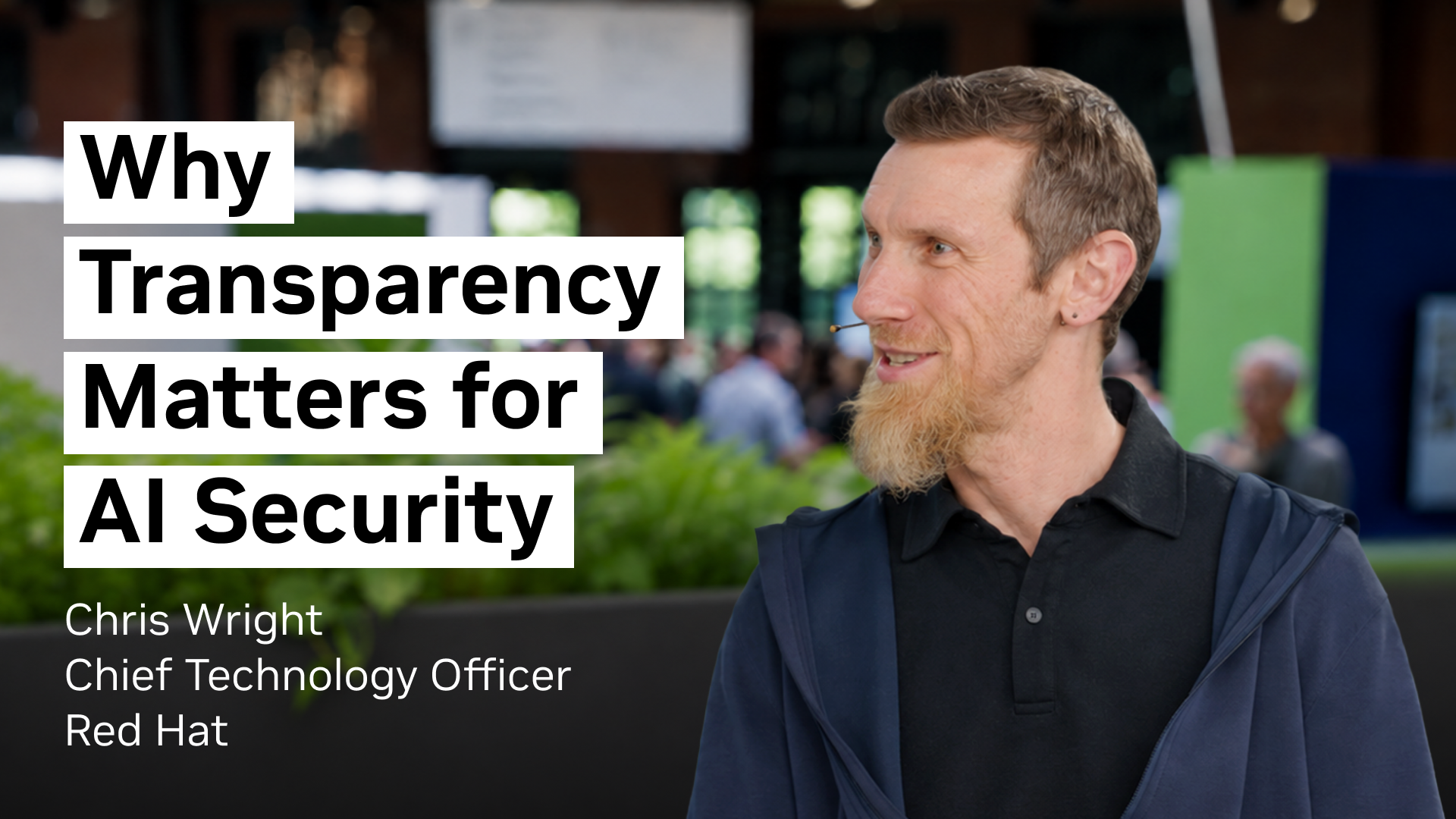
AIセキュリティに透明性が欠かせない理由 ― Red Hat CTO Chris Wright が語るオープンソースとエージェント保護
NVIDIA AI Podcast
NVIDIA Kumo:表形式データの基盤モデル――スタンフォード大学 Jure Leskovec 教授が語る
Super Data Science: ML & AI Podcast with Jon Krohn

Steve Yegge が語るソフトウェアファクトリーの構築
Software Engineering Daily

#254: Anthropic の記録的 IPO、サイバー攻撃が相次いだ一週間、AI Academy Day、Gemini 4 Neon、ジェンスン・フアンの復帰願望
The Artificial Intelligence Show

AIエージェントがITインシデント管理を変える:U.S. BankのMary M Goode氏に聞く
The AI in Business Podcast