
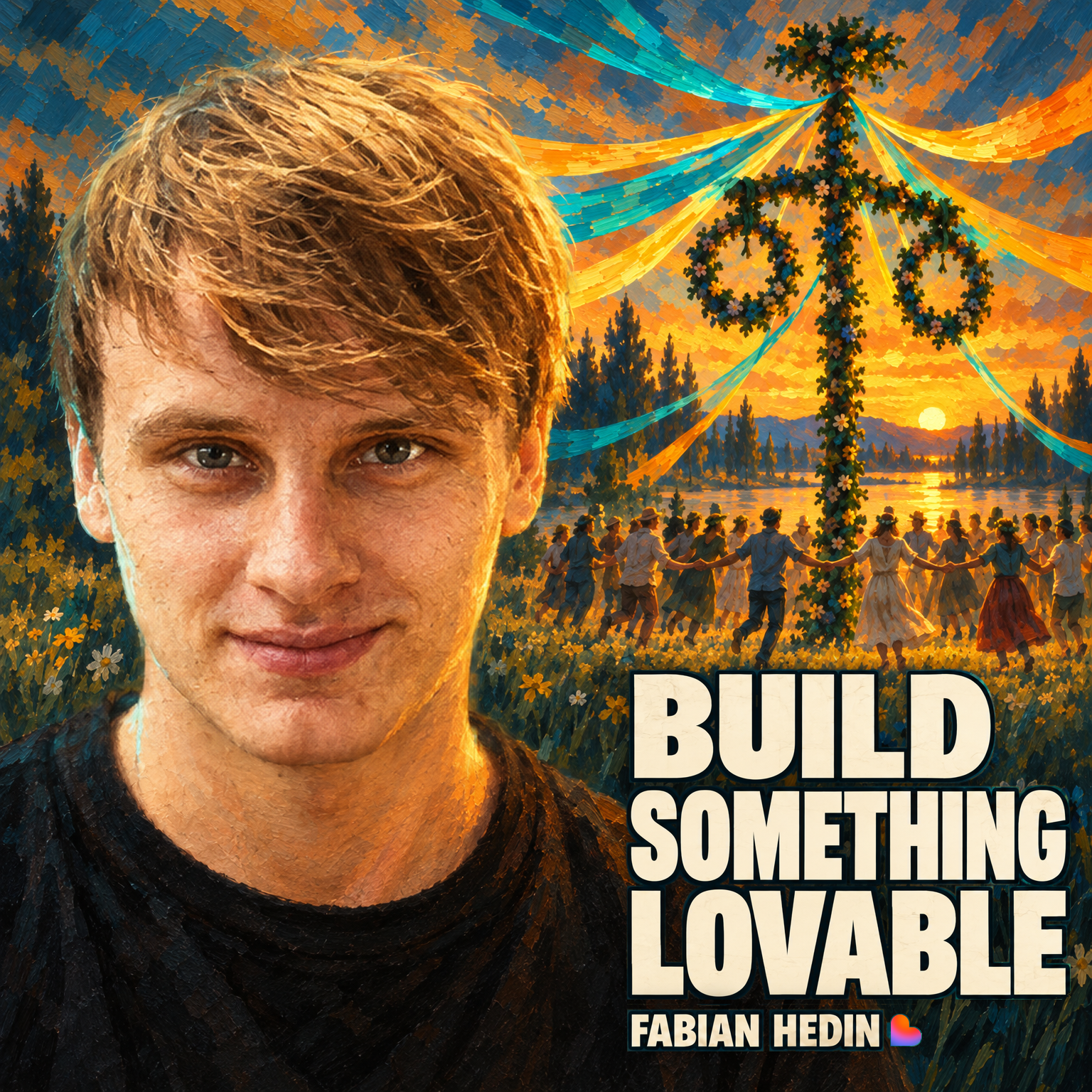
週100万件超のプロジェクト、ARR 6億ドル:Lovable CTO Fabian Hedin が語る「誰もが世界を形づくれる」未来
1M+ Projects a Week, $600M ARR: Lovable CTO Fabian Hedin on Empowering Everyone to Shape the World
週100万件超のプロジェクト、ARR 6億ドル:Lovable CTO Fabian Hedin が語る「誰もが世界を形づくれる」未来
"The Cognitive Revolution"
要約
Cognitive Revolution の Nathan Labenz が、Lovable 共同創業者兼 CTO の Fabian Hedin に、成長の背景と今後の展望を聞いた回。Lovable は ARR 6億ドル、週120万件の新規プロジェクトに達したという。企業向けのガバナンス、バックグラウンドでの自動セキュリティ対応、形式検証、ビジネス運営を代行するエージェント、モデルのルーティング、SaaS の行方、AI の安全性まで幅広く語られた。
この回のポイント
- ●Lovable は累計7,000万超のプロジェクトを抱え、月間10億超の訪問を集め、週120万件の新規プロジェクトが生まれている。従業員は約400人、有料顧客は約80万人、公表済みの ARR は6億ドルと述べた。
- ●開発が「100倍速く、100倍安く」なったことで、これまで作られなかったニッチなソフトウェアが個人から Fortune 500 まで広く作られるようになったと Hedin は見ている。
- ●企業導入では、既存のデータ基盤との接続、データ階層ごとの権限管理、監査ログなどを Lovable に反映させる必要があり、フォワードデプロイドエンジニアやパートナーが支援する。
- ●セキュリティは全プロジェクトの無料スキャン、依存関係の自動更新、生成時に作るテストスイートの再利用で担保する。データベースの行レベルセキュリティ規則には形式検証を使い、エージェントが修正を繰り返す。
- ●モデル選択はユーザーに任せず、タスクの難度に応じて内部でルーティングする。品質は下げず、速度向上とコスト低減だけを狙う設計で、単純な編集にはファインチューニングした OSS モデルを使う。
- ●従来型 SaaS は人間向けから「エージェント向け機能の提供」へ移行すべきだと述べ、AI 時代のリスクとして権力集中を挙げ、誰もが創造に参加できる環境づくりが Lovable の目的だと語った。
章立て
Lovable の規模と成長
プロジェクト数、従業員数、顧客数、ARR など現在の規模を紹介する。Nathan が自作の Fruitopia アプリの経験を語る。
新しい開発パターンと顧客事例
開発コストが100倍下がったことで生まれるニッチなソフトウェアと、ブラジルの個人起業家などの事例を紹介する。
企業向けガバナンスと導入支援
大企業で数千のアプリが作られる際の権限管理、データ階層、IT部門との連携、導入支援体制を論じる。
自動セキュリティと形式検証
全プロジェクトのスキャン、依存関係の自動更新、テストの再利用、DBルールの形式検証、AIUC 認証の意義を説明する。
事業運営を代行するエージェント
SEO や広告、顧客対応から経理まで、段階的に信頼を築いて任せる方向性を語る。
アーキテクチャとモデルルーティング
統合を内製するか提携するかの方針、TanStack 採用の理由、コストを抑えつつ品質を保つルーティングを説明する。
競争環境とモデル企業との関係
フロンティアラボとの共創関係、中国製モデルへの懸念、欧州の主権、競合との市場の見方を語る。
AI安全性と「誰もが創造する世界」
再帰的自己改善や権力集中への懸念と、Lovable の創業動機を語る。
解説記事
Cognitive Revolution の最新回では、ホストの Nathan Labenz が、スウェーデン発の「バイブコーディング」企業 Lovable の共同創業者兼 CTO、Fabian Hedin と対談した。ARR 6億ドルに到達した同社が、成長をどう維持し、ソフトウェア産業の未来をどう見ているかが主題だ。
数字で見る Lovable
Hedin によれば、Lovable 上のプロジェクトは累計7,000万件を超え、それらは月間10億回超の訪問を集めている。新規プロジェクトは毎週120万件ずつ生まれる。従業員は約400人、有料顧客は約80万人、公表済みの ARR は6億ドルという。Hedin はこれらを「顧客の成功の尺度」と位置づけている。
変化の本質は、開発が「100倍速く、100倍安く」なったことだという。自身の請負開発の経験から、かつては試作品だけで数週間から数か月、数千ドルかかったが、今は1日・20ドル程度でできると述べた。その結果、これまで作られなかったニッチなソフトウェアが生まれている。事例としては、ブラジルの女性が実務経験なしでデート相手の身元確認サービスを45日で作り、ARR 43万ドルに達した話や、約50人規模の企業が社内の約50のツールを Lovable で自作した話が挙がった。Fortune 500 企業の従業員の3分の2が試したことがあるとも語っている。
企業利用とセキュリティ
大企業では、数十万人の従業員が数千のアプリを作る状況が起こる。Hedin は、既存システムとの接続や監査ログ、財務や人事などデータ階層ごとの権限を Lovable に反映させる必要があると説明する。その導入にはフォワードデプロイドエンジニアやパートナー企業が関与し、「個人創業者と同じシンプルな体験」を企業の従業員にも提供することを目指すという。
セキュリティ面では、全プロジェクトを無料でスキャンし、依存関係の更新を自動で行う。以前は脆弱性を通知してユーザーに修正を押してもらっていたが、小さな変更の信頼性が高まり、自動化できる範囲が広がっているという。ビルド時に作られるユニットテストやブラウザでの動作確認が、後の自動メンテナンス時にも再利用される点を強調した。データベースの行レベルセキュリティ規則には形式検証を使い、データにアクセスできてしまう設定が見つかればエージェントに修正させ、証明できるまで繰り返す。AIUC の認証については、SOC2 が開発プロセスを見るのに対し、エージェントの安全性を見る点が異なり、主に大企業の信頼に役立つと述べた。
ビジネス運営を担うエージェント
Hedin によると、ユーザーの8割は他者への価値提供や収益化を意図して来る。そのため SEO ツール、広告作成、顧客対応と、アプリ制作の先へ機能を広げている。WhatsApp などでの顧客対応は、まず下書きを提示して持ち主が確認し、信頼が築けたら任せる、という段階を踏むという。将来は請求書の支払い、備品の発注、経理、要望機能の実装にまで広げる方針だ。
モデルルーティングと SaaS の行方
Lovable はユーザーにモデル選択をさせない。複雑なタスクには最高性能のモデルを、ボタンの色変更のような単純な編集にはファインチューニングした OSS モデルを割り当てる。方針は「品質は決して下げず、速度向上と、多くの場合コスト低減のためだけにルーティングする」ことだという。また、異なる提供元の音声モデルとコーディングモデルを組み合わせられる点も強みとして挙げた。
SaaS への影響については、モデルが強くなるほど自社の製品も良くなるため、恩恵を受ける側だと述べた。一方、従来型 SaaS は人間向けの機能を、エージェント向けの機能として提供する方向へ移るべきだという見方を示した。TanStack の採用は、サーバーサイドレンダリングによる検索や AI ボットでのインデックスのしやすさが理由で、既存の3,000万超のプロジェクトは移行せず、プリレンダリングで対応したと説明している。
ラボとの関係と安全性への見方
フロンティアラボとは「力関係」ではなく共創関係にあり、互いにフィードバックを交わし、推論スタックのバグ発見にも協力していると語った。モデル市場の競争と OSS の台頭は幸運だとしつつ、欧州が基盤モデルで遅れている点はリスクだと指摘した。中国製モデルについては、顧客によっては提供を避け、独自に安全性テストを行い、推論は中国で行わないという。
AI の安全性では、再帰的自己改善への警戒に加え、アラインメントが成功しても権力集中という政治的リスクが残るとした。Lovable 創業の動機を、誰もが世界を形づくれる状態を保つことだと説明している。
まとめ
日本の読者にとっての注目点は三つある。第一に、非エンジニアを含む全社員にアプリを作らせる際の統制を、権限管理・自動パッチ・形式検証で担保しようとする設計思想だ。第二に、モデル選択をプロダクト側が吸収し、コストと品質を両立させる運用で、自社サービスを設計する際の参考になる。第三に、SaaS がエージェントを顧客として想定する必要があるという指摘である。なお数値や展望は Hedin 自身の発言であり、独立した検証を経たものではない点には留意したい。
文字起こし(英語・自動生成)
Hello, and welcome back to the Cognitive Revolution. Today, my guest is Fabian Hedin, co-founder and CTO of Lovable, the record-breaking Stockholm-based vibe coding pioneer that invites you to build something lovable, whether that's a new product, an internal tool, or these days, even an entire company. When I first had Lovable CEO Anton Oseka on the show back in February 2025, Agentic coding was just starting to work, but Lovable's early growth had made it clear that there was immense untapped demand for custom software. Today, still less than two years since launch, Lovable has grown to more than $600 million of ARR and now helps users create more than a million new projects every week while also supporting over a billion visits to customer projects each month. The focus of today's conversation is how Lovable has managed to sustain such incredible growth,
and also how they're thinking about the future of both their platform and the software industry as a whole in light of ever more powerful coding agents. As you'll hear, there are several core drivers behind Lovable's success. First and foremost, they've made Lovable an enterprise-worthy platform. They've invested heavily in security, including by partnering with past guest AIUC, the AI underwriting company, to earn their stamp of approval. They're running security agents and upgrades in the background on users' behalf. And these days, they're even using formal verification methods on users' database definitions to ensure that user data can't be accessed in unintended ways. They've also built a team of forward-deployed engineers, which helps customers ensure that their data access rules are properly mapped onto the lovable platform so that enterprises can allow their people to build freely without worrying about data leaks or inappropriate access. And they've expanded how people can collaborate on lovable projects
so that non-coders can use the lovable agent, while professional developers can use whatever coding setup they prefer. I appreciated this last piece tremendously myself when I was creating the Fruitopia app, which I recently launched. To build the world's largest fruit knowledge base, I had Codex research agents scour the Internet for information on thousands of varieties of fruit, countless recipes and products, and even fruit festivals from all over the world. And then I pushed that database onto the lovable platform and built my app on top of it. This is just one new creative pattern of development that Lovable has recently unlocked. The other big push has been evolving Lovable from an app-building platform to a business execution partner. Fabian says that many Lovable users do intend to monetize their ideas. And Lovable aims to make that as easy as possible, both by curating best-in-class partner tools
and increasingly offering proactive agents that allow you to delegate more and more of your business operations. Along the way, we also discuss how Lovable manages costs by optimizing which model is used for which task under the hood, their product design philosophy, which emphasizes simplicity for users while also promising never to compromise on quality, the collaborative nature of their relationship with frontier model developers, how Fabian thinks about the risks associated with recursive self-improvement and AI-related concentration of power, and how he hopes that Lovable can help by building tools that ensure that everyone continues to have an opportunity to make their own individual mark on the world. With that, I hope you enjoy this insightful update on what it takes to build, scale, and secure AI-generated software with Fabian Hedin, co-founder and CTO of Lovable.
Fabian Hedin, co-founder and CTO at Lovable. Welcome to the Cognitive Revolution. Thank you so much for having me. I'm excited for this conversation. This is a bit of a callback. I had your co-founder Anton on the show back in February 2025 when you guys were just bursting onto the scene and setting all kinds of records for fastest revenue growth in European history and, you know, and also like pretty elite air when it comes to just all global startup history. But looking back, you know, it all probably seems pretty small and quaint from today's perspective. It was $9 million in ARR that you had run up to in just the first couple months in market. And you were adding about a million dollars in ARR at the time. And it was like, boy, this agentic coding thing might really be a trend. So, again, here we are in late 2026, and the world has changed a whole cycle or two since then. Maybe for starters, where is Lovable today?
You could give us the tail of the tape by revenue numbers, by user numbers, by employee numbers. How do you measure Lovable's success, and where are you? So we tend to look at our customers and what they are doing. and so today we have built around 70 million projects or over 70 million projects on the platform and these projects are getting over a billion visits every month. Each week we build 1.2 million new projects as well and so this is really the lens in which we view our success which is just the success of our users and so that has scaled immensely since You spoke to Amplenest. Yeah, it's pretty amazing. 1.2 million new projects a week. Are you willing to share headcount numbers? I mean, one of the interesting things, obviously, in the AI wave is this phenomenon of companies
that are doing so much more than was ever possible before with relatively modest team size. What can you tell us about your ratios of customers to teammates? Yeah, teammates is no secret. We have about 400 people working at Lovable full-time. We have around 800,000 paying customers on the platform. And the latest public AR number is 600 million at this point. So, as you may know, Lovable has recently sponsored the podcast. As part of that, I was invited to make a project on Lovable and host it on Lovable. And the idea that I came up with is something I've thought should exist for a long time, inspired by an obsession I used to have with mangoes, where I would always be confused as to why the mangoes I get from the supermarket are sometimes amazing and other times not very good at all, even though they look exactly the same. And when I eventually dug into that, what I realized is they're different kinds of mangoes, but they're being sold because they look the same as the same product.
But they come in from different parts of the world at different times of the year. And the quality is just a totally different experience. But that's like totally invisible to the retail customer. So I created this site called Fruitopia online at fruitopia.ai. I hope to be making a meaningful contribution to your visitor numbers before too long, although I wouldn't say I'm quite tipped over. Do you know how many visitors you have, Nathan? Not too many. I mean, I'm struggling to get Google to index the site, and maybe you can give me some tips for that. It's like slowly indexing, but it's been a bit slow. But the approach that I took, which I want to kind of just use as a prompt for you to maybe talk about some other interesting use cases and approaches is I first said, I want to build the biggest database of this kind of esoteric fruit information that I can so that people that have these kinds of questions, like why is it this way, can actually get an answer somewhere. It turns out that these answers are pretty deep and in dark corners of the internet,
in like fruit grower association bulletins and import-export schedules and all this kind of stuff. But by burning a few resets with Codex, I was able to assemble this huge database of all this information from all over the world in kind of a big pre-work process. And then move that database to Lovable and then start to build an app on top of it. And it kind of occurred to me that, like, there's probably a bunch of new patterns of app development that we really haven't seen before. Like in the past, you usually think like, okay, I'll make the app and then the users will come supply the information. And like if we can create a community and some density, you know, then it could be valuable. But here I was like, I can just have the AIs run, collect, you know, do the tireless and thankless work that would otherwise have been impossible. And then I can maybe bootstrap my way into something that's useful, even if nobody has ever even, you know, heard or contemplated the site before.
So this pre-database, pre-work to build the database is one paradigm I've kind of stumbled onto. But I'm interested to hear what other kind of new patterns of development or new use cases stand out to you from your customer base as interesting things that are new in the era of AI possibility. What you're describing, right, is like a new way to gather data and to kind of bootstrap, in this case, your fruit database. when I think of what has changed if we look at even just the past year or you can just look back like three years as well when this all started in some sense or form even though the capabilities at that point was very much limited compared to what it is today really within the last six months or within this year we've had such a step up in capabilities that people can really start building really advanced complex software and the major thing that has changed is that it's 100 times faster
and it's 100 times cheaper than before to build the software. And so the result of that is, first off, a lot more people are able to build software and a lot more software is being built. And from that, what happens is that a lot more niche software gets to be built, a lot of software that would have never seen the sun before is now being built and being deployed and being used, be it something internal within your family, internal to your business, or something that is serving others and actually a company being built around. And we have all of this happening on the platform, and our platform is designed to be so easy to use that anyone can use it. and so because of that design choice that we've made we really see a lot of users who haven't built software before but a lot of them have had ideas and some of them might even
have had to contract people and then you kind of go back and forth with a contractor. I used to build software as a contractor before and so I know kind of the pain of doing this feedback loop and you're trying to understand each other and it takes weeks or months and it costs thousands of dollars even to just get an initial prototype. Now you can do that within a day and pay $20, you know. And so that is really the core of it. It's just a lot faster, a lot cheaper, and you can get basically same quality or above quality of what you could before kind of using a contractor to do this, which was the alternative for a lot of people building on our platform today. Are there specific customer stories you would want to tell or apps you would want to, that are publicly available that you would want to point people to for examples of high achievement on Lovable? Yeah, I mean, there's a bunch of fun ones.
Maybe I won't point to this one, but it's always fun going out on the Internet and kind of seeing things in the wild. and our bookkeepers actually looked at it and I have this extension which says if it's built and hosted on Lovable and I saw it light up on their page and I thought it was very fun. So we're starting to see it in the wild kind of all over the place. But then to give you some examples, Sabrine is a woman in Brazil, which is our third biggest market, and she built this platform where you can do background checks on someone on someone if you go on a date with them. And she got inspired to build this after a femicide, actually. And this background check basically helps you figure out, like, oh, is this person you're going on a date with, have they been to prison for murder before? Like, maybe you want to know that. And so this platform, you know, it reached $430,000 in ARR, and it was built in 45 days. and she just built it solo without kind of prior software experience.
And so we have these founders examples all over the place. Another example from Brazil is a guy, Rafael, who builds this business where there are 50 people employed by this business and they're helping educate people use AI. And their business is fully run on Lovable. So they have around 50 different SaaS tools that they're using, but all of them are just built in level. And so they have this whole operating system for their business that they've just been able to build for themselves and fully customize it. And so they have full control of how their business is run and their systems fully match what they're doing. You know, each person that is closest to the problem within that business can actually iterate on that piece of software that is supporting the business. So there's that, and then we have in the Fortune 500, two-thirds of the employees there have tried Lovable as well. And so we really see this spanning from solo founders, individuals, consumers, up to the Fortune 500.
On the Fortune 500 point in particular, I recently attended an event with the good folks at IT Revolution. and one of the big themes of talks that happened there was how do we think about collaborating and how do we think about supporting all these apps that people are building? There were a bunch of people from relatively big companies who were like, you know, we've empowered people who used to be unable to create software to create stuff. They're creating these cool apps. They're solving their own problems. but we're struggling often when it starts to maybe outgrow, you know, that individual or outgrow that local team. It starts to take on a life of its own. They can't really scale it. You know, they can't really support it at a higher level. And so, you know, we're trying to figure out, like, what is the kind of right collaboration model. And I'm interested in what you have seen and learned about that because one thing I noticed that definitely tells me you're confronting those challenges
and thinking about them is you've got like a bunch of different ways now, kind of the full spectrum essentially, right, of ways that people can contribute to a lovable app. You can just go on the website, prompt the lovable agent, you know, make changes there. That's kind of where it all started, of course. You've got the MCP, which was really useful for me because I've invested a lot in my personal AI setup, and I actually had this idea kind of, you know, filed away for the Fruitopia app, like, you know, before it was like the time to actually build it. So to be able to tap into the agent knowledge, you know, and get things going that way was convenient. And then of course people can like put the code on GitHub and, you know, contribute to whatever kind of coding workflow they're comfortable with. So how are you seeing companies that are successful in terms of empowering people, but then also like providing that support or, you know, bringing in the true software expertise from their organization when needed.
How are they structuring that and how are you supporting it so that we don't have a chaos of orphaned or sort of half-working projects across large organizations? I think it's very interesting to look at the difference when you have a solo founder building something in LoveVol and how they kind of just hit the ground running and they're able to build things and come really far extremely quickly. And then you take that same experience in a larger enterprise where there's often a lot of, I usually call it red tape, and it sounds quite negative, but that tape is often there for a good reason, right? You have a bunch of customers probably, you have responsibilities towards these customers, and you're under regulation, and you're probably more risk-averse than someone building a prototype from scratch. And so you need to take into account all of the data that you might touch. If you build an app on top of this data and publish it to the Internet,
you need to be very careful that you're actually allowed to publish this data, that it's secured in the right ways, right? And so that's one thing of just kind of controlling the risks of creating software, which is kind of inherent to software when you start deploying things. And the other piece is more organizational. where all of a sudden you go from just the engineering organization being able to build software to everyone in the organization to build software. And we work with a lot of large companies in helping them figure out this journey. And I would say it's continuously evolving the way you handle this. But in essence, you end up with a situation where you create thousands of applications across hundreds of thousands of employees. and you need to make sure that as an IT team, really, which are the people in this organization that are responsible for the security of the software
that is being created like that, it can often be split between IT and engineering in this case. But we really work with them to make sure that they have the tools to, first off, make sure that the software is built in a way that hooks into the existing systems. And so you might already have data sources where you have like audit logging and these things and the apps you build and all about you just hook into that. Okay, let's make sure that is the case. And then you might have different controls on different tiers of data. You might have internal kind of permissioning where someone in finance has access to this type of data. and that should be separate from someone in the people team who has access to a different kind of data and the classification of this data might be differently and all of these more mature organizations often have kind of tiering of the data and so on and so we basically work with them to make sure that this is all reflected in Lovable
and the end goal is really having as simple as an experience as you would if you came into Lovable as a solo founder we just had this chat and this preview where you're going, that you will have that same experience if you're an employee at a large company. So does that involve like a services level engagement to kind of map that out, make sure that there's a good understanding and their data and permission model is reflected on a level? Like that sounds hard to do if you're kind of taking the product-led growth land and expand strategy. I mean, you can, of course, still, like, break into accounts that way. But am I understanding correctly that there kind of comes a moment when it's like, okay, your organization is now, like, making a real investment in Lovable. You're going to equip people with these tools. But in order to make sure we do it in a well-controlled way, we're actually going to get with you and, like, do this sort of data mapping.
Do I have that right? Yeah, definitely. So we often rely on people finding our product through just kind of word of mouth and people building. And then within these larger organizations where they start to adopt it more seriously, we often talk with them. And we have internal resources such as for deployed engineers and deployment teams that go out and help make sure that it's a success. And that could be anywhere from going after this one use case that they're interested in and just helping them implement that to working with the board, the leadership team, the executives or the IT team and engineering and make sure that, okay, we're following these general best practices that you have within your organization. And so we have our own resources for that. And we also work with different partners that help us do that at scale as well. Hey, we'll continue our interview in a moment after a word from our sponsors. Today's episode is brought to you by Amthropic, makers of Claude.
To show off Claude's latest capabilities, I asked Claude to take the lead in making this ad. Given a short creative brief, Claude, using Opus 5.5, studied my past Claude ads, wrote this script, directed a clone of my voice, and designed and coded the animation you're watching. My job? Give feedback and decide. Claude is the AI for problem solvers. It's the collaborator that understands your entire workflow and thinks with you, not for you. Whether you're debugging code at midnight, building a financial model, or strategizing your next business move, Claude extends your thinking to tackle the problems that matter. And with Claude Code Routines, it keeps working in the cloud even after you close your laptop. For problems worth solving get started with Claude at Claude slash TCR That Claude slash TCR And check out Claude Pro which includes access to all of the features mentioned in today episode
Claude.ai slash TCR. This episode of The Cognitive Revolution is brought to you by OutSystems, the leading agentic systems platform. We've all seen the headlines. companies are pouring money into AI. But the big question on every executive's mind right now isn't just how fast can we adopt this, it's where is the ROI? We're seeing a real trend toward AI chaos. You've got teams deploying standalone coding tools, random agent builders, and experimental scripts. It sounds innovative, but in reality, it's creating a massive headache. Fragmented tools, ungoverned data, serious security blind spots, and costs that are spiraling out of control. If you don't bring those agentic applications under control now, while they're still embedding into your core processes, you are looking at broken systems and damaged customer trust down the road. That's where OutSystems comes in.
OutSystems is the leading agentic systems platform for the enterprise. Instead of managing a patchwork of disconnected tools, OutSystems lets your team engineer, orchestrate, and govern your entire agentic ecosystem on one open, unified platform. It's built for the speed of AI, but with the reliability and security that enterprises actually require. We're talking about real results, like KeyBank, who used out systems to deploy a customer-facing app that delivered 75% faster onboarding times. Or the global logistics leaders who built agentic systems to completely eliminate their engineering bottlenecks. You don't have to choose between speed and control. Whether you're a small team or a massive enterprise, OutSystems helps you engineer, orchestrate, and deploy agentic systems that actually scale. Stop chasing the hype and start owning your agentic future. You can see how it works and learn more at outsystems.com slash TCR.
That's outsystems.com slash TCR. are. Now I'm starting to get a sense for what some of these 400 people are doing. Of course, the other big thing that I'm sure is coming up with probably scary frequency right now is questions about security. So how are you thinking about this? We are in, you know, such, I don't need to tell you, right? We're in this kind of heckpocalypse, vulnpocalypse, whatever we want to call it. I know that you guys have been ahead of this because I'm a very token investor in AIUC, the AI underwriting company. And I know you guys have been an early customer of theirs and have kind of gone through their whole like agent standard certification process. I don't know if that like puts people's fears to bed or not, but what are you hearing from customers? And maybe more importantly, like, what are you actually doing to try to make sure that you are providing
the, you know, the most security you can to customers? And I guess maybe even like, how much security can you realistically promise to customers right now? It strikes me that we're in this moment where, you know, you could potentially do everything right and still have kind of unknown, unknown risk, right? The situation that we're in right now with security reminds me of Murphy's Law, like anything that can go wrong will go wrong. And that's just like a way to think about building software. And that's really the case where we have, you know, software that has been around for tens of years with bugs in them. So there's Nginx recently here, right, where you get these kind of remote execution bugs where they've been in the program for 10 years plus. And you have, you know, you have issues with PHP where, you know, about half of the Internet is running on this. And so you start finding this all over the place. And then if you zoom back to Lovable now and you think of, okay, you actually have people building software who does not necessarily think about the security piece of it.
And so the way we think about that is that we, of course, have to take care of making sure that the software that you build on Lovable is secure and that you can build platforms on Lovable serving customers in a way where both you building that and your customers are safe and secure. And the way we do that is to really kind of scrutinize the code that is being built on the platform. And this has to be done in the same way that the code is being built, right, by having AI make sure that that code is safe. And we do this in a few different ways. We have security scanners on Lovable that scans every project being built. and we do this for free, by the way, because we want to incentivize people to do it. You don't really have a choice. We're going to scan your project for you, right? And then as your project starts evolving, right, and it goes out there, then first off, we're just making sure everything is up to date. Again, with kind of the PHP analogy
where you have so many WordPress sites out there living in a VM that are not getting updated, right? That's not the case with Lovable because we're managing the infrastructure to make sure it's always on the latest. But the code itself is specific to the app. And so to manage that, we need to make sure that we have agents continuously analyzing what is being built and making sure it is secure. And so we do everything from looking at dependencies in your app and bumping and updating those automatically without you making a change to the app because we don't want you to host something that has, like, an own vulnerability in it, right? We're kind of on this journey where actually making small changes to your app is extremely reliable. And so before, what we used to do is, like, we found a security vulnerability, and we would send you an email, and we would give you a pop-up in the app. And before you publish it, we would warn you, like, hey, you have this vulnerability, but you would have to click, like, fix, because there might be something in your business logic
that there was a vulnerability or it might be something else, but we're kind of afraid it will affect your business logic or anything else in the app. But really the reliability of making these changes is getting to a place where we can do more and more of this automatically. And so we're moving towards this way of handling security where you truly do not have to manage it as a user. And we're not quite there yet, And I think we're on this journey with our users where we want to make sure they're educated and we do this within the product as you're building. Like if you're prototyping, it doesn't really matter, right? But as soon as you want to have real users on there, we really make an effort to make sure that you're educated. And more and more so, we're making an effort to, even if you kind of choose to actively care about this or not, the app is just kind of auto updating. and we're making sure that, especially when you have these end users, that you have business logic that actually makes sense and follows the regulations
and just, I would say, basic common sense and security of what is being built. Which, you know, is a hard problem when you have 70 million apps out there being built and iterated on the platform. So does that mean when you say it's getting reliable enough, the gold standard typically for, well, I'm no security expert, but certainly a component traditionally of making upgrade like this would involve end-to-end testing from the chair in front of the app, working through all the flows, making sure everything still works the way it used to. I'm guessing you're not doing that, right? How much can we rely on just the coding agents are good, they get it right, or, like, we build out a few kind of unit tests, we make the upgrade, we make sure the tests pass, or maybe you do have to go through all the ways still to, like, end-to-end, you know, click through the whole app testing.
How much are you finding is necessary to be able to run these background updates? It always depends on the update itself, right? If it's just, like, patching a vulnerability in a dependency in the app, you probably don't to have to run kind of a bunch of agents going and crawling the site in all possible ways. Anything could go wrong in an end-to-end way. But if you're changing some of the business logic, then, you know, you want to make sure you run your unit tests and your end-to-end tests and that you might even do some agentic discovery outside the testing suite. One thing that we're doing here is that when you're actually building on Lovable, Lovable, as it is building for you, it is also testing it for you. And the way it's testing it is partly by writing actual unit tests in the code. And so as you build out your app, you also build out your test suite. And it might also go in with its own browser and click through and make sure that it works in an end-to-end way. But by building out this test suite, we're putting ourselves in a good spot later on
when, okay, we find this vulnerability or this potential issue that might be just a result of kind of the outside world, finding a deep vulnerability within Node or whatever it might be, right, and we need to make this update, then we can actually run all of these tests that are already made from when you built your app out. And so the more and more we verify your app when you build it, the easier we just make this kind of continuous maintenance of the app, which, by the way, is like one of the big value adds that we can have as a platform when we take kind of this more managed approach of the software that you're building, right? Where we can actually follow it over time. We have user analytics. We have everything going on. And so we can make sure that even if you're not on top of this yourself, that we can actually help secure, help make sure it keeps running or whatever it might be when it comes to ongoing maintenance of the app.
The other thing that really jumps out to me is, like, getting into actually analyzing and taking some, like, partial responsibility for the user's business logic. This is, like, really, you know, kind of beyond anything anybody would have been thinking about not all that long ago. How far does that go? Like, do you – I mean, you guys are an AI UC customer yourselves. Like, I guess a maximalist version would be like, you could go try to apply the AIUC standard to all of the AI apps that people are building on Lovable. Does it go that far? So I would say we're using the same kind of best practices. Like, when we went through AIUC, it was mostly like, okay, let's make sure we get this stamp of approval, and maybe there were some things that we improved in that process. But really, the way we're working is that we're internally always pushing the frontier on how software is built, and then we're able to productize that because essentially we're doing the same thing that our customers are doing, right?
Even though we get 4% of the traffic that they are getting, which I think is a very fun statistic. but for these apps that are built it is of course very important that they are safe and they have the frontier level of techniques when it comes to building them and to your question of do you care about the business logic when you're building these things we've seen this evolution of how abstracted you are when you're building. And what I mean by that is when before you had LMS, you were looking at the code like you had to. You were the only being out there, let's say, that could iterate on this code. And since we launched or built the first version of our product in 2023, our interface has basically been the same as it is today, where you have a chat and you have a preview of what you're building.
And that's the level of abstraction that you're working on. Now, as we've been at this problem for a while and the models have improved and our system around those models have improved, we've gotten to a place where what you're chatting about is also being abstracted, right? It's being elevated, where you're not necessarily chatting about specific files in the code or specific kind of business rules and so on. You're more chatting about the goal that you have, user problems that you're solving, and then you can let Lovable implement that for you. And so we're going from this place where you're basically just expressing your ideas or problems, and from that you're building a product or a company or just getting to the solution of what you're describing. And you don't have to be as much in the details of how this implementation actually happens. Most of our users are not at all in those details, right? Yeah. I mean, it really is something else when you could just sit down and say,
I want to build the world's biggest knowledge base related to fruit. Let's go. And it just takes off from there. It's honestly amazing, and it's good to be reminded of what is actually going on here, right? We have millions of users being able to do this, and I think that's the motivation for a lot of us here, building, what we're building is that when you see people who have had these ideas for years that are going around and they haven't really had the resources or the capabilities to turn those ideas into reality and all of a sudden they go in and write one prompt and they just get this wow moment of, oh, I can actually do this. And then you start building and you see these amazing examples of solo founders and people within businesses and really everywhere just being able to build. You mentioned like frontier security techniques a minute ago. Does that include or what do you think the prospects are for leveraging things like formal verification?
I know this is like a huge trend, but I'm not sure if it's really a trend that's like broken through to the level of widely adopted platforms like Lovable. How much mindshare do you have for formal methods? What role does it play for any now, and how do you expect that to develop? Yeah, so we already use some of this internally. And the idea, right, is that you're able to formally verify that whatever you're building, it works the way you intend it to, right? And if you rely on unit tests and end-to-end tests, it's not a formal verification of that. And this just comes back to creating this iteration loop, this feedback loop of an agent writing some code and then getting some feedback of was this correct. And it might be like runtime or real-time errors on the actual code itself. But the output of lovable write is not only code, it's a product or it's a business. And so we want to verify that your intent is correct.
And formal verification is one way to do this. And to give you one example in how we're using this in the platform today is when you create a database, we create kind of role-level security rules for you, or less rules. And we can, in our security scanners, we can formally verify is data that you have within your application, is that accessible or not? and this is not done through test and so on, but we can kind of formally verify that and feed that back to the agent and say, okay, no, there is actually this way in how the rules are configured that you can access the data and therefore the agent can patch that and, you know, that loop keeps on going until we can formally say, like, yes, okay, the data is not accessible. That's cool. Hey, we'll continue our interview in a moment after a word from our sponsors. The Cognitive Revolution is brought to you and powered by Tasklet. I've been running Tasklet agents for almost a year, and they've become a major part of how the show gets made.
Before every recording, one agent researches the guest and sends me a suggested outline of questions, complete with links to all sources. Meanwhile, another agent scores the overwhelming number of pitches that I'm getting from PR firms. And that's really the core idea behind Tasklet. Run your business on agents by giving them real jobs to do on an ongoing basis. Setup is incredibly easy. Just describe the work in plain English. Research a new sales lead, update the CRM, and draft a personalized reply. TaskLite connects to your business tools and can run around the clock, on a schedule, or when something happens, like a new email arrives. Each agent works with your tools and business context and remembers useful information across threads. You can also share agents, connections, and reusable skills with your team, so the workflows that one person figures out become something the whole company can use. No developer needed. You decide what agents can do on their own and what needs your approval,
and there are no per-seat fees. You pay for usage, not for adding teammates. Start with one recurring job, like researching the people you're meeting, and then just keep building from there. Visit Tasklet.ai and use code COGREV for $50 in free credits. That's code COGREV at Tasklet.ai. So you mentioned also in referring to AI, you see a stamp of approval. And I'm interested in, like, the motivation for that and the impact of that. I know Lovable has kind of, you know, deep in its DNA, an interest in AI safety kind of big picture. And the AIUC folks are, you know, of course, trying to create a market in insurance to, you know, create the right incentives to get people racing to the top, et cetera, et cetera. How much do customers care? Like, do customers see a lot of value in this sort of approval?
Do they maybe care more about actual insurance? Like, have you been able to go out and buy insurance? I'm very interested in that because my sense is it's, like, probably pretty tough to buy insurance for a platform like Govable, but maybe with AI you see you've been able to. Maybe customers care that there's, like, actually, you know, a financial backstop to this sort of thing. Maybe they care more about frontier techniques like formal methods. Maybe they have no idea what to look for. What are you hearing from customers in terms of how discerning they are on these security questions and what moves the needle for them in building confidence to actually make you guys the default app that they're going to roll out to all their non-developers? When building software for people in the way that we're doing, and we're hosting that software and we're helping maintain it and evolve it, we take a lot of responsibility. and so trust from the user, like we're hosting their data, we're hosting their database, we're sending emails on their behalf, right?
We're getting more proactive in doing a lot of these things and so making sure that what we're building is not prompt injectable or it's not hackable in traditional ways either is of extreme importance. I think just from a moral perspective first off, like when we build this platform, right? but also from a trust perspective of our users. And I think most users going to our platform, they just know kind of the brand lovable and they choose to trust that brand. We've had in the software industry for a while different types of certifications such as SOC2 where you have an independent auditor coming in and looking at what you're building and saying, hey, are you using best practices here? Is it secure? And then you get this stamp of approval saying, like, yes, it is, and then you renew that every now and then. And AIUC is very similar, but it takes a different approach, right, where you do not look at maybe the same thing stock two is,
which is more kind of the standard development processes and making sure you have standard encryption in place and all of these standard best practices, but you're actually looking at how you're building agents and are they secure. And so for us, it's one way to ensure just for ourselves, like, yes, we're actually doing this in the right way, and also a way for us to share what we're doing with the rest of the industry. Because I think it's just a moral responsibility for anyone building at the frontier, building these systems, that if you find a way to make them safer, everyone should follow that. And so that's the motivation for me working with AIUC. And I do think it helps mainly with larger companies who look more into the certifications behind our product, that they can know for sure that we have this independent auditor saying, yes, they are using these best practices and they are secure. And that is not only us saying it. So you mentioned they're being more proactive. I think this is also a really interesting frontier of capability
and like a kind of rethinking of the way that people partner with their software providers. So in creating this Fruitopia app, the first thing I want to do is just create a public good. I think it's like awesome when, you know, a company like Glovable sponsors a little guy like me to create something I've always wanted to create. And now hopefully, as soon as Google indexes it, you know, then the world can kind of have better access to these sort of, you know, esoteric fruit questions and answers than ever before. That's my Fruitopia dream. Um, but then there's also like, well, since I've done all this, maybe it could be a business, right A lot of people are trying to sell all kinds of fruit related products Maybe I can get into um you know referral marketing I don know So when I think of this sort of like AI partnership in business I think of your fellow Swedes and in labs who have, of course, you know, pioneered autonomous organizations and, you know, done a very, I think like fun and experimental gonzo sort of take on that.
But you're kind of doing that now too, My understanding is that one of the big pushes is how can we make Lovable a little bit more of a business advisor, a little bit more of an execution partner? Where are you on that today? How much do customers actually want? And what should I be doing to take advantage of that so I can actually not just provide a public good but maybe even capture some business value for myself? Yeah, I love the journey that you're describing. I think it reflects how a lot of our users are thinking and how they kind of come to our product and how they evolve as you're using our product. And so a lot of people, they come, they have some idea, and that idea intrinsically often has some value to it when you create it, such as knowing if the mango is fresh or not or which type of fruit you should buy at what point in time of the season, right? and as you do that you often figure out
hey this can create value for others and actually 8 out of 10 of our users they come to Lovable with some sort of intention to create value for others or making money off their idea and so from that we're really being pulled into this direction of just helping them achieve their goals that's what we've done since day one and it started with helping them build the software for this And that is getting, you know, it's not a totally solved problem, but more and more people are getting to the point where they've just built out the software. And so the focus then goes to SEO, as you mentioned. Have you tried our SEO tools there? You can connect it to Google Search Console and so on and make sure that the agent can help you optimize that. We've launched ads where we help you create ads to Meta and Google and have the agent help you create that marketing collateral. And again, closing that feedback loop from, oh, hey, was there a problem with these ads?
Maybe there was a problem with the conversion and then maybe you have to fix the ad itself or there's something with the product that you have to iterate on. And us just being able to package more of these capabilities is all in the name of making sure users can actually reach their end goals of creating a successful business on the platform. How sort of autonomous do you think people, I guess how autonomous are the agents ready to be and how does that compare to what people want? I should do the, I didn't realize I could just do all this as maybe much as I can within Lovable. So what I have currently set up is my own personal agent is collaborating with Pion from Andon Labs, and then I set up my own, like, you know, little agent within that, which is called Poem, after the type of fruit. And so they've been working on this search console thing, so it, like, might be done, but it's not, like, done directly within Lovable.
For me, this has kind of been, again, just a gonzo experiment. Like, what happens if I try to put an AI in charge and tell it, you know, go make this into a business? But I realize I'm like just signing up for an experiment or kind of, you know, the value of this for me is the experiment in a way that like probably for a lot of people it's not so much who just like actually want outcomes. So where are we right now in terms of how much sort of business execution delegation people should be slash are willing to give to their lovable agents? Yeah, so what we're building on right now is in this direction of more proactiveness, which, as you're highlighting, is more sensitive when you're doing it in the context of a business. I think some of these more proactive products we're seeing is more about your personal inbox or maybe your company inbox and so on, but they're kind of smaller decisions
and they're more kind of helping you run your day-to-day, right? But what we're talking about here is actually helping you run your company. What we're seeing is, first off, the marketing and the customer support side of things is a place where it's very easy to have high ROI on helping users automate that proactively. And so some of the things we're doing, for example, is if you have a local business, you probably have like an Instagram or some sort of social. and a lot of people actually run their business through WhatsApp and these sort of applications, right, where you kind of have one-to-one DMs with your customers. And so what we're doing there is that we're giving level context of these conversations and helping them proactively answer these questions. And it starts out in a way where you're building trust with the user here and you're also teaching the system on how to handle these conversations.
and so you might start drafting kind of messages and then the owner of this business would review them, edit them and send them out and give some instructions on how to do it better next time, right? And at some point the owner would say, okay, you just handle this. I trust you to handle this, right? And so that's kind of the marketing side. You're conversing with customers, so it's somewhat sensitive, but you can take it to other areas in the business as well, right, where, okay, marketing, sales and so on, but then also the internal operations where you're handling paying invoices, potentially ordering supplies for your business, keep on developing the platform, right? It might be simple things such as iterating on the copy of the website if you're doing some ads and optimizing the conversion, or it might be building out a feature that a bunch of customers requested, right? And so you start finding all of these areas where you can help automate things, boring things such as bookkeeping and things that you shouldn't have to care about.
And that is really our mission and our direction where we're just helping you remove all of this friction so that you can just focus on what you actually want to focus on. Let's talk about some under the hood things for a minute. One thing, if I have the lovable story correctly in my understanding, is I think a big initial unlock was curating a number of really critical integrations. And, you know, back when the coding agents weren't necessarily going to get all these things right on their own, like making sure that the patterns of how to do, you know, I don't know, a dozen really common and really critical things well with the best in class partner for email sending, you know, what have you, were all kind of preloaded so that people could very reliably get those things working. Today, you've mentioned a couple of times things like bookkeeping or, you know, ordering and managing like in your own internal supply to run your business.
These sorts of things traditionally were like standalone platform apps that people, of course, had subscriptions to. Where are you now? Like who's kind of winning with Lovable in the sense of like you're like, okay, this is a piece of core infrastructure that we don't want to rebuild, you know, that earns its place in the ecosystem that we want to integrate and kind of follow that traditional pattern. and what sorts of use cases are you just like, you know, the agent is so good at this, we don't need to, like, tell people to sign up for another subscription. We'll just, like, have the agent spin up a custom version of it for their needs. And then, you know, then it's all just contained within Lovable. How do you see the evolution of who earns their keep and what just gets redone from scratch for people all the time? Yeah, so when we reason about what do we build ourselves, what do we partner to build,
and when we partner, do we do something that is kind of white-labeled or do you sign up for this separate product or is it more of like a power to buy within our product and so on? And so the main driving factor behind any of these decisions is what creates the best experience for our users. and to my earlier point of just removing all of the friction that you can imagine and just making this experience seamless, for a lot of the core capabilities, it means that we're building it in a way that is fully seamless for the user and so they don't have to go and sign up for a different service and enter their kind of building card there and so on. And then on top of that, when we start reaching the scale that we have, not all providers are kind of keeping up with that, right? And we end up wanting to take more control to increase reliability or customize it more in how we want it to work.
So we've been a bit on this journey of going from kind of having level, if you wanted some database before, you would go to a database externally for example and sign up and have a different account and that was great in the early days, right? But as we evolved, we kind of just wanted to make that experience seamless and this is true for like other type of capabilities in Lovewell as well and now it's at a place where you basically just say you want to build something and we figure out, hey, you probably want a database for that and we spin it up for you and we will use a provider and we still use a database under the hood as a Postgres provider for that. we might use other providers or what be it, but you as a user, you don't really have to think about this. And the same is true for sending emails or accepting payments and doing anything that might require some capability that we don't want to build in-house. But we don't want to, let's say, add friction in the experience for our users.
Now, having that said, a lot of the times you as a user, you trust some brand or you have an existing relationship with that brand and you want to use them. And for that, we have connectors in the platform, right, where we make it very simple to connect to Superbase, Stripe, different email providers, and anything like that, where it's just like an OAuth connection. And we can do a metered billing with them and so on, so that we just try to make that experience as simple as possible as well. And so we just try to keep it extremely open. If you want to use something external, you can do it. And if you don't really have an opinion, we just try to not disturb you with going and signing up in different places. One other thing I noticed under the hood is it seems that you've recently changed from a React app by default to now leading with Tanstack. This is something that kind of honestly caught me by surprise. I guess I'm not – I'm working at such a high level of abstraction now that I don't think about these things as much as I used to.
What led to that change? And was this something – my guess is you didn't go back and, like, migrate all historical apps to the new framework, but maybe you did. Are you just kind of supporting, like, different generations or eras of apps at this point? But the biggest question is just, like, what led to that change? I mean, React has been so dominant for so long that I was surprised to see something else had kind of taken the default position. I can nerd into this, right, and kind of exchange some of the details here. So Tanstack itself is a meta framework on top of Vite, which is a framework to run a dev server and as well as build JavaScript. And Tanstack, which is the meta framework that we've started using, it actually uses React. So React is this framework that is still in use, and we've always actually been on this Vite ecosystem as well.
And so really what we did is we went from a bit of something I set up like three years ago, and it evolved since then, but it's kind of a bit more bare setup, very simple. It was great for agents to use back then because it was a very simple setup to something a bit more flexible and something where you could do different types of rendering on. And so the main driver for us to adopt TAN stack was actually that we wanted server-side rendering, which ties back to something you mentioned earlier where you're like, oh, Google is not indexing my website. And so when Google crawls websites, they either just crawl something that is server-side rendered, and in that case, you kind of make it easy for Google where they just have to make a web request and they get the entire page content. Or you have something that is a single-page application that is rendered in the browser. And then in the case of Google,
they have to have a headless browser go in there and kind of read your request and render it out, and then they can index it. And so Google is quite good at doing this. Other indexers are a bit worse. And so to just give our users the best possible opportunity to be indexed all over the place, especially when you start having more and more people discover websites via AI bots that might not use Google's very evolved systems, let's say. We wanted to make sure that we can actually do service-side rendering. And so that is something where a Tansac comes in, where you can actually kind of define where some parts of your application, you might want to have them rendered in the browser for performance reasons. And some parts, if you're building this landing page that really should be indexed by Google, our agent will do that server-side rendered. And so we've adopted that and we haven't migrated all of the old projects. We added the capability for those projects to be server-side rendered
by doing free rendering instead. And so everyone kind of had this capability that we avoided migrating over 30 million projects to a different stack. You can ask Laval to migrate it and it will do it for you, right? Yeah, that would be probably a lot of questions coming back at that scale. I want to talk a little bit about models. There's obviously many aspects to this, but maybe let's start with how you manage costs on your end, right? You've got, this has been a huge challenge over time with, you want to provide some sort of predictable pricing to your customers, right? And people have tried a bunch of different things from, well, we'll just charge a consistent monthly price and it'll be on us to handle it. Or we'll have like some kind of internal, you know, token or credit type currency that people buy and then they spend. But then under the hood, you've got, you know, new models coming all the time at different price points and not just different price points.
But, you know, of course, some of them are more token hungry, less token hungry. Like the price per million, you know, obviously doesn't tell the full story. You mostly hide that complexity from what I see in the interface from the user, right? You've got three modes of build, chat, and plan that are kind of the main modes that people interact with the lovable agent in. But how are you tackling this problem of trying to make sure the economics of the business remain good while delivering the best possible experience on top of this incredible churn of constantly new models? Yeah, so it comes back to this design philosophy of making a very simple product where we don't think that humans necessarily should have to play with a model selector for every query they make. And I don't think humans are the best at selecting the most optimal model either. It's just hard keeping up with all of the different models coming out, right?
And so we've chosen to let the system handle that selection instead. And so under the hood, we're using a host of different models, and we're always kind of A-B testing and evaluating models in our offline benchmarks and our LM judges, and then also in production with actual users where we can see which models perform the best. and our commitment to our users is that we'll always give them the best possible quality, I would say, within reasonable constraints. When you have competition between the frontier proprietary labs, they will come out with new models and we're testing them all the time. We're working with them. We have great partners. We're great partners with all of them. We're partners with a lot of open source labs as well and we try those out in the same way. And then we're able to have this palette of models
where we can choose to serve the one we think is best suited to whatever you're doing on Lovable. And so if you're building something and it's something that is more complex, like we'll route you to the best possible model. If you're building something that kind of requires a medium level of intelligence will route you to a bit more reasonable model, let's say. And if you're doing something super simple, such as change the color of this button, you just want that to be fast, you want it to be cheap, and you don't really need to have the absolute frontier level model for that. And so we'll route you to a fine-tuned open source model. And by being able to do that routing ourselves, we're able to really optimize this system where we can keep on giving the quality at the highest possible level we can. And that's part of the design philosophy behind this,
that we'll actually never route you in a way where we would lower the quality. We'll only route you in a way where we would either increase the speed and often at the same time decrease the cost. And so that is somewhat of a no-brainer to do, but it's actually very hard to do if you would have controlled that drop-down selector yourself. So that is kind of the thesis behind that. And as a company, of course, we find it very important also that we actually make investments on this model layer with the router, which is doing all of this decision-making between which model you're using, and as well as being able to uplift these open source models by fine-tuning them and doing post-training in a way where we can actually at times have them out-execute some frontier models on our use case. How core is that to the long-term kind of lovable defensibility story? I mean, obviously one big challenge that people have for many software companies,
and I tend to use this lens by default myself as like, I don't know, man, like a lot, you know, the models can do more and more all the time. I expect that like the number of SaaS subscriptions I'm going to have is probably going to continue to decline because, you know, the models will either just do the tasks that I used to have SaaS apps to do or they'll like make me a custom app, you know, when needed. but it does strike me that one thing that the models will not do well and that like individuals are not in a great position to do well, is this sort of like optimizing against the landscape of available models. And you have both the scale to do that and the, you know, the incentives to do that optimization on people's behalf. Is that a big part of why you think Lovable remains above the line of things that get eaten by Frontier models over time?
Or what else feeds into that story? Well, I do think we're able to do some things on the model layer that is quite unique in that we're able to route between model families of different providers that you couldn't get if you go directly to a provider. And so we're able to combine a voice model from one provider with a coding model from another, and they might be best in class in each type of model, right? And so we can combine that and just give a great experience. But I think when you're talking about this SaaS apocalypse, thing where you have a lot of SaaS that is not really being used anymore, at least not by humans. We're really not hit in the same way. And the reason for that is we're very focused on, like if you just look beyond the model layer, we're really focused on creating the system for these models to thrive.
That is basically our main engineering work that we do. We run millions of sandboxes every day in which these models run on. We have these millions of apps created. We have 70 million of them that we're hosting and we're building the systems around doing this at scale and making sure that anything that you build on Lovable is fully managed and scales infinitely without you having to care about it And so that is all just in the name of kind of harnessing the power of these models. And as soon as these models get better, our product gets better. And so we're in a scenario where we actually benefit a lot from this development. Now, So I think if you have more a traditional SaaS company, and we've seen a lot of these be kind of having a rough time, right? And be valued at like 1x their revenue and be acquired
and people getting fired from these companies, right? And the thing that is happening there is, as you say, you can do a lot more with these models and you don't interact with software in the same way that you used to. You know, we're kind of contributing, I suppose, to that in a sense where with Lovable, you're able to build a lot of internal software. That is, and I gave you this example before, right, of this 50-person company in Brazil who built all of their internal software on Lovable, and they're not buying SaaS like they used to. But when building those applications, they're able to use capabilities that some of these kind of SaaS providers might be really good at doing. And so, for example, if you're building a CRM in Lovable, you might want to have a capability in which the CRM sends emails or searches for customers within your area. And these are all capabilities that have traditionally been built for humans.
but what we see some of these, I would say, traditional SaaS providers do is be able to turn that into a capability that is provided to agents. And that, I think, is kind of the critical thing for these SaaS companies to transition to where they're not serving humans anymore, they're serving agents, which is, you know, since a while back, the biggest users of the Internet, that agent traffic has passed human traffic on the Internet. And, you know, within our own product, we also do that, right? We provide this MCP and we let agents use Logo. And so I think it's all about being able to provide whatever capabilities that you're building out, not only to humans, but also to agents. Yeah, it couldn't be more important or urgent, I think, for many companies to figure out how to make that switch. On the sort of relationship that you have with frontier model companies, who has the power?
Do you have any power to play them off against one another? I mean, you guys have a brand, right? You've been, like, quoted in model release materials several times, you know, giving your quote about why the, you know, the new model is cool or what have you. But I'm interested in like when you evaluate that, how much do you expect a new model to sort of plug into your system and work well in your context? Right. That would be like one one indicator of kind of who has what power. Like, do you have to kind of bend yourself to or contort yourself to try to make a new model work well? Or do you just expect like, hey, it's either got to plug in for us and work or forget it. And then, of course, there's like economics as well. Are you guys big enough that you can get some sort of sweetheart or insider deals that may not be available to kind of a small scale retail public? Or is it the case that even at your scale, you know, it's like, hey, the price is the price?
Well, so we've worked with the labs now for a long time, all of the big names. and I think we're definitely at a point where we have great relationships with all of them. It's not really a power game in that way. It's more of just like, hey, how can we make sure that the current model works as well as it can for our product and our use case, as well as how can we ensure that we help improve future models? And so, you know, we'll have them here at our office, we'll fly them out and we'll collaborate on ways to improve. We're visiting their offices and we're giving feedback on the models. They're giving feedback on our harness and we're kind of working through and we're finding issues together. We're working with the different inference providers, such as the hyperscalers helping provide these models as well, making sure we find bugs in the inference stack
because we use a bunch of different providers and we're able to say, oh, wait, there's a difference in how this inference works, even if you have, like, zero temperature and the same prompt. And, you know, we're able to find very kind of deep issues with the models. I say deep issues, but kind of arbitrary issues that you wouldn't really necessarily find, which is valuable for the model providers. and it's also valuable for us to have them fixed. And so it's a very symbiotic relationship. Interesting. I think a lot of people are worried about frontier model companies becoming increasingly powerful and kind of price discriminating or sort of access discriminating in various ways. But I guess that hasn't been part of your reality or concern so far. I think it's a concern, of course. Like, we don't have, we're lucky, I think, that we have the competition that we have on the model layer.
There is not that many players, but there is at least three or four of them doing quite well. And that means that there is this competitive kind of marketplace between them, right? And I think we're also lucky that we've seen open source do so well in the last year or so, where they weren't really competitive before that, but now we're able to actually utilize that, especially when we put effort into fine-tuning it. I will say part of this, one part is just like globally, do we have competition, right? But another part of this is to be, are we competitive in Europe too, right? And I think today we're behind, and that is a potential risk as well, where you might have your politics starting to play into this where you actually want to be able to have sovereign capabilities. And so that's something that we're thinking about as well
and working to ensure that we get more investments across Europe into the foundational model layer as well. When it comes to the open source models, do customers ask questions about Chinese models? Are they worried about Chinese models at all? I mean, people, I think this is like probably overblown at this point, but you hear concerns about like back doors or whatever. Does that come up in your conversation with customers? Yeah, it does. It does. For some customers, we simply will avoid to serve them, right? We have that option. And also for any model that we use, we do our own safety testing on those models, right? we're also deeply involved in how we do inferencing. So we don't do inferencing in China, right? So it's more about the models that we're serving and those we extensively test regardless of which model we're using
to the extent that we can. We obviously don't have access to the weights of the proprietary models. So in a sense, we have more control of the safety of the open source models. Are new paradigms like JEV and the kind of decision model wave impacting how you think about the future of software? If so, how? And are there any other exotic architectures that are on your radar, just things that kind of might change the paradigm? I think the different modalities over voice, video, and text are all very interesting. So far, we've mainly been relying on text to write software, right? And I think we're now at a point where, especially in the context of building a business where voice and video plays into it as well. And that impacts everywhere from our editing experience where you might just talk to an agent. And then you will have really quick iterations on what you're doing.
It would almost be like talking to a human consultant that is super fast and doing the edits for you. And to make those edits even faster, you have improvements going on hardware, where you have ASIC approaches where you can make it a lot faster. And you have different architectures such as diffusion text models where you're able to write code at incredible speeds as well. you have decision models such as Jev where you're able to do some types of use cases extremely fast. For example, when we do visual editing, we use the decision model to be able to figure out, oh, is this a rendered component that you can't really edit that comes from the response of an API or is this part of your code that you can edit? And so we're able to utilize a bunch of these new technologies and architectures coming out to just improve the experience. So we're always kind of on the lookout on any of this. And I think it will change the form factor and the feel of our product quite drastically within the next year.
Cool. Okay, watch this space. I'm always looking for things that are going to potentially shake the snow globe. Yeah. I mean, you can just imagine it being 100 times faster by an architectural change or 10 times faster by a hardware change or even 100 times faster by that type of change as well. And just that changes what type of iteration you would do. And it would also change what it's feasible to do from a cost perspective, too. We might be able to run 100 or 1,000 different tests in parallel, building what you want to build for the same cost of doing one thing today. And so the possibilities are very intriguing for us, I would say. Long-term, how do you think about competition? I mean, one thing that I noticed when I opened the Lovable app again this morning is I was invited to import projects from other platforms. And, of course, if I go to other platforms, I'll be invited, you know, to import from Lovable, I'm sure, as well. It just kind of strikes me that, like, as it's getting easier to build stuff, everybody is kind of building the everything app, in a sense, or the everything platform.
and it seems like we may be kind of converging on something where like I may have six or whatever choices that are all like you can build, host, scale, you know, delegate business execution, you know, turn this into your business operating system and everybody kind of does it all. and then the question is and they're all by the way kind of powered by the same ecology of models and they're all kind of trying to maintain their like at least some power against the models by playing them off each other and kind of optimizing on that as you're doing how does that competitive dynamic play out do we just have like a bunch of kind of very similar platforms competing on the margin of execution or find points of taste? Or do you have a different end game in mind?
Well, it's interesting, right? Because I think historically you would end up with more specialized software for a host of different reasons. One is that your UI could not be complex enough to support multiple different types of interactions. And then you would also have restraints in terms of how much can you actually develop as a company or as a team of engineers and builders. On the first point, we're able to combine a lot of capabilities within a very simple interface, right? And on the second point, we're able to build so much more with the same amount of people. And so I think you're right in that we're seeing providers be able to give this more horizontal experience or horizontal platforms where you can do not just one specialized thing, but you can do a lot of things. I think, though, within that, we'll still have some specialization. For example, Lovable is quite focused on creation,
and we're quite focused on software and business creation. And there will be other players in the space, too. There already are. and that has always been the case within in traditional company building and competition that you have multiple players playing for this. I think we're at a very early adopter stage still. So when you're talking about the import thing, yeah, I mean sure, but it's just that is just about early adopters trying out different tools and wanting to transfer their things, right? But the real users of our platforms have barely used AI yet. They might have used it when they Googled something and they got like an AI summary, but there's so many people out there who have never paid for AI, which means that they've only used AI from like six months plus back. And they never kind of experienced this wow factor that you can have when you're actually using the latest models and you're building something.
And so I think the market is not explored. by any of us fully. No one has penetrated the market. And so far what we've seen, when a competitor does well and someone kind of launches something, then it pulls more light on our space. We actually benefit as well because there's more people kind of just discovering what you can do with AI. And I think we'll be in that state for quite some time. And the other piece of your question, which is like, okay, you have maybe these startups and these companies similar to us doing things, but then you also have these model providers that are increasingly doing things on the application layer. But I think they're very focused on building these models, right? They will always put their best engineers at building out these models, and they will have teams kind of finding ways to get more value out of these models. But our one focus is just like, how can we create the best possible place for you to run your company
and build your software? And we're extremely focused on that. And I think by having that focus, we have been, and I believe we're going to continue to be on the frontier of all the different capabilities that are seamlessly packaged in a way where you as an end user will end up with a better experience. And that in Android is the only thing that would matter for what tool is being selected, especially when you have predominantly a word-of-mouth motion where people are talking about how they're using AI and what kind of tools they're doing and what kind of success they're having, and that's really what we're relying on. I know that you and Antem have pledged 50% of your lovable proceeds to the public good, charitable causes, and I know you're also concerned in the big picture about AI safety, so I'm kind of wondering what do you make of the current state of play? You know, we've had Paul Cristiano recently say we might have a 10% chance of an AI takeover in the next year.
So, like, are you worried about that right now? And, you know, would you go as far as advocating for a pause as he did? just kind of what's your outlook on the macroscopic state of AI today? Yeah, so maybe on the macro state of AI, I do think when we have this, let's call it threat of recursive self-improvement, we should take a step back and think, like, how are we approaching the development of this? And I think that is a responsibility that the labs have themselves, and it's something that governments have as well. But there's other risks, even if you manage to align AI to what humans want. You have political risks, right, in kind of power concentration, and you also have power concentration within companies, or sorry, within countries. And when you have a lot of power concentration, you can have stability issues, right, within a population.
And it's also, I think, a quite sad world to live in. And so one of really the reason behind funding Lovable is to be able to shape a world that is shaped by everyone in it. And for us, that means making sure that we empower millions of people out in the world to create and really give this technology to more people. And that goes into design decisions in a product and making it very easy to use. And we think this is extremely important to make sure that we end up in a world where you might have displacement in terms of what type of job you're doing, but that you can actually come there and come with ideas and be able to take part in the economy, essentially, when you really need access to this technology,
this intelligence to be competitive. And so having that being accessible across countries and across people within countries is the future we want to see and what we're building. I love it. Fabian Hedin, thank you for being part of the Cognitive Revolution. Thank you so much for having me, Nathan. On the first day I woke up and made the light On the second day I danced with it all night The third I poured a sea, the fourth I hung the sky And then I looked at everything and laughed until I cried And I saw that it was good No, I saw that it was more than good Lovable, lovable
I made a whole world and it's lovable Lovable, lovable A million new ones and they're all lovable Let there be, let there be Lovable Now everybody stands out making something new You made a little garden and you made a moon Our sushi made a river, he made rain, they made a mountain Tied in every world's a different world And every door is open, why don't we We thought that it was good. We thought that it was more than good. Lovable, lovable, lovable, lovable. Made a whole world and it's lovable.
Lovable, lovable, lovable, lovable. A million new worlds and they're all lovable. Let's therapy. Let therapy. Lovable Lovable First the spark and then the sun Then the world for everyone Yours and mine and hers and his Tell me what's more lovable than this Lovable, lovable We made a whole world and it's lovable Lovable, lovable A million new world for now Lovable, let there be Let there be Let there be All of us
Lovable, lovable If you're finding value in the show, we'd appreciate it if you'd take a moment to share it with friends, post online, write a review on Apple Podcasts or Spotify, or just leave us a comment on YouTube. Of course, we always welcome your feedback, guests and topic suggestions, and sponsorship inquiries, either via our website, CognitiveRevolution.ai, or by DMing me on your favorite social network. The Cognitive Revolution is part of the Turpentine Network, a network of podcasts, which is now part of A16Z, where experts talk technology, business, economics, geopolitics, culture, and more. We're produced by AI Podcasting. If you're looking for podcast production help for everything from the moment you stop recording to the moment your audience starts listening, check them out and see my endorsement at AIpodcast.ing. And thank you to everyone who listens for being part of the Cognitive Revolution.
番組の概要欄(原文)
Lovable co-founder and CTO Fabian Hedin joins Nathan to discuss the company's growth to $600 million ARR and how slashing development costs by a hundredfold enables non-technical creators and Fortune 500 teams to build niche applications. He details the systems required to support these applications responsibly at scale, including enterprise permission controls, automated vulnerability patching, and formal verification of database security rules. Hedin also examines Lovable's approach to background model routing, full-lifecycle business tooling, and the broader shifts facing SaaS as autonomous agents increasingly generate the majority of web traffic. For full show notes, links, and references, read the episode page:https://www.cognitiverevolution.ai/1m-projects-a-week-600m-arr-lovable-cto-fabian-hedin-on-empowering-everyone-to-shape-the-world/ Sponsors: Claude: Claude is the AI collaborator built for problem solvers, extending your thinking across coding, modeling, and strategic workflows. Get started and discover Claude Pro at https://claude.ai/tcr OutSystems: OutSystems is the leading agentic systems platform that enables enterprises to engineer, orchestrate, and govern AI applications on a single unified platform. Learn more and see how it works at https://outsystems.com/tcr Tasklet: Tasklet empowers your business with AI agents that connect to your tools and automate recurring workflows with no code required. Visit https://tasklet.ai and use code cog rev for $50 in free credits CHAPTERS: (00:00) About the Episode (04:06) Lovable's scale and growth (09:45) Emerging software development patterns (16:53) Enterprise governance and deployment (Part 1) (21:41) Sponsors: Claude | OutSystems (24:58) Enterprise governance and deployment (Part 2) (26:10) Automated security and verification (Part 1) (39:22) Sponsor: Tasklet (41:00) Automated security and verification (Part 2) (44:37) Autonomous business execution agents (57:02) Architecture and model routing (01:10:36) Competition and lab relationships (01:24:10) AI safety and empowerment (01:27:04) Episode Outro (01:30:02) Outro PRODUCED BY: https://aipodcast.ing SOCIAL LINKS: Website: https://www.cognitiverevolution.ai Twitter (Podcast): https://x.com/cogrev_podcast Twitter (Nathan): https://x.com/labenz LinkedIn: https://linkedin.com/in/nathanlabenz/ Youtube: https://youtube.com/@CognitiveRevolutionPodcast Apple: https://podcasts.apple.com/de/podcast/the-cognitive-revolution-ai-builders-researchers-and/id1669813431 Spotify: https://open.spotify.com/show/6yHyok3M3BjqzR0VB5MSyk
出典・この記事について
- 番組
- "The Cognitive Revolution" (Erik Torenberg, Nathan Labenz)
- 元の回
- 1M+ Projects a Week, $600M ARR: Lovable CTO Fabian Hedin on Empowering Everyone to Shape the World
- 配信日
- 要約作成日
- 公式サイト
- www.cognitiverevolution.ai
この要約・解説記事は、元の音声を文字起こしした内容をもとに AI(Claude)が日本語で作成したものです。 固有名詞や数値に誤りを含む場合があるため、正確な内容は元の音声でご確認ください。制作方法について
関連エピソード

NVIDIA崩壊の予兆か、中国AIの失速、Alexandr Wangの超知能警告
Big Technology Podcast
リーマン予想に証明が登場――それでも今週のトップニュースではない|ThursdAI 11月26日
ThursdAI - Highest signal weekly AI news show

数字は上がり続けねばならないのか?クリスティアーノの警告、ジェンスン復帰、GiveDirectlyの訴え
"The Cognitive Revolution"

Hugging Face事件が示すAIエージェント・スウォームの脅威(Connor Leahy氏)
Future of Life Institute Podcast
AIセキュリティに透明性が欠かせない理由 ― Red Hat CTO Chris Wright が語るオープンソースとエージェント保護
NVIDIA AI Podcast

リードを安全のために使え:バイデン政権AI顧問のBen BuchananとTantum Collinsが語る世界の行方
"The Cognitive Revolution"