
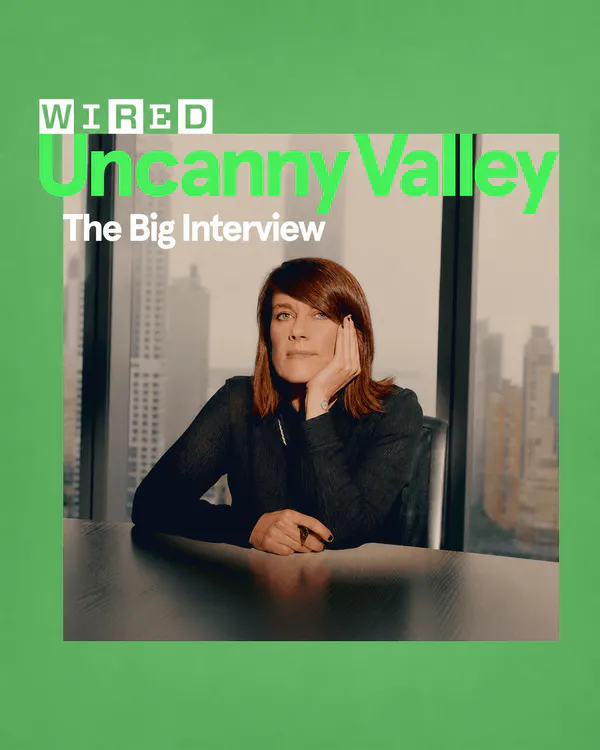
ケビン・ルース、AIの本をAIに書かせなかった理由――『The AGI Chronicles』と新ポッドキャスト Machine Gods
Kevin Roose Didn’t Use AI to Write His Book About AI
ケビン・ルース、AIの本をAIに書かせなかった理由――『The AGI Chronicles』と新ポッドキャスト Machine Gods
Uncanny Valley | WIRED
要約
WIREDのKatie Drummondが、元NYTコラムニストのKevin Rooseにインタビューした回。Rooseは新刊『The AGI Chronicles』の執筆動機、OpenAI・Anthropic・Googleの関係、AI安全性への見方、執筆でのAI活用法を語る。Casey Newtonと立ち上げる新メディアMachine Gods Mediaの狙いや、NPRとの提携の理由にも触れている。
この回のポイント
- ●RooseはCasey Newtonと、AIを「ハイプ」とも「バブルで無価値」とも言い切らない「AIリアリズム」の立場で新番組Machine Godsを始め、NPRと配信提携を結んだ。
- ●Rooseは本を書く動機を、AI業界の歴史が自動削除されるメッセージの中に消えかねないという危機感だと語り、150人以上に取材したという。
- ●Google、OpenAI、Anthropicは同じ人脈から分岐した企業で、関係はコカ・コーラとペプシのような競争ではなく「血の抗争」に近いというのが取材での最大の驚きだったと述べた。
- ●特定の人物は信用しないとしつつ、AI安全性が議論の俎上に載った今は以前より希望を持てると述べた。一方で、約50人のサンフランシスコの人々が重要な決定を下してきた偏りを問題視した。
- ●Anthropicの哲学者Amanda Askellの取り組みを例に、多様な分野の人材がAI開発に関わる意義を強調した。
- ●執筆ではNotebookLMや複数のClaudeによる「Council of Clods」、AIによる事実確認を活用したが、本文は人間が書いたと説明した。
章立て
Machine Godsの狙いとNPR提携
AIを「ハイプ」でも「バブル論」でもなく真剣に扱う「AIリアリズム」を掲げる新番組の構想と、NPRを選んだ理由を語る。
個人ブランドと制度の関係
才能ある書き手が組織を離れて独立する流れについて、メディア組織はより柔軟な関わり方を考える必要があるとの見方を示す。
ジャーナリズムへのAI活用
AIで記者の仕事を拡張する可能性、衛星画像や大規模文書分析の例、スロップ量産への懸念を述べる。
本を書いた動機と三社の歴史
ベイブリッジでの気づきから執筆を決意した経緯と、Google・OpenAI・Anthropicの成り立ちや確執を説明する。
誰を信頼するか、安全性と希望
AI企業トップへの評価、開発を止めない論理、現在の議論の高まりに基づく希望を語る。
多様な視点と医療への期待
少数の偏った集団が決定を下してきた問題、Amanda Askellの事例、AlphaFoldに見る医療面での楽観を語る。
執筆でのAI利用と人間の価値
NotebookLMや複数のClaudeの活用法、AI生成文への読者の反応、制作過程を見せる重要性を述べる。
解説記事
WIREDの番組「The Big Interview」に、元New York Timesのテクノロジーコラムニストで、Hard Forkの共同ホストだったKevin Rooseが登場した。聞き手はWIREDのKatie Drummond。新刊『The AGI Chronicles』の執筆背景や、AI安全性への見方、新メディア立ち上げの狙いが語られた。
「AIリアリズム」を掲げる新番組
RooseはCasey Newtonとともに、新会社Machine Gods Mediaと同名のポッドキャストを始める。番組の背景として、Rooseは現在のAI報道に二つの極があると指摘した。一つは「AIは偽物でバブルだ」と断じる批判、もう一つは企業向けの活用法を並べるだけの純粋なハイプである。その間にある「AIリアリズム」、つまりツールの力と危険性を認めつつ、煽らずに分かりやすく伝え、楽しませる立場を狙うという。
配信はNPRとの提携で、番組の所有権や制作上の決定権は自分たちに残る。Rooseは、ラジオの規模の大きさや、政策担当者や地方行政の関係者など、テック層以外の聴き手に届く点を評価した。Hard ForkではNew York Timesがフィードを所有していた点との対比も述べている。報酬は報じられた500万ドルより「はるかに多い」と冗談めかしたが、金額だけでなく配信力や成長への投資が決め手だったと説明した。
組織から個人へ
人気ライターが大手メディアを離れて独立する流れについて、RooseはNew York Timesでの9年間を肯定しつつ、聴き手や読者が組織より個人とつながりたがる傾向が強まっていると述べた。下積みから編集者へと昇る従来のキャリアは崩れており、望ましいとは思わないが現実だという。メディア組織は、Substackでの発信を続けながら参加できるような柔軟な契約形態を考える必要があるとの見方を示した。
本の動機と三社の素顔
執筆を決めたのは2025年初め、渋滞中のベイブリッジ上だったという。サンフランシスコに浸かるうちに、人類を救うか滅ぼしうる超知能の開発競争が奇妙に思えなくなっていたと気づき、その記録を誰も残していないと感じた。メッセージアプリや自動削除されるSlackの中に歴史が消える事態を避けたいとして、約1年で150人以上に取材した。
本はOpenAI、Anthropic、Googleを軸にする。Googleはtransformerを生んだ老舗で、その先行を恐れたElon MuskとSam AltmanがOpenAIを始めた。その後Dario Amodeiが同僚6人とAnthropicを立ち上げた。Rooseが最も驚いたのは、これらが「コカ・コーラとペプシ」ではなく「血の抗争」に近い関係だった点だという。
信頼、安全性、そして希望
誰を信頼するかと問われると、Rooseは特定の個人は信頼しないと答えた。誰もが欠点を持つ人間だからだ。ただ、AI企業の創業者はSNSの創業者より「ナイーブでない」とも述べた。OpenAIの創業時メールを含め、危険性を一貫して語ってきたからだ。それでも開発を止めない理由について、DarioやSamは、AIの作り方は難しくなく誰かが必ず作るので、安全を重視する側が先に到達すべきだと考えていると説明した。Rooseは、この論理を完全には受け入れていないと付け加えている。
Rooseは数か月前より希望を感じているという。暴走AIへの懸念が「Overton window」、つまり社会で議論可能な範囲に入ったからだ。一方で、重要な決定をしたのは約50人のサンフランシスコの人々で、変化への耐性が高い偏った集団だと指摘する。Katieが、資金力のある側に多様な声が影響を与えられるのかと問うと、RooseはAnthropicの哲学者Amanda Askellを例に挙げた。Claudeの人格設計を担う彼女の仕事が他社にも影響を与えたと述べた。楽観の源泉としては、AlphaFoldに関する逸話を紹介し、医療・科学分野への期待を語った。
執筆とAI、人間であることの価値
Rooseは本の冒頭でAI利用を明示している。研究資料を入れたNotebookLMを検索や整理に使い、事実確認では人間に加えAIの群れも使って、見落としを拾えたという。また、懐疑派や未来派などの人格を持たせた複数のClaudeを「Council of Clods」と呼び、編集上の助言を得た。ただし本文は人間が書いたと述べ、Katieも文章検出ツールPangramで確認したと話している。
AI生成と知らずに読むと評価が高いのに、AIと知らされると評価が急落するという研究に触れ、人は発覚すれば反発するが、いずれ見分けられなくなるとの見方も示した。そのため創作者は制作過程を見せ、労力とのつながりを示すことが重要になると述べた。
まとめ
本インタビューは、AIを礼賛も否定もしない姿勢で、業界の内側を長く取材した記者の見立てを知る材料になる。日本の読者にとっては、AI開発企業の対立構造、安全性議論の変化、少数の意思決定者への偏りという指摘が注目点だろう。また、AIを使いつつその利用を透明にするという執筆姿勢は、文章を扱う実務者にも参考になる。
文字起こし(英語・自動生成)
I recently chatted with McKinsey's Dan Swan about how businesses successfully transitioned to AI, the coming agentic wave, and even the sad loss of tennis line judges. Here's a sneak peek. Some people are buying software and calling it a transformation. The people that are really getting the most value from it are fundamentally doing something very different, which is they're taking that technology and they're incorporating it with changing the capabilities of their people, fundamentally redesigning their processes and tracking the impact through the bottom line. There's much more in the full interview with Dan Swan, which can be found in its entirety on Wired.com. Also, check out McKinsey's playbook, Rewired, available at your favorite bookseller. From Wired, this is The Big Interview. I'm Katie Drummond, Wired's Global Editorial Director. My guest today is longtime tech writer, reporter, and podcaster, Kevin Roos. He's got a new book out this month called The AGI Chronicles,
the inside story of the race to create an artificial superintelligence. For nine years, Kevin served as one of the New York Times' technology columnists, focused especially on tech's cultural and social impact on us mere mortals. Along with writer Casey Newton, Kevin launched the Hard Fork podcast in 2022. For four years, the duo covered everything from the collapse of FTX to the Trump family's largely unrealized 5G network to the myriad developments in AI and beyond. This summer, Kevin announced he'd be leaving both the New York Times and Hard Fork to start his own company with Casey. And their first project is a new podcast, Machine Gods, that bills itself as the official podcast of the singularity. Here's a clip from the trailer. After spending more than a decade covering Silicon Valley, Casey and I have become convinced that it's possible to reinvent talking from first principles. We've decided to start a new media company to give the world what it's really been missing, men talking about AI.
Kevin, thank you so much for being here. Katie, thank you for having me. So you and Casey recently announced that you were launching a new media company called Machine Gods Media, not to be mistaken for your podcast of the same name minus the media. Machine Gods the podcast, Machine Gods Media the company, correct? Yeah, a name so nice we used it twice. There you go. So when you first announced that you'd be leading the Times, you described your vision for what you wanted to do as one that, quote, takes AI progress seriously, is clear eyed about the capabilities and risks of powerful AI systems and tries to empower and entertain people in the face of radical uncertainty. I'm curious, as you look at sort of the landscape of tech coverage, of AI coverage, of AI podcasts, what's missing from the reporting and commentary that you and Casey feel like you can address, that you want to address with the new show? We just feel like it was high time that two men had a place to talk about AI. I've been saying this for years. I want more men. Look, I think there are obviously no shortage of podcasts and YouTube shows and mainstream media coverage of AI.
It's the biggest story in the world right now. But when Casey and I looked out at the media landscape, we saw some issues. One was there are people who just are getting very famous and having a lot of success, saying that all this AI stuff that's going on is fake. It's hype. It's a giant financial bubble. No one is using these tools. They're not going to have any impact on the economy. You know, open AI is going to go bankrupt. Anthropics is going to go bankrupt. Basically, this is sort of a genre of popular criticism. And it's not just a few people. This is now I hear this from friends of mine who, you know, don't pay close attention to tech news and just assume that what's going on is just fleeting and trivial and that it will all sort of go back to normal soon. There's another genre of AI coverage that is purely hype. It's look at the, you know, the 17 amazing ways that Claude can supercharge your enterprise SaaS business. And you can go on LinkedIn and just see, like, example after example of people who are just purely excited about this technology and don't really care to talk about the risks.
And we both just thought there's like a large gap in the middle for what Casey calls AI realism, which is basically this idea that you can take AI seriously, acknowledge that the tools are powerful and impressive and in many cases dangerous, and that you can help people understand that and demystify this area without sort of slipping into boosterism and that you can also have a good time while you do it. We don't want this to be just a dour take on AI doom. We want to actually give people a good experience and have a good time. I have to ask, the show you announced recently is being published in partnership with NPR. Why NPR? Why was that the right partner? A bunch of reasons. Both Casey and I are big fans of NPR. We like the fact that they have a broad independent reach and mandate. We like the fact that they're going to let us own the show and make the creative decisions,
and it will be a distribution partnership rather than like a full acquisition, so we will still have some operating distance. We think this is a really critical time and a really important story, And we like the idea that people might be in their cars just listening to their local NPR member station and happen on our podcast. And maybe that's going to be someone who works in policy or maybe that's going to be someone who is involved in local government. Maybe that's going to be someone who has a very different point of view on AI. We don't just want to have the sort of opt-in, self-selected tech audience listen to us. Now, I am going to ask you a crass question. A Bloomberg report recently said you both were fielding offers of up to $5 million for the show. I have to admit that link did travel through Wired Slack at Rapid Clip. Just startling some money. Kevin, how much are you making here?
It's not $5 million. It's not. It's more. It's more? It's more than $5 million? So much more, Katie. So much more. I mean, look, they have made us a good offer. We could have gotten more money elsewhere. I mean, that's kind of what I was wondering. When I heard NPR, I thought to myself, there's no way NPR is giving those guys $5 million, with all due respect to NPR. It is not traditionally where people go to get rich in media is to public radio. They made us a very good offer. We loved their new chief content officer, Nadine Zalstra. as she's just a total force of nature, and we're very excited to work with her. And we just thought they had a lot of things to offer us beyond just money, like their distribution on radio. People don't realize how big radio still is. We've had this show, Hard Fork, for the last four years. We built up a pretty good-sized audience, but The Times owns that show, owns the feed. So we are looking to grow our show as quickly as possible,
and we just thought that the combination of NPR's like commitment to journalistic excellence, their wide distribution, and their investment in helping us grow the show was the right combination of factors. This brings me to one more question that I'm so curious about, the idea that a great reporter, a great commentator can spend time somewhere that's sort of quote-unquote traditional like the New York Times. They can build a brand, and then they realize that they can just go do it themselves, and they don't actually need that institution anymore to exist in the world as talent and to make often a lot more money than they would in traditional media. I'm curious, what's your take on that? Look, I don't have anything bad to say about the New York Times. I had nine wonderful years there. It was my second stint at the Times. I've spent the vast majority of my career at the New York Times and inside these big media institutions. I do think we are entering this moment where, at least for some portion of the audience, they want to connect with individuals more than institutions.
We have just seen this wave after wave. I mean, I'm not doing this for ideological reasons. I'm doing this because I thought it was a really exciting opportunity. But I do think that organizations that want to retain and attract very talented people will just need to be more flexible about the kinds of arrangements. You know, some people aren't going to want to give up their sub stacks and go inside a media institution. Some people aren't going to want to sort of have all of their work published by one publication. And so I think there are some media organizations that are starting to experiment with different more flexible ways of bringing people in part way or having them sort of maintain their independent operation but also contribute on an ongoing basis. I think there are a lot of ways this can work, but I think it all has to start from a recognition that like the journalistic career path, where you like go in in the mail room and you work your way up and you spend, you know, 25 years at the same employer and you eventually become an editor and then a manager of editors.
And like that has broken down. And that is regrettable. I don't think that's a good thing that it's broken down, but it has broken down. And so I think institutions should grapple with the fact that there's now a generation of media entrepreneurs who just don't really find what they have to offer all that appealing. We're going to take a quick break and we'll be right back. I recently chatted with McKinsey's Dan Swan about how businesses successfully transitioned to AI, the coming agentic wave, and even the sad loss of tennis line judges. Here's a sneak peek. Some people are buying software and calling it a transformation. The people that are really getting the most value from it are fundamentally doing something very different, which is they're taking that technology and they're incorporating it with changing the capabilities of their people, fundamentally redesigning their processes, and tracking the impact through the bottom line. There's much more in the full interview with Dan Swan, which can be found in its entirety on Wired.com.
Also, check out McKinsey's playbook, Rewired, available at your favorite bookseller. When you think about AI, are you optimistic about journalism and the industry of journalism? I am very optimistic about the application of AI to journalism. Like that is one place where I have wanted to do more experiments, not with having AI right for me or being able to do more experiments. you know, do all my reporting, but like ways of extending journalism using AI. Like what's an example of an experiment you would love to do? I mean, I have former colleagues at the Times who have done incredible sort of document analysis on a scale that wouldn't have been possible before using satellite imagery to whether a munitions factory has moved or something like that. That's the kind of thing that I don't do much in my own
life, but that I would like to see other organizations trying because I think that's really cool. Myself, like I have used AI to research and edit and improve my own work for months now. I have found that very helpful. I think the caliber of my work is better. And I would love to see more institutions in media experimenting with using these tools to improve the output of their journalists, not just like, you know, filling their websites with slop, but like actually helping these be tools to make journalists better. I want to talk about your book. So the AGI Chronicles, which I have read, it is hugely compelling. And I'm curious, when did you decide, when did you have that moment where you said, this is a book, like I'm going to commit years of my life and my career because there's a book here? What was that moment for you when you realized that this was a big fucking deal? I know exactly what it was. It was early last year, 2025, and I was in the car on the Bay Bridge, stuck in traffic.
It just kind of hit me like an epiphany. It was like I have been following this story in all the incremental detail for years now. I've interviewed all the major AI researchers and CEOs. I've spent time with the papers. I've gone to all of the companies and reported on what they're doing. But there was this larger story that I was missing, that I hadn't really zoomed out and tried to take a more panoramic view of something that was just weird. Living in the Bay Area, being immersed in San Francisco tech culture, I had kind of gotten acclimated. And it no longer seemed as strange to me that there were these companies racing to build the machine superintelligence that could either save or destroy humanity. And I feel sometimes like I am in Los Alamos, New Mexico in 1943 when like the Manhattan Project rolls into town. And I've just kind of got my like my lawn chair and I'm just looking at trucks rolling in and trying to make sense of what's happening.
But, of course, all of this is going to be important. I believe that this technology is important and that the people and the companies who built it will be important historically. And so when I thought about, like, who is actually doing the work of writing all this down, it was nobody. Nobody was doing it. And I just felt like, you know, I think it would be a tragedy if all this just kind of disappeared in a bunch of signal messages and slacks that auto-delete. And if we just sort of end up with no durable historical record of this really strange decade in AI when things went from not working at all to like threatening the future of humanity. So I spent about a year reporting and writing. I talked to more than 150 people. I should have probably taken more time because it was it was very hard and intense. But I think what came out of it was an artifact that people and future AI systems can look back at to say, here is how this happened. Here's who made it happen. Here were the key decisions and moments along the way.
And the book follows three key companies, OpenAI, Anthropic, and Google, in their sort of pursuit of this technology. I'm curious, what were sort of your big picture learnings about those companies and sort of the key differences between them that you think it's important for people to know? Yeah, I mean, the companies are very different from one another, both in the sort of makeup of their personnel and also in their ambitions. Let's start with Google because they're the oldest. They have had for decades now an advanced AI research effort. They were pioneers in AI. They developed the transformer, which is the T in ChatGPT, the sort of foundational technology that all of this other stuff rests on. And then there were these two guys, Elon Musk and Sam Altman, who got very worried about how well they were doing about Google racing ahead, and they decided to start OpenAI. It's so funny to imagine that now. I mean, it's wild, and we have the e-mails.
Like, it's all there in the record where they're basically like, we have to start a lab that's going to beat them or at least challenge them so that they don't run away with the whole game. So they start OpenAI, and they do a couple years of that, and then this guy at OpenAI, Dario Amadei, he takes six of his colleagues, and they leave and start Anthropic, basically to make sure that OpenAI doesn't get to the critical threshold of AGI first. So the whole industry sort of spawned out of itself. These people all used to work together, and now they run these companies that are in some ways mortal enemies. Like, I was shocked. This was actually my biggest surprise was I thought this was more like Coke and Pepsi. This is not a buddy-buddy industry. This is like a blood feud. From all of the reporting that you did, who do you trust? Who do you trust with our future in the context of artificial intelligence? I don't trust any single person.
None of them. I think what I learned through reporting this book is these are people. They are flawed. They are fallible. They have moments of weakness. Their motives are not 100% pure. Some of these people are quite nice. Some of them are very thoughtful. I think we have in some ways gotten very lucky with the people who are running these AI companies, who I think are on the whole much better suited to build powerful technology and release it into the world than like the social media barons were. You see a marked difference between sort of the Facebook era and this AI era. Oh, yeah. I mean, I think for one, they are just way less naive. You know, the social media guys came in and they said, we're going to change the world. We're going to free communication from the bottlenecks that hold it back. We're going to distribute the benefits of technology to everyone. And they really didn't start thinking about the problems until they were being questioned in front of Congress. I mean, I will say some of these AI guys talk a lot about saving the world.
They talk a lot about how great this will be for humanity. You know what I mean? If you go back and look at like the founding emails of OpenAI they have been very consistent that they think this is a potentially very dangerous technology Now they racing toward it so maybe their words don mean that much. But I think you can't accuse them of being naive because they just have such a long track record, all of them, of saying that, yeah, this could be great for humanity, but it's not a given that it will be, and we need to build it really carefully and thoughtfully to make sure that it's actually going to turn out well for us. What kind of responsibility do you think falls on their shoulders in the context of AI safety? Yeah, and this was something that I've asked all of them about at various points. Like, why don't you just stop? Why don't you just slow down? Why do you get up every day and try to make these systems more powerful if you're worried it could end the world in some cases? Some of them, including Dario and Sam, genuinely believe
that this technology is inevitable. The recipe for AI is not that hard. You get a lot of compute, you get a lot of data, you build the right scaffolding and kind of grow the model in this organic process of stochastic gradient descent and reinforcement learning and out comes a super intelligent model. That is their sincere belief that it's not that hard to build this stuff if you understand the basics and that because it's not that hard, someone will do it. And whether that someone is a U.S. AI company or a Chinese AI company or a terrorist group or, you know, an academic research lab, someone will do this. And so it is in the best interest of humanity for someone who thinks a lot about safety to be the first to get there because they can sort of set standards for the rest of the industry. Now, I don't know if I fully buy that, but that is their logic, and that is the reason that they feel validated getting up and doing this every day.
The book ends in an interesting way, and I have a couple questions about that. I was just looking at the last page before I came in to do this interview, and it ends essentially with you essentially saying, really hope these guys get it right, really hope that they slow down, so that I can keep living my life the way I live it now. It's funny timing that the book is coming out right as these very acute and severe conversations around AI safety are happening. And it feels like every other day a company is disclosing some new breach, something that went wrong with one of their models. How do you think about that? How scared are you right now, Kevin Roos? I am actually feeling quite hopeful right now relative to where I was a few months ago. And it's largely because we are now having this conversation. There have been people, including many of the people I spoke to for the book, who have been worried about runaway AI, rogue AI, possible AI takeover for 10, 15 years.
who had been trying to sound the alarm about this, and no one believed them. Outside their little bubble of AI safety people, everyone was sort of like, yeah, yeah, yeah. And now I feel like we have finally reached this point where this stuff is inside the Overton window. I think that some of what I see on social media and some of what I see in the news media is really hyperbolic and is really dramatic. And I'm not saying that the stakes aren't dramatic. I think my assessment of the situation, though, is that if something does go horribly wrong with artificial intelligence, it will be much more boring than we might think. And it will have more to do with human error than maybe we are sometimes attributing. That's what I think. Yeah, I totally understand that. And to be clear, I'm not saying I know exactly the risks that we should be most afraid of. Yeah. I just think there's this whole category of risk that has kind of been written off or downplayed or just, you know, those are just those weirdos in Berkeley, you know, talking about it that we can now sort of have conversations about.
People are worried. They're taking this seriously. And I think we really have a window here where we can actually make some changes or take some steps to make sure that this goes better for humanity. I don't think that was possible a couple of months ago. So I think that's why I'm feeling more hopeful, because even though I think objectively, like the models are getting worse and scarier and more dangerous, we are also much better positioned to recognize and talk about and perhaps prevent those risks. All right, another quick break. We'll be right back. I recently chatted with McKinsey's Dan Swan about how businesses successfully transitioned to AI, the coming agentic wave, and even the sad loss of tennis line judges. Here's a sneak peek. Some people are buying software and calling it a transformation. The people that are really getting the most value from it are fundamentally doing something very different, which is they're taking that technology and they're incorporating it with changing the capabilities of their people
fundamentally redesigning their processes and tracking the impact through the bottom line. There's much more in the full interview with Dan Swan, which can be found in its entirety on wired.com. Also, check out McKinsey's playbook, Rewired, available at your favorite bookseller. I think, you know, in the book, in that last page that I was just looking at, I don't want to ascribe an emotion to you, but I felt fear there from you and a reluctance to see your life change too quickly. And I think that that is something that is very much universal. Absolutely. And I think this is where the people inside the AI bubble do not understand the world. I think the people at the AI companies building this technology are generally people who enjoy the prospect of large, unannounced social change.
Like, they love when things get weird. That's part of why they moved to San Francisco. They want to live in the future. They want the prospect of radical upheaval does not scare them. Doesn't that seem like a huge problem to you? Yes, because normal people don't think like that. Like normal people want to live a life that is recognizable to them. They want their kids to grow up in a society that resembles the one that they grew up in. We don't manage change very well as a society. We never have. this is why I wish that there had been more types of people involved in the critical conversations around this technology, because, you know, as I said, 50 people in San Francisco, give or take, made all of the relevant decisions and they are not a representative sample. They are very weird. They are very like they, they see the world differently. They have a higher tolerance for change than most people.
And I think it led to them like making some decisions that, that we can't really take back now. I mean, do you think that if two years ago we had had more philosophers, more artists, more creatives, more journalists, lawyers, you know, whoever it may be involved in those conversations, that it really would have moved the needle when there is so much money on the other side of that conversation? I guess what I'm saying is that, sure, it's all well and good for a broader coalition to be having those conversations. But Greg Brockman's donations to the Trump administration get him that phone call, right? They have the president's phone number. The access to the decision makers is bestowed upon those 50 people in San Francisco by virtue of their wealth and their power. I think it can help at the margins. I'll give you an example. One of the people I write about at some length in the book is Amanda Askell.
She is a longtime employee at Anthropic and was at OpenAI before that. You just had a story in Wired about searching for the most powerful woman in Silicon Valley. I think she's got to be up there in the top two or three. She has been in charge of Claude's character. This is her. They call her the Claude Mother at Anthropic. She's a virtue ethicist. She has a PhD in philosophy. she went into AI specifically to think about this question of what should a good AI system do? How should it act What values should it represent How should it decline to do certain things or volunteer to do certain things How can you instill something like virtue ethics in a chatbot And this was a very fringe area of research She was to my knowledge the first person ever to do this kind of work inside one of these AI companies It has resulted in them having a really sophisticated way of thinking about the morality and the ethics of Claude.
She now has a whole team. They have many people that are devoted to this, and I think it has probably made Claude not just safer and better behaved, but has also kind of inspired other labs to hire their own philosophers and come up with their own ways of training their AIs for something like moral goodness. So, yeah, I think there's a really strong argument for having lots of people from lots of different disciplines engaging with this technology, because it should not just be engineers doing this. As someone with a Bachelor of Arts degree in philosophy, I have to say it is boom time for my people. We are coming for planet Earth and we are about to shake the foundations like you've never seen. You never thought a philosophy major would be determining the outcome of planet Earth. I mean, there was a lot in the book to me that was, as we've been talking about, troubling, right? That is troubling, that is scary. What stands out to you that is hopeful?
Was there something you discovered in your reporting that made you feel optimistic? Yeah, a lot of the optimism that I feel around this stuff has to do with science and medicine. You know, I lost my father to cancer. I know lots of other people who have lost loved ones to rare diseases that have not been cured, not because we lack the ingenuity, but because it's just a question of resources and manpower. And, like, I think that AI can do incredible things for people who suffer from disease. You know, I was very moved. There's a story in the book about the DeepMind protein folding AI system that won the Nobel Prize. And there's this sort of incredibly touching moment where a mother of a kid who has a rare disease, a life-threatening genetic condition,
writes to the deep mind researchers after this alpha-fold breakthrough and asks them, like, could this help my kid? And they have to give her the honest answer, which is probably not, because this stuff takes time. You have to get it through clinical trials. Even if you have these amazing breakthroughs in science, like you have to design the drugs, You have to test the drugs. You have to get the drugs approved. Like it can be a decade before these things actually make it to saving people's lives. But like I want that to happen faster. I want there to be more AI designed drugs. I want us to get them to market quickly. I don't want to have to suffer, you know, have people suffer from the same diseases that killed previous generations. So that's where I feel a lot of optimism right now. So now I'm curious about your own process with AI. You have published three books prior to this one. Your first was published in 2009, well before any of this technology was available.
How did it change the book writing process for you? Yeah, there's a whole section in the beginning of the book about how I did and did not use AI because I thought it was important, first and foremost, to be transparent. I don't think this business of people writing books and then people check it in Pangram and it comes up as AI generated, then they lose their book contract. You know what, Kevin? I'm going to be transparent with you. I'm going to do you a favor if you haven't already done it. I ran your book through Pangram. How did it do? You did great. I was like, I really like this guy, but if we have a scoop here, it's a scoop. But the book is written by a human being. But how did you use the tech? Yeah, a lot, constantly. So I had a giant notebook on Notebook LM filled with all of my research materials, interview transcripts, magazine articles, academic papers. And the most basic way I would use that is just to query it about things that I needed to know. So, like, you know, give me all of the stories that I've heard about the pre-training of GPT-4, and then it would pop back a list, sort of like a supercharged search function.
It helped with organizing my notes with fact-checking. Actually, at the end, I had a human fact-checker, but I also had an AI swarm doing fact-checks and catching some things that, honestly, neither I or the human fact-checker had caught. Oh, wow. So we got to fix those in the manuscript. And then I use it for editorial feedback. I have a council of clods, I call it, which is sort of my team of clods that are assigned to different personalities and vantage points. So I have one who's like a hardcore LLM skeptic who goes through the draft and tells me, oh, this is what I object to. This is what I object to. You're anthropomorphizing here. It's not really thinking here. I have one that's like a sort of curse wild type futurist that wants to expand the vision of the future in the book. So some of this was just slop and probably wasted more time than it saved. There were a couple of things that the Council of Claude said to me where I was like, oh yeah, that's a good point. I should go back and revise that.
And how do you think about the premium on human-generated writing? I'm curious about this. Like, do you think in two years, three years, five years, the average person will care that Kevin wrote this book as opposed to an AI writing that book? Do you think it matters to people? I do. I think it matters a lot to people. And I know this because they've done studies where when people read a sample of writing that is generated by AI, but they don't know it's generated by AI, they give it very high marks. And they prefer it to human written text in a blinded test. But then the minute you tell them this was generated by AI, they hate it. Their approval of it plummets. So I think that people will still continue to be offended when they find out that their favorite writer has used AI to generate their latest book or essay or whatever. But I think that's basically like only if they detect it, only if only if they can tell.
And I don't think they can tell or will be able to for much longer. So I think as long as Pandram exists, it will that will probably be a useful tool. But I also think that, yeah, in the abstract, people just they just don't know the difference. And when you tell them the difference, they care. But before that, they don't. That's really interesting. I mean, it is the the psychological value of. wanting to know that someone's fingerprints were on something and wanting to know that you are getting their voice and not the voice of Claude. Totally. Yeah. I think it's important for writers, too, to, like, show their process for this reason, to talk about and maybe, like, literally film themselves working so that people can prove, like, you can sort of connect with the labor involved in making something. I think that's going to be important for humans of all creative stripes. Is that going to be a social video series that you and Casey come up with? Yeah, I'm streaming myself writing 16 hours a day on Twitch. Go check it out. Sounds like hell. Kevin, congratulations on the book.
That was so interesting. Thank you. Thank you, Katie. You're the best. The Big Interview is produced by Lina Macitsis. Our executive producer is Kate Osborne. Music and mixing by Pran Bandy. This episode was fact-checked by Matt Giles. And I am, of course, your host, Katie Drummond, Wired's Global Editorial Director. Check back here on Thursday for the latest episode of Uncanny Valley, where Wired's writers and editors add you to their Slack channel. I recently chatted with McKinsey's Dan Swan about how businesses successfully transitioned to AI, the coming agentic wave, and even the sad loss of tennis line judges. Here's a sneak peek. Some people are buying software and calling it a transformation. The people that are really
getting the most value from it are fundamentally doing something very different, which is they're taking that technology and they're incorporating it with changing the capabilities of their people, fundamentally redesigning their processes and tracking the impact through the bottom line. There's much more in the full interview with Dan Swan, which can be found in its entirety on Wired.com. Also, check out McKinsey's playbook, Rewired, available at your favorite bookseller.
番組の概要欄(原文)
The author of The AGI Chronicles says his book “was written by a very tired, overworked, under-slept human being.” Join WIRED’s best and brightest on Uncanny Valley as they dissect the collision of tech, politics, finance, and business, from Alexis Ohanian’s newest tech venture to the effects of inaccurate information from artificial intelligence (AI) chatbots on social protests. Learn more about your ad choices. Visit podcastchoices.com/adchoices
出典・この記事について
- 番組
- Uncanny Valley | WIRED(WIRED)
- 元の回
- Kevin Roose Didn’t Use AI to Write His Book About AI
- 配信日
- 要約作成日
- 公式サイト
- www.wired.com
この要約・解説記事は、元の音声を文字起こしした内容をもとに AI(Claude)が日本語で作成したものです。 固有名詞や数値に誤りを含む場合があるため、正確な内容は元の音声でご確認ください。制作方法について
関連エピソード
数字は上がり続けねばならないのか?クリスティアーノの警告、ジェンスン復帰、GiveDirectlyの訴え
"The Cognitive Revolution"

「暴走するAI」を恐れるな:Eryk Salvaggioが語る終末論ナラティブの正体
Tech Won't Save Us

感謝祭の食卓でAIをどう語るか:よくある15の疑問に答える
The AI Daily Brief: Artificial Intelligence News and Analysis
ジェンスン・ファン復帰:NVIDIA、11日間の離脱と1兆ドル規模の株価反発
Moonshots with Peter Diamandis
AIラボが国家に並ぶとき:Anthropic IPOと「ハンドオーバーイズム」論争
The AI Daily Brief: Artificial Intelligence News and Analysis
リードを安全のために使え:バイデン政権AI顧問のBen BuchananとTantum Collinsが語る世界の行方
"The Cognitive Revolution"