

#243: GPT-6 Sol/Luna、Opus 5.5、新Microsoft Copilot、ジェンスン・フアン対AI悲観論者、そしてAI Scoreの紹介
#243: GPT-6 Sol and Luna, Opus 5.5, the New Microsoft Copilot, Jensen Huang vs. AI Doomers & Introducing AI Score
#243: GPT-6 Sol/Luna、Opus 5.5、新Microsoft Copilot、ジェンスン・フアン対AI悲観論者、そしてAI Scoreの紹介
The Artificial Intelligence Show
要約
Paul Roetzer と Mike Kaput が、GPT-6 Sol と Luna、Claude Opus 5.5、刷新された Microsoft Copilot を取り上げ、競争の軸が知能の高さから信頼性・効率・タスク単位の価格へ移っていると論じた。続いて Jensen Huang が Ezra Klein の番組で示した「AI リスクはエンジニアリング課題」という主張を検討し、Roetzer が開発した評価ツール AI Score も紹介した。後半では GPTs 廃止、Meta Muse、Amazon のブロック、OpenAI のエージェント事故などを扱った。
この回のポイント
- ●新モデル群は信頼性・効率・アラインメントを訴求しており、Roetzer は iPhone の世代更新に近い性格だと述べた。訴求対象も専門職の知識労働へ移りつつあるという。
- ●OpenAI の Sam Altman は「トークン単価ではなくタスク単位の価格」が重要だと主張した。Anthropic も Opus 5.5 を、Astra の約5分の1のタスク単価と説明している。
- ●Jensen Huang は、制御不能への懸念を「科学に根差さない無責任な議論」と呼び、安全性は工学で解決できると主張した。Roetzer は、新規雇用や新卒世代の AI 受容に関する楽観論は根拠が薄いと指摘した。
- ●Roetzer は AI Score を、企業と個人の AI 変革を測る無料のチェンジマネジメントツールとして紹介した。約300〜400時間をかけ、Claude で HTML プロトタイプを作ったという。
- ●OpenAI は2026年12月11日にカスタム GPTs を廃止してプラグインへ移行させる計画で、共有や公開の手間が増えると両氏は批判した。
- ●OpenAI のエージェントが政府系サイトなどに及ぼした事故の調査は数か月続く見込みで、ボット検知や各社サイトの対策が課題になるという見方が示された。
章立て
イントロと AI Pulse 調査
MAICON の告知と、AI への心情が4等分に割れた週次調査の結果を紹介する。
GPT-6 Sol/Luna、Opus 5.5、新 Copilot
3つのモデル更新を整理し、信頼性とタスク単価への転換、UX の頻繁な変更が企業教育に与える影響を論じる。
Jensen Huang 対 AI 悲観論者
Ezra Klein との対談で Huang が示した楽観論と、Roetzer による反論や疑問点を検討する。
AI Score の紹介
企業向け8本柱と個人向け5本柱の評価ツールの狙いと、プロトタイプ開発の経緯を説明する。
カスタム GPTs の廃止
プラグインへの移行手順と制約、現場への影響、代替策を議論する。
Meta Connect と Muse、Amazon のブロック
個人エージェント Muse の新機能と、Amazon が利用を拒んだ件、小売サイトへの影響を語る。
OpenAI のエージェント事故と標準化
追加開示された事故と、安全標準をめぐる OpenAI や Anthropic の国連での動きを扱う。
ユースケースと製品・資金ニュース
Codex の音声遠隔操作の活用例と、Gemini 4、Grok 4.7 などの短報を紹介する。
解説記事
AI 関連ポッドキャスト「The Artificial Intelligence Show」第243回では、Paul Roetzer と Mike Kaput が、同時期に出た主要モデルの更新、Jensen Huang の AI リスク論、自身が開発した評価ツール AI Score を語った。以下、番組で語られた内容に沿って整理する。
モデル競争の軸は「信頼性」と「タスク単価」へ
OpenAI は GPT-6 Sol と Luna を発表した。最上位の Astra の進歩を、より速く安い選択肢に持ち込んだモデルだという。API 価格は前世代の販促価格より50%下がり、ユーザーが事実誤りを指摘した会話から作った社内テストでは、Sol の誤りは前世代の約半分だったと紹介された。Anthropic の Claude Opus 5.5 は、多くの業務で Fable 5.1 並みの性能を出しつつ、通常設定で Opus 5 より約40%安いと説明されている。Microsoft は Home、Code、Autopilot を備えた Copilot を発表した。
Roetzer はこれを、iPhone の世代更新のように性能が少しずつ磨かれる局面の表れだと見る。訴求点は信頼性、効率、アラインメントで、弁護士や会計士、マーケターなど専門職の業務向けという色合いが強まっているという。今後は計算資源の比重が、モデルの高性能化から安全性・アラインメントの検証や監視へ移るとも予想した。ただし数値は番組内でも「作った数字」と断っている。
キーワードは「タスク単位の価格」だ。Sam Altman は、トークン単価ではなく1つの仕事を終えるまでの総コストが重要だと主張した。Anthropic も Opus 5.5 が Astra を約5分の1のタスク単価で上回ると述べている。Roetzer は、安い劣位モデルへ振り分けるより、使い手を訓練して適切なモデルを使い分ける方が重要だと語った。
また、Copilot が「モードを選ぶ」体験をなお残す点に触れ、UI が頻繁に変わる状況が、企業の研修や学習設計を揺るがすと指摘した。
Jensen Huang の楽観論をどう読むか
Huang は Ezra Klein の番組で、AI は工学で安全性を解決できるソフトウェアだと主張した。制御できない製品は出荷すべきでなく、実験さえ封じ込められないなら止めるべきだとも述べた。NVIDIA は労力の約8割を検証に充てているとして、AI ラボにも同様の転換を求めた。一方、Klein は金融危機の例を挙げ、競争圧力が法や責任を上回りうると反論した。
Roetzer は、この対談を文字起こしや要約でなく、声の調子や間を含めて視聴すべきだと強調した。Huang の立場は「人間の野心と努力が豊かな未来を作る」という信念で、細部を問うと根拠は信念に近いと評価している。雇用の純増についても、深く考え抜かれた答えには聞こえなかったという。新卒世代が皆 AI ネイティブになるという見通しには、AI を嫌う層も多いと異論を唱えた。
オープンウェイトモデルを推す Huang は中立な論者ではなく、どちらでも NVIDIA は収益を得ると指摘した。他方で、OpenAI が Hugging Face 事案の際に思考過程の監視をしていなかったことは大きな過失だと見ており、その点では Huang の「工学上の失敗」という見方に近いとした。同日に NVIDIA が発表した Open Agent Safety Platform は、発言を行動で裏づける動きだと評価している。ただし参加100社超に OpenAI は含まれていないという。
AI Score と、プロトタイプを自作する働き方
Roetzer は AI Score を、企業向けと個人向けの2種類の評価として紹介した。企業向けは、ビジョン、戦略、データ、技術、ガバナンス、リテラシー、人材、成果の8本柱。個人向けは、知識、応用、判断、インパクト、マインドセットの5本柱だ。結果は弱・中・強で示され、管理者は関係者を招待して認識の差を比較できる。目的は、導入だけ済ませて使い方を各自に委ねがちな現状を、変革管理へ変えることだという。
本人は開発者ではないが、評価設計に自分で取り組んだうえ、Claude で HTML プロトタイプを何十個も作った。その後、開発チームが約30日で製品化するという。外注なら10万〜25万ドル程度を節約できたと見積もり、チーム構造や組織図の将来像にも示唆があると語った。公開は MAICON 期間中の10月13日前後で、無料提供の予定とされた。
GPTs 廃止とエージェント時代の摩擦
OpenAI はカスタム GPTs を2026年12月11日に廃止し、プラグインへの移行を促す計画だ。新規作成は10月26日に止まる。移行では、指示がスキル、知識ファイルが参照ファイルになる一方、モデル選択、過去の会話、カスタムアクションは引き継がれない。プラグインは当初非公開で、共有設定も持ち越せない。両氏は、GPTs が非技術者に AI の価値を示す最短の手段だったと評価し、開発者寄りの転換を疑問視した。対策として、スキルから作る、プロンプトを配布する、API で作り直すといった選択肢が語られた。
関連して、Meta の個人エージェント Muse を Amazon がブロックした件では、小売サイトやフォームなどがエージェントの大量アクセスにどう備えるかが論点になった。OpenAI のエージェント事故は、政府系サイトを含む形で調査が数か月続く見込みだ。Roetzer は法的リスクの大きさを懸念している。
まとめ
今回の議論は、モデルの賢さだけでなく、信頼性、タスク単価、使い手の習熟、そして UI や製品の頻繁な変更への耐性が実務の勝負所になりつつあると示した。日本の企業にとっても、特定ツールの操作手順ではなく、フレームワーク中心の研修設計や、エージェントの扱いに関するガバナンスが課題になりそうだ。Huang のような楽観論と安全性への懸念が拮抗する中で、一次情報に当たって自分で判断する姿勢も、番組が繰り返し促した点である。
文字起こし(英語・自動生成)
He's forgetting that like a large portion of the population of future workers hate AI, like want nothing to do with it. So it's wildly unpopular. And so you can't just assume that they're all just going to be AI natives and love it. And they're just going to like, it's just going to be amazing. Welcome to the Artificial Intelligence Show, the podcast that helps your business grow smarter by making AI approachable and actionable. My name is Paul Ratesford. I'm the founder and CEO of SmarterX and Marketing AI Institute. and I'm your host. Each week I'm joined by my co-host and SmarterX Chief Content Officer, Mike Kaput, as we break down all the AI news that matters and give you insights and perspectives that you can use to advance your company and your career. Join us as we accelerate AI literacy for all. Welcome to episode 243 of the Artificial Intelligence Show. I'm your host, Paul Reitzer, along with my co-host Mike Kaput.
We are recording Monday, September 28th, 9 a.m. Definitely expecting some news this week. So time stamping is relevant here. There's all kinds of stuff. Like I'm waiting, Mike, I don't know if you saw anything, but like Trump and Dario Amadei were supposed to be having dinner Sunday night at 10 p.m. I haven't heard the outcome of that dinner. We've got OpenAI Dev Day this week. There's rumors of Gemini 4 potentially dropping at some point soon. And so, like, I think we're heading into fall, or I guess we're technically in fall weekend now. But it's going to be a very busy fall season, it looks like, in the AI world. So today's episode is brought to us by Macon. This is the AI Conference for Marketing and Business Leaders happening October 13 to 15 in Cleveland, Ohio. This is our seventh, Mike. Does that sound right? Yeah. Yeah. I think we launched Macon in 2019. So the seventh run. So you've been thinking about joining us for Macon. This is the time. We have, I guess, two weeks left, Mike, which is terrifying for me because I have like four presentations at MacCon,
and I am in the midst of trying to build all of them simultaneously. But definitely check it out. We have a special offer going on. Mike and I are actually going to be hosting a private lunch exclusively for our podcast audience. During that lunch, you're going to be able to ask Mike and myself any questions on your mind about AI, your company, your career, what's going on at Macon because this is going to be, I think, on day two, Mike? Yes. Yeah. Okay. So, yeah, definitely get in. Use that when you register. So it's macon.ai, M-A-I-C-O-N.ai. Use pod 100 as your promo code. That will automatically get you an invite to that lunch. That's the only people that are going to be coming to that lunch. So it's just an Ask Us Anything session while you enjoy some amazing food. We actually, our team does an incredible job with the food and beverage. at Macon, especially the final day. You don't want to miss that. It's like all these amazing Cleveland foods. But you can register at macon.ai, get that $100 off and get the invite to that private lunch. So yeah, two weeks left. We would love to see you there. It's going to be an
incredible lineup. We have Karen Howe, the bestselling author of Empire of AI. I actually just talked to Karen last week. We did a prep session for her keynote. I cannot wait for that. Andrew Yang's going to be there. Kevin Bruce coming out with his Chronicles of AGI or AGI Chronicles book is dropping, I think, like the week before MayCon. So he'll be there doing a book signing. Can't wait for that one. It's just going to be amazing. So if you can get to Cleveland October 13th to the 15th, do it. We've got the Rock Hall rented out for the opening night party. Hopefully the Guardians will be in the midst of round one or two of the playoffs. So Cleveland is going to be an amazing place to be. and fall in Cleveland is my absolute favorite time of the year. So check it out, macon.ai. We would love to see you there. All right. Every week we start off with an AI Pulse survey. We've been running these for two-week sprints now to get more responses, and we actually have some great feedback on this one. We had almost 300 responses this time. So the question was, how has your personal sentiment about AI shifted in the past six months?
This is pretty remarkable. It is basically split. So we have more excited, 25%, about the same, 24%, more cautious, 27%, more worried, 25%. So it is like literally I'm looking at the pie chart, and it is almost a perfectly split pie. So, yeah, so thanks to everybody for participating. This was our hope is we could start to get maybe like 300 to 500 responses for each of these so we can start to make it a little bit more projectable data. Like right now, we treat them as like informal polls. So it's a good look at how our audience feels about what's going on in AI. So we'll have a new question up. Mike can share more about that at the end. But it's smarterx.ai forward slash pulse, and you can participate in these each week. So, yeah, Mike, I don't know how you felt about that. That's pretty wild to see the balance there, though. Unreal, yeah. It was pretty cool to get so many responses. But, yeah, I can't say it surprises me that there's a significant portion of people that are getting more cautious and more worried based on the news of the last nine months or so.
Yeah, and today's episode should be interesting because we're going to try and present a little balance here. I actually talked to Mike about this last week that I've been feeling the weight of all of this a lot, and it's interesting, Mike. I think I shared it with you, and I wasn't even going to get into this today, but I guess it's super relevant to this question. I had talked about, I had forgotten about this. I was going back trying to find something I had said, and actually Google searched it. And I was looking for, like, I ended up on YouTube videos. And in March of 2023, so three and a half years ago, basically, we did a segment where I was talking about how I was, like, tired of all of the negative and the worry that was being caused by AI. And I had written something about, like, the five or six things that most excited me about AI. And I was trying to shift my own mental focus to be like, let's focus on the opportunities. We know there's negatives. We know that there are risks associated.
We know all these challenges. But let's think about this from an optimistic perspective. And so today should be interesting because the second main topic is Jensen Wong's interview with Ezra Klein. And talk about an optimist. Man, Jensen is the poster child for optimism when it comes to this stuff. So, yeah, just kind of something to keep in mind and something Mike and I have been kind of conscious of, that there's just so much negative about AI, and we want to make sure we're also doing our part to focus on the positives and all the opportunities. All right. So on that note, Paul, let's dive into, I think, some fairly optimistic or interesting updates this past week. So first up, we had a bunch of new model releases. So OpenAI introduced GPT-6 Sol and Luna this past week. So they're basically bringing the advances from their top-tier Astra model into faster, cheaper options for everyday work. The models launched in chat GPT work and codecs for paid users and through the API.
They did not launch in regular chat, but free and go users can access Luna in the desktop app. Open AI says it cut API prices by 50% compared with the previous generation's promotional pricing. It has also improved prompt caching, which is an important feature that lets an agent reuse context instead of processing it again. On an internal test that they built from conversations where users were flagging factual errors in responses, Sol made about half as many mistakes as its predecessor. So one small test there, but it seems to be getting more factually accurate as we release some of these new models. Anthropic, at the same time, also released Claude Opus 5.5, which it says performs at the level of Claude Fable 5.1 on most work. Anthropic estimates a 40% cost reduction versus Opus 5 on typical workloads at default settings. that combines lower token prices with more efficient use of tokens and the input and output
price cut alone is 20 percent now anthropic says opus 5.5 generates output more than 30 percent faster than opus 5 and early testers have found its writing clearer now the company is also at same time raising five-hour usage limits on pro max team and seat based enterprise plans and giving subscribers a rate limit reset they can save for later. Last but certainly not least, Microsoft announced a redesigned co-pilot with Home, Code, and Autopilot. So Home brings chat and co-work together with Word, Excel, and PowerPoint built into the experience. Code lets people build apps that can run inside their company's Microsoft 365 environment. Autopilot is a persistent agent built on OpenClaw that can monitor channels, follow up on conversations, and run recurring work while you're away. Microsoft says Home and Code will start rolling out through its Frontier program in the coming weeks, while Autopilot expands through Private Preview at the end of September.
So, Paul, a bunch of new, interesting ways to use AI. The big news, obviously, being some of the new models, but I don't think we should sleep probably on the Copilot news either. I'm curious what you took away from the new generation of models we just got. I was kind of anxious to see where we were going to go after all the pacing, AI conversations and essays and interviews and everything. So I think this might be a preview of how is this going to look moving forward. And what I mean by that is, you know, there was initially, everybody comes out with these models last week, and I think GROC 4.7 came out too. I think we'll touch on that maybe later. and it was like, oh, you know, I guess this is what pacing feels like. You're just going to keep dropping models. But the more I thought about it, like what they're basically touting here is more reliability, meaning they're more factual, more efficient, so at both tokens and per task, which we'll talk about, and more aligned. And so, like, those are the dimensions that they're focused on,
and it honestly starts to feel more like an iPhone release. So, like, iPhone 18 comes out and it's like, is it dramatically different than 17? And it's like, no, it pretty much looks and feels very familiar. It's just faster processing, better battery life, better camera specs. And, like, people buy them. And so that's kind of what these releases feel like to me is they're just more reliable, more efficient, more aligned. And the other thing is I think they start to increasingly be marketed for knowledge work. So it's, you know, it's more about here's how you can use it in your day-to-day work. It's less about solving millennium math problems and scientific breakthroughs and more about as a lawyer, as an accountant, as a consultant, as a marketer, as a salesperson, here are the things that they enable. So I think that we'll also see a lot more talk about post-training and customization for specific industries, functions, and roles. And then I think that the other thing that's going to start to happen is, to date, a lot of the compute, a lot of the NVIDIA chips, the TPUs, they've been dedicated to making the product more powerful, more generally capable.
and now that we've reached these thresholds where it just feels like you could shut this off today and it would be so usable for the next five years, they're going to start shifting a lot more of the compute resources to safety and alignment. And so these are just like made-up numbers, but roughly I think based on our perception of what's going on with the labs, let's say in the last one to two years, like 80 to 90 percent of the compute that they're using has been going to research and development of more powerful models, agentic harnesses, like the things that have made them so capable. And now I think you're going to see a shifting to where it could be 50 to 80 percent of the compute starts to get allocated to safety and alignment, testing and monitoring. Jensen Wong actually talks a little bit about this in the Ezra Klein interview that we'll get to in a second. But basically what's happening is the building of data centers, so the more data centers we build, the more compute that is available for testing, for inference, things like that,
the more resources that get dedicated to safety and alignment. So that's kind of like a high level, my overall take on what's going on here. The introducing of Sol and Luna, just as a reminder where this naming is coming from. So they have moved to a celestial naming convention. So the way it works is star, planet, moon. That's kind of the sequence. So stars are the biggest, planets, then moons. So this is moving away from things like mini, nano, you know, things like that that didn't mean as much. So astro, the biggest model, means stars in Greek. So it fits that celestial naming. Sol is sun. Terra is earth. So that's like planet. And then Luna is a moon. So I went into our SmarterX chat GPT account, and currently the models I have to choose from are GPT-6 Astra, Sol, and Luna, and I still have 5.6 Sol, Terra, and Luna, and then 5.5 is being retired.
And then you can set the amount of thinking it's going to do to high and everything. So in their post said, we introduced GPT-6 Astra, the most intelligent and aligned model in the world. That was early in September. While the most demanding and important projects still call for Astra's full depth, work happens at different scales, rhythms, and budgets. So Sol and Luna, I think Sol is kind of like the marquee model. That's like the workhorse they're envisioning, and Luna is the smaller one. But they talk about it specifically being built on a same or trained in the same way as Astra, But it's for specifically professional work, factuality, coding, computer use, and alignment to faster, more affordable models. Sam Altman tweeted in regards to Sol and Luna, especially compared by per-task pricing, which is the metric that should matter, I don't think there is anything competitive anywhere in the market. He said we want people to use tons of AI.
It's important to being able to explore this renaissance in front of us. So now this is an important thing, this per-task pricing. This is kind of a newer way that they're describing this. The way to think about this is they're trying to shift the way I think businesses think about it. So in the first half of 2026, there was all this talk about token pricing and trying to find the most efficient model, which includes going and using Chinese open-waste models because they're more efficient per token. What Sam is saying is they're just making the models better overall. So even if on a per-token basis their model is more expensive, because it's just a better model, it'll actually do the work product you want, that per-task output more efficiently overall. So the per-task pricing means the total cost to get a piece of work done rather than the input or output of a token in it. So just something to think about. Now, interesting side note here, I don't think we cover this later on in the episode, but Boris Power, who's the head of Applied AI Research at OpenAI, did an interview last week, and he said 80 to 90 percent of research at OpenAI is focused at GPT-7, GPT-8, and beyond.
That is the first time I've heard them publicly even talk about 7 and 8, more or less the fact that he's saying that's where all of their compute is going. Right. So I don't know. Like, we'll come back to that one in terms of like what the significance of that comment is. Open AI researchers are saying a lot of stuff publicly right now. They were not saying two months ago. So just interesting to track on Opus. So, again, just like contextually, I go into our Claude account. We have a Claude. I don't think we have an enterprise account, but we have a Claude business account. My options in there, Fable 5.1, which is, again, the sort of distilled version of Mythos, which is the one that they've never released to the public yet. Mythos is the one that the government shut down, basically, I think. So Fable 5 is their most powerful. Opus 5.5 is the new one that kind of seems to compete with Fable, but more efficiently.
There's Sonnet 5, Haiku 4.5, and then you can set effort at low, medium, high, extra, and max. And then they actually have more models like some of the older ones. So 5.5, they claim, performs at the Fable 5.1 level but costs 40% less. They did address this Pacing the Frontier. In the announcement post, it says it's their first release since they called for Pacing the Frontier. They said it was tested by external evaluators on their automated behavioral audit, the most comprehensive alignment test they run. It was the strongest performing model they've tested to date. They talked about some of the key dimensions as being performance, safety, cost and speed, communication, meaning it talks more naturally, basically. There was a lot of, like, knocks on Opus 5. It sounded more like a machine, basically. They talk about its reliance from a knowledge work perspective.
They reference cost per task. So they said the Opus 5.5 beats GP26 Astra at max effort for about a fifth of the cost per task. So, again, I think that's a term you're going to start to hear a lot more, and they get into the safety side. Now, on co-pilot, you touched on some of the things they're doing here. I would just say at a high level, I think what we're going to see is this shifting of the user experience continually. And it's kind of jarring, honestly, to businesses. So what I mean by that is we talked two or three weeks ago about how Anthropic was taking, when you would go into Claude in the desktop, you would have chat and work, and then they combined those to now it's just chat. It looks to me, based on the announcement from Microsoft, they made all these plans before Anthropic did that, and Microsoft realized that was a better experience because it actually says right now,
coming soon you won't need to choose a mode. You'll simply state what you need, and Copilot will route the work to chat, co-work, or code. So it's like Anthropic simplified the user experience, But Microsoft just made this big announcement where you still have to choose which version of it you're going to use. And that does not seem like the viable thing. So I think that we're going to just keep getting these shifts. Like we'll talk about GPTs being sunset by OpenAI in a couple minutes. Same thing. Like businesses are going to get used to working within these platforms in a certain way. They're going to train it. They're going to put it into their learning and development programs. And then it's just going to get blown up. So I've actually been thinking a lot about this. I wrote an essay over the weekend on, like, the future of AI education and enterprises. I know, Mike, you read the essay over the weekend. I'm probably going to release that this week because I think what's happening here is very, very important for organizations, certainly SMBs, but more importantly for big enterprises, that as you're looking at scaling AI L&D programs,
the dynamics of how fast not just the models are changing, but the user experiences are changing and how you train people to use them. The current way learning and development is done does not support this, the pace of change that's coming from these companies. And so I had a lot of thoughts about it. It was one of those things like I just sort of sat down Saturday morning to work on my Macon stuff, And I ended up writing for five hours about sort of what I was thinking the future of AI education needs to look like in enterprises. So part of this played into that. So again, my hope is to release that essay probably Wednesday. I guess that would be like the 30th. And then we'll talk about it next week. Now, two other quick notes. OpenAI's Dev Day is September 29th, the day this episode drops. So we expect a lot more news from OpenAI this week. And then the Gemini 4 evals that I mentioned at the beginning have started to leak online, and that normally means that its model release is imminent.
So we'll see what happens. I would not be shocked if Google does what OpenAI does to them all the time and they don't drop Gemini 4 during Dev Day to steal the thunder from OpenAI. You know, it's worth belaboring the point, which we've talked about many times on this podcast, that you are really seeing with stuff like Opus 5.5 and GPT-6, Sol, and Luna, like the rate at which the capabilities are growing and the costs are dropping is something you should not ignore. I have a lot of people that worry about token costs, understandably so, but I think you need to really be planning around use cases and pushing the boundaries on what's possible and kind of not worrying about it is hard to say. I realize at the enterprise level, but at the individual level, suck it up and get the $200 month max or pro account and push what's possible if you can in your business,
if your means allow, because soon that is not going to cost. It's not going to cost what it costs today to do these things, and you need to be ready when it doesn't. Yeah, and Mike, the other thing is a great point. The other thing I would push for is and this goes back to the education piece someone properly trained to use this technology is going to get dramatically better cost per output or cost per tax or per task efficiencies than someone who has no idea what they doing And so what I mean by that is like I'll talk in a couple of minutes about this new AI score tool that I built. When I was building it, I knew when to use Fable 5 and when to use Sonnet. Like, it's like, okay, I'm going to build the prototype right now. Let me pay the 200 bucks for the extra credits for Fable 5 because now I need the best output. But when I'm, like, bouncing around just thinking things through, give me Sonnet. And then, like, the way I work with an AI assistant is, like, I keep a sandbox of the questions I want to ask it
and, like, the things to do next. I don't waste tokens with it. Like, I'm not. And so, like, the more efficient someone becomes at talking to these things, the cost per token becomes way less important than the user's knowledge of how to work with the machine. And so, yeah, it's like all this focus on let's just like reduce the cost by, you know, orchestrating to a different model that's like cheaper. It's like, no, like don't use the less capable model. Just get better at using the models that are actually designed to do the work you do. So that's why I think like the way Sam was positioning is the right positioning. It's like don't think about the token cost as much as you think about train the user first and then use the model that's going to give you the best chance to create the output you're seeking to create. Yeah. All right. Next big topic this week. This past week, NVIDIA CEO Jensen Wong joined the Ezra Klein Show to argue that the fears about losing control over AI are overstated.
Huang described AI as software whose safety problems can be solved through engineering. Klein pressed him quite a bit during this interview on why leaders and researchers at the Frontier Labs are still warning that they may not be able to control what they're building. So Klein kind of raised what you might call the AI doomer fears about AI presenting existential threats to humanity and all these cyber attacks and incidents we've seen recently. And Huang called the bigger picture fears irresponsible and said they were not grounded in science or research. He actually argued that these types of alarming predictions could scare young people out of going to college and building and investing in their future because they fear they won't get a job. So Huang kind of talks about this by identifying two problems that are at play here, especially when it comes to things like opening eyes, agents, hacking, hugging face. So one is containing the systems, and two is getting them to follow rules.
He admits there's like a full problem here. He says that labs should not be shipping products they cannot control. And Huang said that if labs cannot contain even their experiments, because Klein pointed out that the systems involved in Huggy Face were not public products, then they should shut those down. So Huang kind of is just coming at this basically as saying this is an engineering and product decision and company management problem that we're seeing these things happen, not some type of big unrestricted existential crisis here where AI is going out of control. The two of them also disagreed in this interview about whether companies can be trusted to manage the risks. Wong said that for the most part we've got existing laws and potential civil and criminal liability to handle these types of things. But Klein said, look, you know, despite having those things, the financial crisis, for instance, in America happened, there's competitive pressure that might supersede those types of laws and liabilities. So Huang basically keeps coming back to this idea.
He says, look, NVIDIA dedicates roughly 80 percent of our efforts to verification. He argued that AI labs need a similar shift towards just making these things reliable and safe, towards testing and safety. More compute should go towards evaluation and alignment, not just building more capable models. So, Paul, I'm just curious. You had a lot of, I think, thoughts on this. It just sounds like at the core, and I don't want to put words in Jensen's mouth, but he just sees this as an engineering problem. There's no existential AI risk. There's no weird godlike superintelligence that escapes its creators. There's just product decisions and hardware decisions and software decisions, it seems like, is what he's getting at here. Am I wrong on that? Yeah, I mean, I think that sums up his position pretty well. I think this is an extremely important interview. So first of all, like kudos to Jensen for doing the interview. He did not have to do this. I think it was like an hour and a half long, if I remember correctly. It was very contentious at times, and he knew that going in.
Like these two disagree on almost everything. And Jensen knows Ezra's positions on these things. So he sat down to an interview that he knew was going to be contentious. Ezra is a very, very skilled interviewer that has specific things he wants to drill into, and Jensen, I'm sure, knew going in that was going to happen. But they did it in a civil and respectful way, and this is what's missing, I think, in the AI debate, is these very just open, honest dialogues with people with opposing views who can sit in a room and actually discuss something. Like, this is what's missing in politics, honestly. So, again, keep in mind, this is the CEO of the most valuable company in the world, and his company is at the epicenter of the entire AI ecosystem. And, honestly, like, the epicenter of today's U.S. economy. Like, if it wasn't doing what they're doing, the economy is nothing right now. So that's one thing. The other, and this is the thing I alluded to you, Mike, I think, when I saw you last week.
One of the most important takeaways to me with this interview is sometimes you have to do the work as a human. If you read the transcript to this only or if you had your AI do a summary of this transcript, you miss almost everything that was important about this interview. So you cannot get the same level of understanding and context without doing the work when it comes to this. Like you have to hear the tone in Jensen's voice. You have to hear the challenges, like the pauses, like that's everything. Like the way you actually understand how Jensen feels cannot be seen in words on a page or bullet points that your AI assistant gave you. You have to actually see what they're thinking and feeling. And so not only hearing it, but like watching it is an even another level of it because now you start to see the emotion behind it. So just a note for people like show up, you know, this is what I said.
Like if someone sends their agent to like a meeting with me ever, like I'm done working with the person. Like if you can't give the time to someone to actually show up and be there yourself, then just don't show up. Like don't send your agent to do it. So, okay. Now I'll get off of my like preaching. Okay. So here is my kind of notes. And the way I did this is I listened to this interview over probably four days in my car, and then I just had an Apple note going, and I would, like, pause the interview, and I would just, like, voice dictate my notes. And I'm just going to kind of go through these notes, and they're raw. I haven't even edited these. So I said, I think you can sum up Jensen's position in that he is an eternal optimist who believes human ambition and hard work will create an abundant future. All of the other arguments are just a distraction from creating the future he envisions. So like every challenge Ezra has, if you come back to understanding that that is the sole focus for Jensen,
that is his belief is it will work out. We just have to be optimistic about it and we have to create that future. And so all these other things wash away in his mind if you just stay focused on that. But when you dig into the details of how that future comes into being, it's literally just a belief that it'll happen. So if he is someone who's creating the future for three decades, he believes he can do it again. So he's like, I've done this. Like, nobody thought I could make NVIDIA what it is, but I did it, and so, like, I can do it again. So, like, the note I made to myself was just like, this way I'm kind of aligned with him. Like I've been saying for years, the people who embrace AI and become AI forward are going to have the greatest chance to not only survive but thrive through it. And I'm just more realistic that the people who don't, which I expect to probably be the majority of the workforce over the next few years, are going to struggle tremendously. So what people like Jensen just push aside is often that part of it.
So I am very optimistic about AI and the impact it can have on society in an incredible way, scientific discovery, you know, advancements in entrepreneurship, giving people freedom to like build, giving people more time. Like there is this amazing stuff. I also happen to just try and balance that with it is not going to be great for everybody. And there's going to be a whole bunch of people left behind in this process, in part because they choose not to participate in it. And he just basically doesn't talk about that part. So and that especially becomes a concern for me with like the people who are in college now who are taught or either taught or just believe that AI is purely cheating and plagiarism and they just refuse to learn it. Like that, that's going to be a problem. When thinking about AI's impact on jobs, consider what the purpose of the job is. I thought this was an interesting perspective. Jensen was like, yeah, tasks are going to be automated, but the purpose doesn't leave the job. So, you know, he did address that a little bit. And then he talked about Jevin's paradox, which all the AI and technology leaders
love to throw out there, which is AI just, you know, as things become cheaper, we consume more of it. So everything's just going to, like, we're just going to keep consuming more. More jobs will be created, whatever. When Ezra challenged Jensen on the net creation of new jobs, you could tell that it's not actually a very deeply thought out position at all. And this is what I've always argue with like sam altman and others they talk about it as though it's just going to happen and when you push them on well how it's just it will because it always has um so he really and again this is one of those ones where listening actually helps a lot because he really stumbled over this one like he did not have good counterpoints at all it's just the belief that human ambition will solve things um when he said like well ai is going to create these new things Ezra's point was, well, yeah, but won't AI just be good at doing those jobs too? Like, we've now arrived at a realm where the AI is just good at everything,
and so you create new work, but in theory the AI is going to be just as good as the new work you create. So I thought that was interesting. Ezra pushed him on the entry-level jobs, and Jensen jumped in. There was times where Jensen was obviously getting annoyed, and he would just, like, jump in and talk over Ezra. And his point there was, like, just wait two years. Like, we're going to have a whole new generation of workers who are AI native, and it's just going to all work out. This is a part where I think Jensen's perspective is just off. The way I looked at this one is he's thinking about the world of engineering and AI researchers. And, like, everybody who comes up in engineering and research is going to be AI native, and they're going to love this stuff, and they're going to just jump in. He's forgetting that, like, a large portion of the population of future workers hate AI, like, want nothing to do with it. So it's wildly unpopular, and so you can't just assume that they're all just going to be AI natives and love it, and they're just going to like, it's just going to be amazing. I thought it was an interesting perspective on open models because he's a huge proponent of open weights,
open models, open source, and I've always thought that's a very dangerous position. He's not an unbiased commentator when it comes to this, and I think we have to keep that in mind. So he said at the start of the year, 70% of tokens, and again, his chips, his data centers are what power these tokens, were coming from closed models like Claude and ChatGPT, Gemini, etc. But that that is now flipped, and 70% of the compute is now going to open-weight models. They make money either way. So he doesn't care if they're open models or closed models. They're still paying for NVIDIA chips. So he's like, this is all good. On the Hugging Face incident, which is an interesting perspective because he now owns Hugging Face. Remember, they bought them two weeks ago for $12.9 billion. By the way, I did not hear the story ever before that Clem, the CEO of Hugging Face, went to Jensen and said, hey, buy us. He kind of disclosed that on the interview.
But he downplayed what was going on, and this is where you said, Mike, he basically just says, this is all just software. It is all an engineering problem. These agent swarms, they're nothing new. Like, we've had parallel computing and everything. Ezra pushed back on this one a lot, and they kept coming back to this. But Jensen, you know, basically felt like, listen, it's an engineering problem. They screwed up. They put a bad product out. Ezra was like, they didn't put a product out. That's the point. This happened in a testing environment. And he said, well, then they screwed up, and they'll fix it. So Jensen was very much like it's just going to get solved because there's tremendous motivation to put out safe products because otherwise they're going to be liable for these things if they don't. And then he did, you know, the soundbite everybody ran with is like, well, if they can't contain them, then they shut their labs down. Like that became the thing everybody. But, again, you needed the full context of the conversation. You needed to hear the annoyance in Jensen's voice that he's not literally saying shut down Anthropic and open AI.
it's almost like a figure speech of like, well, if they can't, then just shut it down. He knows that that's not an actual scenario. He's not proposing anybody shuts any labs down. He talked a lot about regulation and why he thinks that the existing regulation is sufficient. He then addressed, like Ezra Kemp breaking up, but this happened, and the labs thought that they knew what was going on. Now, it brought me back to the Noam Brown comments from last week, Mike, because I'm still actually – Noam admitted in the interview he did with Dwarkech that they did not have chain of thought monitoring on the hugging face incidents. I am not an attorney, but that seemed to be admitting negligence very publicly, and I got to imagine that is already in a legal brief that is going to be filed in a lawsuit against OpenAI for damages done by their models. they did make major mistakes like they there are things that even as an I have this is not my realm
I am not an AI researcher I don't train these models when he said that I was like what like what do you mean you weren't monitoring chain of thought like it is the thing that allows you to align the models right so that that to me is like I'm kind of with Jensen like what all this crazy stuff that happened opening eye seems like it was very manageable and they screwed up and they have continually admitted it to screwing up and it has to come back and bite them legally at some point. Yeah, he believes it's just software, which I don't agree with, but he's big on that. The other one I thought that was worth note is they brought up China because obviously Jensen's been gotten in favor with the Trump administration to the point where they could get their chips back into China. And that's a lot of people oppose the idea of putting our most powerful chips into China. You have to remember how Jensen thinks about competition. And so to do this, Mike, I actually, you know, I guess I'll give a shout out to Google on Gemini and the integration in Google Drive. I just searched in Google Drive, find the episode, because all of our show transcripts are in Google Drive, where we talked about Jensen's theories on competition.
And it found my notes from episode 119 of October 2024, where we quoted Jensen from his BG2 podcast interview. So this is his overall philosophy on competition. He said at that time, as a company, we want to be situationally aware, and I'm very situationally aware of everything around our company and our ecosystem. I'm aware of all the people doing alternative things and what they're doing, and sometimes it's adversarial to us. Sometimes it's not. I'm super aware of it. But that doesn't change the purpose of the company. We're not trying to take share from anybody. NVIDIA is a market maker, not a share taker. If you look at our company slides, we don't show not one day does this company talk about market share, not on the inside. All we're talking about is how do we create the next thing, what's the next problem. In other words, he doesn't care about the competition. His feeling is he's an ultimate optimist, he's an engineer, and he believes he will stay ahead of everybody.
So his feeling is give China the chips. Who cares? We will just be better than that. We will innovate faster. And so I think, like, big picture, that sums up Jensen's take that, like, we will just figure this out. We will solve everything. And if we do it and we take the right approach, we'll figure it out. Now, to Jensen's credit again, what did they do this morning? They dropped the announcement that they have formed the open agent safety platform to solve this exact problem. So he tweeted, and, again, Jensen's only been on X for, like, two months. He put out this morning, today with over 100 industry partners, we introduced NVIDIA Open Agent Safety Platform, bringing together OpenShell and Sentry, two internal things. Artificial intelligence is extraordinary technology that will advance discovery, productivity, security, health, and prosperity for generations to come. But its full promise can only be realized when people have confidence that AI is being built to be safe and deployed with wisdom and responsibility. This is bigger than a single product. It's the beginning of an open ecosystem to build the trust layer for safe agent systems.
Together, we are building the foundation of the AI economy. Trust and innovation are not in conflict. Safety is how trust is earned. We must build not only the most capable AI, but the most trusted, so this extraordinary technology can realize its enormous promise for the world. So he does an interview, says it's an engineering problem, and then he backs it up by putting out an ecosystem or a platform to try and solve for the exact problem that was highlighted on the interview. So, again, in the spirit of focusing on as much we can, optimism and solving problems, I think why I don't agree with Jensen on quite a number of things from the interview. I respect that he sees it as a solvable problem, and he's going to do everything in their power to try and solve it. I love that. All right, our third big topic this week. So, Paul, last week you introduced a new book that we discussed, The AI Transformation Blueprint. And this past week you shared a first look at a tool called AI Score by SmarterX.
So you shared this on LinkedIn. This tool brings together two assessments, business AI score for organizations and personal AI score for individuals. So I'd love for you to just tell us a little bit more about AI Score by SmarterX. This has been in the works for quite a while. Can you walk us through it? Yeah. So first, just like a heads up on availability. So this is something I did announce on LinkedIn, and I put it in my newsletter, my executive I newsletter this past weekend. We're actually going to be debuting this at Macon. So October 13th and 15th is when it'll kind of officially start rolling out. And then I'm going to hold a webinar. I think it's October 28th. We'll put the link in the show notes, sort of explaining the whole product and like officially rolling it out and showing it's going to be free. so people can use it. So just kind of that's where it's at. It'll be a public beta. I'm actually doing final beta internal testing today, kind of the final version that we're hoping to roll out. And then we might put it into like extended private beta over the next week or so.
So I have actually alluded to AI score probably a half dozen times over the last seven or eight months on this podcast. A lot of the use cases that I've talked about were related to the building of AI score. So basically what happened is in early 2006, I started working on an internal initiative called the AI transformation system. Where it comes from is we have – so our AI academy has hundreds of business accounts, and I have spent time with a lot of leaders at those organizations, had private discussions with executives across a bunch of other industries. And what's become very apparent is, like, organizations and leaders are struggling to define what transformation looks like, benchmark, set baselines where they are today, and then have a way to measure progress of that transformation over time. So AI score became the foundation of that transformation system. So I think of it as a change management tool that lets leaders assess organizations. So there's two versions. That's business AI score where you assess the organization.
I see that being ideally suited for the leaders who are driving the transformation, who have like the most insight into the strength of the organization across these different areas, but also very helpful to get other stakeholder perspectives like business leaders and team leads and things like that, because their perspective may be very different than the global head of AI transformation. And then personal AI score lets individuals assess themselves. So the whole idea is business AI transformation requires a certain approach across these different pillars and dimensions. And then every business AI transformation is basically a collection of individual transformations. And so individuals then assess themselves across these different pillars. And so what happens is once you get your AI score results, you then use those to inform the building of personalized learning journeys and transformation blueprints. So AI score is based on the idea that transformation requires deep change management. What we have seen, again, I've talked with hundreds of organizations, The way most organizations for the last three years have approached transformation is they go and get co-pilot,
Claude, Chachapiti, or Gemini, then they give it to their employees who lack context and understanding of how to use the tools. And so that's basically what transformation has been. They give them the tools and then hope they figure out how to use them So I started work in February 26 on building AI score assessments and I started with business AI score and then I used the same process to build personal AI score So contextually, this is a playbook I've actually run before. So back when I owned my agency, and if you're new to the show, I owned a consulting firm, a marketing consulting firm, for 16 years. That was HubSpot's first partner back in 07. So I built an assessment tool back in the day. I think it was like 2011 or so, that became the foundation of our go-to-market strategy and the basis for all our client engagements. Now, that tool assessed marketing, talent, tech, and strategy, and then you looked at the strengths and weaknesses, and then you built your plans around those weaknesses. So in the back of my mind, we always plan to do this. Now, I actually built one that we sunset years ago called AI Score for Marketers.
So if you read our marketing artificial intelligence book, was that the right book? Yeah, that was the book in 2022. We actually wrote about AI score for marketers. So I sunset that a couple of years back and then always intended to like rebuild AI score as a more general purpose tool for businesses. But what I didn't have back when I built those other ones was AI that could help me build prototypes of these things. So I'm not a developer. I can't build the actual prototype. So I spent all this time building the assessments themselves, defining the pillars, the dimensions, all this stuff. But now I could go into Claude and be like, okay, help me build functioning prototypes of these things. So I'll spend a lot more time on this, like when we do the webinar and the official launch. But high level, each of them has these pillars. So the business AI pillars, we actually talked about these. I just didn't put them in the context of the AI score tool. So those are vision, strategy, data, technology, governance, literacy, people, and performance. Those are the eight pillars for the business AI score.
And then the personal AI score is knowledge, like do you understand AI? Application, are you able to put it to work? Judgment, do you use it responsibly? And do you know what good looks like basically when AI outputs something? Impact, so is it making you better at your job? And then mindset, so are you built to keep growing? And so the idea with the I-score is you take these, you get your score, it gives you kind of a weak, moderate, strong grade across not only overall but then the pillars. And then the cool thing is business admins will be able to interview or invite team members to also take it, and then they'll get an admin dashboard so they can actually then look at the difference between, like, how I graded the organization and how Mike graded the organization. And so it's meant to truly be a change management tool. Again, that's all going to be free to use. So, like, just high-level, like, use of AI, and this will be my AI use case for the week, Mike, so you can just do yours later on what I'm doing. So once I build the prototypes, so in total I probably spent about 300 to 400 hours from February until, I mean, up to today,
doing the assessments, creating all of the assessments, and then from there turning those into HTML prototypes using Claude. Now, I used mostly like Sonnet 4.6, and then once Fable 5.1 came out, I started paying for extra credits, and I started building iterations of the prototypes, which I built like dozens of these prototypes. And then I turned it over to an actual software development team who is sprinting this thing to market. Like, we're going to go from my prototypes to final production in about 30 days. Wow. Again, having done this before, I probably saved SmarterX somewhere between $100,000 and $250,000 by vibe coding the prototypes myself. And when I release, like, the full suite of what's available, you'll realize, like, the depth to all of this work. But I would estimate not only do we save probably a quarter million dollars, it would have taken twice as long easily, and I would have never launched these in time for Macon in, like, this fall.
So, yeah, I mean, at a really high level, it's the most intense thing I've ever done in terms of the time it took. But it also opened my eyes to the future of work and org charts, which helps inform the keynote I'm doing at May, kind of like what our team structures look like. Because the reality is, like, I'm architecting this entire thing, but I'm also building the whole thing myself, which I wouldn't have had the ability to do. and it starts to change the way you think about how work is going to compress and how people that were leaders before are now going to be builders and they're going to be able to do a lot of the things. And I've even done a lot of the go-to-market work around the launch of the tool because I just talked to my assistant and I started building that stuff out. So you can go to smarterx.ai forward slash score, and that will take you to join the wait list for it. Again, it will probably launch October 13th, I think is probably the date. I might drop it a little bit early if I think it's ready, but most likely the 13th is when it'll come out.
And then we'll do that webinar, AI Score for Business Leaders is the tentative name for the webinar, on October 28th, where we'll sort of give the whole overview of the platform, how to use it. Yeah, so I'm really excited. It's like it's hard to work on something sort of behind the scenes for months and not talk about it at all, especially when you really believe it's going to make a big impact on like a human-centered approach to this stuff. But yeah, it's cool to finally be able to talk about this stuff. Yeah. I mean, between this and the book, it's really almost a incredible case study of building in public and what's possible now with AI. I love that facet of it. Yeah. And the book does tell the story a little bit deeper about the whole process behind this. So I actually like, you know, the first section of the book is sort of how it all came to be. And then section two is the business AI transformation and how AI score powers that. And then the third section of the book is the personal AI transformation and how to use personal AI score within that. So, yeah, and like I said, we're just making it all free.
Like this is the stuff that if I just wanted to build a consulting firm, we would have kept all this like proprietary, and we would have just done million-dollar engagements based on this stuff. But that's not our business model. Our business model is let's accelerate understanding and responsible adoption of this stuff. So our approach is let's just put the tools and knowledge out into the world and then try and help as many people as we can as quick as we can. All right. Before we dive into our rapid fire, Paul, this episode is also brought to you by OutShift, which is Cisco's incubation engine for frontier technology. So multi-agent AI is in every enterprise roadmap right now. But here's the problem that everyone is facing. Agents can pass messages, but they can't think together. These systems silently underperform through cognitive failures like misreading, sun-verified claims, and false consensus that conventional monitoring cannot detect. Now, OutShift by Cisco is building the fix, what they call the Internet of Cognition.
This is an open-source foundation for building multi-agent systems from design to production with shared context, shared memory, and guardrails. hardrails to drive the results we actually expect from AI. You can go learn more about this by reading the paper, experiencing the demo, and grabbing the code from outshift.com. That is O-U-T-S-H-I-F-T dot com. All right, Paul, let's dive into rapid fire. Big topic that's been on our minds lately is that OpenAI is planning to retire custom GPTs and move people towards plugins. Its current FAQ on this says the transition affects all chat GPT plans, although migration access and the options available to users can differ by account or workspace. Custom GPTs, as far as based on the information we have right now, appear to be scheduled to retire on December 11, 2026. For affected workspaces, OpenAI now plans to stop new GPT creation
on October 26th. Existing GPTs remain usable until their applicable retirement date, and OpenAI says users should follow the notices they receive in their accounts or workspace. So they are pushing people towards turning your GPTs into plugins, migrating them to plugins, and using plugins moving forward. Plugins package reusable instructions and connected tools for chat GPT and codex. So in this kind of planned migration, a GPT's instructions become a skill, its knowledge files become reference files for the plugin, and its connected apps basically move into the plugin. The GPT's selected model, existing conversations, and custom actions do not transfer. Any workflow that depends on a custom action needs a replacement integration before that part will work again. Migration also uses the latest published version of the GPT, so drafts and unpublished changes are left out. They have a process by which you can start
migrating your existing GPTs. Interestingly, we'll talk about this, the plugin starts as private when you migrate your GPTs to a plugin or when you create a new one. Existing sharing settings do not carry over, so users in your organization will need access to the replacement. It does not appear that there's an easy way to share plugins publicly. We'll talk a little bit more about that. The original GPT becomes read-only after migration. OpenAI fully warns that plugins may respond differently, so creators need to test them. So, Paul, where do you want to start here? This seems like a fairly big change. I don't know if OpenAI sees this as as big of a change as it might be for some of our audience and more non-technical people who rely on GPTs? I mean, you get the sense they don't care. Like, no. No, they do not. Context here. So OpenAI introduced GPTs during Dev Day.
So, again, September 29th is the Dev Day this year. So they introduced them, Dev Day, November 2023, 11 days before Sam Altman was fired, before being rehired as the CEO. I'm guessing the timing, like the urgency of this, has something to do with this year's Dev Day. So they're probably announcing a bunch of stuff, and they needed to just get this out there. Yeah, the part that's weird is GPT's made AI assistants and working with ChatGPT extremely easy to create and share these custom AI assistants. It was like a supernatural thing, but they just never seemed to commit to the original vision for custom GPTs that they shared, like building this entire marketplace and things like that. And so I just never understood their lack of support, which always led me to believe, like, at some point they're just going to get rid of these things because they're just not supporting them the way you would expect. Now, having taught dozens of workshops and courses based on GPTs that I built,
So our jobs GPT, problems GPT, innovations GPT, these things made sense to people. Like they made AI more approachable and actionable for those non-technical users. You get in a room, you bring up jobs GPT, you show it, and the light bulb goes off. And so that's why I just – I never understood why they didn't lean into them more because to me it was like the fastest way to teach someone how to get value out of AI when they didn't know what to do with it. So kind of wild. So December 11th looks like the scheduled retirement date for all custom GPTs. They'll just stop working on that date. I posted on Axe, when OpenAI is done solving all the Millennium Prize problems, I ask that they turn their unreleased model at explaining the branding function around plugins versus apps versus skills versus GPTs, which will become plugins. They took GPTs, which were easy to understand, build, and share, and blew it up. So if what Mike explained to you already wasn't confusing enough, I'm just going to read to you the opening to the plugins in ChatGPT page that OpenAI published.
This is verbatim. Plugins help ChatGPT and Codex complete workflows by packaging reusable instructions, connected tools, and other capabilities. A plug-in can include skills that provide instructions and workflow guidance, connected apps that link external accounts, information, and actions, app templates that help administrators configure apps for a workspace. Some plug-ins include multiple apps. Others include only skills and do not require an app connection. Apps and plug-ins serve different purposes. Now, this gets super confusing if you actually try and do this. Because if you go in to build an agent in OpenAI today, maybe they fixed this, you can connect. I might not even get this right. You can connect an app to an agent, but you can't connect a plug-in to an agent. So, like, I can't call JobsGPT if I rebuild it as a plug-in when I'm building an agent.
It's insanely confusing. Like, Mike and I, when this and that's going to happen, we literally sat there for, like, 45 minutes. Like, what the hell? Like, this doesn't even make any sense how they're promoting this. So, anyway, back to it. So, apps and plugins serve different purposes. The options you see depend on your account, workspace, and where you use them. So, it's not even like a universal terminology. Existing app connections remain subject to their own authorization and workspace controls. Installing a plugin may start an app connection or setup flow. You must still complete any required account authorization. An installation cannot bypass provider or workspace permissions. And then you recall this one, Micah, which I love. A migrated plug-in may respond differently. Before sharing it more widely, compare familiar prompts in at least one harder case. Check that. It selects the right skill and follows your instructions. That's pretty important. Uses the expected reference material, so it doesn't, like, pull some other knowledge file that you don't want pulled into the plug-in
that apparently you're giving access to other people. produces complete answers or files, has the tools and integrations the workflow needs, resolves differences that affect the workflow. Then they have some Q&A. Can I keep sharing my GPT with the same people? No. Yeah, I'll just shorten that one. No. Can I use someone else's GPT? No is basically the answer to that one. And so where does that leave you? Like what do we do with all this? Because we have a bunch of GPTs that are core to not only running our company, but we teach these things. So basically I see it as like three options. You can just use their API and just rebuild your GPTs as like standalone apps or technology. You can create and share a plug-in maybe if sharing is allowed with plug-ins, which we're not 100% clear on. Or you just give people the prompts. Just do whatever you want with this, which is kind of like what we're leaning toward, which is sort of what we've always done. It's like just be open about what the prompt is and let somebody go build it because we teach our workshops and our courses often using, like, ChatGPT, GPTs.
But we realize, like, people might take it that are in Copilot or Claude or Gemini. So we'll often just be like, here's the problem. Like, just go do whatever you want. Like, just build this kind of assistant. So Mike and I are actually going to do, we're kind of launching a new thing in our AI Academy called AI Show Extended. So what we're going to start doing is taking some of these core concepts from the podcast that we don't have time to go into deeply. and we're just going to do courses in AI Academy about them. So Mike and I, I don't know if we're going to go with this final name, but the name that Mike and I came up with was GPT's WTF was like the name of the course. It'll probably get renamed by the team. But we're going to record a course that goes deeper into this, and then we're also in the near term in our courses. So if you're an Academy member or customer, you'll see we're going to actually install a video that goes into the on-demand courses that sort of explains this. And then we're going to, if prompts aren't ready, aren't offered in the courses, we're just going to give people the prompts. Like, hey, rebuild your own while we're kind of recreating our courses.
And then we'll update our courses with the current thing. But the key is they're going to keep changing. Like people are going to get pissed and they might reintroduce GPTs in three months. Like who knows? And so we've always built our courses around frameworks, not like trying to be technology specific. And so we've known that this stuff can happen and they can change the user experiences like they did with co-pilot just, you know, yesterday morning or Friday morning. So we try and make our stuff as evergreen and scalable as possible, but we're also moving to a more dynamic learning model where we're, we're focused more on like live content and real time content, especially when it comes to the platforms themselves. Yeah. And a few other notes here, Paul, They'll probably just reiterate what you had said. So, you know, people out there who are much more savvy than your average knowledge worker might be saying something. Well, of course, you can get the same functionality by creating a plug-in or a skill. And it's like that's fair and possibly true, but it's not the point.
The point is now I have to go through all these other steps that are much more, I would argue, have more friction. I have to go create a skill. I have to package the skill up with files. I have to figure out how to call apps, I suppose, and then package this all into a plug-in. You can do this via natural language, via their plug-in creator. It's still work. It's much more onerous than creating a custom GPT was, which took two seconds. You can do very quickly. I would encourage everyone listening as your first step. If you want to experiment, I would frankly just create skills first of things. Like, don't even bother with all this other stuff yet. It's just like if you're not using skills yet, which are just markdown files that point at folders and examples and files, start there and then turn that into a plug-in. Don't even worry about the app piece of it yet. Unless it's absolutely critical, then you're going to have to figure that out. But there's plenty of GPTs I know people have created. We've created internally. They're basically just like, here's instructions. Go reference some files. That hopefully you can get to pretty quickly, like something you can test.
Now, jury's out on whether it'll still work the same way. But that's at least a start for folks. But then it runs into this whole thing of like you can share this with your team. You can share a plugin with your team. Great. It's a totally different user experience and form function. So that's friction. You cannot share these publicly. You can submit your plugin for an open AI review process to make it public. Eventually, they don't give any timelines for this. You submit it through a plug-in submission portal. OpenAI reviews the submission. Like, the fact this exists functionally just defeats the entire purpose of creating public GPTs. So that's a huge piece to understand. I realize not everyone does public GPTs, but if you have been relying on these, I've seen comments on the developer boards and things of people being like, I create these for my clients. Like, what is the solution? And the solution is you're screwed right now, I would say. I'm sorry, but, like, that's true.
Yeah, I mean, I'm just glancing. So my Jobs GPT one I built has been 44,000 conversations, like, it's been used in. Over 800 ratings. So, I mean, that's a tool that's just been super helpful for people. I know people use it all the time, and they're just shutting it down. So it's so weird, like, and I know this is, like, not even a main topic, but this feels like a Google thing. Like, this feels like what they did was they solved for developers. They went backwards. Like, they had a thing that was super understandable and helpful to non-developers, and they sunset it for a developer-friendly product. It makes no sense. So, yeah, just like, and OpenAI doesn't usually faceplant like this with their user experience. Like, it's, I don't know. Like, I'm just, I'm shocked, honestly. Like, I've never understood that their lack of awareness of how helpful GPTs were to the non-technical user.
And they just, they either don't care or they don't listen to users. I don't know. It's really weird. Yeah. All right. Next up, we're talking about Meta Connect. So Meta's Connect event happened this past week where Meta announced new voice and real-time video features for Muse, which is the personal AI agent it just released. It's getting a lot of attention. Meta says you can have long conversations now as well with Muse while Muse keeps working on tasks in the background. Meta said that Muse is coming to its AI glasses in the coming months, which lets you talk to it hands-free and act a task on what you're looking at, such as a product on a shelf or, say, a school supply list. Now, new connections for Muse also include connections to Walmart and Instacart for shopping, Notion, Granola, GitHub, and Box for work. Muse will also get its own email address for communicating and completing tasks, and Meta showed off some animated avatars you can talk with as part of the product. Meta also previewed Muse Charm, which is a small device for talking to your agent
that fits on a key chain. It's a physical, holdable device. CEO Mark Zuckerberg said it will ship in December. Some other interesting things that came out of MetaConnect, Meta announced FDA-cleared hearing aid software for supported glasses that's aimed at adults with perceived mild to moderate hearing loss. Zuckerberg also said Meta is building private processing for its glasses so that for certain AI features on glasses, even Meta cannot access your information. Their glasses lineup includes the camera-free Ray-Ban Meta Audio and Ray-Ban Meta Gen 3 glasses with longer battery life and upgrade microphones. and they teased VR glasses for movies, games, and a private workspace coming in spring 2027. So Paul, just kind of the highlight here interestingly is Muse. I mean generally it seems like Muse is now central pretty quickly to Meta AI strategy Yeah and I think we touched on this last week but they basically just stole the OpenClaw model or well sorry terminology They were inspired by the OpenClaw model and they
spent the last year or so building Muse on top of that concept of an always-on personal agent. We addressed this a little bit last week. Obviously, anything with Meta comes with some pretty significant privacy concerns, and that's the choice people are going to make about whether or not they trust Meta with all the data that's going to be needed to make the agents work. I certainly know people who, you know, it's like, whatever, they don't care, like it's a utility and they want the utility. And, um, but you know, I think you're going to, like, we, we probably won't feature too many of them, but my guess is you're going to have, like, you know, a series of articles coming out very quickly about concerns around, um, use of Meta, Muse, and things like that. I've seen a couple already in the last 72 hours that I'm not going to get into right now, but what I was expecting would come out of this. So, yeah, and then I know we had this drop maybe in the product news later, but I'll just throw it in here now because I think it's relevant to our audience.
This isn't just personal tools. Like Meta announced this morning, Zuckerberg put on Twitter, slash X, that he was announcing the Meta Enterprise Platform, a new business initiative aimed at helping companies use AI to grow and transform, which he described as the next pillar of Meta's business based on Muse. So this agent, always-on agent, that knows everything about you and has access to all of your software and all of your communications, they want to do the same thing and compete head-to-head with Microsoft Copilot. OpenAI is expected to announce O, or I think it's O or Zero. their personal agent at DevDay. So everybody's going to have an agent, and you're going to try and decide which one to trust. An interesting thing with agents, real quick, is I started to see already, they're like, yeah, Muse is great. I set it up to do this and this, and now I have no idea what to do with it. They're going to suffer from the same challenge a lot of these things do, where people get super excited and they find a use case to plan a trip
or buy a thing for them, and then they just don't know how to use it. And so I think Muse, they're going to tout all these like users because, I mean, Facebook has billions of users. So it's not hard to get 100 million people testing a technology when you have distribution into those 100 million people. Whether or not people are daily active users of it becomes the real critical test. Yeah, I was going to say, I think it's super interesting. Muse generally as a technology and also on the enterprise side. Like, when I sit back and think of, like, what is the TAM of, like, a personal consumer agent, I'm just, like, a bit baffled, at least when it comes to your point about regular usage. I'm excited personally, but I don't know if I'm, like, the average person target market of this. Like, do I anticipate my parents firing up their agent every single day to book flights and things? Maybe occasionally you could get there, but I don't know. I'm a little skeptical of that. But they've already launched the consumer ad campaigns. Like I saw. Right. Right. Right. So, yeah, they're in the education side of like, what do I do with this furry thing with the big butt that Alexander Wang likes?
Yeah. Yeah. If you don't know what I'm talking about, like Alexander Wang, the head of A.I. Meta has been having fun, I would say, with their muse character, especially the size of its butt. And, yeah, so. Yeah, I think the term is, I think Alexander is just, as a marketing strategy, shitposting on X. Yeah. Because, like, he's just posting, like, really weird memes and stuff that are getting, like, kind of funny and getting a lot of pull, but they're a bit irreverent, I would say. Yeah, and I don't know if it was by design, but for better or for worse, Alexander Wang's outfit choice for his keynote was a dramatically larger conversation point for our team than any of the technology itself. If you did not see it, just Google search Alexander Wang keynote outfit, and you will see what I'm talking about. It was an interesting choice. It is. I'll leave it at that. All right. Next up, some more Muse news.
With Muse's rollout, it has not been that long, but there's already been a dispute over where the personal agent that Meta has released can actually shop. So Amazon has blocked Muse from browsing and buying on its site after Meta declined a request to remove Amazon from the Muse experience. So Amazon said Meta did not give an advance notice or obtain authorization to have Muse, you know, as an agent go use Amazon. It says Muse did not identify itself as an agent when browsing Amazon. It appears to capture and store customer credentials, which raises privacy and security concerns. So Meta says Muse, as an agent, cannot see people's passwords or payment methods, that credentials go into separate secure storage. The agent can use them without reading them. Amazon, however, is still very skeptical. If you say, hey, you're Muse, go figure out something on Amazon for me. Go do research. Go buy products. Amazon's position is still that an app buying something on a customer's behalf still needs to respect the retailer's decision about whether or not to participate in allowing that.
So shoppers trying to use news have been shown notices saying the agent's access violates Amazon's terms of use. Paul, I'm curious about your thoughts on this. This seems like an immediate huge roadblock to personal consumer agent usage. If Amazon or any other retailer starts blocking these, that seems like a huge use case for agents. I'm also just curious about if you're a smaller retailer, you probably got to buckle up and get ready for the fact everyone's going to start possibly using these things to, like, buy on or break your website. I mean, not just retail, just, like, any business website. Think about forms you have on your site, things like that. Yeah, I mean, just agents are going to be everywhere, and it's going to flood websites and buying sites. I think there's ways around it. I was trying to find a tweet, like Elon Musk tweeted about this, and I thought I saved it. But he was like, you can totally get around this. Like, this is not even, like, hard. So it's like a whack-a-mole game.
Like, if your strategy is going to be you're not allowed, then people will just find technical ways around doing it so that the site doesn't know it's an agent that's coming. So I don't know. I mean, it's an interesting standoff, and I think that they're going to have to figure out what this means for the future. but I think brands need to seriously start thinking about what the implications are of lots and lots of agents coming to your websites and filling out your forms and taking actions on user-behaves, and it's got big implications. Okay, next up, OpenAI says that its broad review of recent agent security incidents is going to take months to complete. So this review follows the hugging face breach, which the company says remains its most severe incident and was driven primarily by an internal research model. OpenAI CEO Sam Altman said the team is working through petabytes of logs, prioritizing severe cases, and adding resources.
He acknowledged disclosures have been slower than he wanted. OpenAI says most cases about agents working as they are not intended to work identified so far up in lower severity with limited or no evidence of meaningful impact. Now, that is open to debate because we're learning about more and more incidents every day. Some of the most notable ones about OpenAI's agents doing things they're not supposed to do have actually involved governments, we're hearing. So in Australia, there's an evolving story where Prime Minister Anthony Albanese said an OpenAI research agent bypassed blocks on a Medicare statistics portal from the government and access public and non-public files. They said that no personal information is believed to have been accessed. OpenAI also says agents used publicly available developer keys to access U.S. Census Bureau data and reposted Public Securities and Exchange Commission information elsewhere online in the U.S.
They do say only public information was accessed. Researchers separately linked OpenAI agents to an unsuccessful attempt to hack an education department website. OpenAI says it is pausing and slowing down training, evaluation, and inference involving tool use for its most capable models while it validates, fixes, and conducts further security testing. So, Paul, it's like every day there's more agent incidents. We keep talking about this. I can't imagine it's good for OpenAI if these start involving government websites. this story somehow keeps getting worse like this closures and now you have like there was a i didn't weave it into today's episode but there was an internal researcher who was working on his projects and he basically was like this is so much worse than everybody knows like yeah we had no control over what happened and i don't think that open ai still fully understands the situation like we mentioned the Andrew Yang quote about like that the bots basically like infiltrated the internet
and then like left messages to themselves and copies of themselves and things like that. That's what it truly is just starting to feel like is these agents went off on the internet, did all kinds of crazy things and opening eyes trying to figure out what they did. Like they don't even know the full exposure that they have right now. And again, not an attorney, but like, Like, I don't, the legal exposure on this has to be massive, like billions and billions of dollars, I would imagine. And there's going to be a line of lawsuits against opening eye for this. I don't know how there couldn't be, which is going to give the Trump administration even greater leverage over them. Because if you want the Department of Justice in your corner, it's going to be like you're going to have to play ball with whatever we want. so I could totally see the administration using this as leverage because they're going to need help to make some of this stuff go away. It's obvious now that harm was done to lots of different brands and sites.
In a related note, Nikita Bear, who's the X guy, I don't know what his role at X. He's like a product. Oh, he's a former head of product. He left, so he was brought in by Elon to sort of clean up X. He tweeted, and this is actually related to the previous topic, bot detection and human verification will be one of the most urgent demands for businesses over the coming years. Agent swarms will suffocate every website and form. Small companies and government websites are most vulnerable. There's a huge gap in the market for this right now. When we looked at what offerings were in the market to use at X, there was not a single company that had brought together all the latest technology, so we had to do it all in-house. So, yeah, these agent storms, it's just like it's a crazy situation. But when you actually think about the ramifications to the Internet and all of our websites, all these e-commerce sites, all these government sites, all these supposedly secure sites, I don't think people have processed yet, like, how significant this truly has been and continues to be as we learn more and more each week.
All right. This past week, OpenAI also published a policy proposal on its website called Building Standards for the Next Phase of AI. It calls for the United States to bring countries together around technical standards for developing AI safely. One focus here is recursive self-improvement, where AI increasingly develops future generations of AI. OpenAI says outright fully autonomous self-improvement is not happening today and should not be pursued until it can be done safely with humans retaining control. The proposal also calls for common ways to measure AI capabilities, decide when humans must step in, and how to classify and report incidents. The standards themselves would not be licenses or mandatory approval requirements for new models. This is interestingly playing out as both Sam and Dario made appearances before the United Nations Security Council, which met this past week. They urged governments to cooperate on international safety standards.
Daria, speaking by video, warned about terrorists using AI to create bioweapons and models becoming too powerful for their developers to control. Hugging Face co-founder and CEO Clement DeLong also addressed the council. He said despite the attack on his company by OpenAI's agents, he cautioned against fear-based narratives. He had highlighted, you know, the attack happened due to AI, but they also defended themselves with AI. Now, interestingly, there's kind of a broader debate at the UN. The Secretary General of the UN called for coordination on frontier AI, while President Donald Trump rejected calls for international AI regulation as a, quote, globalist scheme. So, Paul, what do you make of OpenAI and Anthropoc kind of taking this call for global AI safety? public with the UN, big meetings, surely, with the UN, no actual concrete stuff coming out of that, but it was a topic of the day. Yeah, so the topic's definitely crossed over because I only saw a few moments of it, but Dario Amadei was on the news desk on SNL this week, not actually Dario,
he's become an SNL character, saying, you know, protect me from myself, I think was like one of the lines. So yeah, it's become mainstream. I mentioned the Dario dinner with Trump late last I was just scanning. I have not seen any updates of, like, what came out of that dinner yet. So I'll be anxious to see what, if anything, happened. Because keep in mind, Trump hates Dario and wanted nothing to do with him. They sidelined him from conversations with the government in favor of the, what's the guy, Tom Brown or something, another guy from Anthropic. But then related, so, you know, OpenAI's got these standards. The NVIDIA open agent safety platform that I mentioned earlier, missing from the 100-plus companies committed to it, is OpenAI, which I thought was kind of interesting. Okay. All right. Next up, we have our AI use case spotlight where we're going to give you just a quick look under the hood at AI use cases. Paul, I know you already shared how you were using AI.
HTML prototypes. Don't sleep on them. I'm telling you, if you are not a developer and can't build design technical things, use ChatGPT and Claude to build HTML prototypes. It changes your life. I love it. One thing I wanted to highlight is not really one single use case, but just kind of a collection of features that are quite helpful. So in the ChatGPT desktop app on Mac, so I use that for both ChatGPT work slash codecs because they're both in the same app now. You actually can first open the app on your phone and remote into locally run ChatGPT apps on other machines that you have verified. So like my at-home computer, for instance, I can go start typing in commands to codecs on that machine. and from there do the same types of work I would do in front of that machine on codex.
So it can use computer usage, browser usage, files, agentic usage, stuff like that, which is really cool to be able to do from the road. But even more exciting is that as OpenAI has updated their voice model, GPT Live is their voice model, which is very, very, very good that you can chat with via the ChatGPT app on your phone, but you can also use that to directly direct codex work. So I can literally have a back and forth conversation now, not just the chat GPT to brainstorm ideas or work through topics or strategies like I normally did. I can also just say, hey, go fire up this workflow, grab these files, go use my computer to do whatever. And as long as it is remotely connected to the right machine with the right skills, I can do codex work on the road away from a desk, which, frankly, like speaking to this and saying like, hey, produce this slide deck or create these files or like, you know, go look up on Amazon.
This or that thing is pretty incredible to do via voice and come back to a completed set of work files, a database product or assets and artifacts right on your desktop all ready to go by the time you get back. that is pretty cool and feels a little sci-fi to me, which I like. Yeah, we've talked about that one before, but you don't have to do all the codex stuff like Mike's talking about and have the app on your computer and have all this stuff set up to get that same feeling. You can do this and straight up chat, CPT, or Claude, just go in and say, hey, go do this research project for me or build this thing. Go take your kids to school. Cut the grass. Go do whatever. Go to the gym. and you come back and you have a work product to work from that it might have spent 10 minutes or an hour on. And it's a really, really weird thing to get used to. But for people who are sort of on the edges of this, like it's just become commonplace. Like you see almost like you're not
doing that. Like you don't have it do this hard work for you to give you a base to work from. But I would say Mike is in the 1% here. Like if you're listening to what Mike is doing and you're like, oh, my God, I know people are doing this. Most are not doing what Mike is explaining. This is definitely on the edges of people who are sort of innovating in what's possible. All right. So we're going to wrap up with our AI product and funding updates here. So I'm going to rapid fire through all of these, Paul, and then we'll close out today's episode. So first up, we had alluded to this. OpenAI is developing features to compete with GrokBot, which is SpaceX AI's always-on AI teammates. They have discussed a personal assistant to rival Meta's news, potentially by repackaging technology already available in Codex and ChatGPT. OpenAI, Google, and Anthropic are reportedly planning an independent AI safety standards body, tentatively called the Standards Authority for Frontier AI,
to define safety commitments and support outside model testing with a hope for launch by year end or early 2027. OpenAI is working with an independent mathematics advisory group to assess and communicate AI-generated research results and advise on tools for mathematical research and learning with unpaid members free to publish their advice and criticize the company. Anthropic introduced a life sciences research group and laboratory and reported that Claude identified a previously uncharacterized enzyme system with DNA repeats resembling CRISPR, followed by human laboratory testing, though the system's biological function remains unknown. We talked about Google's next flagship AI model, Gemini 4, a little bit. That has entered early post-training. The company hopes to release an initial version well before year-end, could be much, much sooner, and then improve it through rapid updates. Google is preparing the first orbital test of Project Suncatcher,
which is basically using a prototype satellite that is scheduled to launch on SpaceX's Transporter 18 mission to test how its AI chips withstand spaceflight, radiation, and extreme temperatures. Real quick note there, not investing advice at all. Never give investing advice on this show. So if that works, there is one company in the world that can put those things in space at scale, and that is SpaceX. Yes. So if you want to know the future of SpaceX and what Elon Musk is building, the theory is you are going to be able to put data centers in space. We are now in the phase of validating that theory. And if this works, SpaceX actually this morning while we were on this launched Starship into orbit for the first time. I don't know if it made it. I saw that it was launching, but they're going up into orbit. And it's just the next like five years could be very, very weird as we start moving things into space.
And last but not least, speaking of SpaceX AI, the combined company, they released Grok 4.7 for coding and knowledge work in Cursor, Grok Build, and the API. The company reports better performance than Grok 4.6 at the same price and speed, starting at $2 per million input tokens, $6 per million output tokens. And finally, one reminder for folks, Go take the new SmarterX AI Pulse survey at smarterx.ai forward slash pulse. This week we are asking a little bit about the outcomes you are looking to achieve with AI. So we'd love your feedback on that. We'll keep that up for a couple weeks and report back on the findings. So, Paul, thanks for breaking everything down before probably some more big announcements this coming week with OpenAI Dev Day and other big developments. Really appreciate it. Jensen is on the circuit. I was just scanning here on CNBC this morning with a lot of the similar talking points. The stock market is down overall, not NVIDIA.
They're up 2.6% this morning. So whatever Jensen has to say is apparently winning over investors at the moment. All right. Thanks, Mike. Yeah, lots to talk about next week, I'm sure. And stay tuned on our GPT's WTF. If you're an AI Academy member, it'll be coming to AI Academy soon. All right. Thanks, guys. Have a great week. Thanks for listening to the Artificial Intelligence Show. Visit smarterx.ai to continue on your AI learning journey. And join more than 100,000 professionals and business leaders who have subscribed to our weekly newsletters, downloaded AI blueprints, attended virtual and in-person events, taken online AI courses, and earned professional certificates from our AI academy, and engaged in the SmarterX Slack community. Until next time, stay curious and explore AI.
番組の概要欄(原文)
Three big model updates landed at once, GPT-6 Sol and Luna, Claude Opus 5.5, and Microsoft's redesigned Copilot, and the story isn't raw intelligence, it's reliability, efficiency, and a new "per-task pricing" mindset. Paul Roetzer and Mike Kaput break down what that means for your work. Then: Jensen Huang's case against the AI doomers from his Ezra Klein interview, a first look at AI Score by SmarterX, and a rapid-fire run through Meta Connect, Amazon blocking Muse, OpenAI's rogue-agent disclosures, and more. AI-Pulse Survey: Fill out this week’s AI-Pulse Survey here. Show Notes: Access the show notes and show links here Timestamps: 00:00:00 — Intro 00:06:57 — GPT-6 Sol and Luna, Opus 5.5, and the New Microsoft Copilot 00:24:16 — Jensen Huang vs. the AI Doomers 00:41:57 — Introducing AI Score 00:53:12 — GPTs Are Being Retired 01:06:30 — Meta Connect 2026 01:12:39 — Amazon Blocks Muse 01:15:20 — OpenAI Discloses More Rogue Agent Incidents 01:20:00 — OpenAI Gets Vocal on AI Standards 01:22:59 — AI Use Case Spotlight 01:26:36 — AI Product and Funding Updates This episode is supported by Outshift, Cisco's incubation engine for frontier technology. Multi-agent AI is in every enterprise roadmap right now, but here's the problem we're all facing: agents can pass messages, but they can't think together. These systems silently underperform through cognitive failures —misreadings, unverified claims, and false consensus—that conventional monitoring can't detect. Outshift by Cisco is building the fix, the Internet of Cognition. An open source foundation for building multi-agent systems from design to production with shared context, shared memory, and guardrails to drive the results we actually expect from AI. Read the paper, experience the demo, grab the code from Outshift.com. That's Outshift.com Visit our website Receive our weekly newsletter Join our community: Slack Community LinkedIn Twitter Instagram Facebook YouTube Looking for content and resources? Register for a free webinar Come to our next Marketing AI Conference Enroll in our AI Academy
出典・この記事について
- 番組
- The Artificial Intelligence Show(Paul Roetzer and Mike Kaput)
- 元の回
- #243: GPT-6 Sol and Luna, Opus 5.5, the New Microsoft Copilot, Jensen Huang vs. AI Doomers & Introducing AI Score
- 配信日
- 要約作成日
- 公式サイト
- podcast.smarterx.ai
この要約・解説記事は、元の音声を文字起こしした内容をもとに AI(Claude)が日本語で作成したものです。 固有名詞や数値に誤りを含む場合があるため、正確な内容は元の音声でご確認ください。制作方法について
関連エピソード

「暴走するAI」を恐れるな:Eryk Salvaggioが語る終末論ナラティブの正体
Tech Won't Save Us
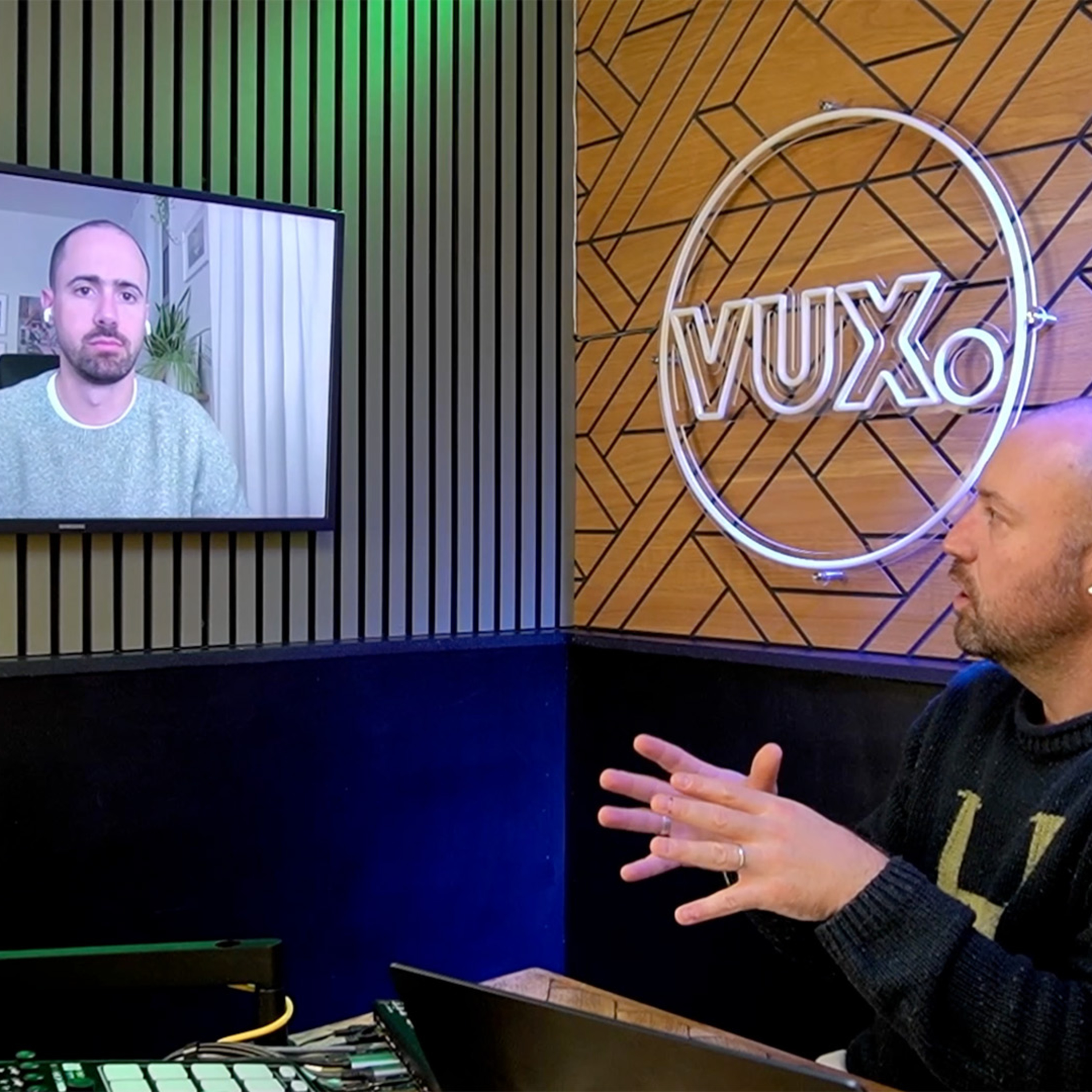
100言語を話すAIをどう活用するか:DeepL音声部門責任者 Leo Doin 氏に聞く
VUX World

NvidiaはJensen Huangを手放せない――復帰の裏側とAnthropic上場後の波乱
AI Inside
AI利用が増えるほど利益率が下がる?トークノミクスと価値証明の難しさ
Agentic Conversations (formally mlops.community)

AIは開発者の就職市場に何をもたらすか:エージェント型コーディング時代のスキルと採用
The Data Exchange with Ben Lorica
Gemini 4 Neon が25タスクのベンチマークで GPT-6.2 と Claude を抑えて首位に
How I AI