
PIシステムとAI:産業データと大規模言語モデルをどうつなぐか
PI and AI
PIシステムとAI:産業データと大規模言語モデルをどうつなぐか
Industrial AI Podcast
要約
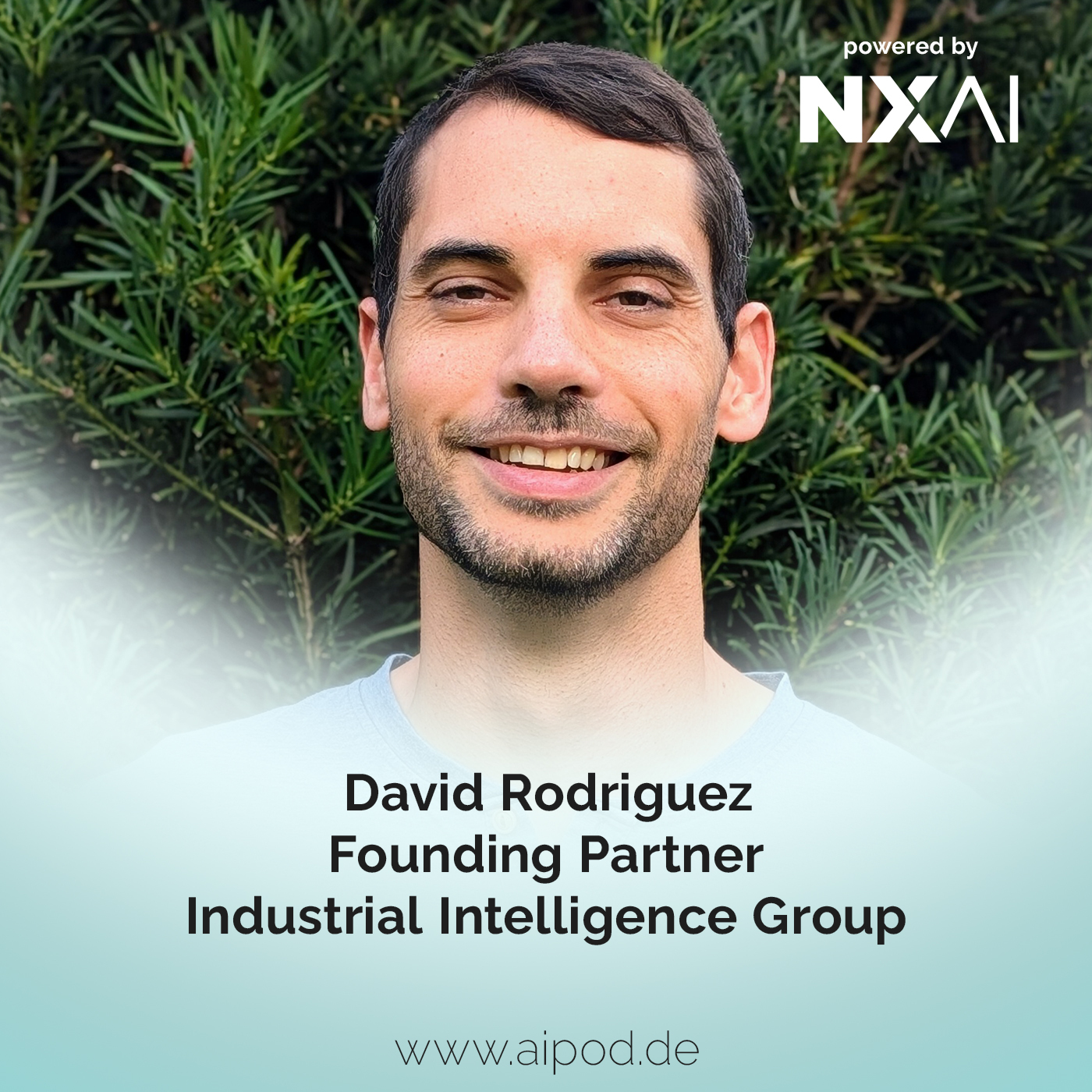
Industrial Intelligence Group の共同創業者 David Rodriguez 氏が、産業用時系列データ基盤「PI System」と LLM の組み合わせについて語った回。機密データを守るためのローカル LLM 運用、Asset Framework による文脈付与、LLM による PI Vision 画面の自動生成、オープンウェイトモデルの進化を紹介している。最終的な結論は、LLM は業務システムに適切に統合されて初めて価値を発揮するという点である。
この回のポイント
- ●産業データは機密性が高いため、事業者提携、自社クラウドテナント、オープンウェイトモデルのローカル実行という3段階のデプロイ選択肢があると説明している。
- ●Asset Framework でタグの山を資産・階層構造に整理することが、LLM に渡す文脈として決定的に重要だと述べている。
- ●コンテキストの構造化には、データ源に近い「早期バインディング」と、複数拠点を横断して整える「後期バインディング」があり、同氏は後者に慣れているという。
- ●PI Vision の表示はJSON相当で書き出せるため、例とルールを「スキル」にまとめれば、LLM に自然言語で画面を作らせ API で公開できる。
- ●エージェントにはグラフ表示は不要で、JSON などの解析しやすい形式で十分だが、ヒートマップなど一部ではマルチモーダル利用の余地もあるとの見方。
- ●モデルが今以上に進歩しなくても、システムへの統合が進むだけで経済的価値は増え続けると主張している。
章立て
ゲスト紹介とPI Systemとは
David Rodriguez 氏の経歴と会社を紹介し、電力・製造・製薬などを支える PI System の役割を説明する。
ローカルLLMでPIに問い合わせる
機密性の高い運用データを外部に出さないための、3段階のモデル運用の選択肢を解説する。
推論の現場とネットワーク耐障害性
ローカル実行のメリットや、現状ではミッションクリティカルな用途はまだ少ないという見方を議論する。
Asset Framework とオントロジー
タグの集合を資産と階層に整理する意義と、早期・後期バインディングの違いを語る。
PI Vision 表示の自動生成と人・エージェント
スキルを使って LLM に画面を生成させる手法と、エージェントに可視化が必要かという問いを扱う。
AI Potluck とオープンウェイトモデル
オープンソースのローカルLLM構成への期待と、小型オープンモデルが急速に追い上げている状況を述べる。
今後の展望と統合の重要性
導入はまだ初期段階だが、統合と適切な文脈提供が鍵であり、副操縦士的なオペレーター支援が増えると展望する。
解説記事
産業用データ基盤「PI System」の現場を知る David Rodriguez 氏(Industrial Intelligence Group 共同創業者)が、Industrial AI Podcast のホスト Peter Sviberg 氏と、LLM を産業データにどう使うかを語った。OSIsoft でのサポート経験と顧客側での構築経験を持つ同氏が、自身の動画シリーズの内容を軸に実践的な論点を整理している。
PI System とは何か
Rodriguez 氏は PI System を「背景で世界を動かしている」基盤と表現する。発電・送配電、製造、製薬といった基盤産業で使われ、OPC や Modbus、DNP3 などのプロトコルでリアルタイムデータを集め、中央のアーカイブ(いわゆるヒストリアン)に蓄積する仕組みだという。その上にさまざまな層が重なり、データを活用できる形にしていく。
機密データとLLMの置き場所
最初の論点は、運用データを Anthropic や OpenAI のサーバーへ送れない場合にどうするかである。同氏は三つのレベルを挙げる。(1)プロバイダーと契約を結んで利用する、(2)AWS や Azure の自社テナント内でモデルを動かす、(3)オープンウェイトモデルを購入したハードウェアでローカル実行する、である。重要なのは「自分が許容できる境界を見つけること」だと述べている。
ホストは、欧州で以前盛んだった「重要データをクラウドに出さない」議論が再び戻ってきたと指摘した。同氏は米国でも同様の企業は多いとし、知的財産や営業秘密を扱う化学メーカーなどではローカルモデルが新しいユースケースを開くと見ている。一方、現状では止まると大問題になるようなミッションクリティカルな用途は見られず、そうした場合のみ通信断への耐性が必要になるという。
文脈を与える:Asset Framework とオントロジー
LLM に適切な情報を適切なタイミングで渡すことが、エンジニアリングの中心課題だと同氏は語る。PI の Asset Framework は、バラバラなタグ名の山ではなく、風力タービンのような「資産」と、その属性(出力、風速、軸受温度など)、さらにサイト・地域といった階層で整理する仕組みである。呼び方はオントロジーでもセマンティックモデルでもよく、要は LLM が読める綺麗な文脈にすることだという。
同氏は、パートナーの記事に出てくる「早期バインディング」と「後期バインディング」の区別を紹介した。OPC UA のようにデータ源側で構造化するのが前者、Asset Framework のように後から統合するのが後者である。現場ではデータ収集が複数の担当者によって異なる時期に行われるため、「データは野生のまま生まれ、後で正規化する」ことに慣れてきたという。ただ、最近はエッジ側で整える方向にも傾きつつあると述べている。複数拠点のデータに天候や市況などの外部データも結びつけた企業横断の資産モデルは、LLM の優れた土台になるという。
LLM にナレッジグラフを作らせられるかという質問には、自身は実践していないとしつつ、有用だが限界があり、オペレーターの頭の中にある暗黙知の翻訳が必要だと答えた。そのため同社は、関係者が知識をタグに反映していく管理可能なワークフロー「intent repository」をプロトタイプとして持っている。
画面生成とエージェントの時代
PI Vision の画面はJSON相当の形式(PDIX)で書き出せる。素の Claude や ChatGPT に頼むと規約を知らず不正確になるため、例や指針を「スキル」(状況に応じて必要情報を文脈に呼び出す仕組み)にまとめた。これにより、自然言語の指示で画面が生成され、API 経由でそのまま PI Vision に現れるデモを示したという。
ホストの、エージェントにも従来のチャートや信号灯は必要かという問いに対し、同氏は「表示は人間の目向けの取り込み形式」であり、JSON のように解析可能な結果があれば LLM は十分だと同意した。ヒートマップなどではマルチモーダルモデルに画像を渡す価値がありうる、とも付け加えている。
オープンウェイトモデルの進化
同氏は、現場にデータを留める前提で再現しやすいオープンソース構成「AI Potluck」に期待を寄せている(自身は実作業はまだ行っていないという)。産業企業がベンダーロックインに陥りやすいことへの懸念が背景にある。モデルについては、オープンウェイトが最先端との差を縮めており、27Bパラメータ級の Qwen が Claude Sonnet 級と渡り合い、単一GPUで動くと語った。
まとめ
同氏自身の業務に占める割合はまだ小さく、「初期段階」だと率直に認めている。それでも、モデルが今のまま止まったとしても、統合が進むだけで経済的価値は増えるという主張は説得力がある。鍵は、信号へのアクセス、整理された表現、必要な文脈だけを渡す設計という「統合」だ。日本の製造・インフラ分野でも、データを外に出せない事情は共通する。ローカルモデルと資産モデルの整備が、AI活用の現実的な出発点になることを示唆する内容だった。なお同社は PI System 向けの MCP サーバーのコミュニティ版を公開していると述べている。
文字起こし(英語・自動生成)
This podcast is presented by NXAI, your partner for Time Series Foundation Models and Physical AI. Hi there, welcome to a new episode of the Industrial AI Podcast. My name is Peter Sviberg and I'm your host. Today I'm going to be talking to David Rodriguez. He is the founding partner at the Industrial Intelligence Group. And David and I are going to be talking about and around large language models and the Pi system. Hi, David. Hey, Peter. David, please introduce yourself to our listeners, please. Yeah, you got it. So David Rodriguez, as Peter mentioned, founding partner at Industrial Intelligence Group. Definitely come from the world of Pi. My first job out of college was at OSIsoft, a company that originally made the Pi system.
So I did my time doing technical support and field service for it and all that. Ended up going to a customer of the Pi system, and that was a lot more fun because you get to actually sit behind the wheel of the system and drive it and make it do the great things that it's meant to do. So I spent about six years at a customer building out solutions, and then figured out it would be more fun to be a systems integrator, an independent consultant, and partnering up with some really talented people in the process. Sounds great. How was the Aviva Enable Conference? I understand you went there last week. Oh, yeah, right. I was there. It's always great because at the main conference, sometimes it's hard to find the really technical sessions, and here that was just the table stakes. You know, all the side sessions and there were hands-on labs. It's always great to get past the slide deck and actually get your hands on the newest software that's being worked on and get a real intuitive feel for what's being worked on.
Very good. Tell us two more lines about your company, Industrial Intelligence Group, please. Yeah, sure. So, I mean, we're just a small shop. It's four of us, and we're just a bunch of, you know, time series data experts. Our expertise centers around the Pi system, but we're familiar with a lot of related technologies as well. I mean, the general idea, as everyone says, is to just make best use of the operational data available to a company and actually turn it into a form that's amenable for action. So all the architecture that's involved, design decisions and new technologies navigating the landscape, that's what we're here for. Sounds great. That's exactly what we're going to be talking about. David, your LinkedIn tagline says, Pie system is my bread and butter, but I enjoy a balanced diet. Great quote. For those of our listeners who do not know if that is possible at all, please tell us, what is the pie system?
You've got to have a little fun with these things, you know. Okay. So, okay, yeah, the pie system for, I guess, those that are uninitiated, I like to tell people it runs the world in the background because its install base is all of the foundational industries that make modern life possible. So you think of power generation, transmission and distribution. So it monitors the large majority of the power grid in the U.S. and in many places around the world. Manufacturing, of course, pharmaceuticals and really just all these different industries. It started as, well, I don't know how far back to go, but essentially it can collect real-time data from just about any industrial source. And it speaks all your typical and atypical protocols. So the ones you're probably familiar with are OPC and Modbus and DNP3. And it takes all these and it puts it in a central archive. So, you know, the term people often use is a historian has a lot of baggage associated with it now, kind of seems out of date.
But it is the mechanism by which you bring in all this disparate data, bring it into one common place that you can then start making use of it. There's more layers on top of it, but at least that's where we can start with that. Yeah, sure. I'm going to come to the details a little bit further. Very good. David, you've been sharing your knowledge, your experience through videos on LinkedIn. Meanwhile, I understand on your website as well. And I suggest that we make them available to a bigger audience by talking about the concepts of some of them here in our industrial podcast. So just let me start. It's not about just copying one by word. You've chosen, you decided for your videos, specific teams. And it's really those themes that appeal to me and I'm sure will appeal to our audience as well. So that's how we're just going to be chatting about those topics. Me starting with, I think it was one of the final ones you did so far.
No, that's not true. One of them from April actually here. And actually, as it is, you know, if in the meantime there have been updates, you share those as well. So you talk about querying the PI system with local LLMs in which you show two alternatives to send your operational data off to Entropic and OpenAI. What is that about? Right. So, for one, just, I guess, back me up for a second. And the whole idea here with putting these videos out is that, like, you know, these large language models, they kind of came onto the scene, you know, somewhat, you know, everyone kind of realized it suddenly with the, you know, chat GPT and that. It just feels like humanity just got this new stick that landed in their lap. You know, it's like, well, what do we do with this thing? Kind of wave it around and see what it's good for. So it just felt like a time for everyone or at least myself to just explore what this technology can do at the intersection of what you are familiar with.
So the PI system was a natural place to kind of start those explorations. And that's sort of what those videos came out of is sharing those findings as I went. And sorry, the next part of that question was… Yeah, no, sure. So the first topic was about where you have this video about querying the PI system with local LLMs. And you're sharing two alternatives, which is really about, you know, in case you are not allowed to send your operational data off to, for example, Entropic OpenAI. So what were the alternatives that you were sharing there? Yes, right. What I was showing was, so I mean, the default that you normally think about is you're querying this large language model that's got to live somewhere, right? So typically it's on servers that are owned by Anthropic or OpenAI or your provider of choice. And, I mean, industrial environments are very sensitive environments. The data is very sensitive. That parts of the network are very sensitive.
Like things that go wrong at that network level can leave craters in the ground, you know, the PLCs and all that. So often those parts of the network are very sensitive. it often gets the data often can live on the corporate network that's usually where a data archive would live for the pi system but even then you can't just send that kind of data off to anthropic or open ai without really thinking about what you're doing so that's one level you could work at if you have maybe some kind of business agreement with them you could also have if you have a some kind of cloud architecture if you work with if you have amazon or azure and have your tenant that you're comfortable with your operational data living in, you can actually host and run models within your own tenant. So that's a good option if you're wanting to keep data within a certain boundary. So it's all about finding the boundary that you're comfortable with. And the ultimate option is, of course, you can just bring the model to whatever part of the network you're comfortable with.
You can run an open-weight model. You can buy the hardware and have it run locally. So in some of the videos I've shown, I showed those three different levels of where you can run the model and the considerations that come along with it. Yeah, it's interesting. You know, Robert and I, we've been running this podcast for, I think, roughly eight years now and being based in Europe. At the very beginning, you know, we talked a lot about, you know, and that was, you know, about, you know, the European German customers in the industrial setting not sending their crown jewels to the cloud. And we always thought this was a very typical European thing. those Europeans, oh, they're so careful. And I must say, we haven't talked about it for a long time. The topic wasn't there for a long time. And it's kind of interesting to see it back again. And as you say, there's all these different options. And the question I was nevertheless going,
it's not really a question, I think. So as you say, if you have a deal with, let's say, AWS, so you said Azure, then that's the deal you have. I mean, but in that case, just to be clear, you're still sending your data out to a partner that you have a contract with, right? Right, exactly. I mean, it's not really your server. It's somebody else's server, and that's a non-starter for a lot of people. It's still very much the case in the U.S. too. A lot of companies aren comfortable with doing that and that okay You know if that what we need to work with that fine Yeah right But nevertheless you say there is the option today to run things locally I guess it depends a bit on the people that make your connectivity to, let's say, AWS or Entropic or OpenAI or Azure, whatever, to an outside service. Are they the same people? Do they need the same capabilities from a technical perspective of running a local solution?
You talked about running Olana on a mini PC, a couple of things. Maybe we come to that later. Or do they, I mean, would they be the same type of person, same type of interest, or would they have different capabilities, different knowledge? I guess it can open up some different use cases. I would say largely the same. I mean, these are all just sort of sloppable one for another. But let's say, I mean, I would imagine it being pretty common where you're comfortable with some data, like you're a breaker status tag or something like that, living in the cloud or something like that. Very different if we're talking about intellectual property, trade secrets type of things for a chemical manufacturer or something like that. But so having a model on a local network that can work with that data in context could definitely open up more use cases that wouldn't otherwise be possible in a AWS or Azure type of situation.
Isn't it special as we're talking inference? I mean, if we're talking, you know, wanting to do things, knowing things, humans, agents, we come to all of that at the point of inference where things are happening, where the rubber hits the road at that very moment. And isn't it, you know, even a good thing to have, you know, the connection within your own network, so to say, rather than needing to go outside with the potential that, you know, there's going to be a glitch, whatever millisecond glitch that you cannot really use? Right, yeah. I mean, you are contingent upon having a good Internet connection. You know, these are still, I mean, I like to say these are the early days, you know. So, I mean, it's full, the full realization of the use cases of this technology have yet to fully play out. And at the moment, at least I don't, I'm not seeing like the mission critical workflows that must occur or else there's, you know, major problems.
Those aren't quite there yet. And that is a good point. Like if it does, if you are doing something along those lines, then you would need to be resilient to connectivity outages, which means that you need to have, you know, the numbers got to get crunched somewhere. So it'd have to be pretty local in that situation. Okay, very good. Good start. The second one, second topic I read about, I saw your video. So it was about using code to talk to the PI, to the PI, sorry, to the PI asset framework, which is, I understand, about getting the right context to the model at the right time, right? So I think that's a topic that I would like to spend a little bit of time about together with you. I mean, also moving into, you know, knowledge graphs in general, the need for a knowledge graph for the large language model.
Tell us what is your knowledge, your experience there. Sure. I mean, the general name of the game, kind of like you mentioned, is getting the right information in the right situation to the model. That takes several different mechanisms based on the situation to, I mean, these models can be, they're very, very capable, But they need the data to be available in a decent format inside the context window. And that's really where a lot of the engineering and the creative design decisions go. And so having the right systems to work with is important too. So when we were talking about the PI system, those extra layers, the one that I left out at the beginning is asset framework. So that is where you can start to get the notion. Instead of having in the archive just a big pile of tags, so like I mentioned breaker status earlier or power being measured, just one sensor's data and a bunch of disparate names, in asset framework, you actually build out the notion of assets.
So my mind always goes to wind turbines as an asset. So you can have representations of the assets. Those assets have attributes associated with them. So a wind turbine will have power. It'll have wind speed going across it, the oil-bearing temperature. And those attributes all point back to tags on the data archive. So it's a way to structure the information. The assets themselves, they're organized in a hierarchy. So there's notions of, all right, these turbines exist under this site, and this site lives under this region. So you start to create that. You know, people use different words, an ontology, a semantic model. But really, it's just having data in a clean, readable context for the model to use. And yeah, it makes all the difference. And this is not a new problem either. We've needed this before the advent of LLMs. Yeah, but most of us didn't do it before.
Oh, yeah. Maybe now if we say we want to do AI or whatever we say we want to do, maybe now we're going to be forced to do it. And the way that you already start describing this brought me as a co-producer of the OBC Foundation podcast, but it's not about that. But there is something that, for example, OBC UA does with an information model. You referred to it before. But we're not talking about that, but that's a way of thinking about, you know, logical. You know, you said wind turbine, there's a foot and there's a whatever, and there's a house up there and there's the pieces and the electricity and all the things like that. But you did a second video which goes a little bit more in detail where you talk from tax to ontology. And that's where you talk about, I understand, the importance of putting stuff into an ontology. And I was trying to find out, as you say, most of us haven't done it,
those of of us those of our listeners that have already in the past understood that it's a lot of work to put stuff for example into an opcua information model would that be maybe sufficient or you say no because you you refer to these three different terminologies of which the ontology i understand is the big one knowledge graph ontology is there is there something missing there then Is there something more? And how do you get there? Even if you have something, what is it that if we move to the large language models, the agents, what is it that they need today so they can really be optimally working for you? Oh, man. Yeah, there's a lot there. So, for one, that article from Tagged Down to Ontology, that's actually from my partner, Rob Raisman, that he wrote that. It's a really good article. It's up on our website. But a key distinction in that article that maybe helps kind of differentiate the idea of making an OPC UA model versus, say, something like an AF or an asset framework or elsewhere is the concept of early binding of context and late binding of context.
so i don't want to confuse the terms context is in the context window of an llm that's sort of separate here but like the the actual structuring and organizing organizing of the data creating that ontology yes can happen on the uh what i would say is closer to the data source side so the opc opc ua is you know it's definitely i have i've seen how you can have like a nice hierarchy of of item ids i guess and that's really great and that's so that's like the early binding of data. That is great if you can get it. I'm not used to having that. So normally I think of the late binding of data. So that's, say, an ASF framework. I think of OPC UA as one of many data sources, and there's many instances of that. So in my experience too, when data collection is set up, it's done by different people at different times. You all have a different idea of what's the right way to do it. So it ends up just being, I mean, it's really hard too.
You could be collecting, what, 10,000 or more different streams from a single OPC UA data source. And that is a lot to try and go through and organize. I think the argument is shifting now where it makes sense to try and tame that data closer out to the edge. I'm starting to come around to that. But what I've been used to is just accepting the fact that all this data is born wild and it just needs to be normalized at a later point. When you actually are aggregating this data across several sites, you're not only collecting that process data, but you're also getting like third party data Like you pulling in weather information or market conditions supplier information That when you start building this enterprise asset model and relating all this stuff to each other That what you know we called like the late binding of data And so that the enterprise asset model when achieved properly that is an excellent
contextual foundation to large language models. But again, it's something that's always been needed and a few people really have come around to having. But is it easier these days to get it? So if we say, let's stick to the knowledge graph or the ontology, you choose it. Can you these days, as you refer to Claude as an example, there's other ones, can you just ask Claude to produce it for you? And in an, let's say, maybe interactive way, ask Claude, Claude, what do you need? I want to have this knowledge graph of X, Y, Z. So maybe interactively you can define what it is for, the complete company, the division, the subset, a specific production line, it doesn't matter. And Claude is going to tell you, okay, I can do that for you, but, you know, you point me to whatever it is that, you know, I'm going to be making it for. Or is this now theory that I'm sharing here? Or should we be using the tools that we today have that we could not imagine having, you know, like a year ago?
Yeah. I mean, so for me, that's theory territory because I haven't been quite hands-on doing that. But, I mean, that goes to suppose that you could do something along those lines. But it's going to be just like with everything. It's a very useful tool, but you need to set it up the right way and it will have limitations. Like there's just certain tribal knowledge that is just that lives in the operators and technicians head that needs to get translated. And it can be a useful tool and get in facilitating that process. And we actually do have a, you know, I said it'd be like a prototype product, but something that can kind of help along those lines. We call it the intent repository. and the idea is to take these streams and provide a governable workflow for having all these different people incorporate that knowledge into the streams and have it become yet more normalized and traversable for an LLM. Okay. Yeah, it's important.
And that's what I would call the ontology. I mean, all our terms, this is all kind of new. I kind of consider knowledge graph to be a little bit of a different thing. We can go into that if you like. Let's move to the next topic here, which is very interesting for me as well. There was one about Pi vision displays in 10 minutes. Is that something you can share with us as well? And I think that one is the faster way of doing things, of producing things, of producing these displays. And the other question I have there, who are we producing? the displays for today still for the same human? Is that the same person? Is that a different type of person? Maybe not today, but maybe tomorrow. And does this person in the near future, with the use of large language models, agents, still need the same type of information that we've been used to for the last, whatever, 20, 30 years, you know, all the charts,
maybe the red lights, the green lights. does the agent need that information? The agent or the LLM needs the access, but they don't need to have it shown in that way, I believe. So that's another topic I'm very interested in, if you can share your thoughts on that. Yeah. Okay. So, yeah, the Pi Vision thing, so just to give context here again, the Pi system, you collect data out by the sources where the data lives. You bring it together in an archive. You structure that data, make it, you know, kind of give it that ontology at the AF layer. And on top of that, you can build visualizations for typically for humans. Typically for humans, right. It's meant to be very, it's a very user-friendly interface. It's actually meant for people who are not very, you know, technically inclined to just go in this drag and drop interface. You can help yourself. And that's part of the idea here is so much of this data is not being fully used to its potential.
So the easier that you can make it to pull that data out and get it so you can interface with your eyeballs is really important. So PyVision is meant to be a very approachable, slow learning curve type of product. But, you know, that's one of the capabilities of large language models to you can produce data in like you can produce text in very well, of course. Sorry, you're not the cleanest way to describe it. But the idea is that I've kind of a couple of times in my videos, it's really the pattern is there is some object in the system that is represented by text. So AF structures can be exported to XML files. PyVision displays can be exported to PDIX files. Essentially, it's just JSON under the hood. And so if you can get the model to work really well in that format, you can produce those objects by just prompting for them. So, and if you just give your vanilla cloud or chat to VT that kind of task, hey, build me a PyVision display, it's not going to, it's going to make up stuff.
I mean, it'll produce valid JSON or whatever, but it doesn't know the conventions and the formatting that's needed for, to actually build these objects properly. So a lot of the work went into producing examples and also finding good, basically good North Stars for it to use and for when following these requests. And those were all wrapped up in a skill. I'm not sure if you might be familiar with that, but essentially it's just a way to conditionally reveal information that a model might need to use given the situation. so you can kind of bundle this information up and it's very easily accessible in a conversation where you say, hey, can you build me a PyVision display? It'll bring in all this information into the context window. That's part of the idea of just having the right context at the right time for these models. So basically with that, you can start producing these objects. And especially with the PyVision display, getting it to actually show up in the system is very easy
because PyVision has an API and you can just publish that display through the API. So in that video, I just show like, hey, I typed it a little bit and then as soon as the model's done, a new display shows up, which is pretty cool. But I mean, like I mentioned, PyVision is a very user-friendly type of application. So it's already very easy to use, but it is kind of neat to show the natural language interface to things like this. Very good. And still, because you shared about the below level, the JSON, you say all kinds of things. If we talk about large language models, maybe if we talk about the agents, which we don't go into details today, but, you know, the agent, the piece of software, basically, that I'm asking to do something for me through the LLM. You know, I'm asking the LLM to do something. It will, you know, find its way through an agent. The agent, as long as it has access to exactly that lower level, let's say JSON as an example, to the databases, the data, whatever kind of format they're in, that's what the agent is going to be happy with, the software is going to be happy with.
The agent doesn't need to see it in the form that humans would need to see it. So have you considered, do you see something changing in the future there if we're going to leave more things, more of the doing things to the LLMs, to the agents? Is the job of the person today looking at these graphs, is that job going to change rather towards, I have no idea, maybe confirming something that the agent comes up with and clicking and confirming? or I don't know. Do you see that changing for that reason? I can definitely see some changes coming along those lines. I mean, really what we're talking about is just formats for ingestion. You know, the display is a nice format for ingestion for humans because we got our eyeballs and pre-inflammation too, depending on what you're showing. So it could be useful for a large language model. So in, I think, more narrow situations, you know, if there's, like, if you have a heat map or something like that, that could be something to put into a multimodal, you know, a language model that takes both vision and text.
But for the most part, yeah, I mean, I think you're right. Like, you know, if you have these JSON parsable results, LLMs will be very happy to crunch on that and no need to, you know, bring a display in. I could imagine, yeah, right. Okay, I've got a final topic here, which was not part of your videos. Maybe you're going to do that sometime. You were suggesting you're going to continue with the ones you have. It's a LinkedIn post, and it was about AI Potluck, if I pronounce that correctly. It's an open source stack. I understand industrial environments where planned data can't leave the site. It's maybe similar to the topic we had at the very beginning. Can you talk a little bit about what that is and what you've maybe been doing with it or what you've been playing around with it? Yeah, I mean, I'll say it's more of just like a, you know, what I just kind of want to put it out into the world you know just amplify its you know its presence so that it can hopefully be more of a thing You know I haven done any explicit work with it but in general I believe in having
a viable, easy to reproduce open source stack as a solution for, in this case, large language models. So, I mean, imagine like we were talking about a company that for the reasons we mentioned want to have a local model running inside their own network. It's going to be, I mean, you have to bring in, I mean, for sure at the moment, you have to bring in some pretty decent expertise to make sure it's set up really well. It would be great if we can just snap these things together like Legos. And that's kind of what it seems like this group is going after. So I just really like that idea. It's similar to the thought of working with data collection out of the edge, having a good open source solution for that. But, you know, it's a terrible affliction at industrial companies to get locked into a vendor. So when I see an open source like Ethos, I want to see that do well. Sure, sure, sure. There was the latter by Jensen, NVIDIA, and most of the other companies except for some of the closed models ones, I guess.
But sure, I mean, open source is a big thing. And it's not about, I don't know, choosing one or the other. I mean, in the end, you know, each of us, each of the listeners, each of your customers, you know, they will make their own decision. But it's one of the options that we have at HandWrite. Now, I think you were sharing two specific, could have been other ones, I guess, open weight models. I saw you have been using Kimi K3 GLM 5.2. I hadn't seen or heard about that one. And then every Sunday, it's on my calendar when I've got nothing better to do. And I look at the arena leaderboard, just because I used to be doing that for many, for as long as they exist. And they, yes, they are both in the top 10, still with a lot of closed opens in the top. It's not about going in there. But just as an example, I believe that's what you are. So within this AI potluck environment, I guess you can be choosing whatever open-weight models that you would like to then, right?
That would be the idea. And yes, it does. There's a lot of nuances, a lot of things to make sure and get set up just right when you go between different models, which is the part that I hope that we can eventually streamline. But yeah, I mean, those models you mentioned, GLM-52, KineK-3, it's already old news. there's it's amazing and i think we've kind of had a moment recently where the open weight models have just really picked up pace and closed the gap with frontier and they're they and they're punching way above their weight like my favorite example is quen 3.8 27 billion parameter model i mean it's trading blows with like with claud sonnet uh five and it's i mean claud sonnet five is really good. I mean, you can put that in a coding harness and get a lot done with it, and it runs on a single GPU. So it's kind of incredible that we have these options now, and, you know, like people say,
like, it's the worst. This is the worst it'll ever be. So as a closing off, final thought, where is all of this bringing us? So it's part of your work. It is your work. Part of your work, I guess, where you're helping your customers with around the PI system. And I guess this is showing the future of the PI system or already today. Maybe you can share with us, you know, what percentage of the things that you do are already in this area. Where are we standing? I mean, in this case, where are you standing, where you live with your customers? And the things that we talked about, the videos you put out, the topics, the large language models in an industrial environment, in the area of the PI system specifically, where is that going to bring us in the next five, ten years? What are the changes less at the technical level, at the higher level? What is it going to be? Are we going to need the same people to do things?
You already suggested, you know, depending on the quality of certain applications, you need maybe less or a different education. What is it going to be doing to, you know, manufacturing? we hear about here in Europe manufacturing United States? Is it going to be easier for that reason? What are things that you see because of large language models, AI in an industrial specifically pie environment? Yeah, well it's always dangerous to predict the future. Sure. Better you do it than I do it. Right, yeah, thanks. And for one too I mean you mentioned like how much of this am I currently doing and I'll be up front like it's very low proportion of the work right now but this is what i want to have out there that hey like you know this is especially this this is all these are the early days you know and it takes some some pretty like sharp people to come in and try and uh really get those first good use cases going and that's what we're just starting to get momentum with now so yeah and one thing too is that like if you freeze these models
in place if all development stopped you know people type oh they're gonna plateau it's and and maybe they will, don't know. But even if it stopped right now, I mean, we're just figuring out how to really integrate these things and work them into an environment. So if they were to stand still, the economic gain and the ability to actually get the value out of them is only going to continue increasing. And it's a matter of integration. You can't just drop a, you know, drop a GLM 5.3 or whatever, like a big heavy model or something like that on your network and expect great things to happen. you got to integrate it. They have to give it the ability to, uh, access the, the signals and everything that's going on, uh, with your operation. And like we mentioned, it can't be just a simple, like a dump of information that it has to trudge through. I mean, it can, it can reason over a pile of unorganized tags just about as good as you can, you know? So it's a matter of having these things really well integrated and having the
information represented in a really capable way. And then there's all these strategies of bringing in the right context at the right time. And we didn't even get to touch on knowledge graphs or at least my version of it. But basically having a structured representation of the information about a certain topic or process that can be easily traversable. And you bring in only what's needed at a given time. So all these things really still need to manifest themselves in an industrial operation. And that's what I'm here to try and help companies do. And there is a lot of upside to it. I mean, I think there's the ability to bring in, essentially, if it's well integrated, you can have basically a co-pilot operator, you know, overseeing a process and understanding what's going on and what will need to be done. It doesn't sleep. It's always giving it full attention. It can work faster than you. So having it all integrated in one place, I think we're going to see more and more of that.
I think I hope the amount, the quality of integration of these models will increase with the systems that are present at companies. And the economic value of that will continue to be unlocked. And I mean, at a more personal level, I see that as super important because, you know, these like I mentioned at the very beginning, this is what this is the foundation of what makes modern life possible. This is what gives us the prosperity that we have. You know, we turn on the light switch and the lights come on. You know, that's because we have this miracle of modern innovation that behind it that's made it happen. And if we can use the information that comes from that process to make it run more efficiently, we have more and more sustainable prosperity. I think it's a really fun area to work. Thank you, David. Huge potential, I hear, but a very clear message we got from you. It only works if it is going to be integrated well.
I think that's a very important message. so I'm sure those people that haven't I mean most of our listeners have heard those that are new to the message and weren't really sure about what LLMs can be doing in an industrial setting now maybe have a stronger feeling but before they can think or believe yes I'm just going to be doing AI I do it tomorrow you say you need to integrate it such that the LLM can be giving you the optimal support. Yeah, I mean, I want people to start exploring it. And we want to give people the tools to do it too. We have our MCP server for the Pi system publicly available, the Community Edition. You can download it, use it, explore. Great, David. It was a pleasure talking to you. Keep up the good work, sharing your industry, your knowledge, experience through your videos, through your, we're going to most certainly put those onto the podcast as well for people to look
at. Keep it up, sharing your experience. Looking forward to seeing another video again. Yeah. Thanks, Peter. Appreciate it. Take care. Have a good day.
番組の概要欄(原文)
In this episode, I sit down with David Rodriguez to explore how large language models are reshaping the way we interact with industrial data. We dive into the Pi System’s pivotal role across foundational industries and discuss practical strategies for integrating AI—without compromising sensitive operational information. David shares his experience on creating actionable knowledge graphs, running local LLMs, and the evolving relationship between human operators, agents, and data visualization. If you’re curious about the real-world challenges and future promise of AI in manufacturing, this conversation delivers clear insights and actionable takeaways. Join me as we unpack what it takes to move from data to decision—safely, efficiently, and intelligently.
出典・この記事について
- 番組
- Industrial AI Podcast(Robert Weber / Peter Seeberg)
- 元の回
- PI and AI
- 配信日
- 要約作成日
- 公式サイト
- www.aipod.de
この要約・解説記事は、元の音声を文字起こしした内容をもとに AI(Claude)が日本語で作成したものです。 固有名詞や数値に誤りを含む場合があるため、正確な内容は元の音声でご確認ください。制作方法について
関連エピソード

AI利用が増えるほど利益率が下がる?トークノミクスと価値証明の難しさ
Agentic Conversations (formally mlops.community)
Gemini 4 Neon が25タスクのベンチマークで GPT-6.2 と Claude を抑えて首位に
How I AI

AIは開発者の就職市場に何をもたらすか:エージェント型コーディング時代のスキルと採用
The Data Exchange with Ben Lorica

AIは建設現場の「本当の進捗」を見抜けるか? Buildots のアミール・バーマン氏に聞く
Making Data Simple
Bosch Rexroth:あなたの「秘伝のタレ」は何か? エージェント型エンジニアリング Agent iXi
Industrial AI Podcast
不確実性の下で推論するAIを作る:Thore Graepel(Metis Reasoning)との対話 #786
The TWIML AI Podcast (formerly This Week in Machine Learning & Artificial Intelligence)