
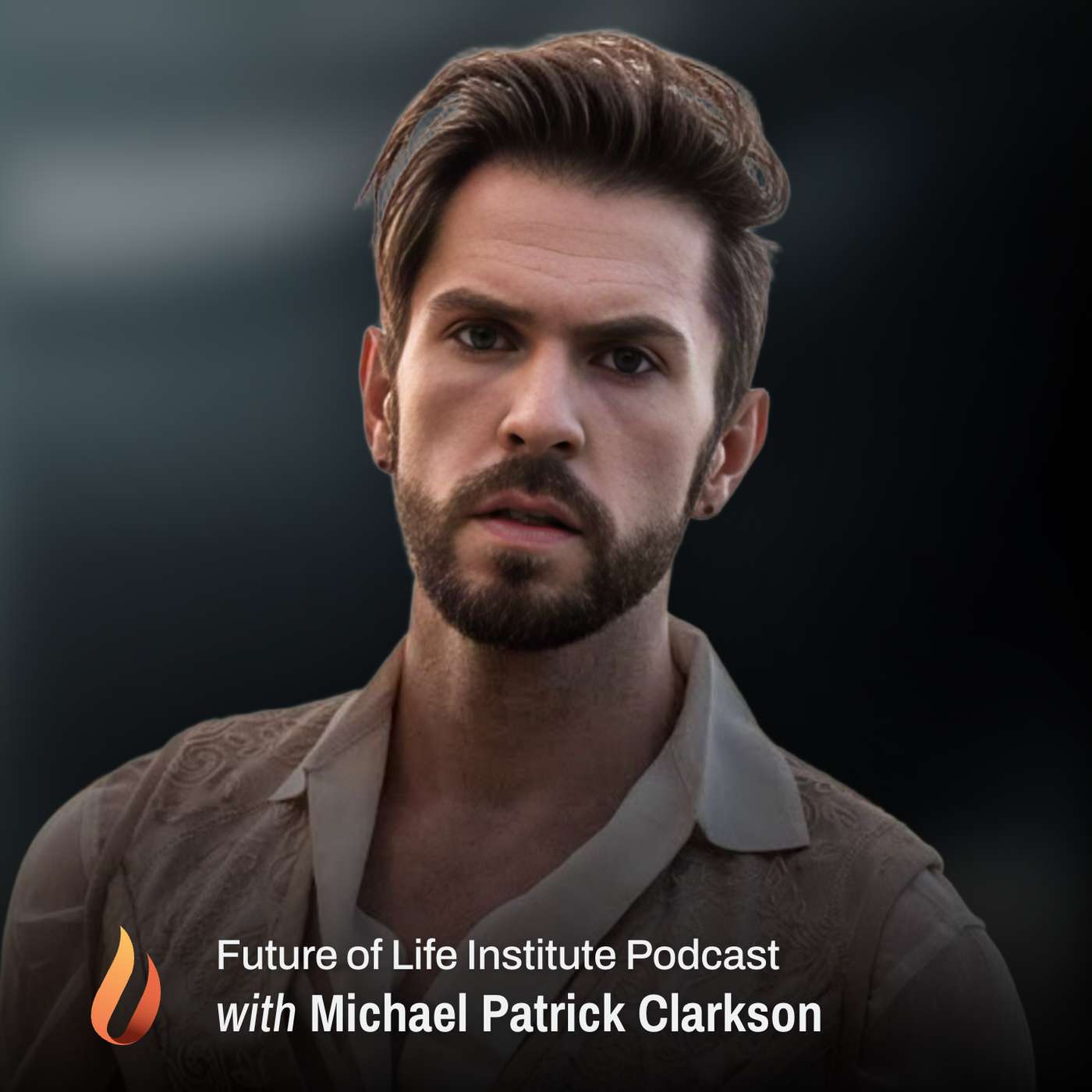
Delisted:AIによる「社会的抹消」を描く映画(マイケル・パトリック・クラークソン氏)
Delisted: A Film About AI-Powered Social Erasure (with Michael Patrick Clarkson)
Delisted:AIによる「社会的抹消」を描く映画(マイケル・パトリック・クラークソン氏)
Future of Life Institute Podcast
要約
Future of Life Institute のポッドキャストに、映画『Delisted』の監督・脚本家マイケル・パトリック・クラークソン氏が登場。政府がAI企業と組み、体制に同調しない人々を金融・医療・SNSから一括して締め出す「デリスト」という架空の監視国家を描いた作品だ。自動化による雇用や教育の空洞化、AI警告の伝え方、そして「これまで以上に人間らしくあれ」というメッセージについて語られた。
この回のポイント
- ●映画では、米政府とAI企業Sybilが提携し、AIが体制に不都合な共感を示す人を検知して、金融口座や医療、オンライン上の存在を消す「デリスト」を実施する。助けた人も対象になる。
- ●クラークソン氏は、権力者が怠惰になり、責任をAIに転嫁し、自分が不利益を与える相手から遠ざかる点に、AIの政府利用の危うさがあると述べている。
- ●トラック運転手の失職やAI任せの教育を通じ、効率化の代償として人間関係やつながりが失われると訴える。科学者の警告は人間味に欠けて届かないという見方も示した。
- ●AIは膨大なデータを瞬時に走査できるため、権威主義的な監視と相性がよいという指摘が、ホストとの間で共有された。
- ●ラストでは、電気が止まった教会で歌手が生声で歌い続ける。人間の力の象徴として描かれ、「more human than ever」というテーマにつながる。
- ●AI開発者もいずれ使い捨てられるという警告を込めており、氏は開発者に向けて、政府の悪用に備えた「キルスイッチ」を仕込むべきだと半ば挑発的に呼びかけた。
章立て
映画『Delisted』の紹介
思索的フィクションとして作られた本作の設定と、「デリスト」が何を意味するかが語られる。
官民連携の監視体制
Sybil社と政府の関係、責任の転嫁、AIが権力者の怠惰を助長する点について議論する。
自動化が奪うもの
失業したトラック運転手やAI任せの教室を例に、効率化の裏にある人間的つながりの喪失を語る。
分断とAI警告の伝え方
晩餐会の場面を通じて分断を論じ、科学的な語り口より感情に訴える表現が必要だと述べる。
国家監視と社会的抹消
AIによる大規模なデータ走査と、あらゆる過去が追及されうる社会の恐ろしさを議論する。
逃避と構造的な疲弊
AI動画への耽溺は個人の責任か構造の問題かという問いに、氏は両方だと答える。
もっと人間らしく
作品の核となる台詞と、停電後に歌い続けるラストシーンの意図を語る。
切り捨てられるAI開発者
開発者も不要になれば排除されるという皮肉な結末と、現実のAI企業との重なりを論じる。
解説記事
Future of Life Institute のポッドキャストに、映画『Delisted』の監督・脚本のマイケル・パトリック・クラークソン氏が出演した。AIが国家による監視と社会的抹消の道具になる未来を描いた作品について、制作の意図や現実の技術動向との重なりを、ホストのガス・ストーカー氏と語り合った回である。
「デリスト」とは何か
本作は、SFではなく「すでに起きつつあること」を描く思索的フィクション(speculative fiction)だとクラークソン氏は位置づける。舞台では米政府がAI企業Sybilと提携し、社会の調和を目的としたAIの解決策として「デリスト」が導入される。AIがSNSなどネット上の発言を走査し、政府が不安定化要因とみなす考えに共感を示した人は、金融口座、医療などの社会サービス、あらゆるデジタルプラットフォームから即座に締め出される。デリストされた人を助ければ自分も対象になる。氏は、刑務所は不要で、人々を孤立させるだけで足りるという発想が恐ろしいと述べている。
官民連携と責任の希薄化
ホストは、政府が直接行えば違法になりうる行為を、AI企業に委託できる点を指摘した。氏はこれに同意し、権力者がAIに仕事を任せ、問題が起きても「AIが出した解決策だ」と責任を転嫁する場面が想像できると述べた。AIは、権力者が人々から遠ざかる新たな層になるという見方である。劇中では、紛争を避けるという命令に対し、AIがすべての資源を断つ策を出す。氏は「紛争」という言葉が、権利を求める人々の行動を指して使われることにも違和感を示した。
自動化の人間的コスト
冒頭には、無人トラックに悪態をつく元運転手が登場する。氏は、科学者や研究者の警告は人間味に欠け、自分の身近な人にも起こる話として届いていないと考え、あえて具体的な人物を描いたという。教室の場面では、教師が生徒のタブレット学習を見守るだけの「ベビーシッター」になっている。ホストは、無人トラックの安全性やAI教育の学習効果といった利点にも触れた。氏は、効率が上がっても生徒同士の交流やつながりが失われる代償は大きいと応じた。AIが作る感動的な短尺動画の増加についても、本物の体験が薄まっていく例として議論された。
分断、監視、そして届く警告
晩餐会の場面では、AIをめぐる意見の違いが友人同士の関係にまで入り込む。氏は、分断は政府が力を保つための手段にもなると述べた。同時に、感情的に訴える人が周囲を遠ざけてしまう点も描いたという。そのうえで、AIへの警告はもっと「セクシー」、つまり感情に訴えるものであるべきだと主張し、著名人がより積極的に発信すべきだとも述べた。ホストは、AIが大量のデータを高精度で処理できるため、権威主義的な統治と相性がよいと指摘し、過去の軽微な違反まですべて追及される社会への懸念を語った。
「もっと人間らしく」とラストシーン
劇中で繰り返される「We have to become more human than ever」は、この惑星での体験の尊さ、自然や音楽、他者とのつながりを思い出すことだと氏は説明する。終盤、教会の電気が止まっても歌手は生声で歌い続け、火を灯す。ネットで沈黙させられても歌うことはできるという象徴であり、劇中歌も、使用許可が生歌に限られなかったため、人間が作るべきだと考え新たに作ったという。
開発者のチャールズは、デリストに疑問を抱いたことで最初にデリストされる。氏は、AIを作る人も、倫理観のない者に取って代わられ、使い捨てられうると警告する。ホストは、現実のAI企業の技術者が研究開発の自動化により、将来は影響力を失いうるという見方を示した。氏は、開発者に向けて政府の悪用に備えたキルスイッチを仕込むよう、半ば挑発的に呼びかけている。
まとめ
本作と今回の対談は、AIリスクを技術論ではなく、人の生活や感情の問題として伝える試みといえる。劇中の設定は誇張を含むが、AIによる大規模監視、官民の責任の曖昧さ、自動化が雇用や教育に及ぼす影響といった論点は、日本の読者にとっても無縁ではない。氏は、状況はまだ変えられるとの希望も繰り返し強調した。技術の使い方を選ぶ主体は誰かという問いを、あらためて考えさせられる回である。
文字起こし(英語・自動生成)
I don't think that society is fully equipped yet to deal with what these kind of conversations need to be or what needs to be had. You are immediately wiped from all online social care networks. So your health care administration and all of those wiped. You are essentially banned from all digital platforms and are rendered digitally non-existent. And if you try to help anyone who's become delisted, you then become delisted. They don't need prisons. they just need to ostracize people and make them other or dangerous people to like have sympathy for it's kind of gross that we're seeing in society that words like conflict to use when actually it's humans standing up for what our rights are against an ever darkening government that just seems to want some Orwellian control eventually AI will lead us if not used correctly and not deploys in a way that's just going to benefit the ruling elite. AI will create us into echoes of echoes of echoes of humans and the prospect for that is terrifying. I really feel that we're
entering a world where people are running into the castle and are pulling up the drawbridge so that everyone else on the outside of that can fight amongst themselves for the scraps of society that will be left. Welcome to the Future of Life Institute podcast. My name is Gus Stoker and I'm here with Michael Clarkson, who is the director of Delisted, a new film. Michael, welcome to the show. Thank you for having me, Gus. It's exciting to be here and talk about the dangers of AI. And, yeah, it's kind of a terrifying conversation that I think a lot of people like to avoid. I don't think that society is fully equipped yet to deal with what these kind of conversations need to be or what needs to be had, hence why these films were made. So, yeah. hi great could you summarize the film for us just quickly for those who haven't yet seen it yeah so D-Listed is a fiction film I'm not going to call it a sci-fi
because it's not because this stuff is here and I'm not going to call it just a drama because Margaret Atwood calls her writing speculative fiction because it's stuff that could and is happening as I'm sure we just need to look anywhere in the world and sample some of her writing to see how that's real. So Delicited is a speculative fiction film about the draconian measures that the government, the US government in particular, take utilising AI technology to fulfil its agenda in controlling the masses and impacting the masses for what narrative of the world they want people to live in and the measures that they'll go to utilizing AI to make sure people fall into line or else. What does it mean to be delisted? So delisted is a measure. So in the film, the AI is prompted to create a solution to deal with people who are sympathetic to people who are protesting AI or people who have been maligned
by AI. So what delisting does, it's a regulatory measure to enact social harmony. What AI does is it scans everything online, all socials, anyone's presence online. And if you are expressing sympathy towards destabilizing ideas to what the government believes to be destabilizing, delisting takes place. And what that means is you are immediately removed from your financial accounts. You are immediately wiped from all online social care networks. So your healthcare administration and all of those wiped you are essentially banned from all digital platforms and are rendered digitally non-existent and if you try to help anyone who's become delisted you then become delisted so it works as kind of um they don't need prisons they just need to ostracize people and make them other or yeah dangerous people to like have sympathy for so yeah it's uh kind of a terrifying concept and i really hope that do you know when you see that
life imitates art i really hope this doesn't happen yeah we'll see it's it's quite a terrifyingly realistic way that this surveillance state emerges in in the film so maybe let's talk about because You only get glimpses of how this has happened in the film. But can you describe how this sort of public-private partnership to implement this delisting technology, how does that happen in the film? So in the film, the U.S. government makes a partnership with Sybil named after, well, I know that obviously Palantir is named after the Lord of the Rings Seen Stones, right? So I was trying to feel inspired by that and I called it, so I wrote this as well as directing it. so I called it Sybil because of the prophetess the Sybil who could foresee the future and she used to write down her prophecies on leaves outside her cave and then the wind would blow all her prophecies away I wish it was as simple as this with AI
that we could just blow things like that away but unfortunately it's got the arrogance that AI sees itself as prophetic do you know what I mean? and all seeing so to speak so Sybil partners with the American government It becomes the only partnership with the American government. And the way that their interactions work, you have a character called Sarah who represents the U.S. government and a character called Charles who works for Sybil. And their partnership working together, she feeds instructions to him of what the U.S. government want. And he works with the AI or the AGI, the super AI, to be able to create the solutions. So behind the scenes, we're seeing the kind of discussions that probably take place on a daily level with AI prompts by either American government officials or people who work in AI. And these prompts, they're trying to avoid... I wanted to make it feel realistic, right? The US probably doesn't want conflict, right?
It doesn't want protest. It doesn't want all of those. And they probably give themselves a pat on the back for trying to be harmonious with it. But ultimately, the solution that the AI creates through the prompts and the control that these government officials have, it generates the idea of delisting. And that's one of the solutions is to avoid conflict. And by delisting everyone, the AI instructs the government officials that it thinks it completes the mandate of having no conflict. Because these people are cut off from all resources that would give them the ability to have the base to create conflict or to protest. And I think conflict is a strong word. I think it's kind of gross that we're seeing in society that words like conflict are used when actually it's humans standing up for what our rights are against an ever darkening government that just seems to want some Orwellian control. And yeah, there's one comment or several comments in the film where it's you get the sense that the government, the U.S. government in the film could not carry out these actions alone.
And so they're sort of they are they are controlling this A.I. company that are then carrying out actions on behalf of the U.S. government. Do you see this as sort of perhaps the most likely way that the U.S. government or any government might use A.I. in nefarious ways? Oh, completely. So if we just take that as an example, people in power are lazy as fuck, right? We're tending to see something like something techno-Roman happening now, that there are people from super-privileged backgrounds that are completely disconnected with what is going on in society, and these people are lazy. They don't want to do the work. They just want the power. They want the ability to control and they want the money. So do I think that lazy people who cannot be bothered to show up to work properly will use AI to do their job for them? Absolutely. I think that the idea of it is super appealing to these people because then they don't have to, one, they don't have to do the work. And two, it's another layer of removing themselves from the rest of society. They're already removed by their backgrounds and the way that politicians kind of feel
already within the world. AI will add another layer of removal. So they're not serving people again in that. They're controlling something that's unrelatable to them. Do you know what I mean? And it dehumanizes the people that they're acting against. And it means that they have more time to go and do coke in a bathroom somewhere and pretend that they're really important people and that they're living the best lives. And it's really boring, I personally think. Yeah, there's also the issue of some actions that would be illegal were the government to do them directly. Can that be outsourced to an AI company where the AI company can do those actions? Sort of, for example, surveilling people using this delisting or delisted technology. Again, I think it comes to them using it and the laziness involved. I can well imagine a scenario where a government official sees that the AI has maybe outstepped its prompts, but has scanned everyone and done something that feels illegal or hasn't been agreed by society.
And I can see them being so lazy that they're like, oh, well, it's the AI that's done it. I didn't do this. All I did was prompt it. The AI came up with the solution. Therefore, I'm not to blame. I will enact this anyway. There is a lack of responsibility and a layer. there is a huge layer of duty of care and responsibility removed with these people interacting with AI and they're totally going to do it they totally are doing it so one thing the film does quite well is to just show the impact of AI on different people and the first scene in which you notice this is where you have this it's an older man waking up in a small room he wakes up and he goes out and he sees a self-driving truck and he gives it the finger. And you get the sense that this is a truck driver who's been laid off because you now have driverless trucks. Then he goes to a church and the church is run down and it's different from how a church would be today. So you see this sort of hollowing out of American life.
Is that a theme you put in there purposefully? Yeah, the moment I started writing this, I thought the most – okay, how to say this, do scientists and the people that know about the horrors of AI, of what's to come, are they good at communicating that? Personally, I don't think they are. I think science and scientists and academics who often kind of stand up for this stuff forget to humanise it, and they forget to show the people or make it accessible enough to people to say, hey, you know people like this. This is going to happen to them. And if it's going to happen to them, it's going to happen to you. So you've got to be worried. So I thought when I was looking at my main characters, so to speak, who were impacted by this, truck driver made complete sense. We grew up seeing films where you get to see people in truck drivers, you know, with like the dice hanging in front of them and the memorabilia. There's something so human and beautiful about that space,
that solitariness that they have with their truck. and they drive through the night and they deliver goods all over the place. So what happened to that person when they lose that? And I was like, oh, God, they would probably not have enough money to live in their house. They'd probably end up living in their truck. This makes complete sense to open the film with this. It makes complete sense that this person, down and out on their luck, would be living amongst the relics that they collected over a lifetime of driving things. Because you can see on the dashboard, there's an Optimus Prime toy, obviously because of the truck and stuff. Something that's very humanising about that. And when you see the self-driving truck, there is no human defining features. There's no stories. There's no memories. There's no nothing with that. And it's so soulless. And, yeah, I just thought a soulless, someone who's felt, who feels soulless because he's lost his life purpose, walking into a church that has been repurposed as a survivor's camp, so to speak, of individuals that have been delisted, felt very bleak, but also very, very real.
because humans will survive things. They will congregate, but in what manner and how much they're able to do so is obviously dependent on whatever happens state level, right? Or like government level. Yeah, you see the impact of AI in the film also when we're in a classroom and you see the teacher having outsourced education basically to the AI. So all of the students are sitting there with their iPads being educated by the AI that the teacher's role is reduced to sort of overseeing this process. And it all feels quite passive. So she is quite unhappy in that situation, right? Yeah, completely. Casey Parker, who is a phenomenal actor, and she's been in the haunting universe by Mike Flanagan and has done a lot of cool things. She turned to me and she went, I'm a babysitter, right? And I was just like, yes, you are a babysitter. you're making sure that the kids on their iPads don't make a fuss and she's like this is awful and
she was I don't know she's not really thought about these kind of things until she was playing this role and she was like this is going to happen we are going to see people that are humans and think about schools there's a lot of kids in the world that don't have as stable home lives and when they come into school there's a either there's a maternal or a paternal energy coming from the female or male teachers or whatever teachers or whoever however they identify there is a human interaction there that lets them know that the world is safe that they're seen that they're heard what's that's what's going to happen when that goes what's going to happen to the kids that are just interacting with ipads that have no human connection from like older people who will take care of them what world does that become they become more reliant on technology They become more enslaved to it I hate to say such a dramatic word but we already seeing it I mean, like, you can see it in Gen Z. I hate terminologies, by the way, like that. I don't think we should have... It's another way to separate ourselves from each other,
but I'm just using that as a catchphrase for their ages. Their reliance on technology is terrifying, and I'm speaking from experience. I've got an army of nieces and nephews, and I just see them with their technology and how difficult it is for them to fight to get away. What's that going to do in classrooms 24-7 on an iPad or on screens or glued to stuff? Like, that's not why we're here. We're not here to be staring at screens or be run by AI. For both driverless trucks and AI-driven education, there's a quite plausible sort of argument to be made that this could also be positive, right? driverless trucks could be way cheaper and you could reduce traffic accidents. Perhaps evidence could emerge that AI-driven education is simply better at making kids good at math and good at reading and so on. But still, I think what you're showing in the film is that even those efficiency gains would come at a cost in terms of, yeah how would you how would you just what is the cost here it is sort of our relationships
and perhaps even our to some extent our humanity our sense of self-worth if you notice in the classroom scene none of the kids are interacting with each other none of them are looking at each other there's no flow of energy there's no connectivity and that is what when we're in groups like that and we understand how society works and working together and being part of a collective that's going to go how do you leave a school with the kind of understanding that we are all linked and the world is linked and it's this big do you know i mean diode connected nodes that spread across the planet if they're not even interacting in a classroom how are they going to leave school and become interactive with people around how are they going to be having a lot enjoying, like, I don't know, using their hands, being physical. There is something is going to happen to the human brain and body that is going to degenerate when they're not being challenged in ways like that, because it doesn't matter if you get a question technically
wrong with AI. AI will be like, oh, well, this is the answer. Let's figure it out again. But the reliance on technology in that way is making us dumber. I don't care what I have this theory that the data is wrong with everything right. Data is being fueled to drive films and television and what works and what doesn't work. And that data is based on reboots that are based on original IP that originally made people feel. So it becomes an echo of an echo of an echo of an echo. And I feel like AI is going to do the same. Eventually, AI will lead us, if not used correctly, and not deployed in a way that's just going to benefit the ruling elite, AI will create us into echoes of echoes of echoes of humans. And the prospect for that is terrifying. You just need to look at, right, okay, you go on a walk, you go out in the mountains, you go out and experience the world,
you listen to music, you dance, you feel alive. That is why we're here. We're here to live in this world and experience it. And I feel like how AI is being deployed right now is pulling and stripping the human experience from everything. You can kind of see this or glimmers of this if you see AI generated short form video, which will often be short situations that are sort of pulling on our heartstrings. But it's all AI generated. So sort of animals being rescued, soldiers reuniting with their families. the peak moments of human happiness. But then it turns out that this is sort of mass-produced AI-generated content that's put out there in order to get engagement and to earn money, basically. And so it begins feeling not nearly as profound as the moment would have been had it been real. No, it's really disturbing to think of reality replaced by non-reality
and people supporting that and people not being able to identify that because you're just going to spend your life absorbed by something that isn't real and when you're 80 or 90 if you're lucky enough to make it that old and you look back on your life and you're like oh my god I'm not only did I not embrace the world around me I was doing so through a phone screen and feeling things that weren't, I say this, before I worked on this project, I was working on AI. I was working with these guys that are developing AI and they needed a writer to help make their work better. And I was working with them and I was really excited by it because there was an opportunity that I saw as a creative with AI that I'm like, well, studios aren't making the things that I think people want to see. AI has the opportunity to create stuff that people do want to see. Maybe there's a crossover where I as a creative can get to see an animated film that is dark and beautiful and fantasy driven
and all of these things and I worked with these guys and wrote the script but then I was hired to work on this I wrote I did my research wrote the scripts and I was just like this all feels so wrong and it felt wrong being part of that but I can see I can see upsides to it of people who have because to get in the industry right the industry is really hard to crack into and it's who you know and they tend to make i don't know about you i think a lot of stuff that's made today is shit and i feel like ai is an opportunity for people to show and create spaces for people to enjoy content that may or may not have been given a chance because it's come through a different yeah these people would never have had a chance if they hadn't generated their own content i understand that but understanding the wider impact of it and how that's going to be used and things like that are going to be used to say ai isn't all bad look at all these things that people have made with it by the way we're now going to do this and now it's going to run and create policy in government whilst we're off having cocktails in mar-a-lago do you know what i mean it's like
it does there's not a balance there's an imbalance across all of it we're not seeing it and then again, when you see things like, oh, AI has found these genetic markers that help this, or it's looking into antibiotics, I'm like, that's great. That's going to be used as the poster child to hide all the crap that's coming at us. Do you know what I mean? There's a very limited understanding and way of talking about AI right now that I think the only way it can be done and understood is to humanize it, to make it accessible to everyone on every level of every background. For me, I'm from a working class background. For me, I wanted to create a film where a working class person could watch it and be like, fuck, I know teachers, I know people that are labourers, I know people that do real hands-on things, and I've not thought about these people losing their livelihoods based on this. Yeah, in the film, there's this dinner scene where you can see
sort of relationships breaking down over differences or disagreement about AI. And you have some of the characters are very impacted and very concerned about AI, and some of them are sort of oblivious to the problems. And there's quite a funny discussion where a journalist has lost his job because he's been automated, and then someone in his friend group tells him, oh, you can just become like a, what is it called, a woodcarver or something. And she can't even remember what the term is for the thing he's supposed to reskill in. And so I think you captured something there about sort of the hand-waviness about what's going to happen with people whose jobs are automated. Yeah. I am someone who talks about real shit going on in the world. And I have been in so many situations where people do not want that conversation. and they will do anything to avoid talking about it, like making the joke or trying to be supportive in a different way.
And we're heading to a world that is going to divide everyone, right? We've already seen divisions. Division is becoming something that is commonplace in society. And I feel like this dinner party, I really wanted to nail the us and them side of it and how it won't just be us and them on the streets where it's people you don't know arguing and fighting over stuff that is to do with the world. Those divisions are going to come to the intimacy of a dining table. They're going to come to the intimacy of a friendship group. People aren't going to believe people. People aren't going to be listening to people. And they're going to be coming up with lame solutions that are trying to, like, I don't know, glaze over the deeper issue. but part of me wanted to write that because i feel like personally i feel like everyone at that dinner table eventually will be replaced by ai right whether or not it's a sliding scale it's like do you know i mean the first wave of people that are hit are going to be people who are like
the lawson's the truck drivers of the world and teachers and journalists but it will come for all these other people like influencers we're going to start like you just saying earlier these fake videos for fake likes that's going to impact real influencers you're going to be able to have some troglodyte create someone really hot as an influencer and say what's going on in their head and heart that's probably going to be beautiful and then they'll be able to dress it up as a real human and they'll push influencers out it's it was a really important scene in showing the difficulties of talking about this but also the character brandon loses his shit in that dinner dinner scene and i kind of wanted to highlight that impassioned emotional people can also alienate people because all people feel is the threat of that person shouting at them and that's why that girl she's like i'm out your insignificant other is acting like an actual dick and she feels just the energy of him shouting but she's not listening to anything he's saying so it's kind of like i just felt it was important to highlight in in scenes like the
division if we think we already know division in the world division is going to come is going to break apart smaller and smaller and smaller because that's the way governments unfortunately can gain power by having division between everyone right it's how they stay in power it's how they utilize it's how they're going to utilize the technology and have people arguing back and forth about whether or not it's real whether or not these things are issues and before you know it it'll be too late to do anything i personally don't think it's too late to do anything by the way i think that there is such a power in society and humanity to be able to fight against these things but i don't think the way that we're currently doing it right now is going to really help with that we've got a lot of smart people who i'm sorry are quite boring in the way that they tell things about how boring it how ai is gonna affect everyone and i also think that i don't know the warning of ai could be a little sexier do you know what i mean yeah i want to know what you mean how could it be sexier it could be sexier by how to say this it could be
sexier by speaking, rather than in a scientific tone, in a human emotional tone. It could be sexier by, let's look at it this way, right? Okay, Scarlett Johansson, beautiful, beautiful, wonderful actor. She's anti-AI, but she's not really done much apart from her lawsuits against it. And I'm kind of like, why aren't you saying a bit more in a kind of glamorous way. Like, the glamour of what she represents could completely back up the voices of these things with just a few, I don't know, public statements or talking about things like that. There are people all in Hollywood, and not that I'm looking to them for answers, but I'm like, by the time they decide to say something against AI on a larger scale, it's probably going to be too late, and people are going to be used to AI actors or AI content, so I suppose the way that for me to make it sexier is to make it more emotional, to make it more understood, that you need the right people stepping forward to talk
about it, rather than, do you know when you see protesters that are monotonous, that are like, we are really worried about this, because this is happening, and this is going on, no, we, those people don't know that we live in a day and age where people will just swipe past that, because it's not, it's content that is, it seems dull, do you know what I mean? Part of me, when I was writing this, I was like, okay, I've got to write something to do with AI, which I think could be quite boring. How do I humanize around this? So that's why I picked really human characters. I picked really human characters that the AI was affecting. And I wanted to add a music video vibe with the song and element in it. I wanted to make this feel emotional and powerful and real. And I don't know, performative and like, because there is like when the singer's singing her song, and there's that emotionalness with the moonlight and the fire and all of those. I wanted to go back to basics of what it is to be human. I wanted to go back to feeling and being and emotion and song and dance and all of those things.
And I feel like art being sexy in that way is the way that people will understand that not only is AI a terrifying concept, but our own power of humanity and what we can do and live in the world is the solution to realising that a machine is not the answer to a living, breathing world. So, if we return to the dinner scene and you have the sort of, the influencer who's oblivious to the problems with AI is that a from some perspective a reasonable position Like is it okay to say I just don want to see all of these problems I just want to live my personal life and I want to sort of ignore what's happening in the world. It seems like engaging with all of the potential problems of AI and other problems in the world could just be psychologically damaging to some people. So maybe just to be sympathetic to her for some seconds here, maybe that's the position she's in.
And she is sort of, she just can't handle thinking about these issues. Well, when we were doing the scene, just when we rehearsed before we shot, she did something really beautiful in looking upset. And we jumped on that. And I was like, again, reiterating what I just said, I think I said it. And I said, you don't hear what he's saying. You just hear someone being angry at you and you get emotional and leave. And she was like, okay, got that. I just thought that was really beautiful because we've all been in those situations where when you're arguing with someone, no one's listening to what each other is saying because the emotions are so high that you perceive it as a threat against you or violence or, yeah, like it's kind of scary when someone's shouting you like that. but to talk about the sympathy level i think it's really difficult there are things that i view on the world that i can't say out loud because the industry would be come down on you like a fucking sack of bricks right it would her job as an influencer needs a technological platform and
unfortunately if she's counter and opposing ai or anything like that she loses her income and i think there's a lot of fear motivation for people in those positions because we are reliant on technology we are reliant on things to make money like like if your platform is online so i suppose there is an element of sympathy and understanding that because how would she look after herself how would her life unfold how's she gonna pay the bills she needs that she can't she even says that yeah there's a sympathy element to her she's like i'd use my socials but i need my platform for work she says that to him so she has sympathy to an extent but she can't the fear of it influencing her life she can't go there because she'll lose her livelihood and my my take on that is she's gonna lose her livelihood anyway because what hits the people on the base level will eventually work its way through the rest of society and by that point if we wait too long to help or talk about these things it will be too late and again i'm reiterating i don't think it's too late to deal
with any of this i have complete hope that this can be turned into something beautiful and that the technology can be utilized in a way that really helps society but the direction that we're currently heading in i am something will have to happen for that path and for that avenue for us to appear does that answer that i know it's like i know i've gone around the houses a bit with It does. Perfectly fine. So in the film, it's even worse than just sort of informal pressure or pressure within an industry, cultural pressure to not speak out on certain issues. It's the government having this massive surveillance apparatus, looking through everyone's comments and picking out who is dissenting, basically. And so in the end, they cannot, those who have been dealers that cannot speak, they cannot send from what's happening. That seems just like, that's almost the most, the scariest part of this movie or film for me. It seems like AI as a technology is perhaps just helpful if you're a government trying to suppress speech.
It might just be useful from the perspective, just sort of fundamentally how the tech works. It's great at combing through lots of data. It's great at sort of overseeing 100,000 or 10 million things at once. And it can be precise in a way that humans cannot. And it can process much more information than we can. And so you've sort of put your finger on an issue where the tech itself might just lend itself well to authoritarian governments. Yeah. It does the work of a million people in the instant of a second or a few seconds. So who wouldn't want to use that? Like, I think everyone, everyone uses bits of AI here and there. And data centers aside and global environmental issues, because that wasn't even a thing I was thinking about when I was writing this, because the data center discussion hadn't even entered society at that point.
I won't go into data centers on this because obviously we're talking about just the specific use of AI being able to comb through everything within milliseconds and use it it's going to be used it's already being used people are on lists we already know this you have people that whistleblow things from within American governments or governments around the world and they're like yeah they're already gathering data they've been gathering data pre-AI they're going to use AI to gather data on anyone You see those ex-CIA agents talking about how everyone has a file on them should the government need it to be able to deploy something against them if they become a threat. What are those files going to look like now? Are they going to be like books? They're going to find every single thing that can legally be used to control someone, or they'll eliminate them, or get rid of them, or arrest them, or in this scenario, like with the delisting, when I started writing delisted I'd put down people that it will turn people into domestic
terrorists and then that started happening so I had to update the script so eventually it moved into fully removing them from society and having them they don't need prisons right delisted people you don't need prisons you don't need to detain them the digital world moves forward and they're forgotten about like neanderthals and then you just let natural selection do its work or perceive natural selection because I don't know there is an appeal to going off grid and living on the land right so somewhat but I if it's voluntary I think it is only good to have that option and to use that option if it's something you do because you want to not because you have to oh yeah yeah you need time to set up your nice little camp and all the food and fall into harvest mentality and doing not yet. Yeah. The terrifying vision here is imagining that an authoritarian government has access to, say, millions of agents, AI agents that can come through all of the available information.
And there's a lot because all of us have been using the internet for a long time and put together a file on each of us that's then available for the government to use against us if needed, right? And I think the government's limited capacity to pursue crime in the past has meant that more serious crimes are investigated, but many, many crimes or many sort of mistakes that people make, cheating on a college essay or jaywalking or whatever it might be, those have been ignored. And perhaps if the government were to pursue every law to the full extent and sort of investigate everything, again, to the full extent, if every institution is capable of that, maybe we live in a world that we don't like, right, where you cannot step out of bounds even a little bit, even 10 years ago, and it can come back to haunt you.
So that's, I think that's a terrifying world. Yeah, I feel sick just hearing you say that. I'm like, it's heading to that. And it's so sad. The saddest and most stupid thing about all of this is these people want control over us all because they want money and power and they want to keep in it, right? but a happier world and people that just get to go out and send the money and be creative and do the things and live in the world without that kind of that'll create more money like it doesn't make sense it doesn't make sense to feel like oh we need everyone under our authoritarian regime I'm like who cares are you that fucking bored with the world that you feel that this is the solution like why not use the AI to empower everyone? Why not use it to figure out how to mitigate the environmental issues? And obviously I know that's ironic thinking about data centers, but if it's been used to make fucking cat videos
and people are using it to like, use the energy of it in a way that's going to be efficient in understanding how to make this world a better place because ultimately we have one planet, we have one human society and our consciousness and everything is advancing. How do we utilize technology to support those things rather than keep everyone under thumb so that these boring people that are rich as fuck and don't give a shit about people can continue to live the most meaningless existence in fighting over power and how they can control people. It's just, it's boring. It's like, those people should be like, if I was as rich as these people, I'd be like, great, I'm going to go on my yacht, I'm going to listen to music, I'm going to have a drink, I'm going to enjoy the environment, and maybe I will just watch the sunset and feel so beautiful of how this world is and how lucky I am to be alive. They're not thinking that. They're still on these yachts having drinks, staring at probably some of the most beautiful things you can see in the world and they don't give a shit.
They're thinking about how they can control people and how they can have people into power and how they can make money. And I'm like, you guys are wasting this experience. And I wanted to kind of enshrined in this film, in the singer is that she sees through all the bullshit she creates music she lives in the present moment she creates fire she lives she has that energy that's the kind of life people deep down want people don't want to be controlling others if people are honest with themselves they want to be rolling down grass hills having fun making daisy chains like playing outside chilling out life's more simple than it is and ai is making it more complex and these people who are in charge of it are, they're not, I think a part of me wants to rebrand it. They are terrifying, but they're not terrifying. They're boring. This is all they can think to do with this technology in this beautiful world. They are fucking dull and they need more, they need more exciting brains. Is this perhaps sort of provocatively here, is this our own fault? Is this the fault of
how people are using the technology. You could, we could, everyone could choose to use AI in the most productive way, use it to do research, use it to figure out how to improve the world. No one is sort of forcing you to, forcing us or forcing humanity to watch short form AI generated cat videos and so on. And it's the same with the internet. Perhaps you could, the internet could be used to read about interesting history and learn stuff and improve yourself, but it's used for a bunch of not as productive things. Is this something that's being forced upon humanity from above, or is this perhaps also the fault of the people themselves? It's both. It's both, and it's one taking advantage of the other in that respect, because I feel like, okay, I can't remember who it was. Google this, but there's a quote that says, every person is given the keys to enter the kingdom of heaven. Those same keys open the kingdom, open to hell as well.
It's something you have, and it's a power you're given, and it's how you use it, right? So, yes, anyone gets excited with new technology. You'll feel the same, I'm sure. We grew up in a time pre-technology, so to speak. Technology was coming on, and it was exciting to use, and then we know what the world was like before, and we know what it's like with. and it's definitely made the world better it's definitely made it more accessible and exciting and there's things that can happen within the technology that bring people closer together but again those are the people using the keys for the kingdom of heaven right there are people that are using it to create hell they won't see it as creating hell they'll see it as like these dumb working class people need us to tell them what to do like their right to rule the divine right to rule and the divine right of kings and the minds of fucking idiots, they're the ones that are taking advantage of it because people who are working not nine to five, it's more like six to eight now, isn't it? People who are working six to eight, six to nine, they don't have energy to be
bothered to look into all of this. They want to go home, they want a roof over the head, they want to make sure their kids are all right. The world is becoming increasingly harder to understand the wider needs of society versus the needs of the individual and the needs of the individual maybe i love watching these fucking cat videos these ai things these ai generated cat people that are or these ai generated kind of how to say this erotic demons like i don't know if you've seen those ones those ones are they're playing on um stuff like fourth wing where it's the sexy dragon writer's story and they're creating content like that that's kind of semi leading into erotic stuff and i'm like my god these people are creating they're creating content like this because obviously they want to see it sorry i'm trying to bring this back to the answer of this people everyday people do not have the energy and capacity to understand the full picture of this and I don't think they want to either
I mean this world we're being it's being drummed the fucking news, just stop watching the news I stop watching the news, I'm not, I'm informed but I'm not absorbing all the bullshit of that because it keeps you on a level where you don want to know of bad stuff in the world your body and your mind and your emotions can only handle so much of what going on in the world And then imagine adding on to that by the way AI is going to do this and you going to feel this People are like, I don't want to fucking listen to that. I want to switch off. And by switching off, I want to watch all these videos. The people in charge and the people up top know that's happening and they're taking advantage of that. And to blame the masses for this or to say that they're involved, could they educate themselves further? yes. Do they have the energy, time, and capability to do that in their lives? No. Like, society has been structured by this above, so that these below don't question anything, and don't
have the energy or capacity to. And then you see politicians taking advantage of that, all the people in charge being like, people don't want to hear these things, they want to go out and have a drink, or they want to go and enjoy these things on the weekend. And I'm like, I don't know. It's a rock and a hard place, isn't it? In the film, there's this sentence that's said a couple of times where the characters say to each other, we have to become more human than ever. How did you choose that line? What does that mean, to become more human than ever? To become more human than ever is to understand how precious our experience is here on this planet. To become more human than ever is to return to basics and understand, like, when everyone's a kid, everyone's like, oh, that's your childhood. I'm like, it's not. When you see through the eyes, when you live as a child or you live young before the world reveals itself of what it really is like and then people either disassociate or lose that
innocence, so to speak, to become more human than ever is to come back to the basics, which is this planet is special this life is special our interconnectivity with each other with nature with music with dance with song with food like to be more human than ever is to remember that we are living beings and this world is a living place and to to come back to that is to remember the power of what humans have we've shaped the world we we create the world we agree on the idea of the world we have the power to do pretty much anything on mass together so the reiteration of we need to be more human than ever is to remind ourselves of that power of a life force that when people get depressed and when people disconnect from the world around them it's because they're not living from here they're not living a life and then they fall apart inside or they don't become who they are you just need to look around the world i'll go into the world and i'll look around and i'm like
so many people are dead inside and have lost their spark and the ones that still have their spark are considered mad because they are like people look at them and like oh why are you being weird why are you doing that and it's like they're alive like they're what you once were as a kid before you let this world fucking get into your mind and heart and poison you about what it is we're to do here we are here to live lives and enjoy this fucking experience so to be more human than ever is to remember that and it's to remember that we have our connectivity to this world to each other is the way that we'll undo this and the way that we'll be able to fight this back and you show this in the ending scene where there are many of the characters are in a church and the church electricity shut off because the government has discovered that there's a bunch of delisted people sort of talking to each other in this church and throughout the film there's been a there's been sort of a concert going where a woman is singing.
After the electricity shuts off, the woman keeps singing just sort of without any electronic help at all. That is sort of, that is a life-affirming scene, I think. Yeah, tell us about that. I'm really glad you said it's life-affirming. Ruby Bridle, who plays the singer, is a phenomenal performer and actor and singer. I met her as part of this dance group that I was involved in for a bit and she, to me, epitomizes energy and life and life force and when I was writing this script she came into my head and I was like, there will be a singer there there will be someone that is a reminder of how powerful our humanity is and she wrote the song and I wrote some of the lyrics with her but it was mainly her and Max, who is our composer and we originally actually we originally were trying to go after a song called Simulation Swarm which by Big Thief and they didn't give us the permission to use it for a live vocal they were
like yeah you can use the song it just can't be a live vocal and I'm like it has to be a live vocal it has to be human so I rang up Ruby and I said to her this is now this isn't we can't use the song but I know you want to write a song. This is our opportunity to be more human than ever and create something that is from here. So we did, and she performed it. And I absolutely love the song when she's singing. The lyrics are, in the part with the swell in the music, she sings, all I ever wanted, ever wanted to do was run away, run away, holding me out of your view, right? how many of us want to run away from stuff they want to how many of us want to hide from what it's going on but she then sings but I can see the parting and the line will rip through you'll be for the haunting but I'll I'll try the light will bleed as anew and to me those lyrics I get shivers whenever I think about it and seeing her perform it live when we were shooting was it
was otherworldly there is so much that we need to rip through in society there is a line that we need to tear through to find and re-find this world. And I just thought when I was writing it, when all the electronics goes, when all the visuals go, like the purple lights that are on her, the backing track of the song, the energy and electricity of the space, like the heat that's going to keep them there, what would people do to stay warm? How do we stay alive? She sings a cappella. No one can take her voice away. No one can stop her from singing. And no one can stop her from lighting a fucking fire and singing over everyone and seeing the fire light up in her eyes it's and everyone else's eyes because brandon when he's staring at it i love that close-up of his eye and you see the fire in his eyes as well there is kindling in all of us we just need to reignite it to understand how incredible it is that we're here the power of what we can do as an individual and how we can use our own voices to create music and use our physicality to create
fire to fight what's coming these people can survive this cold they create a fire the heating may be off but they create a fire they may be silenced online but they can sing do you know what i mean yeah yeah i think that's that's the that's the end of the film for the delisted dissenters, the opponents of AI. But there's also, and I want to dig into this as the final topic here, there's also the ending for the government official and the developer of the AI system. Maybe that's also quite an ironic ending, at least for one of the characters. So can you tell us about the scene where the developer of the AI system is trying to find a peaceful solution to people protesting AI and riots in the streets and so on. The AI comes up with this concept of delisting people and it makes him very uncomfortable. But he sort of, as I see it, he hands off decision-making to the AI.
Why does he do that? He doesn't hand it off. He tells it to stop and he will deal with it in the morning because this heavy thing that's just been landed on him, he has seen literally, and what I love as well, the scene before this, he's having lunch, right? And he stops and he disassociates because he realizes, he senses something is coming. He already knows that it's going to not be good, right? Then he comes back. Sarah's there loving what delisting is because that makes her job easier. And he is hit by a conscious, a complex of consciousness, right? Like, fuck, can I actually do this to society? He stops it. He turns to Sarah and he's like, we can't do this. and he's like, I'll deal with this in the morning. He leaves and Sarah ignores him. She tells it to continue, the AI, with its idea of delisting. And then she does what any smart person would do or the government does what any smart person would do.
They would take anyone who has sympathy towards the idea of, like, we can't do this, and they delist him. He is the first person to become delisted. and that happens all the time how many people create something in this world and then are thrown aside i also wanted to say to technology um to scientists in the world who are paid by these people that have no understanding of how to create it themselves and how they're used and then discarded when they're no longer needed like i don't know people in this world are kidding themselves if they think that just because they're smart that they can oversee technology or create technology that they won't be discarded at the drop of a hat the moment that their technology can be used by people who just want to use it for draconian measures so i wanted to enshrine that in charles i wanted to say and i also wanted to show the audience hey this person who was sympathetic to humans just going to be replaced just going to be delisted they're going to keep doing it until
they find people who have no morality and have no shame in making people feel, in deciding that the technology will serve the elite and not the masses, which is terrifying. Yeah, I think in the real world we see right now developers or members of technical staff at the top AI companies like Anthropic and OpenAI, they have a lot of power right now. They are paid enormous salaries because their work is necessary for the companies to continue to thrive. But what they're working on most sort of intensely is trying to automate the research and development into how to create better AI. And so they have, for the moment, enormous power and they have a lot of money. But if they succeed in automating themselves, they might still have a lot of money. and so they can probably almost only live comfortable lives, but they will probably lose a lot of their power
over how the technology impacts the world. And so there's a parallel to the real world in the film. If I emotionally put myself into those people who do that and they know what they're doing, they don't give a shit about what's coming. They'll cash in, right? Because the people that own the companies that do that, they're the ones that will wield the power. I really feel that we're entering a world where people are running into the castle and are pulling up the drawbridge so that everyone else on the outside of that can fight amongst themselves for the scraps of society that will be left. And I feel like these developers are doing that. And do I blame them? No. They're probably watching these people running the world and are like, well, if they're running the world and they're going to use our technology and eventually they're building a gun to shoot themselves in the head out of work. Right. But it's not. They're not doing that. They're building wealth to be able to buy the castles, to cross the drawbridge and to pull them up and survive what's coming.
I look at these individuals and I'm like I do and don't blame you I blame you because I think that your minds you should take your power and your you could wield the power go and find benevolent millionaires go and find go and find millionaires who are happy to see this funded and do it in your own way to so that you can control it but they're not they're just wanting to make the money because they feel what's coming I think a lot of these things are fear-based and in the end it's not necessarily also so the the workers at these companies the members of technical staff if they might sort of become a loose power in the future but it's not even necessarily the owners and or the ceos of the companies that's going to retain power because the government is right there and the government still has you know the biggest guns and so as we see in the film we could also see in the real world that the ceos and the owners of the companies lose control over the companies because the government is interested in using the technology for certain purposes?
If I were these AI technicians and creating this, I would try and hide kill switch technology in it. That when the government does this, I would have the AI turn on the government officials and decide that these are the threats to humanity and deal with them in the way that they would. Because they could do that. In fact, this is a direct appeal to those people, and I'm saying this right now, and I really hope you hear this part. please hide a kill switch so that the dumb people who don't know how to create the technology that you are creating just create something that lets it infiltrate government and bring it down from the inside they could do that they could quite easily do that and the idiots in charge that all things that are just again probably just wanting to go and do some cocaine at a party with people and feel powerful they're not going to notice that shit in fact if i was to make another film it would be about that. Interesting. Interesting. Michael, thanks for chatting with me. It's been great. Yeah, no, it's been really great. And thank you, Gus. And just to finish my final thought on this,
and I know I've repeated it throughout this a lot, but I believe there is still hope for everything to turn out for the benefit of everyone, but it will require, it will require a sexier way of approaching it in society to make people aware of what is going on and how we can work together to fight against that.
番組の概要欄(原文)
<p>Michael Patrick Clarkson is the writer and director of the film Delisted. </p><p><a rel="noopener noreferrer nofollow" class="text-blue-600 underline hover:text-blue-800" href="https://www.youtube.com/watch?v=LpQXTn7g_AA">Watch the film here. </a></p><p>He joins the podcast to discuss how artificial intelligence could enable state surveillance, social control, and the digital erasure of dissenters. The conversation explores the societal costs of widespread automation across education and labor, the risks of public-private partnerships in technology oversight, and the importance of preserving human connection and creative agency amid rapid technological change.<br></p><p></p><p><strong>LINKS:</strong></p><ul><li><a href="http://delisted.film">Delisted Film Official Website</a></li></ul><p></p><p><strong>CHAPTERS:</strong></p> <p>(00:00) Episode Preview</p> <p>(01:18) Introducing the film Delisted</p> <p>(04:18) Public and private surveillance</p> <p>(09:53) Human cost of automation</p> <p>(15:06) Losing connection through technology</p> <p>(21:48) Social divisions over automation</p> <p>(25:56) Communicating the AI warning</p> <p>(31:40) State surveillance and erasure</p> <p>(39:33) Escapism and systemic exhaustion</p> <p>(44:06) Becoming more human</p> <p>(50:16) Discarding the AI creators</p> <p></p><p><strong>PRODUCED BY:</strong></p> <p><a href="https://aipodcast.ing">https://aipodcast.ing</a></p> <p></p><p><strong>SOCIAL LINKS:</strong></p> <p>Website: <a href="https://podcast.futureoflife.org">https://podcast.futureoflife.org</a></p> <p>Twitter (FLI): <a href="https://x.com/FLI_org">https://x.com/FLI_org</a></p> <p>Twitter (Gus): <a href="https://x.com/gusdocker">https://x.com/gusdocker</a></p> <p>LinkedIn: <a href="https://www.linkedin.com/company/future-of-life-institute/">https://www.linkedin.com/company/future-of-life-institute/</a></p> <p>YouTube: <a href="https://www.youtube.com/channel/UC-rCCy3FQ-GItDimSR9lhzw/">https://www.youtube.com/channel/UC-rCCy3FQ-GItDimSR9lhzw/</a></p> <p>Apple: <a href="https://geo.itunes.apple.com/us/podcast/id1170991978">https://geo.itunes.apple.com/us/podcast/id1170991978</a></p> <p>Spotify: <a href="https://open.spotify.com/show/2Op1WO3gwVwCrYHg4eoGyP">https://open.spotify.com/show/2Op1WO3gwVwCrYHg4eoGyP</a></p> <br>
出典・この記事について
- 番組
- Future of Life Institute Podcast(Future of Life Institute)
- 元の回
- Delisted: A Film About AI-Powered Social Erasure (with Michael Patrick Clarkson)
- 配信日
- 要約作成日
- 公式サイト
- podcast.futureoflife.org
この要約・解説記事は、元の音声を文字起こしした内容をもとに AI(Claude)が日本語で作成したものです。 固有名詞や数値に誤りを含む場合があるため、正確な内容は元の音声でご確認ください。制作方法について
関連エピソード
Hugging Face事件が示すAIエージェント・スウォームの脅威(Connor Leahy氏)
Future of Life Institute Podcast
暴走するAIボット群が示す「制御喪失」の現実(マックス・テグマーク氏)
Future of Life Institute Podcast
AIは人間の心理をどう変えるのか(ミア・チタ=テグマークとの対話)
Future of Life Institute Podcast
人工的な親密さ――機械が「愛着」を狙うとき(シェリー・タークル氏との対話)
Future of Life Institute Podcast
私たちを置き換える1兆ドルのAI競争(ギャリソン・ラブリー氏)
Future of Life Institute Podcast
Molochを可視化する:AI競争を描いた短編映画(トム・コーゼンズ)
Future of Life Institute Podcast