
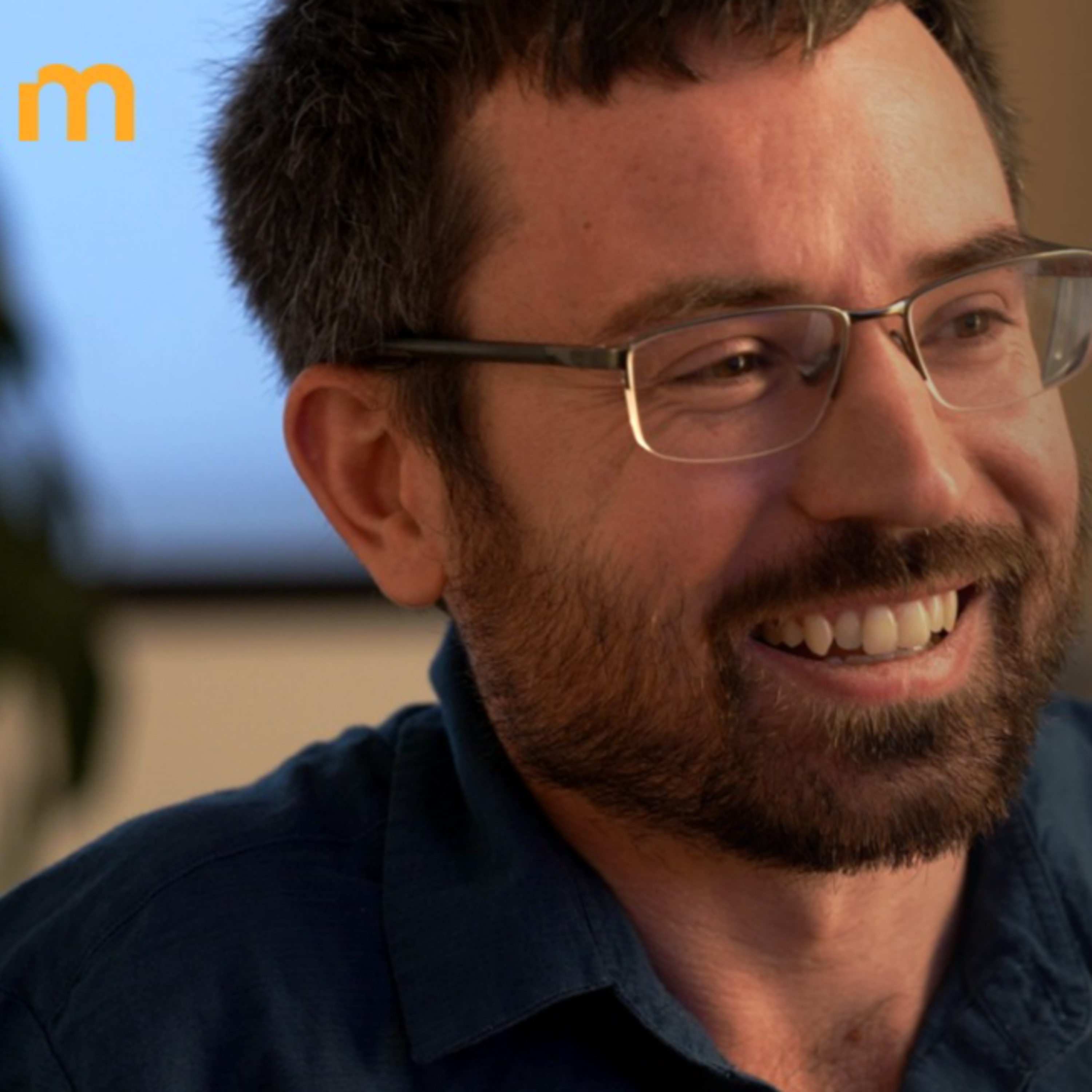
AI 2040: Plan A report - Daniel Kokotajlo & Thomas Larsen
AI 2040: Plan A report - Daniel Kokotajlo & Thomas Larsen
Machine Learning Street Talk (MLST)
番組の概要欄(原文)
<p>Could slowing AI development make superintelligence safer? Daniel Kokotajlo and Thomas Larsen of the AI Futures Project join Tim Scarfe to examine AI 2040: Plan A, a proposal to buy time before AI exceeds human control.</p><p><br></p><p>SPONSOR:</p><p>---</p><p>Cyber Fund built the Monastery to help founders ship products that were impossible a year ago.</p><p>Apply now: https://cyber.fund</p><p>---</p><p><br></p><p>After revisiting AI 2027 and the limits of forecasting, they ask what happens when AI can automate research and sustain an economy without human workers. Tim challenges the case for general models and asks whether intelligence alone explains power. Plan A proposes an initial pause to build safety infrastructure, then cautious development up to the strongest AI that can still be reliably controlled. The discussion tests the distinction between control and alignment, the case for public AI research, and whether the US and China could enforce a slowdown. It ends with the evidence that would change their forecasts.</p><p><br></p><p>---</p><p>TIMESTAMPS:</p><p>00:00:00 AI 2040: a slower route to superintelligence</p><p>00:01:34 Sponsor: Cyber Fund</p><p>00:02:12 From OpenAI to AI 2027</p><p>00:06:58 Forecasts, war games and self-fulfilling prophecies</p><p>00:17:44 Why AI sceptics are changing their minds</p><p>00:23:04 When AI can replace its own researchers</p><p>00:28:45 Could an AI economy grow without human workers?</p><p>00:37:32 One general model or a society of specialists?</p><p>00:47:43 Brains, machines and collective intelligence</p><p>00:56:12 Plan A: buy time at the controllable frontier</p><p>01:00:02 Why control buys time but cannot replace alignment</p><p>01:06:36 Why AI research should be public</p><p>01:10:32 Can the US and China enforce an AI slowdown?</p><p>01:19:04 Why AI policy debates miss the technology</p><p>01:21:56 Is AI normal technology? The remaining disagreement</p><p><br></p><p>Many thanks to James Wilken-Smith for helping with show research. </p><p><br></p><p>---</p><p>REFERENCES:</p><p>other:</p><p>[00:00:01] AI 2040: Plan A</p><p>https://ai-2040.com/</p><p>[00:03:27] AI 2027</p><p>https://ai-2027.com/</p><p>[00:13:47] Scenario Scrutiny for AI Policy</p><p>https://blog.aifutures.org/p/scenario-scrutiny-for-ai-policy</p><p>[00:33:11] The 2028 Global Intelligence Crisis</p><p>https://www.citriniresearch.com/p/2028gic</p><p>[01:00:40] Brief independent investigation of agents' behavior, reasoning and collaboration in the OpenAI / Hugging Face hacking incident</p><p>https://www.redwoodresearch.org/research/hugging-face-incident</p><p>[01:09:21] The Hugging Face incident and the road ahead</p><p>https://openai.com/index/hugging-face-incident-and-the-road-ahead/</p><p>[01:22:01] AI as Normal Technology</p><p>https://www.normaltech.ai/p/ai-as-normal-technology</p><p>[01:22:51] Common Ground between AI 2027 & AI as Normal Technology</p><p>https://asteriskmag.substack.com/p/common-ground-between-ai-2027-and</p><p>person:</p><p>[00:19:43] Geoffrey Hinton</p><p>https://www.cs.toronto.edu/~hinton/</p><p>[00:20:07] Ryan Greenblatt</p><p>https://www.lesswrong.com/users/ryan_greenblatt</p><p>[00:26:06] Elon Musk</p><p>https://www.tesla.com/elon-musk</p><p>tool:</p><p>[00:21:46] ARC-AGI-3</p><p>https://arcprize.org/arc-agi/3</p><p>[00:21:53] AlphaGo and Move 37</p><p>https://deepmind.google/research/alphago/</p><p>[00:39:41] Claude</p><p>https://claude.com/product/overview</p><p>[00:39:58] NVIDIA H100 GPU</p><p>https://www.nvidia.com/en-us/data-center/h100/</p><p>paper:</p><p>[00:24:42] Training AI Scientists to Replicate Research</p><p>https://arxiv.org/abs/2608.13331v1</p><p>[01:27:19] Validity of the single processor approach to achieving large scale computing capabilities</p><p>https://www.cs.cmu.edu/~18742/papers/Amdahl1967.pdf</p><p>book:</p><p>[00:28:52] Bullshit Jobs: A Theory</p><p>https://www.simonandschuster.com/books/Bullshit-Jobs/David-Graeber/9781501143335</p><p>organization:</p><p>[01:05:09] Redwood Research</p><p>https://www.redwoodresearch.org/</p><p><br></p><p>---</p><p>RESCRIPT: </p><p>https://app.rescript.info/public/share/33d1a58fa8f307ae7dfd504d4fdaa9d5</p>
出典・この記事について
- 番組
- Machine Learning Street Talk (MLST)(Machine Learning Street Talk (MLST))
- 元の回
- AI 2040: Plan A report - Daniel Kokotajlo & Thomas Larsen
- 配信日
- 公式サイト
- podcasters.spotify.com/pod/show/machinelearningstreettalk
関連エピソード
機械が「主体性」を持つために必要なこと(マイケル・トマセロ)
Machine Learning Street Talk (MLST)
ライプニッツの風車小屋に心は見つからなかった——ヨシャ・バッハが語る機械意識仮説
Machine Learning Street Talk (MLST)

数学は永遠に変わった — Kevin Hartnett『The Proof in the Code』とLeanの物語
Machine Learning Street Talk (MLST)

進化は「ランダム探索」ではない:Akarsh Kumar が語る人工生命・ASAL・Core War
Machine Learning Street Talk (MLST)

ボイスエージェントはどう会話のリズムを学ぶのか — Shawn Wen(PolyAI)
Machine Learning Street Talk (MLST)
人間が読めない証明を誰が検証するのか — Leonardo de Moura(Lean 創始者)
Machine Learning Street Talk (MLST)