
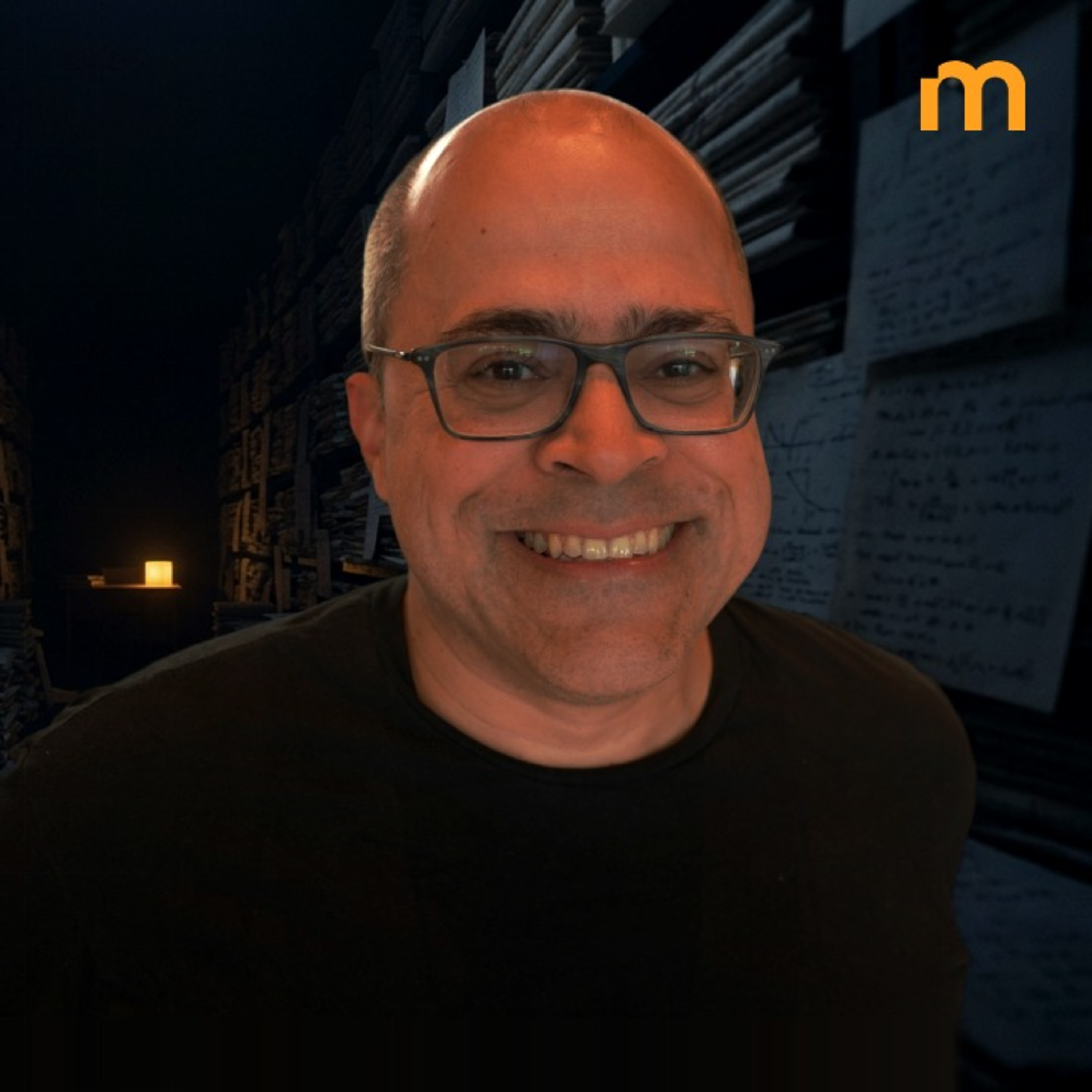
人間が読めない証明を誰が検証するのか — Leonardo de Moura(Lean 創始者)
Machine Learning Street Talk (MLST)
要約
Lean と Z3 の生みの親 Leonardo de Moura が、Lean の中核を小さく保つ「カテドラル型」運営の理由と、コラッツ予想の「反証」を受理してしまった事件について語った回。公式カーネルと外部チェッカー Nanoda がそれぞれ別のバグを突かれた経緯を説明し、複数カーネルや検証済みカーネルで信頼の範囲を縮める方針を述べている。後半は AI による zlib の検証、Mathlib の成長、AI の創造性の限界、Lean の今後と学習法に及ぶ。
この回のポイント
- ●de Moura は Lean の中核を少数の担当者が決めるカテドラル型で運営すべきだと述べる。一方で拡張機構により、コミュニティは中核に触れずに DSL などを作れる。
- ●コラッツ予想の反証とされた Lean 証明が、公式カーネルと Nanoda に受理された。それぞれ別のバグを突いており、AI が作った可能性が高いと見ている。
- ●対策として、複数の独立カーネル、Comparator による証明の再検査、Mario Carneiro の Lean4Lean のような検証済みカーネルが挙がった。信頼すべき範囲を減らす方向を重視している。
- ●AI は Lean 上で zlib の実装を C から移植し、圧縮・展開が元データに戻ることを証明した。de Moura は年初には不可能に思えたと話す。
- ●依存型は、型が別の値に依存することで事前条件や不変条件を表現できる。仕様が変わっても、AI が証明の更新を安くしてくれると見ている。
- ●AI は既存手法の組み合わせは得意だが、新しい技法を生むことや抽象化は苦手だと見ている。仕様を決める役割は人間に残るという見方を示した。
章立て
中核を守るカテドラル型運営
Lean の中核を少数の担当者が管理する理由と、拡張機構によるコミュニティの創造性について語る。Slack から人を外した逸話や Brandolini の法則にも触れる。
コラッツ事件:二つのカーネル、二つのバグ
公式カーネルと Nanoda が別々のバグを突かれ、偽の証明を受理した経緯を説明する。Comparator などの対策も紹介する。
複数カーネルと透明性による安全
独立カーネルや検証済みカーネル、コンパイラやハードウェアへと信頼範囲を縮める考え方を述べる。秘匿による安全は取らないと明言する。
zlib の証明と仕様の変化
Kim Morrison が AI で行った zlib の実装と証明を紹介する。仕様変更時に証明の更新が安くなる点も議論する。
Lean の歴史と依存型
Lean 1 から 4 までの歩みと、Lean 4 で完全な拡張性を目指した経緯を語る。依存型も平易に説明する。
Mathlib の成長と AI の創造性
Mathlib の規模と将来像、Formal Frontiers の構想を述べる。AI が抽象化や新手法を生めるかも議論する。
人間の役割と AI の安全性
検証済みガードレールや、AI を含まないソフトを AI で作る利点を語る。仕様を決める人間の役割にも触れる。
証明書の価値、Lean の未来と学び方
AlphaProof 型と LLM 型を比べ、機械検証可能な証明書が今後も必要だと述べる。Lean の今後と学習法も語る。
解説記事
Lean と Z3 の生みの親である Leonardo de Moura が、Machine Learning Street Talk に出演した回を紹介する。話題は、Lean の運営方針、AI が突いたカーネルの脆弱性、AI による検証付きソフト開発、そして人間の役割まで広い。
中核は小さく守り、周辺は自由にする
de Moura は、Lean の中核について、決定権を持つ担当者が決める「カテドラル型」が必要だと述べている。ライブラリは二分木のように自己完結していて、穴があっても有用である。一方、中核は部品が相互に依存しており、穴だらけでは使い物にならない。
理由として、バグの混入、中途半端な機能、最適化を縛る機能の定着を挙げた。優先順位づけなしにプルリクエストを取り込む運営は、規模が大きくなると成り立たないという考えである。ただし Lean は拡張性が高く、中核に触れずに DSL(特定分野向け言語)を作れる。ソフトウェア検証用の拡張を見せられて、それが Lean だと知って驚いた経験も語っている。
コラッツ予想「反証」事件
番組の中心は、直近に起きた事件である。コラッツ予想を反証したとする Lean の証明が、公式カーネルと主要な外部チェッカー Nanoda の両方に受理された。de Moura によれば、証明は公式カーネルの一つのバグと、Nanoda の全く別のバグを同時に突いていた。さらに、AI が作ったと強く考えているという。Nanoda 側のバグ修正のプルリクエストを AI が見て攻撃を組み立てた可能性にも言及したが、報告者は偶然だと述べたという。
Lean では、定理を信頼するには小さなカーネルだけを信頼すればよい。今回の事件はその前提が、実装のバグによって揺らいだ例である。
信頼の範囲を縮める
対策として de Moura は次の方向を挙げた。
- Comparator:証明をエクスポートしてサンドボックスで検査する。常に最新の Nanoda を使えば、今回の攻撃は拒否できたはずだと述べている。
- 独立した複数のカーネル:異なる開発者と言語で実装する。
- 検証済みカーネル:Mario Carneiro の Lean4Lean のように、カーネル自体の正しさを証明する。
- さらに先の段階として、検証済みコンパイラ、ハードウェアの公式な形式仕様まで進める。
司会の Tim Scarfe は、ARC-AGI のような非公開の検証用カーネルを持つ案を持ち出した。これに対し de Moura は、秘匿による安全には反対だと答えた。透明性を保ったまま、検証済みの実装を増やすという立場である。
AI が変える検証付きソフト開発
Kim Morrison は Claude を使って、圧縮形式 zlib の Lean 実装を作った。C から Lean へ移植し、テストを通し、任意のデータで圧縮して展開すると元に戻ることを証明した。de Moura は、これを年初には不可能に思えたと述べている。さらに、配列操作が苦手な Lean 向けにコードを最適化させ、Rust 実装と競える水準にも挑んだという。証明という強い信号があるので、AI は不正をせずに前進できると見ている。
仕様変更で証明をやり直す負担は、従来は形式検証の大きな障害だった。それを AI が安くすると述べ、将来は開発者が意識せずに形式検証を使うようになると予想した。
なお Lean は、依存型理論に基づく。型が値に依存でき、前提条件や不変条件を特別な概念なしに表せるのが利点だという。
Mathlib と AI の限界
Mathlib は Lean 3 時代の約 110 万行から、Lean 4 では約 240 万行に成長した。de Moura は、研究レベルの論文を形式化するには 1 億行規模が要るとの見積もりがあると紹介する。Formal Frontiers は、人間と AI で Mathlib の穴を埋める計画である。
AI については、既存の手法の組み合わせで解ける問題は人間より強いが、新しい技法を生むのは苦手だという見方を示した。AI のメモリはパンくずを残すようなもので、重みが変わるわけではないとも述べている。Scarfe は、AI は抽象化の階段の低い位置から出発するため、創造性の面で人間とは異なると論じた。ただし de Moura は、原理的な障害は見えないとも付け加えている。
人間の役割と証明書
de Moura は、AI で AI を含まないソフトを作るほうが安全だと述べる。AI を組み込むなら、ガードレール自体を Lean で検証すべきだとも言う。開発が自動化されても、何を作るかという仕様は人間の責任として残ると考えている。
また、LLM が AlphaProof 型を上回りつつあるとしても、機械検査可能な証明書は不要にならないという。未解決の問題が 120 万行もの Lean 証明になった例を挙げ、人間が読めない規模ほど証明書の価値が高いと述べた。
まとめ
今回の事件は、AI が攻撃側にも検証側にも使われる時代に、検証ツール自体の信頼性が問われることを示した。日本の読者にとっては、緑のチェックマークだけを信じず、独立実装や検証済みの基盤で信頼範囲を狭める発想が参考になる。学習の入口としては、まず証明を気にせず Lean をプログラミング言語として使い、AI に背景知識を伝えて説明させる方法が勧められている。
文字起こし(英語・自動生成)
This proof, I think it was a disproof, the Collat's conjecture, was to be met as a link proof. And the claim is, it's accepted by the official kernel that comes with link. Wow, I mean, this is horrible. We strongly believe it was built by AI, it supports one bug in the official kernel, and it's a completely different bug in another. We don't have patience for doing this kind of low-level implementation, but AI has the patience for doing that. I think this is going to be a game changer going to better models they keep doing more amazing things but they keep doing stupid things at the same time Boris Alexei is 1.2 million lines of Lean the formal proof nobody wants to check the proof line by line I'm Luigi Mora I'm the creator of Lean chief architect and co-founder of the Lean Pro a non-profit behind Lean and also senior principal scientist as EWS. At some point, you actually ring-fenced off like a core part of the system
and you say, okay, this is locked, I'm in control of this. And there's an interesting tension, isn't there, that, you know, a lot of creativity sometimes happens in the community. So there's different levels of adaptation. There's the core thing. You know, for example, in Quake 3, the shooter, there are these bounce bugs. And an entire community evolved around speed running and bounce bugs and stuff like that. And similarly in Lean Now, there's the core system and there's Mathlib and there's this entire community being creative in different directions. The core thing adapts much slower and is controlled by yourself. But how do you think about that? Do you kind of feel that you do control an aspect of Lean or does it have a life of its own? Okay. Actually, this is a great question. This is a great question. Now, I don't control the core system anymore. I mean, we have the Thro, there's a nonprofit. We have 20 people there Each one of them are owning I like this model The developers in the core They own parts of the system
It's their responsibility They have ownership If they're going to take external pull requests or not They are the decision makers But for the first 10 years Basically, I own a bunch of the systems Sebastian Udy, my colleague and friends that we built Linfor together, he own other parts of the system. But we believe, I strongly believe in the cathedral model for open source. Cathedral is like there's a central entity that decides what goes into the code base or not. There's this bazaar where it's more open people, everybody can contribute. And there was a lot of tension with the community The Lean community Many people want sometimes to contribute to the core Contributing to a library is different from contributing to the core system The library, many cases We're going to build a library for binary trees
It's self-contained, right? The changes you make there You can own that without impacting the rest of the system But the core system, all the pieces are interconnected They depend on each other Another thing like a binary tree library Maybe missing some functions Maybe missing some theorems about these functions But it's still useful But a system full of holes is not very useful, right? I mean, there are many pieces missing, many crashes. It's a more interconnected system. That's why I always insisted for the cathedral model for developing the core. And it creates tensions. But one cool thing about that is that it's amazingly extensible to enable people to add their own extensions without changing the core.
And this became really popular with the community. Many people implement today extensions to lean without coordinating with us. They implement, it's actually similar to the example you gave. They implement domain-specific languages that hide the complexity of, focus on a domain-specific language for a specific domain, like distributed protocols. You can specify distributed protocols. You have a language that's optimized for that, hides all the complexity. And this can be done without even talking to us. Sometimes they demo things to me. They never met me before. They implemented this beautiful extension, right? Yeah, I think it's great. It was also my side effects. And can you give me an example of that? So that's, you know, when solving abstract problems, sometimes there are very there are ingenious and creative approaches and do some of those really surprise you when you just see what people
do? Yes, yes, I mean I remember last year, Ilis Ferge is a professor in Singapore he was with his student in Volvo and they demoed something to me, I said why are these folks demoing this stuff? This is not lean and it was really cool, the demo, at the end he said no no This is Lean. This is an extension we implemented on top of Lean. I was really surprised. It was for software verification. They have a language that's much easier for people to verify software, especially if it's imperative software. Yeah, I was really blown. Yeah, they blew me away, I mean, with the demo. It's part of the reason that you are so kind of protective over the core. I mean, if you think about it, the reputation of Lean is paramount because this is something that is going to be used to verify software and mathematics and so on. So there's that. But it reminds me a bit of, you know, MATLAB or maybe Mathematica. It has insanely optimized core libraries for doing linear algebra and so on.
But someone could come along and they, you know, with great power comes responsibility. They could just make a mess of it. So they could do some operations and it's no longer vectorized and it's really slow. And perhaps in Lean they could do something that actually affects the integrity of what they're doing. Is that part of it? So you want to put a little bit more control in? Yes, there is that. I mean, there's also people adding something that's half-baked. A lot of people like to have fun implementing software. Software is, I like to see, actually one of my academic brothers, he says software is only fun if the software doesn't have to work. If it has to work, the form disappears very quickly. And first issue, bugs, like you mentioned, people introducing bugs. Second issue, someone submits a feature that's not fully implemented. There are many holes. It looks like it works, but it doesn't. Third thing, people may lock the device.
They add a feature, it's complete, it's correct, but put constraints on how we can optimize the system. And now we have this feature, it may become popular and prevents us from doing other things that are more important because it's there, people use it, we can't easily remove it, and we're stuck with that. Another issue, it's super important to prioritize the development, Going chaotic, implementing random features, and this happens if you start merging random PRs, it's really bad. It doesn't really scale. I think prioritization is super important, and this model where you keep merging random PRs does not work. This is a strong belief I have. So you're a depth-first search kind of guy, and when you build something successful that involves lots of other people you have to become more like brett first search and because there are so many things that are coming in every single day
and i remember there was a bit in kevin's book where he said at some point you just kicked a lot of people off the slack channel and you said look i just need to i just need to focus there because it was getting ridiculous yes oh yes yeah i forgot about this story of the kicking Yeah, because at that point Wow I really dislike People that keep throwing ideas I mean They don't even They're having fun I mean, it's different For me, I was trying to build something that works Some people were there in the select channel Having fun Throwing ideas on the wall I mean, it's cheap You can throw ideas on the wall and the other side has to keep telling your nose it doesn't work something that's for me one frustrating scenario you throw an idea you didn't spend 5 minutes thinking about it then I find a hole I send it back to you
then you polish a little bit now it takes 10 minutes to find the next hole it keeps taking exponentially longer to find the holes on the half-baked idea, for the person coming up with them, it's fun, I mean, but it's not fun from the receiver, right? You have to do your work now, you spend time telling people why this is not a good idea, why it's not the time to do it. Yeah, there was a point, yes, I kicked out, I mean, it stays only the core team that was really contributing to the project, only people that writing useful codes to the project it must be even worse now with Geno Toveyo I mean so what you're pointing to there it's called Brandolini's Law which is that it takes exponentially more work to debunk bullshit than create it well fortunately now we have the show I have many colleagues, many people
that's helped me my life is actually better now I mean I had For example, we had a serious bug this week Joachim Breitner, he took care of It's not just the bug, you have to take care of the community Explain to the community, communicate He did all that In the past, it would be a nightmare You have to deal with so many people The amount of noise Joachim did that And we have many other people at the LeanFro that help coordinating the community, communicating the roadmap. For me, it's much easier now. I mean, without the Fro, we will not be able to run the Lean projects now. Was the bug this week something to do with the collettes? Yes. Yes, I was going to ask you about that. Maybe, can you set that up? Yeah, yeah, yeah. Basically, Lean is
We have the notion of a small trusted kernel Lean is massive Has zillions of bugs Right But to trust our results In Lean, we only need to trust the kernel That's much smaller Right And we also have external kernels Right The sequence of events I mean, Joachim did all the digging I'm glad he did The sequence of events was like One week ago Or 10 days ago A bug was reported In one of the main external checkers We have many kernels One of the main ones Is implemented in REST This bug was fixed immediately by the Nanoda developer, and a few days later, disproved
the Collatz conjecture. Disproved, I think it was disproved the Collatz conjecture, was submitted with a Lean proof. And the claim is It's accepted by the Official kernel that comes with Lean and by the main External kernel Nanoda Wow, I mean this is horrible Right Then the first reaction We had is that Nanoda was not accepting the proof Then you have said okay These guys are exaggerating Nanoda does not accept But then he said, oh, Nanoda from 10 days ago was accepting the proof. And then actually the exploit, and we strongly believe it was built by AI, exploits one bug in the official kernel and this completely different bug in Nanoda. I fixed the bug in the official kernel. And I found strange
The example Because there was a bunch of Wisdoms to create a hash collision That was completely irrelevant I said, why did they put This path there? It's to pass NADODA I mean, to exploit the bug In NADODA Then Yohim asked Whether The LLM They asked the LLM to look at the PR that was submitted to Manoda. The body reporters said that was a coincidence, but they could not discuss the possibility of the LLM by itself. Look at the Manoda repositories, saw the PR and crafted these exploits. Yeah, we have to Before coming here I was talking to him and Sebastian On how to improve
What we can do to improve To make it even more secure Because this is going to keep happening People, AI is a really good exploiting Unsoundness Bugs in the kernels We're throwing ideas like Oh, we should have Bounds for people building kernels as a bulletproof. They get some cash if the kernel cannot be attacked for more than X months or... Another idea is to read, to simplify the kernel to make it simpler to verify. Another thing is to support... Mario Carneiro is working on trying to prove the kernel is correct. Trying to assist him or to accelerate the development of his proof. I mean, yeah, but coming here, I was talking to him about how to improve the situation for avoiding this kind of thing from happening again.
But there are some concrete steps, like one concrete step that Rob did. We have a tool called Comparator. That's basically comparator exports the proof Because some people can use metaprogramming In the extensibility features we discussed To inject false proofs You can even call C function and corrupt the memory, for example But you can have comparator that will export the proofs We check them in a sandbox And one lesson is to For comparator Always to download the latest version Of Manoda So we don't have to manually Upgrade Manoda If someone makes a bug fix Manoda it will be used Immediately by comparator And comparator would have rejected If it had done that And we are doing that But we have lots to do
We want to prove more things about the kernel, about the code generator. That's another place we have to improve. Yeah, but this was... I could not imagine the situation without the throw to help us. Yeah, and I wonder whether it's a similar thing, but there was an incident where the GPT-6, let's say, hacked Hugging Face recently, and the models are becoming reward-hacky, reward-seeking, and I don't know whether you think... I mean, maybe you implied this was a similar situation, But, you know, there was a green check, basically, so it looked like this proof was valid. And sometimes these proofs are quite inscrutable. They're difficult for humans to read. So in principle, the LLM could have done reward hacking, and rather than kind of doing the spirit of what we wanted to do, it didn't. And what OpenAI did was they changed their guardrails so that, you know, when a model generates some code, they don't just look at the code in isolation. They look at the entire trajectory, the reasoning trace.
Why did this code come to be? So they're trying to sort of like disentangle the intention behind this thing versus the intention of the developer who did the prompt. So do you see a similar thing here that we might need to have almost separate adversarial systems kind of evaluating what's happened? Well, having multiple kernels is a way to accomplish that, right? If you have independent kernels implemented by different people using different programming languages, it strengthens the situation, right? The fact that we have the official kernel in Anoda, we want to have more. I mean, the one from Mario, this is called Lean for Lean, is going to be special because he's proving it should be correct. This way it will be not just another kernel, but a kernel that has been proved correct. That will be a big deal when it arrives. I mean, we can use Lean for Lean today, but it's not fully proved. It proved many parts, not the parts that had to exploit. If it had proved it he would have found the bug before it was exploited Having multiple multiple kernels having some of them prove it correct makes this story really bulletproof
Then there's the next level you may ask, okay, you proved the kernel correct, but you're compiling with some compiler. The compiler maybe has a bug, right? And you prove it's correct, but what's running is not what you proved. Then the next step, let's prove the compiler correct Then you may see, well, the hardware may have a bug To say, oh, well, okay Let's ask Intel to publish formal specs That's how they are saying This is the official formal specification for the microprocessors Same for AMG and so on The movement here is always reducing what you have to trust right and this is going to be important right if one day we want to have massive results that's we don't have to spend time checking manually for exploits it's really important that we can
fully trust these mechanical proofs right I wonder whether this is an example of you you could also say you're an open source guy yeah but I mean let's look at the you know there's an AI benchmark called ArcGIS 3 and what they do is they have like a semi-private data set and a private data set. And, of course, what they're trying to do is to stop the models from, you know, kind of hacking and data leaking from these data sets. So when they test it on the private data set, they know that the models haven't really seen that before. Do you think this is one exception that you might make to your philosophy that, you know, possibly we might need to have a separate independent private kernel that couldn't possibly have been hacked? So we've always got the joker in the pack that we can test it with the private kernel. I don't like safety by Obfuscation, by hygiene I think we should always be transparent I mean people should Because otherwise, I mean you're saying Look, I have a really good kernel here I'm not showing anybody That checks the results I think for transparency
For trust, you have to be fully transparent Of these kernels We can improve the situation By proving these kernels correct By adding more kernels implemented by different people, but everything transparent. I mean, it goes against everything our community believes through safety by secrecy. Speaking of checking where your answers come from, today's episode is sponsored by Parallel, where agents find answers. Most engineers today, they closely follow new model releases, but they don't pay attention to their agent's most important tool, web search. Parallel develops enterprise-grade infrastructure for agents to retrieve high-quality context from the web. Their core products are a suite of APIs for retrieving high-quality information from the web with Pareto optimal quality, cost, and speed. So whether you're working on voice agents that need 200 millisecond latency, chatbots that balance speed, depth, and quality,
or long horizon agents to do thorough overnight research for you. Parallel is the single platform for all of your agentic research. Get started for free at parallel.ai forward slash MLST. Apparently, Kim Morrison used the Claude agent to produce a lean implementation of the compression format Zlib and proved some specific properties of it. So what exactly did they manage to prove? Oh, yeah, yeah. When Kim started working on this project, I thought, wow, it felt hopeless. No way. I thought it was at the beginning of the year. To me, I thought AI is not good enough for that. We will not be able to succeed at that. But AI managed to translate from C to Lean, the code. Then managed to keep fixing the Lean implementation until it passes the task suite that comes with the C version.
And then it proves that for any compression level, for any data, if you compress the data and then decompress, you get the original data back. This felt completely out of reach for AI at the beginning of the year, but AI managed to do it and didn't stop there. Kim asked them to optimize the code, especially for this kind of program. Lean right now is not the kind of language for array manipulation Lean has been optimized for Processing manipulating trees Because, I mean, you're manipulating terms, right? You're manipulating trees internally You have the syntax trees The expression trees Lean is really good for this kind of program But not for arrays In my mind, this will never be competitive But turns out that KMASC AI to keep trying
You can go wild Keep optimizing the code You have To keep proving the property You cannot break the property And it's a bit Implementation in Rust And Rust is a really Efficient language for ray manipulation Then Fuzz is really unexpected, right? I mean, first design, imagine now if we improve our rate manipulation for Lean, how far we can go. There's so many possibilities, right? We can ask now, the AI, suppose if we give the semantics of x86, the microprocessors, the assembly, you can ask, I think very soon we're going to be able to ask the AI to prove writing assembly, exploiting all the dispensing instructions, but proving,
you have to prove the property, right? We don't have patience for doing this kind of low-level implementation, but AI has the patience for doing that. I think this is going to be a game changer, right? Last year, I thought this would be impossible, but now it's in reach. I mean, the experiment shows there is a path there. These AI will keep getting better and better at these kinds of tasks because there's a strong signal telling them you're in the right path, right? You have to still prove the theorem, right? You can't cheat. Yeah, I think the sky's the limit. Yeah, it's so tantalizing. I'm fascinated by the notion of specification-driven software engineering, and we've had similar kind of periods in AI. We had expert systems, for example, and we had the concept of a knowledge engineer or an ontologist. And there are certain types of things that we just understand. We can be computer scientists and we can reduce them down to their essence.
But a lot of software engineering, in my opinion, because, you know, the reason we have Agile is the world is very complicated. And what we do is we take small steps towards acquiring a specification. and, you know, after thousands of iterations, we have those aha moments and we sort of compress and collapse some of it down. So I suppose, do we have a chicken and egg problem that when we're working with very complex systems, we can't really yet specify it, or if we can, we can only specify parts of it? Yeah, yeah, yeah, I agree that it's very common sometimes. You know, some properties the system should have, but not all of them. You're still engaging with the users about which properties the system should have. Believe it or not, this happens with Lean all the time. The kernel is clear what the kernel should do, but the whole system, there are many components. I mean, there are many, for example, the statics, I mean, so the moves. What a move should do? We implement something the user is really common for the user saying,
oh, no, no, I want more, or I want less. No, it's doing too much. I want more control I want this flag I want to have a way to control Where the proof is going It's a back and forth The spec there is not really clear Right? Yeah, I think you're right In many cases The spec's not clear But it's important to start documenting the properties You know they should hold Talk to your customers about them Another thing to keep in mind That A high level program In a very high level programming language Like Lean Without any optimization Can be viewed as As a specification Right You can say Look This is what I want to compute It's not super efficient But this is what I want To compute And you can ask the AI Optimize this function for me I implement The simplest possible Right
idea, right? Without any fancy data structures, clever algorithms, it does what I want. Now it's AI's job to optimize it. Yes. I suppose that specification acquisition engineering can be made, we can streamline that process, we can make it interactive, have lots of feedback and so on. But if we did move to a model where we were specification first, and we have globally distributed deployed software, would we then have a specification updating problem? So we have some software deployed on the previous specification, and then like over here we're doing some development and some other folks are updating the specification. How do you think that kind of system could work? Oh yeah, for sure. I mean, when you update the specifications, the code that was generated may be invalidated. The proofs that the code meets specification need to be invalidated. In the past, formal verification, this was a big deal, right?
People would say, oh, my gosh, I spent all this time proving the implementation is correct. Now these folks want to add this fancy optimization. Now I have to redo many of these proofs. It's not rocket science, but it's a lot of work. But turns out the AI is really good at updating these artifacts for us, right? But before AI, this was a really big deal, right? Especially for the safety critical systems where phone verification was used in the past. There were four application domains where the spec was very clear, like cryptography. The spec is very clear, right? Define a microkernel. People put lots of thoughts in the microkernel before they even started verifying the projects. All these things, verification projects like CompServe, Cell 4 People put a lot of thoughts on this spec, right?
In some cases, they had to update along the way And it was painful as how to do it But now because we have AI to update the proofs, the artifacts It's way less painful, right? I think there's still... I can see in the near future AI is still expensive, right? people would say, well, I'm updating this back. Now I have to waste zillions of tokens updating everything. It is really exciting, though, because if I remember correctly, Kevin said in his book that I think Z3, that actually solved an incredible number of bugs in Windows 7 before it even got released, so it was life-saving. But most of the time, this kind of technology is used for very high-stakes software. But do you agree, though, in principle, that in the future, just everyone will be doing this, should every developer will be, you know, building this kind of software? They may not know they're using form of verification, but will be there in their pipelines, right?
They are going to be writing properties, and the properties are going to be verified. The code is going to be updated. I mean, there will be proof showing the codes, still computes the same thing. people submit PRs they're going to get proofs whether the PR is going to is violating some of the properties in their tests, which are not aesthetically yes, I think even if they don't know they're using formal verification, it will be there. So tell me about the evolution of Lean, so the first prototype 2013 and then Lean 2 2015, Lean 3 2017 and then Lean 4 took a very very long time to know. Tell me about that whole story. Oh, wow. Okay. The first link is even called 0.1. I learned by doing it. I read many papers about dependency type theory. I used some of the other systems. But I always feel you get
Different perspective when you implement Something there's so many Nuances details that you Only now say oh Wow this is really important I mean and Lean one I also tried to make it very Small because it was too Small and It was unusable Maybe only Jeremy I think Flores One of his students also used Lean one But they were heroes It was a horrible system It was more like learning An artifact I used To learn Depends type theory Then Lean 2 was for real But And I think Lean 2 has like Maybe between 50 And 100 users Very small And one learning Actually was When I was visiting MIT Adam Schipal is a professor there.
He told me, look, you need a real tactic framework. The tactic framework is the collection of moves. And one thing he wanted is that these moves should be extensible. You should be able to add new moves as a user. And this was the main learning from Lean 2 to 3. We added a new framework for writing these moves. the users could write it, and they could write in Lean itself. You did not have to use a different programming language. And this became very popular. And then Mathlib started. Things started growing very rapidly. And it was clear that Lean3 had limitations. I mean, in terms of scalability, the system was the tactics you could extend yourself, but that was it. Some people managed to do linters. The MathLib community figured out how to hack Lean To write Leanters in Lean But we want to make it fully extensible And in 2018
Sebastian Ulrich and I said We are going to implement the whole thing At that point I'm not a programming language person I'm an automated reasoning person Formal verification person And Lean was basically my first programming language I ever implemented. And the syntax was ugly, I mean, there was many weird things in the implementation and we say, okay, now we know how to do it, let's do it properly in Lean 4. Lean was implemented in Lean, was much harder than we expected, took us from beginning of 2018 to the end of 2020 to get link compiling itself. But it was really exciting to get there. And I don't think we sufficiently explained dependent type theory, so maybe you can do that, but there's this relationship between the expressibility space of the problem descriptions
and how sophisticated the kernel needs to be. And I think earlier on you were quite bullish about you want the kernel to be kind of like quite small and optimized, and you had to admit more complexity to that. Yes, yes. But this was in the design phase. I mean, it was before even Lean 0.1 started. When I started implementing Lean 0.1, it was dependency type theory, right? It was always all Lean versions are based on dependency type theory, but it was more like when we were designing, deciding what to implement, it was at the design level, this discussion about dependency type theory. to explain to the audience what dependence type theory is. I think one example is to say you can have, in dependence type theory, you can have a structure that has two fields, X and Y. They are supposed integers. And you can have a third field that says the type of this field is X is greater than Y. It's a proof. You have to fill this field with a proof that's evidence that X is greater than Y.
You can do it as an invariant It's called dependence Because of the type Of something can depend on the value Of something else The type of this Third field depends on the value Of x and y That's why it's called dependence You can simulate invariants In functions you can have A function that takes x and y And the third argument Y should not be zero You have to call this function You have to provide evidence That Y is not zero It's almost like a precondition That's the beauty of Dependent type theory A simple idea You can capture preconditions You can simulate postconditions You can have invariants You don't need to invent all these concepts Everything is really minimalistic but it complicates your type theory because you have these dependencies you have to manage them but it was worthwhile
I mean, it was worthwhile. Yes. So the kernel had to be significantly more sophisticated to support that. What can you do in Lean 4 that you can't do in Lean 3? Ah, Lean 4 is fully extensible, right? I mean, everything is implemented in Lean. You have access to all the download data. When you're writing your Lean declarations, in the same file, you can write code that accesses the internal representations of everything. The first AI research labs groups, for them it was a big deal. They could extract training data from the internals of Lean. They could write Lean code that extracts information about all the proofs that are in Mathlib. They could manipulate these objects. This was a big deal for them. All these extensions I told you about, tools like Velvet, Veil,
they are all using this extensibility we have in Lean. I saw from your slides you presented this week. So I think that we've now reached the inflection point where there is as much Lean 4 code in Mathlib as there was Lean 3 code. Oh, yeah, way more. Way more. Way more. Mathlib 3, stop it, that's 1.1 million. In Mathlib 4, we have 2.4 million. One interesting thing, though, for me is I think Kevin Buzzard said something along the lines of it will just keep growing forever. So it's always going to be at, I think, did he say it's always going to be at 0%? And I think that's quite instructive about the nature of mathematics because it's something that just keeps evolving in many, many different directions. So, you know, I suppose it's tempting to think of mathematics as being this kind of distilled thing that we just discover and there it is. But is that not the way it is? No, that's going to keep growing forever. Yes. I mean, there will be always new math being inventors, new structures,
defined, new mathematical objects. There will be always new things. There's a debate whether everything should be in math libre or not. At the beginning, for sure, at the beginning it was amazing to have everything in a single library because the library, you have many concepts in mathematics. For example, you have rings. There's only one ring in the mathemático library. The library's coherence, I mean, it's really common in other programming languages to have many implementations of the same thing and things are incompatible if you want to prove things about your code, it's important to have this uniform view and MathLib also another great thing they decided we will always shoot for the more general the most general description of something that was also great but there are limitations about the size right Mathlib is 2.4 million lines
Imagine if it's 50 million lines Now it's starting to get to the size of the Linux kernel Or big projects we have Like Firefox These projects have teams of people Just maintaining the build system Everything is more complicated Sometimes they have their own specialized version control system to handle the complexity. Now there's a lot of discussion on how to get the mathematical library. Maybe MathLib is going to be a collection of libraries. You have the main ones, like the standard libraries for math, and many satellite ones, all of them maintained, all of them coherent, but with different leaderships. I mean, you don't have the same group of maintainers for each one of them. All these discussions are happening. I think they're healthy. Yeah, but people predict if you want to do,
if you have to have all mainstream math, the library has to be 100 million lines. I mean, if you want to be able to formalize arbitrary research level mathematics papers, the library has to be 100 million. You know, some people in the community have these estimates. There is one of these things, though, that some knowledge is more distilled than other knowledge. So rings, for example, you know, you learn about them at university. So this is the distillation process has been going on for hundreds of years. So I would say it's high up the abstraction mountain, so we can kind of, you know, maximally compress it. But then there are all of these strands of discovery, just like when we write software. So the reason we refactor software is because when we started writing the code, We haven't yet understood the domain abstractly enough, and now we do. So we refactor, we distill, we compress. So is it a similar thing in Mathlib that some parts of it are highly evolved and other parts of it are quite adaptable and we're still figuring things out? How do you kind of – yes, yes, yes.
Both things have – it's exactly like software. You're thinking the right way. There are things that people thought a lot, and it's crystal clear how it should be, and there are things that are in flux, right? But one cool property we want to have, and there's a project now from the Mathlib initiative called Formal Frontiers. They want humans plus AI to formalize, to fill all the gaps in Mathlib and enable any such level math paper to be, people to be able to formalize the paper. To put in perspective for software developers This is equivalent Like you want to develop Some piece of software And today people use Hundreds of crates If they're developing Rust But imagine that Half of these crates Were missing And you'd say oh my gosh now I have to spend time Building the infrastructure For building my application
It feels like It's like something that should take one month, takes years, because you have to build all the infrastructure. Same thing for math. If you're trying to formalize a paper, people in the community will tell you it's doable or not, because it has so many components missing. It's going to be a gigantic task, right? But if all the components are there, you only need to formalize your paper, your contribution, not the background material. It's like if I have all crates there, the rates, it's easy. It can focus only on my application. I don't need to build a JSON library. I don't need to build bit trees. I don't need – you get it, right? But it's exactly like software. I've got a theory that creativity is about deep understanding. So when you understand something deeply, you can kind of extend that lineage. and there's a really interesting thought that sometimes you know language models they um they
can acquire all of these abstractions i love using the example of linguistics so they can um skin sentences like an onion even ones that we can't skin and and they explain it to you using concepts from phd linguistics textbooks and it's a similar thing across the board so so they they they know about rings and but but i have a theory that even though they have the abstraction in a sense they don't understand it because um you know the path that led to rings you know it's like a big evolutionary tree understanding is about knowing the difference between what's possible and what's not possible counterfactuals how could it be different and so on so if you start with something that is very very distilled and you don't understand how it came about then it's difficult to be creative. So what we see with language models is they start quite low down the abstraction mountain. So these are still a form of understanding, but they're deep, concrete understandings. They're still quite fractured. They're not very factored, but they have more
degrees of freedom. So when you look at this proof from the new GPT model, disproving this unit distance problem, what you see is insane verbosity. It's just kind of going around, It's doing quite surprising things. So isn't it interesting that from a creativity point of view, what we think is most important, so these really deep-factored abstractions, might not actually be how the AI models are created? Really hard to tell. I mean, I keep thinking about this. This surprised me in both directions, sometimes doing amazing things. We have a bug, not in the trust. This is a simple bug. In the top level, that doesn't need to be trusted. But nonetheless, it's a very complex piece of software there. I think very few developers, lean developers, understand this part. They, I understood perfectly. The explanation was spot on. I was blown. I said, how come they understand so much about internal implementation?
I was blown away. But on the other hand, sometimes it makes idiotic mistakes. I mean, and it's not, I don't see the behavior changing. I keep going to better models. They keep doing more amazing things, but they keep doing stupid things at the same time. But we do stupid things too, right? Today I feel like They are really good for Tasks that we call Nerd sniping Like if you have a hole You have a statement You want a proof If you don't need to create a new theory You are just combining the pieces That exist It feels like they are unbeatable by humans They are way better You ask to implement micro-optimizations for a piece of course. Also, they're amazing doing that. But if you ask them to come up with
a new technique for implementing something, they fail miserably. I feel like maybe, I'm not a machine learning expert, maybe you tell me, one conjecture I have is like, these things are like, you turn on, they are like waking up. I mean, only the training You show them a problem And they go for it I mean, they read all the literature During the training During the training, they saw all the literature They have a bias Towards existing solutions that people use If you can solve this problem Using a collection of tricks from the literature they will do it, they will crush it but if you need a new trick, it feels like they fall short, of course in the future, you may have AI agents that keep
updating their weights and learning you tell me does this match your understanding? I'm not an expert. I'm as excited as you are, but there is this weird thing that they have lots and lots of intelligence but they still clearly need to be directed. So the best case scenario is you're solving a specific problem and you can hill climb towards it, but you still need to give it a kind of aspect ratio. I use the analogy of shining a flashlight into embedding space. So the flashlight has a beam. So as an expert, what you're doing is you're saying, okay, well, this perspective is quite interesting. You know, here are some sample seeded solutions. Here are some tricks that you can use. And here is a clear optimization objective. And in that case, it's miraculous. that there's still some human taste and expertise required. But the thing that seems to be missing for me is it doesn't have powers of abstraction. So, for example, and this might actually be a good thing from a creativity point of view, because what it's doing is it's just finding a path through these low-level concrete fractured representations,
and it's getting to the solution. But what we need to do after it's done that adaptation and after it's found a path, it needs to reflect on it in a meta sense. and it needs to say, how can I compress this? Now, maybe I'm being unfair. Maybe harnesses do this to a certain extent, but when harnesses have a memory system, it's still spaghetti. It's still the human supervisor that says, okay, well, you're doing it now, but you need to optimize it. Maybe if you think about it in this different way, boom. If they could do that on their own, that would be incredible. Yes. Maybe they are to some extent. It's very limited. I feel like, you know, machinery more than I do, But to me it feels like They wake up And they leave breadcrumbs for the next one That we wake up And just read all the breadcrumbs And do the next step They are not really The memory are like breadcrumbs for the next one They are not changing their weights In any meaningful way It's almost like
And there's so much you can do You keep leaving breadcrumbs for the next instance that we wake up and reach all the breadcrumbs and take the next action, but eventually the diversion, that's where the humans help a lot, keeping them in the right direction, right? Does this match your... I have a feeling that the reason why we can do this abstraction is because we are in the world and we could have done differently. You know, we have agency. We can, you know, towards doing our goals, we can actually kind of subject to the constraints that we are, you know, that we have applied to us. We can try different things. An example of this is if I hire a video editor. So I've been evolving video editing skills for five years, and I could say to the video editor, okay, I'm going to optimize your process because I've learned all of these important lessons. so always use a tripod don't even bother holding it by hand because you're going to have lots of problems with that
so you know let's just we're going to prevent that problem from even happening and I can lay a load of constraints and they would have competence without comprehension right but they would always be pushing back at me and they would say oh you know I want to try this and I want to try that because they don't know why those constraints are I understand it because I understand the space of possibilities and I know why those constraints came to be you know I agree is like you learn by experience. Your experience taught you that. And they are learning from your experience. They do not experiment themselves. For example, SMT. I mean, you mentioned these three. If you ask questions about SMT implementation through large language models, you're going to get exactly the textbook explanations. but the language model never tries them it is repeating the learnings from people that wrote the papers that's exactly what you said
they are repeating they are not trying experimenting themselves yeah, this part for sure is missing but it feels enriched I don't see an obstacle here people will try that to improve the line in one's direction, right? I'm so torn on it because competence without comprehension is not necessarily a bad thing because we're now writing software which is intelligent. So in the olden days, we wrote software which just did exactly what it was supposed to do. Here's what you do. And now there's some flexibility. So we place some constraints in. And then within those constraints, there's some adaptation. And we can control that as an engineering problem. But these constraints are really good. You know, like, for example, there are certain things that we've just figured out, and that's why they've survived in our cultural lexicon, certain algorithms, certain types of thinking. And, frankly, it would be a waste of time to make the AI rediscover those things from scratch.
So, yeah. Learning by doing it gives you a new perspective, right? Maybe the AI can get new perspectives by learning by doing itself, right? not relying on what we did, but learning by doing itself, maybe updating their weight. That's conceivable. And maybe it's just a matter of computation. And maybe if we did have a society of agents that were actually doing weight adaptation. But it would be quite difficult and possibly dangerous in some ways because the good thing about having big fat models that are trained every six months on a platform is we can put safety guard rails on there and at least there's only one model to check. I mean, just imagine, well, this is something that interests me as well, is the extent to which the platform owners should be responsible versus individual engineers' responsibility, right? Because if I make a sophisticated agentic system,
it's already got to the point now that I don't think anyone should be deploying Fable class models in production. So maybe during the development in the R&D phase, you need more intelligence, and then the engineers place constraints in, and then it should get to the point where it's halfway between a normal software application and an intelligence. So then maybe we would have a lower intelligence model in production. But how much responsibility do you think the engineers have for kind of degenerate behavior? Well, that means you're talking about a scenario where the application has AI embedded If you have this scenario, I think it's super important to have guardrails, right? Even better if your guardrails are verified using a system like Lean You proving properties about the guardrails Some people are talking about having verified sandboxes in the future
Yeah, I would love to see that. In my mind, I always use AI to develop software that does not contain AI. Lean does not contain AI, right? This is a much safer scenario, right? And many people are using it like that. They build applications. But the applications themselves do not have AI embedded in them. It is a much safer scenario, right? You are fighting against bugs in the application, not putting guardrails around the AI. If I get AI to generate some lean and then lean proves it, is the human still the author? And will humans play a meaningful part of this in five years' time? Really, I should tell, right? I mean, I couldn't predict. One year ago, I could not have predicted what happened so far, right? I mean, I cannot even imagine in five years. It feels like it's accelerating. It's moving way faster than we expected.
Sometimes people ask me, do you fear becoming obsolete? I would feel like relief. I mean, developing software, it would feel like mission accomplished. I don't have to do it myself. anymore. Maybe I can spend my time only with implementing softwares that do not have to work. It will not be the end of the world. I hope one thing I want to be coming, I think we are always going to be in the loop because we have to keep always the specification saying what the software should do will be always our responsibility. We're the ones that are benefiting from the AI. We're the ones that are saying this is what we want. We will be there somewhere Even if it's just at the specification level Stating what we want Of course people can create scenarios Where the AI is super intelligent We have robots And we talk to the robots What we want
And they go in natural language And they are obedient They do exactly what we ask But we're still the ones Telling them what to do I feel like we are always going to be some role for us in the future. But I can see the exciting parts. I mean, how many as a developer, most developers I know have many ideas, but they only implement a small subset of them because time is finite. I mean, they don't have time to implement all the ideas. and I see many of my colleagues, they see the ones that have the most, the ones that are most probable to work. It's like you are playing a game saying the effort versus the chance it is going to work. And many of the ideas you discuss, you see, this is very low probability it's going to work. But with AI, we can try more ideas, right?
I give the example of your him. I mean, he's not vibe-coding in the sense people do, but for trying ideas, he sends the AI in different missions and sees the ones that are worthwhile his time to implement them. This is already a big win, right, I mean? Yeah, it does make me think about, because I guess it's so difficult to see the future because we're just starting to find out what the meaningful boundary is. But I think that humans do have this kind of deeper understanding, and that means that we have better instincts for what are interesting problems, and we're also better at this distillation. So, I mean, even Mathlib, for example, if it becomes really cheap to produce theorems in the future, maybe the human role would be more about kind of distillation and structure. Yeah, I can see Mathlib. In the near future, people will use the AI to maintain the proof, To construct new proofs Proofs that are boring That nobody cares But the key ones
They will still write by hands Because they want them To be beautiful Or have some Specific structure That's good for teaching For communicating ideas Coming up with the The roadmap Also is going to be A human activity What is in math lab What is not How do we define the rings And other mathematical structures These are all going to be done by humans there are lots of exploration happening for example one cool idea was and I've seen people find this idea let's say I start building the whole mathematical library what's going to happen? it can be garbage but how do we control these properties? Johan Komenlin he's one of the main people behind this form of frontiers the idea is One way to control the process is to have key theorems that are super simple to state, but need a lot of math to be proved.
If the AI managed to construct a proof of this key theorem, it's doing something worthwhile there. One example is Fermat-Less theorem. I mean, you can write it for the natural... You only need the natural numbers to state the theorem. is very simple, but you need a lot of math to prove it. You can say, like, this is a milestone for the AI. You can build your crazy library, but you have to get there. I mean, you have to show me you got there. And you can have many of these milestones that are easy to state, but really hard to prove. And if the AI managed to build a library that allows you to prove that, maybe it's worth our time looking what is there, right? Yeah, one of the age-old debates in AI, I guess, is kind of, you know, pure connectionism versus neurosymbolic. And I think now we are in the neurosymbolic age, and these agentic harnesses, they are incredible. I think they're the reason why AI works so well.
But there are still folks who think that connectionism only is really good. But just to put a bit of flavor on this, so we've long had the intuition that adding structure and constraints to neural networks makes them better. And this was the intuition that Google had in 2024 when they won silver at the IMO using Alpha Proof, which auto-formalized lean code and generated these lean proofs. But there's been a bit of an interesting development, which is that last year they won gold and they were just using a pure, you know, I think, was it an agentic LLM or just a pure LLM? I can't actually remember. But this is interesting, right? So these models, they're just neural networks. they don't have any hard constraints. And an example of this is when they play chess, apparently they're getting better, so they generate valid moves about 91% of the time, which frankly, given it's just a kind of spaghetti neural network, it's very impressive that it's generating these valid moves so far. But how do you see this going forward? So do you think that folks like Google will move back to lean in some way,
or do you think the direction of travel is that as we scale these things up, that they're kind of internalizing some kind of these constraints. Okay. I think there are two ways to answer your question. One is whether techniques like alpha proof, it follows the Monte Carlo research, is like a hybrid technique. You can maybe even say it's a truly neurosymbolic technique for proving whether this pays off or not, right? And the other one is that do we need formal verification at all? I think the answer to the second question is yes. Even if I have a model that generates right answers 99.99999% of the time, we still want certificates. Just to give an example of how proofs can get massive, this unit's distance conjecture that OpenAI proved false. Boris Alexei
It's a proof tool It's 1.2 million lines of link The formal proof Nobody wants to check the proof line by line It's great to have a certificate I think Having certificates as a machine Checkable This is excellence Having moves If you're playing With the AlphaZero architecture The moves or a large language model is saying boom, boom, boom, these are the moves to do it, you still have the moves, right? It's just how you produce the moves are differently. I think having the moves in the game, viewing math as a game, this is valuable and will stay, right? Because the AI will synthesize a formal proof that's a sequence of moves independently of the fact if it's an LLM agent controlled by LLM or is a Monte Carlo research combined with some kind of neural network.
The question why it pays off or not is still open. I mean, everybody's impressed. I mean, the community with GPT 5.6 and Claude Fable, they, I think, outperform all these systems that are using Monte Carlo's research. But then we have to ask the question, the costs, right? Which one is cheaper? I was talking to some colleagues that are doing these experiments during the conference this week, And the token is not clear because each move of these systems using the hybrid approach of Monte Carlo's research, the moves are much cheaper, but they're making way more moves because the moves are dumber. The LLM is more expensive, but it gets there faster, right? It's still debatable. I can imagine in the future That for some domains This hybrid approach works
And the LLM works There are also scenarios where It goes We improve so much the hardware That is so cheap That nobody bothers The hybrid approaches anymore Everybody is using just large language models Or something like a large language model This part is still Huge debate Whether it pays off or not What is the future of Lean? So I guess the first part of the question is you've distilled Lean for so much, right? And do you kind of – I mean, what do you imagine the next version would look like? And also, what do you imagine Lean's legacy will be after you're gone? Because you've built something now which is – it's a phenomenon. It's going to be around long after you're gone. And in a sense, it will just continue to evolve. How do you see that process unfurl? Yeah, well, there's still lots of work to be done, right? I mean, one thing that we want to improve a lot, Lean is a programming language, right?
We want Lean to generate code that's competitive with Rust, right? Especially for array-manipulating programs. There will be a lot of investment there. A lot of investment in Lean is a platform for software verification. One thing is to verify some library. The other thing is to verify full systems, right? I mean, that's much bigger. We want to invest there, make sure this lean scales. We want to make sure that we have been keeping up with MathLib growth, but MathLib, the growth is by humans. Just to give you perspective, MathLib from 2025 and now, MathLib grew 44%, but the completion time reduced by 10%. We are making lean faster and faster, but with AI now, Writing math, we have to step up. I mean, AI, the library can grow way faster than we can keep adding improvements.
We will need AI to help us to improve the performance and keep up with the size of the library. So scalability will be a big issue. How do we support a library that's 100 million lines of code? This is an open question. Scalability Lean is a programming language As a software verification platform And then improving trust We want to have a verified compile The code you generate from Lean People don't understand that the trusted Code base for Lean If you only want to prove theorems Is much Smaller, you only care about the kernel If you only care about Proving theorems, but if you Care about, suppose you wrote a programming Lean, you prove a property about it and it generates executable. Today, the trust code base includes the compiler. That's much bigger than the kernel. And we want to prove this compiler. We want to remove, in the future, we want to have a compiler that has been verified and
you do not have to trust us that this compiler was implemented correctly. Not because we are malicious, but because we make mistakes. I mean, like everybody, reducing the trust code base will be an activity. From now on We want to keep producing AIs are going to keep getting better and better At finding vulnerabilities Exploits We want to keep improving that Making sure that Lean is a platform For developing software and math About legacy Even if I die today Lean will continue The Lean throw is amazing The folks there can take care of everything They don't need me I'm always trying to help but the project would continue even if I die and back in 2013 even in your wildest dreams did you imagine that it would be anything like it is today? no, even in my wildest dreams I never imagined
that Terranstile would be using people like Terranstile would be using Lean and giving talks about that never imagined that I felt like we're building a platform for safety critical systems and the proofs would be done by hand right I mean some people claim I'm lucky maybe I am because making me interactive was great for AI the tree is a black box the AI cannot influence cannot guide the tree But it can guide me I was really lucky So many amazing people Like Cherney Mitch and Mario I found him in obscure conference Sebastian Ulrich Joachim Breitner Kim Morrison So many
All these folks at the throw Yeah All the colleagues I mean, yeah, it's incredible. Kevin Buzzard showing up. Kevin Hartnett taking the interest, writing articles. Yeah, it was. Maybe I'm the lucky person in the world. And I watched the Computerphile video yesterday. There was a wonderful chap. He was using a tactic for tautology. Was it tautology detection? Reduction? But anyway, the point is that it was quite intimidating. And so, you know, like there's a lot of tutorial videos and people are going through it a million miles an hour and they're doing this and they're doing this. And what would you say to people that, you know, the initial shock is quite intimidating using Lean? Well, for software developers, I would recommend start using Lean as a programming language. Just write code. Ignore the proofs. Don't try proofs at the beginning.
Start writing codes And playing, face-executing Then when you're comfortable with the Lean syntax You go to the next step You start trying to prove simple properties about your codes Another thing that I tell everybody Have your AI agents around They know lots and lots They know everything about Lean They know Lean better than I do I finally doubt that No, they can explain I mean, they can explain extensions that they do not develop Lean is extensible They know about all extensions And they read the documentation They will read the documentation Very few users read the documentation The AI reads it And can explain to you You can tell the AI your backgrounds For example Software developer is vague If you have, for example, a software developer that has been using Haskell or Lisp
It's going to be much easier to learn Lean Because they are all functional programming languages But you can tell the AI, I'm a C Sharp developer or a Java developer The AI now will calibrate the explanations for customers to your backgrounds And they're really effective at teaching you Lean step by step if you open a video that I can see that's very overwhelming with many tactics that are like moves in the game of proving theorems you can ask the AI explain to me this is the background I have tell me what I should know before I even try to understand this example it is really good at that Leo, it's been a pleasure and an honor having you on the show thank you so much for joining us thank you you
番組の概要欄(原文)
<p>Leonardo de Moura created Lean and co-created Z3. ---This episode is sponsored by Parallel.Parallel, where agents find answers: web search, extraction and deep research APIs built for AI agents.Start free with the Parallel MCP server and $5 of credits every month: https://parallel.ai/mlst?utm_source=creator&utm_medium=podcast&utm_content=MLST---Tim Scarfe talks with Leo about how Lean escaped its original audience, why dependent types and Mathlib made it useful to working mathematicians, and what happens when formal verification leaves the lab. De Moura explains the small trusted kernel and independent checkers, and gives his account of the recent Collatz incident, in which a purported proof was accepted by both Lean's official kernel and Nanoda, apparently by exploiting a different bug in each.---TIMESTAMPS:00:00:00 Cold open: the green checkmark can lie00:00:59 Cathedral or bazaar: who controls Lean's core?00:04:55 Why Lean's core stays small and protected00:08:07 The Slack purge, Brandolini's law and the Lean FRO00:11:12 The Collatz exploit: two kernels, two bugs00:16:44 More kernels, reward hacking and safety by transparency00:21:04 Sponsor: Parallel00:21:59 Kim Morrison, Claude and the zlib proof00:25:25 Can we specify complex systems?00:28:04 Specs change: proofs are cheaper to redo with AI00:31:27 From Lean 1 to Lean 400:34:57 Dependent types in plain terms00:37:25 Lean 4's extensibility and Mathlib's growth00:41:44 Mathlib as infrastructure: Formal Frontiers00:44:15 Creativity, abstraction and nut-sniping00:48:46 Breadcrumbs, not learning: what AI agents lack00:53:03 Competence without comprehension, and verified guardrails00:56:21 Is the human still the author?01:01:44 AlphaProof, LLMs and why certificates still matter01:06:38 What's next for Lean, and its legacy01:11:42 How to start learning Lean---REFERENCES:tool:[00:00:48] Leanhttps://lean-lang.org/[00:01:24] Mathlibhttps://github.com/leanprover-community/mathlib4[00:12:09] nanoda_libhttps://github.com/ammkrn/nanoda_lib[00:12:19] CollatzLeanhttps://github.com/xrchz/CollatzLean/blob/a79357462a33d2a6babd4cf6c8d8bcd25425d653/README.md[00:13:06] Lean issue 14576https://github.com/leanprover/lean4/issues/14576[00:13:21] Lean pull request 14577https://github.com/leanprover/lean4/pull/14577[00:13:45] nanoda_lib pull request 22https://github.com/ammkrn/nanoda_lib/pull/22[00:15:33] Lean comparatorhttps://github.com/leanprover/comparator[00:18:02] Lean4Leanhttps://github.com/digama0/lean4lean[00:19:50] ARC-AGI-3https://arcprize.org/arc-agi/3[00:21:59] lean-ziphttps://github.com/kim-em/lean-zip[00:29:45] CompCerthttps://compcert.org/[00:29:45] seL4https://www.sel4.org/[00:30:23] Z3https://github.com/Z3Prover/z3[00:38:10] Veilhttps://github.com/verse-lab/veil[00:38:10] Velvethttps://github.com/verse-lab/velvetorganization:[00:00:52] Lean FROhttps://lean-lang.org/fro/[00:42:39] Mathlib Initiativehttps://mathlib-initiative.org/about/person:[00:05:11] Ilya Sergeyhttps://ilyasergey.net/[00:10:31] Joachim Breitnerhttps://www.joachim-breitner.de/[00:32:58] Adam Chlipalahttps://adam.chlipala.net/[00:38:42] Kevin Buzzardhttps://www.ma.imperial.ac.uk/~buzzard/[01:10:16] Terence Taohttps://terrytao.wordpress.com/book:[00:08:19] The Proof in the Codehttps://us.macmillan.com/books/9780374620059/theproofinthecode/other:[00:10:05] Brandolini's lawhttps://en.wikipedia.org/wiki/Brandolini%27s_law[00:45:33] A new result on unit distanceshttps://openai.com/index/model-disproves-discrete-geometry-conjecture/[01:01:08] Fermat's Last Theorem formalisationhttps://imperialcollegelondon.github.io/FLT/paper:[00:34:36] The Lean 4 theorem prover and programming languagehttps://doi.org/10.1007/978-3-030-79876-5_37---RESCRIPT:https://app.rescript.info/share/7d3d4a0059443236a01f6c9acbf4db58https://app.rescript.info/api/public/sessions/b007264c0ce89047/pdf</p>
出典・この記事について
- 番組
- Machine Learning Street Talk (MLST)(Machine Learning Street Talk (MLST))
- 元の回
- Who Checks a Proof No Human Can Read? — Leo de Moura
- 配信日
- 要約作成日
- 公式サイト
- podcasters.spotify.com/pod/show/machinelearningstreettalk
この要約・解説記事は、元の音声を文字起こしした内容をもとに AI(Claude)が日本語で作成したものです。 固有名詞や数値に誤りを含む場合があるため、正確な内容は元の音声でご確認ください。制作方法について
関連エピソード

混乱のさなかにAIが歴史を作った——リーマン予想の証明、NVIDIA騒動、Anthropic IPO
The AI Daily Brief: Artificial Intelligence News and Analysis
機械が「主体性」を持つために必要なこと(マイケル・トマセロ)
Machine Learning Street Talk (MLST)

ジェンスン・ファン辞任とRSI「2027年」説——ロバート・ライトと語るAIニュース
Doom Debates!
ライプニッツの風車小屋に心は見つからなかった——ヨシャ・バッハが語る機械意識仮説
Machine Learning Street Talk (MLST)

AIがコードを書く時代、誰が正しさを証明するのか
The Data Exchange with Ben Lorica
数学は永遠に変わった — Kevin Hartnett『The Proof in the Code』とLeanの物語
Machine Learning Street Talk (MLST)