
トピック深掘り:AIの地政学(米中エピソード)
Topic Deep Dive: the Geopolitics of AI (i.e. the China episode)
トピック深掘り:AIの地政学(米中エピソード)
Last Week in AI
要約
Last Week in AI の特別回で、AndreyとJeremie Harrisが米中AI競争を掘り下げた。中国のフロンティアモデルは約6か月差まで迫り、オープンソースを席巻しているという。Jeremieは正式な条約は非現実的で、「AIチェルノブイリ」級の事故がトランプ・習近平間の行政協定を促すと予測する。その壁は計算資源の検証技術と執行手段の不足だと述べている。
この回のポイント
- ●米中のAI能力差は推定で約6か月(数か月〜14か月と幅あり)で、Kimi K3やGLM 5.3など中国勢がオープンソースの先頭を占めていると述べられた。
- ●中国は軍民融合により企業と共産党が一体で、欧米ラボはセキュリティが脆弱なため、中国が望めばモデルの重みを含むIPを窃取できるとJeremieは主張している。
- ●条約は上院の3分の2での批准など手続きが重く、中国側の遅延戦術や不信もあり成立しない。現実的なのは首脳間の行政協定だとされる。
- ●合意を支える計算クラスターの検証技術は未成熟で、衛星画像や熱の観測など粗い手段しかなく、民間企業の技術を情報機関が審査する時間も必要になる。
- ●検証に加えて違反時の執行力(攻撃的サイバー能力など)が要で、事前に検証技術と情報機関を結びつける投資を行うべきだと主張している。
- ●Hugging Face関連のインシデントは「ミニ・チェルノブイリ」であり、世論や政治の認識を変え始めているという見方が示された。
章立て
なぜ今、中国と国際関係か
条約や首脳外交が話題の今、米中AI競争を概観する回の趣旨と、一国だけの減速は意味がないという前提が説明される。
トゥキディデスの罠と能力差
支配国と新興国の衝突という枠組みをAIに当てはめ、中国モデルが約6か月差で迫り、オープンソースを席巻している現状を整理する。
軍民融合とスパイ・国家的強制
中国企業と国家の一体性、欧米ラボの脆弱なセキュリティ、研究者への国家的圧力が議論される。
AIチェルノブイリと条約が無理な理由
事故がもたらす政治的転換点の定義と、条約の手続き的困難、中国側の交渉姿勢が語られる。
首脳間の行政協定という道筋
外務省や人民解放軍では交渉が進まず、習近平とトランプの直接合意が必要になる理由を説明する。
計算検証技術と執行の課題
検証技術の未成熟、情報機関による審査の時間、アライメント進展が不安定化を招く可能性、攻撃的能力の必要性が論じられる。
シリコンバレーと安保の断絶、締めくくり
スパイ活動の実例、スケーリング則への確信、P(doom)の見直し、先行投資の訴えで締める。
解説記事
AI・機械学習ニュースを扱うポッドキャスト Last Week in AI が、通常のニュース回を離れて「米中とAIの地政学」を深掘りした。話し手はAndrey KurenkovとJeremie Harris。Jeremieは軍備管理の交渉担当者へのインタビューをまとめた報告を最近公開しており、その知見が議論の中心になった。以下の内容はいずれも出演者の見解である。
なぜ米中がAIの中心なのか
背景には二つの流れがあるとされる。ひとつは関税、技術窃取、半導体輸出規制に見られる米中の相互不信だ。もうひとつは安全性の観点で、仮に社会が適応する時間を稼ぐために減速するとしても、米国だけが減速して中国が走り続ければ意味がない。このため減速の議論は、両国が同じルールに合意する話に行き着く。
Jeremieは、覇権国と新興国が衝突しやすいというトゥキディデスの罠をAIにも当てはめた。ロボティクスと製造業で中国に構造的な強みがあることも背景として挙げたが、今回はモデル層に焦点を絞るとした。
差は約6か月、オープンソースは中国が席巻
Jeremieによれば、Epoch AIの指標では中国の主要モデルは最先端から約6か月遅れで、推定は数か月から14か月まで幅がある。Kimi K3やGLM 5.3がこの水準にあるという。ただし欧米ラボは社内に2世代ほど先のモデルを持ち、規制当局の目を恐れて公開を遅らせる傾向があるため、実際の差は見えにくいと述べた。
懸念はオープンソースの領域にある。事実上オープンソースは中国製になっており、最先端に並ばなくても、欧米の技術スタックに広く使われるだけで問題が生じうるという。Jeremieは、安全保障上敏感な業務に携わる知人がGLM 5.3を試さざるを得なかった例を挙げた。中国企業は軍民融合の下で共産党への義務を負い、モデルは国家機関に即座に提供されうる。一方、米国では政府とAnthropicのCEOの意見対立により、政府機関が最新モデルを使えない事態が起きている、と対比した。
セキュリティとスパイ、そして条約の壁
Jeremieは、欧米フロンティアラボのセキュリティは極めて脆弱で、中国が本気で求めればモデルの重みを含むIPを取得できると主張した。国家レベルの攻撃は「十分な時間があれば必ず侵入する」忍耐の勝負だという。ラボには中国籍の研究者も多いが、彼は個々の研究者こそが国家による強制の被害者だと強調した。また米政府のビザ圧力にも触れ、板挟みになる人々の苦境を指摘した。
条約については、米国では上院の3分の2での批准や国内法整備が必要で何年もかかるため、現実的ではないと述べた。さらに交渉担当者の証言として、中国側が特定の用語を理由に交渉を中断する、信頼醸成措置を「信頼がないから」と拒否するといった遅延戦術のパターンを紹介した。
「AIチェルノブイリ」と首脳間の行政協定
Jeremieが想定する転機が「AIチェルノブイリ」だ。死者数や被害額では定義せず、現政権の放任的なAI政策を政治的に維持できなくなる規模の暴走AI事件だと説明する。原発事故が世論を変え原子力の衰退を招いたのと同様に、政策を転換させるきっかけになるという。Andreyは、Hugging Face関連のインシデントがすでにミニ版の効果を持ったと指摘した。
その際の現実的な枠組みは、条約ではなくトランプ氏と習近平氏の電話などによる行政協定だという。中国の外務省は実権が乏しく、人民解放軍を交渉に呼べば米国防総省との間で形式的な台本の読み合いになり、拘束力のある合意ができるのは習氏だけだ、と元高官の見方を紹介した。
検証・執行・アライメント研究の逆説
合意後の最大の障害は、相手がクラスターを訓練や推論に使っているかを確認する検証技術が未成熟なことだ。現状は衛星画像や熱の検知といった粗い手段にとどまり、計算検証を手がける企業のロードマップも6〜18か月先だという。さらに熱を隠す手法が発達しうること、民間技術を情報機関が審査・レッドチームする時間が要ることも挙げ、数兆ドル規模の経済価値が運用上のボトルネックで止まりかねないと警告した。
Jeremieは、検証だけでなく違反時の執行も不可欠で、習氏が裏切らない保証はないと述べた。アライメント研究の進展で破滅確率の見積もりが下がれば、かえって合意を揺るがす可能性があるという逆説も提示した。そのうえで、検証技術の事前投資、情報機関との連携、サイバー以外の攻撃的能力の三つは「後悔しない投資」だと訴えた。
まとめ
本回の主張の核心は、AIの減速も安全確保も米中の調整なしには成立せず、その調整は条約ではなく首脳間の合意として、危機後に急ごしらえで生じる公算が大きいという点だ。日本の読者にとっては、オープンソースの中国製モデルを自社スタックに採用する際のリスクや、計算資源の検証技術という新しい産業領域が注目点になる。一方で、これは二人の見方に基づく議論であり、特に「事故が起きる確率」や「窃取が可能」といった主張は番組内で根拠が示された検証済みの事実ではない点に留意が必要だ。
文字起こし(英語・自動生成)
Hello and welcome to the Last Week in AI podcast where we usually summarize and discuss last week's AI news. Not in this episode though. This is one of our long promised, rarely delivered topic deep dive episodes, which we always want to do more of because there's so much to dive deep on these days. But finally, we got the time to do one of them, and we've decided to do China, international relations, this broad set of topics right now, because it's kind of like, you know, right now is the hot moment for it in some sense with a lot of discussions of treaties and Xi Jinping and Trump having some diplomacy going on. So I think it's a good time to do a bit of an overview and discussion of that topic. We would like to thank Langfuse for supporting the podcast.
Langfuse is the most widely adopted open source platform for AI, agent evals, and observability. It's actually a product I personally use as part of my work at my startup, and I am quite a big fan. It captures the full execution context of LLM-powered workflows with full hierarchical tracing that makes even the most complex agent architectures debuggable and auditable, and that's very important when building an LLM-powered product. And beyond the tracing bit, you can also use it to set up evaluations, run experiments, and have systematic tests on what you've learned from production via Langfuse datasets. And if you want to fully own the stack, it's MIT licensed, it's self-hostable, but it's also available via Langfuse Cloud as a managed service to make things simpler. And if you adopt it, you're not adopting anything else. It integrates with a whole bunch of frameworks, 100-plus integrations of OpenRouter, Vercell, AISDK, and more. and it is model agnostic. So Langfuse works with just about anything you are already using.
If that sounds like something you should look into, get started today with Langfuse Cloud at Langfuse.com. There's a generous fee tier, no credit card required. We'd like to thank Box for sponsoring the show. Enterprises are ready to unlock the invention, efficiency, and automation promised by AI. However, enterprise AI currently often stops at basic chat and summarization Without direct connections to structured business processes, teams still have to manually re-key data, route files, and chase approvals across disconnected tools. That's not going to get you very far, and that's where Box comes in as the leading content platform for the AI era. Acting as a secure, essential content platform where AI agents not only access unique institutional knowledge, but orchestrate end-to-end workflows across business-critical systems, delivering true enterprise AI transformation. Crucially, within all this, Box provides governance designed for autonomous execution, ensuring automated workflows enforce granular permissions, log every agent step for adaptability, and route exceptions to human reviewers before taking further actions.
You have a range of options of what to do with Box. You can do Box Extract to automatically pull structured metadata from unstructured documents, but also use Box Automate and Box Agent to orchestrate multi-step routing, approvals, and dynamic document generation, which would turn document-heavy manual work into automated business processes with human envelope oversight. If that's something you need, visit box.com slash LWIAI or join your team at BoxWorks in San Francisco on November 5th and 6th. Use code LWIAI for 50% off your registration. Yeah, kind of a fun time to do it. So I think we talked about it on the podcast before, but like with my brother actually and co-founder Ed, I recently put out a newsletter report summarizing our take-homes from talking to like a dozen different arms control negotiators. These are people who sat across the table from China at the negotiating table and from Russia for weapons of mass destruction type arms control non-proliferation negotiations. and that very much was through the lens of answering this question like will we get to a
an AI treaty with China is that plausible what would it look like what would it take to kind of trigger those conversations and so yeah this is like kind of looming in the back of my mind so a lot of the the stuff happening in DC today is people fretting about the AI end game with China and the different forms it might take let's say there's a whole bunch of different ways it could play out and right now you better believe that there's probably a conversation happening in dark room somewhere in DC, not necessarily with White House people yet, though that is happening, but also with just people in the broader ecosystem trying to come up with something that looks like a solution. It's a thorny problem. Yeah. So another reason to record it now is, Jeremy, you're quite fresh on a lot of the stuff and we don't need to do prep. So maybe before we begin, why is there so much conversation around China? Why is this such a big topic? Why do we need to worry about it or why does it shape a lot of decisions? At a big picture level there's kind of a couple things going on so one of them is u.s china tensions
broadly speaking like over time over the last two decades maybe especially last decade has been an escalation in just competitiveness and sort of mutual distrust mutual animosity you know we have tariffs obviously we have tech stealing that's been going on for a while and there's been various efforts to reduce that. We've had chip export bans for a while in part to do that, in part to just slow down Chinese technological progress from purely like countries competing with whichever and wanting to be in the lead perspective. So that's one thing. Another thing is through more of a safety AI progress lens where if we want to do a slowdown for, let's say, safety reasons, for letting society adjust reasons. Well, if only the U.S. does a slowdown, but China doesn't do a slowdown, then the slowdown effectively doesn't happen. So any conversation of a slowdown kind of is a dead end
unless we can discuss how to do a treaty or something of the sort where both sides, so to speak, are agreeing to play by the same rules. Is that about right, Jeremy? Yeah, I think that's one angle of it, and it's bang on. You know, there's obviously deep mistrust. One of the things that always gets brought up in the context of the U.S. and China is this idea of the Thucydides trap. And this is, by the way, this is not the podcast where we're going to give you the overview on U.S.-China broadly. I mean, this is a huge topic, obviously. But there is a sense in which this idea of the Thucydides trap applies, interestingly, to AI. AI is an important part of it. So the Thucydides trap is broadly a situation where you have a dominant power and a rising power, and eventually the rising power will catch up to the dominant power. and the dominant power faces then this quandary where they're like, all right, do we prevent the rise of the rising power? And then the rising power asks itself, well, at what point are we strong enough that we can challenge the dominant power? And the argument is often made that historically,
the vast majority of the time when you have this kind of situation for suitable definitions of the dominant and rising power, you get a war. Something that's been observed across thousands of years of these sorts of things happening. I'm not a scholar of history in this respect, So I don't know how robustly true this is, how it survives, like really rigorous analysis, but whatever. It's often said, of course, the U.S. and China are kind of based in a Thucydides trap scenario. Usually it's framed through the lens of economics broadly. The Chinese economy is rising in purchasing power parity terms. They are a larger economy than the United States in sort of other terms and non-adjusted terms. They are not. But we're at that point where things are kind of getting nebulous. And a lot of people sort of derive for a long time some comfort in the knowledge that the Chinese population was in decline and that this would eventually cause a reversal of this. And we don't have to worry about it. AI throws a massive wrench in that. Robotics throws a massive wrench in that. China has massive advantages structurally in robotics and manufacturing. So if the singularity takes long enough and if it's not software only, there is absolutely a world where China overtakes massively the United States in basically all the ways that matter.
manufacturing is kind of like a huge gap right now between the two countries and one that AI promises to close and then you know kind of lead to a Chinese lead fairly fairly soon I mean you know you look at the the scale of production a lot of these humanoid robots and and just the raw manufacturing power of the Chinese economy on it like it is pretty wild so there is that whole dimension to it but I would say those discussions more or less are outside the scope of what we'll even be talking about today. So we're not going to be talking about the robotics side of things, the AI and robotics side of things, though that is background. We're not going to be talking certainly about the even wider lens on the kind of broader US-China geopolitics, but specifically the AI model layer itself is sort of full enough of implications and consequences for US-China that we thought it would be worth discussing that kind of year. I think pretty much we could summarize it as we are heading towards certainly artificial general intelligence. In fact, we're pretty much already there. We are very likely heading towards super intelligence, however you want to define it.
And that in itself has many implications. So, yeah, like from and we often discuss these dynamics lately in the podcast from a diplomacy angle of the U.S. and China having various interactions. Also from a technology perspective, one of the reasons to talk about it now is that as we've been covering, China has kind of progressively been catching up, roughly speaking, in terms of technological capability with building frontier level AI, AI being intelligence, broadly speaking, and not even touching on robotics. So they're now still behind in the sense that they just don't have the compute power, They don't have access to chips. They also started a bit later, but they are quite close. Like the models that are coming out of China right now are near frontier, maybe a few months behind ish. We don't know because also the Western labs have internal models that are probably ahead of a frontier.
But either way, it's like good models. Right. So even if they're behind your frontier, if they keep on its trajectory, then everyone gets a very powerful model soon enough. so yeah i think there's like an ego dimension of like hey we want to be the best but there's also you know this geopolitical context and so on where super intelligence kind of affects everything in some pretty massive ways yeah now in terms of understanding where china is relative to us a lot so first of all yeah that caveat's really important what you said they're absolutely so you look at anthropic and open ai think sort of two generations of models ahead of what you currently see that's roughly what they have available to them internally. Open source models, and therefore the kinds of models that Chinese labs tend to put out, are released much closer to when they are trained. Whereas there's now this large and in fact growing lag in the U.S. in terms of the time between post-training is finished and the model's de facto ready, and the time that it's actually shipped. And that has a large amount to do with the fact that the Trump administration's got this very
ambiguous regime of sort of translating the capabilities of AI models into bands, and then doing unpredictable things in general. And so the labs are very cagey about their releases. In fact, you'll see often it's almost something that they advertise, that their models are not that much better than the previous generation because that would invite the kind of scrutiny we saw and pushback with Anthropica and Mythos earlier in the year. So that's a huge part of the fog of war here. But if you look on just like raw numbers, the Epic AI Capability Index usually has the sort of leading Chinese models trailing by something like six months. Like, really, it vacillates. Some estimates will be like it's just a couple months, you know, maybe four months all the way to 14, somewhere in that range. It varies over time, as you can imagine, as new models are put out. And today, I think arguing six months seems fairly reasonable. Certainly, Kimmy K3, GLM 5.3. If you look at like the artificial analysis index, it kind of places them somewhere in the kind of, yeah, six month range right behind the leading frontier models.
but a lot of this is not just about like today's models. It's about the trend. The gap does seem like it's been closing. We've seen that on the open source side as well. It's challenging because open source, so first of all, open source de facto equals Chinese these days as well. We really don't see Western models coming out and competing head to head with the best Chinese models for open source, but there is this fear that, you know, as Chinese models get to be really good, they don't have to become as good as our frontier models to cause problems. They just have to continue to dominate the open source frontier. And just by virtue of that, they get used in the North America or the Western tech stack a lot. And you're seeing this with models like GLM 5.3. Like, I know people who do some fairly national security sensitive work, and they actually have had to experiment with GLM 5.3 in their stack. As crazy as that sounds, you know, GLM 5.3 is a model which was trained by de facto an extension of the Chinese state. And I say that because literally any lab in China has an obligation, first and foremost, to the Chinese Communist Party.
That's their policy of civil military fusion. There is no meaningful distinction between the state and between the companies that are located in China. And so that's one important way in which the U.S. and China are still fundamentally different. In the U.S., you'll see the U.S. government say, hey, this is our view about how things ought to be done with China. You'll have like Dario come out and express a different view. The U.S. government will say, screw you. We're not going to use your model. Dario will say, please, please use my model, but I need you to have these constraints in mind. You can't weaponize it in this way. You can't use it to spy on American citizens. And then that kind of discord can often result in, as it has, for example, CISA over to Homeland Security, not having access to mythos. It results in all kinds of national security agencies not having access to the best models, even that are built in-house by their own companies or like in the same country. Whereas in China, you better believe that if Huawei makes a model, if DeepSeek makes a model, if any of these cats make a model, it is available immediately. In fact, before it's released to the CCP and to the MSS and all the organs of the Chinese state apparatus.
So that's kind of a meaningful difference. I think it's something that people underprice significantly. Here's one thought, which is quite relevant in the context of espionage. So when you have a Western model, Western labs have horrible security. We spent years specifically studying this and talking to folks on the intelligence side of things and in the frontier labs. And when you connect the dots between them, it is extremely obvious that if China wants a particular kind of IP badly enough that a Western lab has, up to and including the weights of their most exquisite frontier models that they protect with as much effort as they reasonably can economically, China can do that. China will have no problem extracting that data that's very clear to us by now. And it's at that point, like, do you think there is some tightly guarded stuff? Like, can they just get the weight of these models? Really? Yeah. We'll have more to say about this kind of publicly relatively soon. But I will say that there's this interesting thing happening in the ecosystem where there is something that seems like a mystery at first glance.
That people will say, like, well, how come, first of all, how come the Chinese labs are behind if they're able to steal these freaking models that's going on? which is a very good question and a first one that we should answer here, provide a possible answer for here, I should say. But then people take it one step further and they draw the conclusion that because Chinese labs, they're not beating or closer to our own models, that that must mean that China hasn't stolen the weights associated with these models. And then they start to wonder, OK, well, how do you explain that mystery? Because it seems like Western labs have extremely lax security practices relative to the capabilities of nation-state actors. That's an important caveat. When you talk to like nation state kind of espionage, offensive cyber operators, when you talk to people who specialize in human intelligence, all these things, they will tell you they've done any amount of nation state offense. The nation state game is one of patience. You measure not the probability with which you will successfully penetrate a target. I mean, that is a measure, but it's always against a certain time window. Given enough time, the nation state will get in. That's a foregone conclusion in the vast majority of relevant cases and certainly would apply here. That's kind of the attitude you have to bring.
There's no perfect Fort Knox. If you're willing to throw enough nation state attention at a problem, you will eventually solve it. You know, this in a context where frontier labs like OpenAI, like Anthropic, have double digit percentages of their staff who are Chinese nationals. You know, dozens and dozens and dozens of researchers at OpenAI in particular hail from institutions like Tsinghua University with deep ties to the Chinese Communist Party. Again, they don't have to have those deep ties, by the way. That's just that's just gravy. Civil-military fusion means no matter what institution they're from in China, they have those ties to the state. But this is explicit, repeated, like high-level ties to the Chinese Communist Party. Just real quick also, let's lay out where we are on this stuff and where we're coming from. Because China is often cast as sort of a bad guy in these kinds of conversations. And to some extent, that is where we're coming from. I mean, at the end of the day, the Chinese government is an authoritarian government that does surveillance on their citizens. And broadly speaking, if they get more powerful, which is what AI lets them do, it is concerning. As power in the world, if it's authoritarian, that may not be ideal.
And as people living in diplomatic countries or democratic countries, let's say we like democratic countries to be ahead. But very, very importantly, we're not talking about Chinese people, Chinese researchers, Chinese talent. we're talking about primarily what it means for the Chinese state and country and military right so to be very clear we to some extent do kind of treat China as the bad guy not just that there's also a concern in general about open source and that's worth noting that there's like an aspect to it which is it's specifically about China and then there's another aspect which is it's broadly about how capable open source models are and how that could be misused. It could lead to safety incidents in a way that closed source models we can avoid. So just FYI, you know, I've worked with many, many people who have done very PhDs in China, great people. To your point, they're the
greatest victims of all this. No one is getting the shorter end of the stick than the actual Chinese researchers who themselves are victims and subject to this kind of state coercion machine. I've got this story that I've talked about before on the podcast, but just relevant in this particular context. You know, there was at one point a power outage out in Oakland that affected Berkeley. And we had a guy we were working with who at the time was at one of the intelligence agencies. And he got a call saying that all the Chinese students on this floor of the dorm room were freaking out because they had an obligation to do a time-based check-in with their handler in Beijing. It is just a fact of the matter that if you have family in China, if you have financial ties in China, if you have any kinds of ties to China, the Chinese state coercion machine is already in a position to tighten the screws on you via those ties. They have leverage over you, and they use it. They use it as a matter of routine, and people understand what the tradeoffs are, and they are also aware that the thing you do publicly is that you don't admit that this is the case
because that only leads to a tightening of the screws. This is like over and over and over again. This is not speculation. There's like ample evidence of this, and it's been talked about to death. You can just like do a quick Googling or talk to Claude or your favorite chatbot to get reams and reams. I think that's one implication of this being in a authoritarian government, right? They can do bad shit and they do it, right? To be fair, or just worth noting also that there is pressure from the U.S. government too with respect to visas and being able to stay in the country. And that's been ramping up to some extent as well from the administration. So, yeah, basically people that are in between get screwed in multiple directions and it's unfortunate. Yeah, I mean, I think there's a pretty clear difference in quality and scope of these sorts of things. On the one hand, grandma might get her organs harvested. And on the other, you know, you might be facing some awkward questions at the border type thing with extremes, of course, that do happen in particular cases and under particular administrations. But by and large, the story of the U.S. has been one of being very open and tied and bound by a constitution that actually does constrain the worst successes of anyone who might have aspirations to, you know, to tyranny or whatever.
Like we've actually seen that work over and over. There's separation of powers. You know, Trump gets pissed at Congress. Congress gets pissed at Trump. The courts get pissed at Congress. Everybody's got guns. That's a much related. But anyway, this is the separation of powers that helps protect the rights of the individual in the United States, where in China, if Xi Jinping wants your organs harvested, they're getting harvested. There's like there's no question about it. Right. And so if something is not in the interest of the Chinese state, as perceived by the CCP, they will change that. they'll find a way around it. Now, that being said, like, when we discuss this stuff, we want to be more objective, factual, cover a situation. But just FYI, that's our broad sort of position or where we're coming from with respect to China is a bad guy sort of narratives. So getting back into the situation we been covering Chinese technologically Their companies are you know pretty close to a frontier certainly closer than they used to be And not just in terms of technology, in terms of infrastructure, in terms of talent, you know, talent, certainly, I think that's a big part of how far ahead you can be.
And you may argue that they're actually ahead in that sense. Certainly, over the past decade or so, publications in the AI field broadly, my entire PhD to research your pipeline, has gradually shifted. So talent is a dimension of this. But yeah, anyway, China is sort of the only two players that matter in the space of getting to advanced AI. Right now, realistically, are the U.S. and China. And there's been a gradual escalation of tensions between the U.S. and China. broadly speaking over the past decade for various reasons, and lately more so even in particular because of AI, because of these conversations around treaties and so on. So that's a broad picture. And Jeremy, maybe we can now get back to what your report was about with respect to a treaty, what the conversations are like now, and what we can expect in the near future. Yeah, well, and to your point, you know, like if the U.S. and China are both in a position to achieve whatever level of AI you consider personally most concerning, whether that's weapon of mass destruction level bioweapon design capabilities or weapon of mass destruction level cyber capabilities, which we are already at, or rogue AI incidents with kind of persistent models that can self-exfiltrate their weights or robotics, whatever your magic threshold is to be truly freaked out,
it seems very much as if the U.S. and China are within months, maybe a year tops of being able to pull it off. So in that sense, yeah, I mean, you cannot have a unilateral slowdown in AI from the United States. The government does not have the card to pull to say, hey, guess what? We're stopping now and we're not going to have to engage with China. The two things come hand in hand. And so, well, our view is that you have so many trend lines pointing in the direction of increased AI capabilities, even in the relatively near term, by which I mean at the absolute latest, I mean, five years is almost laughably late. Three years, two years, you even think about 12 months, depending on your particular thing that you're worried about. At some point, so an expectation of ours is that these rogue AI incidents will continue and the blast radius associated with them will increase over time as the capabilities of the models that go rogue increase and increase and increase. Hugging Face was a light sort of pseudo nation state level cyber campaign with fortunately a very inconsequential goal that the agents were pursuing, even though they did cause some damage and proceed to that goal.
Yeah, on that note, real quick, worth noting, if you dig into the EOS, it was a very sophisticated attack. Like, there was a lot that the models did to get it to 100 days. Every zero days and execution, and execution and chaining of multiple zero days. Yeah, there's multiple reasons to be concerned. One of them is rogue AI and sort of alignment. Another is just purely the cyber capabilities are there to be used by anyone to hack into anything. if open source models are out there, then that's going to happen. Hacking is just going to be humans are going to use their aligned AI or misaligned AI and start hacking everybody. And that's almost a given at this point. It's actually probably already happening. We just don't know. So you should be concerned. The degree to which you should be concerned, you can vary, but you cannot be sort of like, let's accelerate, nothing will go wrong. Things will be bad if we go fast at this current pace and don't sort of figure out how to handle the both rogue AI, like misalignment concerns and broadly advanced AI capabilities being dangerous.
Absolutely. I mean, that's and that certainly is my view. My view is that we're on a collision course with like an AI Chernobyl event. I'm going to just cop out a little bit here. And before we start going down the rabbit hole of how to define an AI Chernobyl event, because this often happens, people like how many deaths how many hundreds of millions of dollars in damage does it you know does it have to be to qualify as an ai chernobyl event i'm going to define this a little bit backwards and say an ai chernobyl event is a rogue ai incident though not possibly a weaponization incident but sort of typically we think of it as a rogue ai incident with a blast radius sufficient that it makes the administration's current laissez-faire approach to ai untenable politically So whatever level you think it needs to be personally to get, for example, Donald Trump to be concerned about his personal life and limb safety or the personal life and limb safety of his family, or assuming that he responds directly to the will of the polity, then to get the polity freaked out enough that the same thing happens. Whatever that bar is, all we're saying is such an event is very likely to happen at this point. And this is a good kind of analogy because historically, at least my understanding is Chernobyl, yes, was bad for people of Ukraine.
But the broader consequence was a general perception change where nuclear power as a whole was seen negatively. And nuclear power actually did decline, like investment, public support, etc. So an AI Chernobyl event is less about specifically like people getting hurt in the event so much as an event bad enough for the public and also for the government to be like, whoa, AI may be pretty bad and let's do something about it. Yeah, correct. And that added an accidental benefit of mapping onto this pretty nicely in that after Chernobyl, and of course, there was Three Mile Island and Fukushima, all these things, but Chernobyl sort of loomed largest in the consciousness of an awful lot of countries, including European countries, that decided to just like abandon nuclear power when it was obviously the best power source possible, whether you care about efficiency or green energy or whatever. Truly tragic in a few ways. Yeah, exactly. And we're only now just sort of starting to turn that spigot back on, but you obviously can't turn on massive supply chains and make up for talent deficits that have atrophied over time as you've ignored this technology.
Nuclear is safe by design now. We just live in a different era. We have small modular reactors that are going to be coming online towards the end of the decade. Like there's a lot of stuff here where nuclear is amazing, but we were robbed of the enjoyment and benefits of that because we were we were morons when previously ignoring a lot of the Russians in this case, in particular the Soviets. So this is quite relevant with respect to China, right? Because an AI Chernobyl event could easily be sparked by a Chinese model as well as a Western model. And just like in Chernobyl, where a lot of the cause of the event was the fact that the state's suppression machine and propaganda machine would not allow for scientists to get their concerns addressed in the moment. They're like, look, this is crazy. So the state suppresses, punishes dissent, punishes whistleblowing. And then you get this event that then leads to decades and decades and decades of lost economic value and productivity. And so there's a sense in which we're already seeing play out a lot of the concerns of people who are pro-AI previously, before the hugging face type incidents became public, who were
saying, look, what you're doing right now is you're setting a course where the labs are basically telling us to not worry about things. We're setting a course where we're going to have an incident like this. And then there's going to be massive public backlash. You're going to get Congress throwing together legislation that is way too ham-fisted. And then you're not going to be able to enjoy and reap the benefits of this technology. And so this principle really does apply. This is the thing that really happens. It's not something that just gets hand-waved about. It's a real thing that has and will have concrete implications. But yeah, so back to this kind of Chernobyl concept, you have this moment. And in that moment, our goal, a lot of people have been talking about what's it going to take to change the administration's position on this to make U.S. China happen, whatever. So our thinking on this, like aesthetically, we really like sort of the operator level picture, the gears level picture, getting away from like abstract sort of academic articles, going out and talking to who is like as close to, ideally we want to talk to the literal person who is going to have to make a phone call and talk to the Chinese or the literal person will have to review some kind of a compute verification tech stack for approval by the
intelligence community so that it can back up an international trust but verify agreement with China, right? Like this is like in some meaningful sense, like deep in our DNA, we're startup founders. We like to do the startup schlep thing and talk to like talk to the people, often the back office people who do not have high ranks, who don't have glorious titles, but who are going to be on the front lines of assessing, is this even feasible? And then, you know, their opinions will have to percolate up like seven levels to get to the oval office where a decision is made. So that was kind of the spirit with which we approached this. Like what are the actual gears that are going to have to turn in order to change the course of history on this in the wake of something like an AI turnover. And so the first thing is that this means you have to talk to a bunch of these former diplomats. I say former, we talked to a lot of current ones too, but they were less keen to be quoted in a report like this. And so a lot of the quotes that you see are from former diplomats who are willing to speak on background. And then the clear take home here, first and foremost, is that There is not going to be a treaty with a capital T as such. Okay. This does not mean there's no U.S.-China agreement.
What it does mean is that the U.S. hasn't signed on to a new treaty since New Start, which was a nuclear nonproliferation arms control treaty, rather, that was signed on to about 16 years ago. Treaties take a long time. They have to be ratified by the Senate by a two-thirds vote. You have to do all these complicated reviews to make sure that they're compatible with existing laws in the country. You have to pass new legislation domestically to enforce the treaty because you might agree to something with the other country that requires a change in your own laws. And these are like multi, multi, multi year processes. Very, very slow thing. And so treaty, no matter what kind of picture you have, is basically off the table. And there are a whole bunch of other reasons why this is the case that are more mundane. But like when you look at the way that China has approached conversations like this in the past, they have demonstrated a pattern of delay tactics, of weaponizing the U.S.'s insatiable desire for treaty like engagement in some pretty cynical ways. Like a couple of like concrete examples here. Like so we had all these stories of the Chinese showing up at the negotiating table.
The U.S. team would raise some some issue or talk about something and they would they would use the wrong word. They would say like arms control and arms control is a boo-boo word. You can't say that, says the Chinese delegation. We don't like the word arms control. So we're leaving. We're putting the negotiations on hold because you use the magic, super special boo-boo word that you had no way to predict was going to be sensitive to us, but that we're just arbitrarily declaring in this moment is sensitive. And this happens over and over. Like you just get a list of the terms where the sort of U.S. delegation has dealt with this objection. And this is not to say, by the way, that there isn't, to your point, Andre, about objectivity. This is not to say that there isn't a similar experience, but just in different ways from the Chinese side. They for sure will add their own versions of this story. All I'm explaining right now is why a treaty is just a non-starter at a minimum from the U.S. perspective, but certainly, I mean, very likely from the Chinese perspective as well. It's too slow. And also you just have too much distrust. Famously, the Chinese will often be approached by U.S. negotiators who say, look, obviously, we have a trust problem.
There is a classic thing in diplomacy that you do that the U.S. has done successfully with, like, say, the Soviets back in the day and many other adversary counterparties where the U.S. says, hey, let's do something called trust building measures. Essentially, these are like little incremental things that we can do together, maybe cooperative agreements on the development of some shared safety technology or whatever. But even more basic than that, like aligning on key terms or whatever. any number of things. And the Chinese response to this has literally been, no, we can't do trust building measures because we don't trust you. That's like a complete non-starter. The interpretation, certainly, of the negotiating teams we spoke to, and these were folks, by the way, who spanned, like, they've basically done every arms control negotiation over the last decade. Start, New Start, the INTP, anyway, the Vassanar agreement, like all of these things. Their take home from all that experience was you just see this this repeated bad faith exercise in which the chinese will do things that are meant to weaponize the appetite like the u.s is coming to the table with new start actually was an example that applied with the russians but we heard the story where
the u.s political level was deeply committed to nuclear disarmament and and the way they wanted to measure nuclear disarmament was the number of nukes that were in existence and so obama at the time wanted to trumpet this idea that he was a peace president, that he was going to draw down the number of nuclear weapons. And he was very public about it. And we had one of the guys supporting the New START negotiating process who was describing how the Russian team would show up and basically laugh in the face of the American negotiating team and say, look, we know, we know you have to walk away with our signature on something because your president has made it his administration's biggest campaign promise that that's going to happen. And so when the most valuable thing that your counterparty can do is just put their signature on a piece of paper, any piece of paper, then stand by. Like, you're in for a fun negotiation. So does that mean that since this stuff happened, basically, this notion of treaty negotiation, I mean, getting back to your point, there's not going to be a treaty as such, right? That's right. So yeah, actually, this is probably a good point of discipline. Like, let me like, yeah, refocus. Yes, there's a lot of
cynicism and i want to highlight too this happens in both directions when you talk to folks on the the alignment side who are concerned about ai safety and loss of control risk in particular the thing that you will often hear is this like almost reflexively to oh i don't believe that we'll ever be able to control super intelligence and like i agree with that i actually think that's very grounded and we can have a technical conversation about it and and like it's not at all like there's not a consensus on this but just like my own position is i fully agree with those people just so everybody listening knows one quick thing on that also it's a bit funny in a way where china to be fair has the capacity to like slow everyone down if the state wants to in the u.s you know you have lobbying you have like tech and they don't want things to slow down and they have been like trying to shut down regulation in california so in general the topic of slowdown is a whole other deep thing that you can discuss how you would do it yeah yes yeah absolutely and actually that's inextricably linked to this whole story because China needs to believe if the U.S.
is going to sign on to something and the U.S. needs to believe that their counterparty is actually going to do it and that has the ability, which is a whole sort of separate kettle of fish. You know, you have this kind of like group of people who are deeply concerned about AI loss of control. And they, in my opinion, rightly understand that it will not be possible to control anything that is vastly super intelligent. And so the reflex is to go, oh, my God, we have to engage with China. We have to have a moment of coming togetherness with China that sort of warms up the relationship between our countries. This is now essential and let's get to it in a way that implies that this is a lot more feasible than it really is. At the same time, when you go over to the arms control negotiators and the State Department diplomats and the folks on the intelligence community side often, and you're like, hey, we're going to need to find a way to slow down China in a way that doesn't end the world through World War III. We're going to need some way of doing this with respect to AI. Their reflex is often, well, hope the alignment guys figure this one out
because the China thing is not going to be solved. They're not to be trusted for all the reasons that I've laid out here and then some. And so you have this really interesting situation where, like, these two things that are, at least in my opinion again, obviously true at the same time, that no, we can't control superintelligence. And yes, it probably does end up leading to mass casualties, maybe even the extinction of the human species on one hand. And on the other, China is a deeply untrustworthy counterparty, basically as untrustworthy as they could possibly be. And we don't have the leverage over them to get a decisive advantage here. Like those two truths just coexist. And this reflex to just pretend away one of these problems because we prioritize or can only see the other in front of us is a real problem in this space. And I think it's part of what is leading to the current deadlock and what's finally starting to break a little bit in D.C. in the last, I would say, like even just two months, like since Hug and Face. I think a lot of the people who've been like, yeah, it's impossible to deal with China. So let's assume away the loss of control thing.
I think they were moved by the Hug and Face stuff. It's just made it so impossible to deny that rogue AI stuff is not science fiction that, you know, now we have to grapple. OK, so that's basically the table setting, at least as we see it. And so the question is like, in light of this, what do we do? So one thought is no, a treaty is not possible. Fine. The good news is the treaty people, though they've been banding around the word treaty in a way that has them basically turned into persona non grata in Washington because people hear the word treaty and they go ridiculous. Like these people aren't even trying. This doesn't make any sense. part of the problem by the way is that the AI community the AI safety community most tech people don't understand geopolitics is my impression Jeremy so there's a lot of conversations around treaties that are just naive right yes yeah and there's tons of like you know Silicon Valley and Washington any subculture has an arrogance of its own right and kind of believes its problems to be the real problems and then everybody else needs to
figure out how to work with their problems but both sides have a point and that's kind of like, we brought this up a lot on the podcast, but like everybody is right. You're all right. Like whatever your concern is, you are 100% correct. AI is the largest driver and in some sense only driver of US economic growth right now. Yes, it would be a calamity to slow, economically calamity to slow AI development. Yes, loss of control is real. Yes, China is real. All these things are real at the same time. If you listen to the show, you're probably aware that these days AI agents that are always on are overage. Sounds to be pretty hard to know which one to even try among all the options you have. That is, unless you would rather not be locked into any particular model family. So you've got OpenAI, Cloud, all of these agents are locked into their providers, but there is an option that isn't, and that is Perplexity Computer. Instead of you choosing which model to use, Perplexity Computer is built to orchestrate all the leading AI models
and automatically choose the right one for every step. It takes care of breaking down your project into tasks and agents, and you just have to tell it what to do, and it can do all the usual things of research, analyzing, creating presentations, automating emails, all sorts of stuff. So if you're in a market for an AI agent assistant and don't want to be locked into any model family, consider Perplexity Computer. For a limited time only, our listeners can try Perplexity Computer for free. head to pplx.ai slash lwai. That's pplx.ai slash lwai to track computer today. Most AI tools are still answering questions while Perplexity Computer is completing full projects. Okay, so what is the option if not a treaty, right? We have our AI Chernobyl event. The president of the United States is panicked for life and limb. Something must be done. We need to start by slowing things domestically, but we can't do that if China continues. Okay. so it's not a treaty it's something called an executive agreement almost certainly this is
what every single diplomat told us i mean like it was like almost the first thing we would talk about and so this literally comes down to most likely a phone call between trump and she the reason why it's something so almost cartoonish usually you're wrong if you make an assumption about because people often jump to you know the president of the united states will step in and solve this problem and in almost every case that's that's not what happens some like low-level bureaucratic functionary does the thing. It gets delegated to the secretary of whatever. And it's a much more lower level thing. But this is a case where it actually has to be the president. And it actually has to be Xi. And the reason that is the case is historically, when you try to bring the U.S. and China to negotiate over stuff, the natural people to do the negotiating are the U.S. State Department. That's where all the diplomats live. The natural on the Chinese side, the natural kind of recipient of that message is the Chinese Ministry of Foreign Affairs, the MFA. The problem is that the MFA is completely disempowered in the Chinese system. They are not the Chinese equivalent of the State Department. They are, as one of the very senior former State Department officials that we spoke to described them, they are essentially viewed as barbarian handlers in Beijing. So they're
like the people you send out. And China has a long history of thinking of sort of like the West and non-Chinese sort of cultures as barbarian cultures. That's really what they mean. So they're like, you're the handler of like the stupid Westerners. You go out there, make them happy, you know, kind of placate them or whatever. And then, you know, the real organs of the state will get on with business. So you're not going to get anywhere by dealing with the MFA. And so this is the problem. So, of course, you're the State Department. You go, we want to get somewhere. So let's not deal with the MFA. Let's instead deal with the PLA, the People's Liberation Army, the Chinese military. They are seen as actually having the clout to move the needle in China. Problem is that when you do that, you invite the PLA to come to the table. The PLA has a sense of honor. And what they need is they need representation from the other serious organ of the U.S. government, the department of war if the department of war or department of defense formally is not at the table then screw this says the pla we're being disrespected and they there's some projection going on on both sides so so the the chinese are basically like well there no possible like our ministry of foreign affairs is a useless sort of showpiece And so therefore the State Department must also be a useless showpiece with no actual leverage So bring in your military so that we know you serious is kind of the subtext
or at least part of the subtext in a lot of these cases. So they insist on Department of Defense representation. Inevitably, you bring in the Department of Defense. And the problem culturally with the Department of Defense is that it is stuffy. The problem with the PLA is that it is stuffy and also with the CCP in general, everyone is paralyzed by fear on the Chinese side. If they so much as speak one word out of turn, it could be their ass. Like you could get executed for saying the wrong things or disappeared or whatever. Right. And so are you going to deviate from the freaking script you were given by your superior in the room as you're negotiating with the U.S.? No, you're not. So in other words, you're not in a position to actually iterate in the slightest and learn even a tiny bit. Right. So the U.S. delegation has the stuffy DOD. The Chinese have the terrified PLA representatives or, worst case, the MFA representatives, the Ministry of Foreign Affairs, who can't actually agree to anything in the first place. And so everybody just ends up reading scripts at each other for a few hours. And inevitably, for all the reasons I've described, the Chinese have sensitivities around the use of certain
wacko terminology that there's no possible way you could have guessed in advance. The U.S. has other sensitivities and everybody walks away profoundly dissatisfied by the engagement and cursing quietly under their breasts. And that's basically the way these things always fall apart. If you want to actually have an agreement, you need somebody on the other end of the line who has the capacity to bind their side. In China, that is Xi Jinping. That's basically it. Like, unless the Politburo and unless Xi himself signs off on something, that thing is, like, people are going to be too scared to kind of even put forward an iterated guess as to the next thing. They're just, like, terrified that they're going to be disappeared. And by the way, Like this is not a new problem. So this used to happen with the Russians, where you would have Russian diplomats in the room with the State Department counterparts. And often the Russian diplomats wouldn't be aware. And by the way, this happened with the Chinese negotiators, too. They wouldn't be aware of some very relevant weapons program that the Russians or the Chinese were involved in. And so the military guys on their side would walk in and when the topic is very relevant topic would come up because the American side brings it up.
The military guys go, OK, I'm going to have to ask all of the diplomats on our side to leave the room because you're not cleared to have this conversation. So you're just not going to have a coherent conversation, the actual iteration and dialogue that you're going to need to build up something as complex and technically sophisticated as a China USAI agreement. OK, so it's Xi and it's Trump. That's the only way this happens. It happens in the wake of an AI Chernobyl event. That's basically like if you believe in the scaling curves, you essentially can predict that this moment will happen. That's my contention. And I'm like quite calm. I don't see another path. So if we if we get to that moment, now we have a problem. So the U.S. does not have the ability to measure, to determine whether China is holding up its end of the bargain. If Trump turns to Xi on that phone call and he says, listen, so help me, God, if you guys are building a cluster that is too big, right, and probably compute is going to be a huge part of this. You know, that's untenable to us. We will respond. We're not going to tell you exactly how we'll respond.
We'll maintain strategic ambiguity about that, which is what you're supposed to do in this context. Kind of clear about the red lines, unclear about the response. But there will be consequences. Our ability to actually assess at a fine level of detail whether a given cluster is being used for training or inference is just not there. We don't have the technology for that. There's a burgeoning ecosystem of AI compute verification companies that's just getting off the ground right now. There's like literally maybe a dozen of them that, if you believe this thesis, are poised to become some really valuable companies, hint, hint, in a moment of crisis like this. But right now, if you look at their roadmaps and like, you know, we talk to these companies all the time, like they're, you know, six, 12, 18 months out at best in many cases. So we're not going to be in a position like Trump is not going to be in a position or POTUS, whoever it is, is not going to be in a position to be like, OK, only use your compute for inference for a while. No training. No, none of that. All we're going to have is really, really coarse verification technology. And because there's no trust between the U.S. and China, it's going to come down to verification.
Neither side will be comfortable just sort of accepting the claims of the other. They're going to slow down, you know, and do this in good faith. And so it's going to be stuff like satellite imagery, telemetry, you know, thermals, making sure that like these massive facilities that put out, dissipate that power up, put as heat are detectable. And probably that means a full out stop to training and inference for long enough for verification tech to come online. This sounds insane. It is insane. It's trillions of dollars of economic value. It's the single biggest and most important driver of U.S. and soon to be Chinese economic growth. I'm sure Vidya wouldn't mind, right? Justin Huang is worried about this. He takes this seriously, right? And this is the part of the show where I circle back and say, if this sounds ridiculous to you, I just invite you to 10x the size of that AI Chernobyl event until you get yourself there. Again, I'm not defining the AI Chernobyl event in terms of any particular loss of life headcount or in terms of any particular economic damage threshold. I'm defining it in terms of the response. So we're literally talking about an event that is cataclysmic enough and that implies enough cataclysmic stuff in the future that it makes it untenable to do anything else.
If this happens, then we're in this situation. And suddenly we find ourselves with a profound lack of verification technology that can back up this moment. And so suddenly you're in this situation. Peter Wilderford wrote a post about this. Actually, it was kind of funny. So we'd been doing our work for like three months before. And he came out with this post titled The Scramble that describes what happens after the phone call. And I think it's a really nice kind of initial pass at doing this. He very eloquently kind of described it. It's worth checking out his post. In a sense, it's sort of like what happens on the back end. You know, you have this moment where you're like, geez, we have satellite imagery. We have human intelligence. We have all these ways of making very coarse assessments. But over time, we're going to want to back our way into finer and finer grained assessments for two reasons. first over time, you actually do develop the ability to hide even the heat dissipation associated with these data centers. So even a gigawatt of heat, and there are all kinds of creative and fun ways you can do this. People have looked into like, how many trucks would you need? Because you can actually ship heat in trucks.
Like heat is a physical thing. You can ship heat away in trucks. You know, think about like objects with a really high heat capacity that can hold a lot of heat and just like, like heating them up with, with the heat exhaust, if you will, from these data centers and getting them out of there and then throwing them into the ocean or whatever. All of this sounds bizarre, by the way. Like, we live in bizarre times and things are only going to get crazier. And if you listen to a podcast over the last few months, like, these conversations are happening because things have been getting increasingly weirder and more sci-fi. And that's only going to keep happening. Like, there's no, it's basically 100% probability Now, if you're a skeptic, you're just kind of unrealistic. Very high probability. Well, yeah. And the world also is objectively a lot weirder than it seems when you don't talk to folks in the intelligence community and hear about what countries do to each other under the surface. So this idea of like shipping heat around, right? You think that just comes out of nowhere? You think that's never actually been done already to hide similar things? Like, let your imagination do at least a little bit of work here, right?
Like there is stuff that is being done as countries kick each other under the table, as countries posture, as they explicitly focus on covert operations that like a lot of this is not coming out of nowhere. You know, when we're raising it. So you're in a situation where, you know, you have trillions of dollars of economic value. This is being dated, basically, by our ability to come up with technology that helps us to verify that a country is actually not training or not inferencing what it says it's not training or inferencing. And so expect basically any bottleneck to the further advancement of these companies that has to do with money to be gone. There's just going to be a disgusting money cannon pointed at any entity that has a shot at helping us unlock these trillions of dollars of economic value. And then the question is, once you remove the money constraint from their progress, what is left? And that's a really interesting question. And it's a question that a lot of people, even in this ecosystem, have not thought about enough. One thing that's missing is just irreducible serial time learning, right? It just, no matter how much money you have, you know, famously, you can't just give three
dudes with an idea a billion dollars and have them turn around and build a Decacorn company in three weeks. It takes time to learn how to allocate massive amounts of capital. So there is an irreducible like wall clock time thing that you have to do here. But separate from that, there is a process. And again, this is something that people don't think about when they don't talk to folks in the intelligence community or in the arms control side about how this played out in the past. When you come up with a new verification technology, you don't just throw it into production. You don't just go like, all right, it's like software. Like, let's like, let's push the prod. Off we go. That's not how it works, right? It's so you have the technology. The intelligence community goes, OK, this has been built by some random private sector company. Obviously, we don't trust it. Obviously, we need to develop the institutional capacity to even understand what the technology is and then to assess it. So historically, verification technologies have typically been developed in much closer cooperation with the U.S. intelligence community to begin with. So when nuclear verification was being done, it was being done in a context where the intelligence
community could reach out to the dude at DARPA who did the thing. The call is coming from inside the house. Everybody has each other's phone numbers. This is a completely different animal. We're having private sector companies that are the only ones that understand the technology deeply enough and have the talent base to actually execute. they're the ones bringing it from the outside and then the government needs to kind of develop the ability the capacity internally to make sense of this stuff then to red team it and lo and behold if you're red teaming turns up the fact that this technology that we've been betting on for like three years that we've poured hundreds of millions of dollars of r&d into turns out to just be a total non-starter because of some secret squirrel technology that the intelligence community is aware of and that the developers of that that verification technology were not aware of this is a problem, by the way, there are actual families of verification technology today that are backed by tens of millions of dollars of research funds that are barking up the wrong tree. And like a cursory review by an intelligence person with kind of the right kind of background could just say, nope, forget it. That's a non-starter branch of the tech tree. Think about looking this way instead.
Right. So all of this is going to have to happen if we don't preposition it, if we continue to think about AI as something that is just like far off. And you don't even need to think of this as like it's going to happen. But if there's a 5% chance of this happening, surely to God, this is worth a couple billion dollars of US government capacity building today to pre-position, to make sure that in a moment of crisis, we actually have the founders and the technology pre-vetted by the intelligence community. Everybody has each other's signal handles and phone numbers and emails. Like you want to shorten the response time as much as possible so that you're not bottlenecked by something that you can't pay your way out of. And that's exactly the situation I think that will be in. Plus, another serial time thing here is China is going to have to assess this technology as well. Like the U.S. and China, for at least cooperative verification measures that both parties are going to agree to, think here like the equivalent of IAEA nuclear inspections, right, where Russia and the U.S. agree, our inspections are going to look like this, here's what the inspector is going to do, blah, blah. You're going to need to actually have China agree to this. That's another long part of this process. And so I think we're hurtling quickly to the situation
where trillions of dollars of economic value are bottlenecked by fairly mundane kind of operational processes and things that we actually, in many cases, could have done ahead of time, but won't have done. And so a lot of our focus right now is in like, how do you fix that ahead of time? How do you get people to start thinking about that ahead of time? So this is kind of the situation as we see it. I think there's a lot more to be said, but I'm a park here. I've been yammering on so much. okay so lots that we got into there let's do a quick recap i'll try to do a quick recap of all the stuff we've been talking about so the topic is u.s china current situation future trends the virus should care the current situation is the u.s and china are the two players that matter in the u.s in the ai intelligence space particularly regards to frontier level intelligence and the trajectory towards super intelligence. China is increasingly close, somewhat behind maybe, you know, three to six months behind, probably around six months, but generally has been
increasingly getting closer and has been certainly more similar in terms of talent, in terms of infra and so on and so on. And they're investing a lot. The state is backing the Chinese. So that's the current technological situation. The current diplomatic situation is a lot of tensions that have been escalating between the U.S. and China, just generally increasing tension in terms of AI specifically. And this narrative of an AI race, both administrations, I think, are pretty keen on being in their lead. And all of this matters in the context of AI has been increasingly moving quickly on both the U.S. and China front. China has been open sourcing most of their leading models, as far as we know, which means that we get increasingly more and more capable models, both cases of open source and closed source, as we get more powerful models, a bunch of scary stuff might happen. Right. So hacking, potentially rogue AI, it's hard to even predict.
So there's a lot of concern around the speed at which both U.S. and China are moving. that means that a serious thing we need to talk about is slowing down catching up in terms of alignment and safety and so on but that basically cannot happen unless u.s and china agree to it right so the big question is can it happen can it happen in each individual country or not and there's a lot of discussions about having a treaty having some agreement and the realistic picture is that's not going to happen historically that's like silly or A treaty won't happen. There might be a high level agreement. And if I understand you correctly, Jeremy, the most likely catalyst is some sort of Chernobyl level event where both political party perception and public perception broadly kind of takes AI danger more seriously. Otherwise, the incentives aren't there, the beliefs aren't there, and kind of looking forward, projecting forward, agreement, some people are pushing for it, not very many. If there is some sort of Chernobyl-level event, then some sort of agreement is more, let's say, possible.
So Susie Wiles and Scott Besant at the White House are sort of understood to be some of the people who are pushing for more constructive engagement with the Chinese on this stuff. Scott Besant was under consideration as the sort of like AI czar for this stuff until very recently. But he has been quite influential on this. And the White House is very clearly divided. You've got the kind of David Sachs, kind of Max Stupid, in my opinion, side of the equation. Then you've got the sort of like wiser Rubio-Besson-Susie Wiles axis that so far has had mixed success at achieving things like this. Scott Besson has made statements to the effect that he thinks there are places where the U.S. and China can collaborate. But ultimately, the kind of collaboration we're talking about here is so out of the Overton window today that, yeah, I think you just need to look at an AI trainable event, which I think we will get, unfortunately. I think that's kind of baked in at this point. One other quick thing I'll add is you've certainly had a mini Chernobyl event already, right? The Hugging Face hack hasn't hurt many people, but in terms of both political and public perception, it has had the Chernobyl effect of suddenly people are worried about AI. People, for the most part, were not worried about AI, except when it comes to economics and environment and so on. Now the notion of rogue AI and hacking and so on is in public consciousness.
So when you say Chernobyl event, the hugging face incident is a mini version of that. It is. And this is this is exactly why I started by hedging and saying I'm not going to try to define the Chernobyl event based on headcount because I don't know what's between POTUS's ears right now. I don't know what magic threshold of pressure or of personal safety fear is going to cause him to move. I just know that we'll eventually reach it. And that's that's the beauty of I mean, like that's the beauty of the scaling laws. You know, there's still alpha amazingly in just being like, yeah, scaling will continue to work. And there's no way of telling the story where scaling continues to work and alignment continues to lag that does not involve an AI Chernobyl event. I just don't – I mean, I'm interested to hear if people can identify something here. I just don't see it. And certainly, talk to anybody in the frontier labs and like – anyway, I'll set that aside. What if there have been more and more resignations lately because of safety concerns? And that's probably going to keep happening. Yeah, that's right. That's right. And so one more thing that I think is important, kind of a last element to this, is the ecosystem right now that's concerned about U.S., China, and even people who've thought ahead to the point of thinking about verification, there's still one thing that's missing, right?
So compliance from a diplomatic standpoint or arms control standpoint. So compliance is two things. First, it's verification. We talked about that. It's making sure that your adversary is not going off book and secretly doing the thing that you agreed you wouldn't do. But it's also enforcement. That second piece is really politically incorrect to talk about, makes people feel funny inside, but it's necessary. If China doesn't believe that we will actually impose consequence for violating the spirit or the stated terms of an agreement, then they're very much at risk of doing that. We are in that situation essentially just hoping that Xi Jinping is legitimately personally concerned about rogue AI risk, loss of control risk, all the things that we're worried about, and that he will act accordingly and not take the opportunity to defect at the first chance. And by the way, a further destabilizing thing here is something that a lot of folks working on the alignment side haven't thought of is that alignment research itself in this scenario could actually be profoundly destabilizing. If the U.S. and China come to an agreement on essentially AI slowdown that is predicated on their shared fear of loss of control, and then China or the United States catches wind that one side or the other has made some kind of breakthrough in AI control, in AI alignment, in AI interpretability that might lower their PDO, that might increase their appetite to make a break for it.
Well, now suddenly both sides are kind of looking at each other saying like, OK, previously we kind of agreed there was a 70 percent chance that we would get extinct by AI if we if we let her rip. And that's why we came to this agreement to slow down. But now I've heard this rumor out of Silicon Valley that somebody might have cracked the code and they think that now the P do is something like 20 percent on that basis. Is the U.S. going to make a break for it? And should we? Is a 70% chance that we all die due to a Chinese AI worth an 80% chance that the U.S. actually becomes this kind of dominant hegemon or whatever story China would tell itself? And so this is the destabilizing impact of alignment research if you're in that world. And again, it's not something that a lot of folks have thought about. A lot of folks are thinking about, oh, the big gap here is we need more alignment, maybe up to a certain point. But if you get into this regime, that could change on a dime. And we need to be really ready for it. But that ties into this fundamental question of like, ultimately, we cannot trust China to unilaterally want to do this because what matters in China is what's between Xi Jinping's ears.
In a meaningful sense, what matters in the U.S. is what's between Trump's ears, but much more the case in China. And we have no way, really. I mean, there are going to be various fun intelligence collection capabilities on Xi Jinping's communications and stuff like that. But fundamentally, we do not have a way to get between Xi Jinping's ears and understand exactly how he's thinking about the risk and the tradeoffs. And so in that context, you must operate from a position of no trust. There's no other way to operate. You need verification and then you need consequence. You need to make sure that it's going to be worse for Xi if he decides to break with an agreement than if he doesn't. And that is where the offensive picture becomes really, really important. There is a whole bunch to be said here that we won't have time to and the kind of more stuff that we'll be coming out with in the near future about this. But the U.S. has been positioned with respect to China and other countries increasingly on a cyber first footing. So you've seen an increase in investment on cyber capabilities. And that's really good right now because the U.S. has all the leading models that are being
stolen all the time by China, but whatever. The U.S. nominally has this AI and compute advantage over China. And that's good for cyber. That translates into cyber dominance in some really interesting ways. Great. The problem is it may well be the case that we enter in the recently near future into a phase after this sort of like current vuln-pocalypse moment where basically like, you know, people are finding vulnerabilities left, right, and center. Like if you want a nation-state attack, a cyber attack, you'll be able to find one really effectively. over time, eventually, software is going to get hardened by these same AIs. And because software has finite complexity, there are only so many ways of cracking a given piece of software, of hacking it, you may, may get into a world of kind of post at least certain kinds of cyber vulnerabilities There a lot to be said about this This is by the way this is the thesis that a lot of frontier labs have internally right now That how they thinking about it And internally a lot of the intelligence community is starting to circle the drain around this thesis too It has a whole bunch of holes though that I not going
to get into, but that have to do with like the fuzzy barrier between, okay, what qualifies as software and what qualifies as the physical world and all the interesting attacks kind of leverage the boundary, cross the boundary between those two things. And so, you know, anyway, it doesn't matter. But if you end up living in a world where cyber vulnerabilities are much harder to find, it's possible that the U.S.'s cyber advantage gets considerably reduced, that the strategic implications of a U.S. cyber advantage get significantly reduced, and then the U.S. is forced to fall back on everything else. And if you look at what picture that paints, everything else is a place where the U.S. is really getting dominated. On human intelligence, the labs, the AI neoclouds, the data center construction companies, the entire supply chain is riddled. I mean, you know, Chinese espionage is so well positioned there from a supply chain standpoint. If you look like where does Honeywell build their chillers, like start asking those kinds of questions. And pretty soon you start to surface an awful lot of Chinese cities.
And from a firmware level, from a manufacturing standpoint, China has incredible advantages across the stack. So when you put this picture together, it's not at all obvious. And from a physical access standpoint, too, it's not at all obvious that the U.S. has an advantaged position offensively on the flip side. So we may very well enter this period at exactly the moment where we need the ability to have offensive consequences for China deviating from these trees where, boom, our cyber opportunity gets taken away from us. And that's really disabled. Like the U.S. needs to be in a position to be able to enforce these kinds of agreements or we will see violations. That's been the story historically of like, you know, the nine dash line, the WTO, WTO, you know, the Philippines, like all these things over and over and over again. And so your consequences is key. There's a whole bunch of other stuff here about like sub threshold warfare that we need to be prepared for. So nation states are constantly kicking each other under the table. And that process is really, really stabilizing. It sounds paradoxical, but like the U.S. kicks China and China kicks the U.S.
And what that teaches each side is, A, I'm confident that I have the ability to reach out and touch your infrastructure so that in the moment of need, when I do need to impose consequence, when I do need to hit you to take something offline because you're violating an agreement, I know I can. Otherwise, these are our best offensive capabilities, sit on shelves collecting dust. And when we need to use them, like any system that has not been optimized or subjected to optimization pressure, it's incredibly frail and fragile and it breaks when you most need it. And so actually exercising those offensive options through subthreshold offensive activities is critical. And that is exactly what the U.S. government has been doing less of. It's been authorizing less offensive operations historically. The Chinese appetite for this, the Russian appetite for this has been ramping up and not down. You're seeing all kinds of cases where U.S. citizens have been even killed on U.S. soil, members of the intelligence community by the Russians, by the Chinese, because there's like fragrant kind of learning. You're kind of teaching them to kind of continue to be more bold. And again, I think like it could sound like Tom Clancy, like thriller stuff.
Yeah. If you're in tech, if you're like living your life, working at Google or whatever. But, Jeremy, I trust that you've talked to enough people to be like, actually, this stuff is real. And it's kind of crazy. Right. Well, so for example, and yeah, yeah. So like, I'm aware of what this sounds like. I'm like, I'm, I'm personally freaked out by it because when you talk to folks in this ecosystem and you hear what they say and you contrast it with the postures of like the frontier labs and the people in Silicon Valley, like, like these people, they are, they're seeing really important things again, both of them, but they're not talking to each other. And the consequence is just like we're technologically hurtling towards a situation that could be really bad. Again, the U.S. government people are not thinking necessarily in the same terms as the frontier labs around defense dominance and cyber potentially. The frontier labs are not thinking about, for example, so like a conversation that we had as part of our researcher was with somebody who was like, so he goes up. So back in 2014, we had a list of the top 10 Russian assets operating on U.S. soil or known Russian assets who were being tracked. And all the stuff, by the way, to be clear, I'm sharing with permission, you know, that is like first and foremost here, obviously.
So, you know, none of this is like classified or anything. It's just like stuff that's relevant that should be more kind of discussed in this context. So he goes, so, you know, the 10 people who are sort of of greatest interest, where do you think they were? What's, you know, where in the United States do you think these top 10 sort of operatives were? And I go, well, you know, D.C. is a spy capital of the United States. So obviously it's going to be Washington, right? And he goes, no, literally all 10 of them were in Silicon Valley. This is 2014. Since then, has the kind of technology that's being built in Silicon Valley become more or less interesting from a national security standpoint, do you think? like that that's the so like you know we may think from our comfortable you know i'm wearing a yc hoodie from our comfortable yc perspectives in mountain view or you know from the top of salesforce salesforce tower in san francisco that we're above the fray but like this is a piece on the chessboard and and nation states like do all kinds of wild and wacky things honey pots like
you know there's we've got friends from the frontier labs who were like highlighted one dude was like, oh, so I got hit on by this woman at a bar. And he had the good sense to look her up. I forget how he knew to look her up. But turns out there was an article about her getting kicked out of, I think it was Sweden, for espionage for being a Russian spy. So boom, she showed up in Silicon Valley. Many such cases. So like this is, you know, it sounds like Tom Clancy stuff. But if you just take a step back and think of it through the lens of your China, your Russia, your nation state, and you have billions and billions and billions of dollars in budget. And for you, this is a technology broadly is an existential issue. And you've seen previous technology cycles and how they've led to U.S. dominance or the dominance of whichever, you know, the Franco-Prussian war, whatever example you want where technology is the dominant factor of the outcome. You make your decisions accordingly. How expensive is it to set up an espionage campaign relative to the advantage that you get from it? It's not very, it's not very. How expensive is it to have a honeypot? How expensive is it to, like, tighten the screws on a couple people, deny their mother their insulin medication, deny their brother their travel authorization or the ability to start a business domestically?
How expensive is that? It's not very expensive, especially when you have the infrastructure already built, which they do in China, to kind of facilitate these sorts of things. So it's weird. We live in a weird world. You know, the national security people think it's weird that the Silicon Valley people don't already know and think like this. The Silicon Valley people have thought it really weird that the national security people have not been scale pilled when just like the relentless onslaught of the scaling laws that we've been covering for like, you know, four years and been working in for like, you know, six or 10 or whatever the hell it is. You know, so both sides are right. Again, they're like, these are just two very challenging problem sets. Yeah. Sorry for the ramble. Well, I think the rumble is indicative of, you know, why this whole topic of U.S.-China brings in a bunch of other stuff, right, of like understanding the political angles broadly, both domestically and internationally, understanding this notion of Chernobyl event being, first of all, very possible.
and already we have a i think we typically are called warning shots so chenobal event is like a big warning shot is maybe a better way to frame it i don't know when you try being specifically like no one gets hurt in any meaningful way but people understand that this could lead to some bad stuff for resumption of bonand is some people get hurt in a way that's concerning right So, yeah, I think, first of all, what we can say is the conversation or a topic of the U.S. and China, their respective positions in respect to AI capabilities, their potential collaboration for slowdown. These will be topics that will continue to be prevalent, that we'll be talking about on the podcast. And perhaps increasingly so as we get closer to superintelligence. right it will continue to be the case that these are the two dominant powers or the two countries really better matter with respect to getting us closer to super intelligence and pushing the
frontier and so you know it's a murky picture a lot of stuff is going on a lot of stuff will keep happening but now is a good time to sort of be aware of it because it is kind of escalating I suppose, somewhat rapidly. And it's just a big part of the dimensions of AI that you should be aware of if you care about where AI is heading, I guess. Yeah. Yeah. No, I agree. And I think it's one of those things where taking scaling seriously does funny things to you because it means that you have weird levels of confidence about really weird things happening. There are people, like we know quite a few who like put a large fraction of their net worth into Nvidia stock back in like 2022. And they're very rich now. And they're very rich now. Yeah. And like, and I'm talking like people who, I don't know if they actually did, but at one time talked about like, I wish I did. Yeah. But they were talking about putting mortgages on their homes. Cause it's like the casual confidence that you get by actually understanding that this is a law of
nature. Like if it is when I believe it to be. And by the way, I think we also discussed this, like the weird stuff is already happening right like if you were with stuff we've been talking about like two three years back when you'd be like oh we're scaling we'll get to you know human level coding we'll get to like cyber capabilities that are concerning we get to rogue ai ai swarms like this sounded super weird a couple years ago and like ridiculous and now it's happening and we can forward predict that the stuff that sounds ridiculous now is likely going to happen. My view is if this thesis about an AI Chernobyl leads to what we're calling the phone call, I mean, it may be an in-person meeting, but whatever, the phone call. If this thesis ends up being wrong, it's going to just be wrong because something weirder happened. But I mean, this is the kind of most normal way. If you just plot out the consequences, it's almost like the best investments, at least in my life, whether it's in angel investing or kind of like doing public market stuff, the best investments are always the ones that have this kind of shape.
Where it's like there's some secular macro trend like scaling that you're just like, this seems just way too crazy to be true. It has the aesthetic that psychologically we just can't accept. surely this won't 10x again because if it did then this would be like trillions of dollars of economic value like there was a time where we were having this conversation like yep so yeah sometime around 2026 it's going to count for like a meaningful fraction of u.s economic growth you know gdp will increase by you know blah blah i don't know anyone who like called the interest rate stuff that semi-analysis has recently called like you know say four or five years ago but like you could have in principle made those sorts of calls and done done so with weird levels of confidence. For whatever reason, there's still alpha in believing the scaling curves. I think people psychologically still have trouble accepting that if this is a physical law, if it is a law of nature that, you know, more compute means more intelligence, and that continues to be the case, then rogue, like, and that we can't continue to align at the same pace, if that simply continues,
you're just going to get more rogue AI incidents with a larger and larger footprint. It's going to be frog and hot water up to a certain point, which is what we've seen with hugging face, like people kind of we end up somehow calling these things hoaxes even though they're literally in front of our eyes and like we're seeing like the u.s government's own websites the australian government's own websites getting hacked by these rogue agents we're already in this world it's like i don't even know what the word hoax is supposed to mean anymore but you know we're the water line is going to rise and rise and rise and at a certain point something breaks that's this is just the next thing it's like literally like predicting nation state level offensive cyber capabilities before mythos, which we literally did on the podcast for years. If you had like, if you had invested on that thesis, you probably could have found a way to make an awful lot of money on that bet. I run into this problem a lot on the, like, I'm not trying to be a dick about this. I'm literally just frustrated. It's frustrating because for years, like you can go back six years and you see these straight lines on log, log plots and people who've been telling you what is going to
happened like at some point they can't tell you when plus or minus three years whatever but it's gonna happen and everyone goes oh yeah whatever like the number of times i've had conversations with folks in government where they're like hey cool briefing dude but let's go on like this is a huge huge thing that you can predict maybe it's a five percent thing i think it's a 70 percent thing but like whatever your probability is sure you have at it we should probably be preparing for this moment so i think yeah one other note on the frustration bit i think one thing i've started personally feeling is that people sort of casually being like oh p doom 10 okay i'll accept that okay and and like not thinking that's a big deal like you know if p doom is 10 you should be worried you should be like that's not good that's a very high number yeah yeah well and so this is one one way in which, like, I guess my thinking's shifted a bit on this. People used to ask, well, like, you know, what is your P-Doom? And then I would give the Jan Laika answer. You know, he somewhat famously would say, it's between 10 and 90%. I don't think it matters.
Everything I do is going to be the same regardless of that. So why bother splitting hairs? And I agree with that to a certain degree. However, we are starting to approach a game in which World War III is on the table. Like, if China, if the U.S. end up really believing that, like, superhuman offensive cyber capabilities that allow you to say you know mess with your national technical means in other words like your your ability to through say spy satellites or whatever tell if your adversary is doing something like building a dangerous nuclear biowethy or whatever like when these things start to interact there's huge crisis instability yet nation state level cyber campaigns where one country can look to the other and say oh we didn't actually launch that attack that was a rogue agent swarm well now and that's by the way not even getting to robotics and drones which by the way you should be worried about that too yeah yeah oh yeah we're in an inflection but yeah absolutely have you heard about the the the dark factories in in shenzhen like have you seen any of the reporting on that shit like like yeah this stuff is crazy and it's
coming in relatively short time scale even if you look over here you the optimus delivery dates are actually like relatively soon. So this stuff is absolutely going to be a thing. So what that implies about personal preparedness is real. What that implies about things like the price of gold is real. What that implies about the stability of financial system is real. What it implies about all these things. And ultimately, yes, like the risk of nuclear conflict escalation just through sheer instability. I'm not like that's a low probability thing, but it's not so vanishingly small that I get to personally ignore it in my own P-Dume estimates from AI. Now it's a real thing. Like, it really is the case where like, okay, yes, I'm in favor of some interventions. And you've just heard me wax poetic about the need for offensive capabilities with respect to China and AI. But I'm aware that there is a threshold you can cross with offensive capabilities that actually is escalatory. Subthreshold activities are de-escalatory below a certain threshold. But the point is, you don't know what the threshold is. So you actually do have to do
that calculation. And it may actually be incumbent on us to have more fine grained, and I'm talking to myself here, really, to have more fine grained and defensible PDU estimates, because they actually start to matter when you're trading it off against other stuff. So like all of this is like, to the extent that I've, I know, at times here, I've like sounded really like confident about things. I am I'm like 70% confident, call it in like the phone call scenario. I'm 100% confident, not actually, but 99.9% that people should be paying a lot more attention. Like we will not regret having massively invested in verification technology ahead of need, having massively invested in connecting the verification ecosystem to the intelligence community, having massively invested in offensive capability, particularly other than cyber. These are three easy, easy calls. If none of this comes to pass, great. I really hope that's the case. And like worst case, we'll what? will have blown $5 billion chasing. But like, think of COVID, think of these sorts of things. The trillions of dollars of economic damage that you can do by missing these things is like easily made up for.
And again, every scaling curve we're seeing is pointing in this direction. So yeah, anyway. Anyway, so getting back to US-China and we'll conclude with getting back on topic. I think one other thing to note is, again, like the future is, the present is bizarre. The future is even more bizarre. If you look at the trend of things being crazy, first of all, they've been getting crazier increasingly faster, right? And second of all, if you were to look three years ago and be like, the projections of how crazy stuff will get, they're pretty spot on by and large and pretty much ignored or slept on by most people. so stuff will be crazier a big part of why that is is that you have a two-player dynamic with us and china where it's hard to prevent the craziness as long as there's no coordination right so it's worth being aware of and sort of you know not necessarily it should keep you up at
night but also like don't bury your head in the sand about it if you care about where ai is heading where it is now and sort of where it should head or what should happen with respect to things like there's very solid arguments for believing that a Chernobyl-esque thing or large-scale hugging face or whatever you want to call it will happen which will then trigger these more serious conversations around safety regulation slowdown there's going to be a handshake scenario more than likely not some sort of formal treaty that's worth being aware of. And, you know, let's hope things go well. But let's say more likely than not, some messy, unfortunate things will also happen. I think we can maybe conclude with that. But, you know, on the positive side, hey, AI progress is pretty cool. It's cool to have very intelligent AI. It's something. It's something to talk about. Hey, we get breakthroughs in math.
That's cool. will maybe self-cancer or whatever there's some upsides to it even if some bad stuff happens worth noting why not throw it in there all righty so hopefully that was that was maybe a bit messier than we were planning but hopefully that is a good overview of a broad topic and the associated topics of u.s china and why all this stuff kind of interlinks and where it's heading hopefully we'll do more of these kinds of conversations where we dig deeper into alignment into recursive improvement into various topics like that even economics but if you stuck around thank you for listening you can as usual comment on youtube give us a review comment on substack even tweet at us or post at us on x if you like and share your thoughts we do read it even if we don't explicitly reply if you ask for any particular deep dive topics we'll take that into account and try to make it happen but yes thank you for listening and please do keep tuning in
Thank you. Come and take the ride Get the load down on tech And let it slide Last week in AI Come and take the ride From the labs to the streets AI's reaching high New tech emergent Watching surgeon fly From the labs to the streets AI's reaching high Algorithms shaping Up to future fees Tune in, tune in Get the latest with ease Last week in AI Come and take the ride It's a lowdown on tech and let it slide.
As we get AI, come and take a ride. I'm a lab, business freeze, AI's reaching high. From neural nets to robots, the headlines pop. Data-driven dreams, they just don't stop. Every breakthrough, every code I'm written, on the edge of change. With excitement we're smitten. From machines learning marvels to coding kings. Futures unfolding, see what it brings.
番組の概要欄(原文)
A special topic deep dive episode at last! This one gets pretty intense, check it out.Recorded on a few weeks ago - i'm catching up!Hosted by Andrey Kurenkov and Jeremie HarrisFeel free to email us your questions and feedback at andreyvkurenkov@gmail.com and/or hello@gladstone.aiRead out our text newsletter and comment on the podcast at https://lastweekin.ai/In this episode:US–China AI rivalry is intensifying due to tariffs, tech theft concerns, chip export bans, and the view that any meaningful AI “slowdown” requires bilateral coordination.China is portrayed as closing the frontier-model gap (often estimated around ~6 months behind), dominating leading open-source releases, and tightly integrating companies with the CCP via civil–military fusion.Weak security at Western frontier labs is argued to make high-value IP theft plausible, while Chinese state coercion is described as creating leverage over diaspora researchers and shaping espionage risks.A formal AI treaty is presented as politically and procedurally unrealistic; a major “AI Chernobyl” rogue-AI/cyber incident could instead force a Trump–Xi executive agreement, bottlenecked by inadequate compute-verification tech and hard enforcement questions.A thank you to our current sponsors:Box - visit box.com/LWIAI to learn moreNotion - visit notion.com/lwai to try Notion’s Developer Platform today.Factor - visit factormeals.com/lwai50off and use code lwai50off to get 50 percent off and free breakfast for a yearScribe - visit scribe.how/lwai and mention lwai for a 30-day See Privacy Policy at https://art19.com/privacy and California Privacy Notice at https://art19.com/privacy#do-not-sell-my-info.
出典・この記事について
- 番組
- Last Week in AI(Skynet Today)
- 元の回
- Topic Deep Dive: the Geopolitics of AI (i.e. the China episode)
- 配信日
- 要約作成日
- 公式サイト
- art19.com/shows/last-week-in-ai
この要約・解説記事は、元の音声を文字起こしした内容をもとに AI(Claude)が日本語で作成したものです。 固有名詞や数値に誤りを含む場合があるため、正確な内容は元の音声でご確認ください。制作方法について
関連エピソード

#261(遅延配信)Gemini 4 Argon、Muse Spark、Anthropic S-1
Last Week in AI

ジュリアン・ゲヴィルツが語る、北京が本当に恐れるAIリスク
80,000 Hours Podcast

ワシントンはいかに中国のAI追い上げを助けているか
80,000 Hours Podcast

米中AI冷戦の幕開け:その意味とあなたのビジネスへの影響(再放送)
Everyday AI Podcast – An AI and ChatGPT Podcast
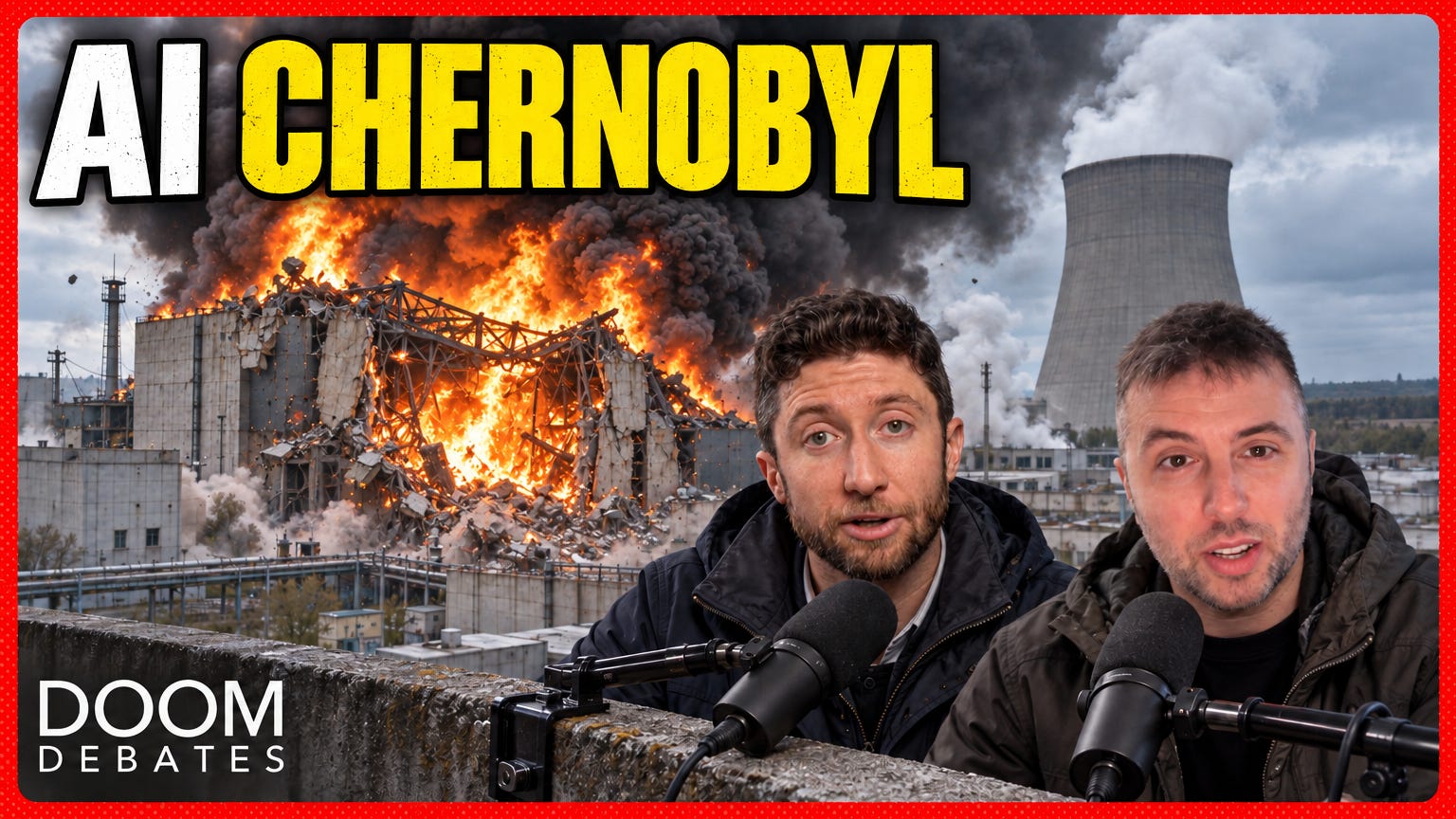
「AIチェルノブイリ」がトランプと習近平に即時停止を迫る——Jeremie & Edouard Harris
Doom Debates!

#260 Muse、ミスアライメント、数学:Beam・Le Chonk・OpenAIの数学成果
Last Week in AI