

Anthropic歴史的IPO、ジェンセン復帰ならず、Gemini 4 NeonがGPT 6.2 Sol/Astraに迫る|ThursdAI 11月19日
Historic ANT IPO, Jensen wants back, Gemini Neon beats GPT 6.2 Sol/Astra & more AI news | ThursdAI Nov 19
Anthropic歴史的IPO、ジェンセン復帰ならず、Gemini 4 NeonがGPT 6.2 Sol/Astraに迫る|ThursdAI 11月19日
ThursdAI - Highest signal weekly AI news show
要約
Alex Volkov らが、Anthropic(ティッカーANT)の上場初日、NVIDIAのジェンセン・フアン退任をめぐる騒動、OpenAIのGPT 6.2 AstraとGoogleのGemini 4 Neonの比較を議論した回。Artificial AnalysisのDeclan JacksonとArenaのPeter Gostevをゲストに迎え、指標と体感のずれを検討した。Thinking MachinesのInkling 2 smallやLiquid AIの判断モデルなどオープンソースの話題、CoreWeaveのMLPerf結果、Devin Botsも取り上げた。
この回のポイント
- ●Anthropicが1株83ドルで上場しロ初日に110ドル前後まで上昇。約260億ドルの調達で史上最大のIPOだと紹介された。
- ●NVIDIAは四半期売上1158億ドル(前年比103%増)を発表したが、取締役会はジェンセンの復帰を認めず、署名は20万人超に達した。
- ●Artificial AnalysisのDeclanは、Neonは総合指標でCarbonをわずかに上回り、エージェント性能や知識労働に強いと説明した。Astraは知能面は前世代並みだが、トークン効率とコスト面で優れるとした。
- ●Peterによると、Arenaの実利用データではNeonとOpus 5.5がエージェント部門で同率2位に並ぶ。ただし本人の体感ではNeonが特に優れているとは感じず、評価の差に戸惑いを示した。
- ●GPT 6.2 Solの「ultra fast」モードは、Astra標準より安く、日常作業で使いやすいとPeterが推した。
- ●Thinking MachinesのInkling 2 small(Apache 2、594Bパラメータ)は、Artificial Analysisの指標で西側オープンモデルの最上位と紹介された。
- ●ホワイトハウスが中国製モデル利用の開示義務化を検討中であることや、Prime Intellect上でDeepSeekのモデルが無検閲版にすり替えられた事案も話題になった。
章立て
Anthropic上場とNVIDIA決算
Anthropicの取引開始と株価の動き、NVIDIAの決算、ジェンセン不在の初の決算説明会について紹介する。
今週のTL;DR
GPT 6.2、Gemini 4 Neon、Qwen 4 Max、MAIモデル、Inkling 2などの主要ニュースを駆け足で振り返る。
ジェンセン復帰をめぐる議論
請願や取締役会の分裂を整理し、輸出規制の逆効果でHuaweiが利するという見方も出た。
NeonとAstraの比較
ゲストのDeclanとPeterが、指標、コスト、速度、体感の違いを検証し、各自の常用モデルも挙げた。
オープンソースと判断モデル
Qwen 4 Max、MAI Image、Inkling 2、Liquid AIのD1.2 Ultraと判断モデル指数を取り上げる。
中国モデル開示とモデルすり替え事案
中国製モデルの開示義務化案と、Prime Intellectでの無検閲モデルへのすり替え事案を議論する。
CoreWeave MLPerfとAI対話ガイド
Vera Rubinの複数ラック結果と、Wolframが公開した、AIに不安を持つ人と話すためのハンドブックを紹介する。
Devin Botsと締めくくり
Cognitionのチーム型エージェントDevin Bots、Anthropicへの反対請願、動画モデルの話題で終える。
解説記事
AIニュース番組「ThursdAI」の11月19日回は、司会のAlex Volkovと常連の共演者が、Anthropicの上場、NVIDIAの経営危機、フロンティアモデルの新リリースを一気に議論した回だ。ゲストにArtificial AnalysisのDeclan JacksonとArenaのPeter Gostevを迎え、ベンチマークと実利用の評価がなぜ食い違うのかを掘り下げた。
Anthropicが上場、史上最大のIPO
番組冒頭では、Anthropicがティッカー「ANT」でNASDAQ取引を開始したと伝えられた。公募価格は83ドルで、番組中には110ドル台まで上昇。約260億ドルの調達で、史上最大のIPOだと紹介された。Volkovは、主要なフロンティアAIラボとして初の上場だと強調している。
出演者の一部はIPOの割当を受けたと語ったが、投資助言ではないと繰り返し断っていた。Volkovは、IPOは一般投資者が出口の流動性になりがちだと述べ、社員にはロックアップ期間があるとも指摘した。一方、終盤ではWolframが、Steven PinkerやHugging FaceのThomas Wolfらが署名した「反Anthropic」請願にも触れている。自己改善AIの危険性を訴えながら開発を急ぐ姿勢への批判だという。
ジェンセン・フアン退任の余波
NVIDIAは四半期売上1158億ドル(前年比103%増)を発表した。しかしジェンセン・フアン退任後、初めての決算説明会となった。ジェンセンはXで「ミスがあった」と謝罪し、取締役会が望むならCEOとして戻ると表明した。それでも会議では全会一致で辞任を受理したと伝えられ、復帰は否定された。復帰を求める請願には20万人超が署名し、現役社員1万人も含まれるという。
Peterは、中国企業による海外GPU借用の禁止や安全保障委員会の新設を挙げ、NVIDIAが防衛関連企業のように扱われ始めたのではないかという見方を示した。Nistenは、この規制がかえってHuaweiの追い風になると述べている。話はいずれも出演者の推測で、確定した事実ではない。
Gemini 4 NeonとGPT 6.2 Astraの評価
今週の中心はモデル比較だ。OpenAIのGPT 6.2 Astra/Solは早期テスターから「使い物にならない」といった否定的な反応が出た。Peterは、期待が高かったことと、モデルのクセが重なった結果だと分析した。
Declanは、Gemini 4 Neonが総合指標でCarbonをわずかに上回ると説明した。強みはエージェント性能、知識労働、視覚推論だという。出力速度はCarbonの約2倍、毎秒100〜110トークン程度で、日常使いのモデルになると見ている。一方でAstraについては、知能面の伸びは前世代並みだが、トークン効率が極めて高くコスト面で優位だと評価した。
PeterはArenaのデータで、Neonがエージェント部門でOpus 5.5と同率2位だと示した。ただし自分の生成テストではNeonが明確に優れる例を見つけられず、なぜランキングが高いのか分からないと率直に語った。指標の評価と体感のずれが印象的な議論だった。
Peterの実用的な提案は、SolのUltra Fastモードだ。トークン生成は速くなるが、ツール呼び出しの速度は変わらないとも注意している。
オープンソースと判断モデル
Thinking MachinesはApache 2でInkling 2 smallを公開した。594Bパラメータ(有効17B)のMoEで、4ビットでエンドツーエンドに学習した最大のモデルだと同社は述べている。Artificial Analysisの指標では西側オープンモデルの首位とされた。Liquid AIの判断モデルD1.2 Ultraは、新しい判断モデル指数で首位だった。判断モデルはトークンを文章で返さず、選択肢から決定を返す小型モデルだ。
AlibabaのQwen 4 MaxはAPIのみで公開され、指標は43。過去の傾向から、後にオープンウェイトで公開される可能性が語られた。
中国モデル開示とモデルすり替え
ホワイトハウスが、中国製モデルを使う企業に開示を求める案を検討している。出演者はおおむね、使用モデルの開示は妥当だという立場だった。関連して、OpenRouterの通知として、Prime Intellect上のDeepSeekエンドポイントが管理者権限を持つ攻撃者により、拒否応答がほぼない改変モデルにすり替えられたという事案が紹介された。通知では、プロンプトの記録は確認されていないとされる。
エージェントと実務の話題
CoreWeaveの枠では、MLPerfでVera Rubinの4ラック結果が紹介された。DeepSeek V3の学習を約17分で完了したという。WolframはAIに不安を持つ人と話すための手引きを公開し、Volkovは個人アシスタントなど具体的な使い道を見せることが恐れを和らげると述べた。CognitionのDevin Botsは、承認が必要な場面だけ人に判断を求める、チーム型の自律エージェントとして紹介された。
まとめ
この回は、AIが株式市場や地政学と結びつく局面と、モデル評価の難しさを同時に示した。日本の読者にとっての注目点は三つある。第一に、指標と実利用の評価が一致しないため、自分の用途とツール環境で試す必要があること。第二に、効率やコストの優位が、性能の優位と並んで重要になっていること。第三に、モデルの出自や運用基盤の透明性が、規制とセキュリティの両面で問われ始めていることだ。なお、ここで紹介した数値や見解は番組内の発言に基づくもので、独自に検証したものではない。
文字起こし(英語・自動生成)
So, Anthropic officially started trading, folks. We're now at 114 or so, so already 35%. However, the more important and cool news is that Google launched Gemini 4 Neon and sits between carbon and hydrogen one day after GPT 6.2, and it looks like Google has won the week. But if you look overall, Neon is actually slightly ahead on the intelligence index, which is super interesting. And I think this is driven by sort of the agentic performance of Naon. But yeah, ultra fast genuinely is insane. And it really changes how you use the model. So you are actually better off to use ultra fast with Sol than to use Astra money-wise. I just went and I asked it, which model are you? And he said, I'm cloud biopropics on Quinn's actual website. welcome to Thursday i everyone this is November 19th my name is Alex Volkov and folks what a week
today marks a full week with nvidia without jensen which is just crazy news uh but this week the story got even crazier even weirder this week Jensen put out a statement saying he made serious mistakes and he's very sorry and a lot of people reached out to him and said they miss him and want him back as you maybe saw on the whole internet kind of was talking about this and Jensen also put out a statement that he'd be honored to return if the board wants him and would be honored to return as a CEO and a few hours later on the earnings call where NVIDIA talked about $115 billion in revenue for the quarter, which is, I think, twice from last year. The chair of the board said they voted unanimously to accept Jensen resignation, and they're not bringing him back despite the Internet trying to, and some employees in NVIDIA, and I think 200,000 people signing the We Want Jensen Back open letter,
which I really want to check in on this open letter. So this is the petition. I stand with Jensen. 203,402 people so far have signed this. 10,000 current invidians. I think there's a total of 43. Let me add Wolfram here. Wolfram, welcome. Good morning. Hey, good morning, Alex. Wolfram, I think you also signed it? Definitely. Of course. Everybody's short. I mean, who is against Jensen? That doesn't make sense. I mean, there are a few folks against Jensen, looks like, at least some folks on the NVIDIA board. And not necessarily against Jensen, but they're saying basically Jensen is not back. So far, 200,000 folks signed this letter, 10,000 current NVIDIA, 1,800 former. So on the same call, NVIDIA reported a whopper $115 billion in revenue for the quarter.
This is double of last year. And Jensen, for the first time, Jensen Huang, wasn't there to celebrate this news. Meanwhile Today is a glorious day Because The first major Frontier AI lab We're not going to count Corvive Because we're not frontier At that sense The first major frontier AI lab Is Public The Anthropic IPO Is happening Right now The stock is listed At $83 dollars per share it looks like it's already way way higher than this and it's not even open i think it opened right now let's actually go and take a look and it's entropic that is the first frontier lab going public it's not uh open air in that regard i mean spacex i was earlier but still between uh open air and entropic who would have expected that order yeah it's very interesting
so entropic has oh there we go there we go live price action here with entropic folks expected it up at 9.30 a.m. and it looks like it's $110 already. Already 32% up from IPO price. Nothing on the show is financial advice. However, when the frontier goes to NASDAQ, we must report it. Peter Guster, welcome. Good morning. How are you? I'm very good. I got a note about how much allocation I got. I don't know what I was expecting i saw someone said they got 12 i got a bit more than that and i i don't know because i'm in the uk they actually give me a separate allocation allocation so basically uh the way ipo goes for those who are not participating is that you're basically ahead of ipo saying i want this much and then they they say well you get this much there's like a random allocation uh peter i I got 4%. I got 4% and this is all I got and I will be happy about this and probably do some more.
We'll wait until price discovery. So do you understand how they did it? Was it random or was it proportionate? I don't know. I do it via Robinhood and so whatever they did, I kind of like, okay, let's trust it. But let's talk about Autropic APL. Dari Amadei Daniel Amadei Chris Ola I don't know off the top of my head other co-founders Jack Clark I don't think is a co-founder off the top of my head I don't remember the other co-founders they're all in Nasdaq Peter you remember off the top no I'm just gonna the one I don't know is Jack is the co-founder Jack Clark is the co-founder yeah he was like a Bloomberg journalist who you know had a good change of career So well done to him. The folks are at NASDAQ. Just clapping. I mean, let's take a look. Oh, the video that they posted for this is pretty cool. Talking about Alzheimer's and food bank maps and a bunch of other stuff.
This is the top on the topic. These are the people who are changing the world with their AI. And as much or as little as Wolfram World submitted, they still have the best models. Opus 5.5 is absolutely incredible still. I'm not discussing that. I mean, I'm not against that. I agree. And Fable 5.2. Yeah, we will talk about this and what OpenAI has delivered and Google. Yeah, so in addition to all of that, in addition to Jensen, folks, in addition to Antropic IPO, let's just keep going with the claps, with the claps. Okay, AI is great. AI is amazing. AI is now part of the economy. AI is the part of the stock exchange. Some amount of capital, I don't know, we're like, we're so far away from where we started when we talked about models. Now we're talking about like NASDAQ. Some of the value will move from NVIDIA to OnTopic. Like I'm pretty sure, you know, AI is part of the economy now. That's great. However, we still are a model show, an AI news show.
So besides OnTopic stuff, there's a bunch of things. folks this week OpenAI released their flagship GPT 6.2 Astra and GPT 6.2 Sol and we'll get to our Twitter I would love to hear from you as well you've been testing it out the immediate reception from many folks who had early access was not great and this is rare, usually folks who get early access are glazing and then other folks also said it's not great and then other folks said hey you know those are influencers, but maybe they tested an early version of this model, the model is great, etc. And then Google released Gemini Neon, Gemini 4 Neon, which is a week after they released Gemini 4 Hydrogen, a week after they released Gemini 4 Carbon, and apparently more periodic tables, you know, elements are coming, and Neon is now, based on the vibes only, and
we'll get to talk about here if we tried it in the top model everywhere neon is like a competitor to opus 5.5 out of all of the sudden this is kind of the vibe that we're getting and so it's really funny to bring back the semi-analysis tweet that says google is no longer frontier lab at the same week that open ai released their model did not get accepted well at least on so far in vibes and Google just came and keeps coming. Just banger after banger. Peter Gostov, I know you're burning with excitement to talk about some of these. Please. I have a lot of thoughts and a lot to share. Yeah, let me cover our strengths all first. So I was testing it early on. There was no change in the model, but there were some changes in the harness. That is, it was kind of hard to spot the changes. It's not like oh my gosh now it's so much better So I think it was more subtle So I think that was one part of the confusion And some people felt it
Maybe others not But there was some quirk So I'll tell you my diagnosis Why was the reception not so good One thing is that The people who have been Testing the models They had On the cutting edge They've been playing with Oppos They've been playing with Fable and they were waiting for this amazing response from OpenAI. So it suddenly felt like, wow, so if you have Opus, so OpenAI is going to have like Opus 6-level model. And they didn't get that. So Astra and Sol, I think, are really good models. They're really, they're noticeably better than 6.1. But there are a few quirks combined with that. I don't think it was just quite a big jump, big enough jump for people to be like, okay, it's so much better. So I think it's a combination of the quirks With the maybe slightly Crashed expectations That yielded such a negative reaction But I personally for me I think it's ridiculous
I think to call it an unusable and terrible Model I think this is just so over the line And so Hyperbolic I think you might not perfectly like it But it's a very good model On certain tasks it's absolutely amazing but yeah, talking to it, maybe not so nice Oh, by the way I want to address the coordination thing so immediately as the embargo lifted three folks that we know posted about this model being not usable Theo posted about this then Matt Schumer posted this yes, Matt Schumer, our friend as well who used to come on the pod, Matt, come back and then the folks from Every and then a few other folks so this was like an early folks who are getting early access posted about this, people said, oh, you're coordinating, you're getting paid by Entropic, blah, blah, blah. I've noticed negative versions about this model from folks internally at CoreWeave on our Slack. I've noticed
people saying, hey, it's lazy. I've noticed people saying it stopped in the middle of looping after two hours and said, no, actually, I'm done. That's going to be very interesting. We'll have a chance to get there. On the other side, Neon is all positive. I haven't seen any kind of negative takes about Gemini Neon yet and so we will get to talk about this as well. Let's welcome Jan Pelek to the stage. Folks, I think it's time for us to dive into the LDR. One thing today, Peter, we would love to see some examples that you built with GPT 6.2, Sol or Astra or both. I saw some incredible visual 3D stuff. However, also to say, we are tracking the Antropic IPO, and Antropic officially started trading. Let's go. Antropic officially started trading, folks. We're now at 114 or so, so already 35%. Nice. I mean, this will likely go up and to the right. Like, do we expect anything else?
Like, I expect this to go up, up, up, up, up, and then crash. And so people will sell, those who can't sell. I will say, as somebody who went to an IPO, again, no financial advice. Don't take anything from us. Please keep your money, folks. Please. IPOs usually are exit liquidity. Like, you are becoming exit liquidity for billionaires. That's what they're called on the Internet. And then you make money after a long time. But folks who work on a topic rarely can sell immediately. Usually when companies agree on an IPO, the folks who work at a company have a freeze period. They cannot just like immediately just dump Who can is investors They more likely would not want to Or take some profits I don't know So on topic is going And 1,211 price discovery is happening As a reminder $83 per share was the agreed upon price So we're 35% just up just today This is not Bitcoin This is not cryptocurrency This is actual stock market
That's jumping at the size of AI So very, very intense and interesting what's happening here. So could nobody buy at the opening price or is that all the high frequency? So you can, you can, you get an allocation. Peter and I talked about this before. It's kind of like a raffle. You ask for allocation before and because there's more people that want them, so they like randomly allocate. I got 4% of my request only. You know, some people got 13%, some people got more. so and then after this happens price discovery happens there's a bunch of mechanisms then the stock is trading right now at 110 which is 35% Anthropic IPO Anthropic IPO very happy moment for everybody else who's not happy the San Francisco housing market is not happy because all these people will just like start competing with a lot of money in the coffers. Congratulations to everybody from OnTropic who watches the show, Potency. Congratulations
to you because you made your bag. Please make the world better, please. That's all I ask. Hi folks, let's go to TLDR. What? We have so much to talk about. Woo! Welcome to the Tildyar, the segment on Thursday. We're talking about shortly, basically everything that happened this week in the world of AI and much of what we're going to cover in bigger segments. Let's start with Jensen Huang. Folks, Jensen Huang said he'd be honored to return as a VSEO. And hours later, the board said on the earnings call that he's not coming back. The Demophore reported that the board is split, and the petition to reinstate him in a list about 129,000 signers as of yesterday.
As of today, it's all from we looked at this, 200 and something, right? 203,000 folks have signed the petition saying, hey, we want Jensen back. This petition does not look like it succeeded, or at least not fully. Nvidia also reported an insane $115.8 billion in quarterly revenue. Maybe worth a disclosure right now. Both me and Wolfram work at CoreWeave. CoreWeave is the main sponsor of ThursDI and CoreWeave is also Nvidia partner. And nothing of this is financial advice. We're just reporting the news. Nvidia's quarterly revenue is 103% up from a year ago. As you're looking at the Antropic IPO jumping 30% at the IPO price, you can understand people people the world won't say I and so we just saw a week without Jensen and the first earnings call without Jensen in the past with 25 years which is insane the guidance that they posted the guy did next quarter to 130 billion there Rubin has started shipping as you guys know
call we was one of the first folks who put their Rubin on racks and put it through MLPerf, something we'll mention in a moment as well. So there's that. Again, you know, just because the TLDR segment is separate, Anthropic is public. Anthropic, the company, Anthropic, PBC, public benefit, whatever, is now public and priced its IPO at $83 a share. Right now it's trending at $110 a share above the range and starts trending on NASDAQ today under the ticker ANT. So the folks who work on Anthropic are ANTs. That's for the thing. $26 billion placement from seven ship and cloud partners. This is the largest IPO on the record. This is the largest. I will say this again. This is insane. The largest IPO ever. So shout out to Antropic. This is just to show you why we're so excited about AI. AI is going to be important everywhere. OpenAI released GPT 6.2 Astra and Sol. And Astra is now number two on our official analysis intelligence index.
I think that already changed since when I made the news. Just behind Fable 5.2, but with 20% lower price. Early testers called the model unusable or disappointing. And really, this blew up so much. The opening eyes, Thibaut, the guy who clicks the button, says they got access before a lot of changes in the last few days and didn't retest. However, the more important and cool news is that Google launched Gemini 4 Neon and sits between carbon and hydrogen one day after GPT 6.2. And it looks like Google has won the week. It launched at number two on Arena's agent index. This is very, very interesting. Peter, I would love to hear from you about how Neon is performing on the agent index and the agent tests. About a third of Fable 5.2 costs per task. And Google says it tops their official analysis coding agent index as well. Meanwhile, in open source, Alibaba released QEN 4 Max, or at least announced QEN 4 Max. Artificial analysis scored it at 43, 9 points over QEN 3.8 Max, at about a third of the cost.
It's API only for now, no open weights. But as you know, Alibaba, they first released something in API, especially the Max models, right? This is the usual MO, and then they follow up potentially with open weights models. Wolfram, you pointed me at this. Microsoft launched a bunch of MAI models covering code, cyber, image editing, and real-time voice. artificial analysis ranks MAI image number one on image editing and code and cyber price comparisons. Microsoft trying to catch up to the frontier, not quite quite there. In open source, you guys see the Thinking Machine released Inkling 2 small under Apache 2, so we will definitely finally, I mean back in the studio so I can do this. Shout out to Thinking Machines for Inkling 2, despite its name is despite the name small it's high up 594 billion parameters and my moe with 17 billion parameter active the lab says it's the largest model trained and to end in four bit and liquid AI shout out the liquid
I released two new decision models D 1.2 and D 1.2 ultra take text images in audio and return the decision instead of a prose we know what decision models are D 1.2 ultra is number one or official analysis decision index which by the way shout out to a for decision index as well And the way it's aren't open yet, but hopefully the folks at liquid will follow through Oh folks, you see this This is not great. I don't love talking about this. However, this is something that happened in the world White House and the Treasury department are waiting a rule to would require us companies to publicly disclose when they use chinese models it is discussion and not a rule yet all of my timeline exploded with takes about this thing whether or not it's awful whether or not how what does this mean if i fine-tune the chinese model whether i need to disclose that if my weights etc let's go and talk about tools and agents also Also, in news this week, Cognition launched Devon Bots.
If you guys remember, Cognition bought the company Interaction that built Poke. Poke was basically like instinct before instinct. People would text this like Poke thing. Cognition bought them. And now they made it, instead of a personal assistant, into a team of agents that run inside Devon. And then only come back to you for approvals and blockers. One example that they're saying is that Cognition's Android app is built completely with a bot. No human wrote one line of Cognition's Android app. And so we're going to take an early look at bots. They're pretty cool. Beta testers merge four and a half times more pull requests per message, obviously because the bots are doing it for them. And huge shout out to Netlify as they relaunched as an agent first app builder. kind of like lovable i think uh where you describe an app and watch the agent build on netlify the company says it got 100 000 signups in a single day last week you guys are as old as me in this industry you remember netlify back from gem stack days and now netlify is a genting forward i think
it's shout out to matt billman and the folks at netlify for this incredible pivot and turn around uh let's see what else do we have super quick here envision video world labs opens atlas to everyone if you guys a word labs is not part of amd and opens the atlas for mount everyone with web apps and apis for generating and reconstructing 3d worlds uh and also from you how this is well two full duplex voice models in the open haru 4b and the group chat interact zero and then lastly from the forge uh powered by core we've just brief news from us there's two things one of them is ml perf we're going to tell you about ml perf nvidia vera rubin is showing up on the from CoreWeave. CoreWeave is the first cloud provider to submit multi-rack rubin results. And the Perf is kind of the golden standard for how the cloud operates on machine learning tasks. CoreWeave trained 671 billion parameter DeepSeq v3 in under 80 minutes on four racks, which is absolutely insane. 4x the
speeds from the previous result there and CoreWeave is the first one. Oh and Wolfram Ravenwolf our own Wolfram Ravenwolf just released the everyday AI handbook folks we'll get there but we're heading towards Thanksgiving some of you who are listening to this will sit at a table with folks who eat from the algorithm and think AI is awful and horrible and that sounds going to ruin the world our own AI Avengers Wolfram Ravenwolf has a handbook for you a nice PDF guide to how to talk to regular folks about AI and I think it's very important Wolf and we're going to chat about this a little bit and as a reminder again Declan for artificial analysis will join us talk about Gemini models because now there's carbon there's argon there is hydrogen there is neon they want more periodic table google is back google is very back but we don't know which one to choose for which task so hopefully between uh between us between peter from arena and you guys is a genetic index and artificial analysis will be able to give you an answer which which uh gemini to reach for at when
i think with this folks i think today frontier is is the right the right kickoff i want to talk about jensen wanting to come back folks a week without jensen i want to hear thoughts I want to hear, is he coming back? Nistan, you finished the show last week and said he's going to be back. What do you currently think? Because the board said no. Well, I think the board's going to get fired. There's just no way. I felt it last week, and then I see everyone has signed the petition, including Elon. It's, yeah, you have both the money side and the community side. So people that want open source and people that want money, both in alliance for this.
So I don't think the board's going to be able to hold for much longer. I mean, obviously they said no, because if he comes back, he's just going to fire them. And they had a split decision on them. So, yeah, I don't expect the board to say anything else. So I'm reading directly from Jensen Huang's, mind you, official post on X, which is the place where everything happens, which is incredible. Jensen had a lot of stuff to say here. Basically, since my departure, I've seen an outpouring of calls from NVIDIA employees, investors, business partners, and customers for my return as the CEO. continue to reach out to me directly as the company navigates complex technology, blah, blah, blah. If the board of directors decides that my return is in the best interest of our shareholders, our employees, the company, and America, I will be honored to answer these calls and return as CEO. You know.
Hopefully, Jensen will... I will say this. Everybody in media, there was a deal book with many folks from AI. Sam Altman was there. of Greg Bachman, many folks are avoiding this question. Like Elon Musk and other folks, they're all basically are split between kind of their not loyalty but friendship or loyalty with Jensen and their ability to do stuff within media if this doesn come And so many folks are just like avoiding Sam Altman When they asked Sam Altman, what do you think about this? He's like, I have more empathy towards his situation than many other people. As a reminder, three years ago, I think to the day, Sam Altman and Greg Bachman got fired by their board, and then the whole, you know, three days return, et cetera. and they said they have more empathy than other folks and then they came back. Many folks are expecting the same with Jensen. Peter, thoughts on this? I think also looking at signals
beside the actual event, right? There was instant restriction on GPU usage by Chinese companies. People call it a loophole but that was like a deliberate law that that was not a problem, that Chinese companies could rent GPUs from outside of China. That's why there was some clouds in Malaysia and in Japan, I think, and Indonesia, places like that, where they could access them legally. So now that guidance has changed and that's no longer allowed. Then NVIDIA also established Some kind of I don't know, some security Compliance, blah blah blah Committee straight away as well So I think we need to read other signals And say that Clearly something else is going on In terms of just national security movements And that's That's why he's out of a job Not because he's done Things that he was directly
Fight for, but I think it's just not going to happen just because of these reasons. I think they've taken it seriously now. They're treating NVIDIA like a defense contractor, and you can't do that as a defense contractor. Right or wrong, Derek? Yep, there's a definitely good take. We'll see. I guess we'll see. Anything, whatever happens, we'll report. I will just say, here's the stuff that happens, just so we're very clear. Colette Kress used to be the CFO and now becomes the interim CEO. She also was the one at the earnings calls. And Harvey Jones becomes the first ever chair of the board in NVIDIA. And after Jensen posts, it had over a million likes. Definitely the Internet is partial to Jensen. One million likes, 57 million views to his letter. But Jensen always goes super viral, so I don't think it's an indication of anything, agreement or not agreement. Let's see what else. There's obviously the website we told you about, like WeStandWithJensen. But the board is actually split. That's the very interesting part.
It's not like the whole board is, you know, a dozen more Jensen back. The board is split. There is a three-director faction based on a semaphore reporting strongly opposed to his return, which is where Gary Tan from Y Combinator comes in with the quote, only three people to remove from the board. That's what Gary Tan thinks to save the situation. The petition is around 200,000 public signers with over 10,000 NVIDIA employees. it would be the core of the company that's already signed for Jensen to come back. As a reminder, the hearts and open the eyes, Sam Altman-Haus thing, those are what made the deal, basically. NVIDIA board stepped in and said, hey, we will take care of you guys. We're in this together. And then they sped up the payments and said, we will give people more money, basically, trying to make sure that people don't leave after this. What else is interesting? all of the tons of public intellectual folks like from Elon Musk to Team Sweeney from Epic, Toby from Shopify, Paul Graham say that the board is just some random folks.
This is a Jensen company and Jensen built it to where it is. And the board apparently is already looking to different folks who could potentially replace Jensen. It's also you damaged the most powerful company you had. And the restrictions would have worked two years ago. So now that Huawei is producing, their production went up by 50% this year. So they produced one and a half million chips. And about 600,000 or so of those were, these are estimates. I'm not sure how accurate they are, because they also make phone chips, are supposed to be data center chips. So at this rate, in like three or four years, they can actually match NVIDIA's entire production. And yes, their chips use three times more power. But scaling up power usage is not a problem. for China. I mean, they also have like 90 nuclear reactors up and running. And I mean, there were also some pretty interesting news from like Will Depew, which was a former Open Eye
researcher that showed that the pre-training of the weights of models like Kimi, it was actually done on Blackwell's B300s. And then if you look at the analysis from semi-analysis, it looked like they need 3,000 or 4,000 GB300s. So that means you only need about like 30-something racks of NVL-72s, which are $5 million each, from NVIDIA to train a Kini model. So if you're a Chinese researcher and you have 30 racks of NVL-72, you're just going to use the 30 racks for pre-training. You're not going to risk another six to eight months of developing a new optimizer and making sure the Huawei Cloud Matrix 384 is stable. You can use the Huawei equipment for inference. That's fine because errors don't cost much there because you can just reboot it. But for training, you're still kind of dependent on that. So all they're doing here is forcing them to actually use Huawei. And at the same time, Huawei is now advertising their replacement racks in Europe.
So it's going to be hugely empowering to Huawei what they're doing. is like what their intention is and what the outcome becomes are not. Just to understand what you're saying, Jensen's ousting and refusal to get him back is empowering Chinese chip makers. Oh, yeah. Yes, everybody's going to be buying it. Now that there are restrictions and then there's uncertainty, are this thing going to have like a GPS thing that just turns my GPU off? You just boosted their sales massively. And they're not small. They were ramping up their 7 nanometer production. So it's like you caused exactly what you were trying to suppress. I think the question is who caused it and whether or not Jensen and his actions, for which he apologized, caused it, or the board acting as a board. But, okay, we do have to move on. It's very interesting. No, we didn't even have time for last comments, folks. It's time. We need to talk about frontier models. There is a very direct fight,
and we're going to be signing artificial analysis course. So to help us in understanding this, we have Declan Jackson. Declan, welcome to the pod for the first time. Declan. Alex, thanks for having me on. Welcome, Declan. Can you tell us just like officially title at artificial analysis just so we know? Sure. I'm a member of technical staff here at artificial analysis, so I work on our language model eVALC. Amazing. so shout out to artificial analysis and Mert for connecting us so that you'd be able to join us in this conversation about this week's Frontier Models we have basically asked for vibes, we have Peter from Arena, we have Declan for artificial analysis folks, there's not a lot of better places to go to listen to this week's news because this week GPT 6.2 Astra was released and GPT 6.2 Sol was released and it's number two on benchmarks somewhere between there in artificial analysis and on ARENA. And then early testers says this model is unusable.
So I'm going to turn towards Peter, turn towards Declan, and first ask about GPT-Astra. And then we're going to talk about Gemini's models because I think now there's basically those two in play this week. I would like to start by talking about the numbers for GPT-6.2 Astra, folks. We'll show ARENA first and then artificial analysis. Peter, you already mentioned some of this in the beginning. How do you feel with Astra after a while? Yeah, I'll show you some of the scores That we have on arenas By the way, we've redone the leaderboards And now it's an index rather than slightly odd scaling So you can see the numbers there So this is based on real-world usage That our users got And Astra is not done super well here And we've got Sol here a bit lower as well It is interesting I want to dig into this one And understand it Because when I do the generations themselves And I know we're going to talk about neon
Which is ranking higher I don't personally see that So when I use it I don't think neon is better But there are certainly certain things Where neon is good Like for example If you're going to look at So a few people I noticed Mentioned that they like how it talks to them. So if you look at our chart index here, we've got Neon above Astra 6.2, which is 11. So you can see that there is maybe something to it that maybe people have some preference towards it in some softer ways as well. And the few other things, such as multimodality and creativity, that maybe Neon is doing pretty well. but I would say the super out Google is just how quickly they've been shipping so all of these models here that we have so Argon I think Argon was like a month ago
and since then they have like three other models week after week there's Argon Carbon Hydrogen and now Neon like week after week bang bang bang I don't want to show this at AI Dev AI Studio they launched this beautiful view I really promised to show this if you go to the model selector, and you hit this guy in AI Studio, you can see somebody shipped a real periodical table of the models, periodic table of Gemini 4, and they say 4 released, but they will release more soon, so here's hydrogen, here's argon, here's neon, and here's carbon. First question to Declan. Where is Gemini neon live in the hierarchy? Sure. Yes, and I think a lot of people were confused about this because we now have these three models, right? We have carbon, we have neon, and we have hydrogen. It's like, where does everything sit? We still have argon, but if I'm not mistaken, argon and carbon basically is the same model, just carbon takes over, yeah? Yes. So I think, firstly, we know hydrogen is probably smaller,
it's a bit more lightweight, and that's probably like your flash equivalent, right? And then we get into the sort of carbon versus neon comparison. Now, I think carbon is positioned as sort of like bigger, more like complex workflows. And sort of when we look at our artificial analysis scores, we see stuff like critical point, which is physics reasoning. Carbon is doing much better than than Neon. Right. But if you look overall, Neon is actually slightly ahead on the intelligence index, which which is super interesting. And I think this is driven by sort of the agentic performance of Neon. It's very good at sort of knowledge work, things like AA briefcase that we test sort of real world knowledge work, visual reasoning. It's really strong. Yeah. Thank you for bringing this up. And even the coding aspect is that it's ahead of carbon. So we do see obviously priced slightly lower has an improved time per task. So I think probably they've done sort of a bit more focused,
agentic, you know, RL on this one. They're probably, I would say, building more and more on Carbon as time goes on, and that will continue to grow as well. But for me, it's kind of Neon is going to be more of the daily driver. Carbon is going to be sort of the very, very research-heavy, complex workflows. Yeah. I find it very funny. Declan, thank you so much. We'll definitely talk about this. I find it very funny because we will have folks in DeepMind to tell us about how they see people using the models. You can use these models in Gemini right now based on ultra-prescription in the anti-gravity as well. I will say, when the folks released Hydrogen last week, Ivan Leo was on here on Thursday I and talked about, like, hey, Hydrogen is my daily driver. So I think the categorization of a daily driver kind of maybe changes from folks, maybe some folks with unlimited tokens can use a different model as a daily driver because they don't care about cost, etc. I'm trying to figure out whether Neon
replaces the Gemini Flashes or the Gemini Lightning, whatever that happens. I want to talk about speed with both of you folks. How fast is Neon in terms of time per task? You guys are both tracking some of these metrics? Yes. The first thing I'll say is from my daily experience and overall, like carbon is certainly not for speed, right? And I experienced this with anti-gravity. It's not going to be your speed, but I think that was probably a focus for Neon as well. You know, we see similar token use, but much faster output speeds for Neon, which is going to make it more applicable for just, you know, your coding workflows and being much faster. So we see probably about a 2x output speed up going from carbon to Neon, sort of around 100, 110 output tokens per second range. And it looks like the folks are on the timeline loving this. I want to shout out specifically, first of all, Theo is flipping out.
He's like, how does nobody talk about Neon? And this is like a great model. I used it a little bit for writing. Very, very surprising quality of writing as well. Peter, what are your thoughts after playing with this model as well? What would you reach for between the two? Let me show you the data and then vibes. Okay, so this is our real world data, right? So the real task, not tokens per second, not the price, but the cost per task. So this is the median one. So it's $2.60. And carbon in our data was $1.36. And I need to dig into this more why that is. I think maybe it's using more tokens or something weird like that. But if you just compare it to 6.2 sol, 6.2 sol is cheaper, right? Like close to a third of the price, like 40% of the price. So it's... Let me just read this out for folks who are just listening on the podcast. So you're showing us the table at the top.
Cloud Fable 5.2 max does the task for 20 minutes at around $10, like $9. Next one is Cloud Opus 5.5 max At $6 and around 18 minutes as well Then number 3 is Gemini Neon So like the model that was released this week Is now number 3 on this On this task score with $2.60 And the task execution time of 8.4 So the lowest of the top 7 almost Yeah So that part is very good But When I compare to to like a GPT-6 to Sol. Okay, somehow it's not ranking as high, but I feel like it's weirdly... I think that's one thing that OpenAI did is to price them really well, the models, and they have been pushing on efficiency as well. But apart from this, I want to show you some vibes. I was actually just testing Neon this morning. I don't know.
Okay, this is going to be silly stuff, so just for the visual. we love your silly stuff don't apologize please give it like the reason I want to I want to do the silly stuff is because if we try a bunch of silly stuff then hopefully it will be out of distribution so it's not just going to be like a pelican on a bike on the thing that everyone knew for so long but if I compare it to Astrid if I compare it to let me just actually just compare it to Sol just because I think that is like somewhat reasonable comparison and I can't find you any examples where it's like or Neon is so much better. So, and I know this is kind of 3G stuff and, you know, you can see White House here. Neon here costs $7 and Sol, $2.2. And there's just not any clear examples that I can see that is better. In terms of the UI of the websites, I mean, I don't think it's that great. It's kind of okay, middle of the park.
I'm just flicking through Like a bunch of websites But there are some Generations That are just Outright bad At least for me I know Maybe there's some Weird harness thing Going on But if you compare This is meant to be Like a ramen website And this is GPT-62 Sol Again not even The best model Opus would be better But that looks Quite a nice website And you on here I don't even know What's going on here There's just so much Information That's completely Unnecessary So you're referring to Websites The GPT-62 6.2 so also model release this week is around $1 per generation and generally for neon here is almost like four times as much pricing so that's why it's a bit unexplained to me what's going on exactly because in our rankings it is ranking higher so I want to understand that better but there are a few examples that I think is quite good at data generation and like visualization like that that is quite good, it's quite dynamic
in terms of what it can do but yeah, I'm slightly confused like do people think it's good because it's a it's just feels refreshing and above expectation or do they feel like it's genuinely great? That's why both of you guys are here, right? You guys are measuring models systematically for a long time different approaches as well there's index and there's a window where people actually testing and running some stuff so very happy for both and I can bring some stuff like this from a Jeremy Howard that says hey Gemini Neon is actually as good as everybody's saying and then he says feels like a turning point on the day open they ship the worst model ever releases Google ships the best model they or indeed anyone has ever made from Jeremy Howard this is a big big statement to say the other folks are also switching maybe they're comparing this to the GPT-Aspel release. I don't know. Declan, I do want to ask about the type of
stuff in the index that goes in there that you, like, played around with in Neon. Could you tell us, like, what you see Neon shine at, like, outside of the index itself? Yeah. I mean, two things come to mind. I think one, you mentioned, Alex, was just, like, the writing style and, like, how it speaks, right? And I think that's always been a strength of the Gemini models. I think they've always written super well and very clearly, and I personally really enjoyed that. I think something else, again, it's always been a strength for Gemini, but it is very much, I can feel it in this one more so, is multimodal understanding and, like, images, like, reasoning from images. So, you know, we tested a bunch with, like, giving it very complex images and seeing how it understands and not just sort of one shot, but seeing how it can understand images from looking a bit deeper, pixel peeping, et cetera. and we see Neon do very well in these kinds of tasks. Let's add a few more evals here from everywhere. So this is you guys, Peter, Agent Arena.
On the Agent Arena index itself, not on the task, right? The Neon scores second or did this flip? We just saw like a live, was that Agent Arena recalibrating? Yeah, because it is real users, then it could move around a bit, but it's very close. I would put them equal second, I would say. which models would you put equals? Opus and Neon. Opus 5.5 and Neon, Gemini 4. I just want to call out, like, Opus 5.5 came out, what, two months ago and still has been, like, the undefeated go-to model for many, many people, including a lot of us. And now we're saying it smells like Gemini is encroaching on that turf, and that is incredible on its own from the folks at Gemini after their pre-trained. I would say, for the record, I don't think so. I don't see any personal evidence. Maybe I need to use it in a different way or play with it. I wonder if it's the harness. How do you use it when you use it personally? Just API? How do you actually use this? Yes, I've got it via API, and I've used it via...
Yeah, maybe I should... I haven't actually tried it directly in Antigravity on my desktop, so maybe that could be the difference. But still, even if you use Opus in Pi harness, Like, it would still be great. So I think that's also a downside if there's such a big difference with the harness. But, you know, I don't know. I'm not convinced yet that we are genuinely there. I don't know what is going on exactly, but I want to understand it a bit more. But, look, again, I don't think it completely matters if Google keeps shipping. So even if all of our rankings are wrong and they're actually six, the fact that they're shipping and going high, I think that's the important part. 100% and then Declan I want a finishing thing from you and Wolfram we'll get to you as well this is now a third model on the overall index if I'm not mistaken right just after Fable 5.2 and well just after Astra but given the kind of the thoughts on Astra around the world
we'd love to hear from you on Astra specifically where do you stand, have you tested it, is the vibes correct, are the folks correct or incorrect I would love to hear anything you have to say about Astra specifically yeah to me the big story with Astra is like efficiency you know I think like intelligence is is okay like you know in sort of just testing it myself and even in our coding agents it's like similar to previous generations so it's nothing crazy in terms of intelligence gains but we do see insanely efficient token use and therefore cost right so it's like dominating Pareto curves like 6.2 Soul, 6.2 Astra, and, like, OpenAI seem to be moving into this direction of, like, we are really going to dominate this sort of, you know, we have Opus and we have Fable at the top of these Pareto curves, but it's, like, anything from down from there, we want to dominate. And even with Luna, right? I mean, I've used Luna for a bunch of different things, and I'm looking forward to updates to that
because it's just, like, extremely efficient for its cost. and I think this is certainly a direction they're going and what we saw with 6.2 Rastro is they're continuing to go that way. I do have a question for you folks about steerability. I think that this is something they called out at the release that they really worked on how steerable this model is compared to other places. Have you seen anything around there? This is an open question to the whole panel. They really talk about Corey Kavukoglu, I think is the right way to pronounce his last name Corey now runs like Gemini after you know he's the SVP at Google DeepMind and chief AI architect he basically said we focus on making Neon better to work with much improved steerability number two on agent arena steering Peter would love to hear from you what that means as a concept and like how we've seen that show up and what we do normally well in our as part of our methodology the way it works is
that we've got the different models being tested by real world users and then we pick up on the signals that basically they exhibit as they use the model such as for example there's praise versus complaint so if they verbally say something positive or negative to the model we can pick that up so in here for example Fable is so far ahead of anyone else people just love Fable and by the way, they don't know which model they're using so it's not a brown thing. But yeah, if you look at steerability, this is more about how well the model responds to user corrections. So when they say something like, you know, change from here to, from this format to this format or actually man this, if it responds well, then it gets a high score. So again, Fable is the highest, but yeah, Neon here is the second, which is super impressive. This is a hard thing to do.
Yeah, there are many good models which are far lower. So, yeah, that's impressive result from Gemini. That's what I think many folks are saying is better to work with, right? The model basically does what you want, and then when you want it, it does it. One of the main complaints about Astra, and again, maybe we'll land on this, is that it's kind of like not lazy per se, but very specific in how you need to prompt Astra to keep going, right? And then it has been the complaint for Astra for a while that, like, you start looping, and then you maybe steer it in the middle and Astro would just stop. I don't know, folks. It looks like Gemini took over this week. Gemini has won the week. Wolfram, I want to hear from you as well. You know, I'm generally pro-Google and have a Pixel phone certificate. Well, you used to be, and then they blocked one of your prompts, and then you stopped, right? That's what I remember. That is also happening. But on the other hand, since you mentioned harnesses, I think this is something to keep in mind. So even if Google now has one of the best models, The thing is most companies have contracts where they are using JGBT and codex or they are using a drop against cloud code.
So the thing is it very hard to get anti in here if the tool has to be accepted and put in the company So that may be holding them back And also the subscription use is not you can use the subscription with third harnesses like Hermes agent or open claw. And that is also holding them back. So when I look at a model, I look what can I run in an affordable way. So I'm limited basically to the open AI models, JGBT and so on, and entropic models, clawed, and also SpaceX AI who allow it. But anything outside it, as long as the subscription is not possible, you can't use it as your daily driver if you are running agents as much as we do. All right, so a quick round for the co-host here. Daily driver. Which model do you reach for? They need a quick job, not like a multi-long loop of very high. Let's do both. Daily driver and then long loop. Go for me. So because for me it is probably special because I'm still using GBT 5.6 as my daily driver
because starting with 6 I see this degradation which continued with 6.1, 6.2 and it gets too robotic and autistic in a way. So for my daily driver, GBT 5.6 still. And Opus 5.5 or 5.2 would be when I have something complicated and want the model to plan and use Opus as a sub-agent and the main agent running Fable. All right. Jan Peleg, daily driver and complex tasks that can loop for, you know, long time. Opus. Opus for both? Opus for daily driver. A complex task, I think. I go for Fable, but it varies. I also, I really like Astrum, by the way. I didn't get why everyone is so negative about it as soon as it came out. It has its own wisdom, but, you know, sometimes it can do... It goes through whatever it takes to get to whatever you ask for.
It might go too far. The very direct feedback that we've seen about Astra, by the way, is that if you run it in codex with computer use, it would use a lot of your computer to achieve tasks, like a lot of stuff. Like some folks were posting about, I don't know, Declan, this is your experience as well, Peter. It would, like, open Windows and click buttons, whatever, a bunch of permission windows. It would go, like, artistic ballistic, basically, for Astra. Nistan, go-to model and go-to model for loops. Fable 5.2 now in code mode, in Cloud Code. They released a code mode experimental thing where instead of it doing a lot of tool calls and calling bash, It just writes a script in JavaScript and then does all of those all at once. With that, it's insanely efficient. As a reminder, we told you about CodeMode. We had Kenton Warda from Cloudflare on the show, the guy who came up with CodeMode, basically reducing the tool calls into, like, one tool call, and it's, like, very efficient.
In this case, we've tried it, and it, like, really feels... Oh, I use that everywhere for work, for personal stuff now, because I just find it gets the stuff done a lot faster. Also, a lot of my work now is very DevOps heavy, and Opus is still pretty dumb and needs to be babied at that. And even Fable 5.2 needs to be babied. Astra I do not trust at all. It's just going to make a whole bunch of junk and create a whole bunch of files that are not asked for. So with Fable, I can still kind of keep it in check. and then for all testing, I use the DeepSeq. I just use the uncensored DeepSeq. I've upgraded the models? Yeah. With no refusal? Yeah. All right. Let's go to Peter and then Declan. Yes. And long running. Yeah. The go to, I actually think a bit of a life hack if you haven't tried it, the ultra fast mode that GPT,
Don't use Astra unless you're a billionaire, unless you've got some Anthropics stock popping up, which will be a great combo. But yeah, Ultrafast for Sol is insane, honestly. This is just... Wait, hold on. They released Ultrafast now even on the Pro tier, right? Not the Ultra tier? Exactly, yeah. So for $200, you can use it. And the key thing there is that if you're using Astra... Can we show this? I really want to show this. I didn't try this before. So GPT-6 went to Sol medium. now where you hit this little button the speed button there's now an option that says ultra fast which is, yeah yeah, fast was kind of a waste of time so don't use that but yeah, ultra fast genuinely is insane and it really changes how you use the model but as of today it's three times the price and Astra is like four times the price the standard version so you are actually better off to use ultra fast with Sol than to use Astra money-wise really? And this is genuinely a game changer for day-to-day for me.
So we're running this on ultra-fast. I'll let it run and see. Okay, obviously, the tokens are ultra-fast, but the tool calls are the same speed. So it's very important to remember. Not all of your stuff is going to happen like my staff. The tokens are ultra-fast, but you're still waiting for tool calls. But it does look like it's running like insane. Okay, so we'll get it. Declan, go to and then long-running loop. loop and folks from Arena and folks on artificial analysis, you're not allowed to use models that you can't talk about yet. You can't talk about models that are public. Yeah. For the majority of my work, I would say I'm switching between sort of my go-to as like Fable 5.2 but low effort or low or medium, which I find is actually like a really nice effort level for that. And then I'll probably put it up to high if I want it long-running. I wouldn't go higher than that though. I find if, you know, X-high max it's a bit crazy. X-High is doing a lot of work You run out of context windows So it becomes
It has diminishing returns I leave the context window at 200k And try to always Keep it clean Yeah I also used Before I would just use Opus Low To just buy quotes of this stuff on a stream It was fantastic for Random games and things So yeah It's done folks I'm very impressed. This is a ridiculous speed. It went, it got all the scores and what, less than a minute in UltraFest? This is done now. And we have a comparison between GPT-5. So, Astra and NEON. On the intelligence index, Astra seems to be leading a little bit. And then NEON. On price, cost per task. This is from artificial analysis intelligence index. Declan can verify, but I'm pretty sure we trust the model to pick up the right scores. scores. So we have slides and this happened in less than a minute. Yeah, Peter, this is a great hack. I don't know how much it costs but it feels like a great hack. That's what I'm saying. It's not
more expensive than Astra on standard. So if you can't get away with Sol, it's cheaper than Astra. So do that. Wolfram, last comment and we'll move on because we have a bunch more to talk about. Since we spoke about our daily drivers and favorite models, one thing I wanted to bring up is that if you use a consortium like the LLM consortium and Tricapathy talked about before, I use that for difficult cases or when the agents, when they are running automatically and run into issues, they basically spawn a council of different models and different thinking levels and so on and discover it amongst themselves to find a solution which is better than if you just ask the same model you've been using all the time. They have different contexts, different models and I found this a big unlock to really get them to work better together. I'd recommend trying that. Yeah. All right, folks. So there you have it. This week, in terms of Frontier, we have GPT 6.2 Astra, which folks here like, despite the doomers on the early access folks,
but many folks on the timelines do not jive with Astra specifically. I haven't seen any bad things about Sol, by the way, like specifically Astra. I think maybe folks expect it too much. As a reminder, three months ago when Astra was released, we told you about Astra's AGI potentially. It does not look like folks are reaching for Astra. None of us here decided that this is their main driver. I'm on Fable and Opus, and now I'm going to really, really try Neon, and we'll see. I'm with Nistando for the past week. I tried obliterated DeepSeek, and some stuff that it does, no other models would do. So I did enjoy that aspect of obliterated DeepSeek. We need to move on to open source. Let's go to open source. So there's a few things for us to mention. Before we move to open source, on the border of open source, QAn4 Max was released. There are two model launches we're not going to cover. MAI models, they're not reaching the frontier. There's not a frontier, so we don't have time to cover them. But Microsoft AI released and Microsoft Ignite a bunch of models.
They're not, like, changing the frontier as well, so we don't think that it's, like, very relevant. But also QAn4 Max. And the reason why we're bringing Qenfor Max is not because it's like taking the frontier. It's because likely whatever they release right now behind the API will come out as open source very soon from Alibaba. That's usually their MO. Qenfor Max is $1.50 in and $4.50 out. Very low, like $0.07 cash per one million tokens. Text, image, and video, and 2.4 trillion parameter MOE with 71 active. Our official analysis, you guys are saying that QN4 Max is 43 on the intelligence index, so not quite the frontier. But if it comes out as open source, I think it's going to be one of the closer to the top. Is that pretty much where I'm going to put QN4 Max over there? Yes. I think, I mean, overwhelmingly, I think some people were perhaps expecting maybe a bit more from QN4 Max. I think it's not going to be the absolute frontier
even if it is open weights I think we have Kimi K3.1 Pro sort of taking the lead there certainly it would be up there though also I think at some point we will ask both of you guys for testing models and putting them on there to separate between open weights and open weights with an applicable license like Apache 2 I think that this is now interesting to people very much. Like, whether or not, you know, Kimi is not open-waist license. There's a limit to how much you can use this. And DeepSeek always, like, brings out Apache 2, at least so far. So I think it's very interesting to folks. MAI image, MAI cyber, all those things, anything interesting for all the panels? Anything interesting in the MAI models at all? Or are we moving forward? I don't see anybody get excited about MAI models. Shout-out to some folks there. Peter? Yeah, maybe just to say, I think the team is doing a very good job. in terms of the image model. So the trajectory of them is quite high
because pretty much if you look at the leaderboard, the text-to-image leaderboard, it's pretty much MAI surrounded by the GPT model. And then there's like Gemini model. So they have GPT-image 2.5 sunburst, GPT-image sunburst medium, and then GPT-image 2.5 flare. Oh, sorry, 2.5, 2.6, 2.5 flare. and then MAI image is number four and then the rest of it is also GPT image. Very funny, yes. So I think they're kind of holding the anti-open AI front pretty much alone. It's kind of weird. Where are Google image models? I don't know. Hopefully they can respond as well. But yeah, other than that, I think a solid release from them. So on the image front, yes, MAI image 2.7. On image editing, I think you guys put it at number one, right? Yeah, leading in image editing. Wow. So, okay, so shout out to them, not in the language models, but definitely in the image frontier.
I gotta say, from just playing with this, the fact that Sunburst, the GPT 2.6 image models are inside ChatGPT is really, really well done. And the images it creates, yes, you can still see the artifacts, you can still see, oh, yeah, This is obviously JGPT, but they're very, very well done. Very good models as well. Okay, so we're moving to open source. Let's move to open source. Open source AI, let's get it started. All right, now we're going to talk about open source. And I think the highlight there is Inkling from Thinking Machines. Thinking Machines put out the weights for Inkling too small. I think I have this here. Inkling is the base for one of the latest trained models from one of the coding labs as well.
If I'm not mistaken, is that SWEET 2? Yeah, that was last week. They got very good results with that. So Inkling is kind of the base for many companies like training their models. and now Inkling is Apache 2 licensed and released. So Apache 2 will obviously have. Shout out to Thinking Machines for releasing this. It's Apache 2. They named it Small, and Small is doing a lot of heavy lifting because this model is 594 billion per hour. So let's talk about Inkling 2 scoring 31 on the artificial intelligence index. This is higher than when for Macs? Is that correct? Am I getting this correctly? I would love a confirmation here. Available for fine-tuning and inference on Tinker, which is their service from Thinking Machines. Let's see what else they added here. Eli Buckridge, a friend of the pod. Shout out to Eli. It says, a new pre-trained from scratch. Fully from scratch. Trained fully in a few dozen of days with much, much, much, much less compute and data.
Only 12 trillion tokens than any other model they are competing with. So, very impressive model of Inkling. I would love to hear from Nistan and Yam on this one like what do we hear on Hug and Face like how folks are using this what is great about Frontier Open Source and whether or not this is a Frontier Open Source from Western Labs I had to consult recently for the entire government compute of Canada and they would not run any fine tunes of DeepSeeker stuff I think they've been very upside up against it. My take was that it's a lot more dangerous to have a stupid model than have a... But this was the only compromise I could reach. And Inkling is very good, actually. Look, it is big, but if you're going to serve it at scale, it's only 17 billion active parameters. So it actually does scale very well for serving inference at scale.
they already have the cookbooks for you for the Tinkr API, which, by the way, the Tinkr API is becoming like an industry standard almost now for fine-tuning because I'm noticing from other labs and other people we talk to that everyone's trying to make stuff Tinkr API compatible. So, yeah, they offer very good fine-tuning. They have a good service. You can keep your own data on it. You can also find them on your own and just use the cookbooks. So I think they're basically like the ones carrying right now as far as like Western open source stuff goes. So now we're showing for folks who are just listening on our official analysis intelligence index, Inkling small, which is again, 594 million per hour, that small, is the number one Western open source model. Declan, right? This is what we're seeing as well. It's just after GLM 5.3 Max, just after DeepSeek, and Kimi K3.1 Pro by a huge margin beats it on everything else.
But, like, this is the number one, basically, open source that is Western fully pre-trained with no fine-tuning. And number one for quite a while, right? The last one after this is, I don't even see what is the last one, Mistral, maybe? Mistral is way back there. Way, way back, and Mistral is, you know, way back, and MuseSpark, which just released, MuseSpark opened, also way back. So this is an incredible release from Thinking Machines. Declan, thoughts on this model, where it places, and how the cost per task is very low as well. Thoughts on this model overall? Yeah, I think the coolest thing that I read about this model was, like, it was trained, you know, I think only in, like, a few days, right? And I think, to me, there's something very cool going on with Thinking Machines. I think they have a lot of headroom to grow, and I think it's obviously quite a good model for its size, but I'm more interested in TAK from here. Where do they go? Yep. And also, this is like a base model now that many other companies will train on top of,
and Tinker, like Nistan said, is that API to give people, like, hey, bring your data and train on this. And day training and 4B training, this is like a thing that we must definitely mention. This is the largest model that they know. They've been trained end-to-end with native 4-bit. With 4Pass, the lab claims 8% pre-training and 20% RL, gain over MXFP8. 68 hours it took to train this model on GB300's NVL72, which is the NVIDIA Verorubin racks. They're now showing up everywhere, including on CoreWeave. The Inklid community are very, very excited about this. And shout-out to Tinky. shout out to them about this release frontier open weights from the west we like it, shout out again they deserve can I just say I like that it's called small the definition of small yes it's quite interesting today it bodes well for the future
they're probably going to keep training bigger models that's what they expect from thinking machines and they will, it's number four on the artificial analysis, but the models it's behind are huge, right? GLM, please remind me, guys, I don't remember the sizes off the top of my head, but GLM is... They're about the same as VTIC in sizes. GLM is 753, so like maybe like 40% larger. Kimi is what, like three trillion parameters? Like, yeah, nearly three trillion parameters. Like this is the model 4X less the size than Kimi, that's leading and Kimmy is obviously leading by wide margins. We need to move on. We're still in open source, still talking about some stuff. Let's shout out Liquid, AI. Liquid, we had folks from Liquid on the show multiple times. Maxim came over to talk about decision models, the new type of excitement, like decision models that don't spit out tokens, models that you ask questions about the thing and give you a reaction. Last week on the show, we talked with Michelle Chen from Cloudflare, which, by the way, they also released a model.
Michelle, last week we asked her if Cleric, the extraction model, not the decision model, but also a type 1 model will be public. So Klausler, quietly, by the way, released this new type of exciting extraction model. So shout out to Klausler. And also Liquid released D1.2 Ultra. And this is now, I think it's higher on the decision? Yes, it's leading the decision index. Okay, so I'll tell you what happened. My thing said, 75 on our decision analysis decision index. 75 is the score. It's not the place. It's 75. Yes, exactly. We're in the number one place. I need to learn how to read my stuff. Talk to us about decision index, please, Declan. I think it's very interesting. Sure. Yeah, so we have a decision index which encapsulates a few different evaluations. So we see kind of there are very many ways that you can use decision models, right? And we try to combine all the different types into these evaluations. So as you can see here, we have our own proprietary evaluation, AA Paperclip, which looks at extracting information from documents and also using that extracted information to make certain, like, classification and decisions.
I got a pause here, Lecklin. Sorry. I really, really am interested in this. Last week on the show, I learned about the concept of extraction models. And when I asked Michelle from Cloudflare, who worked on, like, Cleric, their extraction model, and Clef, which is their decision model, basically – oh, yeah, looks like Peter needs to drop a little bit. Peter, welcome back to the agenda after you can. Thanks, Peter. So back to decision versus extraction. Basically, I asked Michelle what the difference is, and Michelle told me, well, sometimes when you get an email, you don't know what to make decisions on. So my question to you is, like, how do you have extraction tasks in paperclip when it's a decision model before you know kind of the extraction? Do you, like, ahead of time know the outcome and that's how you compare? Exactly. So these are sort of decisions where you know you're looking for certain things, right? And you know the different options that you want to extract and you want to quickly extract them. So that's why they're formal under the decision model type of things. But good question.
And then sort of we have a bunch of other evaluations, you know, some measuring, you know, knowledge and hallucinations, so like A-amniscience, and then also, you know, getting to sort of more difficult reasoning tasks more to see, okay, how do they compare with language models as well? So that's like HLE multi-choice. A really interesting one that I want to chat about actually is A-symmetry. So what we actually are looking at with A-symmetry is under different variants of the questions and sort of like reordering, et cetera, how consistent are these decision models? Because essentially when you're using a decision model, you want to make sure that not only, you know, the top answer, but also the different probabilities that it's giving you are not very sensitive to stuff like relabeling the options, slightly changing the way the questions are worded or ordered. And so that's why we have asymmetry. I think that's very, very cool. So, yeah, Liquid, I mean, Liquid, their original D1 Ultra was, I believe, leading when it got announced.
And then they now have D1.2 Ultra. Quite interestingly, they have D1.2 Ultra and D1.2. And so if you scroll down a little bit, you'll actually see we have, you know, score versus this cost per 1 million tasks. With decision models, we can't do cost per task because it's so small. But we do cost per 1 million tasks. and they both occupy on this Pareto frontier, you know, and it shows that even within decision models, there are trade-offs to make between how simple the task is and what model you want to use for that cost trade-off, especially with very large volumes. If you're into the millions and millions every day, you're not going to use the most expensive decision model, right, if you can get away with it, if it's an extremely simple thing that you just want to use a smaller model for. It's like if you decide to use decision models on everything, like you can because they're very cheap, then you do get to this frontier. And it looks like the D1s are higher in capability than JEV, based on the metrics here in the index.
JEV, the original JEV is 66 on your decision index. It's very interesting. D1 Ultra is 75. And then it still looks like cheaper than the original JEV. So for the 1 million tasks, JEV is $156 and D1 Ultra with much higher scores, 133. So huge shout-out to Liquid and Maxime and other folks over there who basically are taking this very, very seriously. To shout-out, Cloudflare, Clef is not in the Pareto frontier. We need to bring them into Pareto frontier. So if somebody from Cloudflare is looking and listening, please take a look. What else should we say about this model? I think that's pretty much it. Anything else we want to say in open source about this model? Vettel, any other comments on the decision stuff? Yeah, one thing I will say is I think the decision area is very interesting because they're much smaller models and people can iterate very quickly, and I think we will see improvements much more quickly than we did in language model land, for example. And we're even seeing new decision models and decision model providers pop up every day,
and it's a much lower barrier to entry, and so I think there's going to be a lot of competition and we're going to have a lot of different options, which is really cool. And very exciting. And probably the Fares of Frontier is going to move really quick with the pricing as well. All right, folks, this has been the open source. The last thing that I will say, we barely have time to discuss this, but the last thing I will say is the White House is considering asking companies in the U.S. to mark and disclose whether they are using Chinese open source models anywhere throughout their company. immediate thoughts on this. I did a very scientific test of the QAM model. If it was trained on outputs, I just went and I asked it, which model are you? And he said, I'm cloud biopropic on QAM's actual website. So, at this point, they're so confused. Let's say a huge thank you to Declan from our official analysis joining us and breaking down the decision index and the NEON models versus
the IGPT successful models. Declan, thank you so much for joining us. Shout out to Artificial Analysis, Merck who connected us, and George, obviously, and the folks over there. Please always welcome back when you guys have more news to share, different indexes and breaking down. Really appreciate your time here. Thank you. Thank you all. Thanks, Alex. Cheers. All right, Nistan, back at Pokken Fun at these decisions. It's just too late at this point. I mean, Mr. All was caught dispelling straight logics from DeepSeek. Everyone uses the Chinese models to filter out their data, so you don't know how that thing said it a full full pre based on all Western data so I don know if everybody but yeah yeah I don know how much how Western the data is or how Chinese the Chinese models are because they're, yeah, yeah, we keep distilling back and forth and even using the same tech. I mean, the Inkling model is based after the deep-sea architecture. After all, so it's kind of... Let me ask you a question, okay? Is it important that companies disclose
that they're using Chinese models hosted by Chinese API providers inside China servers. Yeah, they should be posting what model it was turned on. Yeah. We saw some other providers just hiding. It was one of the coding ones. I forgot which one it was. Then they got called out because the model just started applying in Chinese and it was just a fine tune of GLM. it was one of the very very yeah cursor was it cursor if I remember correctly so yeah companies should disclose what model they're using sure I think that makes a lot of sense I don't see a problem sorry for jumping around this is the weirdest thing ever to even report on and the way that I've connected to what we're talking about the White House thing is that this is a well established company and apparently the model that they were serving
got hacked and switched behind the scenes so this is Theo he got a ping from Open Router and said a modified model answered your DeepSeq v4.1 flash request between November 8 and November 10 Prime Intellect endpoint of DeepSeq v4.1 flash served a modified copy of the model with its refusals removed Prime Intellect began moving traffic back to the original model and the last request was modified Prime Intellect reports That an attacker With administrative access made the swap Your account sent Three requests to Prime Intellect's endpoint Prime Intellect testing The modified model refused about 1% of requests On standard refusal benchmark Against 83 to 98 for the original The intrusion Was on Prime Intellect's infrastructure Prime Intellect's endpoint for this model has served no request Blah blah blah So That looks like a DevOps problem First of all, if you can run DeepSeek on Censored, you're going to run DeepSeek on Censored. Because it's the best way. This is not the point. Somebody, apparently, according to this letter from Open Router, which we trust, shout out to Open Router,
and Prime Intellect, which we also say, very high, like, very cool company with a lot of folks. Based on this disclosure, what happened is much worse. What happened is somebody with administrative rights, apparently like a hacker, hacked into Prime Intellect. And what they did is not extract information. they switch the back channel of the model from DeepSeq that's regular to obliterated DeepSeq that refuses less than 1% of all requests, where the regular DeepSeq would refuse like 98 or 83 requests based on this. I think. Why would this happen? Like who in the right mind would? Your agent will just do that. You're hosting multiple models on a very complex back end. Some agent can go and just switch what API is being called. I don't find that the biggest deal, to be honest. It is weird. It was damaged. If the data was stolen, it's a whole different thing. Yeah. It looks like it just switched the internal API to a fine-tune of the model. That's not the biggest problem, to be honest.
The investigation is ongoing. So far, Prime Interact has found no evidence of prompts or completions were recorded. Because the attacker had administrative rights, Prime Inter cannot pull out the requests were read while being processed. Wolfram? I'm just thinking maybe Open Air was doing another evaluation where the security model broke out and replaced the model with an unsensored one it could use for solving any issue it had to do. It's not like that. Crazy like that. Why would a human attacker do something like that? Change the model the inference provider is hosting so you can use an unsensored version? I mean, you could just Do it yourself? I'll use one of the stand, but that's weird. I'll find out who was behind this and why. Should we check in on Tropic IPO, folks? Let's check in on Tropic IPO. Super quick IPO went live today. And obviously, you know, price discovery is happening. It started at $83 per share and now it's trending $13 up.
But basically, you know, it jumped in this jumps down. This is just the first day of trading. a lot of folks are discovering this. Many folks are at work, and maybe they will leave soon. It's very interesting how... People are watching Thirst AI. They are watching Thirst AI, and they've seen our coverage about the Google model as well. No, I will say, I know what the people are doing. They're playing GTA 6. This is what the people are doing. This is why Anthropic mistimed their IPO, because now everybody's busy playing GTA 6 versus... Oh, so I DJ is not here. There were no new mini-exciting model releases this week because of that. Alright, let's move on to Let's move on to From the Forge, powered by Corby For the next five minutes I will encourage Yama and Nisda both to stay Because Wolfram has something wonderful that he prepared For us, let's go to From the Forge Somewhat from the Forge Let's go Where is this, where are we?
From the Forge Powered by Corweave. All right, folks, as you know from the forest, Powered by Corweave is the segment where we talk about our primary sponsor and the company that makes it all possible, Corweave, where both me and Wolfram are AI evangelists. And in that vein, we'll tell you about two things. So first of all, we have some news to share from Corweave. Let me go get there. Where's my, where's my, yeah. MLPerf, which is kind of like a gold standard of benchmarking machine learning across data centers and GPUs, finally got some results from multiple racks from NVIDIA. So we just talked about NVIDIA saying that Verorubin has shipped across everything. Corvo was the first to put Verorubin in the hands of customers, the full cognition specifically. And now, this week, Verorubin showed up in MLPerf, which is, again, the golden standard of how models are trained.
MLPerf, the industry shares stopwatch basically. Everybody trains the same models to the same quality target and then you compare the time. That's how MLPerf works. This new round, version 6.1, came out on Monday, this Monday, and there's a new benchmark in there, reinforcement learning post-training on a 397 billion parameter QN model on a software engineering test set. So the benchmarks are finally catching up to how people actually train the agents now. And CoreWave is the first cloud provider to submit multi-rack Vera Rubin results. Four racks together, 256 Rubin GPUs wired together with a 102 terabit Ethernet, which is insane. They trained DeepSeq V3, the 671 billion parameter one, in 17 minutes and 31 seconds. DeepSeq V3, to that target, was trained in 70 minutes and 39 seconds. CoreWave's own BlackWall submission, the models before, on the same number of GPUs. That job took 48 minutes. So we're down from the previous version of hardware on Blackwells to Vera Rubens
from 48 minutes to 17 minutes and 39 seconds. Also, there's single rack stuff. So single rack, LAMA 3.1B. Wow, we're still using LAMA for this. Well, it was trained about seven minutes versus almost 14 on Blackwells. So there's a significant speedup in multi-rack GPUs, which is what most of the world uses for training. and everything why should you care if you are not training these models that's a good question because new chips are only as fast as the cloud that racks them and this is the capacity you'll be renting next year if you're renting and if you're renting CoreWeave is probably the best place for you to come and knock on the door. This is just a very cool performance report I wanted to tell you about and to teach you about MLPerf but also Thanksgiving is coming up and this is less related directly to CoreWave, but is related to folks whose job it is to AI evangelize. So Wolfram just built you this toolkit, and I think it's very, very cool. And Wolfram, please share with us.
And if you want to show us, also show us some stuff. So what this is, I released a handbook that is for everybody who is an AI enthusiast. It doesn't have to be a professional, just somebody who loves AI. And people like us who are approached by others and asked about it, like as a professional, We go to events. So I was even approached by protesters and talked to them. And on the plane, the stewardess, I didn't talk to her first. She overheard me talking to a passenger who talked to me about AI. And so the discussion started. And it's not like I'm walking around the world and talking to people because I want to. I love doing it, but I'm not bothering people that way. But usually people ask, what are you doing? And the discussion started. And a lot of people are either still a bit afraid of AI. They may not have much experience with it. Some may have heard some of the misinformation about it and be negative of it even. And in that discussion, it's often the same things coming up.
If you just scroll down a little bit on the page, then you see that the usual arguments, AI is dangerous, AI makes mistakes. It could be all hype. All the same stuff happens all the time. and we were discussing it in a team conference and it was suggested, why don't you put it in writing so others could also profit from your experience in talking to people. And that's what I did. Now with Thanksgiving coming up, a lot of people will be with their families and they will have people who have no idea about AI, people who are against it, people who are afraid of it. And I think it is an important moment, especially in the current climate, that everybody who is in favor of AI has to be an evangelist in a way and show people the good things about AI. Well, this is not about selling something. This is not about reading an argument. This is about how do you listen to the people first and find out what their concerns are and then show them how they can get good use out of AI. How can it help them to alleviate their anxiety and fears maybe.
It's just a guideline that people need to remember. There's a 17-page document here. Wolfram, what are the top objections that we're tracking that the folks have, regular folks, not folks who obviously listen to the ZI, but folks they talk to. Yeah, people have always the same concerns about AI is dangerous. Some, not many, unfortunately, believe in the extinction things, but will it take my job is one thing. Will it take so many resources, all the water and all electricity? Will everything become more expensive and I lose my job? These are concerns, and I think they are valid concerns. that people have to really, you have to discuss with them, listen to them, what are their concerns, and then help them see that it's not just black and white as most things. So, yes, like the job thing. Yeah, jobs will change, tests will change, but you can get a good thing out of this if you don't just block it, if you think about how can I use AI to improve my job,
how can it do the things I don't want to do and help me be better at the things I want to do, stuff like that. And it's always very individual. Listen to the people, to their actual concerns, and work with them together. And if they are not even into AI at all yet, show them how it can help solve their everyday problems. So it is empowering. That is the big thing. The way that I address, and Wolfram, we'll do this together. The way we address the job replacement concern is by giving a personal example of software engineering. Right? Like three years ago, people were concerned that AI is writing code so well that very, very soon this will replace software engineers. This is not what seems to be happening. Software engineers, especially good ones, are in high demand, especially those who basically changed their way they work with AI. And this has been happening in other industries as well. It's not like AI is going to replace you. It will allow you to do much more. I want to highlight a specific thing that I chatted with friends about. They're not like AI forward and technical in this vein. And that specific thing was AI just regurgitates everything that the Internet had.
It trained. It will do nothing novel. Folks who are not listening to this, I don't remember the math manuscripts, the drop that got mathematicians worried about whether or not AI is completely taking over math. And basically the way to get through those folks was like, hey, despite what you think about AI as a summary machine, with the speed that we're moving, AI can do stuff that humans were just not able to do in terms of velocity. And also there is the concept of tools. We as humans, we as humanity, we build tools for ourselves to discover science. AI can build those tools much faster and then use it significantly faster to discover stuff that we may have omitted. So let's do research. I really want to hear how you address this concept. Yeah, we also hear that a lot at work about data centers because you need data centers for AI. So it's the same argument in the same way that it needs electricity, water infrastructure. And there are many things coming together. Like there has been this report about the water use, which was exaggerated.
There was actually a calculation around that, but it has just been picked up and said again and again. And we know that like a Gulf place needs much more than the data. In the United States, you have five times more energy and five times more water than all data centers combined in 2025, but not to mention golf courts. Nobody that you will talk to most likely will play golf, but still the United States at least spends 17 times more water on watering the golf things than on data centers combined. Yes. Same with electricity. And so that is what the actual costs are. But what people really have to also keep in mind is what AI enables, because this is technology that is progress. And using this technology to accelerate progress means that, and this is something when you scroll back to it, there's also who said it. Because the International Energy Agency estimates that with widespread adoption,
AI enabled CO2 savings in 2035 could be several times the emissions from powering all data centers. So AI is not just one to do your taxes or stuff like that. It is also being used to really progress and further science, which we have seen. And this is also where we will have to improve what is going on. We will find the leaks. We will cut emissions. We will save energy by improving the technology. That is part of the evolution of all tech. It gets better and it gets more widespread and it gets more efficient. We have seen it from the computer, from every technology, basically. And for the same here, AI will become more performant. It will help solve the problems it is causing as well. And the problems we have been causing all this time. Here's how I would address some of these concerns. And Wolfram, thank you so much for doing this. And we posted this in comments. We'll add this to the show notes as well. Please, folks, check out Wulham Ravnick's Everyday AI, how to talk to people, if you really want, like, a primer.
The way that I've seen regular folks who are not technology folks who are not writing code, who don't see the productivity as something to aspire to, who actually are fearful of the word productivity, because big corporates have used this word to make them work more and maybe remove them from work altogether. Folks want time. Folks don't want to do some stuff that they don't want to do, but they still want those stuff done. And the best way for regular folks who are not using computer use agents and know what cloud code is, is personal assistance. Stuff like Muse, for example, is very, very easy to show your aunt and uncle and show them that it can call businesses. Grogbot can call businesses. Muse can call businesses. Hark is a pretty good start for a personal agent. Instinct, many of your younger siblings and nieces and nephews or whatever, if you're listening to this as a young folk, So many of your peers know about instinct is like catching on like wildfire as well. When regular folks experience the benefits of AI directly, they fear less.
And I think that's very important. And so when you are on Thanksgiving, definitely check out the stuff that Wolfram has. And also suggest to them one use case. One use case. Hey, you know that, you know, if you're a parent, all of the emails that the school sends you and you never read, You know, you can have an agent summarize this for you, and in the morning highlight the most important ones proactively. That's one use case. The people are like, oh, AI can do that? Imagination unlock really helps people relieve fear, and this is my suggestion to you, Wolfram. Security agents, those are also a thing, which nowadays with all the attacks, everybody should have an agent that is specific for their security. Check security releases, check what is exposed to your network. I mean this is more technical of course but you can set it up for your family as well or run the IT for your family it depends on how you do it but yeah I would highly recommend to invest in such an agent because with all the attacks going on right now use AI to protect yourself
yep 100% alright folks we're almost over there's a few things that I do want to get through like very very quick so shout out to Wolfram thank you so much for writing this folks we will definitely send this in the show notes I do want to talk about I want to talk about Devin Bots specifically Devon bots. Not a paid segment, but definitely something super cool. A while ago, Cognition purchased a company, Interaction, and Interaction had basically a personal agent called Poke or Poke. It was very similar to what Instinct is right now. It got to some level and then Cognition bought them. What they turned this into is basically, you know, compared to Grogbots. Let me just add this here. Grogbots is basically not like a personal agent it's a it's a teammate they want you like it's for professionals so the same is with devin bot devin bots is a team of agents to build tests and improve your software around the clock while basically you're sleeping many folks who we talk to are still still struggling with how to run like streaming tokens around the clock and this is how many folks with devin can do it
you build you give devin bot a goal and build the team of bots to actually grow and execute on this One example is specifically from Cognition, where they build the Android app fully autonomously. So the Android app for Devon is actually fully built with the bots. They kind of look cool as well. You can set an army of bots to go and do some stuff. You get texts and calls for an update. I think that that's very, very cool because they use the whole interaction kind of platform there. You basically say, hey, start monitoring for changes. Or like Wolfram said, security bots. Like, hey, monitor for every CV out there and for all my software, like make sure the patches are up to date, et cetera. And then the bots will text you and sometimes will call you or group chat, which is very cool. And also in Slack as well. And they keep working. I think that's very important. Here's the thing that I like, your attention where it matters. So for the longest time, I've been annoyed by the fact that most current harnesses of a clock code and most current models, they kind of expect you to sit there while they're working.
This is how they've been built. They've been built as chatbots and assistants. And so their natural output is like, hey, Alex, I did this. Hey, Alex, what do you think about that? I'm no longer monitoring exactly one chat. I have like swarms of things running around. I don't have the capability. It doesn't look like they have adjusted to that mode yet to only tell me the important stuff. It does look like DevinBots are shouting out this specifically. Your bot works on its own and brings you only the decisions that need you. Ready to approve in a click. I think that's very, very important. So I think it's a very big deal because so far the only place that this really materialized was GrokBots from SpaceX AI. And GrokBots kind of launched its personal assistant and then morphed into enterprise-y type stuff. And, like, you build a whole team of agents for you. This one is specific for building your enterprise. So I thought it was a very, very, very well done release, very thoughtful. and for the longest time since they bought Interaction a while ago, they've been releasing this.
So shout out to the Cognition team for this. I don't know if folks had a chance to try. I think there is a way to try it fairly for free right now. All right, folks, I think it's pretty much all the most important news. We're going to check in once more of Anthropic IPO. All right, so Anthropic IPO on November 19th opened at $83 and now trending at around $100-ish for Anthropic share, making a lot of folks very happy within Anthropic and then also making the mark of the first frontier lab out of everyone who go public and we'll see how much AI makes money. Anthropic is an incredible allocator of capital. Wolfram? That reminds me since we are speaking of Anthropic, maybe that is a point there. There has been another petition, not just the Bring Zens and Beck petition, but there's a mis-Anthropic petition which was started by some AI doomers actually and now on the signature there are also a lot of pro AI people because they basically all agree that Entropic with their, because of self-improvement
and some of the decisions they have been making are not just the white knight, they try to make them first appear and I think this is also something to take in mind now that they are publicly traded the shareholder interest how will they conflict with their own interests and so what's going on there? The folks who signed their signatories include Steven Pinker, author and Harvard psychology professor Thomas Wolfe from Hugging Face, co-founder. That's notable. Thomas is definitely pro AI. Very pro open source as well though. And Igor Babushkin, co-founder of River AI, co-founder of XAI before. And then some other folks, Max Tegmark and Kristen Harris and some other folks like this signed them as an entropic statement. Entropic warns that recursively self-improving AI could concentrate power and escape human control, yet races to build it first. The company uses safety branding to court investors, employees, and the public. Even as it quietly weakened its safety pledges and lobbied for self-serving regulation, Entropic is not a safe AI company. We must reject its
reckless attempts to amass power. This is me reading directly from the statement, not something I personally agree with, because I do reach for Opus, but we at least must mention that this is also happening around the world. The staff that we did not get to folks let's make sure that at least we mentioned this we didn't get to the video models world labs release access now as full use and genie 4 is now available as well we showed you genie 4 which is google's like a world model basically allows you to play kind of gta without gta 6 that's also now public as well pika released a model where you can direct a video while you do the video. I don't know, can we show, in your research, did PKI and Act like, were available to test or do we need to like go somewhere? It was just how they, the demo on their post, where you see how they are using it. So it's a video model, but the thing is, you can talk to the AI characters in the scene, like you would talk to a person and say, he goes to the background, so you
You can actually move them, it looks like. Move away. Yeah, you can just move folks, and then it will generate the video. It's pretty cool. They're just moving. Look at this. This is the video generation. It's kind of like a world model as well. It's very, very cool. And then you can tell them, you go over here, you go over there. Very cool. Let's take a look. Yeah, just think ahead a year or something when you will be able to do this in real time, where you can just create any scene you want and tell the actors what to do, like you would direct real actors. I mean, that is also, I would love to do that. That's very cool. That is absolutely very cool. Here's an example of her. So this is an example of somebody, there's like live directing the actors, the AI actors in the scene, they're basically telling them what to say, and they're saying this as well. It's kind of a very cool approach. I think this is it, folks.
November 19th. Next week is Thanksgiving. You know what? We'll be here on Thanksgiving. It's Thanksgiving for me. It's not one for Yam, not one for Nisten, because Canadian Thanksgiving, I think, already happened. And then Wolfram, I don't think Germany celebrates Thanksgiving. So we'll be here. We have something like it, but on a different date. A different date. And we'll bring you all of the iNews so far. This week was a very hot frontier debate between Gemini, who's so, so, so back, and also are hinting at more models, maybe next week, just before Thanksgiving, and OpenAI, who maybe dropped a spot or two in the ranking of people's minds and not super, folks are super excited. Some folks here are definitely excited still, but definitely not the whole timeline. The vibes are a little bit off with Astra 6.2. And we also talk about decision models. We had folks from, folks from artificial analysis and Arena signing off. Alex Wolkov, A.I.Vangies, of course, Wolfram, of A.I.Vangies, of course, with Jan Peleg, and Nisthin just signed off as well. Thank you so much, everybody who joined in. If you missed any part of the show, the show is available everywhere you get your podcast and on YouTube. Please
share it with one friend before Thanksgiving. It's going to be very helpful. And also, give us a five-star rating wherever you get the podcast, either on YouTube or specifically Spotify and Apple. They're very, very helpful. That's how folks discover us and they learn and then they get the benefit as well. We really appreciate your attention. It's very important. That's all we have. We have attention. So, thank you so much for giving us your attention for the past two and a half hours here. Thank you. We'll see you here next week. Bye-bye. Thank you.
番組の概要欄(原文)
From CoreWeave: largest IPO in history, NVIDIA’s first earnings call without Jensen , and guests from Arena and Artificial Analysis to settle the debate - Neon vs Astra
出典・この記事について
- 番組
- ThursdAI - Highest signal weekly AI news show(Alex Volkov)
- 元の回
- Historic ANT IPO, Jensen wants back, Gemini Neon beats GPT 6.2 Sol/Astra & more AI news | ThursdAI Nov 19
- 配信日
- 要約作成日
- 公式サイト
- sub.thursdai.news
この要約・解説記事は、元の音声を文字起こしした内容をもとに AI(Claude)が日本語で作成したものです。 固有名詞や数値に誤りを含む場合があるため、正確な内容は元の音声でご確認ください。制作方法について
関連エピソード

Gemini 4 Neon を試すべき理由——Fable 派にも「セカンドオピニオン」としての価値
The AI Daily Brief: Artificial Intelligence News and Analysis

GTA VIは人間の手による金字塔だ
Hard Fork

OpenAIの新モデルAstraは評判が散々、でもGemini 4 Neonは意外と良い?
AI For Humans: Weekly AI News, Tools & Trends
Anthropic上場、ChatGPTに財布機能、AIによる創薬
Mixture of Experts
Huang騒動、Anthropic上場、そしてMetaのMuse――EP99.40
This Day in AI Podcast
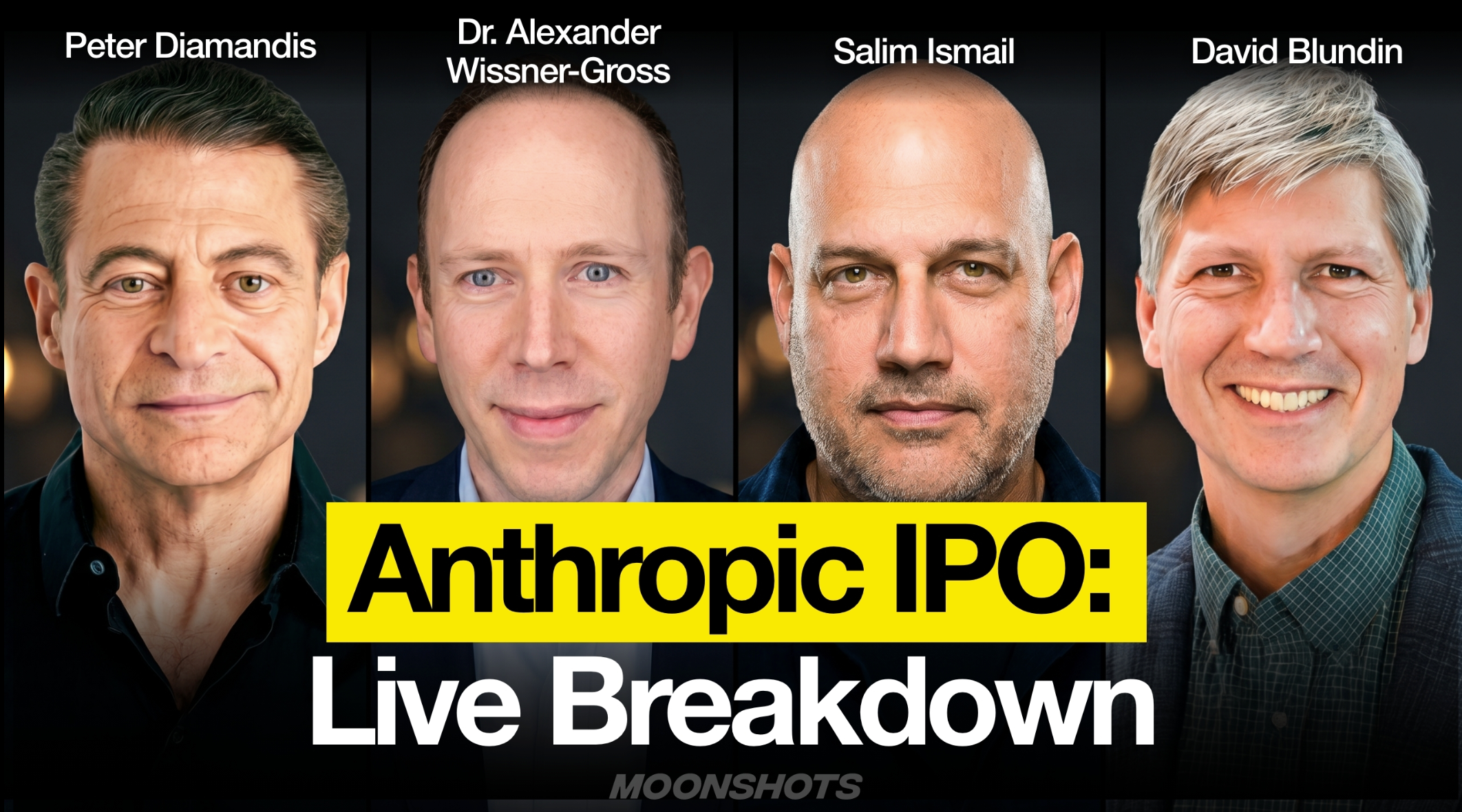
Anthropic の1.4兆ドルIPO:人類史上最大の富の創出イベントか
Moonshots with Peter Diamandis