
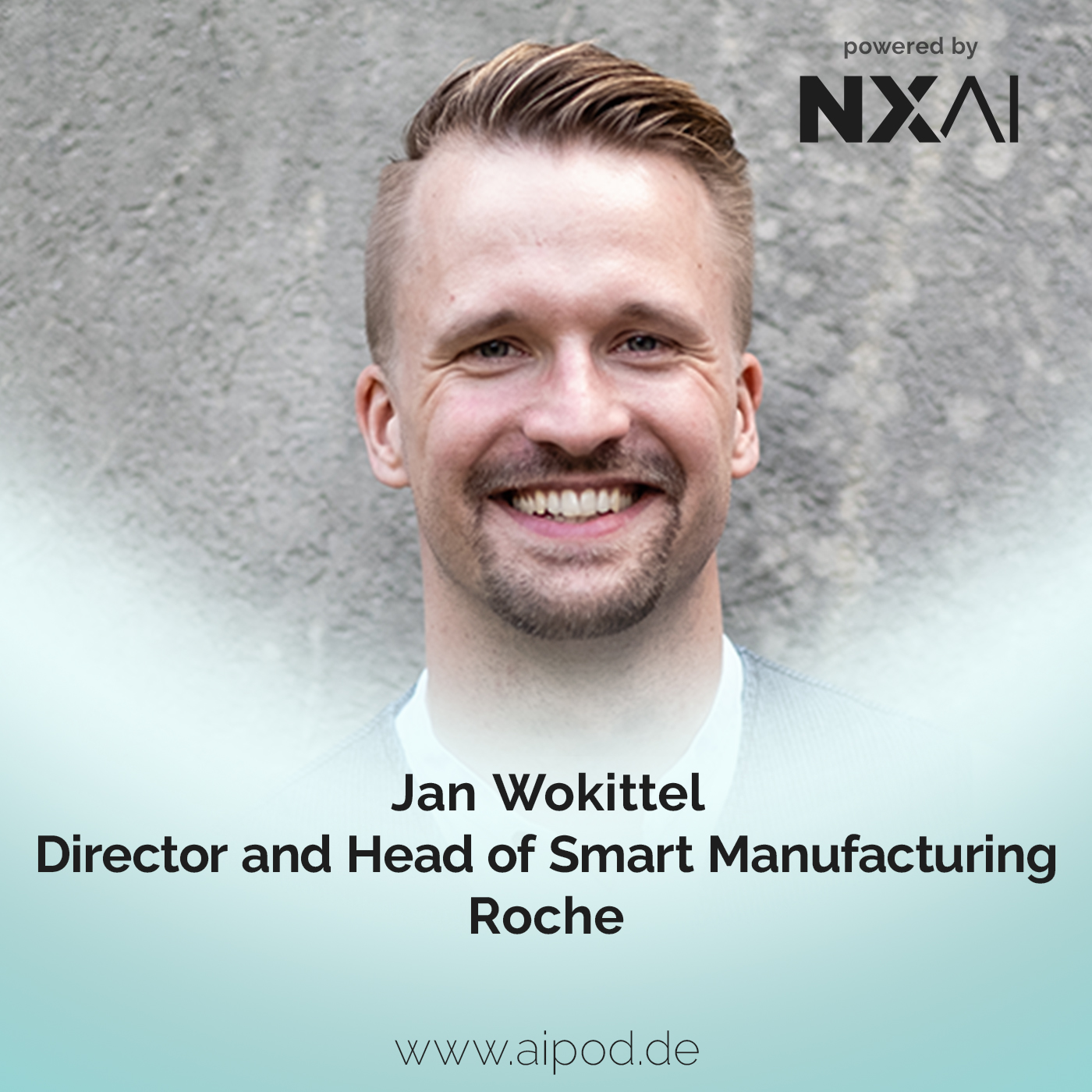
MCP、MHS、そしてオートメーションピラミッドの終わり?
Industrial AI Podcast
要約
Roche のスマートマニュファクチャリング責任者 Jan Wokittel 氏が、ISA-95 のオートメーションピラミッドが現代の製造には合わなくなりつつあると論じた。Anthropic の MCP と MHS が AI エージェントと実機を直接つなぎ、分析からコード生成、物理世界での実行までの閉ループを可能にするという見方を示した。AI によるソフトウェア開発コストの低下や、週末に作ったチョコレート工場の仮想ラインの事例、GxP 環境での検証の難しさにも触れている。
この回のポイント
- ●Jan 氏は、データが各層を順に通るピラミッドは「リスク低減優先」の時代の設計であり、層を足しても方法論は変わらないため最適な表現ではないと述べている。
- ●MCP はソフトウェア側の文脈付きデータを AI エージェントに理解させる仕組みで、Anthropic が 8 月に発表した MHS はそれをハードウェアへ広げ、物理環境での実行という欠けていた部分を埋めると説明した。
- ●MCP は Linux Foundation に移管されており、MHS も同様にオープン化されるとの予想を示した。無償であることが普及を早めるという見方だ。
- ●OPC UA や MQTT との関係は共存が基本で、既存設備(ブラウンフィールド)では並存し、新設(グリーンフィールド)では競合が強まると語った。
- ●Roche の GxP 環境では、AI の判断内容を把握せずに使うことは認められず、MHS の検証には時間がかかる。AI アルゴリズム検証の専門人材もいるという。
- ●AI でソフトウェア開発が劇的に安くなり、自動化ソフトの価値が下がる可能性を指摘した。自身は週末にオープンソースと AI エージェントで仮想チョコレート生産ラインを設計した。
章立て
ゲスト紹介とテーマ
Roche の Jan Wokittel 氏が自己紹介し、新しいオートメーションプロトコルとソフトウェアが主題だと示される。
ピラミッドは時代遅れか
IoT Analytics の Knut 氏による 8 層案を受け、Jan 氏は層を足しても各層を通る方法論が変わらず、柔軟性の要請に合わないと述べる。
MCP と MHS の役割
MCP は plug and produce を支え、MHS は AI エージェントがラボ機器を制御するための標準として生まれた。分析から実行までの閉ループが焦点となる。
OPC UA・MQTT との関係
導入の容易さを軸に比較し、ブラウンフィールドでは並存、グリーンフィールドでは競合すると見通す。
検証と機器メーカーへの助言
GxP での検証の難しさを説明し、機器メーカーには Anthropic などの部外者と組み、まず小さな一歩を踏み出すよう助言した。
ソフトウェアの価値とチョコ工場
リバースエンジニアリングや AI 開発でソフトの価値が下がる可能性を論じ、週末に作った仮想チョコレート工場の事例を紹介した。
Jan 氏の一日
Roche の大型設備投資でのデジタル成熟度への責任、チームのリード、VDI での活動、ゲームなど仕事と私生活が語られる。
解説記事
Roche でスマートマニュファクチャリングを統括する Jan Wokittel 氏が、Industrial AI Podcast でホストの Peter Sieberg 氏と対談した。テーマは、ISA-95 のオートメーションピラミッドは役目を終えつつあるのか、そして Anthropic の MCP や MHS が産業オートメーションをどう変えるかである。後半では AI による開発コストの低下と、週末に作った仮想チョコレート工場も語られた。
ピラミッドはなぜ合わなくなったのか
きっかけは、IoT Analytics の Knut Lasse Lüth 氏が ISA-95 に層を追加し、全 8 層(ナレッジグラフ、インターフェース、エージェント、アプリケーションなど)としたことだ。Jan 氏はこれに対し、層を足しても「データが各層を順に通る」という方法論は変わらないと述べる。
ピラミッドは一度構築すれば 10 年動かす、というリスク低減重視の時代の発想だという。製薬では分子開発が短期化し、製造側にもより短いサイクルでの柔軟な変更が求められる。AI で PLC や機器に直接アクセスしたい場面では、ERP を経由するのは意味がないとも語った。Unified Namespace に見られる疎結合の流れも同じ方向だという。
MCP と MHS:分析から実行までの閉ループ
Jan 氏の説明では、MCP はソフトウェア環境の文脈付きデータを AI エージェントに理解させるプロトコルである。フロントエンドのデザインフレームワークが MCP に対応していたおかげで、エージェントが部品のデザインを把握して Web サイトを作れた、という自身の例を挙げた。
MHS(Model Hardware Standard)は、Anthropic が 8 月に発表したもので、同じ発想をハードウェアに広げたものだとされる。Genentech のラボとの PoC から生まれ、機器ごとにプロトコルが異なるラボで AI エージェントが機器を制御する課題に応えるという。AI は温度値だけでは不十分で、それが流体のものか機械のものか、どんな操作に結びつくかという文脈が必要だと強調した。
Jan 氏は、AI エージェントの強みを「データ分析」「仕様作成」「コード作成」と整理し、MHS が最後の「物理環境での実行」を埋めると見る。実行結果を再び分析し自己調整する閉ループが成り立つ。Siemens や ABB ではなく業界外の企業が作った点が破壊的だとも述べた。MCP は Linux Foundation に移管済みで、MHS も同様になると予想し、無償であることが普及を加速させるという見方を示した。
OPC UA・MQTT との関係
Jan 氏は評価軸を「使いやすさ」に置く。OPC UA は一度構築して長く使う時代の設計で、導入負荷が大きい。MQTT は専門家でなくても設定しやすい。MCP なら数行のコードで接続でき、MHS にも同じ手軽さを期待するという。ビジネス側から見れば、ユースケースの立ち上げに数週間かかる現状は許容できないと語った。
ただし二者択一ではない。既存設備では OPC UA の資産を捨てる事業上の理由はなく、MHS は横に並ぶ形になる。新設プラントでは機器ベンダーに MHS のようなプロトコルのネイティブ対応を求める議論が増えており、そこでは競合が強まるだろうという。Anthropic や NVIDIA のような企業が、大手オートメーション企業を介さず機器メーカーに直接働きかけている点も、顧客として歓迎しつつ、従来の仲介層には脅威だと述べた。
検証という壁と機器メーカーへの助言
課題として最初に挙がったのは検証だ。医薬品の製造に関わるハード・ソフトは GxP の下で適格性評価とプロセスバリデーションが必要で、AI がコードレベルでどんな判断をしているか分からないまま使うことは許されない。MHS の検証にも時間がかかるはずで、Roche には AI アルゴリズム検証の専門人材もいるという。
機器メーカーへの助言は、Anthropic のような部外者と組むことだ。そうしたエンジニアは「過去のやり方」にとらわれないという。ある機器ベンダーの幹部から「本当に今必要なのか」と問われて驚いた体験を紹介しつつ、パートナーシップで取り組み、FOMO に流されず小さな次の一歩を考えることを勧めた。
ソフトウェアの価値は下がるのか
後半は、AI によるソフト開発の変化である。Jan 氏はゲームのリバースエンジニアリングや、Microsoft Office を Linux で使えるようにした GitHub リポジトリの話題から、2014 年に自身が 5 年かけたスタートアップのソフトを、今なら 1 週間で作れただろうと語った。ハードウェアメーカーが「ソフトを売れ」と言われてきた経緯を踏まえ、ソフトの価値が下がる影響は大きいと見ている。社内データから 6,000 ユーロ分のトークンでデジタルツインを作った例も挙げた。
週末には、オープンソースと AI エージェントで仮想のチョコレート生産ラインを設計した。要件定義、3D 可視化、ドキュメントをコードとして扱い、Git ワークフローで製造計画を回すという構成で、3D のフライスルーまで作ったという。通常は数年かかる平面図や P&ID の検討を、検証済み設計に進む前の仮説検証として数日に縮められる、という主張だ。投稿後にはスイスとドイツのエンジニアリング会社から、実ラインでの同様の試行の連絡があったという。
まとめ
本回の主張は一人のゲストの見方であり、MHS の標準化やガバナンスはまだ未成熟だと本人も認めている。それでも、AI エージェントが実機を扱うようになれば、階層型アーキテクチャや従来のオートメーションベンダーの位置づけは見直しを迫られうる。日本の製造業にとっては、既存の OPC UA 資産と新プロトコルの共存、GxP などの規制下での検証、開発コスト低下を前提にした戦略という三点が注目点になるだろう。
文字起こし(英語・自動生成)
This podcast is presented by NXAI, your partner for Time Series Foundation Models and Physical AI. Hi there, welcome to a new episode of the Industrial AI Podcast. My name is Peter Sieberg, I'm your host, and today I'm going to be talking to Jan Wokittel. He is the Director of Smart Manufacturing with Roche. Jan and I are going to be talking about new automation protocols and also in addition later on about new automation software. Hi Jan. Hi Peter. Thanks for having me today. You are very welcome. Please introduce yourself to our listeners. My name is Jan. I am an engineer from background. I work in Basel in Switzerland at Roche. We are one of the world's largest pharmaceutical companies.
And in my day-to-day business, I think about how we apply new digital and technologies within our manufacturing area. And, yeah, create a good business case out of that, I would say. So it's quite cool actually work in that time because I have the possibility of learning new things, dive into new tech solutions, but on the other hand also figure out how it makes sense to apply those technologies and really make a difference. Sounds good. And there's many opportunities these days within the digital, within the AI world, I guess, also specifically as they touch on industrial manufacturing, right? So, yeah, you already gave an introduction into your company and into the role that you have. We're going to get into details a bit later and also feel free to give examples of, you know, where you see, where you apply your thoughts with regards to the digital manufacturing.
But I think it's okay to just jump into our topic. It was a couple of weeks ago that Knut Lasse Lüt, he's the CEO of IoT Analytics, he announced new layers to the ESA 95, ISA 95, the famous automation pyramid, which describes how industrial software is organized, which originally is like PLCs at the bottom going north, SCADA, MES, ERP, And Knute sees eight layers. I'm not going to go through all of them, but roughly reshuffling the bottom and adding four new ones. Number five, knowledge graphs, ontology, six interfaces, which we are going to be talking about more like protocols, MCP, A2A, MHS, seven agents, and then number eight, applications, people. And you and I on LinkedIn, separately from each other, we agreed that the pyramid may not be the best way to represent industrial automation anymore.
So please, let's go into our topic, share with us your experience with the pyramid and also your perspective on Knut's proposal. Yeah. So this was a funny situation. And it was not only you reaching out to me and ask for a bit more context. and I think for our audience I think everyone knows these famous ISA95 pyramid and with all the layers you just mentioned but I think it's more than 10, 13 years old by today I think and this pyramid comes from an area where every layer was connected to the layer on top and the data from the moment of the birth of the data itself it just flows one way up to an ERP system, for example, in the past. But now the complete environment is changing. And with new capabilities coming up from AI, for example, you do not want to go through each of the layers down.
You directly want to have access on the PLC, on the equipment, for example. You do not want to streamline data through an ERP. This doesn't even make sense. So also with coming up with ideas like the unified namespace, everything is about decoupling. You want to be more flexible. You want to be more modular, not just on the production equipment itself, because you need to adapt your manufacturing process in much shorter cycles of time. But you also need those kind of flexibility on the automation backend. And the pyramid itself comes from an era where risk mitigation was most important. You set it up once and then the production runs for 10 years and you know, okay, this will work. This changed completely. And I see this also on our pharmaceutical area. In the past, we had been in the comfortable situation that the development of a molecule took longer than the manufacturing, the build-up of the manufacturing process itself.
So we had time on automation side and engineering side to figure out how we want to produce a molecule afterwards. Now, this changes completely. We will be able to develop a molecule in much shorter period of time, and we also need to have the kind of flexibility in our physical back end, let me call it in that way. And the pyramid was never meant to be for that. And I think we do not solve the problem just by adding new layers because the methodology is still the same. Every data point runs through each layer, whether it's to top or to the bottom. And this is why I do not agree that the pyramid is still the best way to visualize of what we are aiming for. Of course, I like to work in a visual way, so it makes it very easy for everyone to understand where you are and how you connect the dots. But like I said, the pyramid comes from a century where we do not need to be so flexible on our tech stack.
Okay, yeah, and I'm coming from a different perspective, and I'm going to come to that later, but basically you and I are in agreement, and I'm following what you're saying. But to be fair, and Klut, if you're listening, I'm going to give you the opportunity at some point in time to share your view as well. But now we're going to stay with your perspective, Jan. So tell us, we're going to be talking about what Klut refers to as well and, you know, what you have been working with or where you have a perspective on, which is what he calls interfaces, protocols, the new ones like MCP, A2A, MHS, etc. Maybe you want to remind each of us, so we're in the same picture, what they are, and then share your view on what these new protocols are going to potentially give us today and looking into the near future. So, at least everyone, I think everyone agrees that we need to have a certain level of flexibility and modularity.
What does it mean? I want to be able to adjust my manufacturing process much quicker and much more easier. I cannot allow it anymore that it takes me weeks and months to maybe just adapt little things. And this is where, for example, and we start with MCP, kicked into, it comes in the typical branding is plug and produce. You have a new equipment, you want to plug it into your network, your existing environment, and you just want to start to produce. And all the intelligence from automation side comes with MCP so that the environment directly understands, okay, this is equipment, this is what you can do, and this is how you can adjust parameters. All good. Now, the big difference to MHS, for example, which was announced by Anthropic in August. On my birthday, I recall. So if you want to know the next year when to say, oh, congratulations, Peter, it's exactly that day.
We're not going to call it out now, but yes, you're right, it's in August. And this came from a very interesting POC, Entropic Mate, with my colleagues from Genentech in the U.S. So MHP stands for Model Hardware Standard. And the challenge was that in a laboratory environment, we have a very heterogeneous landscape of equipment vendors in the lab space. And each of them comes, whether it's a proprietary protocol, a closed source one, whatever it is, it makes it very complicated to connect all the different setups within the lab. So now everyone is talking about AI and the capability it brings with it. So, we face the challenge, how could we enable the equipment itself being controlled by an AI agent? Now, when you have a bunch of various protocols in place, it's even harder because at the end, it's also about getting contextualized data.
And AI agents cannot handle just temperature value. It needs to understand how this temperature, how this sensor is based within the environment itself. So is it a temperature from a fluid? Is it from the machine itself? And afterwards also, what kind of actions can be triggered by a certain temperature value? So this is why the contextualized data is so important. And now when you vision this a bit in what does it mean coming from lab now to a production line, it's so cool that suddenly an outsider, I would say, like Antropics, they are good in AI now kicking into the automation space. And coming back to our automation pyramid, they do not care about the certain layers. They directly want to jump to the bottom and control things. And I think the disruptive element is here that the AI agent are very good at analyzing data.
The first pillar. Secondly, they write a specification. The third pillar is they are very good in writing the code. Everyone knows this. Now, the sweet spot comes into executed in a physical environment. And this is what makes it so interesting, because then suddenly an AI agent can close the whole loop, because afterwards it executed something, it starts again with analyzing the data, and then it adjusts itself, for example. or based on parameters you give it. And this is now the change to, for example, MCP, because MCP is not an AI agent. And I think we completely underestimate the importancy that it was not a Siemens or an ABV developed this. The biggest disruptions comes classically from outside an existing industry. So I'm very curious to see how this will end too. We are already in discussions, still in discussions with Antropic itself.
So based on our POC we had there and which was publicly announced in Genentech. And the vision also from Antropic is much broader. So it do not end with execute something in the physical world They also previously announced the dashboards etc So in the past every software vendors were good in hey I analyze data create a dashboard that it And suddenly you can close the loop and have everything in one environment controlled by agents. Let's make a short break here, Jan. These are all amazing topics, but each of them I want to discuss in more detail. And before I forget all the questions that I have. Yeah, just interrupt me. So what is your view then on this, independent of the layer, on the interfaces or let's call them more protocols, such as MCP and NHS? And maybe you want to remind us as you do that what each of them are so all the listeners are at the same level.
So when we start with MCP, which means modular context protocols, it gives an AI agent the capability to understand contextualized data in a software environment. Let me give you an example. Last week, I wanted to develop a new website and I wanted to use a dedicated front end framework. So and now I wanted to call my AI agent, use this framework to build my website. And the provider of the front end designs, they supported MCP. So now my AI agent was able to understand, OK, for the navigation bar, for the hero slider, whatever it is, I will use this kind of design. And this is how it will look like afterwards. So it makes it much more easier to understand contextualized information coming from a software environment. Now, the sweet move Antrofic made here is that they copied this and now tried to bring this up to the hardware side.
So now it's the model hardware standard. and the model hardware standard is like the latest piece they needed to close the circle. So why is it? Because an AI agent today is very good in analyzing a huge amount of data. Secondly, they are very good in writing the specification. Third, they write the code afterwards. Now, the missing piece until today was how we execute the code in a physical environment. So this is why they developed MHS. But I think the big disruptive element in comparison now to the classical vendors, whether it's a Siemens or an ABB, is that they also made this, or they will make this open source. They did it with MCP. So they are a huge company. So they have a lot of resources. They developed MCP. They made it open source. And now they hand it over to the Linux Foundation. So not a company is owning this anymore.
This makes it so much easier to apply this because not a certain company is owning it. I expect that they will do the same move with MHS afterwards. And so now what the market adoption typically is doing is once there is something for free, the adoption rate is much higher. And we saw this with MCP. Now every software vendor provides this natively. You do not have to pay for that, but you bring a very good level of new capabilities to the end user. Now, having this for robot manufacturers, equipment manufacturers, this is awesome. So I expect that there will be a lot of additional value at the end to the end users because it makes it so much easier to use whatever software front end you might have to interact with your hardware tech stack afterwards. Right. We're going to discuss the relation between, let's say, the new protocols and the existing, the old ones, the de facto standards in a moment.
One question I have is like MCP is, what did we say, how old? Maybe two years, maybe older. MHS is only now two months old, roughly three months old. is MHS to be regarded as an extension of MCP in the future if MHS will have had the same development of one, two years further development. Will the market only be using MHS or does it sit like on top or next to the MCP protocol? So I think it depends on the use case you want to develop. So when you just think about software to software connections, I think MCP is still the go-to point. When we now talk about physical AI is kicking in, and there you have suddenly software to hardware connections and vice versa, then I think MHS is still the go-to point. When you have a mix of both, then you complement it, but it depends.
Okay, yeah. Yeah, it makes a lot of sense. I guess I lost the thought of MCP. When it's software, yeah, maybe it doesn't make sense then to start working with a hardware protocol. So now let's look at what we have today, what we're going to have tomorrow, and let's see how we're going to do that. But I would like you to relate to MHS. Let's concentrate on that one. Two important OPC UA, they don't like to call themselves a protocol. They call themselves communication architecture, but also MQTT. So the graph that Entropic produced in their MHS announcement, you know the one I'm referring to, it shows an agent on one hand and then on the rest, on the right, there's all these different hardware entities. Now, this picture looks a lot like the picture that I produced. It must have been like 20 years ago, I think, in cooperation with Stefan Hopper, president of the OPC Foundation, with the difference that at that time, instead of MHS,
you know, it would say OPC UA, and we would call it the USB connector for software. You mentioned today also the term plug and produce. Now, the question is to you, what is different today? So what does MHS do that today neither NQTT nor OPC UA have been doing? Do they complement? Do they compete? Where do they sit? Similar to my question before. Or do they sit next to, does one sit on top of the other ones? And as you're giving your thoughts, again, feel free to explain from your perspective the difference between what is OPC UA and what is MQTT. So I think the big difference lies into the ease of use. Setting up an automation environment and a tech stack based on new PC UA is a big task, I would say. So when you just go through the handbook of OPC UA and then you compare it to MQTT, you will figure out what I mean with ease of use, just to understand this. Now, let's start with one topic, the comparison of OPC UA and MQTT.
Also, OPC UA comes from an era where you set up the whole automation cycle and then you rely on it for the next years. What makes it so interesting to have MQTT in place is that it's so easy also not being a certain engineering expert to set it up and work with that. So the ease of use is, I think, the critical element here. Of course, there are pros and cons. So there are certain use cases where OPC UA is still the better choice than MQTT. Also, when you afterwards run SQL request and so on, there are differences. Nevertheless, from what I know, and I'm coming from the business side, So being an engineer on business side, I'm just interested in how easy is it for me and how fast can I set up a certain use case, whether it's something with an AI agent, just a dashboard, just data analysis, whatever it is. but my biggest hurdle today is that it took me like weeks to discuss it with all my experts and engineers in place,
taking care of each of the layers just to set up and analyze this use case. And this is not applicable anymore, so I cannot allow it anymore from business side being so slow. And this is where now the attractive element, let me call it that way, comes from other protocols like MQTT. What I think is the complementing element of MHS, for example, is that the ease of use is the same as MCP. It just takes me like three lines of code to set up an MCP connection because all the contextualized data has already been done by my counterpart. With OPC UA, it's completely unimaginable doing this with three lines of code. and Antropic will now and this is what I expect and what I've seen is doing the same smart move on MHS side so when it's now easy to have a hardware connection just by certain elements of code
then it completely outperform classical protocols like OPC UA and I understand also the approach of the OPC UA let me call it foundation but the field of application was different. Set it up once and then run it for a lot of, for a longer period of time. For me as a business, modularity, flexibility and speed is the important element here and this does not come with what I've seen from OPC UA on the workaround which is needed. Now, does, therefore, does it sit, does something like MCP today and maybe MHS today or MHS as tomorrow, therefore sit on top or next to, let's say, with the example of OPC UA, isn't it so that there is already like an MCP server for OPC UA? I mean, the question being, so even the new, let's call them protocols, then MCP, MHS,
if they can find information that they need for their protocol, they will use it, I assume, right? So if there would be an OPC UA information model available for, you mentioned robots, for example, would they be using that information or the other way around? Would the OPC UA information model be interested, kind of, or the OPC Foundation be interested in making that information inside of the OPC UA information model available to these new ways of doing things? Yeah, so I would say that there's no black and white. There will be a time in between, especially when it comes to Brownfield application, where like MHS is just on top or sit beside. I would say it's sitting beside because in Brownfield, when it is working,
there's absolutely, I cannot imagine that there's a business case that you would get rid of the whole OPC UA foundation you already have. It absolutely makes no sense. So at the end, I need to find a business case for all the technologies. And therefore, I think you already mentioned this, the new capabilities will sit beside. This will change, I would say, for greenfield applications. So also what I see today is also in our discussions with equipment vendors, when we point out that modularity flexibility is key that we ask for natively support of for example protocols like MHS Because maybe it makes my engineering workflow the operations afterwards so much easier If I do not have to go through 100 lines of code, of course, it could speed up my engineering lifecycle. It depends, though it's not mature enough to answer this today. But I see that our discussions are shifting.
And I would say in Greenfield, you would more and more go to newer solutions, I would say. And then, of course, OPSUNA and MHS will compete there more. One question I have is like you talk about the lab. So there is a lab equipment. And was I correct in understanding that Antropic has actually been working with one of the lab equipment manufacturers? manufacturers. So are you involved in or it doesn't matter, are they your colleagues that are, you know, in charge of whatever equipment is in the lab, as well as in later on then producing some manufacturing machines? So the topic we're talking about applies to both sub-worlds of your organization, I guess, right? So because you can imagine there are some NDAs in place, I will try to answer this in the best way I can. What's very interesting is that a company like Antropic is reaching out to
hardware vendors to bring them on board like a grassroots approach. You overjump all the men in the middles like big automation companies and directly reach out to equipment vendors and propose your solution, which is afterwards free of use. So, of course, I can understand that then, for example, whether you come from lab or somewhere else and you provide certain equipment, that it's very interesting having those kind of partnerships in place. What we do as a company and we also, whether it's Antropic or, for example, also NVIDIA, Also, we have a public partnership in place, and everything is around this AI sphere. Those kind of tech companies more and more disrupt existing ecosystems, and they provide their solutions directly to the equipment manufacturers,
which is cool for me at the end as a customer because I get more capabilities. It's more disruptive for the classical man in the middle like we have today. Yeah, but can you say more generally speaking is like is the lab, so the lab equipment, so I guess a microscope is probably still, I don't know the details, is still maybe a typical kind of instrument in the lab. Is that, are the people in the lab kind of earlier on dealing with new technology rather than, you know, in the manufacturing? Maybe there's some kind of molding machine. or would you say, you know, the same? Or is it typically the lab first and then maybe a year later the manufacturing equipment gets involved as well? No, I would say it happens from what I see also then in our company at the same time. So in both worlds. And this is, I think, a cool thing because tech-wise,
it doesn't matter for a protocol if it's a microscope at the end or some other equipment. Yeah, yeah, right. Okay. Very good. And then there's even before what I thought very interesting. But if I don't forget, I get back to that at the very end, which is the molecule manufacturing, because that's where loads of things are happening with AI as well, right? But I'm not going to go there right now. And just to be sure, so you wrote all of these thoughts in a great article for our listeners interested. We're going to make a link to that. And in that article, you also relate to process industries, SILA, S-I-L-A-2, V-D-I-A, 62443, NAMURA 2658. I'm not going to go there right now, but for those listeners interested in your additional extended views in these areas, please go to the article and maybe you can contact Jan there directly. So I'm going to ask one more specific thing. So we heard a lot of good things about MHS here.
Is there any things that we still need to be careful about? What about safety, security, validation? Who is going to govern a standard written by an AI company? Yes, there's a big challenge we have in front of us. And this also especially relies to our industry in life science is the validation aspect. I think it's not that hard to reach out to a certain software vendor when you have a use case in mind and just install a new software. So very easy speaking. In life science, the biggest, the best business case comes with technology when you can use it in a qualified environment. So for the GXP use, what does it mean for our listeners who are not familiar with that? everything you use, whether it's hardware or software, in a production environment with a connection to the medicine you produce afterwards needs to be qualified and afterwards process
wise also needs to be validated. and when I had my first experience in life science I thought I was a bit naive oh this can't be so hard now after a couple of years I say okay this is really this is really the sweet spot when you made it happen and now just talking about MHS it will take some time being able also to validate this afterwards because we wouldn't be allowed and I completely agree with that just use AI without knowing what's happening on code level. So what kind of maybe decisions is the AI agent doing with an impact on my product afterwards? So and this will be a hard thing when you go to that kind of detail and level. And this is also why on business highs, we also have colleagues who are now specialized in just doing this, right? Just validating of AI algorithms. Okay, that's a big topic
And, you know, any interview I'm doing these days The next one I'm doing with Mohamed from Marsworks It's exactly the same topic of TÜV, TÜV, ZÜD, certified process You know, what can I say? And then there's questions like, sure, today it's the human What can the AI do? And in some months or years, who knows Can the AI overtake us? And are we going to be the bottleneck? I don't want to go there now. Maybe at the very end. We want to do so many things at the end. It will be a long end. Yeah, yeah, yeah. But my most very important part is if you, in life science, which is kind of very strongly related also to your medical world, I would guess, you know, medicine and stuff like that, if you find out how it works, then many, many, most of the other markets are going to be fine, right? Because, yes, I do understand that you are very, very, a lot more even strongly regulated than other markets.
So maybe then, before we get to these other additional thoughts, how would you bring this all together? What is your message you would give to any machine builder listening and maybe also to any standards folks listening today? For that, I would like to share a situation I found myself into a couple of weeks ago where also it was personally, I found myself in a meeting with one equipment vendor and I showcased our vision, what we want to do and why is it so important getting all the data directly from equipment and so on, which is much more than we had in the past when we wrote our retryments. And my counterpart answered, Jan, I understand that you want this because also everyone is talking about that. And when you go on fairs, you can see this. But do you really need to do this today?
And I was a bit surprised. And I said, yes, yes. Yesterday. Yesterday, yes. So why is it already there? And this surprised me, honestly, because this was also the position was the chief digital officer. And I thought, how did that happen? So I think it's not that hard what I'm asking for when I talk about open interfaces and so on. But I figured out, okay, this is not that common when you are a hardware provider. so my advice here would be be very curious and also work with like outsiders in the space like an anotropic or so on right just to get those kind of experiences and I can share that those engineers are very naive so they do not care and you said this of how it was done in the past they just think about how it can be done in the future with the use of
the new technologies and it's very important to speed up here and just be open and directly think about how could we make this happen and I also would invite and this is also what we are doing to think on that in a partnership, right? It's not that I'm just asking for that on the customer side. I'm also very willing to figure out how this can work in the future and I think everyone is a bit of now also with AI in this formal mood, right? Fear of missing out something, right? But also at the end, be a bit of grounded. Okay, what does it mean for me? And what could be the next little steps? Because otherwise you're just lost and you won't go anywhere. Sure, yeah. I strongly support your perspective here. But there's always going to be people that are, you know, a very high level of pace. I believe I myself am one of those. and other people are more like, oh, not too fast.
But nevertheless, we see things changing. Let's thank you for that. Let's spend five minutes on the second piece, which I really just added as I was reading through other things that you're doing. So when Knut Lasse proposed the layers, my reply at that time was a little bit more forceful. Like many times I said, you know, the earth is flat. We don't need layers at all. nevertheless very similar maybe to you and and that was part of my hypothesis couple of weeks back like like software is that meaning you know you're just going to ask your llm your ai and you expect results it's more like this results on the fly kind of thing but we're not here for my thing here but the reason i mentioned it is that then i saw that you were also writing about the value of software and how that is changing. Tell us what is your perspective on that Maybe it does relate to our main topic today Maybe it a little bit separate but what is your perspective there It a good point and I think there also a connection to what we discussed previously
It all started when, and I'm a gamer, for those of you who do not know me, so I really like to game. And I found a game which is a combination of two, and I thought, what is that? So suddenly I was able to play a shooter game in Minecraft. So in Minecraft, everything is about creativity, right? You have blocks, you build something. 90% of our listeners will know Minecraft. And then suddenly they adopted a shooter and set it up in Minecraft. I was like, what is that and how was this done? And then I came to the topic of reverse engineering. And in reverse engineering, then with AI agent, it was then much more easier to reverse software. And a software can be a software we use in business context or in my space, it was a game. And then I thought about this and this drove me curious. And then I also tested this out and I found then also online in some GitHub, trending GitHub repos,
that someone reversed engineered the whole Microsoft Office suite and then suddenly it can be used on Linux. And this was mentioned a couple of times in various newspapers. And then I thought about my time back when I owned a software startup in 2014 and we invested all our money in software development. And now having those kind of AI capabilities, I would have been able to develop this software in one week. what we invested five years for that. I said, by yourself, yeah. By myself. I said, what the fuck? This is so easy. And this is very disruptive. And then I also thought about, now software does not end in a game or in some kind like business solutions. There will be people to also think about, why should I pay, for example, so much money for an automation software? Why should I do this? And on a fair two weeks ago, I met someone from Open PLC, the Open Software Suite.
And I think this will be more and more important also in business context and also now in our context here today in automation, that in the past hardware manufacturers were told like, think software, so what can be your business case in the future? So they develop their own software. And then now suddenly after years of telling everyone needs to sell software, It's so easy for everyone actually to develop software for low cost or even reverse engineering this. And this is why I think it will be a big change for the industry when the value of software is not that high anymore, when everyone can do this. And also I like examples. One example from my ecosystem is that he created a digital twin just by the data we already had in the company. So in our department, and this was like a wow moment also because it just took us like 6,000 euros of token.
And then afterwards, we had a digital twin of our home facility. This is the disruptive, what I mean, the change of value of software. And I think for also our listeners, when you are in that space, I think it's very crucial to think about that. So how do these ideas that you have relate to the Chocolatary Choketel AG in Appenzell? Yes, so this was also an idea of mine. I had a bit of free time during the weekend and I wanted to test all of that. And I would describe myself as a very curious guy to test this out. And of course, because of IP reasons, I wouldn't be allowed to do this in a life science pharmaceutical space. And then I thought, okay, Switzerland, connection, chocolate. Chocolate, number one, yeah. Yeah. So let's make a chocolate line. And then I set up the environment, and I'm also a big fan of open source, and I wanted to prove and test if I could develop this just by using open source solutions.
And I set up my agents, my environment. I figured out what kind of tools do I want to use, also which I already know from automation and so on. Also visualization, 3D elements. Yeah, and I wrote the requirements. So how should a chocolate factory look like? And I wanted to challenge an assumption I had that with all the capabilities coming up from AI, that I can test new ideas much more quicker than I know how it's done today. What does it mean? Today we define a manufacturing line, a facility, and during the design process, We come up with new ideas, but then it maybe takes like three to four years to create a new floor plan, a new P&ID schema and so on. And I wanted to showcase that I can speed this up tremendously by using these capabilities. And I set up some guardrails like a document is code, so there are no physical documents anymore.
Also for validation, I want to run a Git workflow in a manufacturing planning process. And it was very successful. And I was so surprised that I showcased this Sunday evening to my wife. And she was like, what are you doing? Please, you do not want to go into the chocolate space, do you? And I said, no, but look what I have. And I was able to showcase her a fly-through, a 3D model of a complete autonomous chocolate line. And I was completely, yeah, mind-blown for me because I thought, okay, this is a big disruptive to how I know today how we run these engineering processes. And also then just test new assumptions. So it wouldn't take you weeks to test new assumptions to figure out where you want to go to. And I think this is a cool thing because by using these new technologies, you can do this within days before you invest much more, of course, in a validated floor plan design.
I totally agree here. Yes, and fun fact, when I posted this, an engineering company from Switzerland reached out to me, and they sent me a screenshot of a real production line in manufacturing, and they validated my approach and my process and said, yes, we tested this on a real line in our test environment, and it would be possible we will reach this out. And then one week later, an engineering company in the northern of Germany, they reached out and said, we are the ones designing those kind of line designs. And we also read this and here's the screenshot from our test. Okay, this was fun. And yeah, also next week I will have a bigger presentation just on this approach, right? And how this might can change and speed up our engineering processes today. It's amazing. Yeah, we had Torsten from Bosch building a robot in his spare time, a couple of months. We have you, Jan, building a chocolate factory in your spare time.
I think you needed less time than a month, maybe over a weekend. I think these are wonderful, great examples for any of our listeners, what each of you can be doing yourself as well, right? And I think it's a marvelous, great approach. And it's perfectly okay if you then come back to the office and you share this, that people are saying, oh, but what about the validation? and we did talk about that. So it's not saying like we're doing this from today to tomorrow, but it's really very, very impressive what is possible. Jan, as a close off, tell us a little bit when you're not building chocolate factories in your work, how does a day in the life of Jan Borkittel look like? Where are you based? You know, your colleagues, what are these, how does it look like? Very interesting question. So you're the first one asking me this. So a typical day looks like that. Like I told, I work in Basel in our headquarter from Roche.
So there I have one part of my team. I also have colleagues reporting to me in the U.S. So I lead a very multicultural team from about 20 internals, roughly. and my day is like I try to, on the one side, try to figure out what might be a disruptive element for us in the future. I'm responsible for our digital maturity level in all our new big CapEx investments. So like publicly announced, we built a new chemical production in Basel, a new drug product site in Shanghai, new site in North Carolina and in Hillsborough as well. So when someone wants to know what are we doing there with digital data and AI, this ends up in my team, who I'm also very proud of to have those kind of, I would say once in lifetime opportunity, right?
Because it's a time now where Roche actually invests so much money. and my day looks like what can be, like I said, the disruptive element and what could be the business case on our side. Does it make sense to invest there? If yes, how could the next steps look like? So this is content-wise a typical part of my day. On the other side, I try to invest more time also in my people-leading role, like to inspire others, right? I really like this, and this is why also I use my spare time to figure out some new elements and try to connect this to my business life or maybe the business life of my colleagues, just to be a bit more visionary and inspire them and maybe just change a bit the ways of working and, yeah, also leverage certain kind of capabilities. And then after such a day, I'm also a member of the board of the Association of German Engineers.
here in the southern part of Germany, where I try to communicate to young people, jump in a technical job, and convince them that this is also something cool, working in such a tech environment. We work with universities and schools, and this is what I'm doing on a volunteer side. And when I'm not doing something like that, I have a lovely family, and like I said, I'm a gamer. and maybe I have 30 minutes a day where I can still game and lost myself a bit in these imaginary worlds. Sounds great. Thank you very, very much. Thank you very much for stimulating. As you say, you like doing that. You can hear that you like doing that. Good luck with all your thoughts within the digital manufacturing space in a life science environment and even more good luck with the chocolate factory. If it ever is going to go live, let me know.
We're much looking forward to be tasting it. Thank you very much, Jan. Thank you very much, Peter. Thanks. Bye-bye.
番組の概要欄(原文)
Is the traditional automation pyramid becoming obsolete? And what happens when AI agents can directly interact with industrial machines, laboratory equipment and production systems? In this episode of the Industrial AI Podcast, host Peter Sieberg welcomes Jan Wokittel, Director Smart Manufacturing at Roche, to explore how artificial intelligence, open standards and new protocols could fundamentally reshape industrial automation. At the center of the discussion are Model Context Protocol (MCP) and Model Hardware Standard (MHS), two emerging approaches that could enable AI agents to move beyond analyzing data and generating code toward interacting with physical equipment. Jan shares insights into Roche's experience with emerging AI technologies, including discussions with Anthropic and the potential implications for established automation ecosystems built around OPC UA, MQTT and traditional industrial software. In this episode: The end of the automation pyramid? Why traditional hierarchical architectures may no longer meet the demands of modern manufacturing. MCP and MHS: How new interfaces could connect AI agents with industrial hardware. Anthropic versus traditional automation: Why AI companies could challenge established players such as Siemens and ABB. Closing the loop: How AI agents could move from data analysis to executing actions in the physical world. The future of industrial software: Why AI-powered development and open-source technologies could dramatically reduce software costs. From concept to factory: How Jan used AI agents to design a virtual chocolate production line over a weekend. Safety and validation: Why regulated pharmaceutical manufacturing presents particular challenges for autonomous AI systems. One of the most provocative questions of the conversation: What happens to the value of industrial software when AI makes developing it dramatically faster and cheaper? A conversation about the future of manufacturing, the growing influence of AI companies on industrial automation, and why machine builders may need to rethink their technology strategies. Guest: Jan Wokittel, Director Smart Manufacturing, Roche Host: Peter Seeberg, Industrial AI Podcast Presented by NXAI — Your partner for time-series foundation models and Physical AI.
出典・この記事について
- 番組
- Industrial AI Podcast(Robert Weber / Peter Seeberg)
- 元の回
- MCP, MHS and the End of the Automation Pyramid?
- 配信日
- 要約作成日
- 公式サイト
- www.aipod.de
この要約・解説記事は、元の音声を文字起こしした内容をもとに AI(Claude)が日本語で作成したものです。 固有名詞や数値に誤りを含む場合があるため、正確な内容は元の音声でご確認ください。制作方法について
関連エピソード

人間はAIエージェントとどう協働するか — Atlassian CEO マイク・キャノン=ブルックス
Big Technology Podcast

NetDocumentsのHeath Harris氏が語る「タクソノミーこそAI戦略」――最終的に勝つのはデータ
LawNext

個人創業者として戦うトークン詐欺の実態と対策
How I AI

エンタープライズAIはなぜROIを出せないのか|DevRev CTO Ahmed Bashir
Eye On A.I.
私たちのパッケージはすべて奪われた:AIエージェント時代のサプライチェーン攻撃とSocketの対策(Changelog Interviews #690)
Changelog Master Feed

SE 33: John Bruce(OneDigital 人材イノベーション&テクノロジー担当VP)|Workday Rising 2026 会場からライブ
AI and the Future of Work: Artificial Intelligence in the Workplace, Business, Ethics, HR, and IT for AI Enthusiasts, Leaders and Academics