
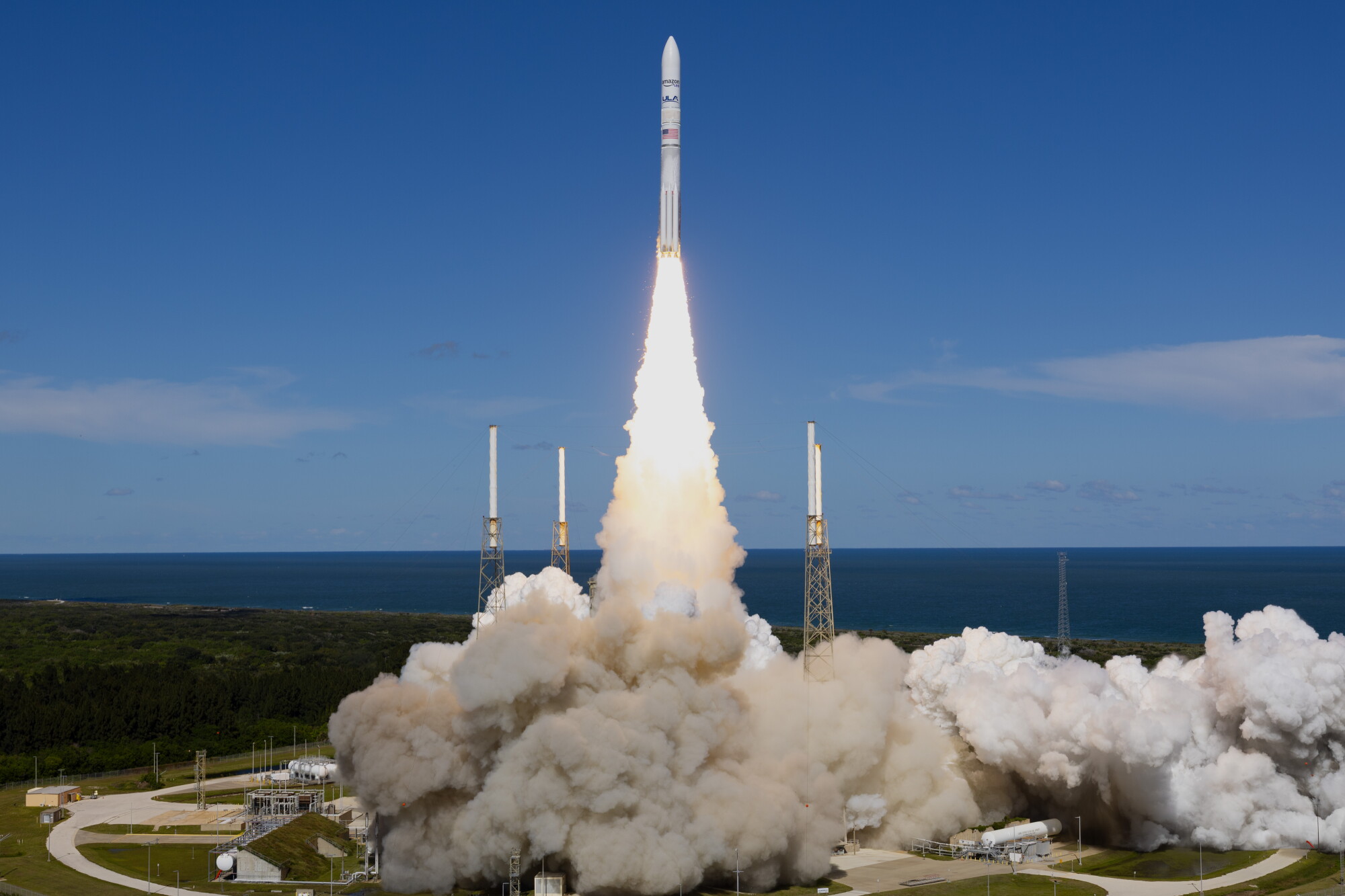
Starshipは上段回収に成功、Vulcanは納品に失敗――明暗分かれた2機のロケット
Starship gets a catch. Vulcan misses a delivery. A tale of two rockets
Starshipは上段回収に成功、Vulcanは納品に失敗――明暗分かれた2機のロケット
Are We There Yet?
要約
ULAのVulcanはAmazonの衛星40基を軌道に届けられず、ブースターの性能不足が原因とみられている。元宇宙産業幹部のDale Ketchum氏は、ULAとAmazon、さらに打ち上げ業界全体への影響を語った。一方SpaceXはStarshipの第15回飛行で上段の回収に初めて成功した。Ars TechnicaのEric Berger氏は、その意義や今後の開発、同社の長期目標の変化を解説した。
この回のポイント
- ●VulcanはAmazonの衛星40基を搭載していたが、飛行中に異常が発生した。ULAは約10分でテレメトリを失い、ブースター性能の低さで上段と衛星が低すぎる高度で切り離されたとの予備的見解を示した。
- ●Ketchum氏は、VulcanはULAの事業そのものだと述べる。BE-4エンジンが原因なら、Blue OriginのNew Glennやアルテミス計画にも波及すると指摘した。
- ●Amazonの衛星網はFCCの要件に照らして展開が遅れており、Vulcan、New Glenn、Ariane 6が飛べない現状ではFalconに頼らざるを得ないという。
- ●SpaceXがStarshipに集中することで、小型衛星事業者や国家安全保障分野が単一事業者に依存するリスクが高まるとの懸念が示された。
- ●Starship第15回飛行ではStarlink衛星を搭載し、上段を発射塔のアームで初めて回収した。ブースターは推進剤の残量が想定より少なく、回収を中止して海上で爆発した。
- ●Berger氏によれば、Starshipは約3週間に1機のペースで製造されている。フロリダからの初打ち上げは2027年1〜3月ごろと見られ、長期目標は火星有人飛行から宇宙データセンターへ移りつつあるという。
章立て
Vulcan打ち上げ失敗の概要
Amazon衛星40基を運ぶVulcanが異常で軌道到達に失敗した。ULAはブースター性能の低さを示唆し、FAAが調査を監督する。
VulcanとULAの位置づけ
Ketchum氏が、VulcanはULAの事業そのものだと説明する。過去の高い信頼性との落差と、原因がBE-4エンジンだった場合の波及も語られる。
Amazonと業界全体への影響
Amazonの衛星網の遅れとFCC要件、他ロケットの停滞、SpaceX依存の高まりが議論される。
ULAの評判は回復できるか
打ち上げ需要が強いため、ULAは致命傷を免れる可能性があるとの見方が示される。
Starship第15回飛行と上段回収
Bergerが現地の様子を語る。ブースターは推進剤不足で回収を中止して爆発し、上段は初めて塔で捕獲された。
飛行の成果と耐熱シールド
Starlink衛星の展開などロケット性能は良好だった。損傷は想定内で、耐熱システムの改良が再使用の鍵とされる。
アルテミス計画とフロリダ打ち上げ
月着陸に必要な打ち上げ頻度の向上、フロリダからの初打ち上げの時期見通し、3週間に1機という製造ペースが語られる。
SpaceXの長期目標の転換
火星有人飛行から、軌道上データセンターへと重点が移りつつあるという見方が示される。
解説記事
United Launch Alliance(ULA)のVulcanロケットがAmazonの衛星40基を軌道に届けられなかった一方、SpaceXはStarshipの上段を初めて回収した。ラジオ番組「Are We There Yet?」は、この明暗を元宇宙産業幹部のDale Ketchum氏とArs TechnicaのEric Berger氏の話で振り返った。
Vulcanの失敗とULAの苦境
ULAによると、打ち上げから約10分でテレメトリが途絶えた。予備的な調査では、ブースターの性能が低く、上段とペイロードが軌道に届かない低い高度で切り離されたことが示唆されている。調査はULA主導で、FAAが監督する。
Berger氏はこれを「ULAにとって monumental な後退」と評し、Blue Originとの差がさらに開き、Relativity Spaceのような企業に役割を奪われかねないと述べた。Ketchum氏は、ULAはDeltaを退役させAtlasも残りわずかで、Vulcanに事業を賭けていると指摘する。過去の飛行ではサイドの固体ブースターに問題があったが、それが分離した後だったので皆が安心していたという。
原因次第で広がる波及
Ketchum氏は、現時点では推測にすぎないと断ったうえで、ブースター側の不具合の可能性に言及した。もしBlue Origin製のBE-4エンジンが原因なら、同じエンジンを使うNew Glennや、アルテミス計画にも影響が及ぶ。上段のCentaurはSLSの上段にも使われる系統だと述べ、どちらが原因でも影響は広いとした。
Amazonと打ち上げ市場への影響
最大の被害者はAmazonだとKetchum氏は見る。同社のLEO衛星網は、Starlinkに対抗するための容量確保が急務だ。FCCの免許には一定期間内に所定数の衛星を軌道に載せる条件があり、数でも規制面でも遅れているという。代替のNew GlennやAriane 6も飛べない状況で、定期的に飛んでいるのは実質Falconだけだと述べた。
さらにSpaceXがStarshipに集中してFalcon 9を縮小すれば、選択肢の乏しい20年前に逆戻りしかねないと警告した。特に打撃を受けるのは、Falconの低コストで成長した小型衛星事業者だという。国家安全保障やNASAも単一事業者に依存するリスクを抱えるが、現状ではSpaceXだけが成果を出し続けている、とも語った。それでも打ち上げ需要は強く、ULAの評判が回復不能になるとは限らないとの見方だった。
Starshipが上段回収に成功
第15回飛行でSpaceXは、Starship上段をテキサスの発射塔のアームで捕獲した。Berger氏は現地で、雲の切れ間から機体が現れ、水平姿勢から大きく向きを変えて捕獲される光景を印象的だったと語った。ブースターのSuper Heavyは、推進剤が想定より少ないとのMusk氏の説明で回収を断念し、海上で爆発した。ブースターのエンジンは30基超が失われたが、重大な設計欠陥ではなさそうだとBerger氏は見る。
Starlink衛星を搭載した運用飛行としても意義があり、Falcon 9の約1か月分に当たる打ち上げが1回でできる点を挙げ、収益化が始まったと評価した。機体の損傷は固定部の摩擦によるタイルの傷みで想定内とされ、耐熱システム(TPS)の改良が迅速な再使用の最大の課題だという。
今後の見通しと長期目標
月着陸には月次、さらに週次の打ち上げ頻度が必要になる。次の節目はフロリダからの初打ち上げで、Berger氏は年内は難しく、2027年1〜3月ごろが妥当と見ている。Starshipは約3週間に1機のペースで製造されており、工場は3日に1機も可能な規模だという。
長期目標については、ここ12〜18か月で火星有人飛行から、地球の計算需要の大半を軌道上のデータセンターへ移すという構想へ重点が移ったとBerger氏は述べた。課題は多いが、今後5〜10年の野心的な目標だという。
まとめ
今回の2つの出来事は、打ち上げ市場がSpaceXに集中している現状を浮き彫りにした。日本の読者にとっては、Vulcanの原因調査の結果が、BE-4エンジンを介してNew Glennやアルテミス計画にどう響くかが注目点になる。衛星コンステレーションや宇宙事業の計画では、打ち上げ手段の分散が引き続き課題になりそうだ。
文字起こし(英語・自動生成)
Starship gets a catch, Vulcan misses a delivery, a tale of two rockets. You're listening to Are We There Yet, the radio show exploring space exploration. Hi, I'm Brendan Brown. United Launch Alliance's Vulcan rocket failed to deliver its payload on Sunday. The rocket was supposed to deliver 40 of Amazon's satellites into orbit, but couldn't after there was an anomaly during flight. It is a more meaningful loss because of the nature of the investment that ULA has in this vehicle. We'll speak with Dale Katcham, a former space industry executive, about the lasting impact of the mission's failure. Then, SpaceX successfully caught the upper stage of this massive Starship rocket, another big step in the development of the vehicle. SpaceX has this ability to do the unexpected thing with rockets. We'll speak with Ars Technica's Eric Berger about this milestone and the future of Starship's development. That's ahead on Are We There Yet? Back in February, United Launch Alliance's Vulcan rocket was grounded due to anomalies with one of its booster's nozzles.
The tech issue kept Vulcan from flying until recently when ULA launched a mission Sunday to deploy 40 satellites for Amazon's internet constellation into orbit. But that mission failed to deliver those satellites. In a statement Tuesday, ULA said it lost telemetry about 10 minutes into the flight. A preliminary review points to low booster performance, which means the upper stage and payload were released when the vehicle was too low to reach orbit. The FAA will oversee the ULA-led investigation. I spoke with Ars Technica's Senior Space Editor, Eric Berger, about what this might mean for ULA. Well, obviously this is a monumental setback for United Launch Alliance. I mean, it was already clear that they had faded as being a critical launch company for the future of the United States. This just sets them back behind Blue Origin further and potentially allows a company like Relativity Space to come up and kind of claim a really important role. So it's hugely detrimental to the company. The mission was the first of 38 that ULA had planned with Amazon and its Vulcan rocket to deliver these satellite payloads.
So what does this recent tech issue mean for the future of Vulcan and Amazon's ambitions to create an Internet satellite constellation to compete with SpaceX's Starlink? Well, here to answer those questions is former space industry executive Dale Ketchum. And note, we recorded this conversation on Monday before ULA released more details of the investigation. Dale, welcome back to Are We There Yet? Glad to be here. Hey, Dale, before we get into the Vulcan anomaly, let's talk a little bit about Vulcan itself and just how important it is to ULA's business model. What is Vulcan and why was ULA developing it? Well, Vulcan is ULA's business model. They have retired Delta. I think they may have a few more atlases, but they bet the farm on Vulcan, and it's got to work. One of the tragic things is it has been a very, very long time since ULA, with either Delta or Atlas, had a complete boost or failure. The Atlas in particular was famous for being immensely reliable.
That reliability has been dwarfed now by Falcon 9, but they were rightfully very proud of the number of Atlases they had that successfully executed the mission. So this is a real blow because the expectation was, I'm sure I, along with everybody else, felt very comfortable when the solid boosters fell away because that had been the source of the problem for the last two flights. The missions were successful, but they had problems with the boosters. So when the boosters fell away, it was a lot like when we had returned to flight after shuttle and you get to see the boosters fall away, everybody breathes a sigh of relief. So the fact that it failed shortly thereafter is a disappointment to everyone. There were those issues with the boosters before, right? And, you know, there's now this anomaly that failed to get the Amazon payload into orbit. As you mentioned, this is a new vehicle.
Is this part of the growing pains of a new rocket, Or is this something more tragic because this is all ULA has? We don't know yet. It is a more meaningful loss because of the nature of the investment that ULA has in this vehicle. But if they find it was a, you know, something that was not fundamental to its design, then you fix it and move on. It's just the nature of business because, quite frankly, you have no choice. But we're just going to have to wait and see. It's like any launch failure. There's a lot of wild speculation, which is always part of the fun, but we'll need to wait and look at the data. Do we know anything as to what happened and what happens next when it comes to looking at what happened, other than wild speculation, which we could do, but we won't? Right, right. Well, from what I've read based upon the most recent speculations by people who were reasonably qualified to do so,
it looks as though it might have been a booster failure as opposed to the second stage or some problem with the prime booster. Either one is a problem because the primary booster is the main vehicle for getting to space. That is complicated by the fact if it was one of the BE-4 engines, that's the same engine that New Glenn uses. So that would be a major blow to Amazon, a significant blow to the Artemis program and getting back to the moon. Because that BE-4 engine, when you talk about New Glenn, that is Blue Origin's rocket, right? The one that exploded on the pad a few months ago. Correct, correct. The BE-4 engine is built by Blue Origin, used by Vulcan, but also used on New Glenn. So if it's a BE-4, that's probably a worst-case scenario.
So the booster, the second stage was, it's an iteration of the Centaur second stage. That is being prepped for use as the second stage on the SLS rocket for the launch Artemis 4, I think, after Artemis 3. So that either way, this ripples through a lot of universes as to which is how bad it's going to be. But again, we don't know. Does that complicate And I think I know the answer to this Does that complicate the investigation moving forward You know we talked a lot on the show about issues and anomalies on SpaceX launches but those are kind of built into their design process, right? They blow things up and they learn from it, but it's their technology that they've developed. When it comes to ULA, now they've got, you know, multiple contractors and different people building these parts. Does that make the investigation a little more difficult?
I guess it could for that very reason, but my expectation is that there are so many sensors and so much data flowing with those vehicles for this very purpose so they can quickly identify what went wrong and get about the business of fixing it. You're listening to Our Way There You from Central Florida Public Media. I'm Brendan Byrne. We're speaking with Dale Ketchum, a former space industry executive, about the United Launch Alliance's Vulcan rocket failure and what happens next. Dale, this is certainly going to ground the vehicle for quite some time as they investigate this. What are the immediate impacts to ULA and its customers? Well, the biggest impact, at least from my perspective, is with Amazon. the owners of the payloads on that very rocket, for their LEO constellation to compete with SpaceX's Starlink,
they lost those satellites, which they very much need to get up there to be able to start generating capacity to effectively try to launch a competition with Starlink. I know basically everyone would like to see competition because everybody likes choices. But that's a real problem for Amazon because that constellation is already very behind schedule in getting its payloads into orbit because one of the big concerns is you have FCC license to operate and put that constellation in space. But the FCC has requirements that you need to have so many satellites on orbit performing within a fixed period of time or you put at risk that license for the whole constellation. And they are way behind on delivering those satellites to orbit, both in number and from a regulatory perspective.
and they're not generating revenue, which, of course, is why they went into this business anyway. But their follow-up plan was either they're using Vulcan. They've got 34 or something in August that launches scheduled with Vulcan. They've got a boatload of New Glenn rockets on contract to put their payloads into orbit. And the Ariane 6 also has a large number of contracts to put LEO into orbit. And all of those are dealing with problems and are not flying right now, which effectively leaves Falcon really as the only vehicle that's regularly flying. Rocket Lab has a growing capability, but certainly nothing on a big scale. Yeah, that was going to be my next question is how does this affect the industry as a whole?
You know, Falcon 9, SpaceX's rocket has been flying quite regularly, but the company has indicated that it's going to be scaling back its production and usage of Falcon 9 to focus on Starship. With ULA now on the sidelines and New Glenn on the sideline, what is going to happen here in Florida? That's a real challenge. With SpaceX focusing ever more exclusively on Starship, either for exploration for the Artemis mission, or I think more likely they're planning on the bulk of that being to put data centers in space, that forces all other space users pretty much back to the future. It's like it was 20 years ago. launch capacity was limited to a few vehicles which were expensive, infrequent, and very often with cringe-worthy reliability. And that falls most heavily, I think, what I'm most disappointed
about is that falls most heavily on the new satellite, small satellite operators who really blossomed when Falcon 9 lowered the cost and made ready access to space possible for creatives and entrepreneurs, primarily through their transporter and bandwagon opportunities that Falcon readily advertised. Now, they're kind of screwed. This is not the landscape they were told would be their future. But beyond the small entrepreneurs, national security launches, NASA, the intelligence community, they're put in a position of, you know, possible reliance on a single provider. That provider is headed by a famously mercurial CEO who has, shall we say, a somewhat awkward relationship with those who will be appropriating the funds in the next year. And I think the particularly DOD, I mean, they can they're less exposed than anyone else to reliance on SpaceX as a sole provider.
But, you know, those guys, they don't like having a vulnerability and risk like they do. But at the end of the day, SpaceX is the only people executing right now, and they're executing spectacularly, as always, as we evidenced over the weekend with the recovery of that Starship. So we are where we are. We just keep pressing forward. You know, Dale, at the start of our conversation, we talked about ULA, and its reputation, the old reliable, right? That is what it built itself on. You know, very few anomalies and issues with flights, but now in the past three flights of Vulcan, the two issues with the side boosters and now a loss of emission with this latest anomaly. Does this harm ULA's reputation beyond repair at this point? I don't know if it's beyond repair. the marketplace is an interesting place. I think it would if New Glenn was
launching regularly and Ariane 6 was launching regularly and there was no threat to Falcon 9 ready availability in the future I think it could but the fact of the matter is there continues to be a real demand for additional launch capability So I think ULA is very fortunate that this happened when it did. Dale Ketchum, thanks for joining us. Glad to be here. Thank you. That was Dale Ketchum, former space industry executive and retired vice president of Space Florida. Still to come, SpaceX's Starship gets reusable. Well, I think SpaceX is clearly now, Starship is an operational rocket. They're deploying payloads for the second time they took Starlink satellites to space. The significance of the catch and the look at Starship's elements. That's Ed on Are We There Yet?
You're listening to Are We There Yet? from Central Florida Public Media. I'm Brendan Byrne. SpaceX launched its giant Starship rocket from Texas on its 15th flight. One of the mission's goals was to catch Starship, or the vehicle's upper stage, and its booster after launch. While the booster had some tech issues and exploded in the Gulf of Mexico, SpaceX was able to recover Starship for the very first time. SpaceX caught its booster before with giant tower arms during previous test flights, but catching a rocket's upper stage has never been done before. Ars Technica's Senior Space Editor, Eric Berger, was there in Texas for the catch, and he's here now to talk about the significance of this moment. Eric, welcome back to Are We There Yet? Thank you very much. So, Eric, over the weekend you were at Starbase and watched this historic moment for SpaceX and Starship. What was it like seeing Starship return to Texas and get caught by that massive tower? So the whole experience was pretty incredible because you don't always get great seeing or clear skies. And so the launch on Friday was pretty spectacular, as was the booster return.
And I know you asked about Starship, and I'm going to get there, but I want to talk about the booster return for just a second. Because with the clear skies, you were really able to see it come back, and it falls so quickly. It just drops right out of the sky like you wouldn't believe it before kind of the engines come on right before the landing. And obviously this time it wasn't caught. It went in the ocean and made a powerful explosion. But it was just really striking to see that. Unfortunately, on Saturday it was much cloudier, so you didn't really get to track the upper stage starship return. So you were just kind of watching and waiting, and then like in the last 30 seconds it drops out of the clouds. And it was so visually arresting to see this rocket come back in a horizontal configuration. and then it sort of makes this wild swing over and then swings back and then is caught by the launch tower. It was, you know, it was pretty amazing to behold and I think everyone was kind of watching, holding their breath, thinking, well, something could go wrong, they're going to wave off the last minute, but then it actually was caught and it was this pretty fantastic moment
that, you know, SpaceX has this ability to do the unexpected thing with rockets And so it was just another kind of one of those really dazzling moments from the company. I have never had a chance to see Starship launch or return, but I have seen quite a few Falcon 9 boosters fall out of the sky and land back at Cape Canaveral. In comparison, and I know you have too. I think we've watched them together. How do those two compare, watching the super heavy booster come down versus Falcon 9 booster land? The super heavy booster is quite a bit larger, so you can see it more clearly. And it just, just the rate at which it plummets toward the ground, I think, is shocking to me. So, and it's different too, right, because the profile is coming back for a catch rather than landing on legs. But I wouldn't say it's terrifying, but it just, the velocity at which it drops is impressive to see.
Yeah, that's hard to imagine because, you know, the first few Falcon 9 boosters that I watched fall out of the sky were terrifying, right, until you see that. So I can only imagine something larger and faster. That booster did not return back to the launch site as anticipated. What do we know happened, and what might SpaceX learn from this? Well, several hours after the failure, Elon Musk shared on social media that there was less propellant available than they anticipated in the boost stage. And so I guess they didn't feel quite comfortable bringing it back to the launch tower. It wasn't within their constraints. It's not clear why that was the case. I will say it created a phenomenal explosion just offshore, extremely violent, that you could feel even though we were probably three and a half miles from the launch pad and probably, I would say, seven to ten away from the actual landing of the booster in the ocean. So it did give me some pause about what if a Starship exploded on the pad with all of its propellant available.
That would be pretty dangerous. But, you know, we don't know exactly why it happened, but it basically was one of those things where it kind of tripped a limit on propellant management, and they aborted the catch attempt. Let's talk about Starship itself. This was the 15th flight of Starship. Second time it's gone orbital. besides the catch. What else was SpaceX trying to accomplish on this flight? What went right, and what have they learned about this? Well, I think SpaceX is clearly now, Starship is an operational rocket. They're deploying payloads for the second time. They took Starlink satellites to space, and this is basically a month's worth of Falcon 9 launches in a single go, and so they're generating revenue from the Starship program finally. I think that's significant. You know, the launch was perfectly nominal. First stage performance, very important. Second stage performance, in the past they've had difficulty with some of the Raptor engines in space, and by all accounts everything performed really well.
So I think from the standpoint of the rocket performance, this was the most complete Starship flight we've seen to date, both from launch and then in-space performance, and obviously it had to go very, very well for them to come back to Earth. I think there was maybe some of the propellant, when they were in orbit, the starship, got a little hotter than they were expected, so they had to manage that. That was the only issue I heard of. And then the only other blip, obviously, is that they did not catch the first stage. They obviously don't want to lose nearly three dozen Raptor engines like that into the ocean. But it does not appear to have been the significant hardware flaw. But we'll have to see what caused the lower propellant reading. I was looking on social media. It looked like Elon Musk had actually gone out himself to examine the Starship rocket when it was, you know, in the cradle of those arms on the launch tower. Were there any issues that we saw from that? It looked like there was a little bit of damage to the exterior of the vehicle What may be concerning there Any possible changes in the future or is this kind of the plan going forward I don think it concerning particularly The damage we saw
was right below the little kind of nubs that stick out from the rocket that hang it on the side of the launch roms, and SpaceX always knew that they're going to have to do some learning on that to see how much, because that's rubbing, right, that area of the rocket, and so there's going to be some frictional damage to the tiles that were there, So they're going to have to work on the TPS in that area to make it more resistant. So I don't think that was unexpected. You know, the reality is they got the second stage back. They can really give it a great once-over and understand where their margins are excessive and where they need to do a little bit more work. But I don't think the company saw anything that was concerning to them or particularly unexpected. A lot of the heat shield seemed to perform quite well on the rocket. And obviously that now is the biggest hurdle they have to, I think, achieving rapid reuses. is developing the heat shield such that it is resistant and doesn't require significant refurbishment after launches. And the heat shield is part of that TPS, which is thermal protection system, correct? Yes, that's correct. You're listening to Are We There Yet? The radio show exploring space exploration from Central Florida Public Media, Brendan Byrne.
We're speaking with Senior Space Editor at Ars Technica, Eric Berger, about the SpaceX Starship landing and what comes next. Eric, let's talk about what comes next. Starship is an integral part of NASA's Artemis program. NASA's got to be excited about this 15th flight and the successful landing, right? How does this help with Artemis? Well, it's good news, first of all, that there wasn't a significant setback, because at this point, if you're losing time day for day in the Starship development program in your lunar landing, so obviously it's a big deal. It was a success, and I think this helps. This is an important step forward in terms of increasing the launch cadence of Starship. To enable moon landings, you really need to get to monthly Starship launches, then you need to get to weekly Starship launches at least. And so the fact that SpaceX took an important step here, and now kind of the next big milestone will be, you know, proving out the capability of launching Starship from Florida. And then really I think the big goals in 27 will be to step-by-step increase Starship launches
such that they've become much more frequent than they've been in the past. How close is SpaceX to that launch from Florida? You know, I've been out there that the tower seems up. It seems like it's ready to host Starship and Super Heavy. How close are we to seeing that? Because I'm kind of jealous that you get to see this. Now I get to see it. Your time, your time is coming. They've not ruled out an end-of-the-year launch for Starship in Florida. I think that's not likely. I was able to sort of see, you know, a bit of the production line there, and they have a bunch of Starships almost ready to complete. So, you know, I think in the not-too-distant future, we'll see the vehicles being shipped to Florida. I think you're going to have to do some testing of the launch infrastructure at Florida with a rocket there. So I think you could see it's reasonable to look for launch in the January to March timeframe from Florida. You know, you posted something on X about the Starship manufacturing and just how rapid it is and how quickly those are coming out.
Talk to me a bit about why that is so important to the future of Starship. because they're coming out at, like, rapid pace, right? Yeah, at this point, they can manufacture a Starship comes out of the factory about every three weeks. And I don't know if most of your listeners really appreciate how massive these vehicles are. If you stand next to them, it's quite a bit larger than a space shuttle orbiter, and this is just the upper stage of the rocket. And they're just churning them out. And it's quite impressive to see it. I mean, you think about it like NASA built five space shuttle orbiters for a program that lasted 30 years operationally. And SpaceX is, you know, building, you know, them every 21 days. And the goal actually the factory is sized as such that you could churn them out every three days, ultimately, from the factory. And I remember, you know, talking to Musk five years ago, six years ago, right, right before COVID was setting in. and we were sitting down at a tent in South Texas, and he was saying,
yeah, we're going to reach a point where, you know, we're going to build one of these every five days. And, you know, I thought it was kind of insane for him to say that. But now that they're churning them out, you know, every three weeks, it doesn't seem so insane. So it's an enormous production capacity. So I think when SpaceX says they're going to launch thousands of Starships a year, make them rapid reusable, people have never seen anything like that before, so it doesn't seem realistic. But that is clearly the goal. That is what they're making investments and working toward. And so I think five, seven years, we might see some kind of insane launch cadence like that. That leads me to my final question, Eric, because I know you have been following SpaceX since the very, very early days. And that conversation with Elon, you know, five years ago, he says this, you know, this ambitious goal. And five years later, he's pretty close to making it. What is something that is five years or ten years from now that SpaceX is hoping to do that is ambitious? I think the biggest pivot that's happened in the last 12 to 18 months is that SpaceX has moved pretty significantly away from the vision of putting humans on Mars.
That now seems to me to be a very distant goal for the company. I mean, their near-term goal is to get Starship flying at a rapid rate, and then they want to continue to build out this massive Starlink constellation and then the vision is to put basically the majority of Earth's computing needs, data centers, so to speak, in orbit where there is essentially free energy. There are lots of other challenges to putting data centers in space and so there's going to be a lot of work to overcome them. But that is now the stretch goal in the next five to ten years is to basically move this heavy data infrastructure from Earth into orbit. And we'll see if that's successful, but that's really what they're working toward. Eric Berger is the Senior Space Editor at Ars Technica. Eric, thanks for joining us. My pleasure. That's going to do it for this week's show. If you're interested in our search for life and the universe, check out our newest podcast, When We Find Them. It's a limited podcast series that explores the search for life and what happens when we find it.
Get on Apple Podcasts, Spotify, or wherever you get your podcasts. All six episodes of Season 1 are out now. Stay connected with this show. Be sure to follow us on social media. You can find us on Instagram and Facebook or at AWTYspace. And if you've got an idea for a future episode of this show or you think you might make a good guest, well, reach out to us. Our email is arewetheryet at pfpublic.org. Are We There Yet is a production of Central Florida Public Media. Our producer is Marion Summerall. Editorial guidance comes from Latoya Dennis. Support for Are We There Yet comes from our listeners. Until next time, I'm Brendan Byrne. Thanks for listening. Thank you.
番組の概要欄(原文)
United Launch Alliance’s Vulcan rocket failed in its mission to deliver a payload of Amazon satellites into low Earth orbit. Plus, SpaceX successfully recovered the upper stage of its Starship rocket.
出典・この記事について
- 番組
- Are We There Yet?(Central Florida Public Media)
- 元の回
- Starship gets a catch. Vulcan misses a delivery. A tale of two rockets
- 配信日
- 要約作成日
- 公式サイト
- www.cfpublic.org/podcast/are-we-there-yet
この要約・解説記事は、元の音声を文字起こしした内容をもとに AI(Claude)が日本語で作成したものです。 固有名詞や数値に誤りを含む場合があるため、正確な内容は元の音声でご確認ください。制作方法について
関連エピソード

パーサヴィアランスが火星で最古の岩石を発見/ローマン宇宙望遠鏡の最新状況
Are We There Yet?
人類は火星への旅に耐えられるのか?――『Are We Ready for Mars?』著者に聞く
Are We There Yet?
不気味なSFとUAP――ハロウィーン特集
Are We There Yet?
宇宙ごみ除去ミッションと、ナンシー・グレース・ローマン宇宙望遠鏡の打ち上げ撮影
Are We There Yet?
宇宙ステーションの科学研究と、マーガレット・ハミルトンの遺産
Are We There Yet?
銀河進化を探るRoman望遠鏡のGRACE計画と、地球外生命探査に示唆を与える「火のアメーバ」
Are We There Yet?