
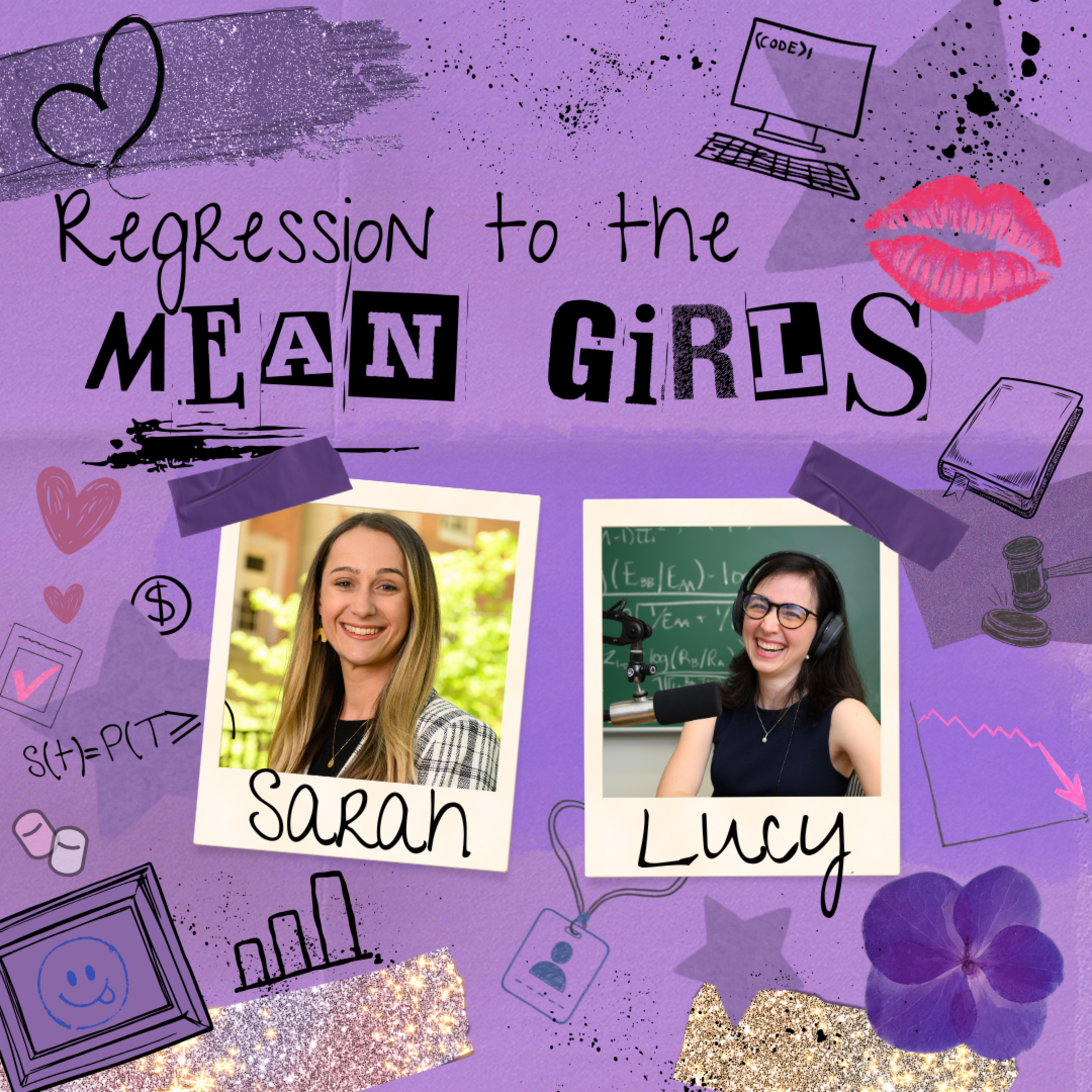
Regression to the Mean Girls:ドラマの「初キス」は視聴率(評価)を変えるのか? Ashley Mullan と考える
Regression to the Mean Girls | The Kiss Effect on Television Ratings with Ashley Mullan
Regression to the Mean Girls:ドラマの「初キス」は視聴率(評価)を変えるのか? Ashley Mullan と考える
Casual Inference
要約
Vanderbilt大学で生物統計学のPhDに取り組むAshley Mullanが、テレビドラマの「くっつくのか?」系カップルの初キス後にIMDb評価が変化するかを分析した経緯と結果を語る。分析は中断時系列分析で、点推定では評価がわずかに下がったが信頼区間からは結論が出なかった。モデルの限界、評価指標の偏り、ツァイガルニク効果や「jumping the shark」との関連、今後の拡張案も議論された。
この回のポイント
- ●発端は『New Girl』のNickとJessの初キス後に2シーズン一気見したAshleyと、飽きたというSarahの口論。「キス後に視聴者は離れるのか」をデータで確かめようとした。
- ●BuzzFeed系記事の言及数から人気カップル上位20組を選び、初キスを区切りとして、IMDbのエピソード別評価に中断時系列分析を適用した。
- ●個別番組(New Girl、Friends)でも全20組でも、点推定では評価がやや下がったが信頼区間では結論が出ず、どちらの主張も証明できなかった。
- ●グラフは説得力があるように見えるが、評価尺度が7〜9と狭く、10の上限を超える反事実になるなど限界がある。番組ごとの要因がなく、混合効果モデルやベースライン調整が改善案として挙がった。
- ●未完のものほど記憶に残るツァイガルニク効果や、物語が行き過ぎる「jumping the shark」を、キス後の変化を解釈する枠組みとして紹介した。
- ●別媒体(映画や小説)での比較、別れと復縁の条件付き分析、Rotten Tomatoesなど他指標の利用が今後の展開として語られた。
章立て
メディア・ミニット雑談
『Maybe Happy Ending』『Big Bang Theory』『Widow's Bay』など、最近楽しんでいる作品の雑談。
分析のきっかけと対象選び
New Girlをめぐる口論から始まり、BuzzFeed記事の言及数で人気カップル上位20組を選び、初キスを基準にした。
カップルとトロープの話
Grey's AnatomyやFriendsなど複数カップルを持つ番組や、関係性のトロープ、好みのカップルについて議論した。
データ選定の別案と今後の拡張
トロープごとの分析、長期番組の再調査、別れと復縁の条件付き分析など、別の選び方の可能性を議論した。
分析結果とツァイガルニク効果
中断時系列分析の結果は結論が出ず、未完のものが記憶に残る効果で解釈を試みた。
モデルの限界と改善案
評価尺度の狭さ、反事実の不自然さ、番組ごとの効果の扱い、ベースライン調整や混合効果モデルを議論した。
jumping the shark と別の指標
物語が行き過ぎる現象との関連、Rotten TomatoesやGoogle Trendsなど評価以外の指標の可能性。
Fetch評価と次の展開
分析を中程度の「fetch」と自己評価し、『高慢と偏見』など他媒体での比較を構想した。
解説記事
Casual Inferenceの「Regression to the Mean Girls」に、Vanderbilt大学で生物統計学のPhDに取り組むAshley Mullanが登場した。ホストのLucy D'Agostino McGowanとSarah Lotspeichを相手に、「ドラマのカップルが初めてキスすると、その後の評価は変わるのか」という軽い疑問を本格的に分析したサイドプロジェクトを紹介した。
きっかけは一気見をめぐる口論
Ashleyは『New Girl』でNickとJessが初めてキスした後、続く2シーズンを一気に見たという。一方Sarahは、その後は少し飽きたと感じていた。「キス後に人は見続けるのか、それとも離れるのか」という議論から、統計家らしく「データで決めよう」という流れになったという。
対象は、BuzzFeedなどの「will they or won't they(くっつくのか?)」系記事での言及数から人気カップルを集め、上位20組に絞って選んだ。区切りとなる出来事は初キスとした。Sarahが確認したデータセットには、125のドラマシリーズにわたる150組の人気カップルが含まれていたという。ひとつの番組から複数のカップルが入る例もあり、『Grey's Anatomy』や『Friends』、『Big Bang Theory』などが挙がった。まだキスしていないカップル(Kermit and Miss Piggyなど)は分析から除かれた。
結果:どちらの主張も証明できなかった
評価指標はIMDbのエピソードごとの評価で、手法は中断時系列分析である。キス前の傾きを直線で当てはめ、その傾きがそのまま続いた場合を反事実として、実際のキス後の傾きと比べる。
結果は、New GirlとFriendsの個別分析では点推定で評価がわずかに下がったものの、データが少なく信頼区間からは何も言えなかった。上位20組をまとめた分析では、点推定の低下はさらに小さくなったが、やはり信頼区間では結論が出なかった。Ashleyは冗談めかして、「どちらの主張も証明できない」状態だったと語っている。
モデルの限界と改善のアイデア
議論では、分析の弱点が率直に挙がった。グラフ上では評価が上昇してキス付近で横ばいになるようにも見えるが、評価の目盛りが7〜9程度と狭いため、実際より説得力があるように見えるという。また、反事実の直線をそのまま伸ばすと、10点満点を超える「あり得ない領域」に入ってしまう。
Lucyは、各番組の開始点を揃えるべきではないかと指摘した。Ashleyによれば、モデルに番組ごとの要因は入れていなかったという。改善案としては、混合効果モデルで番組ごとにまとめる方法や、出発点の評価を調整する(Frank Harrellが勧める方法として言及)ことが挙がった。『The Office』の第1シーズンのように、序盤が一定の傾きで進まない番組もあり、スプラインを使うと「ジャンプの大きさを直接解釈できる」という利点が失われるとも語られた。
評価そのものの偏りも話題になった。強く感じたときだけ評価する人が多いかもしれず、統計的に有意な0.25点の差が実質的に意味を持つかも疑問だという。
心理学と「jumping the shark」
Ashleyは文献を調べ、心理学のツァイガルニク効果(未完のことほどよく記憶に残る)に行き着いた。初キスは「続きが気になる区切り」であり、見続けたくなる効果があり得るという仮説である。ただしLucyは、人によってはキスが「結末」として受け取られる可能性を指摘した。
また、Dan Beaversから教わった「jumping the shark」(作品が行き過ぎて本来の趣旨から外れる現象)も紹介された。『Bones』では、カップルになった後の展開や出産の描写が従来のキャラクター像と合わないと感じたという。時間ジャンプ(『Pretty Little Liars』など)を含む番組の影響という発想も挙がった。
今後の展開
データは公開されており、ブログなどで共有される予定だという。拡張案としては、トロープを固定した分析や、長期番組の再調査、別れと復縁を条件にした分析が話題になった。評価の代わりにRotten Tomatoesを使う案や、Google Trendsを使う案も出た。ただしGoogle Trendsは正規化済みの値しか得られず、生データが欲しいというAshleyの不満も語られた。
Ashleyは自分の分析に「中程度のfetch」をつけ、『高慢と偏見』のように原作、映画、ドラマが揃う作品で、媒体による違いを見る構想を述べた。
まとめ
この回は、軽い話題から出発しても、データ収集、モデル設定、評価指標の偏りといった統計分析の基本課題を丁寧に学べる好例である。結論が「有意差なし」であっても、検出力、反事実の妥当性、グラフの見え方に注意する姿勢には価値がある。公開データを使って読者が追試できる点も魅力で、日本のエンジニアや研究者にとっても、身近な疑問を分析に落とし込む際の参考になるだろう。
文字起こし(英語・自動生成)
This is Regression to the Mean Girls, where we chat with brilliant data people about their silliest side quests. We are mean as an average, but actually very nice. Come sit with us. I'm Lucy D'Agostino-McGowan. And I'm Sarah Lotzfeach. And today we're thrilled to be chatting with Ashley Mullen, who is a Wake Forest Stats alum and is currently working on her PhD in biostatistics at Vanderbilt University. Welcome, Ashley. Hi. Thank you so much for having me. Super excited to be here. Great. So, Ashley, we usually kick off with what we call a media minute. So it can be any kind of media, music, books, TV, edible things, whatever you're enjoying at the minute. I will say we went to a musical yesterday. We saw Maybe Happy Ending at the Durham Performing Arts Center. Lucy, you might. I'm always so desperate to find common ground in our non-statistical interests.
But Maybe Happy Ending is adapted from, I think it was either a Korean, I think it was a Korean show first, and then they brought it over to America. It won a bunch of Tonys. Darren Kress from Glee was in it. The premise is they are retired helper robots who have been essentially sent to live in these condos for the rest of their days. And the one guy is just like desperately waiting for his owner to come back and get him and won't leave his room. And the other girl is like trying to live her life, but basically her charger breaks. And so she's forced to go next door and talk to him and be like, can I borrow your charger? And they go out on this little adventure also the entire time they're robots. So they have these funny little quirks and like the music is excellent. It was, I was remarking to Matt that it's the first musical we've seen where I felt like it was more a play with music rather than like a lot of the ones we've seen, I think skew almost like an operetta where they are almost only music with like a lot of dancing and a small amount of talking in between. But this was a lot of like storytelling with like really good music.
It's called Maybe Happy Ending. It was really cute. It's very funny. And maybe one of my favorite parts was one of the humans says to the robot, like, I love you. And she goes, I don't have an opinion on that. And now I want to say that all the time. That's so good. Do you want to go next, Ashley? What are you enjoying? I've been on a Big Bang Theory rewatch, which has been super fun. A couple months ago, I saw Titanic on Broadway, actually, right before I closed. And it was super cool because they do a bunch of callbacks to other shows. and they have this cardboard Patti LuPone cutout that's right out. And then I must have been there on the right day because they stop the show like two-thirds of the way through and actual Patti LuPone walks out and breaks the fourth wall talking to Jim Parsons. And I'm like, I forgot how funny this man is. So I started rewatching Big Bang Theory again, and now I'm on, I think, season six. And I just forget how funny that show is. That's awesome. I've never watched it, like, linearly. I've only watched like whatever episodes pop up when I'm happened to be watching TV.
That's the same with me, but I always have enjoyed it when I watch it. My Patrick's grandparents were like really into it. So whenever we would be visiting his grandparents, we'd usually watch an episode or two, which I thought was like, so I don't know why. I thought that was very sweet. But I also always enjoy it when I see it. I just like I don't I couldn't tell you the like through like the story in terms of like over time. But I feel like I know all the characters. I feel like every time I rewatch I jump in at a random point and just get like two to three seasons worth in a row. And then just forget that I was doing it. And it's always just so funny when I do that because I never realized what exactly what point in the overarching timeline that I jump in at. I think I started around like season four this time. See that's when there's a comfort kind of watching. But like certain shows can let you do that. I can do that with Gilmore Girls where I can just drop in anywhere and I feel, it gives me like a little bit of comfort watching. I think New Girl is a little bit like that where like I can drop in to New Girl. I don't know. I love, I love a show like that. I think Brooklyn Nine-Nine is also similar.
A lot of those kind of 25 minute, well, I guess Gilmore Girls doesn't fall into this, but like Mindy Project for me is the same. Like the little 25 minute ones where like there is a loose timeline, but I feel like generally it's just like the, like who's with whom and like what stage the main couple is in their relationship is really the only thing that chronologically matters at that point. Like, because fortunately in shows like that a lot of the time, like, characters don't die off. It's not like you're going to accidentally, you know what I mean? Versus like, you cannot do that with Grey's Anatomy. There is a lot of love. I've never done Grey's Anatomy. You drop in and you're like, where's my favorite character? I'm going to do Widow's Bay as my media. So I get into these where I'll watch the same thing over and over again. I watched all of Widow's Bay like a couple months ago. It came out over the summer. This is a show on Apple TV and I loved it. And so now I've rewatched it many times. I tried to get my husband to watch it. And it turns out everyone I tried to get to watch it, like I pitch it one way and then
they watch like a couple episodes with me and they're like, that's not what this is. And they don't like it. So I don't know. I'm not I'm not explaining it correctly because the reason. And so Katie, the person who wrote it, she wrote for Parks and Rec. And this was like one of her, the pilot, although it's different from what actually got made, but a version of this pilot was like one of her audition pieces, like when she wanted to become a writer on Parks and Rec. So it is, it's horror. So it is horror. There's like scary parts, but it's funny. And it, to me, gives off real Parks and Rec vibes. Like it does tickle that same itch. But everyone who I've, like, said that to who liked Parks and Rec is, like, I don't get what you mean. This is not that funny. And I'm, like, laughing the whole time. And they're, like, I don't know. So I think you do have to have a certain level of, like, of enjoying. You have to enjoy horror stuff a little bit to think it's good. But it's not, like, terrifyingly scary. It's more like Monster of the Week kind of stuff.
Anyways, I'm wanting to watch it. I think my parents watched it. I need you to know, and this is probably a joke I don't get yet. I searched Widow's Bay because I wanted to see what it was actually categorized as. Did it say Martha Vineyard? The next Martha's Vineyard and definitely not cursed. That is the Google recommendation. You search Widow's Bay and it says, did you mean the next Martha's Vineyard and definitely not cursed? And I was like, see, that is my sense of humor. I feel good about this. Yes, exactly. And that's exactly like what that's the kind of stuff in it. I think it's so funny. Yes, that is a joke from the show. And also, I noticed this as well, that Google does this, which is fascinating to me because it's an Apple show. So Google sometimes does those kind of Easter eggs where they'll like pull something. Someone at Google must be a fan of Widow's Bay. I'm going to pivot us away from media many minutes. Thank you so much for engaging with us, Ashley, on our media minute of sorts. Can you tell us about the context of your analysis? Sure. So like many of my side projects, this did start with an argument.
I actually worked on this project because both of you all at different points of it. I was chatting with Sarah about New Girl because that's pretty much all I do on my coaster that my coffee's on is a New Girl coaster but I was saying that after Nick and Jess first kissed on screen for the first time I sat on my couch and I watched the next two seasons like in one shot I think I did and Sarah's like wait you did that like I kind of got bored after that happened which proceeded to become an argument about do people keep watching after these things happen do people get bored and like good statisticians we said data so this whole thing became do people binge watch after characters kiss on screen like I do or am I crazy and do people tend to fizzle out and go find another show at that point and it became an analysis so can you talk maybe a little bit about I know new girl was like the main impetus for this but what kinds like what did it take to define like the main couple that you're looking at here?
And can you have maybe some other examples? So I can back a little into the overall data collection. People like to talk about this on the internet, apparently. So between the two of us, we were getting just BuzzFeed articles of will they or won't they type couples. So I'll go back to my new girl. That's your Nick and Jess. If you were a big fan of friends, that's your Ross and Rachel, where you're just watching through to see what happens. So we just started stacking these BuzzFeed articles and BuzzFeed-like articles to see how many times they get mentioned in a Google search of couples like this. And we landed on a bunch of couples and filtered them down to top 20, which had shows like, I want to say True Blood was in there, Cheers with your Sam and Diane, your new girl. And we just compiled a bunch of these types of couples and tried to pick a moment to define the relationship, which we ended up being a first kiss and put those together to start looking at this analysis. I'm pulling up, I sometimes forget that there's actually a DOI for this stage set, which we can have it on the show. I was looking at it this morning. Yeah, it's on, so it looks like we had 150 popular couples from 125 television series, which is also kind of funny because it shows you that, like, some shows give you multiple of these will-be-won't-days.
And I have to say New Girl is one for me that like honestly I root a lot harder for Schmidt and Cece than I do for Nick and Jess for a number of reasons we maybe discussed But I trying to think of other good examples I trying to think of any examples Well Grey Anatomy comes in a million times and Grey's Anatomy is a series of couples doing couple-y things for up to, I think it's been 20 seasons now? A series of couples doing couple-y things that is famously about surgery. Couple-y, cute little couple-y things like craniotomies and the crash cart. Well, when you have your couple eyes on, then you look at Grey's Anatomy as your 20 seasons of so many couples can pop in like this. So you've got your new girl. We've got two. Grey's Anatomy had a bunch. I think Friends had a bunch, too, from the main sex. Because I think Friends has, let's see. I think Friends would have Monica and Chandler in addition to Rachel and Rob. To Rob and Rachel. Yeah. Another one that had a couple was Big Bang Theory.
You've got, like, your Amy and Sheldon. You've got your Leonard and Penny. so we just track them by couple mentions so shows would pop up more than once if this was a thing going on with multiple couples yeah I think too uh it's kind of funny to to harken back a little bit I guess like a lot of these shows where there are multiple of these will they won't they couples I think they use different tropes for them so like Nick and Jess are like friends to lovers but Cece and Schmidt are like kind of like I don't know forbidden love or like they like start as a secret and that's a very different trope even in Grey's like I think it would be fair to say that like Meredith and Derek who like that starts in the pilot but in like the first 10 minutes of the pilot she finds out that she hooked up with her attending the night before but she like didn't know who he was so it's like from the very beginning that the trope for them is this like kind of power dynamic taboo versus other couples in the show like meet under different circumstances
because their peers and things like that so there it does kind of tie in i think nicely to our previous discussion our first but now on now on screen instead sarah do you you said but you mentioned like briefly that you are we're not so in to nick and jess but you were in to smitten do you think that is due to the like would you guess that's because of the difference in trope or is it like the the characters themselves you there was some something that i have i have an unfair prejudice against couples where i feel like a woman on tv is made to settle for a man and so like nick and jess are not the only one there are other examples but it's like an easy one for me where it's like I can see all the things people see and like by the end of the show I can see that Nick is a solid partner and all these things that's hilarious that is unfortunately my problem more than the trope is just an imbalanced pairing I think but like that that
is what it is is like I think very highly of Jess and it's like yeah he's like nice and he'll put furniture together with you but like he won't even open a bank account that's no way to build a life Yes, I will say Jake Johnson, though, he's very funny. And I think it comes through in Nick Miller. And so I do think for some reason that gets that bumps people into different categories. Like, even though he's like a man child and new girl, he's funny. I don't know. Maybe that's like bad. To your point, like you've got Moonwalks Away, which is funny on screen, which is like, yes, how we problem solve. so you can take it at the bit level or you can do the character analysis. I just happen to love most of his bits. I know. His bits are so funny. He was, Jake, just maybe a couple weeks ago, he was on Take Your Shoes. Do you guys listen to the Take Your Shoes off the podcast? It's, okay. It's Rick Glassman. Anyways, I was laughing so hard the whole episode. Like, Jake Johnson is so funny. He just makes me laugh. And I feel like he's not exactly Nick Miller, but there's a lot of him in the character.
So I don't know if that's why people are sympathetic to the potential pairing, but I think funny boys sometimes get a pass when it comes to who they could potentially partner with. I agree he makes for excellent television, a lot of really good gifts. I think there is a part of me that ruined it for myself by actually being like, is this someone you should really be building a life with, Jessica? Yeah, sure. It was like me being 80 years old and over-analyzed. Like, I can acknowledge that, like, the first kiss for them is, like, all of that. I just find that when I rewatch it for whatever reason, I really root a lot harder for Schmidt and Cece. No, that makes sense. The reason I was originally asking is because I was going to say if it was the trope, if it was trope related, like, it could be interesting to code those in this data set and then adjust for it and see if there was a difference by trope. But it might be harder. I mean I guess like it feels more subjective to try to rank all of the partners and see if there's
like disparate partnership I don't know like and then and then see if that affects. I mean I think the polite way to say it would probably be like opposites attract like you or like yes like that is a written trope that is probably a more polite way to say what I've been saying. I will give a counter example which is that I actually often do like friends to lovers so it's not that either because like I loved Jim and Pam on The Office. I will say that I also root pretty hard for Angela and Dwight because they're so weird and like perfect for each other. But like it's not always like hashtag not all friends to lovers. I don't dislike the trope. I do have to say as a moderate side quest now that I've pulled the data set up. Actually, I had forgotten that Kermit and Miss Piggy made the list. They were mentioned as a will-they-won't-they couple from the Muppets, first introduced in 1874. To date, haven't kissed. So much, much debate, I suppose, on will they or won't they. You know, every time I talk about this project, I feel like there's a different way to pick couples to put into the larger analysis.
Like, we just did top 20 dimensions. To your point about tropes, it would be really cool to just fix a trope and zoom in on them. Fix maybe, like, couples you wouldn't think would go on this list, like your Kermit and Miss Piggy. folks that have been on for too many seasons like your Grey's Anatomy or only short-running shows or things like that like I think a lot about this project and I'm curious because we had to throw out couples that hadn't kissed on screen yet at the time we presented the analysis which is I want to say we did this in like 2023 so if some of these long-running shows were still going on we could check in on them again three years later and see how they're doing this is also interesting because some of these characters like Kerma and Miss Piggy have been on many different like they I assume that in your data set you picked like one of the shows that they've shared the screen on but they've been in lots of different media you know they're in movies and whatever like they've spanned lots of different types of shows and I do think they I mean I can picture I think they have kissed in one in at least one of those but maybe not in the one that you were following so it's also
So, like, would this, you know, would it impact, because these exact characters can find themselves probably even simultaneously in different media, like, would that impact, you know, the, like, the data a little bit? Because there's some, there's some kind of other factor outside, like, maybe they're not kissing in The Muppet Show, but they did in The Muppet Movie or whatever. I think, too, we ran into couples who, like, break up and get back together. and I think right now we just included like the time until it happens the first time but it is interesting like the whole dynamic after a breakup would then you would enter kind of like the second wave of like they're gonna have to like I don't know recover in some way and build back to where they were and it's like and by the time they've done that do they just end the show or do they like continue like like could you do this again kind of for couples who break up and get back together so you would basically then like do a conditional like given that you've already been together and broken up once like what does this look like and is it different than the first time
i haven't found the data set yet i put it in the chat like that's not gonna go because i like i want to see yes and of course we'll put this in our on our blog so everyone can do fun things with it let us know what you do yes everybody email us at regression to the mean girls at gmail.com or comment on our insta or blue we don't have a blue sky but whatever you're a blue sky it's just me honestly what i need to know is where are the other viewers that immediately binge watch after the couple's kiss so i feel validated no okay wait so that's your own circle so they all think i'm crazy no but i get what you're saying i mean i don't know i don't know that i binge watch or not based on romantic I don't know that that is a trigger for me but I but I will I don't stop watching once a couple has kissed the first time like that does not I will say I don't stop watching either and I think that that wasn't because honestly like the amount of views is an interesting
and different outcome that I don't think I looked at but my point was that I I think it is not as good I will still watch it but I am not enjoying it as much generally because for at least like in some parts like that is the main focus is you like waiting like when are they going to get together And then once they done that it like all right well what now I will say that the external factor of why I did have the chance to binge two seasons in one day is that I was doing this during COVID-led. So it was me, my TV, and my couch, and I'm like, this is very exciting to me. And just kept watching. Exactly. And there also, and it happened to be so much chaos immediately after that. Like, there was that emergency trip to Mexico, which was just hysterical. And that's when you get the Winston sitting defying gravity in the car, which might be one of the greatest cinematic moments of all time. Yeah, Winston is, like, we've only been talking about the couples, but Winston is, like, maybe my favorite character. Well, Winston couples up, but it's, like, a sure thing, kind of.
Like, you don't really have to worry about Allie and Winston. Yeah. It's not, like, a, it's not a will they, won't they. No, it's, like, they will. They will. Pretty much from the beginning, I feel like. Okay, so the outcome here, and I know you already said this, but the outcome is IMDb ratings. Is that right? And it's, so you're looking at whether IMDb ratings change, so like some kind of interrupted. Exactly. It was an interrupted time series analysis. We were trying to see, is there a direction that the ratings change after the point where the couple of kisses for the first time? Yes. And you found that. So we did this a couple times. We did this with all 20 of these top 20 couples by mentions in a larger model to get a bit of a bigger sample size. And we also tried fitting at a show level. So, of course, I'm legally obligated to pick New Girl. So we did this with New Girl and I did this with Friends later just to have a couple in my back pocket. And at a show level, you would think probably not enough data to get anything to fit in either way with a confidence interval, which you would be correct.
we saw point estimates of ratings dropping a little bit after the kiss but couldn't say anything conclusively and then we zoomed out a little bit and looked at all 20 of those at this at the same time and we saw actually a smaller decrease at the point estimate level but still no dice with the confidence interval saying that we really can't say anything either way which actually led me into a little bit of a side quest literature review to see is there something going on here What do I not know? And I landed in the land of psychology on something called the Zygarnik effect, which I summarize as people remember unfinished things better, which was kind of interesting to me. And when I went on my quest to explain what is going on here, where we kind of really saw nothing conclusive, and that works well for the Ashley, did I win this argument? You can't prove me wrong, but also you can't prove me right. So, sad. So, wait, can you explain the Zygarnik effect? it's people remember kind of unfinished things better.
So that's kind of saying if there's this cliffhanger, then people are going to remember that. There was actually an episode of The Big Bang Theory where Sheldon ended up calling, I forget what network it was, to complain that a show finished on a season two cliffhanger and they didn't do season three, they didn't renew it. And that feels kind of like a great example of this, that it was lurking in his back brain that there was a cliffhanger and that wouldn't necessarily have been the case if they resolved the show. So it's kind of that same idea where this first kiss thing kind of feels like a cliffhanger. and then if you're me you go and watch the entire next two seasons in one shot and apparently the rest of the world does not so yeah and in some ways well in some ways you could imagine i mean so for you it sounds like maybe it feels like a cliffhanger because it's like what's going to happen next but for a lot of people that could be a conclusion they could see it as like this and like they it happened and so they weren't like wondering if it's going to happen this is so and looking back at your um you had a great piece in significance which is one of our um kind of stat magazines that publishes this type of exactly the same of analysis is a perfect one for significance so we'll link to that as well in the blog post but i'm looking at your graphs and i
mean they really are like beautiful and pretty compelling for the individual like you do one for new girl and one for i mean not it's not what you were hoping that it would be but for sarah's argument they're pretty compelling that both the new girl one and the friends one you see you know interrupted time series, the way this works is you fit just like a simple regression line to what the ratings would have been before this event happens. And then you kind of like assume a counterfactual would be like we assume that exact same slope would just continue on forever if we didn't have this event. And then you see like what is the slope in fact if you just look at the data after the event. And if it's different, then that would suggest some difference. And, like, to me, these graphs, I mean, again, it's hard, as you said, this is not a significant effect. So it's easy for graphs to look compelling. But these graphs do look pretty compelling that you see this kind of positive trend in the ratings. And so it's sort of suggesting that the ratings are, like, kind of steadily increasing as the show is going on.
And then that it just, like, post-KISS levels off as, like, at the point where the ratings kind of seem to the slope kind of steadies. Is that how you would describe the data, too, Ashley? I mean, any model has limitations. And the thing that I saw when I looked at those counterfactuals is we're zooming very quickly into the land where you're above a 10 rating. And if I remember correctly in IMDB, you have to rate it out of 10. So we're landing quickly in the impossible land. if you tend to follow them counterfactual. And the other thing that I look at when I see those is they look a little bit more compelling than they probably should because the scale is so small. So you're looking in between the 7 and the 9, and then that brings the question of what's the difference between like a 7.5 and an 8? Although I feel like I personally, that brings an interesting question about the bias of ratings themselves because I go in and I rate things if I feel very, very strongly about them. So it's either 10s across the board or I actually could expand this. unless you're my story graph which I am actually a terrible statistical citizen out there and I just
don't write things I just mark the diagram which is something I should probably get better at but I feel like that could be another interesting problem of who's doing these ratings in the first place and I think you're getting at a point too of like the scale is very small on these graphs and there is even if like if you have large enough data eventually like it would have been a statistically significant difference but a statistically significant difference of a quarter of a point on a rating scale or something like that is that actually practically significant in terms of the quality of the episodes um which i think is a really good point i wonder too what it would look like so for the individual scores the two i you only have you two graphs one for a new girl one for her friends you kind of see this positive increase and then this leveling off and i guess like i mean i i think you would expect obviously nothing can go above 10 and you probably expect at some point like you know at the beginning people are trying to decide if they like the show and then at some point the show just is maybe what people think it is like it's just an eight or a
ten or a nine or whatever so there is going to be a leveling off and I think what is interesting in in these pictures again maybe just because like humans like to look at pictures and come up with something but it does kind of look like that leveling off starts around where you chose this this cutoff to be and so that's like what is somewhat compelling is that perhaps it starts around that point, at least in these two examples. But then when I'm looking at the all 20 shows, I think what might be happening here, like I'm wondering if instead of having it be the, like I wonder if it should, or maybe you did this, but whether it should have been normalized by where you started. So like instead of the graph being like, what's the average rating across these shows, it should be like everybody starts at zero and then you look at the change. in the in the in the rating because it's like it feels like that first kind of steady increase is sort of like it's blurred out a little bit I can't quite tell what's going on in terms of the trend
because on average it looks like shows are about an eight and and like I maybe some of them were going like eight to nine to ten you know like I don't really know what the individual show level one is but maybe you had a a factor for did you have a factor for each show in the model we actually did not and that was one of the things that if I did this again I would love to try differently like maybe some sort of mixed effect extension or whatever to group by show yeah either that or like sort of another if you like normalize the outcome to be just like like within the show kind of how it's changing that would be like maybe another way but that I'm just curious if that would have made it look different because I wonder if some of it we're like losing some of the effect because like overall the average is sort of just like following this particular trend but the change i mean one of my other back brain thoughts about this one is i don't know how fair it is to assume like a constant slope in the beginning of the show because for
example let me just take on the office folks have mixed feelings about the first season we've been to commit to before and it's really funny if there are shows like that you might have a couple of patterns in that early season that you might be losing if you try to smooth that out yeah but i hadn't really thought how much i would fix that like maybe a spine or something but then you lose that really easy interpretation of just quantifying that specific jump in ratings at the time of defining the relationship right yeah and it would be hard to define the counterfactual wouldn it if you put you wouldn know what going to happen after Yeah Exactly Unless you just assume that it like wiggly at the beginning but then let it go shoot off to infinity after I guess, like, as I was saying that, too, instead of looking at the difference, like, I think the way that Frank Harrell would have us do it would be just to adjust for baseline score. So, like, you would adjust for what the starting score was. So, instead of, like, I had to just subtract out. But, anyway, so instead of starting it zero, you would, like. shift everybody you just shift everybody yeah i after it just i wanted to add to to our discussion
about the zagarnik effect there is also i brought this up with dan beavers and he introduced me to the idiom of jumping the shark do you know about jumping the shark yeah because that's that's um what's his yeah what's so it according to wikipedia it's fonzie from happy days but it's A creative worker entity has evolved and reached a point in which it has exhausted its core intent and is introducing new ideas that are discordant with or an extreme exaggeration or caricature of its original theme or purpose. I think Dexter is similarly criticized for having just a wildly outlandish series finale. But I feel like you could also kind of frame this as that. Like, it depends, of course, on what the purpose of the show is. And none of these shows are strictly supposed to be about this romance. but they are largely just shows about people living their life and so it's like that ends up being kind of a big part of it so yeah like are you jumping the shark at the point where they get together and then it's like well now you're together like bones was that way we're like you
wait so long for them to get together and then once they're together the way that they exist as a couple really didn't make sense relative to how they had been before like she's supposed to be kind of all about the science like very calculating and then they did this entire episode where she basically like she's very pregnant she gives birth in a stable very straight out of the nativity i was like what is this like it and it's never really discussed it's just like jump the shark together all of a sudden we've jumped the shark amazing is that like a regular timeline or do a time jump to that so there is a bit of a time jump the reason i ask is because i feel a lot of these couples that were listed and the ones that didn't make the analysis were ones that had time jumps involved too so the one that comes to mind is pretty little liars where i think it's season six where they jump like five years ahead and all of a sudden just the dynamic completely changes because they're now grown adults like you could probably do a whole subset on shows with a time
jump and how that affects the progression there is a time jump yeah i didn't realize it it's so you wait six seasons they get together in episode 22 and then in episode 23 she tells him she's pregnant and he's the father so like there's your surprise pregnancy trope also but after like six seasons of like probably grumpy sunshine would be like a fair yeah trope for them and then there's a time jump and it she is like visibly and heavily pregnant and like that's that's birth in a stable gives birth in a stable never just again it's not like she like finds like her faith or anything like that but anyway that's one that i feel like i pick on where that one i think sadly like well i think nick and jess i lost a little interest this one i felt like actually went against who they were before in a way where i was like i don't want to watch this anymore are people having their first baby so fast that you gotta have it in a state like i don't know i mean i don't know this
is all anecdotal but i think she's like on the run or something there's like a bunch they kind of did like i feel like some of the shonda rhimes shows do this as well but it's like you spend six seasons where it's like there's crimes and stuff and like bad stuff happens to them occasionally like someone will get kidnapped and buried alive you know normal stuff yeah and then And in season seven, for some reason, she is like in the people think she's done something and she is like living on the lamb for a while in season. I think in season seven, maybe after they get together. And so I think it's that I think it's that she can't go to a hospital. I see. So naturally, the only thing to do is have a baby in the barn. Yeah. this is like roger pang brought this up a little bit but it sees it like a different shows that like once you get past season four they're like now we're crazy now we now it's like there's we've had enough seasons of this being like a normal show and now we're going to be having babies in
barns i have to bring us back for one minute to the fons because every time something winston salem related i this is like little tiny winston salem we got to hold what we can and henry winkler came to winston-salem he went to moselle's and he ordered our tomato pie and said it was amazing and i just have to bring this point up people that are from big cities you know this kind of thing like this can't make the news because famous people just eat food in their city all the time but in winston-salem we don't get so much famous people coming through so when they do it makes all the local newspaper so we talked about what you found i guess i mean we had like A couple of reviewer two things because it was, like, the idea of maybe having, like, a baseline score in the model, perhaps. We could. And in fact, because the data is so easy and publicly available, we can do it. We could. And I think if we could divorce, like, viewership from ratings, which gets at your point, Ashley, as well, that, like, reviewer ratings are notoriously problematic.
I mean I would love to get my butt on Rotten Tomatoes and see how the ratings out of 100 changes because the different scale might allow for more nuanced people's thoughts and feelings about it that's true and the people yeah and oh but I guess because I was gonna say there's like Rotten Tomatoes splits by like if you're a like formal reviewer versus an audience and so that could be interesting. Although I actually have, I've never looked for Rotten Tomatoes ratings on a TV show before. I've only ever seen them for movies. And one of the cool things about this particular project is we got episode by episode ratings. Yes. So like, I don't know if that would work. Yeah. Maybe they don't actually even have, I wonder, I mean, I guess the other option would be to come up with your own metric based on like some kind of like Google analytics. Like if, if people are, it wouldn't be perfect, but something about like if people are Googling about, I mean, that doesn't really map. Google Analytics drives me mildly nuts because they only let you explore the normalized ratings.
And I would love to kind of see what's going on under the hood there. Like I did a similar project with Taylor Swift and did things change before and after she went on that podcast. And I was just, I really wanted raw ratings and raw Google searches to play with, but they didn't give them to me. So sad. Yeah. Yeah. And there's all kinds of things to do. I think you've done Google Analytics too, right? I have done it before. Yes, I have. And I think there's, like, some ways you can, like, slightly manipulate the, like, to be able to, but it doesn't let you kind of undo. Undo the fact that they have normalized it, which is unfortunate. My Google history when I was doing that project was, how do I undo Google, which was kind of funny, and I felt very meta about that. Google was like, why would you want to undo us? Yeah, they're like, please don't. Like, I'm sorry, it's for science, guys. How can I trust Google with my entire life? How can I? So usually at the end, we'll have the guest rate their analysis on some fetch scale, which we allow you to decide on.
Would you care to rate your analysis on a scale from one to many fetches? So as it stands, I give it a solid mid-level fetch. Mid-level fetch. Like three or four candy grabs instead of the whole bucket. But what I really like about this project is that I just keep asking questions about it and thinking of more spinoffs and more things I could do with it or more things that people who have our public data can do with it. Like something that even just came into my back brain while we were talking about this is that I did a deep search into how early in literature can be find the idea of a will-they-or-won't-they couple. And I came up with Pride and Prejudice, which is 1813. And on that Google, I found that they're actually dropping a miniseries based on it. and I want to say December of 2026. One thing that I thought about that could be super fun was seeing if a different story and a different presentation does kind of the same thing with their world, I want to say. Like I know Sarah, you've done a project on how this looks in the world of books. This project is how it looks in the world of TV. Could it be kind of similar in the world of movies? And especially if you have something
like Pride and Prejudice that has the original book, it has a movie, it has a TV show. Like do these things play the same way in different media forms? Which could be super cool. So I guess on the fetch scale, to go back to the original question, And, like, there could be many, many fetches if we do all of these types of spit-offs. But I feel like this is a fun starting point. I love it. I love it so much. And I love opportunity for next steps. That's always, like, the best part of being a statistician is that we always have next steps to explore. So our jobs are never done. This is so good. Well, Ashley, thank you so much for joining us. You go, Glen Coco. We're regression to the mean girls. where immune is an average, but actually very nice. Tune in next time.
番組の概要欄(原文)
<p>Follow <em>Regression to the Mean Girls</em> on [<a href="https://podcasts.apple.com/us/podcast/regression-to-the-mean-girls/id6807111816">Apple Podcasts</a>], [<a href="https://open.spotify.com/show/6L5PaIieWX4uNz06tCPcKp">Spotify</a>], or wherever you love to listen!</p><p><br></p><p><a href="https://ashleymullan.github.io/">Ashley Mullan</a> join <a href="https://www.sarahlotspeich.com/">Sarah Lotspeich</a> and <a href="https://www.lucymcgowan.com/">Lucy D'Agostino McGowan</a> with a data-driven side quest into how a TV couples first kiss impacts ratings.</p><p><br></p><p>Follow along on instagram: </p><p><a href="https://www.instagram.com/regressiontothemeangirls">@regressiontothemeangirls</a></p>
出典・この記事について
- 番組
- Casual Inference(Lucy D'Agostino McGowan and Ellie Murray)
- 元の回
- Regression to the Mean Girls | The Kiss Effect on Television Ratings with Ashley Mullan
- 配信日
- 要約作成日
- 公式サイト
- casualinfer.libsyn.com/website
この要約・解説記事は、元の音声を文字起こしした内容をもとに AI(Claude)が日本語で作成したものです。 固有名詞や数値に誤りを含む場合があるため、正確な内容は元の音声でご確認ください。制作方法について
関連エピソード
Regression to the Mean Girls:野球データ解析とBART(Sameer Deshpandeと語る)
Casual Inference
Regression to the Mean Girls:『Dancing with the Stats』— 学部生が挑んだ生存時間解析
Casual Inference
Regression to the Mean Girls:混合効果モデルとLove Islandのキススコア(ゲスト:Hannah Barton)
Casual Inference
Regression to the Mean Girls:Roger Peng と「みんなのための因果推論」――偶然のビジネスマンになった寄り道
Casual Inference
ピンクとホワイトのマシュマロは味が違う?ベイズで検証するサイドクエスト(ゲスト:Mattan Ben-Shachar)
Casual Inference
Regression to the Mean Girls:Emily Riederer と選挙データのウェブスクレイピング
Casual Inference