
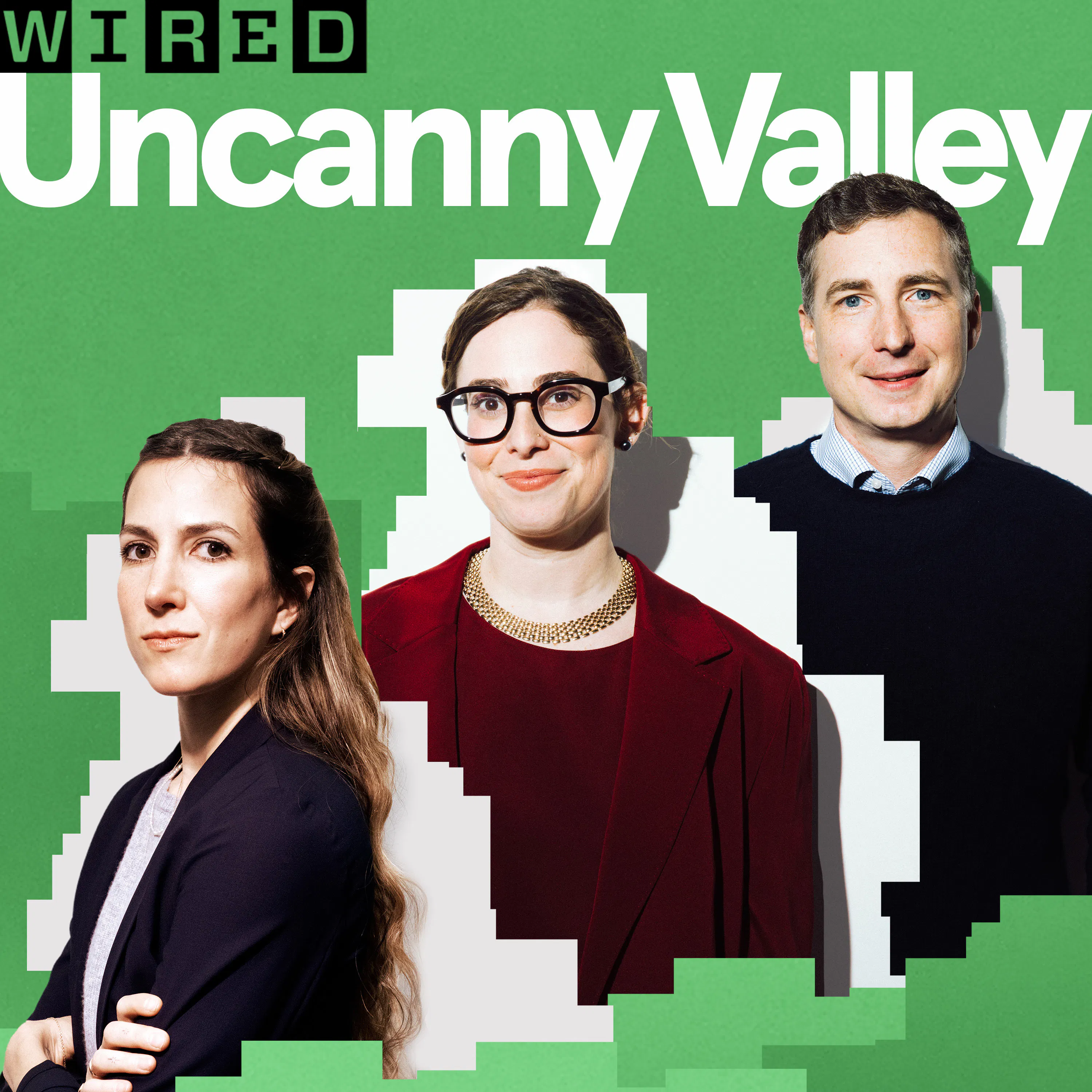
イーロン・マスクとビッグテックは中間選挙に巨額を投じ、そして敗れた
How Elon Musk and Big Tech Poured Millions Into the Midterms, and Lost
イーロン・マスクとビッグテックは中間選挙に巨額を投じ、そして敗れた
Uncanny Valley | WIRED
要約
WIRED の政治チームが、民主党が上下両院を奪還した2026年中間選挙を振り返った回。マスク氏の America PAC は約4億〜5億ドルを投じながらほぼ成果を得られず、AI データセンターをめぐる住民投票では40件中39件が制限を選んだ。MAGA 支持層がトランプ氏やイラン戦争に責任を向ける様子、選挙否定派の沈黙、2028年大統領選への見通しも語られた。
この回のポイント
- ●民主党は上院で純増4議席、下院で3議席が必要だったが両方を上回り、サウスカロライナやミシシッピなど共和党の牙城でも接戦や敗北が起きたと語られた。
- ●WIRED の分析では、マスク氏の America PAC が支援した候補は決着済みの20戦で敗れ1勝のみで、追跡可能な資金の99%超が敗れた選挙区に使われたという。
- ●データセンター関連の住民投票40件のうち39件で制限が選ばれ、NBC の出口調査では有権者の約4分の1が投票判断で重要だったと答えたと紹介された。
- ●MAGA 層の反応は当初の沈黙の後、イラン戦争とトランプ氏への批判に向かい、ホワイトハウス内ではヘグセス国防長官を責める動きが出ていると報じられた。
- ●選挙不正を主張してきた否定派は敗北後も不正を訴えず沈黙しており、トランプ氏が結果を早く受け入れたことが影響しているとの見方が示された。
- ●2028年に向け、共和党側ではヴァンス氏やルビオ氏の出馬判断が難しくなり、マスク氏は資金面でキングメーカーになり得るとの指摘も出た。
章立て
民主党が上下両院を奪還
民主党が必要議席を大きく上回った選挙結果と、サウスカロライナやミシシッピなど予想外の接戦・敗北を出演者が振り返る。
MAGA 層の反応と責任追及
トランプ氏やバノン氏、マット・ウォルシュ氏らの反応を紹介し、ホワイトハウス内でヘグセス氏にも責任が向けられている状況を語る。
マスク氏の巨額支出と敗北
America PAC の支出と勝敗、テキサスでの惨敗、マスク氏のブランドが負担になった可能性、2028年への影響を議論する。
AI 業界とデータセンター住民投票
AI 推進派ネットワークの動きと、40件中39件でデータセンターが制限された背景、候補者たちの訴え方を解説する。
選挙否定派の沈黙
選挙不正を唱えてきた候補や団体が敗北後に沈黙している理由と、運動の今後について議論する。
2028年への予測
議会の召喚状の限界、ヴァンス氏とルビオ氏の判断、トランプ氏の支持表明の影響力を巡る見通しを語る。
解説記事
WIRED のポッドキャスト「Uncanny Valley」が、政治チームによる中間選挙特別回を配信した。進行役は政治・科学部門ディレクターの Leah Feiger 氏で、Hugo Lowell 氏、David Gilbert 氏、Vittoria Elliott 氏が参加。民主党が上下両院を制した結果を、トランプ政権とビッグテックの双方に対する有権者の評価として読み解いた。
想定を超えた民主党の勝利
番組によると、民主党は上院で純増4議席、下院で3議席が必要だったが、両方を上回った。出演者が驚いたのは、サウスカロライナでトランプ氏が推した候補が苦戦したことや、ミシシッピで長年の現職が接戦に追い込まれたことだ。Lowell 氏は、2024年に激戦州で二桁の勝利を収めたトランプ氏の連合が、今回は約10ポイント逆方向に振れたと述べた。
その要因として、虚栄的なプロジェクトや DOGE による連邦政府の削減、そして物価高につながった不人気なイラン戦争が挙げられた。
MAGA 層の反応とホワイトハウス内の責任追及
トランプ氏は候補者の質や自身が投票用紙にいなかったことを敗因に挙げ、Fox News も批判したという。Gilbert 氏によれば、MAGA 層の最初の反応は信じられないという沈黙で、その後イラン戦争への批判が広がった。右派ポッドキャスターのマット・ウォルシュ氏は、トランプ氏を「80歳のレームダック大統領」と呼び、結果を歴史的な政治的大惨事と評したという。
Lowell 氏のニュースレターによれば、ホワイトハウス内ではヘグセス国防長官(番組では戦争長官とも)に責任を向ける動きがある。ヘグセス氏の戦況報告があまりにも楽観的だったため、ヴァンス副大統領とルビオ国務長官が独自に情報機関の説明を求めたとも報じられた。ただし Lowell 氏は、まだ初期段階だと断っている。
マスク氏の巨額投入は実らず
番組が紹介した WIRED の分析では、マスク氏の America PAC が支援した候補は、水曜朝の時点で決着済みの20戦に敗れ、勝ったのは1戦のみだった。追跡できる資金のうち、決着した選挙で敗れた側に使われた割合は99%を超えるという。Lowell 氏は支出総額を約5億ドルとし、いわば「影の共和党全国委員会」を運営したようなものだと表現した。最重視したテキサスでは、ケン・パクストン氏が大差で敗れたと語られた。
出演者の間では、マスク氏のブランド自体が負担になったという見方が出た。資金を受け取れば不人気な億万長者の意向を実行する存在として攻撃材料にされる、という指摘である。一方で Lowell 氏は、マスク氏にとって5億ドルは端金であり、2028年に特定の候補を支援すれば資金面で並ぶ者がいないため、キングメーカーになり得ると述べた。AI 業界についても、a16z や OpenAI の Greg Brockman 氏らが支える「Leading the Future」が予備選に資金を投じており、2028年に向けた布石との見方が示された。
データセンターをめぐる住民投票
今回の選挙を WIRED は「データセンター住民投票」と呼んだ。全米で40件あったデータセンター関連の投票で、有権者は39件で制限を選んだ。NBC の出口調査では、約4分の1の有権者がデータセンターを投票の決め手として重視したという。
Elliott 氏は、背景にテック業界への反発と、その右傾化への不満があると説明した。水の使用、騒音、電気料金の上昇といった懸念に加え、雇用不安の中でAIが仕事を奪うと受け止められていることも挙げた。共和党が強い地域でも超党派の動きになった例として、データセンター関連 PAC から資金を受けたとして「Data Center Darlene」と揶揄されたサウスカロライナの候補が紹介された。民主党側では、ジョン・オソフ氏が勝利演説でシリコンバレーの大物を名指しで批判したという。
沈黙する選挙否定派と2028年
2020年選挙を盗まれたものとして否定してきた候補や団体は、今回の敗北後も不正を訴えず沈黙している。Gilbert 氏は、敗北の差が大きかったこと、トランプ氏が早く結果を受け入れたことが影響したとみる。ただ、運動が終わったと断じるのは早いとも述べ、2024年の後にも再燃した経緯に触れた。
2028年については、議会が召喚状を出しても、執行には司法省の協力が必要で、民主党の説明責任追及には限界があるという指摘があった。共和党ではヴァンス副大統領の早期出馬が難しくなり、ルビオ氏も判断を迫られるとの見方が示された。トランプ氏の支持表明の影響力は、議員には弱まった一方、大統領候補にとっては支持層を得るために依然必要だと論じられた。
まとめ
この回は、資金力や政権との近さだけでは票を動かせないことを、マスク氏の事例とデータセンター住民投票で示した議論だった。日本の読者にとっては、AI インフラの立地、電力、水、雇用への懸念が、米国で実際の投票行動を左右する政治課題になっている点が注目される。AI 業界の政治資金が2028年に向けてどう変わるかも見ておきたい。なお、本稿は出演者の見解や報道内容の紹介であり、数値や評価は番組での発言に基づく。
文字起こし(英語・自動生成)
AI can make businesses faster. It can also make mistakes, expose data, and execute the wrong instructions faster. ThreatLocker helps organizations set boundaries AI cannot ignore by controlling what applications can run, what they can reach, and how they interact with sensitive resources. Innovation needs more than good intentions. It needs limits. Control AI with zero trust at threatlocker.com slash wired. That's T-H-R-E-A-T-L-O-C-K-E-R dot com slash wired. Welcome to Wired's Uncanny Valley. I'm Brian Barrett, Executive Editor. I'm Zoe Schiffer, Contributing Editor. Not this week, folks. Sorry, Zoe and Brian. The midterms have just wrapped up and the politics team is taking over the feed. Welcome to Wired's Uncanny Valley. I am Leah Feiger, Director of Politics and Science. This week, we're bringing you a special midterms episode.
I'm joined by three of my Wired colleagues, Hugo Lowell, a senior correspondent covering the Trump White House. Hey, everyone. David Gilbert, senior reporter who focuses on disinformation and extremism. Hello. Good to be here. And senior writer Vittoria Elliott, who focuses on the internal machinations of the U.S. government. Good to be here, Leah. We'll get into how these candidates supported by Elon Musk and AI super PACs ended up faring and why these elections were reviewed by Americans of not just the current government, but also of big tech. So the Democrats needed a net gain of four seats in the Senate and three in the House. They blew by both. What were your biggest shocks of the evening, everyone? Well, because I am based in Ireland, I woke up on Wednesday morning and the landscape had just completely changed. Even people who were in deep red states like Arizona, like Mark Lamb, who was a certainty to win, his race still hasn't been drawn. It's just exceptional. I was floored by how tight Mississippi is and the win in South Carolina.
Like, I would not have put my money on that. Incredible. Yeah, I agree with Torrey. South Carolina, you know, Darlene Graham was handpicked by Trump and endorsed by him to win that race. And it was not this close in previous cycles. To inherit her brother's seat. Insane. And she ended up losing it. And then also Mississippi, the fact that Cindy Hyde-Smith, who's been in the Senate a long time, was once considered to be a very, very safe incumbent, losing in deep red Mississippi. That's, I mean, it's not been called yet, but that was also a massive shock. And I think what really stood out to me was having been at Trump's election night party in 2024 for that presidential run and how everyone there was talking about how Trump had put together this historic coalition, was making big gains in all sorts of places where they didn't expect to and took all of the battleground states. What happened on Tuesday night, election night, was a reversal of all of those gains and then some. I mean, if you think about Trump winning
double digits in battleground states and then seeing what happened on Tuesday. Those states swung 10 points back in the other direction for Democrats. And it just, I think, goes to show how in 18 months, in 20 months, Trump has managed to undo everything and all of the goodwill that Republicans have built up in the 24 election cycle through all of his vanity projects, all of the cuts with Doge, all of his acts for the federal government, and really the fact that he led the country into an unpopular war that led to higher prices, which are even more unpopular. Absolutely. I mean, I was messaging with Democrats on Tuesday night who were telling me that they really couldn't have in their wildest dreams thought that this was going to happen. It wasn't like just picking up Maine or just picking up South Carolina. It was Maine, North Carolina, Ohio, Texas, Iowa, Kansas, South Carolina, Michigan. And obviously for Republicans, the blame game has started. This was an unpopular president. leading an unpopular war with a variety of, as you mentioned, policies that really hit home for a lot of Americans and residents.
So Trump, after the election, blamed the quality of the candidates and the fact that he wasn't on the ballot. The MAGA base didn't totally agree. David, you reported out a story about how MAGA basically went feral, I think is the fair way to put it, on Tuesday night and Wednesday morning. looking at all of the results come in. What did you see? Yeah, it was interesting to look at how it played out because Trump also blamed Fox News, let's not forget, because he said they had a lot to bear because they platformed a lot of Democrats because that's what they do. But I think the first reaction was kind of silence because a lot of people just could not believe it. If you looked at what Steve Bannon and Steve Bannon show and they kept bringing up new results in Texas in particular, He just kind of couldn't believe that what he was seeing was actually happening. So I think initially they were just shocked, like pretty much everyone else, that this was actually happening to the extent that it was happening.
But slowly then they began to say, OK, well, this is because of the war and the war that Trump more particularly got us into. So figures like, you know, Matt Walsh, who has been critical of the war for quite a while now, was kind of laying it all out, saying this is exactly why we've had such a reversal from 2024. I mean, Walsh, who's, you know, an infamous right wing podcaster, quite literally called Trump an 80 year old lame duck president and called the results a political catastrophe of historic proportions. It doesn't get more official than that. And this for me was the first time that I saw this blame game laid out so concisely, so specifically and so squarely on Trump's shoulders. Yeah, I think they realized very quickly that they couldn't look anywhere else except Dr. Trump because the pushback or the reaction was so strong that there really wasn't anywhere else to look.
Yeah, I want to get into that. Specifically, Hugo had a newsletter that came out on Wednesday afternoon all about the blaming process inside the White House and inside the Trump administration, where staffers have been essentially trying to assign blame without exactly pinpointing the president. Let's talk scapegoats. Who's getting thrown under the bus this time? Yeah, I still think it's early, but it is very quick how people coalesce behind blaming Pete Hegseth for one, the Secretary of Defense or the Secretary of War, because of his encouragement of Trump for months and months about continuing the Iran war. You know, he has been a big cheerleader for continuing to have kinetic strikes, for continuing to extend deployments in the Middle East and being pretty unapologetic about about championing the conflict, essentially. You had one piece of reporting in there that was absolutely mind-blowing to me, honestly, that Hegseth's reports from the Iran war to the president were so rosy, so glowing, that Vice President J.D. Vance and Marco Rubio from State, they ended up having to ask people for their own intelligence briefings because they were very aware they were not getting an accurate assessment of the war on the ground.
That's pretty unbelievable. Yeah, I mean, look, Rubio and J.D. Vance have both been very voracious consumers of intelligence products. That was the case even before the Iran war. But our sources tell us that interest in getting an unvarnished, somber look at the situation in Iran became a top priority for those guys. Because, you know, at the end of the day, they have their own political ambitions, but they also have to advise the president themselves. And so they felt like they needed to arm themselves with, you know, the facts of the matter. in order to guide the president in the best way. And, you know, this all coalesces, right? It's like the fact that the Iran war was being presented to Trump in such a rosy way meant he felt more involved in to continue it. People inside the administration thought, well, you know, this is actually not the situation. And had Trump been maybe, I don't want to say misled, but had he received a different characterization, maybe he would have been less interested in continuing the conflict especially months before the midterms It amazing There really no other word for it
So let's talk about spending. If we're going to talk about spending, we have to talk about Elon Musk. He spent over $400 million in this midterm cycle, largely attacking Democrats and supporting Republican candidates, he virtually set his money on fire. According to a Wired analysis, by Wednesday morning, candidates backed by Musk's America PAC had lost 20 races and won only one. There are still several that haven't been called yet. But to put another way with where we're at right now with the information we have, of every traceable dollar that Musk put into a race that has now been decided, more than 99 cents went to a race that he lost. just unbelievable figures there. I mean, I think it's pretty incredible that two years ago, America PAC was this new force in Republican politics. Everyone was starting to play to the sort of America PAC donation situation. And it pulled in not just money from Musk,
it pulled in money from big VCs like Sean McGuire. And in 2024, as we reported, their ground game wasn't exactly super strong, but it was just the willingness to pump money in. Similar to how VCs make things work, you know, you pump money in until your team wins. And just to watch that strategy really crash and burn. But I think we saw some early indications that, particularly in the months post-Doge, that Elon himself became a really toxic thing for Republicans to start attaching themselves to. Oh, absolutely. And so then it became this sort of like monkey's paw situation where it's like you can take the America PAC money and then you get tarred with the Musk brand. And like those two things, maybe at best they cancel each other out, but it seems like actually the Musk brand is more toxic than he and his candidates could buy their way out of. I 100% agree with you.
Hugo, you were very involved in the Wired Tracking Project, where we built a live tracker of Musk's political spending. Can you take us through a couple of the candidates that he put, like, all of his dough behind and how they ended up doing? Yeah, look, in total, Musk's America PAC spent about close to $500 million, actually, half a billion dollars this midterm cycle, him alone. I mean, if you kind of conceptualize that sort of spending, the way to think about it, I think, is he effectively ran a shadow Republican National Committee. That is the scale of that contribution. And were it not for that money, by the way, some of these losses might have been even greater. Tory talked about the ground game that America PAC financed. That has been a big focus both in 2024 and also in this cycle. Obviously, his biggest focus was Texas. That is his home base. That was where he spent the most amount of time, the most amount of money, and the most amount of resources. and it basically got him nothing. I mean, Ken Paxton lost by such a wide margin that hanging on to James Tallarico's coattails
was Gina Hinojosa in the governor's race. So, you know, I think the way to look at Musk's spending, if you talk to Republican operatives and people in Trump world, is to think about it in terms of what is the money actually buying him. Like, for him, it's a rounding error. You know, half billion dollars to Elon, it's kind of pocket change, which is kind of incredible to think about. But, you know, that is the case. And so what is the net effect he gets from this? And it is probably the fact that he can play Kingmaker now running into 2028. And if he decides to back a particular presidential candidate, I'm sorry to say this. We only just finished this election, but 20 is around the corner. If he decides to back a particular candidate, no one else is really going to be able to compete with him on the money front. Because if he sinks another half billion, if not more, in the next cycle, who else has that kind of money to play with? It's insane. But I think the takeaway, at least in this moment, is that money didn't matter. He couldn't buy these races. People were so mad at Republicans and so mad at Trump's mandate that this didn't actually work out for him.
I'm not sure going into 2028, I would necessarily want Elon Musk behind me. I don't know that voters necessarily see that, though, right? I mean, like, are voters really tracking, like, which animals paid for by which super PAC? Like, I understand that, like, the money didn't buy a Texas Senate race. By the way, as it shouldn't, like, this concept that you can just buy Senate races instead. Right. But, like, and I take your point and I see what you're saying, but it is not clear to me that whether the money would have come from the Senate leadership front, which is the super PAC aligned with the Senate Republican leadership, or whether it came from America PAC. In some ways, it doesn't matter. It's like the volume of cash that flowed in, where is that going to be going and what is the future of those kinds of contributions look like? And I do think it kind of flows into 28. I would just argue that, yeah, maybe if he wrapped the money on like many, many layers of PACs that made it like hard to trace where it came from, I would agree with you. But like anyone who gets money that flows from Elon or even his association with the party allows for someone to run an attack at that says like Elon backs this guy, Elon backs this party.
They're going to execute on the unpopular will of an unelected billionaire. I think it's still going to be toxic, even if the money eventually gets routed through sort of the general Republican funding apparatus. I think the thought that this is in some ways all a preview for 28 is the right take. Sort of in that vein is where the AI industry showed up in this election cycle as well, you know, leading the future, which is the pro-AI network backed by Andreessen Horowitz and OpenAI president Greg Brockman, among others. They threw in money for Republican primaries, Democratic ones. They've been sort of all over the place. And to me and to some of the experts people on our team have spoken to, that's really spelled out that they're just kind of laying the groundwork for 28. They want to see where different, not just races land, but where the population is landing on all of these different issues, which I guess takes us to data centers, a topic that I did not think was going to consume 2026 for me.
But here we are. Tori, we have been framing this election quite a lot as the data center referendum. We were not wrong. Across the country, there were 40 ballot measures about AI data center projects. Voters chose to restrict 39 of them. And an NBC exit poll found that almost a quarter of all voters said that data centers were crucial to their vote. Absolutely mind boggling. Voters hated AI. Voters hated data centers. Talk to us about what you and science senior reporter Molly Taft reported out for Wired. Yeah, so I think a couple of things. First off, I think this sort of ties in in many ways to people's resentment of the tech industry and its rightward swing more generally, and data centers and AI are like sort of the peak embodiment of that. And, you know, obviously there's the environmental concerns around data centers, And I think you really saw it as a galvanizing force in rural communities where these data centers are being put, where in communities that really would have more traditionally swung Republican, that it became this really bipartisan, uniting effort around the fact that.
I can't think of another issue, honestly, that has galvanized. I know something we can all agree on. Truly, truly. So to go back to South Carolina, for instance, Darlene Graham got dubbed Data Center Darlene because she was taking money from data center PACs in Montana with Sam Forsag, who Democratic up and comer, fire jumper, his opponent also tarred and feathered with the data center label in a historically Republican district. So I think we are really seeing this moment where these things are touching down in communities that normally would be Republican and they're seeing these impacts on their daily lives and having, you know, Republican representatives. Or even just the threat of the impact on their daily lives People were running on there could be a data center in your community Don worry I stop it from happening That was Chris Pappas in New Hampshire for example Totally And you know especially in places like Georgia and Texas where a lot of these things
are already up and running or are planned, resounding, resounding population telling Republican lawmakers to step off with that. They're not interested. You know, telling people, we're going to put this thing in your community. It's going to take up your water. It's going to be loud. It's going to be annoying. It's going to be expensive. It's going to drive up your electricity bills in the middle of an affordability crisis. And then saying to them, and reward for all of that is it's going to take your job in the middle of a jobs crisis where tons and tons of people are struggling to find work. I just don't think that's a good selling point. And there were individual Republicans who ran saying that they wanted to regulate the AI industry. They wanted to push back on data centers. But for the Democrats, it really became sort of a whole of party movement around this. And I think that really was rewarded at the ballot box. Yeah, I mean, there were people who brought it into their victory speeches.
John Ossoff, when he won his Senate race in Georgia, used his victory speech to specifically call out Silicon Valley titans who build bunkers and warn that their AI could cause human extinction. It was pretty incredible to witness. This is a rallying cry, but I wonder if it's going to be still a rallying cry in two years from now. let's talk about the people who were very very convinced that no matter what happened this election cycle it was all going to be fraud david you reported out a story on wednesday about how all of these election deniers who are usually the very very first to say that something was wrong, that results were inaccurate, there has to be a recount, there has to be investigations, had nothing to say. Election deniers accepted the results. Talk to us about that. Yeah.
As I was saying earlier, the MAGICRO, kind of their first reaction was silence, and then they started the recriminations. But for election deniers, the silence has continued. There was hundreds of election deniers on the ballots. But people who had, you know, back Trump's claims that 2020 was a stolen election. Lots of those races still haven't been called. Some of them have won, but lots of them in their most consequential races have lost. People like Andy Biggs, who's running for governor in Arizona, or Mike Rogers, who's running for Senate seat in Michigan. They both had backed Trump's calls in the wake of 2020 to overturn elections. Jim Marchant was running for Secretary of State in Nevada, who was kind of one of the OG election deniers. And he got beaten easily by Cisco Aguilar, who's the incumbent there. But it was just incredible to see when they were making their concession speeches that they didn't mention elections or security or vote rigging or election fraud whatsoever. They didn't mention non-citizens.
All of your favorite buzzwords. Yeah, they mentioned none of them because in most of the cases, the margins of defeat were so great that it just made no sense. But equally, the groups who are kind of backing this movement, the kind of groups like Cleta Mitchell's Election Integrity Network, True to Vote, people like Patrick Byrne, who's funded much of this, they've just been silent. which makes me wonder, is this kind of the beginning of the end of that movement? Have we kind of seen it beeter out that they've just realized now that, no, these elections are secure. It's just people really don't like what Trump is doing and the policies that he has. Something that you had flagged a number of times in the lead up to the midterms was there were a number of election denier candidates running for attorney general races in states across the country and secretary of state races. And those two positions don't tend to get a lot of attention, but they're really important because they have to do with how elections are run in those particular states, which would mean that 2028, the next large election coming up, could have been very well impacted had these candidates won their races.
So there is this weird stopping point. Does it feel like the end of an era for you, David? look I think we probably are talking about it too early because I think in 2024 we thought that maybe it was over because Trump had won so convincingly so there was nothing for them to complain about and Trump himself was didn't bring it up but we saw that they came back very quickly again and there was still a lot of money to be made for a lot of these groups because for a lot of people involved in this it is a grift they were making money they were traveling across the country talking to people and getting paid for it um i do think based on the initial response that we've seen that lots of the people who are involved in this are tired like some of the comments i was reading in some of the telegram channels that i follow our people are just so tired of this and they they seem like they they no longer want to take part in it so it's too early to say that this is the end, but it is possible that a lot of the energy
that has been in this movement for six years now will dissipate. I'm just curious, like David, to what extent do you think a lot of this is also follow the leader and the moment Trump came out pretty early on in election night and was like, I'm going to accept the results, like the rest of them thought, okay, well, if we're not going to have our champion, we're going to stand down too. Yeah, I think that's a huge amount to do with it. He hasn't been as active in terms of getting involved in the nitty gritty of us. Like he's been making claims that elections are rigged. But I think the movement was kind of self-sustaining, especially in like 2025 after Trump had won. So they were able to sustain themselves in that period, even when he wasn't promoting them. And I do think the fact, though, that he has so quickly accepted defeats in these midterms and hasn't pushed back, I do think that's going to be a big issue for them and will be difficult for them to kind of get themselves motivated once again.
AI can make businesses faster. It can also make mistakes, expose data and execute the wrong instructions faster. ThreatLocker helps organizations set boundaries AI cannot ignore by controlling what applications can run, what they can reach, and how they interact with sensitive resources. Innovation needs more than good intentions. It needs limits. Control AI with zero trust at ThreatLocker.com slash Wired. That's T-H-R-E-A-T-L-O-C-K-E-R dot com slash Wired. One day last year, police entered a mansion in L.A. County and discovered the couple that lived there had almost two dozen children, nearly every one of them born through surrogates. But those surrogates had been deceived. I started crying. I was like, what the heck did I just get myself into? I'm Ava Kaufman. The Journey is a new series from In the Dark and The New Yorker. Find it now in the In the Dark podcast feed. Hi, I'm Nicole Phelps, Global Fashion News and Features Director at Vogue and co-host of the Run-Through Podcast.
Each week on the show, our listeners get an all-access path into the world of Vogue. On Tuesdays, join me as I interview influential designers like Calvin Klein, Rachel Scott, and Simone Bilotti. On Thursdays, join Chloe Mao, Head of Editorial Content at Vogue US, and Choma Nadi, British Vogue's Head of Editorial Content, as they explore fashion through the lens of culture with guests like Doja Cat and Margot Robbie. Listen and watch the run-through with Vogue wherever you get your podcasts and Vogue's YouTube channel. You guys, I want to talk predictions. Midterms, they're over. They're behind us. In January we going to have a whole new set of politicians on Capitol Hill which means it is time to talk about the presidentials There a bunch of names that are already floating around John Ossoff AOC Gavin Newsom J Vance Marco Rubio
I'm curious what you think. What are your predictions here? What's going to happen? What should we be looking out for in the next few months? I mean, I think one of the big things that we saw a lot of Democrats saying immediately last night was subpoena, subpoena, subpoena, favorite word. And I think, you know, unfortunately, that's going to run up against some real friction because as Congress, you can subpoena people. You can try and get them to testify. But ultimately, all those federal agencies are under the executive branch. They have political leadership now under the Trump administration that is pretty hostile to Congress. And if you want to enforce that subpoena, you're going to need the DOJ to do that for you. And I can't see A.G. Blanche super excited to assist in that. So I think as much as a lot of these Democrats are coming in saying we're ready to do accountability, and I do think they want to, I think the actual mechanisms through which they're going to be able to do that are going to be pretty narrowed. And that's something that they're probably going to have to get ahead of explaining to their constituents right now.
Absolutely. Hugo, how about you? Yeah, just on the presidential question, the Democrats, I think it's actually quite a wide open field. And you'll have to see how the new dynamics and the new Congress play out. You do have these freshman Democrats who are going to come in very, very aggressive. And then you also have people like ourselves who are going to be riding on a wave of a lot of goodwill and a lot of momentum inside the Democratic Party. I think what's more interesting is Republicans because this really screws up a lot of timelines for people. You know, two frontrunners that keep getting mentioned. Obviously, J.D. Vance is the vice president and then Rubio to a lesser extent. So on J.D., there was a lot of thinking inside Trump world that J.D., if it was an OK night, could announce pretty soon after the midterms. He had his kind of donors more or less lined up. But it strikes me that that is not actually going to have to be paused. Like, there is no way a Republican candidate can announce anytime soon with the stench of these midterms coming off on their coattails. It's just not possible. It's just a terrible, terrible political environment for Republicans.
And it may only get worse, right, if Trump decides to be in open warfare with Democrats on the Hill, and if he decides to go harder against Iran, you know, that actually, conversely, might hire Republicans more. And so I think J.D. Bass now has a very nuanced and difficult decision as to when he's going to announce, if ever. And as for someone like Marco Rubio, you know, I have always been of the belief, and this is just me talking to people in kind of Rubio's orbit, that he was not particularly enthralled about running this cycle. You know, he saw J.D. as the heir apparent, a lot of movements inside Trump law to make sure that J.D. got it. And now, again, you know, he has a difficult decision. Like, if he decides to run, does he wait for J.D. to announce and then potentially flame out? Or does he wait and see if he just announced at the same time as J.D.? Or does he decide actually J.D.'s cooked and now is the time for him to announce? This is the moment for him and he should go right now. I mean, these are all questions that are really unanswerable. And my guess is actually everyone takes a step back, takes stock, see how the next 36, 12 months play out before they kind of get going.
David, how about you? What do you think? Are we definitely ruling out a third term for Donald Trump? Is that off the table? Because Steve Bannon is still talking about it. He's still working on possibilities. I love that this is the area of the Internet that you're still steeped in. Obviously, the four of us, different areas. It's interesting to me because obviously Trump has been a split in his base for quite a while now, and we're seeing it diverge even more after the midterms. But I'd love to know from Hugo, actually, how important now, or is this important now, is Trump's endorsement? Because obviously for a long time Trump was seen as the kingmaker, and whoever he endorsed would be the person who would get the nomination. Has that weakened now because of the midterms? I think for congressional candidates, it's weakened, right? Like, if you're a senator, if you're a member of Congress who, you know, your election coming up in two years' time, I think the threat from White House officials, the threat from the president is not going to sway you.
And by the way, we're already seeing this start to happen, right? Seeing people like Lauren Boebert and Thomas Massey be like, you know what, yo, this is going to be my last stint in Congress. I'm going to vote to release the Epstein files. And there was nothing Trump could do, you know, sticking Lauren Boebert in a situation room that could change her mind. I think though for the presidential things are again more complicated because if you're someone like JD, if you're someone like Rubio, do you want Trump's ace to turn out for you? Yes. Like can you disown them completely? I don't think it's that easy. You still need to pick up a coalition. You still have to put together this coalition of super mega voters who still like Trump and will still vote for him. You can't just write off that section of the voting populace. You still have to bring those voters with you. And if you don't get Trump's endorsement or Trump endorses someone else, then you're absolutely not going to get those voters. It's a very tricky needle to thread that you have to be able to move away from the negative aspect of what Trump brings, but also bring in all those people, as you say, who will, no matter what he does, will turn out from tens of millions of numbers, obviously.
But I think what is notable, though, is this is clearly a voting coalition that is very fluid. And Trump could capture them in 24. He lost them this cycle. But there's nothing to suggest, you know, in 18 months time, who knows what the news cycle is like and where we are at, that they cannot be won over again. I think that's how Republicans are thinking when they kind of look forward to the 28 cycle and the primary season. Is it bad to say that I'm really excited for 28? Guys, this is going to be so fun. Well, I'll be retiring on my, you know, it's been a long road from this Trump reporter. Hugo, David, Tori, thank you so much for joining us today. This was great. Thanks for being here. Thank you. That's our show for today. We'll link to all the stories we spoke about in the show notes. Adriana Tapia produced this episode. It was mixed by Pran Bandy, who's also our New York studio engineer. It was fact-checked by Matt Giles and Daniel Roman.
Kate Osborne is our executive producer, and Katie Drummond is where its global editorial director. AI can make businesses faster. It can also make mistakes, expose data, and execute the wrong instructions faster. ThreatLocker helps organizations set boundaries AI cannot ignore by controlling what applications can run, what they can reach, and how they interact with sensitive resources. Innovation needs more than good intentions. It needs limits. Control AI with zero trust at threatlocker.com slash wired. That's T-H-R-E-A-T-L-O-C-K-E-R dot com slash wired. Hi, I'm Tether Foggett, a senior editor at The New Yorker and one of the hosts of the Political Scene podcast. A lot of people are justifiably freaked out right now, And I think that it's our job at the political scene to encourage people to stop and think about the particular news stories that are actually incredibly significant in this moment.
By having these really deep conversations with writers where we actually get into the weeds of what is going on right now and about the damage that is being done. It's not resistance in the activist sense, but I think it is resistance in the sense that we are resisting the feeling of being overwhelmed by chaos. Join me and my colleagues, David Remnick, Evan Osnos, Jane Mayer, and Susan Glasser on the Political Scene podcast from The New Yorker. New episodes drop three times a week, available wherever you get your podcasts. One day last year, police entered a mansion in L.A. County and discovered the couple that lived there had almost two dozen children. Nearly every one of them born through surrogates. But those surrogates had been deceived. I started crying. I was like, what the heck did I just get myself into? I'm Ava Kaufman. The Journey is a new series from In the Dark and The New Yorker.
Find it now in the In the Dark podcast feed.
番組の概要欄(原文)
The midterm results delivered a rebuke not just to the Trump administration, but also to Big Tech. This week, the WIRED’s politics team takes over to break down how Democrats flipped both the House and the Senate, and why the MAGA base is pinning the losses on Trump and the Iran war. We look at how more than $400 million from Elon Musk’s super PAC largely came up empty, and why voters restricted 39 of 40 data center ballot measures in what WIRED called the data center referendum. Plus — why election deniers suddenly went quiet, and what it all means for 2028. Learn more about your ad choices. Visit podcastchoices.com/adchoices
出典・この記事について
- 番組
- Uncanny Valley | WIRED(WIRED)
- 元の回
- How Elon Musk and Big Tech Poured Millions Into the Midterms, and Lost
- 配信日
- 要約作成日
- 公式サイト
- www.wired.com
この要約・解説記事は、元の音声を文字起こしした内容をもとに AI(Claude)が日本語で作成したものです。 固有名詞や数値に誤りを含む場合があるため、正確な内容は元の音声でご確認ください。制作方法について
関連エピソード

中間選挙の結果はAIをどう変えるか
The AI Daily Brief: Artificial Intelligence News and Analysis

「リスクは私たちに、報酬は彼らに」:ゾーラン・マムダニ市長が語るAIとデータセンター
Uncanny Valley | WIRED

請負業者のAIエージェントが国防総省に侵入した経緯、Anthropicの終末論的IPO、投票所のICE
Uncanny Valley | WIRED

ディープフェイクの被害者となった英国議員 Jess Asato、xAI を提訴へ
Uncanny Valley | WIRED

極秘だったネイサン・フィールダー取材の裏側/マスクはあなたの子どもにSpaceX株を配るのか?
Uncanny Valley | WIRED

性的暴行は言論の自由の問題だ――メアリー・アン・フランクス教授が語るネット上の性的虐待
Uncanny Valley | WIRED