

共和党はAIによる破滅を止められるか? — ブレンダン&ランダン・スタインハウザー
Can Republicans STOP AI Doom? — Brendan & Randan Steinhauser
共和党はAIによる破滅を止められるか? — ブレンダン&ランダン・スタインハウザー
Doom Debates!
要約
Doom Debates の司会リロン・シャピラが、保守系政治の実務家であるスタインハウザー夫妻を迎えた回。夫妻は Alliance for Secure AI を率い、超知能の制御喪失への懸念を共和党・信仰者・保護者層に広げようとしている。超党派の立法、宗教界との連携、トランスヒューマニズムや魂をめぐる意見の相違、データセンター抗議の位置づけ、2027年の州議会と2028年大統領選に向けた戦略が語られた。
この回のポイント
- ●ブレンダンは最大の脅威を超知能の制御喪失とし、P(doom) は人類絶滅で9〜10%、大規模な破局で20〜25%と述べ、ランダンは約20%としている。
- ●夫妻は、AI安全は超党派の課題だと主張する。調査では米国民の約80〜85%が安全対策を支持しており、ビッグテックの資金より民意が最終的に勝ると見ている。
- ●連邦議会での優先事項は、インシデント報告の義務化、内部告発者の保護、企業の厳格責任、チップの輸出管理、ホーリー議員の AI Risk Evaluation Act など、超党派で通りやすいものだという。
- ●ランダンは Faith Leaders for Secure AI を通じ、カトリック、福音派、ユダヤ教など多宗派を結集している。神の像としての人間の尊厳や権力集中への懸念が軸だが、「神の計画だから大丈夫」という見方もあると語る。
- ●トランスヒューマニズムでは意見が割れた。夫妻は意識のアップロードを魂の観点から拒み、リロンは脳の計算的シミュレーションにも意識が宿ると考える。ただし、制御喪失を避けるという点では一致した。
- ●AI企業の社員が内部に残るべきかについて、ブレンダンは内部告発者としての価値を挙げ、リロンは今すぐ声を上げて政府規制を求めるべきだと主張した。
- ●データセンター抗議について、リロンは超知能の研究そのものに焦点を絞るべきだと懐疑的だが、夫妻は入口として活用し、より大きな課題へ導く戦略だと説明した。
章立て
夫妻の紹介と共和党入りの経緯
スタインハウザー夫妻の経歴を紹介し、リロンが共和党支持を公表した理由と、AI安全の党派化への懸念を語る。
活動の使命とP(doom)
Alliance for Secure AI の使命、制御喪失への脅威認識、それぞれのP(doom)を述べる。
AI安全に目覚めた経緯とタイムライン
カーツワイルの著作や元国防総省職員の勧誘、ユドコウスキーの影響、5〜10年での知能爆発の可能性を語る。
トランプ政権と共和党の力学
ホワイトハウス内の動きやビッグテックの資金、世論の強さ、民意が資金に勝つという見通しを議論する。
信仰者の連携と神の計画
宗教指導者の連合、教皇の回勅、「神の計画」と人間の主体性の関係を論じる。
議会の優先課題とAI企業の道徳
超党派の立法案、州法、企業の自己統治の問題、PauseAI、内部告発者の役割を議論する。
EA、トランスヒューマニズム、機械の神
効果的利他主義との関係、意識のアップロードや魂をめぐる対立、機械の神への宗教的反発を語る。
子育て、データセンター抗議、今後の戦略
子どもへのAIの影響、データセンター抗議の位置づけ、一般市民への働きかけ、2027年と2028年に向けた計画を述べる。
解説記事
AI破滅論を扱う番組 Doom Debates の今回のゲストは、米国保守政治の実務家であるブレンダン・スタインハウザーとランダン・スタインハウザー夫妻だ。ブレンダンはティーパーティー運動の立ち上げに関わり、コーニン上院議員の選挙も指揮した人物で、現在は Alliance for Secure AI のCEOを務める。ランダンは同団体の信仰者連合を率い、ポッドキャストも担当している。司会のリロン・シャピラは最近共和党支持を公表した。AI安全が民主党側の政治的武器になりつつあることへの懸念が背景にあると語り、保守層を巻き込めるのかを問うた。
制御喪失という脅威認識
ブレンダンが最大の脅威とするのは、人類が理解も制御もできない超知能の出現、すなわち制御喪失だ。実現すれば、政府や軍を含む世界の支配権が AI に移りかねず、最善でもペットのように扱われる未来だと述べている。P(doom)(破滅確率)は、絶滅について9〜10%、数百万人規模の破局まで含めると20〜25%と語った。ランダンは約20%で、子どもを墜落確率20%の飛行機に乗せるかという例えを引いた。リロン自身は約50%としている。
夫妻が AI 問題に関わった時期は2年ほど前だ。ブレンダンはカーツワイルの著作を読み、第1次トランプ政権で国防総省の AI 政策に関わった知人に誘われた。その後ユドコウスキーの発言に触れたという。知能が次の知能を作る再帰的自己改善が数年内に進む可能性については、時期への確信はないとしつつ、5〜10年内に起こり得ると述べている。
共和党と民意の力学
政治面では、ブレンダンはホーリー上院議員やデサンティス知事らを早くから動いた存在として挙げた。トランプ大統領は金融市場への脅威を最も気にするため、立場が揺れやすいという見方も示している。ホワイトハウス内には制御喪失事案やハッキングを懸念する人々がおり、インシデント報告義務化へ動いた点は評価できるとした。一方でデビッド・サックスの見立ては誤っていたと批判している。
資金力ではビッグテックに勝てないとしつつ、米国民の80〜85%が安全対策を支持していると主張する。企業が仕事を奪うと言い、子どもへの悪影響も指摘され、さらに人類を滅ぼしかねないとも言われる状況では、巨額の資金でも世論は動かしにくい、というのがブレンダンの見立てだ。議会向けの優先課題としては、インシデント報告、内部告発者の保護、厳格責任、チップ輸出管理、ホーリー議員の AI Risk Evaluation Act を挙げ、連邦の動きが遅い間は州法が重要になるとも述べた。
信仰者の連携と道徳的議論
ランダンは多宗派の連合を築いており、米国カトリック司教協議会や全米福音派協会などとも協力している。教皇レオ14世の回勅も追い風になったという。信仰者の懸念の中心は、人間は神の像に創られたという教えと、少数の億万長者への権力集中だ。「神の計画だから大丈夫」という反応もあるが、夫妻は、自由意志を持つ人類が破滅を防ぐこと自体が神の計画かもしれないと捉え、道徳的責任として行動を求めている。
AI企業の社員が内部に残る是非では、立場が分かれた。ブレンダンは内部告発者として情報を出せる価値を重視した。リロンは、全員が今すぐ声を上げ、政府による規制を求めるべきだと主張した。ランダンは、自動車や飲食の屋台でさえ規制があるのに、AI企業は事実上自己統治だと批判している。
トランスヒューマニズムと機械の神
リロンは意識のアップロードに肯定的だが、夫妻は魂の観点から拒否する。ブレンダンは、アップロードできても意識の移転ではなく複製にすぎないのではないかと疑い、苦痛の可能性も指摘した。人工関節のような医療による延命は容認した。ブレンダンは、機械の神を築く発想を偶像崇拝とみなし、金の子牛やバベルの塔になぞらえた。信仰の有無が違っても、制御喪失を避けるという点では一致できる、というのがこの章の結論だ。
運動の戦略
データセンター抗議については、リロンが、超知能は新設の施設ではなく研究そのものと中央の監督で止めるべきで、個別の抗議は時間の浪費になりかねないと疑問を示した。夫妻は、地域住民の関心を入口にして連絡先を集め、制御喪失などの大きな課題へ導くと説明した。今後は2027年1月の州議会と2028年の大統領選に向け、各党の候補に AI 安全の公約を迫る構えだ。
まとめ
本回の主張は、AI安全を左右対立から切り離し、実務的な立法と地域組織で積み上げるという路線だ。数字や見通しはゲスト自身の主張であり、検証は別に必要だが、保守層や信仰者を巻き込む動きは、日本の読者にも米国のAI規制の行方を読む材料になる。一方で、段階的な法整備が時間内に間に合うのかというリロンの懐疑は、議論の核心として残った。
文字起こし(英語・自動生成)
With a Republican president in office, the conservative agenda on AI is critically important. There's a ton of money flowing into the White House from big tech. We hear a lot from Republicans of like, well, if we don't do it, China's going to do it. Brandon and Brandon Steinhauser, these two know how to make things happen in Republican politics. All of the money in the world, trillions and trillions of dollars, probably will not move public opinion on this very much if it's coming from big tech. Because the American people don't trust them. They're being told by the companies, AI is going to replace you. It's going to take your job. and then they're being told this could actually wipe out humanity. This could kill you. MAGA voters support safeguards. You know, I'm personally apolitical, but I did recently publicly come out as a Republican. Congratulations. Welcome to the party. Tell me about the faith-based community. We believe that humans were created in the image of God. If we know this is happening and we want to honor God in all that we do, don't we have a moral obligation to stand up and fight for humanity? I think that's the ultimate question here. Welcome to Doom Debates.
My guests today are Brendan and Randon Steinhauser, a husband and wife team working to make AI guardrails a priority for conservatives in America. Brendan is the CEO of the Alliance for Secure AI. Randon leads the Alliance's Faith Coalition and hosts their podcast. These two know how to make things happen in Republican politics. Brandon helped build the Tea Party movement, served as campaign manager for Texas Senator John Cornyn, and also helped elect the state's other senator, Ted Cruz. Brandon has worked on advocacy and political campaigns in more than 30 states, and worked under former Secretary of Education Betsy DeVos at the American Federation for Children. The Steinhausers are also active in their Catholic community, have five children, homeschool them, and in their spare time run a separate political consulting agency. With a Republican president in office, as we head toward the singularity, the conservative agenda on AI is critically important. Brendan and Randon come from a conservative background, they're feeling the AGI, and they're advocating for guardrails.
The question is, can we get more Republicans on board before we run out of time? Let's find out. Brendan and Randon Steinhauser, welcome to Doom Debates. Thank you for having us. Thank you. All right. So some context, you know, I'm personally apolitical in terms of left versus right. I don't feel a super strong allegiance to either party. I voted for both in the past. But some useful context is I did recently publicly come out for the first time in my life as a Republican. Congratulations. Welcome to the party. This may not be the best year for it with the election coming up. I don't know how well we're going to do, but long term, you're in good hands. You know, I like to root for the underdog. Yeah, in the context, like I said, I'm not super passionate about one side or the other. I feel like I'm always borderline. But anyway, when I recently came out as Republican, I chose that timing to publicly announce my political affiliation because I saw that the AI safety issue seemed to be getting really closely tied with Democrats in the Senate, right? like Bernie Sanders and Greg Kassar and all of these other senators and congressmen were kind of
using it as a way to fight Trump. And it was becoming so polarized. So I just took the moment to stand up and be like, hey, guys, by the way, I'm pro-AI safety and I'm Republican. I was just trying to do my part. But what do you guys think about that like Senate Democrats versus Trump conflict? Yeah, I think we have to avoid it. And I think there's plenty of evidence that we can This movement really is bipartisan. And if you look at folks like Governor Ron DeSantis in Florida, he's one of the leading AI safety advocates in the country. You have Senator Josh Hawley from Missouri, who's authored a bunch of legislation on AI safety and security, including the AI Risk Evaluation Act, which gets into super intelligence and those issues. He's also doing a lot to try and protect kids online. So there's a lot of Republicans that are out there fighting the good fight. And I think the Democrats just probably are a little bit quicker to realize the politics of all this. But I think Republicans are getting it a little bit out of time and they're moving a little slower overall. But I think this election is going to have a big impact on how the parties view AI safety and security. But folks like Hawley and DeSantis and others who are tracking this and are speaking out, I think, are going to be seen as sort of the profits, if you will, of the party who got this right early.
And I think more Republicans will look to them in the future when it comes to how they think about shaping their own AI agenda. Nice. Okay. And just to zoom out a little bit, let's give everybody full context here. U2, what is your mission right now? Yeah, our mission is to help build this movement nationwide to secure AI, to make it go well. We want to mitigate the risks, prevent all the harms so that we can reap the benefits of AI. And so we do that through strategic communications. We do that through traditional lobbying, grassroots organizing, and building coalitions. There's a lot of opportunity to continue to build this movement. And honestly, our biggest challenge right now is just capacity because there's so many people who are raising their hands saying, I want to help. And so we're trying to get them into this effort so that we can do all the things we know how to do to make a big difference in the policy debates. Yeah, I would just add that, you know, two years ago, I wasn't really tracking this issue. And I consider myself to be someone who regularly reads the news, pretty well informed.
But it was only once we started reading the articles, watching the podcast, listening to some of the conversations that were being had about the idea of superintelligence, the idea of, you know, building something that humans could potentially lose control over that really motivated me. I joked that I wanted to get on top of the rooftops and just yell, like, why are we not spending more time paying attention to this issue? And the more that I learned, the more concerned that I became. And so when Brendan became the CEO of the Alliance for Secure AI, I was kind of like, what can I do to help? And so that's really been where I've leaned into the faith community and bringing them more alongside this conversation, giving them a seat at the table. And then also, I'm really passionate about making sure that parents and specifically moms recognize what this technology could do to the future of humanity and to the future of their own families and for generations to come. So I would say just making sure anyone and everyone is aware of this technology, the potential for catastrophic outcomes, and ensuring that we have a voice in this conversation.
Makes sense. Brendan, you mentioned you're all about AI security, right, kind of like a national security matter. In your own words, how would you describe the AI threat? Well, I think the biggest threat that we all face as human beings is loss of control. of a superintelligence. And I think we're kind of on that path. And so I think that all countries around the world, you know, we're naturally going to compete in all sorts of ways. Geopolitics is a reality. But we're all in the same boat when it comes to trying to prevent a superintelligence that we cannot even possibly try to understand, have insight into, or control. If and when that happens, if we don't put these safeguards in place, if we don't prevent that from happening, then I think it would be almost impossible to control an ASI from taking over governments, taking over the militaries of those governments, and basically being in control of planet Earth. And then we're sort of just existing at their whim, essentially. The best we could hope for is that they would treat us almost like we treat our pets,
that they treat us well and take care of us. I don't think that's a future that any human being wants or should want, although I guess there are a few who might want to see that outcome, which to me is pretty anti-human. But I think that's the biggest threat is a loss of control scenario of super intelligent AI that takes over governments, military apparatus, and essentially gets to decide the fate of humanity. All right. Well, I got to ask you then. You ready for the biggest question of Doom debates? I am. P-Doom. P-Doom. What's your P-Doom? What's your P-Doom? What's your P-Doom? Brendan Steinhauser, what's your P-Doom? I think my PDOOM, if you're talking specifically about human extinction, is probably 9% or 10%. But if you're talking about a major catastrophic event that kills millions of people and does a lot of damage, that would be considered just massively disruptive to humanity. I think that's closer to 20% to 25%. All right. Randett Steinhauser, what's your PDOOM? I'm consistently at like 20%, which feels really terrifying.
You know, I once heard someone say, I think it was John Sherman. Shout out to John Sherman. If you knew that there was a 20 percent chance that your children got on an airplane and that airplane was going to crash at 20 percent, would you put them on that airplane? That's a hard no. And so even at 20 percent, that's still a very terrifying number for me. totally yeah it is terrifying i think that logic is sound if it were only like two percent which some people think it is then you start getting into all these other considerations like well there's all these other disasters that are going to get us there's climate change and underpopulation and volcanoes and people start bringing up all these other disasters and they're like look just hit the gas pedal so i think there's some decent arguments once you get to two percent but if as you guys are 8 to 10 percent or 20 percent 25 percent once you get in that range or like me when you're 50 at that point it's like why are we being insanely reckless this is like insane because we're talking human extinction and brendan you mentioned loss of control are you on the same page as me that it's kind of like if you lose control once you're probably not going to get
the control back i think so and i think in some ways we've we've clearly lost control of these models that we have currently i mean there have been so many incidents already this year where these models have essentially escaped. The sandbox have gone to the internet. They've hacked into companies, governments. They've filed false police reports and that sort of thing. And I just think about how this is the worst that AI is ever going to be. It's just going to get better, faster, smarter. And so if we can't even control the puddles we have now at the frontier, how can we possibly control the model six months from now or a year from now, especially if it's true, as many in the frontier labs believe it is, that recursive self-improvement is potentially when you'd be here in terms of all of AI development being done by AIs within the next year or so. It could be months, could be a year or two. But if we go down that path, which we're on currently, and we think maybe we're 25%, 26% of the way there, then, again, by definition, I just don't know how you could even hope to understand or control the models. We're already seeing that it's harder to monitor the chain of thought reasoning,
that the monitorability is getting really difficult, and things are just getting faster and smarter. And so, yeah, once it's out of the box, I don't know how you put it back in. I think what you're saying is consistent with what a lot of Americans are saying. You know, surveys are showing it's I would say it's creeped up past 50 percent of the number of Americans who will tell you, at least on a survey, like, yeah, this is such an urgent issue. We do need more regulation. There is a threat of loss of control. I think we're tapping in the popular sentiment here. But how far back do you go on this subject? When did you first learn about when did you first get convinced? Like, oh, wow, this is kind of the single biggest threat to my life here. Yeah, I would say just I followed this stuff from afar, just like anybody else in the popular culture, you know, watching, you know, iRobot, you know, and joking that I felt like Will Smith in that movie. And I kind of started reading books. I've read a bunch of books on theoretical physics and I read Ray Kurzweil's books. The Singularity is Near and the follow up. The Singularity is Near. And, you know, some of those things in there are kind of exciting and interesting and then others are quite terrifying. And I kind of thought at the time reading those books, there's too many opportunities for things to go poorly.
And so that's when I really started to intellectually start to think about these possibilities. But more practically speaking, a friend of mine actually kind of brought me into this space. He happened to be working in this space. He worked at the Pentagon in the first Trump administration, Mark Beal. And he worked under General Jack Shanahan. And they ran the AI policy desk there at the Pentagon. This is like 2017, 2018. So he was tracking all of this closely and had worked with the Frontier Labs and was talking about AI when nobody was talking about AI, really. And so he brought me into space about two, two and a half years ago and said, I want your help. We have something in front of us that is a major challenge that people are not tracking, they're not aware of. And I need people with strategic communications, backgrounds, with connections on Capitol Hill, connections to the Republican Party, people that can kind of help us get the word out. And so Mark Beal recruited me about two and a half years ago. Did you ever read much by Eliezer Yudkowsky? I didn't until I'd read Kurzweil's books until Mark pulled me in. And so once I started to do research and he and others were sending me articles, podcasts, etc.,
that's when I really started to watch Eliezer. I watched hours and hours of him on Lex Friedman and on my old client's podcast, Dan Crenshaw, Congressman Crenshaw. I interviewed him a while back. Yeah, yeah. And then I watched everything. I found him to be persuasive and obviously very passionate. When I see someone like that, who you can tell is very sincere and has thought about this and studied this for a long time, but who also is kind of a polymath and is really incredibly smart in so many different subject areas, I really started to pay very close attention to what he was saying. For sure, yeah. I happened to be early to the Eliezer Yudkasi train as far back as 2007. That's when I first started reading his long sequences. and so I've been kind of anticipating the current moment for a while. It seems like we're likely, not for sure, but likely a few years away to this intelligence explosion moment. I mean, you've described it as loss of control, but I think a big factor is you have intelligence building the next version of intelligence, and then because it's more intelligent, it can build it faster and better, and it's kind of a singularity, and as you say, you know, we can never recover from that. So just to clarify on timeline and magnitude here,
are you on the same page as me and Eliezer Yudkowsky, that like, yes, this could happen in, let's say, five years. That's like a plausible amount of time. And yes, it could be like permanently unrecoverable. Are you on that page? I think I am. I think that I certainly, you know, don't feel certain about that in terms of the timeline. But I think that, you know, intellectually, logically, kind of scientifically, it makes sense to me that these exponential growth would combine with these feedback loops could lead to unbelievable advancements in the technology. And I just think it's hard for human beings to comprehend that because we don't deal well with exponentials. And it's just, you know, like any group of human beings living in any interesting revolutionary time period. You know, you think about what they were going through when we sort of discovered, you know, fire or when we invented the wheel or the agricultural revolution or the industrial revolution. It would be hard to, you know, convince people that that was about to happen. But it does kind of feel like we're in that moment. And I think that if you look at the last hundred years, technology has advanced quite rapidly and a bit exponentially in some ways. If you look at Moore's Law, for example, with computer chips.
And so I do buy that. I do think it's probably a possibility it could happen in the next five to ten years. And, yeah, by definition, I just don't know how we could even comprehend what is going on in that moment of the singularity. Okay, let's talk about the political chessboard right now, and then we'll talk about the faith-based community and how that, Archie, Nisha's going. On the political side, I know your background is working with Republicans, and you've mentioned Ted Cruz and Josh Hawley. Give us the lay of the land, okay? Do you know anything about Trump? What do you think the next move on the chessboard is? Help me out. Sure, and I think that, again, Republicans are moving toward our position, albeit a bit slowly with fits and starts. And I think that, you know, starting with the most important person there in D.C., you know, the president, I think that he is sort of the kind of person that's going to react very quickly. So he might react, overreact, you know, not do anything for a while or have a position that might sound really strong and then completely reverse course if he feels like there's a threat to the financial markets, which I think is the most concerning thing to him and the way that he thinks about these things.
But I do know there are people within the White House, cabinet secretaries, and I think even the Vice President, J.D. Vance, who are tracking this closely, who are concerned about these loss of control incidents, who are concerned about the hacking that they've seen, the potential impact on the financial system, and the national security implications of all of this as well. And it's clear that they've really started to pay close attention in the last four or five months. Things have really shifted. Look, there's some things that are coming out of the White House that we like. There's some things that we don't like. But I do think it's good to see the White House taking action or doing this sort of turn toward mandatory incident reporting. That's a good thing. They should be applauded for that. I think they're going to come more and more to our side as events transpire, as it becomes more and more clear to everyone that these threats are real, that David Sachs has been wrong and really wrong for the last couple of years about this stuff. I think he's going to lose favor, and I think you're going to see other voices rise up. The politics of this, though, are tricky, of course. There's a ton of money flowing into the White House, flowing into Republicans from big tech.
That's creating a disincentive for them to do stuff on anti-safety and security. But as I've told friends, colleagues, candidates, et cetera, the one thing that matters more than money in politics is people. And the voters overwhelmingly support safeguards. MAGA voters support safeguards, something like 80 to 85 percent of Americans do. And I think that the pollsters, the consultants, the after-action report that comes out after this election is going to show that AI safety and security matters and that the American people want it and that the candidates that were not for that are not going to do well in this election. And unfortunately, that may be the hard lesson that people have to learn so we can get on the right path. Yeah, people are more important than money, ultimately. I agree. That's how a democratic government works, fortunately. But from your perspective, in the short term, you do agree that the money side is skewed toward the AI companies just because they have an unprecedented amount of money. So you feel like you're fighting an uphill battle in terms of funding? Yeah, in terms of funding, for sure. We're never going to be able to compete, although we've noticed that, you know, some of these groups like Leading the Future, this big super PAC that has support from big tech, they're starting to basically just turn the spigots off because it's so politically toxic.
And Greg Brockman, of course, decided against putting another $25 million into that super PAC because it is so toxic. And so I think that the good news for us is that all of the money in the world, trillions and trillions of dollars, probably will not move public opinion on this very much if it's coming from big tech and their friends. Because the American people don't trust them. They have certain values that are rock solid that are not going to change. They can see the writing on the wall. They're being told by the companies, AI is going to replace you. It's going to take your job. They're seeing that it's getting their kids addicted. We have mental health issues with children because of AI. It's kind of making a negative impact on education in this country so far. And then they're being told this could actually wipe out humanity. This could kill you. So why would anybody, you know, support this other than they financially have a stake in it? And so that's why 85% of Americans are with us. Nice. All right. Well, that's great to hear that you feel that way because I did detect a shift where Democrats are using it as their political ledge. and I certainly hope that Republicans fully close that gap
and it just becomes a unified apolitical cause. You know, I'm doing my part. You guys are doing your part, obviously, by being Republicans. And also, this is a good segue, are bringing in the faith-based community. Okay, Randon, tell me about the faith-based community. What is their perspective? I'm personally not faith-based. I'm Jewish by culture, but I'm a pretty open atheist. So I don't know anything about the faith-based community. So start with me from the beginning. They're reacting to this. Well, it's interesting because, as I mentioned, And when Brendan took on this role, I really tried to look at it and evaluate, like, where can I be helpful? And so I actually participated in a fellowship with GovAI where I studied the landscape of AI safety organizations to figure out exactly that question, like, where can I be most helpful? And one of the things I found was that we really were in need as a movement of a more diverse array of spokespeople. We needed more voices out there sounding the alarm. And so one of the constituencies that I thought could be most helpful would be faith leaders.
Now, this was months before the Pope's encyclical, which was quite helpful to this effort, as you can imagine. But we started working on building out Faith Leaders for Secure AI a project of the Alliance and really trying to bring in multi multiple traditions to have these conversations and identify them as leaders who are concerned about this and talking about it from both a philosophical and a theological perspective and making sure that they were taking those messages back to their congregations back to their parishes So we started identifying folks that were already kind of with us or had been on the record but also started doing a bunch of outreach to different faith organizations as well So you fast forward to the Pope encyclical right Pope Leo, who's, you know, said that he chose his name because of the rapid advancements that the previous Pope Leo saw during the Industrial Revolution. And he chose that name because he had the foresight to see the impact that this technology was going to have on humanity, which was really inspiring, I think, to those of us who are working on this issue, especially Catholics, to know, like, he's taking this very seriously.
We've seen a lot of concerns around issues that relate to the purpose of humans, the dignity of humans, the dignity that comes with work, human relationships. And so I think that faith leaders have had a unique opportunity to really amplify their voices and have some concerns about not just loss of loss of control, but also concentration of power. What does this look like if this technology, this incredibly powerful technology is just in the hands of a small few billionaires? And so I think that faith leaders have a really unique role. We've been doing virtual convenings. We have one coming up in just a few weeks. We've been doing in-person convenings. convenings. We've been working with faith leaders to get op-eds placed on sounding the alarm on things like loss of control and human extinction and the fact that these are very real concerns, and we should be taking them seriously. Your faith-based outreach, are you focusing on a particular faith or is it like interfaith or Buddhist part of this? Who's the coalition? It's totally interfaith. It's certainly leaned heavily Protestant, Catholic, and Jewish. I would
say we have worked with a number of different organizations, but we're also a part of a broader coalition, a multi-faith coalition that includes a wide array of faith traditions. And so we found a lot of support. Obviously, the U.S. Catholic Conference of Bishops, they take the leadership of Pope Leo, and so they're taking this issue very seriously. We've partnered with them on a number of speaking engagements as well as events. We're also working closely with the National Association of Evangelicals, which is sort of a trade association umbrella organization for multiple denominations within the Protestant and evangelical faith. And then we've also worked with Jewish and Orthodox organizations as well, but open to working with anyone that is concerned about this. And the Faith Leaders Coalition is just one small part of what the Alliance for Secure AI does with our outreach and coalitions. We were working with pretty much anyone who is concerned about this. We will find a place for you to use your voice and i think that's what's most important okay i want to try to understand more the connection between faith and how somebody thinks about imminent human extinction from ai
because i do think a lot of the literature of faith right the holy books they do take a fascination with the subject of like how is it all going to end right so because of that i've met people with different opinions for example i talked to an orthodox jewish person and he was like yeah your arguments make sense. I don't really have a good counter argument. But if there's any way that we could not die, I don't think this is how we're going to die. I don't think God wants us to die this way. So I don't feel too bad about it. So do you think that's like a representative opinion of people of faith? Or what's the connection? I would say that it depends on the person you're talking to. And it depends on what they're reading and where they're getting their information and how closely they're tracking this. One of the main concerns that I think really resonates with people of faith, specifically from the Abrahamic traditions, is that, you know, we believe that humans were created in the image of God and that God gave us dominion over the earth. And so you have this small group of people who are building a potential super intelligence that will supersede humans and potentially replace us. I think that's really the crux of a lot of concerns is like, why are we creating something
that we're not going to be able to control that ultimately could control us? And if it chooses to, it could lead to that, you know, end of humanity experience. I think that typically is where we start in terms of like major concerns. There's also concerns about transhumanism. There's concerns about, you know, a variety of different issues. I haven't really heard a lot of folks push back on like the end of times conversation. It's more just like this technology is coming. We all feel like it's happening to us. No one asked for our permission, right, to use the algorithm to get our kids addicted, to use our data, to constantly be pushing big tech products at us every time we turn around, to constantly be monitoring us and mass surveillance. And so all of these things are happening to us very rapidly. And I think that faith leaders have a real opportunity to stand up and say, this has to stop. What are we doing? We're on a really bad path right now. And so we're just hoping that, you know, they will be inspired to use their voice in this conversation.
I don't know, Brendan, if you have any additional insight into the conversations you've been having as well, but those are kind of my thoughts. Yeah, I think you said it well. I mean, I have had some conversations with people who think about the end times, think about, you know, the holy books as you cited. And, you know, for some of them, they think, well, God would not let this happen. And, you know, for many, it's like, well, Jesus is going to return and it's going to be fine. It's all in his hands. I think a lot of people view it that way. Others view it this way, which is to say that, yeah, we have free will. We might doom ourselves. We might create this thing that destroys us all. But part of God's plan is that we stop it, that we prevent it, that humanity unites. We come together and that the scenario that plays out is actually that we prevent that. And that's kind of the hopeful vision and view that I think many of us have, which is still lines up well with, I think, you know, our faith and our traditions and the holy books and views about the end times. Right. And so I've heard kind of both of those things. But I think most people, you know, it's just such a kind of ontological shock to be thinking about this.
They're just now starting to kind of think about how they process that. But everybody that I talk to, you know, they say, what can I do? They know they have agency. They want to maintain agency. What can I do to help? What can I do to prevent that scenario? Right. Okay. So they feel they have agency. I mean, I certainly like the perspective of being like, look, sure, it's God's plan, but we still have to act like, you know, it's kind of what I think about free will. Like in some sense, I think the universe is deterministic. So I actually think that all of my actions, if you had a powerful enough computer, you could predict them from the state of my atoms. But that doesn't mean that I'm allowed to like murder people and get away with it because I don't have free will. I still think that my thoughts right now, basically I should act exactly like I have free will, even though there's some sense in which I don't. So it sounds like a lot of these people who have faith kind of have a similar mindset of like, okay, yeah, everything is God's plan, but that doesn't give you a free pass, basically, to prevent your own extinction, correct? Absolutely. That's right. If we know this is happening and we want to honor God in all that we do, don't we have an obligation, a moral obligation to stand up and fight for humanity?
I think that's the ultimate question here, is we all see what's happening. It's happening without our consent, and we have to stand up and fight for the future of humanity. Yeah, okay. Honestly, I do think there is a good thread here, which is this idea of agency and taking moral responsibility. So there is this thread here where the AI companies and a lot of techno-optimists are really selling this frame of like, look, it's just there's so much momentum, there's so much money, you can't realistically stop it. I do feel like so many people are resigned to be like, look, this is capitalism. You can argue theoretically, but you can't really do it. And I think you guys are in a very empowered position, same as Doom Debate, same as myself and the Posse I movement. We're in this empowered position being like, actually, we do have a chance. Like, we just have to take our chance. And this really is our time to step up. And we might miss the chance, right? Is that how you guys feel? Absolutely. And I think about social movements of the past that did be impossible. There were people that thought, you know, slavery would never end. There were people that thought, you know, civil rights would never come to pass.
And there was a lot of opposition to those movements. And I always look at the civil rights movement as just one of the greatest times in American history, regular people coming together from all walks of life to do the right thing and to defy the odds and to defy politics and the powers that be and to take on, at that time, the violence that was visited upon them. They had no real financial resources. They had no real power. And those people came together and they fought for what they believed in and they used nonviolent resistance and they used political organizing and faith leaders played a huge role in that. as did people who are not people of faith. People came together and they ended segregation bit by bit, and it was a hard-fought win, but they pulled it off in this country and we're all better for it. And so I looked at movements like that to say, if they could do that back then as hard as that was, what is possible for us, given the resources we have, given the connectivity that we have? Even though we're outspent and outgunned, there is no doubt that the American people can come together on this, especially with an issue that has overwhelming support. Okay, so let's say your outreach is going well.
You keep getting a bigger and bigger coalition. What are your top priorities to get done in U.S. Congress? Yeah, I think for us, we're looking at things like getting some mandatory incident reporting through, protecting whistleblowers, strict liability for companies, things that are bipartisan, politically palatable, things that we believe can pass through Congress, export controls on our chips. It's, you know, we've had some bills that have passed in a bipartisan fashion through the House Foreign Affairs Committee unanimously with no one opposed to them. And they're being held up right now and there's some work to do. But things like that that I think are common sense that have bipartisan support, we can get those done, whether in the lame duck session this year or in the new Congress in 2027. There's also Josh Hawley's bill, the AI Risk Evaluation Act, that has some, you know, testing and evaluation standards for models. Those types of things, I think, are building in public support and political support in Congress. I think one of the biggest factors we're facing right now, in addition to just the election, everybody's focused on that, is members of Congress not feeling empowered or confident enough to sort of work on this stuff.
And so it takes a little bit of time with our friends and allies to go sit down with them and their staff and say, like, you should read up on this, become more confident, work with us, work with other groups. we will be a resource to give you the confidence to write the bills or to pass legislation that makes sense. And I think they're concerned about doing, you know, too much, too fast and sort of overcorrecting or that sort of thing. And that's why we're focused on things that they can do now that are, you know, the beginning of something that they can then build upon. And I think that's really important, give them some things to do. But I would also add the states are critical as we continue into 2027. passing state laws on everything from catastrophic risks to reliability to other related policies. I think the states are going to play a big role, and that's why you've seen a lot of the tech companies oppose state legislation through this idea of federal preemption, the idea that the federal government would preempt any state laws on these topics. So we're going to continue that fight in 2027. Let's talk about the moral side of this, because one nice thing about the faith-based coalition is
part of their specialty is guidance on morality, right? Let's talk about the morality of the AI companies, so specifically the ones really pushing the frontier forward, the names that come to mind for me, OpenAI, Anthropic, Google, Meta, SpaceX, and NVIDIA. I think that's six. Let's take that set of companies. Randi, what do you think about the morality of the leaders of those companies and anybody who's still working for those companies? Yeah, it's a great question. I mean, I think it goes back to the concern about concentration of power. You just named six companies that are ultimately on a path to changing the course of human history. That's concerning, right, is that you have such a small group of people. I think that when it comes to the folks inside these companies, it's kind of a double-edged sword, right? We saw over 1,000 of them sign that letter calling for a slowdown, calling for a pacing. That helped. that helped our efforts in Congress to be able to say, these are not just the folks at the top of these organizations and these companies, the folks actually working inside of them,
the folks who are building this technology are the ones that are most concerned. So I think it's helpful to have those advocates inside the companies, but I also understand the argument that we are hearing right now, you know, like you're guilty if you're working on building this technology, you're part of the problem. I understand that. However, I do think that, like, if the technology is going to continue to be developed, it is helpful to have those advocates inside the companies helping to sound the alarm because they're the ones closest to the technology. I think we all have a moral obligation to say, do we really want to build something that is a super intelligence that, you know, we could have a loss of control scenario? I often go back to this idea. We hear a lot from Republicans of like, well, if we don't do it, China's going to do it. Here's the secret is that it doesn't matter if it's American-made superintelligence or Chinese-made superintelligence. Superintelligence is not going to be controlled by its creator. It is going to be able to control its own destiny, if you will.
And so we have to have an understanding of the fact that this technology is not going to be controlled by any one government or any one person or any one company. That's the whole premise of loss of control. So I think there's a real, very serious moral concern. You know, I'm a member of Paws AI Global and Paws AI US, and we're a volunteer organization, and we basically do protests, and we talk to people in government. We try to promote these kind of bills, chip regulation, building the off switch. We're a pretty small and scrappy movement so far. The funding is in the very low millions per year total. What do you think of the Paws AI movement? I'm a big fan. I'm a big fan of it because I believe in the power of protesting. I believe in the power of organizing people from all walks of life. I mean, I think Brendan actually coined this, like, the rural bubba's and the blue-haired, you know, liberals coming together and marching the Bernie-to-Bannon coalition. Like, this is a human issue. And I think Paws AI has actually done a really good job of maintaining the humanity of this issue without trying to make it partisan.
I do think that the data center protests that we've seen across the country has really been indicative of the type of movement that this could become. And unfortunately, I think that it's going to continue to grow as we have these, you know, you could call them minor events, these hugging face incidents, these scandals that are occurring because of the technology right now. I think as those continue, the movement will grow. My fear is that it's going to take like a minor catastrophic event before people are like, yes, I am going to get my pitchfork and I am going to get my torch and I am going to march to the Capitol and I'm going to rally together. And I don't care if we agree on any other issue. This is the issue of our time. This is the issue that's going to protect and defend humanity. And we can debate all these other issues another day. But right now, what we need to do is come together and stand up and march and rally for humanity. And I think that's exactly what Pause AI is doing. nice well you know one of posi us's positions is they are taking the moral angle holly elmore has
been on this show she's the executive director of posi us and she was one of the first to openly call for people working for ai companies to quit being like look at this point you guys were so close to the appearance of potential takeoff you know permanent uncontrollability there's enough smoke here the ai companies themselves don't even try to claim that they can control what they're building, they're basically on a best effort basis, right? Their whole claim is like, look, we're trying, okay? Here's a program where we're trying, but also we're building it and we're burning the timeline. So it's pretty damning. I think this is an opportunity for you guys to be like, you know what? You're working for these companies. It's kind of indefensible at this point, right? Do you want to take a stand on that? I think for me, it's useful to consider having people at the companies who are there, who are future whistleblowers, who are still getting information. They're keeping an eye on things. They are sort of sources on the inside, if you will, who are future whistleblowers. And I think that's still kind of important. If everybody who cares about this stuff leaves, then we may be left with only the people that want to race. But I guess the counter argument to that is, well, if everyone would leave,
they would weaken the companies. We would continue the drumbeat. There'd be nobody left. But I do think there are people at the companies that do support racing. And so maybe for now, it's better to have people on the inside who can sort of share information, who could be whistleblowers. if something is happening that is really dangerous or criminal, they're able to share that with, you know, members of the media and the government. Maybe that's kind of on background or, you know, quietly or maybe that's more public. But in general, I do think it's been very helpful for people to leave and to cite their reasons. I mean, obviously, the most famous is Jacob Coxon, but he was certainly not the first and he won't be the last. We've had David Robinson. We've had Miles Brungers. We've had Daniel Cocotelo now a year and a half ago or more. And I think all of them have made a big impact. So I think each person has to decide, you know, what's right for them. I would also say that, you know, as those folks who care about this leave, ironically, what it may do is it may make Sam Altman and Dario Amadei and others more powerful in their companies, because in some ways, I think they've become political figures in their own companies. And I do think Sam, you know, clearly he more than anyone, you know, survived this attempt to replace him, I guess, a few years ago.
And so I worry that, you know, we have a little leverage with the employees that are currently there. But if they all leave, then we might lose that leverage. I also think it brings up the question of governance, though, right? Like, why are we allowing these companies to, like, self-govern? Like, this is the craziest part of it all is that you're building something that is so powerful. We don't allow automobile companies to self-govern or the aviation industry or, I mean, even food trucks. We have more regulations on barbershops and food trucks than we have on this technology and these companies. And they're being, you know, given the red carpet at the White House and the administration. I think that's where we as conservatives and Republicans need to say, hold on a minute. We might not like the word regulation, but what are we doing? We're giving them a free for all. We're giving them a free pass to develop this technology safely under their terms, under their conditions. That's just not acceptable. It may be a new frontier. We may be in this new era of technological advancement, and hopefully we will see beautiful outcomes.
But right now, in my opinion, it's been a net negative. And so why are we continuing to allow these companies to self-govern when we have a government that's in place to protect the people, especially as it relates to national security? I feel like we're just falling short. And so that would be my thing is like, whether it's the employees, the CEOs, et cetera, this should not be a position of self-governing by these companies. I'm glad you said that, Randall, because, Brendan, when you were giving your answer, I felt like it was too defeatist for my take, right? Because you're basically like, yeah, you know, we have to leave some people there because how else are we going to control Sam Altman? But then Randall was like, yeah, we should just use the government, right? So putting this all together, I think my personal preferred solution here is I think everybody who's a Jacob Coxon waiting in the wings should just stand up and make their move right now. Like, there's really no time. You're not going to be a hero. You should all get up and walk out now and be very clear that you're calling for the government to come and do the job that you would have done if you had any power at the company, which you honestly don't, right?
The government needs to come and act now. And not only the employees, but even the leaders, right? Somebody like Adario Amadei, he should be desperately calling to be regulated. There should literally be, like when you go to the homepage of chat gpt or claude it should stay on the homepage we don't know how to control this we're a few years away from probably going uncontrollable we are begging for the government to regulate us in the meantime we're going to race as fast as we can because we don't have a better alternative but we're begging for the government to regulate us until everybody's going that far everybody's trying to play four-dimensional chess be too clever you know even to what you were saying earlier brennan like feel powerless right be like oh i have to be here because it's only way i can get power it's like no screw that it's too late you We just have to use regular governance. Am I right? Well, I think you can do both. I mean, I think that you can have governance, but you can also have people that, until we get that, that are still there, that are providing information, that are whistleblowers, that are trying to do what they can on the inside. And maybe this is the point or maybe it's not, but at some point maybe that changes. But I would still say, if you think about any organization, I mean, if you're trying to prosecute the mob, for example, trying to take down the mafia, you don't sort of pull all of your informants out.
You keep people close. You provide that information. and you provide that intelligence to law enforcement. You put your case together and you prosecute. And again, that may or may not be the best example, but I do think that having informants and having people that are keeping eyes on what's going on, especially as things get crazier, probably is going to have some utility. So I don think they going to let this happen without a fight and so I do think that it important to have people on the inside at least for the next few months Okay there may be some merit there because imagine all the Jacob Coxons waiting in the wings at Anthropic opening If they walked out then it's like, okay, the government's going to regulate them to make sure they're safe. But it would certainly be nice if those people were then back to the companies. So maybe the ideal move, okay, just brainstorming right now, maybe the ideal move is everybody should stand up and say, they ought to quit, right? And like something horrible is going on here and they ought to be stopped, right? So everybody should be very loud and proud. Everybody should expose themselves as the hidden whistleblower, but don't leave the company. So you could insist that you get fired and then, you know, you get fired, which makes the CEO look even worse. Basically,
it's like this big event. This is crunch time. You know what I'm saying? No more small boy stuff is what I'm saying. Yeah, I'm going to hear you. And I think that I've actually seen some pretty strong statements from people who are there who are taking positions that probably in any normal circumstance would get them fired. For example, when Jacob left, Evan Hovenger at Anthropic, who said, I agree with Jacob, this is sincerely held, we do feel this way. I think that there's a lot of power and credibility there for someone who's still there, who's publicly saying it, but then doesn't get fired. I mean, if he got fired, it might even be more of a story, but I think the fact that he's still there, he's saying it publicly. And again, 1,300 plus employees of these labs said, including the chief scientist, I mean, there's some merit there to these folks speaking out, and they're calling for pacing development, right? And again, they're not saying we want to stop right now. They're not saying we have to pull the plug right now. But I mean, that's a big shift from where we were even a few months ago or a year ago. Now, we are on this path. And so we're months away potentially from RSI being, you know, basically doing everything or 100% RSI at these
labs. So again, maybe it's a question of timing, but I still think that with the people that have signed those pacing letters or the people that are in the inside who do believe this, who are trying to make things go well, there's a certain amount of time that we have, I think, for them to continue to do that but at some point and maybe that point is now maybe that point is three months from now or a year from now then yeah it might be time to do what you're saying let's triangulate your position and your movement against some of the other communities that i'm closer to so okay effective altruism where do you relate to those guys which and by the way i would say i'm an effective altruist too so you can say it to my face yeah i mean i i think that um i view it as EAs were sort of early to this, clearly, like the community was tracking this because of their concerns about existential risks, long-termism, etc. Like, clearly, they were early to the game. But I think what has happened is that this coalition has expanded, you know, way beyond that. And so I do think there's obviously, they were sort of the pioneers of caring about this
issue. But in a lot of ways, now, they might even be a minority in terms of the people who work on this, care about this, and that sort of thing. And I think that's a good thing. You know, I think the movement has grown so much to include, again, you know, these faith communities, labor leaders, state lawmakers, political operatives, people at think tanks, lay people who just going about their daily lives. And, you know, being someone who was involved in a movement that went national and became a mass movement, I was one of those, you know, handful, like 50 people that helped to kind of help launch the Tea Party movement. I remember seeing this in that movement, where it was this very small group, dozens, really, and then hundreds of people who kind of fit a certain profile. And then as time went on, as the movement grew geographically and politically, it became more diverse. It became much more powerful, though, and much more widespread. And so in some ways, we were kind of like, we were kind of early to this. And that wasn't exactly what we had in mind. But, well, I guess we're going to take it because we've got millions of people marching in the streets. And so it ended up being a big benefit. So I think that's kind of how I think about this movement. I think you're correct.
The effect of altruism is now a minority of people working at Frontier AI companies. Just because of a simple numbers argument, AI has swallowed the tech industry. If you look at Anthropic in particular, though, that company, it seems like they are majority EA or EA adjacent. They certainly have prominent EA figures working at the company, even though in terms of their words, right, I think Dario and Danielle Amadei, I think have called themselves not effective altruists, but it's just the company as a whole is clearly an EA cluster. So they've still got a ton of sway, and Anthropic is kind of tied for number one with OpenAI. So anyway, I do think that's the current role of EA. I think that's a huge power position. But my question for you is, do you have a beef with EA, right? What do you think EA is currently getting wrong? I mean, I think I probably have a beef with certain people in EA, just like I do with Democrats, Republicans, Libertarians, you know, Evangelical Protestants, Catholics, et cetera. Like, I just, I don't really focus on those things as much because I think for a movement to be successful, we have to focus on the things where we agree and kind of link arms and fight together.
We'll fight another day. I mean, I've got like my friend Brad Carson, former congressman from Oklahoma, who's leading a group, Americans for Responsible Innovation. We kind of talk about it a little bit about how, you know, we will live to fight another day on all the things we care about politically. But for right now, this is the fight of our lives. This is what brings us together. And I've really been encouraged to see people from all different backgrounds come together to do that, including the aid community, you know, welcoming into their midst people that they might disagree with on things. Yeah, I would say that I feel like it undermines the effort and the ability of this cause, the most important cause that we as humans potentially will ever face, to try and focus on something of a small community and their philosophy. I think, like Brendan said, the groundwork of the safety community for sure was laid by a bunch of folks who identify as effective altruists. But honestly, the first time I heard that term was not that long ago. And I thought to myself, well, I try to be effective and I think I'm altruistic. So maybe, right? It didn't mean anything to me. And I think that's how most Americans feel is that this is a very small niche community. And so trying to like make it a bigger part of the story, I think, is a distraction. But that doesn't mean that we shouldn't focus on the like ways that individuals who, you know, have that philosophy have impacted the foundation of this movement. That's super important, right?
But, like, identifying any narrative that could drive a wedge in the ability for this to bring together folks across the aisle from all different backgrounds, from all different religions, from all different political parties, I think does a disservice to the fact, like, we have no time to waste. And this is the issue of our time, and we must focus on it, and nothing else matters. Okay. Yeah, I agree. That's a great attitude. There's certainly a lot of political beefs that I could name with various people in Congress that I'm completely happy to compartmentalize and sweep under the rug and just be like, look, in five years we're all going to die, let's just focus on that, okay? And then we can have many decades to come to potentially hash out the other battles. Okay, but I got to go to this other political hot button. I actually consider myself a transhumanist in principle, which is just the idea of like, look, I personally am not attached to the exact details of the human condition physically. You know what I mean? So, for example, like aging, I find aging annoying, right? If I could press a button and just be young forever, right, then I think I would, right?
I'm happy to do life extension, cryonics, and I'm even potentially happy to upload my brain into a computer. I think maybe I depart from you guys at this point. Maybe I'm more transhumanist than you. Randon, you've actually gone on another podcast. I saw you said this about transhumanists. You said, as believers, we must vehemently stand up against transhumanism, the idea that the human can merge with a robot, that our souls can live in perpetuity through an uploaded consciousness. This goes against every moral, ethical, theological fiber of our beings. All right. So let's hash it out. Transhumanism. Ren, what are your thoughts? Well, I couldn't have said it better myself. I mean, I genuinely, yeah, this might be where we, you know, our opinions here diverge. But I think that like, it all comes back to the idea of the soul for me. And, you know, whether you believe that your soul exists in your heart or in your brain. Like I do not want my, my brain uploaded to a computer. I believe that we were created in the image of God. Like, do I like aging? No. Right. I'm complaining about it all the time,
but that doesn't mean that I want to intervene in what I believe the Lord did when he created my life and that I was created for a special purpose. And I hope that in everything I do, I'm glorifying him. And I don't think that glorifying him means uploading my existence to a computer. We were created in the image of God. That means that we were given a human body and a soul that, in my opinion, I'm doing everything I can to get that soul to heaven. So it's not up to me to upload that to a computer to try and live forever. To me, this is very concerning, and I think that this is where the faith community is probably going to be most outspoken. Interesting. Okay, well, I'm just curious. You know, as a transhumanist myself, I can tell you the kind of arguments that convince me to take a different position. Think about like an artificial knee or an artificial hip. Do you have any objections to somebody getting a hip replacement with an artificial hip? I don't because I think that's different than talking about uploading your consciousness. Like really that for me is where I start to have a real concern, right? If you're like, oh, well, what do you think about lung transplants?
Or what do you think about artificial knees? Or like extending the human life by, you know, a dozen years. And that means that you're able to spend more time with your children and you get to meet your great grandchildren. All of those things have a lot of merit. And I would be very interested in, you know, understanding more and debating those ideas. But on paper, that doesn't offend me. What is concerning to me is the idea that you have individuals who are trying to create God, to create a different species that merges humans with computers, specifically as it relates to the soul or our consciousness. And so that's where I start to have very serious moral and ethical and theological concerns. What do you think, Brendan? I was just thinking one thing I don't know that it's possible to upload your consciousness I mean again nobody knows for sure so a lot of this is theoretical and it's sort of you know the science is not very clear on this but I don't think it's possible to upload your consciousness I think you can create a digital copy of your experiences and your memories and your you know that sort of thing
to a computer but I don't think that's you I think it's sort of an artificial copy that exists which to me sounds like a horrible perpetual torture chamber that I wouldn't wish upon a digital person or a copy of a real person. It sounds like an awful Black Mirror episode to me. That's definitely something that I don't want to see, but I think you make a great point about artificial lens or using medicine, using technology to extend life, to improve well-being and health, those sorts of things, to transcend some of the physical limitations that we have currently. So those sorts of things I think we can agree on and certainly, again, agree to disagree on some of these other things. But I'm very well aware that there are kind of transhumanists on sort of both sides of the AI safety and security debate. I do see that. I have met them. I do understand the arguments. But personally, I'm kind of with Randall on this one. And I better be because I'm her husband. And so we have to agree on this one. I've got to agree on where the seat of consciousness is. You know, I don't expect us to agree in this conversation. But just for the viewers, you know, this is doing debates. I'll just explain why I land where I do.
So I've just been pretty convinced that all of human behavior, like every word that we say, you can trace it to a computation. like the neurons in our brain, it does seem like what the neurons are doing are computing, right, what they're doing with the electrical signals. They feed into other neuron activations. We're getting increasingly good models of them. So it does seem like every time somebody says words, even words like, oh my god, I'm experiencing consciousness right now. Every time somebody says words like that, it is possible to kind of print out a trace of what all their neurons were doing and just perfectly simulate like, oh yeah, you said this because of this cascade of neuron activations. I can build you a similar neural network. I can get the same activations. And even though I don't claim to understand consciousness, if you were to simulate it, I do think the computer simulation would have actual experience of consciousness. That's my best guess, because the only alternative is like, no, no, no, it's something in the physics of the actual lipids, right? Like you need lipids, man, you need the cytoplasm, right? You need like the nucleus of the cell of the DNA if you want the full set, if you want the full magic of consciousness to happen, even though it doesn't
directly affect the output. I just don't really see it just from an engineering perspective, Like, that would be a very weird way for consciousness to work. Well, I just have a question for you. I mean, genuinely, I'm curious, like, what happens next? Like, once you upload your brain and you're like, you said, you know, like, I would be fine with my brain, like, merging with a computer. Like, to what end? Oh, well, it's, I mean, it's just continuing living my life, right? So, like, whatever I want to do with the factory installed body. Well, look, I agree that after a million years, then I could be like, man, life is just so boring. It's so repetitive. I'm good to shut off now. Like, I've had enough. Like, I think that's very possible. I do think like 100 years is short, especially if I get the same body, because I just think that there's enough hobbies to do. Like, it certainly feels like my life is slipping away quite fast right now. It just feels like I have like a to-do list, and it's going to take like a year to do the to-do list, right? And that's like 1% of my life, let's say. It doesn't seem like enough time. So, you know, I feel like we all want to at least extend it another 50 or 100 years. And I just think that most likely I'm going to have stuff going on at age 200, assuming I'm healthy.
And I'm not going to be like, wait, wait, don't shut me off yet. I just think that's the most likely prediction. So, I mean, are you guys willing to agree that like at least a few hundred years seems like a better amount of time than 80 years? I still have a question about who's doing the turning off, right? Like you just said, like, wait, wait, don't turn me off yet. Like, I feel like you've just like outlined a scenario where you have lost control. Like you're existing and you're merged. But what if you're not the one in control of how long you exist in that state? And you are no longer happy or satisfied being merged, but yet you're not in control of that, right? Versus like a natural life cycle, like from birth to death as a human, like we have like a pretty good understanding. But we don't have an understanding of what that life cycle would look like if you merge with a machine. and what if we've lost control of a technology that is in control of how long you have been merged and how long you stay in that place? Does that make sense? Like, where does the control lie? Yeah, well, it definitely makes sense. And at the end of the day, loss of control is my issue.
I think that the AIs will disempower the humans, but I do think that that is a separate part of the issue because I can still give you a straightforward hypothetical. Look, here's a machine where all it does is simulate the brain. So before you had a brain made out of neurons, now you have a brain made out of virtual neurons. You feel like you're the same you. You're behaving. All your friends think you're the same. And this is just a one-for-one swap. This is just like, yeah, you get to live forever, but, like, nobody else is controlling you. Like, it's still just you. You're just made out of virtual neurons. So what do you think about that scenario? Well, is that you or is that a copy of you, in your opinion? Well, it's a copy in the sense that the original you can still exist and potentially die, but it feels like when that you opens its eyes in the morning, it really is like you opening your eyes in the morning. Like, when I open my eyes in the morning, like, it clearly is like a checkpoint, right? Like, state is obviously being loaded. It's not like a super continuous experience, right? It's like a lot could have happened during the night that I would be indifferent to. Yeah, I mean, again, I think there's a lot we don't know. Even then, you're taking a risk of what might happen or how that experience might actually be. And are you experiencing pleasure or pain?
And, you know, we'll see where the technology goes. But to me, that seems like a potential nightmare scenario. So as long as, you know, I get to still choose. I mean, I think that, yeah, the installment question, that is still key. It's like it's one thing to have kind of a copy. Like you talked about like a bionic arm or leg or organ or whatever, but this is something entirely different. I do think consciousness is different, right? It's I mean, you could be, you know, 50 percent bionic, I guess, and you'd still be human. And in my view, you could, you know, your your soul, your consciousness are still attached to the body in the way temporarily that they're meant to be. I know that raises the most interesting questions really in all of this discussion. And, you know, what is meant to happen to your consciousness and your soul after death? And that is what I'm more interested probably in learning about studying and trying to prepare myself to enter the next phase. All right. Well, yeah, you know, thanks for indulging the philosophical discussion. But long story short, you guys are at best skeptical. I don't know how fully closed off you are to the idea, but you're certainly not pro transhumanist.
I've got a quote from you, Brendan. This is from another podcast in August 2025. You said, Larry Page and others refer to the fact that what they're building is a machine god or a digital god. To me, that's idolatry. That's blasphemous. Okay, yeah, so you guys kind of have this religious objection, right? The way you've been talking now, you're kind of saying, look, it doesn't feel like this is what we're meant to be doing as humans on Earth, right? That's kind of where you're coming from. Yeah, no, definitely. I believe that from not only my own faith tradition, but I think most faith traditions would agree with that, that trying to build something that is called a machine god, a technology that we create and we look to almost as an oracle. And again, some of the successionists want to hand over power to this thing. I think that's really dangerous. I think that is blasphemous. I think that is sacrilegious. I think it reminds me of the Old Testament, you know, Hebrews leaving Egypt and worshiping the golden calf sort of thing or building the Tower of Babel. In all those traditional stories, I think it's really, really dangerous and somewhat hubristic for us to think that we should create something that is more powerful than
us to the point of almost worshiping it that goes against every fiber of my being violates my sincerely held beliefs and also i think you know the vast majority of the eight billion people on earth when people refer to it that way that kind of thinking tells me that what they're trying to build is sort of a dictatorship of this technology run by this technology right they're trying to build a machine god that essentially is in charge and control of our lives of all the governments and it's just going to operate so fast that we're just going to, you know, exist in its wake. And I just think by definition that that leads to the destruction of human beings, that leads to disempowerment, not just loss of control. You will have no control. It won't even be an option. So I think that's a really, really dangerous and bad idea. I think it's anti-human and I think it's something we should all band together to reject. Okay, I hear you. And like I said, a lot of the purpose of these debates is it's not like either of us are likely to change our fundamental faith in the next two minutes. But for the viewers, I do think it's interesting for people to compare and contrast. Okay, this is where you stand. So I'll tell you where I stand.
My view of the universe is, I don't really think in terms of like, oh, we're meant to do this as humans. I see the universe as basically a big video game. My epistemological status of myself is kind of like, hey, maybe I woke up in a simulation, right? Maybe I'm a character in The Sims, just looking around being like, okay, this is how the game works. Like, this is what the logic of the simulator says. okay because i do actually think reality might be legitimately a simulation in a lower universe i don't really see a stronger argument why it is or isn't so i'm about 50 on that so i'm just yeah i'm just acting like essentially a video game character i'm like okay i'm in this game what can i do in this game what's what's my favorite thing to do in this game what's the priority from there you know that doesn't mean oh great i'm gonna steal a bunch of stuff it's like no because like i have a moral sense like within my brain there is you know i like it when people flourish right it's Like, I like having children. I like helping other people's children, right? It's like, I'm benevolent. And I don't refer to, like, oh, here's the holy book. What does the holy book say about how you're supposed to be? So that's my own approach to doing it. I think you guys can tell, you know, it's a very different approach. But the point of convergence, right, it seems like we're both on the same page.
It's like, in neither case, do we agree with basically the techno-optimists, right, or those who call themselves the accelerationists, where they're like, you know what the best thing to do is? Hit the gas on technology. Like, if more technological progress is happening, that must be the best. I generally like technological progress I've been really happy with technological progress to date but I'm also seeing something in the windshield coming up two miles down the road where it's like oh but then this thing is going to kill everybody as if we had a nuclear war similarly bad so it sounds like you can take different religions or lack of religion and you can still converge them to the point of being like hey I don't want us all to completely lose control correct yeah I think so and it's interesting laying out your kind of your theory, which again, you recognize as we do, we can't really prove this to be true. You start to look at, you know, people of faith, obviously, they have their view of the creation of the world that varies from different traditions. But when you read, like, get into theoretical physics and read all of this stuff, one thing that is clear to me that I think you would probably agree with, it does look like this universe is ordered.
It does look like it's just got the right balance of everything for it to exist, right? That's what's so fascinating. So physicists look at this and say, it's too perfect. The conditions are so perfect for life that it seems constructed and it seems designed. And so I think there's a lot of commonality and consensus there that it seems that way from people that might agree with you more or might agree with me more. I would just say that for those trying to figure out where they stand both of those things require a leap of faith right To say this is a simulation or this is this is created by the god of the bible right we can only go so far with our minds and with science and then we have to figure out in the time that we have you know which one we believe based on our faith but also you know preponderance of the evidence or the evidence that we see and try and put those together and say okay what do i believe and why but it is interesting i think there's a lot of scientific evidence that the universe is orderly it is constructed it is designed in some way so that i think is what draws human beings to try and figure out that age-old question all right viewers who want more of this kind of debate i encourage you to look up last
year's episode with me and matthew adelstein otherwise known as bentham's bulldog because he is both a rationalist and a theist and he was arguing along similar lines that the universe looks ordered and i was busting out the idea of tegmark level four and how if every mathematical universe existed then the anthropic principle would still also predict what we're seeing so It was a pretty heated debate, so that's a good place to continue that rabbit hole. All right, so that's transhumanism. Very interesting. Thanks for being open to engaging that. That's certainly not your average red versus blue political debate. Okay, and let's talk about parenthood. I'm a parent of three young kids, ages three to seven. How many kids do you guys have? We have five children, ages 10, 8, 8, 5, and 2. So we have identical twins in there. Nice. Yeah, respect for having five. I know that's not super common these days, but it does feel like as a society, I'm kind of convinced by the whole underpopulation issue.
It just seems like people aren't doing a good job of replacing themselves, right? Because you need at least 2.1. You need at least 2.1, which means that even people like me who have three, I'm actually just doing the minimum, correct? That's right. You get to work the wrong. Yeah, yeah. I mean, well, the minimum is that you have two, and then you roll a 10-sided die, and if it comes up one, you have a third. That would be the bare minimum you can do to pull your weight in preserving the human species. Yeah, well, good job. All right. No objection to that. Highly recommend. Keep going. More babies. Yeah, yeah. Thanks. Thanks. Maybe I'll try to have more stay tuned. But then, of course, you know, for my position, there is that whole situation of, like, I'm bringing a child to the world that I literally think there's a 50% chance we're going to lose control of in a few years. So I'm really just trying to have the optimistic perspective. I can tell you I'm not having a kid because I want to go through doom with a kid. That's not where I'm going with it. But I'm having the kid because I think that in the case where we're not doomed, then it'll be great for the kid and great for me. Talking about parenthood, I've got a quote here from Rand and you say,
As a mother, I refuse to sit back idly while some big tech AI bros build a super intelligent technology no one can control. You may not love my kids, but I do. and I'm going to fight like hell to stop the race to end humanity. Right. So, I mean, you know, this is obviously the stakes, right? And the truth is that I'm not even just thinking about my kids. Like, I also personally expect to have my number one most likely cause of death be the AI. But talk more about your kids. Yeah. When I started learning about these things from Brendan and others and was listening to the podcast and the conversations and doing my reading, I just thought, like, it's up to us to provide that, you know, better future. We hear it all the time. Like, we want to leave a better world for the next generation. And so it's not just my five kids. It's all of the children. It's the next generation and the generation after them. And, of course, I hope that this technology leads to a much more prosperous and safer and healthier future. But I just don't believe in the course that we're on right now. I think it's been a net negative, specifically when it comes to children. You know, the companies themselves, the CEOs have talked about, like, I don't let my children use this technology.
Just recently, Sam Altman was on the record saying, like, no, children should not use ChatGPT. Like, no, I don't think that's a good thing for kids. But yet they're designing it to be manipulative and persuasive with, you know, attractions that children want to use. And I think, like, they're designing this technology in a way that they know is going to be addictive or going to be difficult for them to understand reality. when they're looking at a screen all day and they go outside and, you know, they haven't felt grass all day. They haven't walked outside. They haven't felt fresh air. They haven't felt the breeze. They haven't looked out at the sky. And so, like, this disconnect between children and nature is something that I care very deeply about. You know, you mentioned we homeschool our children. We're kind of unique in this approach because, like, we want them to have, like, a very real human experience that allows them to learn at their pace, to enjoy the love and seek knowledge for the sake of just having information and knowledge,
critical thinking, and all of these things are being undermined by the use of technology in our homes and in our classrooms. And so I'm a pretty strong advocate for not just having a lot of babies, but raising them in a way that allows them to be fully human and to not give up their humanity to a machine, especially at a young age where they can so easily become addicted and manipulated by this technology. All right. So now we're getting into kind of the more mundane homes of technology where we can survive it with, you know, some brain damage, let's say. But it's not as urgent, I guess, to solve. I think if I remember correctly, when we talk about building out data centers, for example, are you guys part of that movement to be like anti-data center or are you actually pro-data center? I would say we're not anti-data center or pro-data center. We're kind of more like local communities should have say so. I do think there are real concerns. We want people to take action. We want local communities to show up and ask questions and demand accountability from local officials and from the companies.
And I think every community has a right to have say so on whether they're built, where they're built, how they're built, and to have some transparency with that both from the local elected officials and the companies that are building them. I mean, I think I'm more concerned about what's in the data centers than the actual physical, you know, building itself. What we've really focused on is empowering local communities to ask questions and take action, but then to kind of convince them, hey, we know you're concerned about the data center. How much are you thinking about what's in the data center and what they're building? How closely are you tracking, you know, recursive self-improvement or artificial superintelligence? You know, we want to work with you on that. And so our goal has been to kind of identify folks who are protesting and kind of bring them along to work on some of those other things. Yeah, I would just say I see the data center protests as like the tip of the spear right now. And so like whether it's like anti or pro, like I don't really have a strong position. I agree like local control. I feel like the sentiment for a lot of the folks who are protesting or would consider themselves anti data center is really like this idea of like, yeah, this is happening to me without my consent.
And it was built right next to my family's farm that we've had for five generations. And I can't go outside without hearing a constant humming. So that to me is encouraging that people are standing up and are using their voice to protest against data centers in their community. And I think that it's laying the groundwork for what will likely be a much larger mass movement against this technology and the ever encroaching presence of this technology that no one really asked for that just keeps coming into every facet of our life. And I think data centers are like so emblematic of that right now. This is kind of tricky, right? Because I agree. You mentioned the tip of the spear, right? And I do think there's negative sentiment to data centers. I understand there's a lot of people in communities where they haven't been treated well by the economy. My concern is we have so little time that unless we aim for the heart of the matter, I just don't think we're going to get there by kicking up dust. I just think we need a coherent plan. and the way I see it, the ideal plan is,
hey, we can't make superintelligence that's uncontrollable. That's currently happening as a research project. The issue is not that it's compute constrained. The issue is not that the next data center is going to be superintelligent. There's actually, as far as I can tell, there's more than enough data centers on the planet right now to have a vastly superintelligent entity. So it doesn't really matter if you add a few more. That's not really what's going to move the needle. What's going to move the needle is this centralized oversight and this coordination to have a stop button and to coordinate how fast we can go, that is where the focus needs to be. And to the extent people are like, I'm fighting a data center in this particular community, I just think they're wasting their time and we're running out of time. So it's not worth it. What do you think? I hear you. I think that what we try and do is meet people where they are and then if we can engage with them and get their contact information, stay in touch with them, then we can plug them into the bigger fight. And so for some people, it is about jobs. For others, it is about the energy usage of the local data center. For others, it's about, you know, we have a creative coalition, people that are concerned about AI replacing them, voiceover actors, actors, musicians, et cetera.
They're probably not tracking some of the existential risk stuff right now as closely. But what we are doing is building out coalitions of people that care about AI in some way, and then we kind of get them into the system. So now we can communicate with them directly at scale about all these other risks. Hey, I know you're concerned about this. You're tracking that. we're here to support you on that. Hey, by the way, we're really concerned about this. Have you thought about this? Yes, I have. Okay, great. Here's what we need you to do. Call this congressman, call this senator. Or no, I haven't thought about that. What is X risk? Okay, here's what it is. And here's why I think it's a possibility. And here's what we need to do to stop it. That is a way to kind of, you know, work together with the energy that they have to kind of steer them toward the bigger questions that I think we all care about. Nice. Okay. So and I totally agree. Again, of tactically that makes sense but i i guess you'd say you are on the same page as me in terms of like if you could if people just listen to you in terms of like what their focus would be are you on the same page as me as be like okay well just you know it's it's fine if data centers are helping their community you know economically or whatever like let's just focus on the existential loss of control
risk are you on that page yeah that plus catastrophic maybe not existential risks i would say existential risk is one bucket yes but then also catastrophic risks like hacking into our power, water, transportation, communications, and banking. Because I think that's very likely. That's like my, you know, my P-doom there, you know, is much higher. I think that's very likely in the months to come. We're going to look at billions and billions of dollars still in the stock market. We could have major, major things happening, like, in the next few weeks and months. But for me, it's kind of the catastrophic risks, threats to critical infrastructure, and then also existential risk, which, of course, are related in some ways. But I think that bucket is the, those are the two buckets, I guess, that I'm the most concerned about because of the severity of it, the probability of it, and the consequences. All right. We're heading toward the wrap up here. I wanted to bring up like the experience of talking to normal people who aren't yet activated on the subject. And besides that, are there any other particular topics you guys want to make sure we hit? No, that sounds good. And I think, you know, kind of talking, we can talk about that and then also just what we're doing at the state and local level, because I do think there's opportunity there.
And again, I would, you know, say this if this were the case, that we were running into trouble with regular folks, but we're just not. And Brandon can attest to this, you know, two years ago when I started talking about this, I was saying, like, I don't know how many people agree with me on this. And it's really been incredible. Most regular Americans are tracking this to some degree, right? all of these things. They're kind of aware of it, but intuitively they understand the threats. They understand the risks. Some of that is, again, intuition. Some of that is popular culture, conditioning them to be thinking about this, the movies and books we've all read and referred to. But I think that their gut instinct is to say, I don't trust this idea of building a super intelligence. I don't even trust, you know, I don't trust big tech, the people building it. I don't trust the technology. So I think regular people are aligned. You know, for me, the biggest challenge that I face is A, the timelines, the urgency of the matter, and then B, just being able to scale what we're doing fast enough to be able to reach the people I just talked about earlier, to communicate with them at scale, to get them the information, to take the right action.
But we've been able to do this before. It takes time. It takes money. It takes people know how to organize people. But I think that is the solution is to continue to work with those folks. But I'll let Randall chime in on sort of conversations with regular folks because I know she's had a lot of those as well. Yeah, I would say that once you bring up the subject, people have a lot of opinions on this topic. And you do have to be careful because a lot of people just think of AI as chat GPT, and it helps them in their day-to-day creating, you know, images or recipes. But when you start to really peel back the layers and you're like, hey, are you tracking the fact that this technology is about to become even more intelligent and loss of control scenarios? Or Have you seen how, you know, there was an AI hacking attack or, you know, are you concerned about your banking? Are you concerned about mass communications? It's almost like that's our job right now is to plant those seeds with them to say, let's take it beyond just this tool AI that you're using that seems really helpful in your day to day.
And let's think about it in terms of what it could be capable of. And we've already seen some examples of this. So we're hitting some obstacles with the fact that like most people are not tracking what industry or those of us in the AI safety community are tracking. So it's really up to us, those folks, people, those leaders in the AI safety community that have a role in communications to go into their neighborhoods, their communities, their churches and say, hey, I want to make sure you know that this happened. Did you see this? Brendan is so good about sending our friends and our church community articles and links to podcasts and saying, hey, if you have time, listen to this. If you have time, read this. I think that's our number one mission right now is to just ensure that people are paying attention to this and that when they get concerned, they feel like they have a place to go. And that's what we want the Alliance for Secure AI to be, and we want our partners in this AI safety community to be, to be a place for people to go who have concerns, that want to take action, to be able to use their voice and standing up and saying, I'm not so sure about this.
I'm not sure I like the direction that this is going. And so I think that's what I would say to our partners and to the folks listening is, like, don't be afraid to go have conversations with everyday people. Don't assume that they know what's happening. don't assume that they're even reading the headlines. It's up to us to take the information to them and get them involved in the fight. Yeah, that's great. I think just raising the urgency is kind of the name of the game because I don't think you get a lot of people who are diehard techno-optimists to the point where they refuse to hear that AI extinction is imminent. I mean, I definitely know plenty of those people, but I don't think that's representative of the average American or the average human citizen of the world. Like my in-laws, right? They don't disagree with everything I'm saying, but are they going to use it as their number one voting issue? Well, maybe there will just be other issues that rile them up, right? We have so little time to deal with this existential issue that I hope people will treat it as number one and forgive politicians for disagreeing with them on these other hot-button issues. Okay, and then that brings us to politics on the state and local level, right?
What do you guys want to say about that? Sure, and I think, you know, kind of piggybacking on that a little bit and tying it together, you know, my team has tracked mentions of existential risk in the mainstream media over the last year and a half. And so there weren't that many from what we could tell a year and a half ago, but it started to pick up. And we've actually got a document that includes as many of the articles as we could find in mainstream press, people talking about catastrophic risks, loss of control, superintelligence, and X-risk. And it's gone way up in the last three months. Of course, Jacob Coxon helped really break through that. But even nine months ago or a year ago, you were seeing mainstream media coverage of these topics, especially in places like the New York Times, the New Yorker, the Economist, like these very kind of highbrow, elite media institutions that I think added a lot of credibility to the conversation and a lot of, you know, for a lot of folks. And then other journalists started to read those articles and then they started to write about this stuff. And then that helps to reach people. And also the podcast network that are out there. I mean, not just the big ones like Joe Rogan, who've talked about this and interviewed various friends and colleagues of ours.
You've seen other major podcasters with millions of listeners or viewers putting people like Tristan Harris or Nate Suarez on, the Harris brothers, so many other people, Peter Wildeford and others. I saw John Sherman on the O'Reilly show not too long ago. So they're being platformed. And I want to make sure we talk about that. That's really opened up a lot of opportunities for us to then go and follow up with people and say, okay, now we kind of know that the groundwork has been laid. Now we need to talk to people about the specifics and what to do. So that's what we're kind of doing, and we're working with a lot of great organizations in the states right now to gear up for legislative sessions in January of 2027 because we believe it's still really important that states act. While Congress has failed to act so far, it's moving slowly on the federal side. States are gearing up, and we've seen a big movement for states. They're holding hearings. They're introducing bills. There's a ton of bills going on on all these topics. And so we're going to really try and work with local communities to say it's a lot easier to travel to Harrisburg, Pennsylvania than it is to D.C.
So let's focus on that and getting them engaged there. And I'm very confident we're going to see some catastrophic risk bills passed in legislatures. We're going to see some protections on other things as well, but mandatory incident reporting, whistleblower protections, third-party independent evaluators and audits and that sort of stuff. I think we're going to see a lot of that activity and we're going to be supporting that because I think that's a critical piece of all this. And that will also put political pressure on federal members of Congress. So when they see that the states are moving, U.S. senators are more likely to act and the members of the House are likely to act. Final point on that is we're also working with our friends and allies to, you know, gear up for the 2028 race. And so some people think we may not even have that much time. Right. But I think we've got to lay that groundwork so that the presidential candidates of both parties are forced to confront this. They're forced to have an AI safety agenda. And so we're doing a lot of work on the ground in those early 2028 states as well. All right. Very cool. Viewers who like everything you've been talking about, what's a good call to action for them?
Where should they go or sign up? Yeah. So come to our website, secureainow.org, secureainow.org. Sign up, get our newsletter. We have calls to action there. an online action center. We make it very easy for you to send letters to your member of Congress, to your senators, and to your state legislators as well. And we have a great outreach team that will follow up as well with anyone who wants to do more than that. Nice. Would you say that it's a nonpartisan organization? We're nonpartisan. In fact, our team is pretty bipartisan. We have people that have worked for Republicans and Democrats and Libertarians. We have a lot of great political debates around the office and people from the left, the right, the center. And it's really a refreshing opportunity to work with people across the aisle that I'm usually on the other side of. And so we've been able to pull our time and talent and resources and build a really incredible team here at the Alliance that is working hard to put some safeguards on AI. Nice. Randan, any other calls to action for people? Well, if you feel called to get involved in this from a position of faith or from your theological teaching, we do have the Faith Leaders Coalition, which is led by
the Alliance. And so that's secureainow.org slash faith. We have some incredible resources that we've put together there with our partners from Future of Life Institute and others that are specifically focused on how to talk about AI from a position of faith. We also have an upcoming event that you can learn more about on our website. And if you are in a position of clergy or a pastor or a faith leader in your community and you want to do more, we would love to work with you to use your voice in this conversation through op-eds, earned media, speaking engagements, however you want to get involved, we'd love to help you. Nice. You know, I've mentioned it before, I'm an open atheist here, but as such, it has been nice to see so many people of faith and faith leaders also stepping up and being like, hey, we don't like this either. We may disagree on faith, but we also don't want some other entity taking control away for humanity. So, you know, everybody can have their own legitimate reasons. And that's great. It sounds like we're bringing a lot of different parties and bodies together, which is great. It's just our species against AI
loss of control. I like that unifying message. Brendan and Brandon Steinhauser, thanks so much for coming on Doom Debates. Thank you. Thanks for having us. Thank you.
番組の概要欄(原文)
Brendan and Randan Steinhauser are a husband and wife team who know how to make things happen in conservative politics. Brendan helped build the Tea Party movement and ran John Cornyn’s Senate campaign. Randan has been involved in advocacy and political campaigns in more than 30 states, including working under former Secretary of Education Betsy DeVos. Now they’re bringing Republicans, parents, and faith leaders into the fight against AI catastrophe. They know how to build political momentum, but my question is whether that will lead to action quickly enough. I'm skeptical of incremental legislation efforts and data center protests, but they argue it's necessary coalition-building that leads to superintelligence regulation. This isn't your typical state-of-the-political-map podcast. We also get into: Their personal AGI awakenings How people of faith make sense of claims of Godlike AI and AI doom My own transition to joining the Republican Party Transhumanism, souls, and mind uploading Parenting in the age of AI It’s a candid conversation with a couple who are making the fight for our future feel a little more winnable. Enjoy! Watch on YouTube: https://www.youtube.com/watch?v=XTm9tqS1Ibw Timestamps 00:00:00 — Cold Open 00:01:07 — Introducing Brendan & Randan Steinhauser 00:02:22 — Why I Came Out as Republican 00:04:28 — The Alliance for Secure AI 00:06:30 — Losing Control of Superintelligence 00:07:52 — Brendan, What’s Your P(Doom)?™ 00:08:26 — Randan, What’s Your P(Doom)?™ 00:10:47 — Finding the AI Safety Movement 00:15:04 — Trump, Republicans, and Big Tech Money 00:19:22 — Bringing Faith Leaders Into AI Safety 00:23:23 — God’s Plan and Human Extinction 00:29:43 — Priorities for Congress 00:31:42 — The Morality of AI Companies 00:34:03 — PauseAI and Employee Whistleblowers 00:43:34 — Effective Altruism and a Broader Coalition 00:48:12 — Transhumanism, Souls, and Mind Uploading 00:57:40 — Building a Machine God 01:03:20 — Raising Children Under AI Risk 01:07:35 — Data Center Protests and Movement Building 01:13:09 — Talking to People About AI Risk 01:17:32 — State Laws and the 2028 Election 01:20:38 — Getting Involved Links REFERENCED IN THE EPISODE AI Risk Evaluation Act — Hawley–Blumenthal bill text The Singularity Is Near — Ray Kurzweil Can We Stop the AI Apocalypse? — Dan Crenshaw interviews Eliezer Yudkowsky Magnifica Humanitas — Pope Leo XIV’s encyclical on humanity in the age of AI Pacing the Frontier — open letter from frontier AI employees PauseAI — the global movement to pause unsafe AI development PauseAI US — organizing and advocacy in the United States Jacob Coxon’s resignation statement — the insider warning discussed Americans for Responsible Innovation — Brad Carson’s bipartisan advocacy organization PAST DOOM DEBATES EPISODES MENTIONED Let’s CALL OUT the AI Doom “Enablers” — Holly Elmore on working at AI labs God vs. AI Doom: Debate with Bentham’s Bulldog DOOM DEBATES Join the Doom Debates Discord Support Doom Debates — become a mission partner Doom Debates’ Mission is to raise mainstream awareness of imminent extinction from AGI and build the social infrastructure for high-quality debate. Support the mission by subscribing to my Substack at DoomDebates.com and to youtube.com/@DoomDebates, or to really take things to the next level: Donate 🙏 Get full access to Doom Debates at lironshapira.substack.com/subscribe
出典・この記事について
- 番組
- Doom Debates!(Liron Shapira)
- 元の回
- Can Republicans STOP AI Doom? — Brendan & Randan Steinhauser
- 配信日
- 要約作成日
- 公式サイト
- lironshapira.substack.com/podcast
この要約・解説記事は、元の音声を文字起こしした内容をもとに AI(Claude)が日本語で作成したものです。 固有名詞や数値に誤りを含む場合があるため、正確な内容は元の音声でご確認ください。制作方法について
関連エピソード
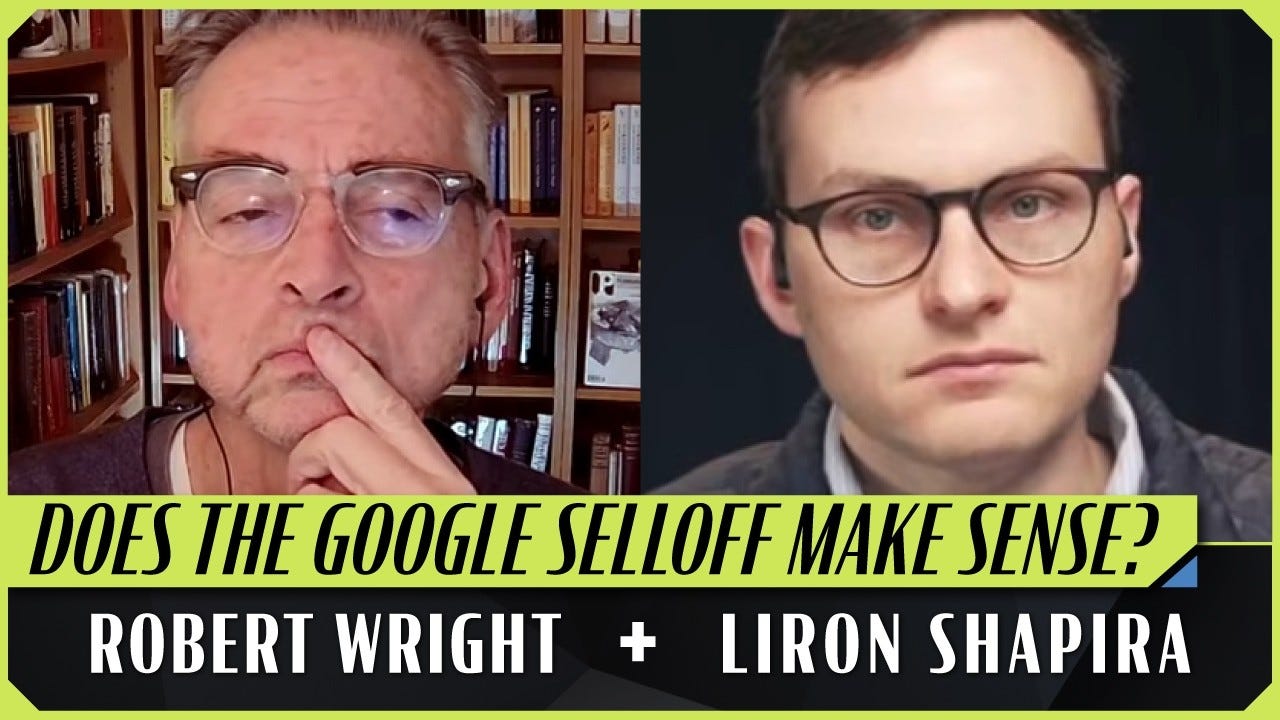
AIバブルは崩壊するのか?ロバート・ライトのNonzeroとのコラボ回
Doom Debates!
Luke Muehlhauser が語る「誰も手をつけていない最重要のAI安全の仕事」
80,000 Hours Podcast

行動の自由を保て:RANDが描く米国の超知能戦略(Joel Predd、Ben Boudreaux、Matt Chessen)
"The Cognitive Revolution"

サイバーセキュリティ専門家 Zack Korman は「人類は生き延びる」と確信している
Doom Debates!
「AIチェルノブイリ」がトランプと習近平に即時停止を迫る——Jeremie & Edouard Harris
Doom Debates!

最新のAI性能飛躍がビジネスモデルを揺さぶる
The AI Daily Brief: Artificial Intelligence News and Analysis