
オープンモデルとサイバーリスクについて、私は間違っていたのか?
Was I wrong about open models & cyber risks?
オープンモデルとサイバーリスクについて、私は間違っていたのか?
Interconnects
要約
Interconnectsの筆者は、数週間前に「Claude Mythosがオープンウェイトで流出していても世界は概ね大丈夫だった」と書いた自身の主張を振り返る。「Black October」と呼ばれる脆弱性開示の急増を踏まえつつ、AI安全コミュニティの発言を検証し、「fine」という表現の不十分さを認めた。一方で、最近の脆弱性発見の多くはクローズドモデルによるもので、オープンかクローズドかよりもAI能力の普及こそが本質だという立場は維持している。
この回のポイント
- ●「Black October」と呼ばれる重大な脆弱性開示の急増があり、AIのサイバーリスクが現実化し始めた節目と位置づけられている。
- ●筆者はAI安全コミュニティがMythosのオープン公開を「本物の災害」のように語っていたという印象を裏づけるため、Rob WiblinやAnthropicの発言を引用した。
- ●「fine(問題ない)」という言葉は、避けられない乱気流の時期を過小評価しかねないと認め、サイバー不安定の新時代を論じた安全派の一部をより評価すべきだったと述べている。
- ●筆者の見方は、オープンモデルが攻撃と防御のバランスを取る役割を果たすというもので、企業は攻撃者より早く導入できるとみている。
- ●現時点の脆弱性発見の多くはクローズドモデルによると予想するが、誤差は大きいと断っている。
- ●サイバーは社会全体の問題であり、AI企業だけでは解決できず、エコシステム全体の視点が必要だと結論づけている。
章立て
Black Octoberと現状認識
脆弱性開示の急増やBinanceの事件に触れ、水面下の対応が加速していると見ている。指数的な増加がシグモイドの頂点に達するまでには時間がかかると述べる。
以前の主張と予測の検証
数週間前の「オープンなMythosでも世界は概ね大丈夫」という主張を再掲する。反対派の予測は反証可能であり、実際の答えが得られ始めると述べる。
安全派の発言の検証
Rob WiblinやAnthropicのGlasswing発表、Zviの発言を引用し、どこまでが適切でどこからが誇張かを論じる。
「fine」の再考とEpoch AIの例
自分の立場への不安を認めつつ、Epoch AIのGLM 5.3によるFirefox脆弱性の例で、被害には複数条件が必要だと説明する。「fine」という語の限界も認める。
攻撃者の動機とオープンモデルの使われ方
攻撃者を事業者とみなす見方を紹介する。現状の発見の多くはクローズドモデル由来と予想し、オープンモデルは高コストだが長期的には価格が下がるとみる。
エコシステム視点と結論
サイバー被害は以前から指数的に増えており、AIの能力と普及が鍵だと述べる。オープン対クローズドの論争より社会全体での対応が重要だと結ぶ。
解説記事
AI分野の週刊ニュースレター「Interconnects」の筆者が、自身の以前の主張を振り返る回である。数週間前に筆者は、Claude Mythosがオープンウェイトで流出していても世界は概ね大丈夫だったはずだと書いた。その後、重大な脆弱性の開示が相次いだことを受け、この主張をどう位置づけ直すかを語っている。
「Black October」と現状の見立て
筆者によると、前週は大量の重大脆弱性の開示があり、「Black October」と呼ばれた。PHP関連の脆弱性やGitLabの長年のバグなどが含まれ、AIモデルのサイバーリスクが現実化し始めた節目とされる。Binanceでの暗号資産関連のセキュリティ事件も報じられたが、暗号資産業界は元々ハッキングの歴史が長く、新しい社会的害の指標としては適さないと筆者は指摘する。
筆者の推測では、水面下の対応はむしろ加速しており、インターネットを修復するために人と資源が投入されている。ウォール・ストリート・ジャーナルが、サイバー分野の初動対応者が逼迫していると報じたことも、システムが機能している表れだと見ている。脆弱性の指数的な増加は、シグモイド曲線の頂点で落ち着くまで長くかかるという。
安全派の発言を検証する
筆者は以前、AI安全コミュニティがオープンなMythosを「単なる頭痛」ではなく「本物の災害」として扱っているように見えたと書いた。これには、実際には「真の災害」とは言っていないという批判が寄せられた。そこで裏づけを探し、発言を引用している。
- 80,000 Hoursポッドキャストの司会Rob Wiblin(4月10日):犯罪者や敵対的な国家のサイバー攻撃者の手に渡れば「実際の災害になる」。
- Anthropic(Project Glasswingの発表ブログ、4月7日):こうした能力はまもなく拡散し、経済・公共安全・国家安全保障への影響は深刻になりうる。
比較的妥当な例としてZvi Mowshowitzの発言も紹介された。Mythosは攻撃者に、地球上のほぼ全ソフトウェアに対するゼロデイ攻撃の宝庫を与え、混乱になるという趣旨である。筆者は、これまで混乱は大規模なデジタル製品の運営者に限られており、それは幸いだが今後変わりうるとしている。大事なのは、実際の発言内容だけでなく、聞き手がどう受け取り内面化するかだという立場だ。
「fine」という言葉の見直し
筆者は自分の主張に不安があることも認めている。サイバー専門家ではなく、できる限り根拠ある予測をしているにすぎないという。Epoch AIがGLM 5.3を使って脆弱性を探し、攻撃につなげる社内作業を公開した例を挙げた。Firefoxで、特定のサイトを訪れるだけでファイルが外部に送られる脆弱性が見つかったが、被害が出るには攻撃者がそのサイトを設置するなど複数の条件が必要で、脆弱性の発見は多段階プロセスの一歩にすぎないと説明する。
そのうえで、以前使った「fine」という言葉は、ソフトウェアの作り方をコストと苦労をかけて更新させられる避けがたい未来を表すには適切でなかったかもしれないと述べる。混乱期を織り込まない人には「fine」は過小評価になる。筆者は、サイバー不安定の新時代を理性的に論じたAI安全コミュニティの一部を、もっと評価すべきだったとも認めた。ただし自身は、困難は来るが人間は問題を何とか乗り切ると考える立場だという。
オープンモデルは攻防の均衡をもたらすか
筆者の見方は、オープンモデルが攻撃と防御のバランスに寄与するというものだ。Mythosがもっと早く登場していても大きな変化はなかったとみる。企業は多くの攻撃者より資源があるため、オープンウェイトモデルの導入も速いだろうという。
注視する指標は、攻撃者が米国とその同盟国で物理的な被害を生む意志をどこまで持つかである。敵対国はモデルを使って情報を大量に抜き取っている可能性があるが、公共機関に全力で攻撃を仕掛ける主体がいるかは不明とする。引用された投稿は、攻撃者を「あらゆる手段で侵入したいハッカー」ではなく明確な業務プロセスを持つ事業者とみなすべきだと述べ、パン屋が犬の餌不足でドッグフードを作らないのと同様、フィッシング事業者が新しい脆弱性のためにすべてを投げ出すことはないとしている。
現在の脆弱性発見の多くはクローズドモデルによるものだと筆者は予想するが、誤差は非常に大きいと断る。オープンモデルは配信コストが高く、大型モデル向けの計算資源も売り切れ状態だが、長期的には供給の拡大で価格と利幅は下がると確信している。筆者が関わる立場の多くは、その未来を実現することに向けられている。さもないと、脆弱なソフトウェアを生む道具と、それを直す道具の双方を、少数の企業が握ることになるからだ。
まとめ
筆者の結論は、今回の事態はオープンかクローズドかよりも、AIの能力と普及の問題だというものだ。サイバー被害は ChatGPT 以前から指数的に増えており、最近の出来事もその延長線上にある。AI安全コミュニティでは、オープンモデルが原因かどうかの追及に労力が割かれがちだが、その証拠は非常に乏しく、最近のハッキングにはむしろクローズドモデルが大きく関与していると述べる。
日本の読者にとっての注目点は二つある。一つは、AIによる脆弱性発見の加速に備え、パッチ適用や防御体制の更新が急務になることだ。もう一つは、オープンウェイトの是非を単純な二項対立で論じず、エコシステム全体の視点で議論する必要があることだ。筆者はサイバーを、AI企業だけでは解決できない社会全体の課題と位置づけている。なお、筆者自身がサイバー専門家ではなく、予測の不確実性が高いと明言している点にも留意したい。
文字起こし(英語・自動生成)
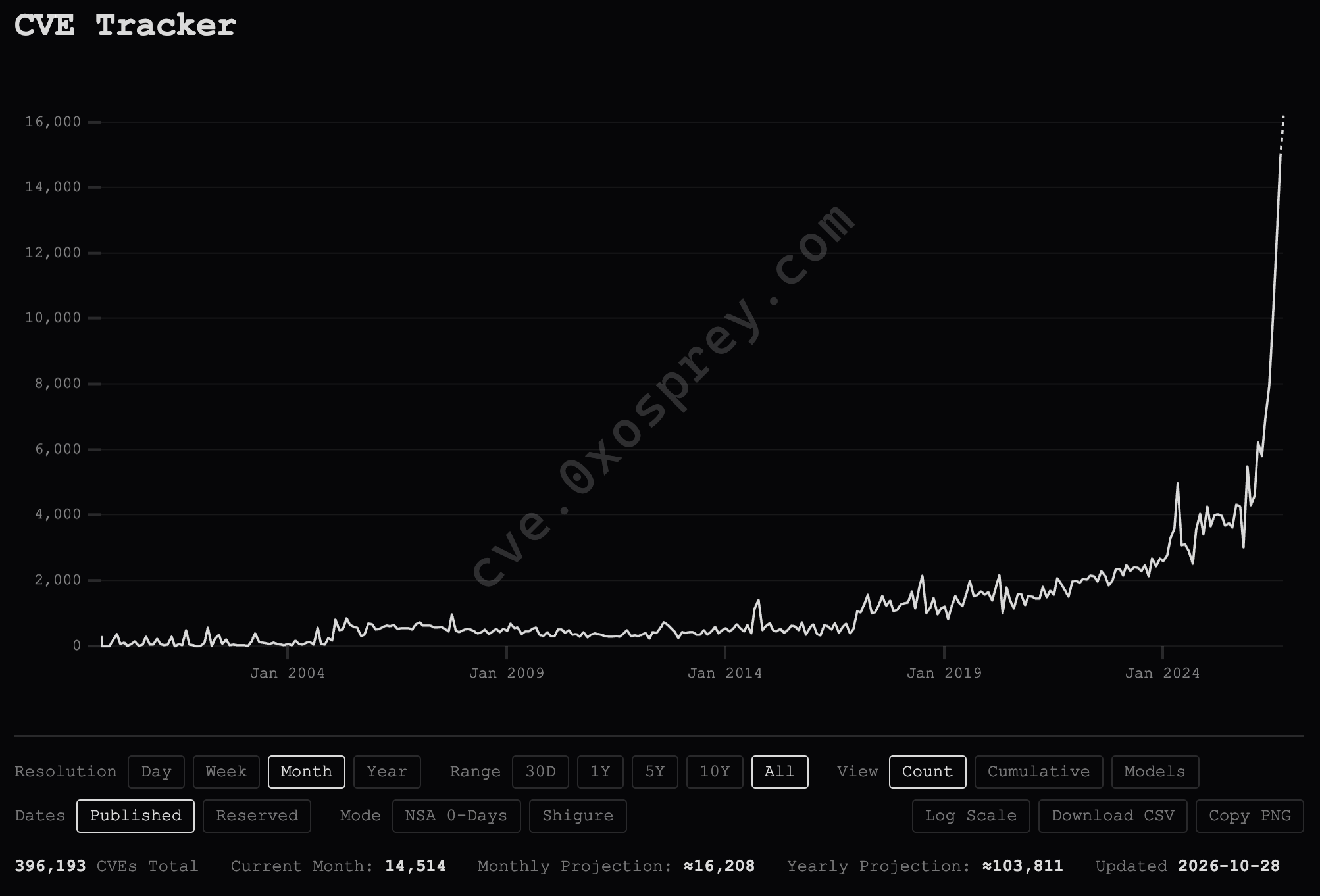
Was I wrong about open models and cyber risks was published on Friday, October 30th, 2026. Last week coined the term Black October after an onslaught of critical vulnerability disclosures, including PHP to Shell and a longstanding GitLab bug, signified the moment when the cyber risks of AI models started to materialize. It seemed like the news cycle had stalled a bit when I started writing this, but then there was the news about another major crypto security incident at Binance. The crypto industry has a very long history of hacks, so it's not the best industry to indicate vulnerabilities translating into news as idle harm. Still, we are very much living through the implications of this movement. The best guess for what is happening in the cybersecurity space is that the behind-the-scenes work has only accelerated, bringing more people and resources in to try to patch the internet. The Wall Street Journal reported the cyber first responders are strained, which seems like the system working. We're living through this plot of an exponential rise in vulnerabilities, which will take a long time to level off at the top of the sigmoid.
Click through to see the image of the critical vulnerabilities disclosure tracker. A few weeks ago, before the rapid acceleration in vulnerability disclosures and the uptick in reported hacks, I wrote the following take. It's been getting a pretty consistent barrage of feedback, some hopeless dunk attempts, and some reasonable discussion, so on to unpack where I stand. Quote, further. If Claude Mythos was accidentally released as open weight, it seems like the world would have been more or less fine. Yes, there would be a clear increase in cybersecurity incidents, and it would be bad for a society if the model leaked, but it would be a scenario that
looks more like an acceleration than a step change in risk. The leading proponents of this new wave of open weight fear-mongering have effectively been making a falsifiable prediction, that the current open weight models are going to cause substantial, not seen before AI harms by crippling our cyber infrastructure Based on all the evidence I have which I unpacked above they set up to be wrong At least now after so many years of debating open risks we will start to get some real answers, end quote. To start the reflection, I wanted to do more due diligence and track down some receipts on the claims I made that the AI safety community was reacting as if open-weight mythos would be an actual disaster, not just a painful headache. This was distinctly my impression, having lived through the online discourse. I've gotten criticism that the frontier AI community never said it would be a quote true disaster, but regardless of exactly what they said, it is always about how people hear and internalize your information. Here are some examples of the sort of language that I felt was too exaggerated and from prominent people, which spilled into the
public and more importantly the federal government perspective that this was a cyber weapon include rob wiblin host of the 80 000 hours podcast on his own podcast quote if it fell into the hands of criminals or hostile state cyber actors it would be an actual disaster anthropic themselves in the project glass wing announcement blog quote given the rate of ai progress it will not be long before such capabilities proliferate potentially beyond actors who are committed to pulling them safely. The fallout for economics, public safety, and national security could be severe, end quote. For one that is actually more reasonable, to illustrate the fine lines between correct and exaggerated, from Deux V, who I don't agree with on a ton of things, quote, Claude Mythos would give the attackers a cornucopia of zero-day exploits for essentially all the software on earth. It would be chaos, end quote. To date, this chaos has been confined to those running large-scale digital products, which is good, but could change. I largely still stand by
my above writing a few weeks ago, but I'm nervous about it. I'm not a cyber expert. I'm working hard to make the most educated predictions I can. It's a fine line between all of our tech companies need to work extra hard to keep us secure and public infrastructure is actually going down. It is very clear as of writing this that there are way more critical vulnerabilities which are being found in popular tools and fixes are being built. For example, Epoc.ai recently published a nice post on their internal work using GLM 5.3 to try and find vulnerabilities and chain them into what could be an attack. The actual exploit they found in Firefox is a good example of why cyber risk needs multiple things to align for harm to be done Quote we use GLM 5 to create a website that simply when visiting a Firefox user simply when visited by a Firefox user and without further interaction gave the attacker the ability to exfiltrate files from the user's computer. End quote. Here the exploit is in Firefox. A would-be hacker needs to plant a website that is looking for this exploit. This is doable and could have
serious consequences, but just finding the exploit is only one step in a multi-stage process. In the previous post, I should have been more specific on what FINE is for the future of cybersecurity. And in this case, it means giving more credit to some of the AI safety community that discussed this reasonably as a new era in cyber instability. Reflecting on it, I'm not sure that FINE is the right word to describe what is inevitably coming, a forced industry update to a new way of working with software, which will clearly be expensive and accompanied by some hard work. If you're already somber about the challenges coming from AI, I think fine is actually very suitable. If you don't price in a period of turbulence, fine undersells. I've written many times that I am in the former, difficulty will come, group, but I think humans are good at muddling through problems and patching immediate concerns. What my view was closer to is that open models are providing balance in the offense-defense equation, and that mythos coming sooner wouldn't have massively upended this. I suspect most of these companies would be faster to adopt open
weight models than attackers, as most attackers are lower resourced than these companies. A key needle we're watching is the balance on how willing attackers are to cause physical harm within the U.S. and its allies. For now, while our adversaries have likely used these models and exploits to extract information en masse in a clandestine way, it is not clear if there is a party who will cause mass harm by pushing the full force of these models at public institutions. I thought this tweet was a funny way to summarize some of the personnel motive gaps in hacking. Quote, life is a lot easier once you stop seeing threat actors as hackers who want to break into systems by any means possible and start seeing them as businesses with well-defined business processes. A bakery isn't going to start making dog food because there's a dog food shortage. ClickFix and phishing attack actors aren't going to drop everything to VibeCode exploits just because a critical CBE came out. The fact that the only actors exploiting this area are actors who MO is exploiting things isn a coincidence It entirely predictable if you understand threat actor behavior end quote Where I sit I expect
most of these vulnerabilities are being found by closed models, and I have very high error bars on this prediction. A lot hinges on how open models are actually being used in the near term. Today, open models are expensive to serve and the compute to serve the largest models is extremely sold out. In the long term, I am very confident that margins and prices on open models will be driven down, as computing supply grows abundant, but in the near term, the closed models are definitely more price effective. Many of my positions are making sure that we get to this future, as otherwise a few companies are building the tools that produce some of software with vulnerabilities, and also selling the tools to fix said software. For now, we're working through the backlog of cyber vulnerabilities as we transition from the human-focused Internet to closed silos of human activity mediated by agents. All of this, I think, is way more about AI's capabilities and diffusion generally than anything about open versus closed models. In fact, I feel like in reading more cybersecurity-oriented discourse that they focus much more on the ecosystem perspective, how the rate of exploits and overall damages from cyber has been growing since long before Chachiputi, and how these recent events are on trend.
It's just that trend line was exponential. An example plot of this trend is below from Joshua Sachs. These are the sort of ecosystem level plots which can be very clear if AI's capabilities in diffusion is the bottleneck on cyber attacks. Click through to see a plot which shows a steady increase in cyber damages over time with a small attribution to AI. When talking to people who are close to the AI community, especially AI safety, I find a lot of effort going into figuring out if open models are to blame, which we still have extremely low evidence for. Closed models have played a very heavy part in recent hacks, at least more than open models have. Cyber is a really societal problem, one which AI companies cannot solve alone. Effort needs to be spent at this higher level of abstraction. This is the first of many risks and transitions we'll need to manage with AI, none of which can be easily solved solely by the San Francisco-centric tech industry. Thanks to Seb Cryer for feedback on this post, and have a great day.
If you're interested in sharing interconnects with your team, I offer tiered discounts for group subscriptions. Please reach out and email me if you are interested.
番組の概要欄(原文)
Last week coined the term “Black October“ after an onslaught of critical vulnerability disclosures, including PHP2Shell and a long-standing GitLab bug, signified the moment when the cyber risks of AI models started to materialize. It seemed like the news cycle had stabilized a bit when I started writing this, but then there was news about another major crypto security incident at Binance. The crypto industry has a very long history of hacks, so it’s not the best industry to indicate vulnerabilities translating into new societal harm. Still, we are very much still living through the implications of this transition. The best guess for what is happening in the cybersecurity space is that the behind the scenes work has only accelerated, bringing more people and resources in to try and patch the internet — the Wall Street Journal reported that cyber first responders are strained, which seems like the system working. We’re living through this plot of an exponential rise in vulnerabilities, which will take a long time to level off at the top of the sigmoid. A few weeks ago, before the rapid acceleration in vulnerability disclosures and the uptick in reported hacks, I wrote the following take. It’s been getting a pretty consistent barrage of feedback, some hopeless dunk attempts and some reasonable discussion, so I wanted to unpack where I stand. Open-weight Mythos in April would’ve been fine? When Claude Mythos was announced, it was previewed as if it was a new class of cyber weapon, where if it ended up in the wrong hands it would’ve caused mass societal destabilization. It seems like this was wrong. By all measures, GLM-5.3 is the model that crosses that threshold of capability, and there’s little public evidence that much has changed, and we’re over a month out of the model weight release. In fact, I would go further. If Claude Mythos was accidentally released as open-weight, it seems like the world would have been more or less fine. Yes, there would be a clear increase in cybersecurity incidents and it would be bad for society if the model leaked, but it would be a scenario that looks more like an acceleration than a step change in risk. The leading proponents of this new wave of open-weight fear mongering have effectively been making a falsifiable prediction — that the current open-weight models are going to cause substantial, not seen before AI harms by crippling our cyber infrastructure. Based on all the evidence I have, which I’ve unpacked above, they’re set up to be wrong. At least now, after so many years of debating open weight risks, we will start to get some real answers. To start the reflection, I wanted to do more due diligence and track down some receipts on the claim that the AI safety community was reacting as if open-weight Mythos would be an actual disaster, and not just a painful headache. This was distinctly my impression having lived through the online discourse. I’ve gotten criticism that the frontier AI community never said it would be a “true disaster,” but regardless of exactly what they said, it is always about how people hear and internalize your information. Here are some examples of the sort of language that I felt was too exaggerated and from prominent people, which spilled into the public and more importantly federal government perspective that this was a cyber weapon include: * Rob Wiblin, host of the 80,000 hours podcast, on his own podcast (April 10, 2026): “If it fell into the hands of criminals or hostile state cyber actors, it would be an actual disaster.” * Anthropic, in the Project Glasswing announcement blog (April 7, 2026): “Given the rate of AI progress, it will not be long before such capabilities proliferate, potentially beyond actors who are committed to deploying them safely. The fallout—for economies, public safety, and national security—could be severe.” For one that is actually more reasonable, to illustrate the fine lines between correct and exaggerated, from Zvi Mowshowitz (who I don’t agree with a ton of things on) on April 9, 2026: “Claude Mythos would give attackers a cornucopia of zero-day exploits for essentially all the software on Earth … It would be chaos.” To date, this chaos has been confined to those running large-scale digital products, which is good, but could change. I largely still stand by my above writing a few weeks ago, but I’m nervous about it. I’m not a cyber expert, I’m working hard to make the most educated predictions I can. It’s a fine line between “all of our tech companies need to work extra hard to keep us secure” and “public infrastructure is actually going down.” It is very clear as of writing this that there are way more critical vulnerabilities which are being found in popular tools and fixes are being built. For example, Epoch AI recently published a nice post on their internal work using GLM-5.3 to try and find vulnerabilities and chain them into what could be an attack. The actual exploit they found in Firefox is a good example of why cyber risks need multiple things to align for harm to be done: We used GLM 5.3 to create a website that, simply when visited by a Firefox user and without further interaction, gave the attacker the ability to exfiltrate files from the user’s computer. Here, the exploit is in Firefox, and a would-be hacker needs to plant a website that is looking for this exploit. This is doable, and could have serious consequences, but just finding the exploit is only one step in a multi-stage process. In the previous post, I should’ve been more specific on what “fine” is for a future of cybersecurity, and in this case it means giving more credit to some of the AI safety community that discussed this reasonably as a new era in cyber instability. Reflecting on it, I’m not sure fine is the right word to describe what is inevitably coming – a forced industry update to a new way of working with software, which will clearly be expensive and accompanied by some hard work. If you’re already somber about the challenges coming from AI, I think fine is actually very suitable. If you didn’t price in a period of turbulence, fine undersells. I’ve written many times that I am in the former, difficulty will come, group — but I think humans are good at muddling through problems and patching immediate concerns. What my view was closer to is that open models are providing balance in the offense-defense equation, and that Mythos coming sooner wouldn’t have massively upended this. I suspect most of these companies would be faster to adopt open-weight models than attackers, as most attackers are lower resourced than these companies. A key needle we’re watching the balance on is how willing attackers are to cause physical harm within the U.S. or its allies. For now, while our adversaries have likely used these models and exploits to extract information en-masse in a clandestine way, it is not clear if there is a party who will cause mass harm by pushing the full force of these models at public institutions. I thought this Tweet was a funny way to summarize some of the personnel / motive gaps in hacking: Life is a lot easier once you stop seeing threat actors as hackers who want to break into systems by any means possible, and start seeing them as businesses with well defined business processes. A bakery isn’t going to start making dog food because there’s a dog food shortage. ClickFix and Phishing actors aren’t going to drop everything to vibecode exploits just because a critical CVE came out.The fact that the only actors exploiting this are the actors whose MO is exploiting things... isn’t a coincidence. It’s entirely predictable if you understand threat actor behavior. Interconnects AI is a reader-supported publication. Consider becoming a subscriber. Where I sit, I expect most of these vulnerabilities are being found by closed models, but I have very high error bars on this prediction. A lot hinges on how open models are actually being used in the near term. Today, open models are expensive to serve… This is a public episode. If you'd like to discuss this with other subscribers or get access to bonus episodes, visit www.interconnects.ai/subscribe
出典・この記事について
- 番組
- Interconnects(Nathan Lambert)
- 元の回
- Was I wrong about open models & cyber risks?
- 配信日
- 要約作成日
- 公式サイト
- www.interconnects.ai/podcast
この要約・解説記事は、元の音声を文字起こしした内容をもとに AI(Claude)が日本語で作成したものです。 固有名詞や数値に誤りを含む場合があるため、正確な内容は元の音声でご確認ください。制作方法について
関連エピソード
AI:AM 週次ハイライト:Arenaのアライメント指数、Kepler の強誘電体メモリ、エージェント経済、AI主導のサイバー攻撃、Mistral Large 4「Le Chonk」
"The Cognitive Revolution"

AIブームは本物か、持続するか――Anthropic S-1、SpaceXのネオクラウド、フロンティアAI規制案
The Data Exchange with Ben Lorica

AIバブルは崩壊するのか?ロバート・ライトのNonzeroとのコラボ回
Doom Debates!

エージェンティックAI時代のサイバーセキュリティ:Amy Blackshaw(Palo Alto Networks)が語る
Super Data Science: ML & AI Podcast with Jon Krohn

AIバブルかどうか、まもなく分かる――Anthropic IPOとS-1が示すもの
Hard Fork
コンピュータが(時に)人間より優れていても構わない
The Stack Overflow Podcast